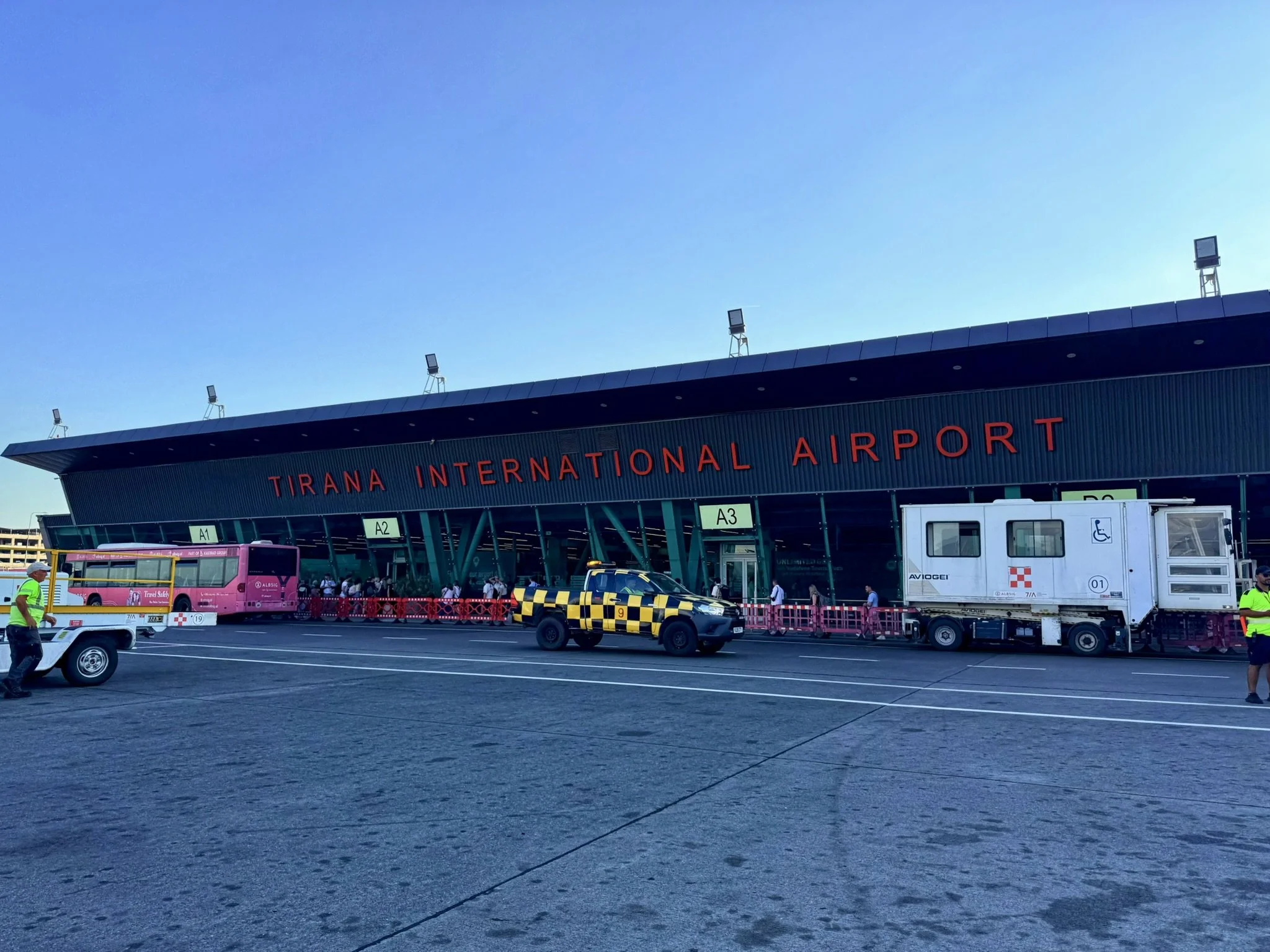
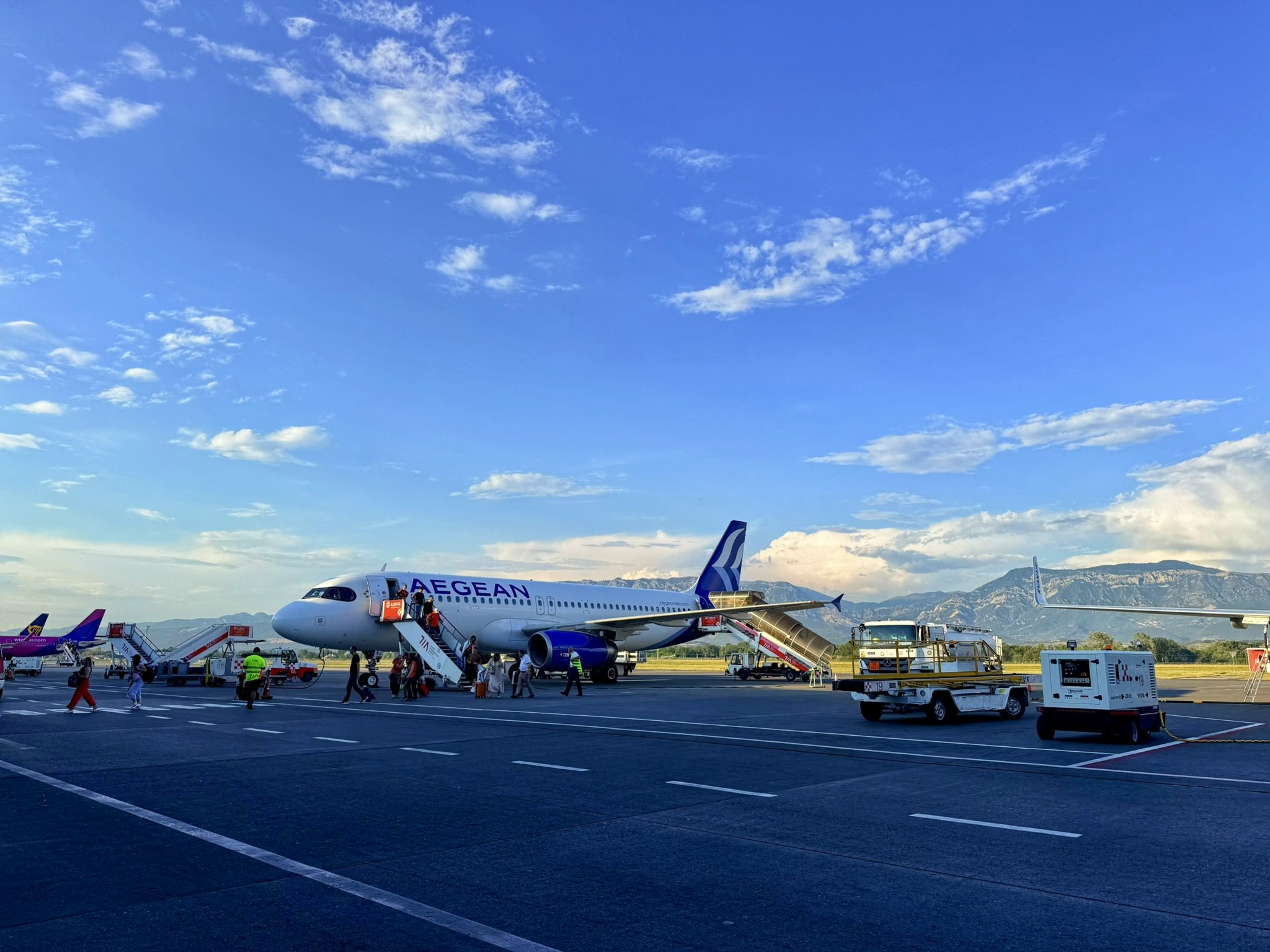
Since we knew very little about Albania, we quickly realized that a healthy dose of historical and cultural research would go a long way toward appreciating our newest country (#55 for Akiko and #58 for Bama Mike!).
What started as simple curiosity turned into a full-blown "term paper" on Albania that we willingly and enthusiastically wrote for ourselves—and now for the blog. If only our history teachers could see us now.
One-Year Visa-Free Stays for Americans
Did you know that American citizens can stay in Albania visa-free for up to one year?
Not that we intend to stay that long, but it's nice to know we could. This unusually generous immigration policy stems from a deeply rooted pro-American sentiment among Albanians.
Wondering why? Read on.
The Flamingo Revolution: Protests, But Still Pro-America
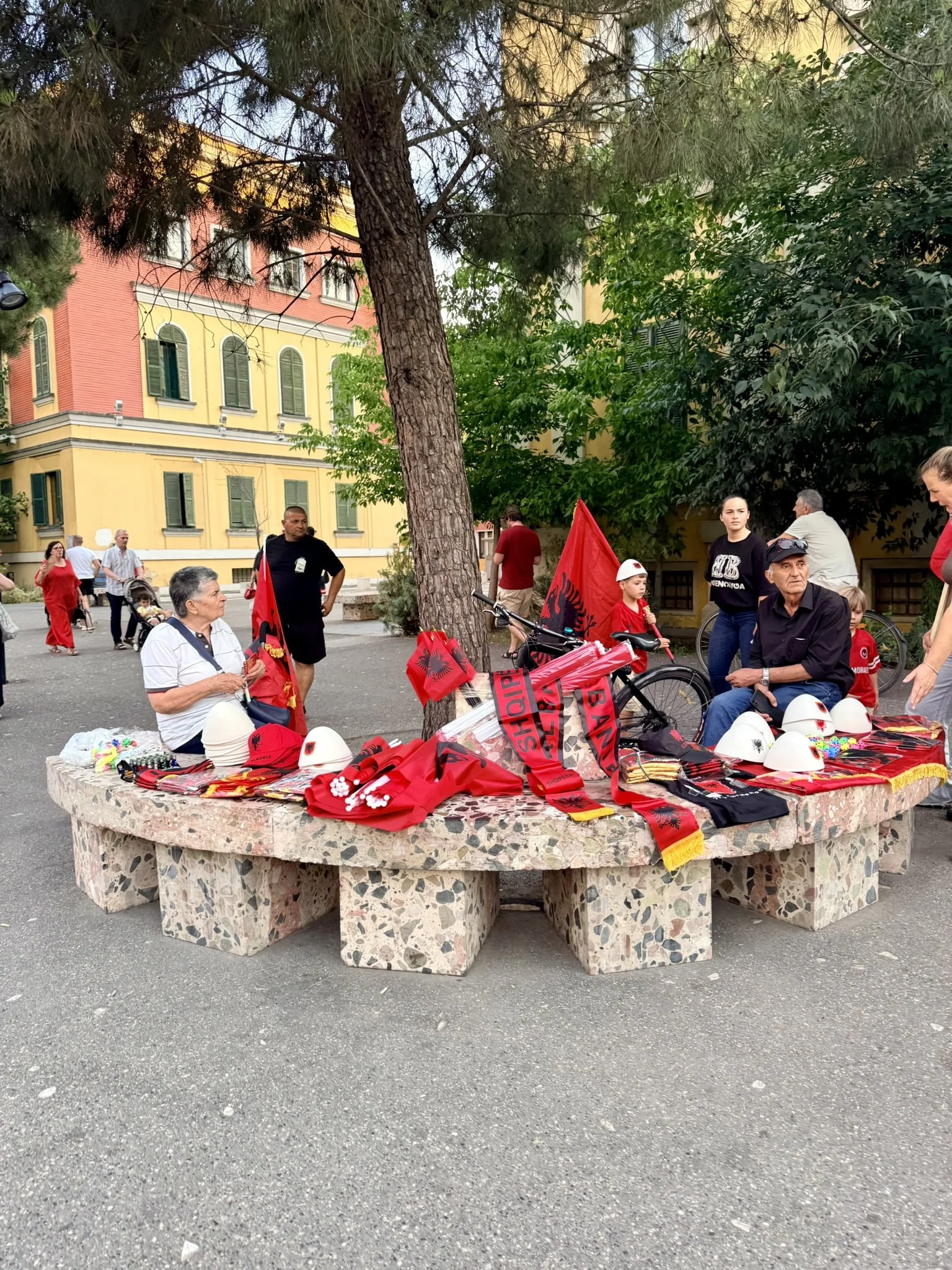
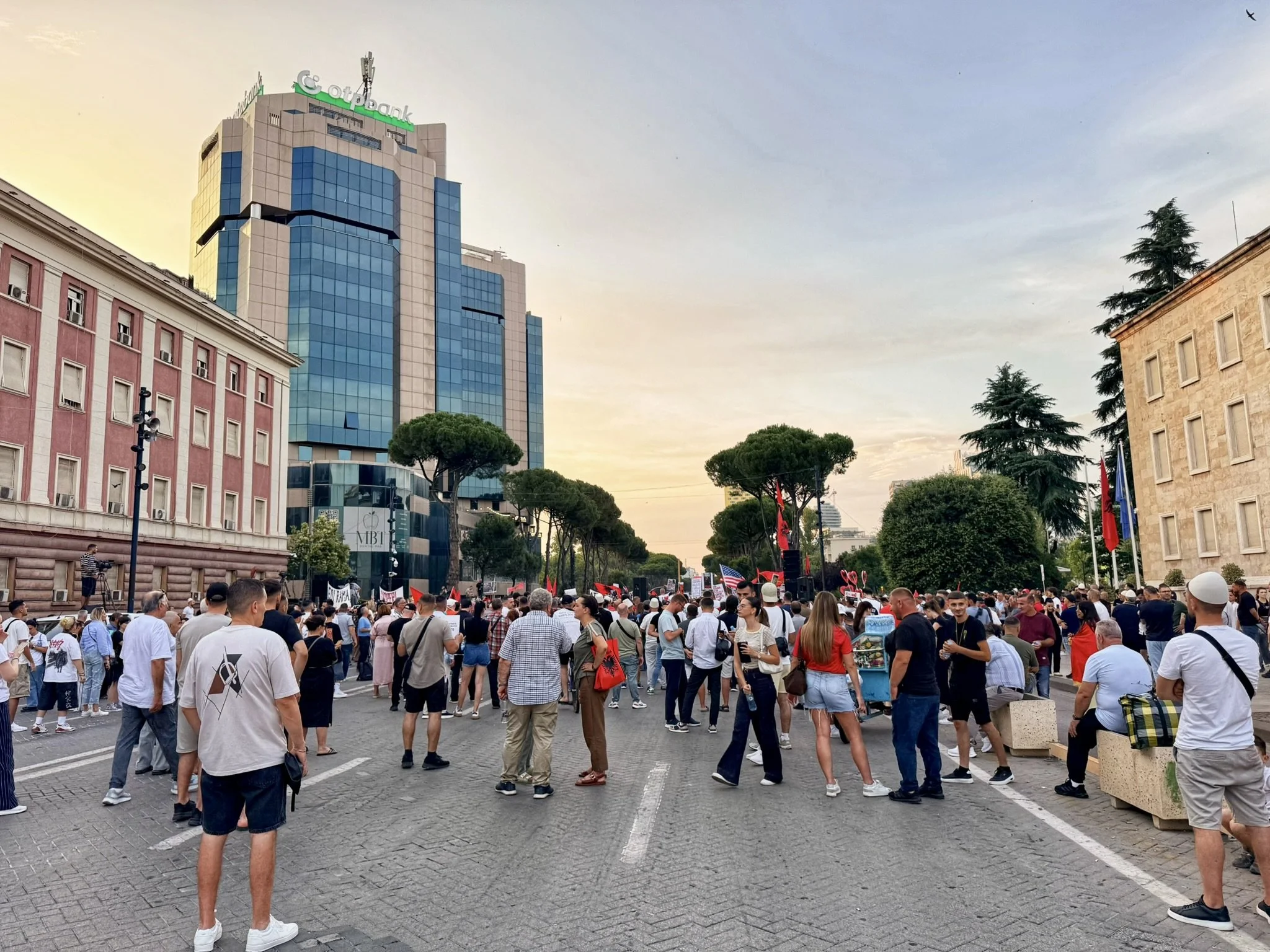
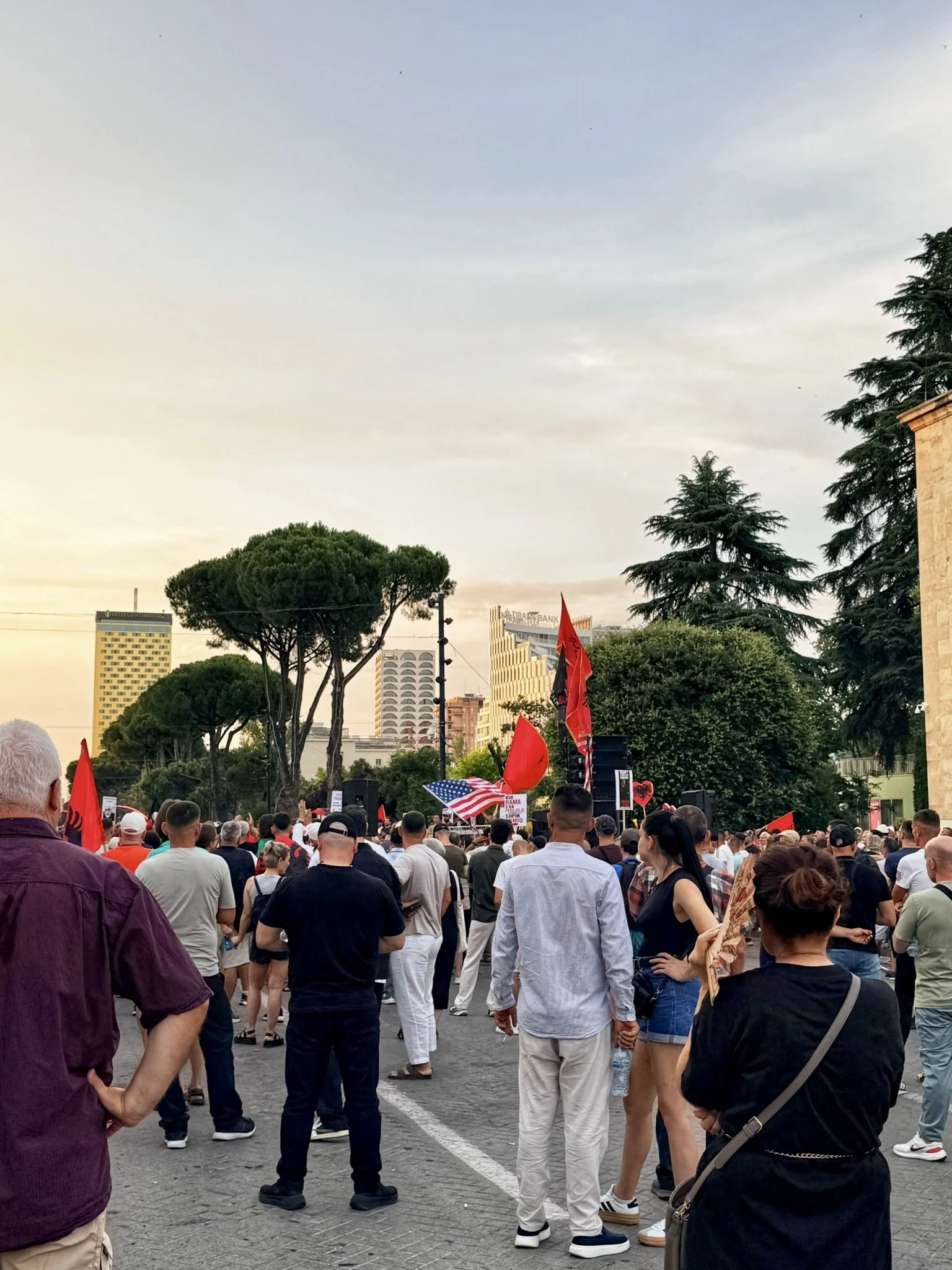
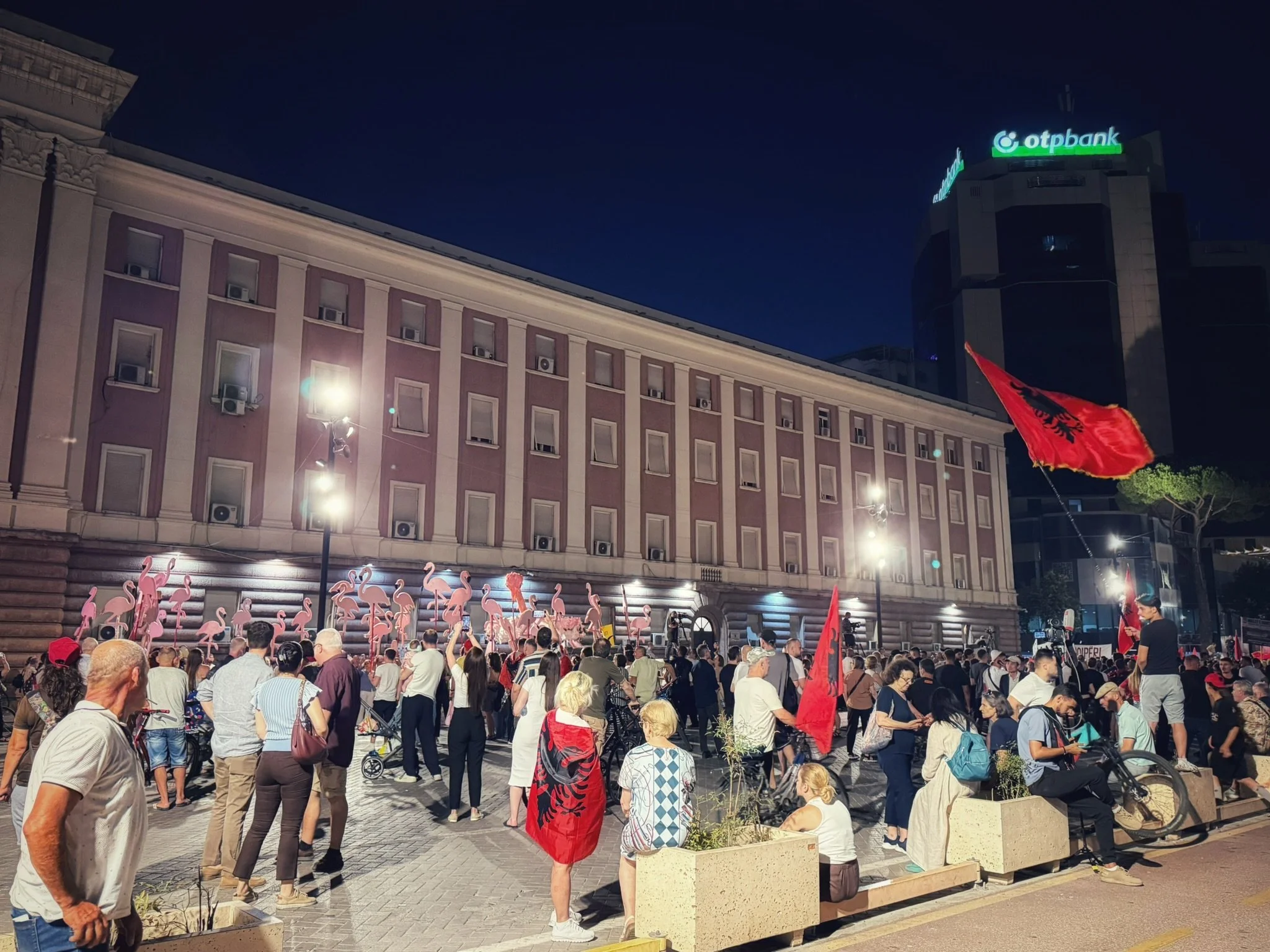
We witnessed Albania's pro-American attitude firsthand in Tirana, despite the nightly protests against U.S. investments currently taking place in the city center.
For more than 20 consecutive nights, demonstrators associated with the "Flamingo Revolution" 🦩have gathered outside Prime Minister Edi Rama's office. Protesters oppose a luxury resort development linked to Jared Kushner and backed by Donald Trump, arguing that it would privatize protected coastal habitat and prioritize wealthy foreign investors over public interests.
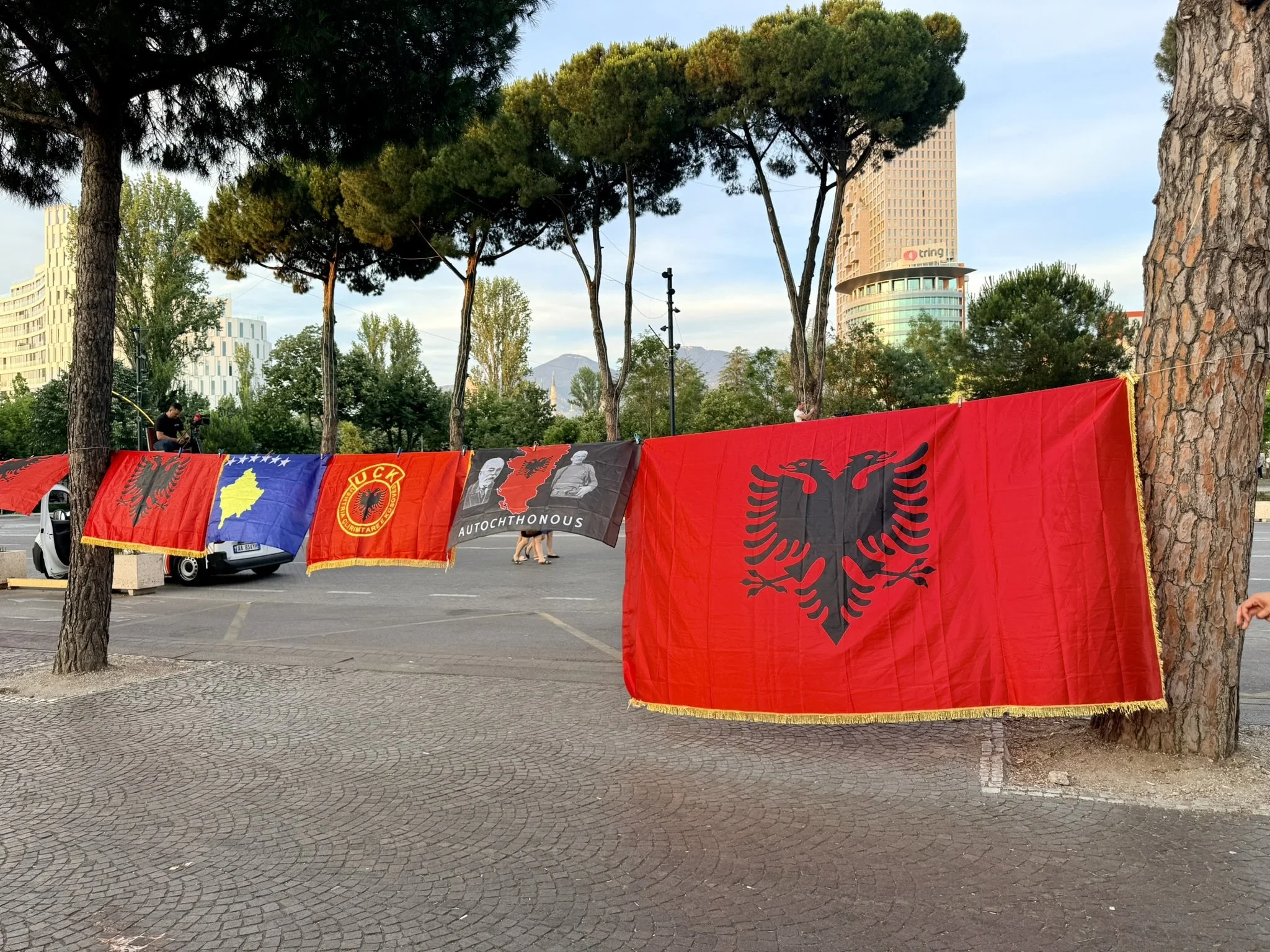
One detail immediately caught our attention: American flags were prominently displayed throughout the demonstrations.
At first, it seemed contradictory. Why wave American flags while protesting an American-backed project?
The answer is that the flags are intentional. Protesters display American and Albanian flags side by side to emphasize that their movement is not anti-American. Rather, they are expressing opposition to a specific development project while reaffirming Albania's longstanding friendship with the United States.
Why Albanians Love America
The special relationship between Albania and the United States is rooted in several pivotal moments in modern history.
Woodrow Wilson
After World War I, neighboring countries sought to divide Albanian territory among themselves. U.S. President Woodrow Wilson opposed the partition and supported Albania's right to exist as an independent nation. His intervention helped pave the way for Albania's eventual recognition and admission into the League of Nations.
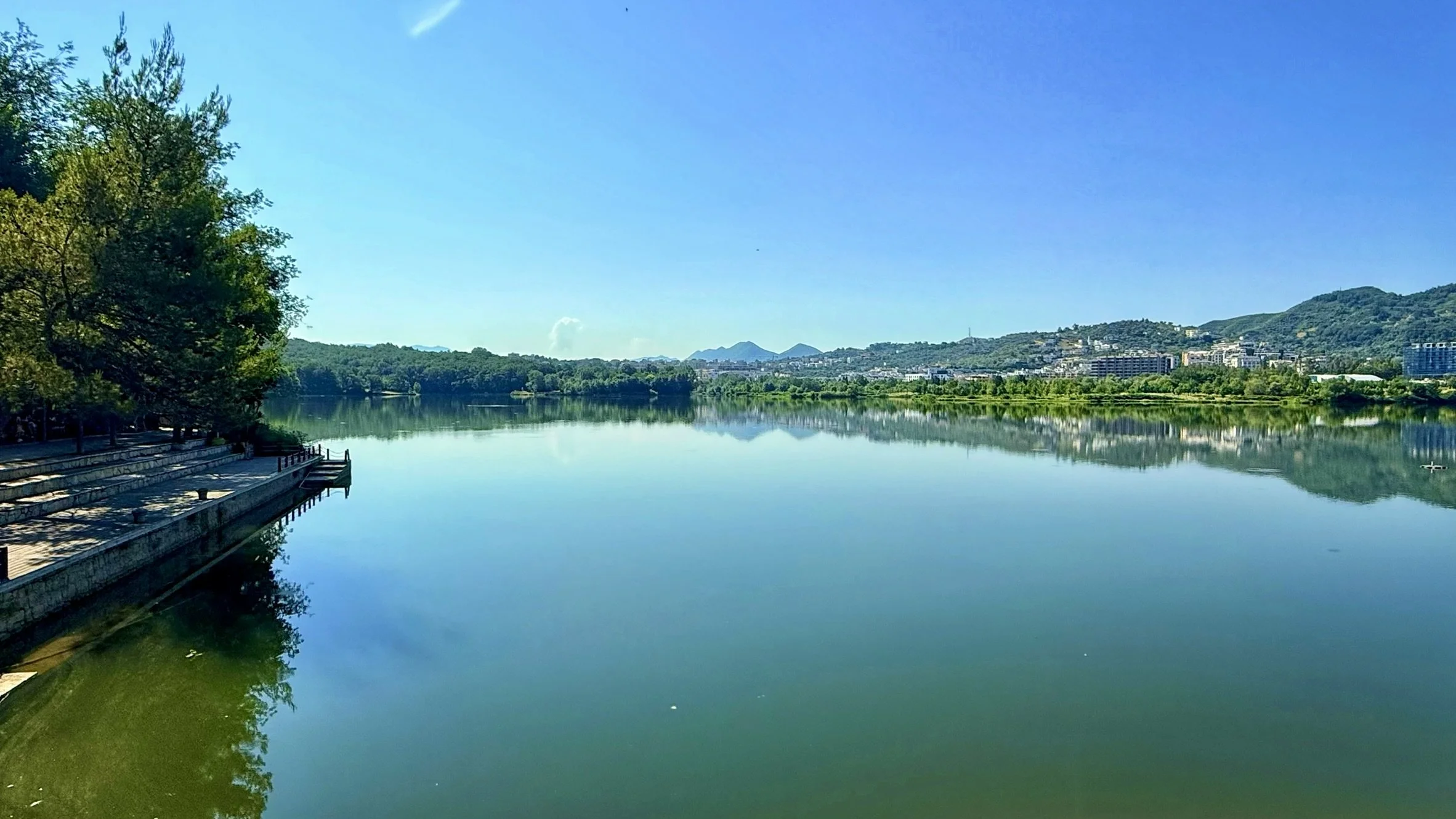
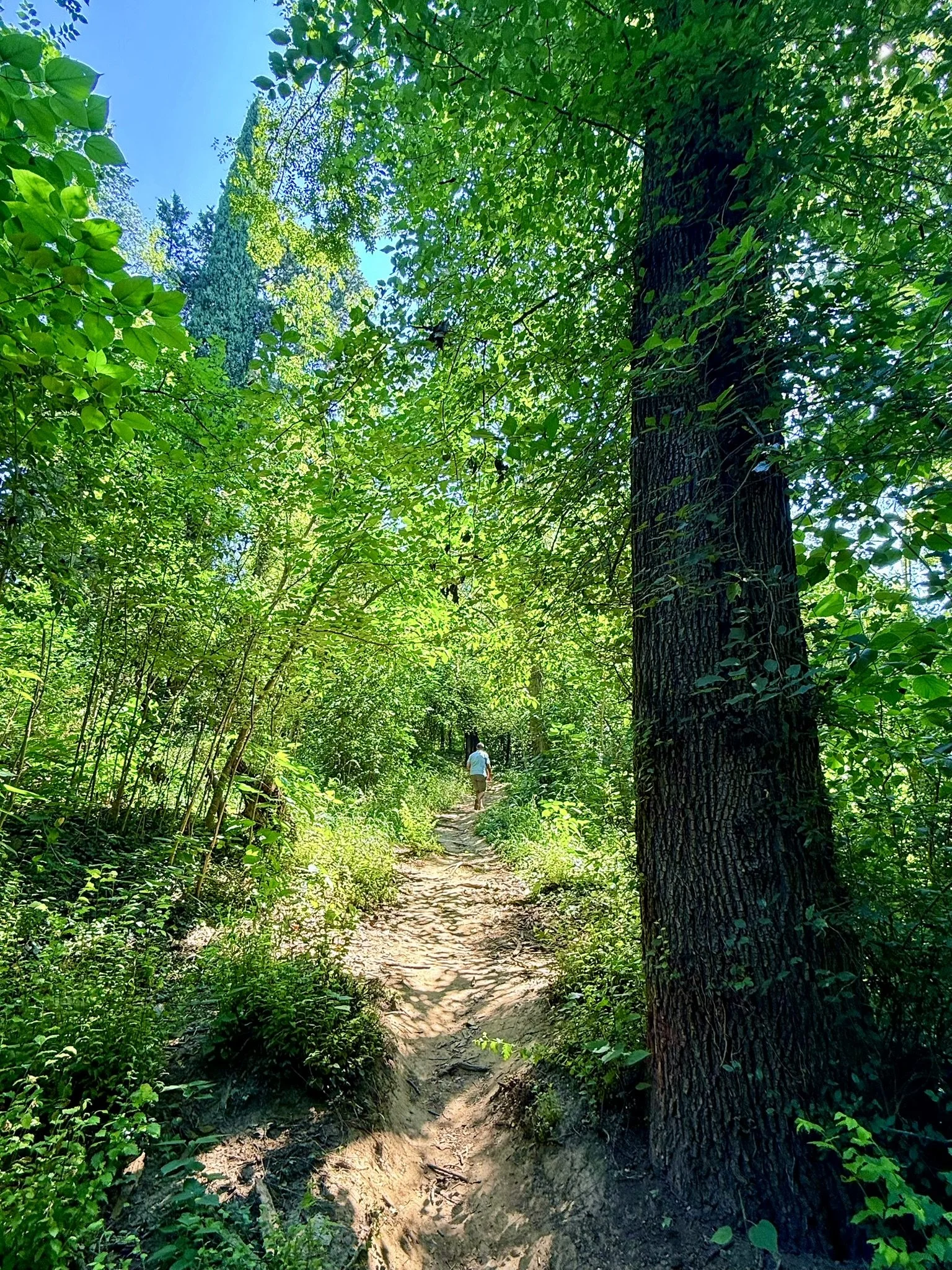
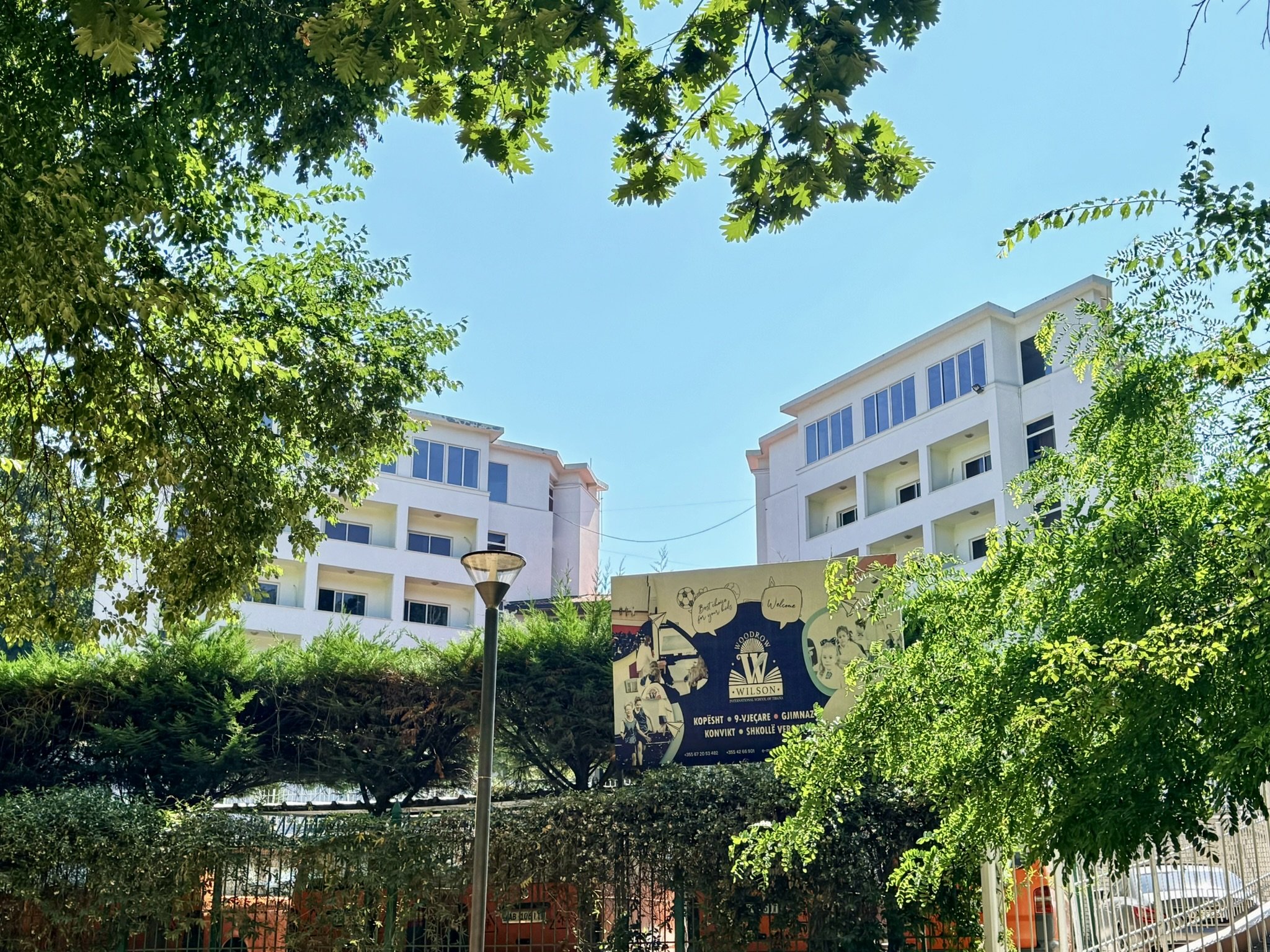
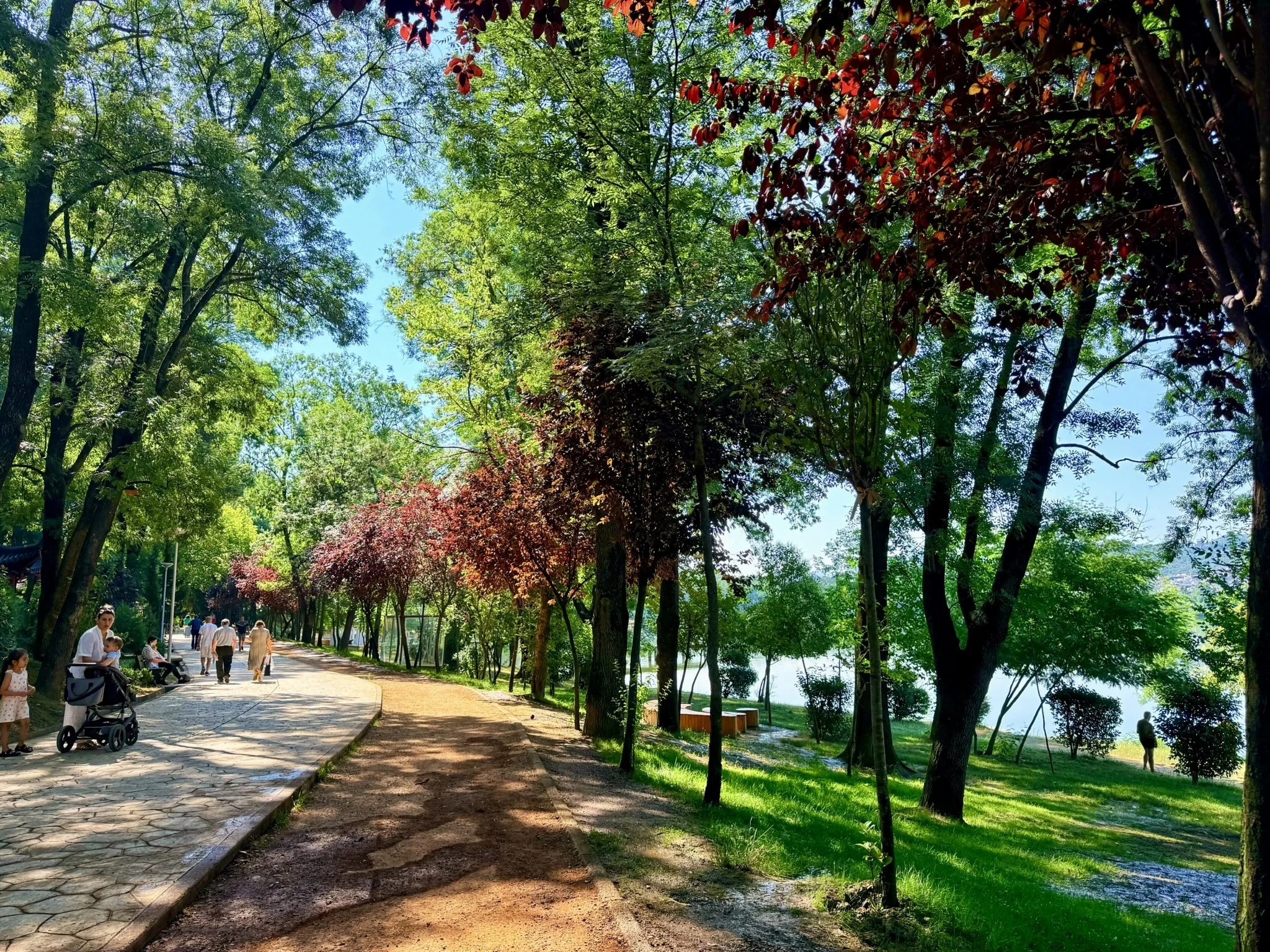
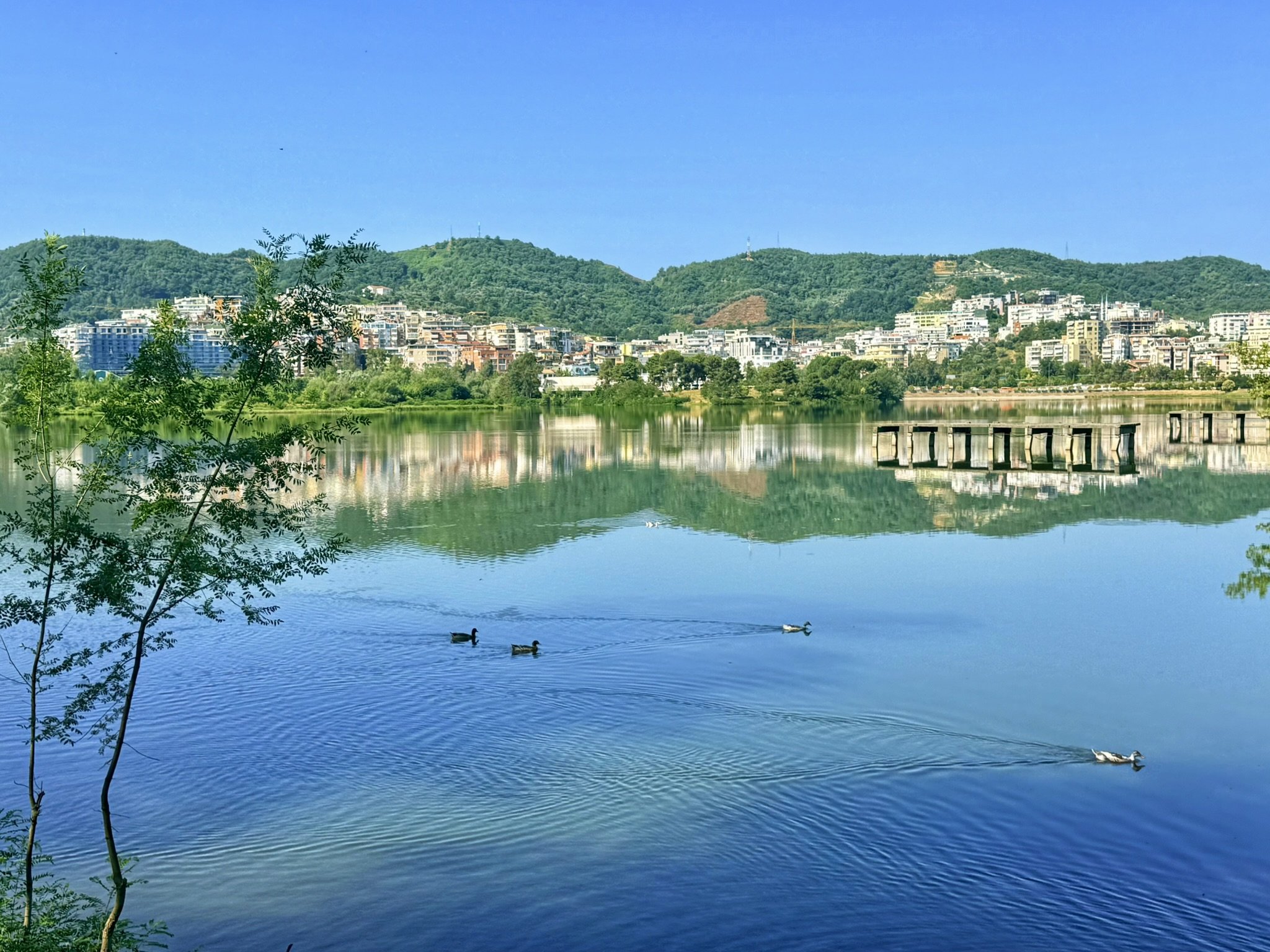
Today, the Woodrow Wilson International School in Tirana's Lake Park bears his name.
The U.S. and NATO
In 1999, during the Kosovo War, the United States led NATO intervention efforts to protect ethnic Albanians in Kosovo from Serbian forces. For many Albanians, this cemented America's reputation as a trusted ally and protector.
George W. Bush
In 2007, George W. Bush became the first sitting U.S. president to visit Albania.
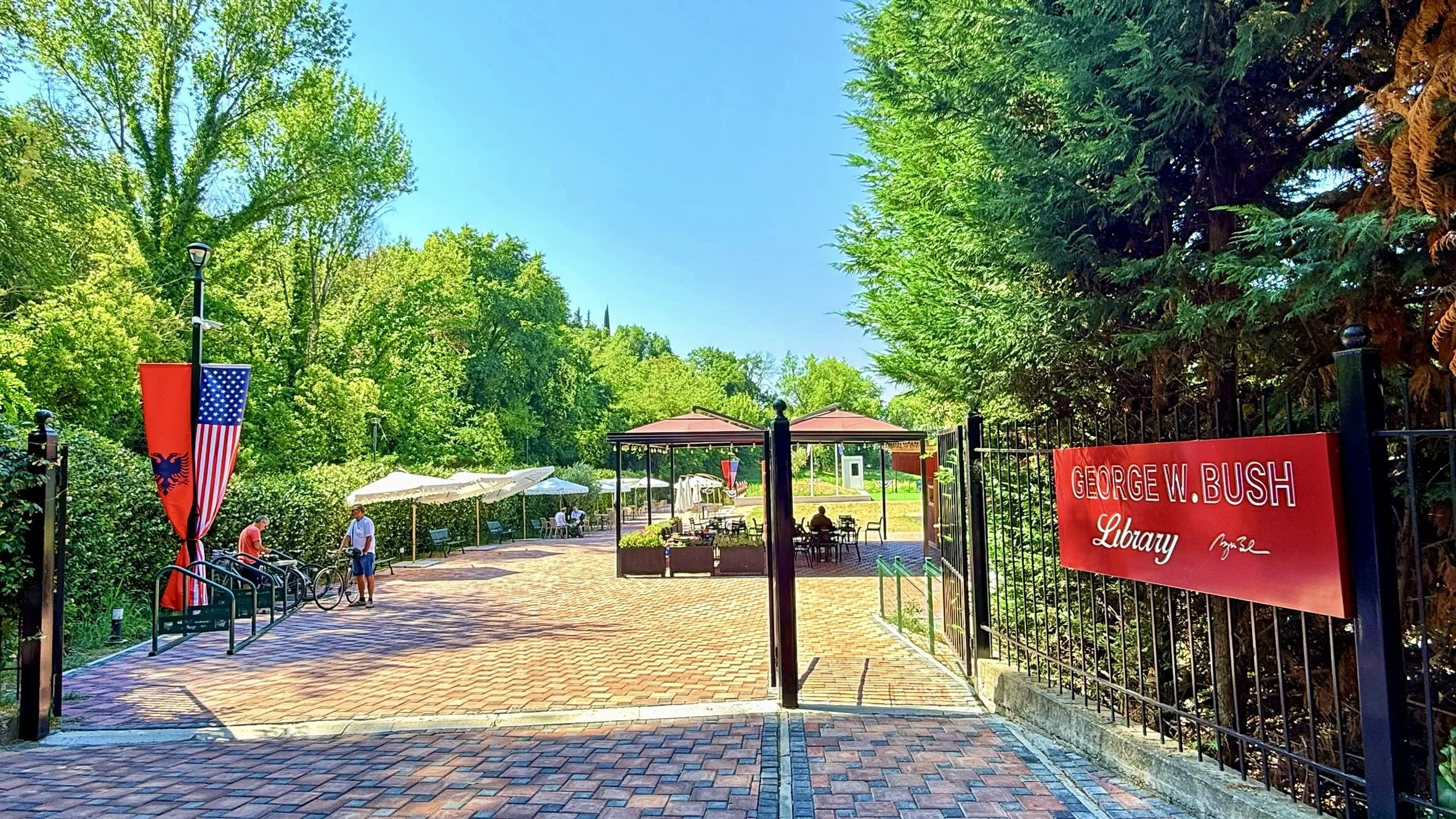
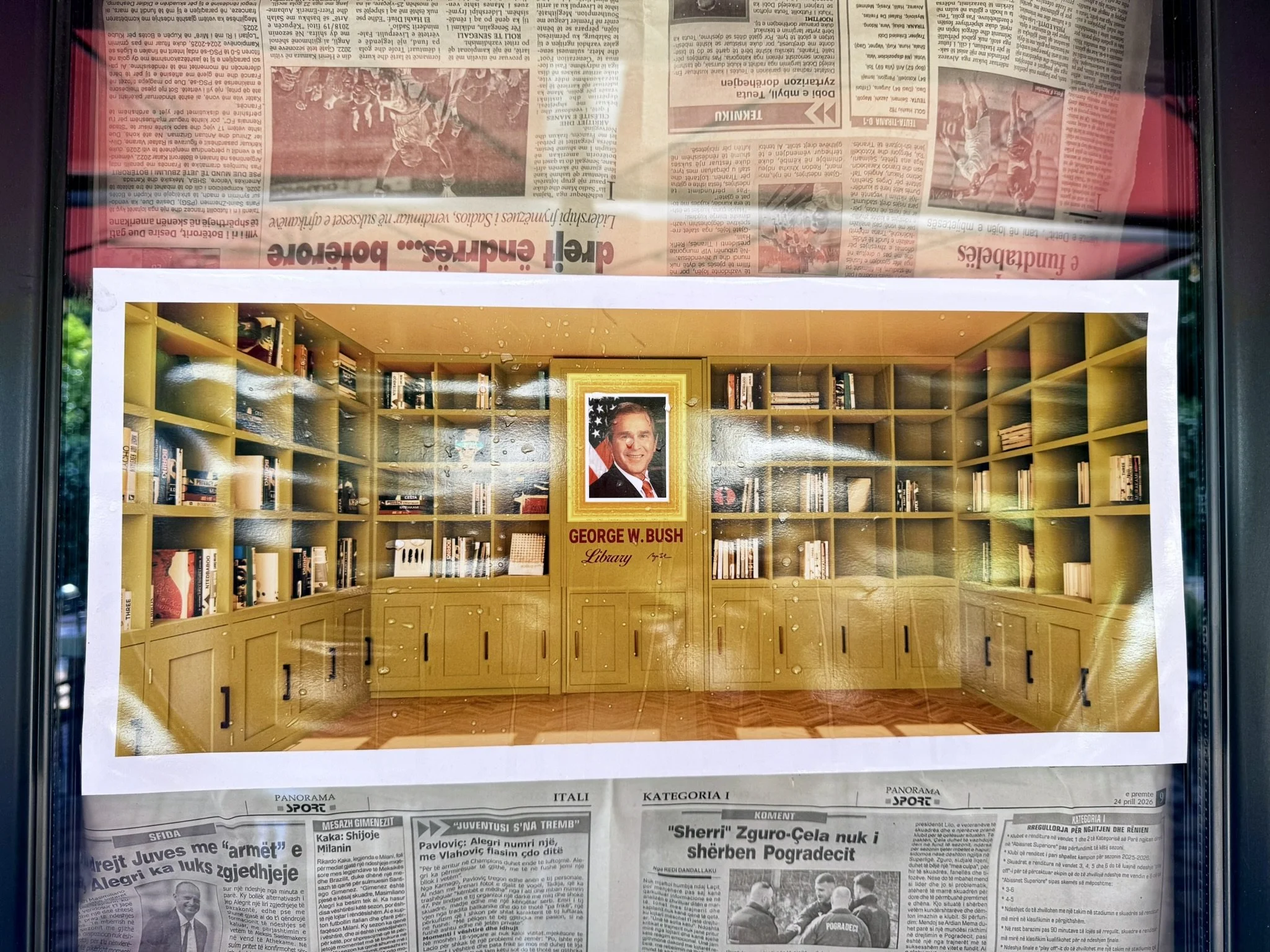
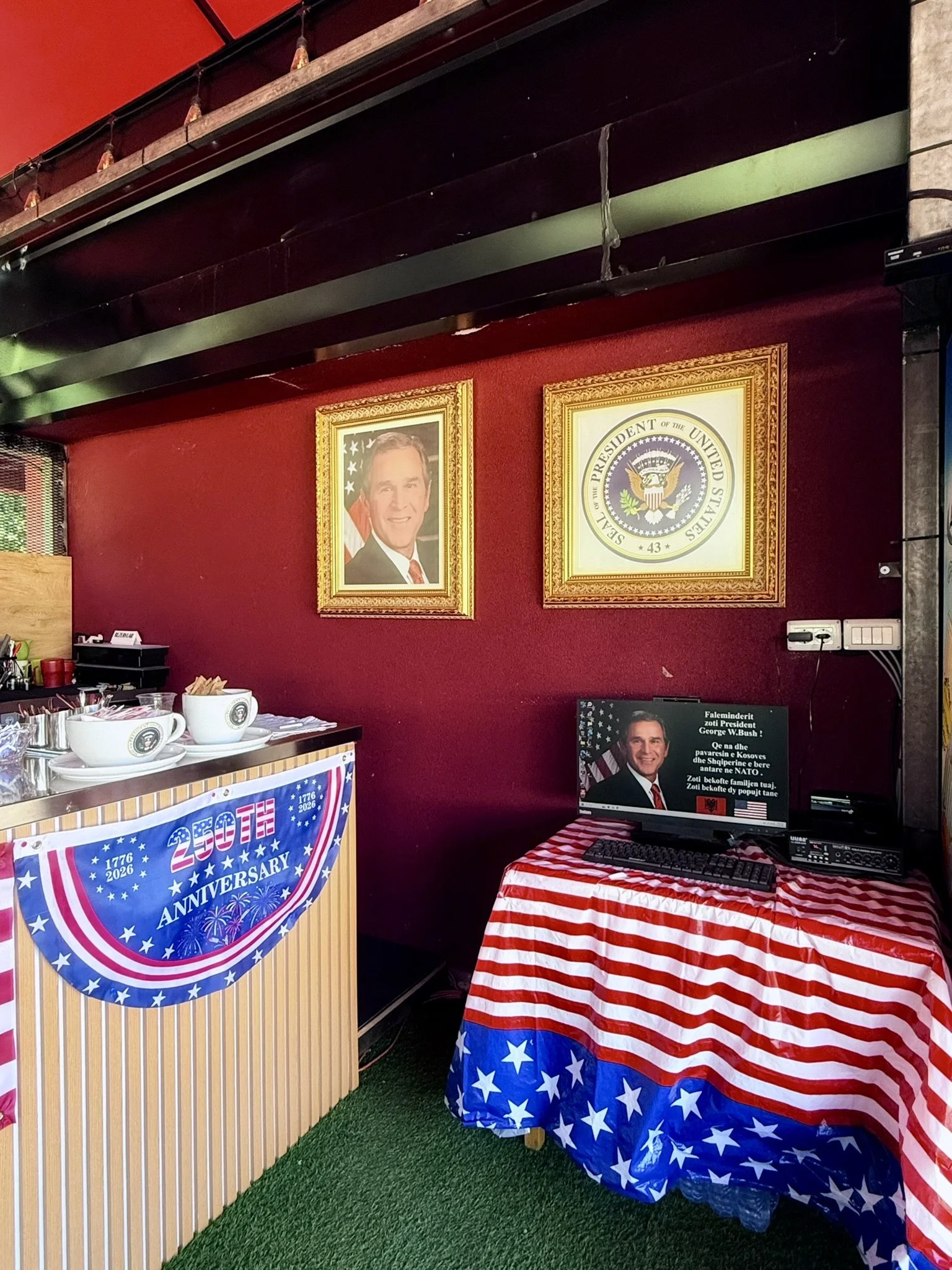
The visit was enormously significant, and many Albanians felt recognized and acknowledged by the international community. A library dedicated to Bush was later established inside Tirana's Lake Park.
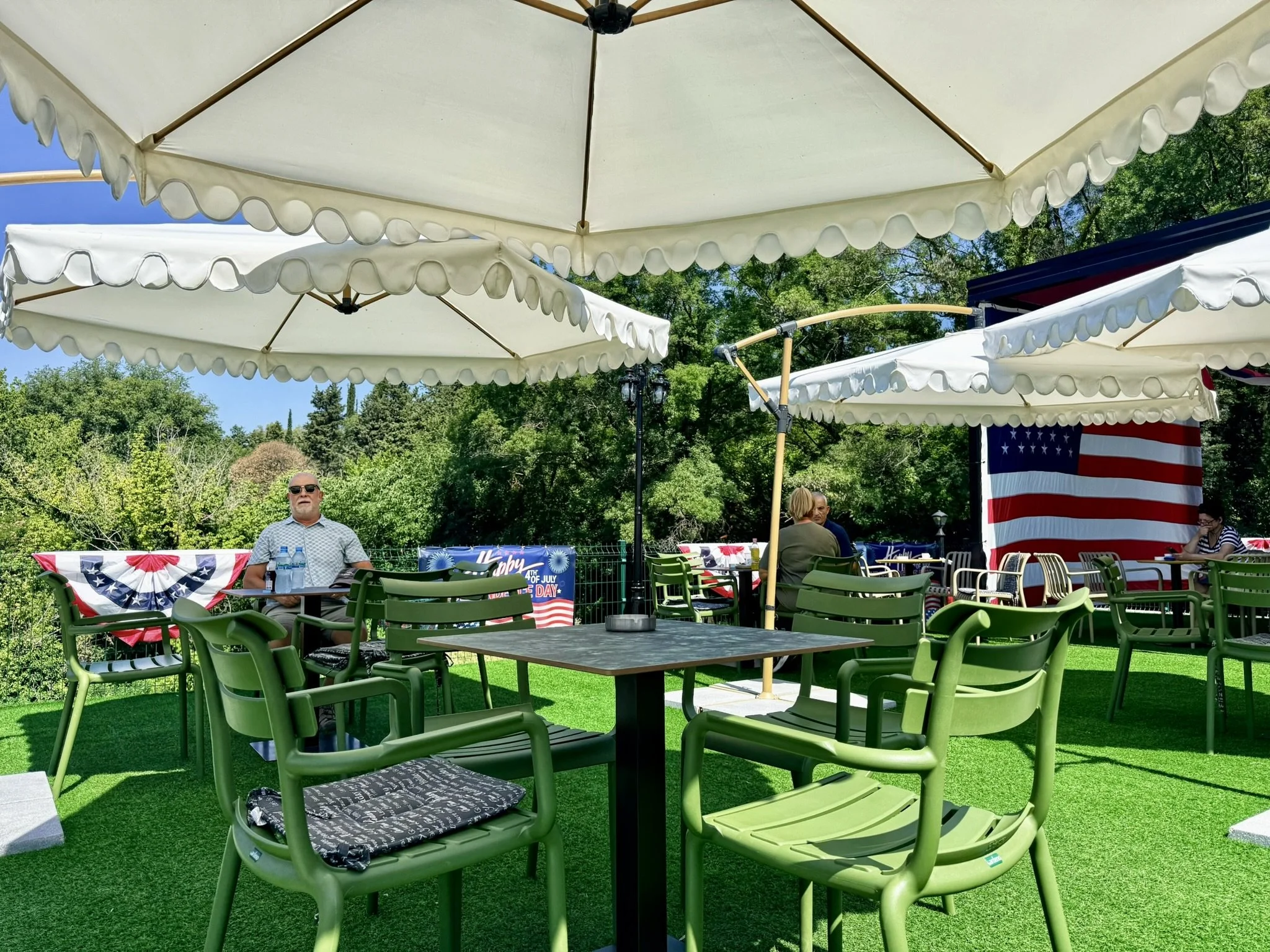
We stopped by to see it. Today, it's actually a pleasant café that still retains the signage and American flags. Our guess is that "W" probably wouldn't mind being replaced by coffee and pastries.
So...Where Exactly Is Albania?
Albania is a small mountainous and coastal nation in Southeastern Europe on the Balkan Peninsula.
Albanians trace their roots to the ancient Illyrians, and the Albanian language is one of Europe's oldest surviving languages. Its origins predate both the Roman Empire and many modern European languages.
Situated at the crossroads between East and West, Albania has long occupied strategically valuable territory. Romans, Byzantines, and Ottomans all ruled the region at various points in history, yet Albanians managed to preserve a distinct language and cultural identity throughout centuries of foreign domination.
The country's story includes periods of fierce resistance, dramatic isolation, and, more recently, an ambitious effort to integrate with Western Europe.
The North Korea of Europe
For much of the twentieth century, Albania was one of the world's most isolated countries.
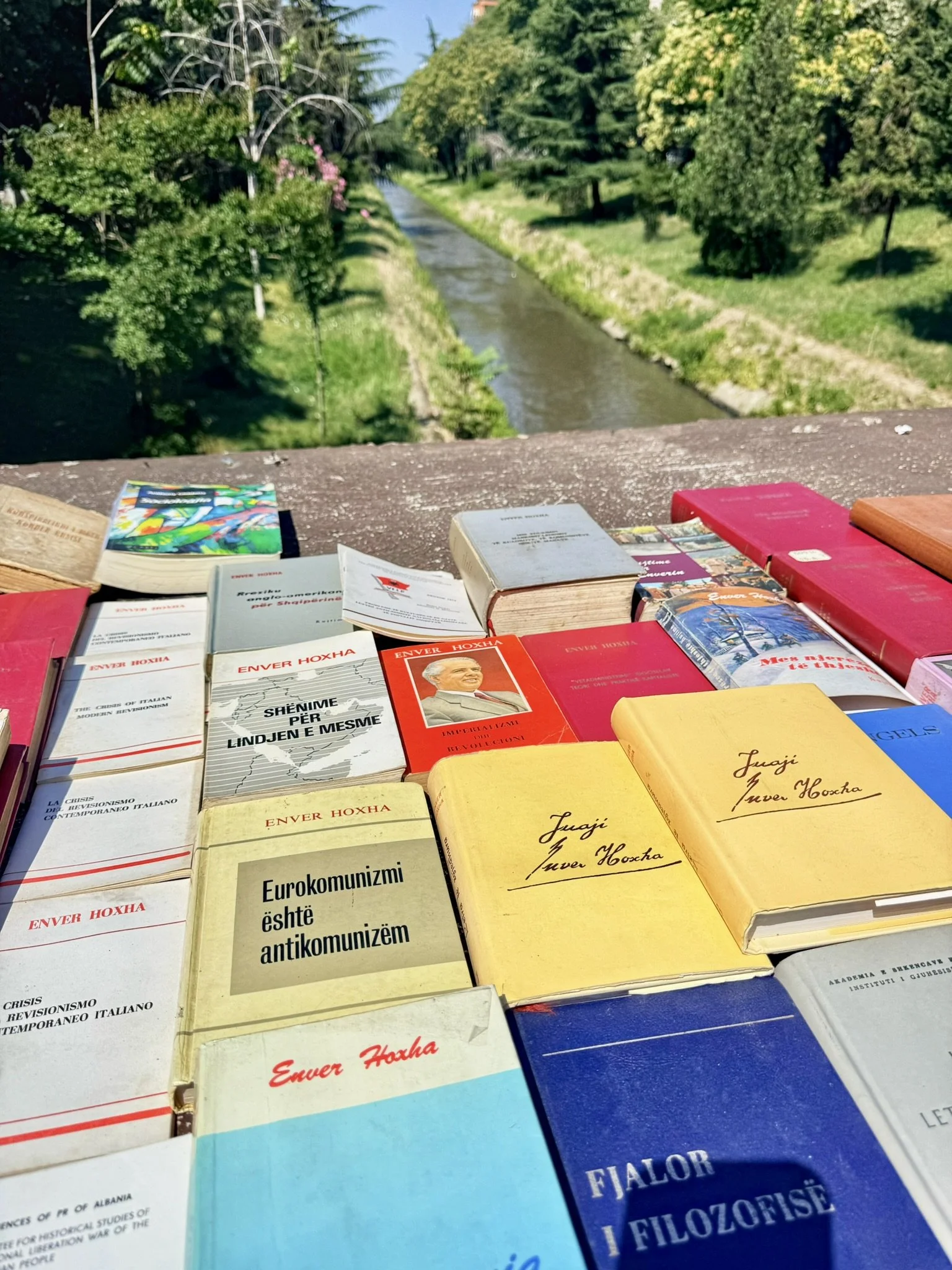
During World War II, Albania was occupied first by Fascist Italy and later by Nazi Germany. After the war, communist partisans seized power, eventually establishing a harsh Stalinist dictatorship under Enver Hoxha.
Over time, Albania broke ties not only with the West but also with the Soviet Union and later China, leaving the country almost completely isolated from the outside world.
In 1967, Hoxha declared Albania an atheist state and banned all religious practice.
The list of ways to become an "enemy of the state" was long. Wearing blue jeans, growing your hair too long, listening to foreign music, or expressing the wrong opinion could attract unwanted attention from the secret police, known as the Sigurimi. Citizens were encouraged to inform on one another, creating an atmosphere of fear and suspicion.
For nearly five decades, Albania was often described as the "North Korea of Europe."
Following Hoxha's death in 1985, economic collapse and mass protests eventually brought down the communist regime in 1991-1992.
Since then, Albania has transformed itself into a parliamentary republic, joined NATO in 2009, and continues pursuing membership in the European Union. Tourism has become one of the country's most important industries, helping connect Albania's rich history and stunning coastline to the wider world.
Tirana: A Capital Reinvented
Understanding Albania's difficult past makes Tirana's transformation all the more impressive.
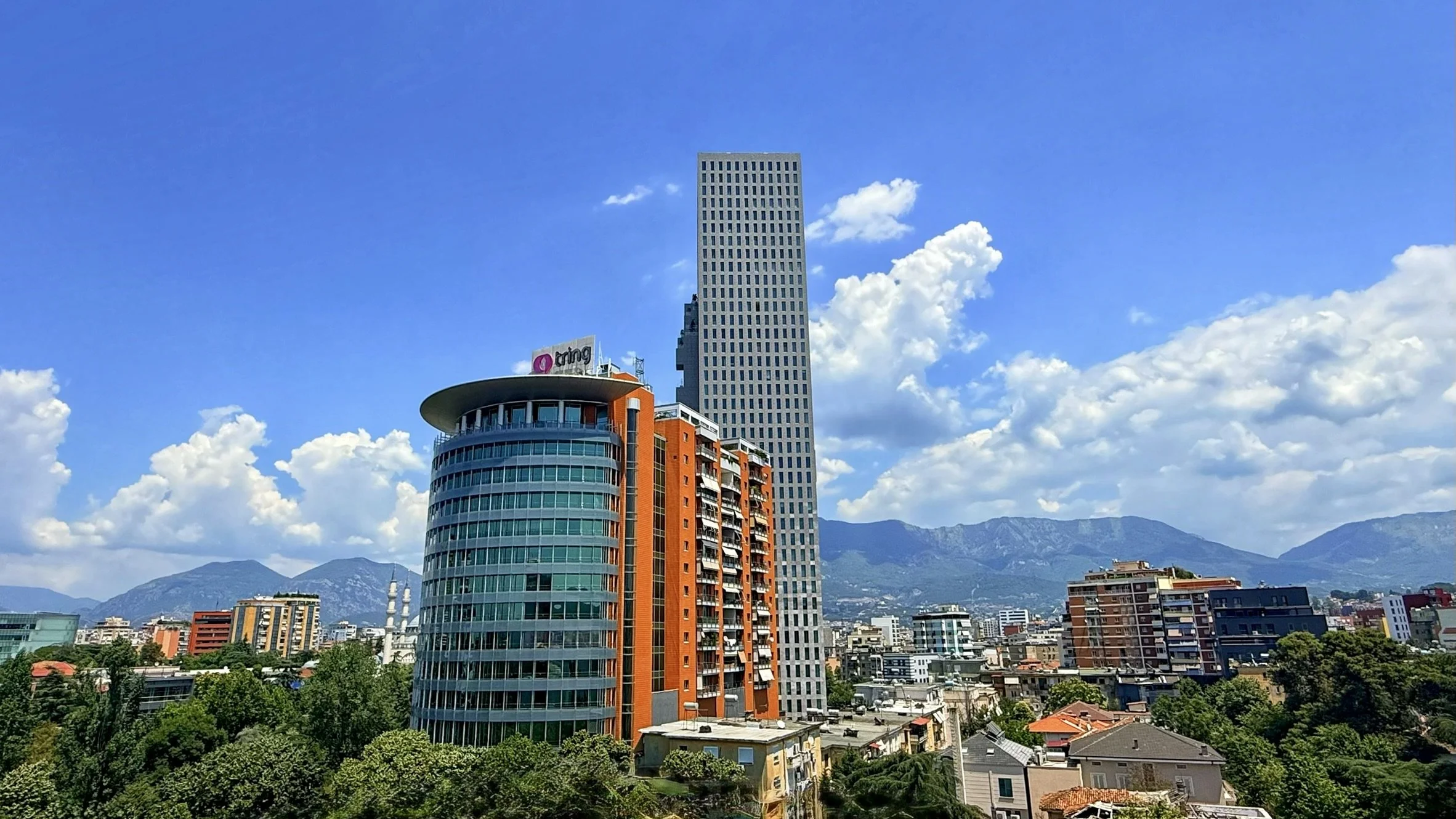
The city has served as Albania's capital since 1920, and its architecture tells the story of the country's evolution. Ottoman influences, Italian-designed boulevards, austere communist structures, and striking contemporary architecture all coexist within the same cityscape.
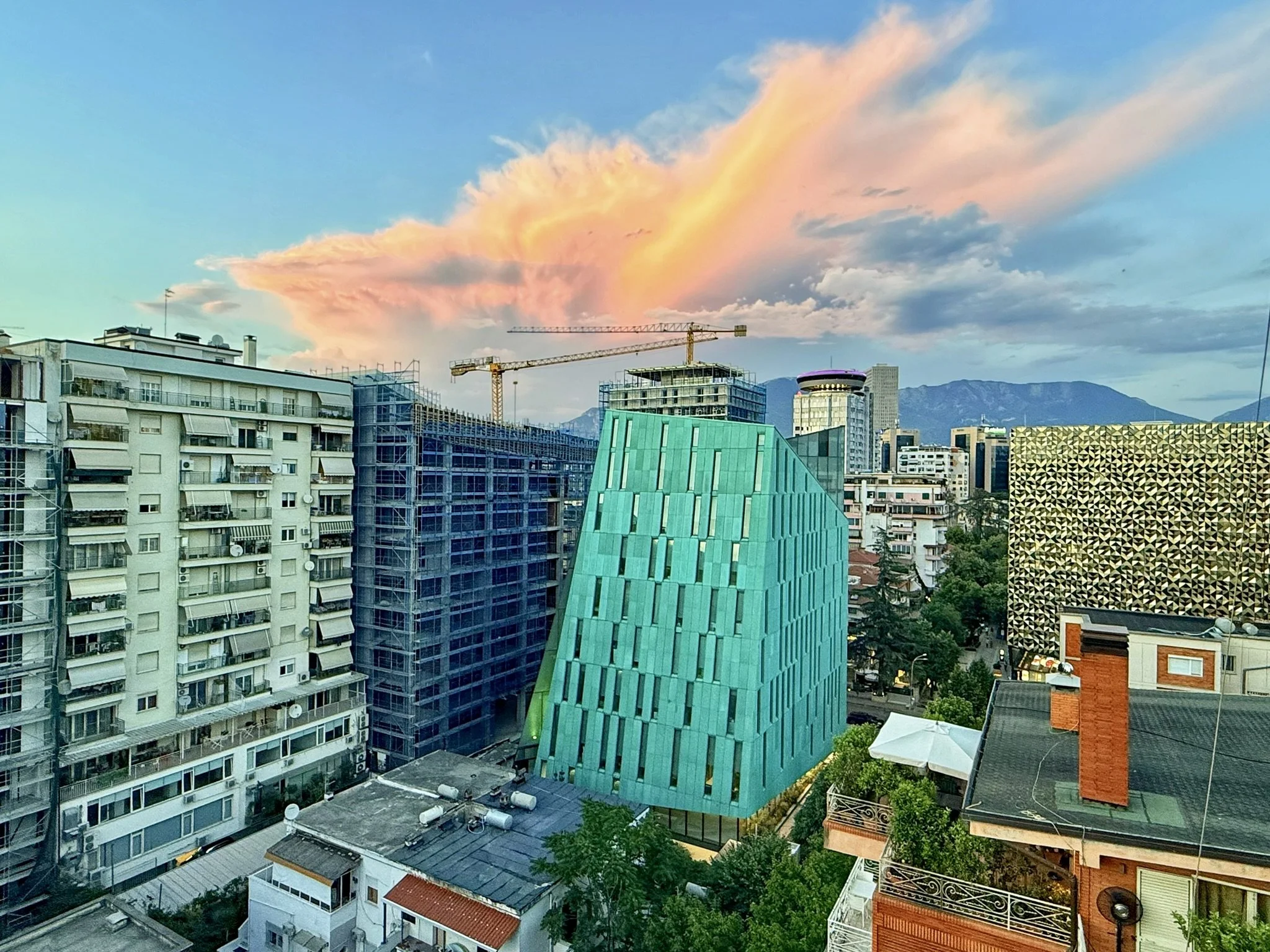
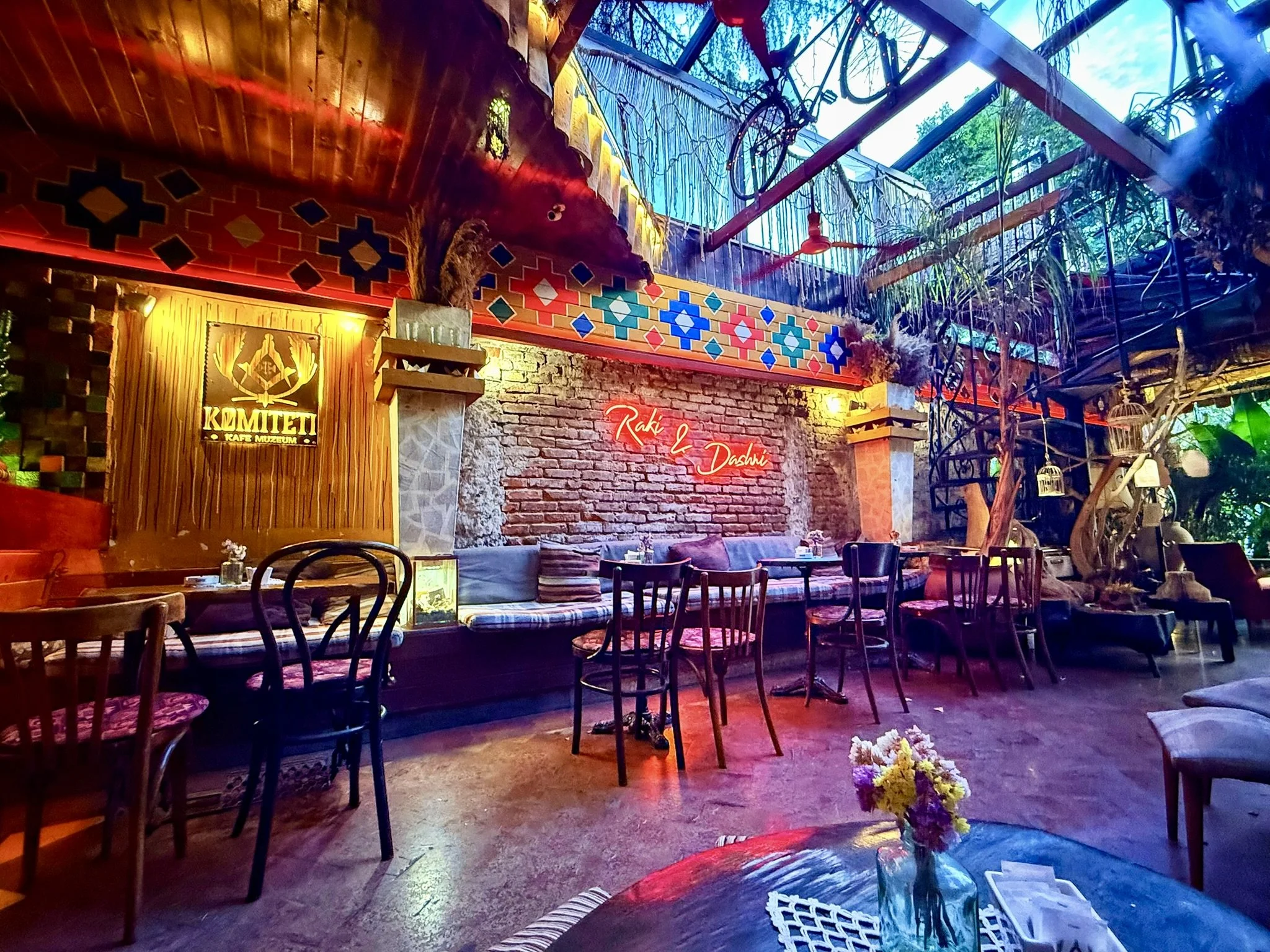
What surprised us most was how modern, vibrant, and livable Tirana feels. Creative new buildings are rising across the skyline, public spaces are thriving, and the city feels full of energy and optimism.
Yesterday, we completed a self-guided walking tour of Tirana and will share our favorite discoveries in a future post.
A Couple of Fun Facts
Yes Means No (and Vice Versa): In Albania, a vertical nod often means "no," while a horizontal head shake can mean "yes." As you can imagine, we've already confused several restaurant servers during our first two days here.
No McDonald's: Albania is one of the few countries in the world without a single McDonald's location. However, KFC has happily stepped in to fill the fried chicken void, introducing a fast-food tradition that wasn't historically part of Albanian cuisine.
We're not sure whether that's progress or simply globalization doing its thing.
