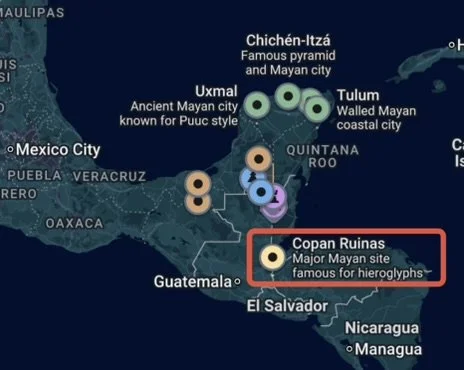
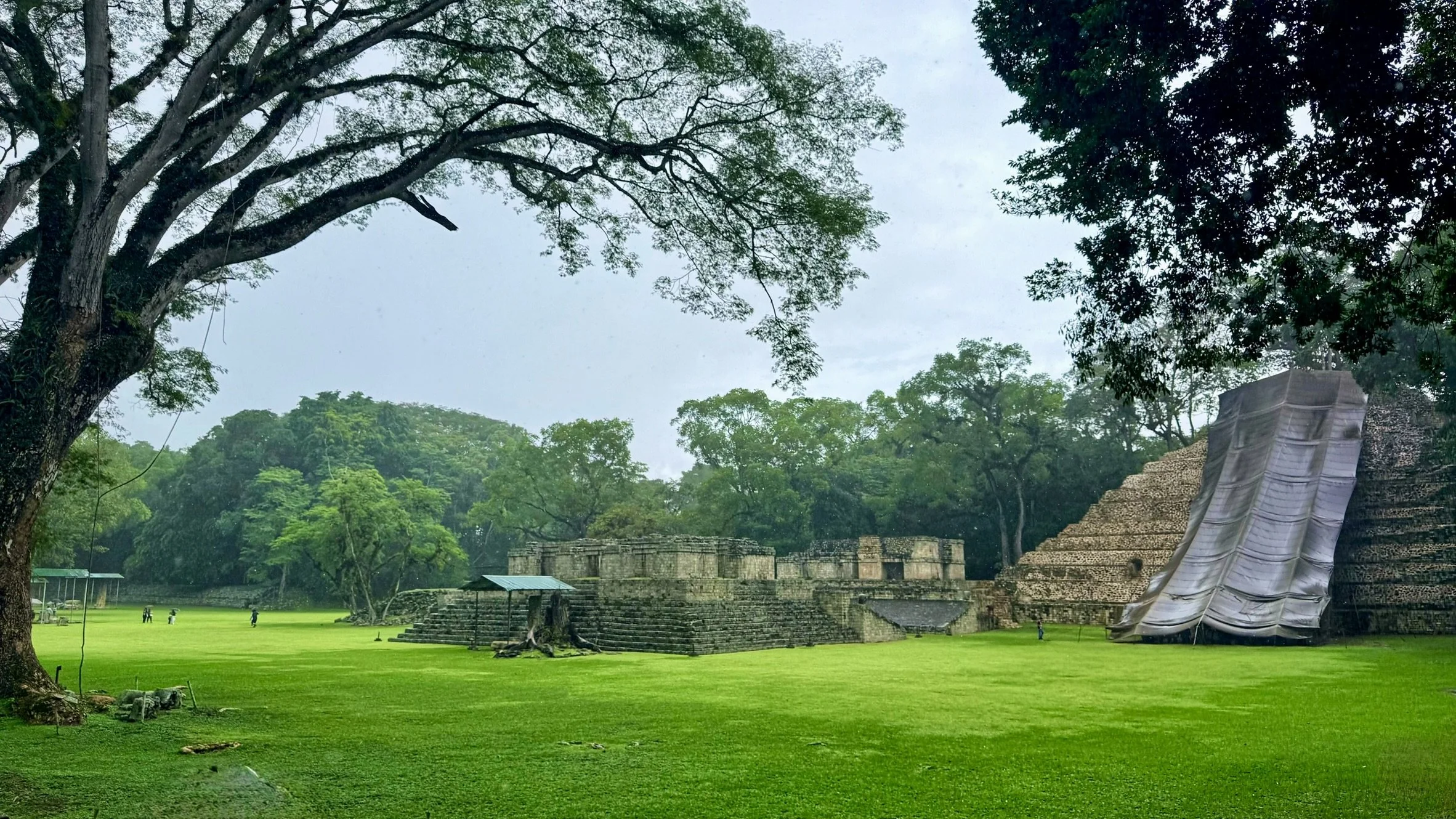
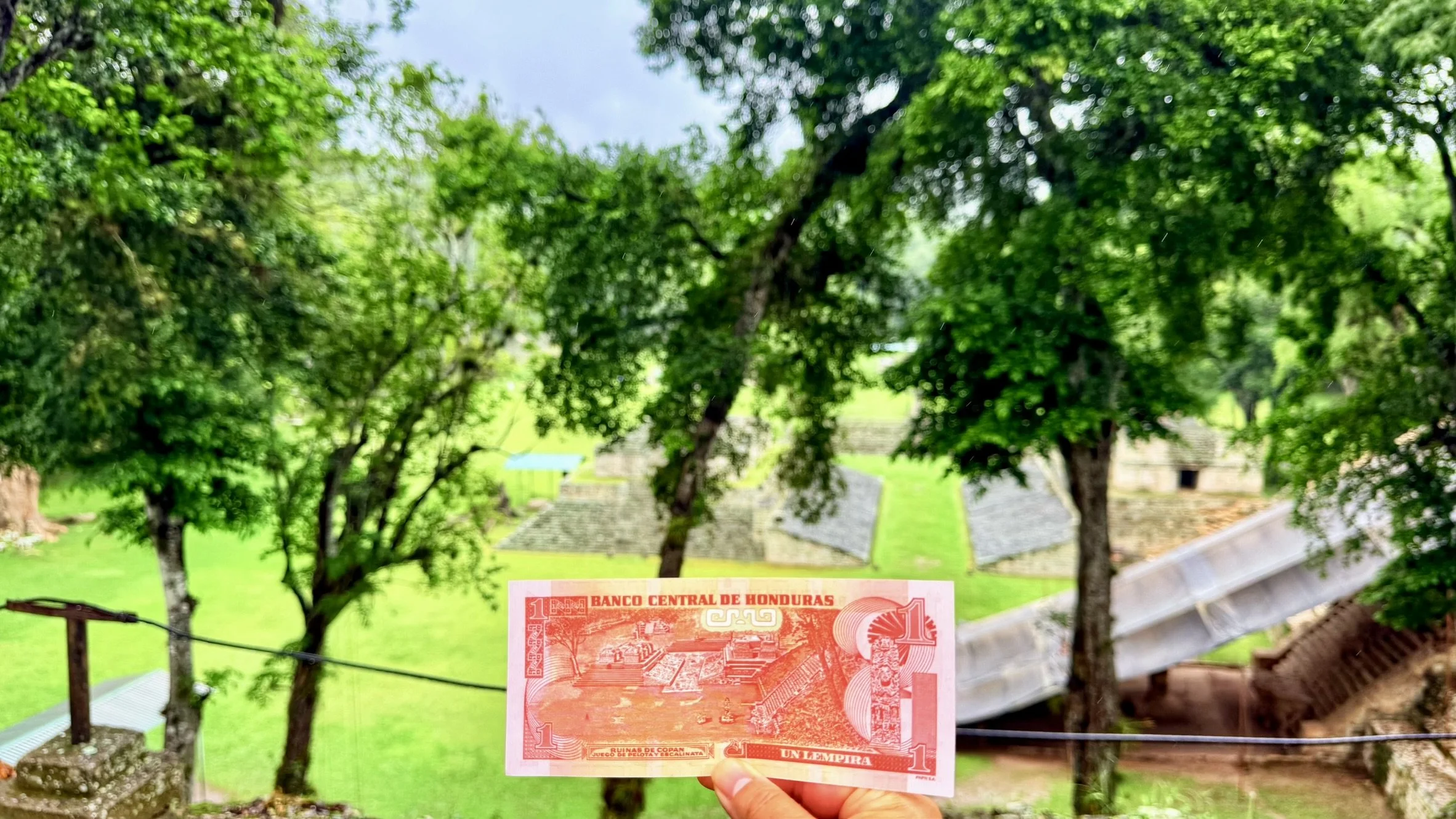
The remote Maya ruins of Copán, along with the namesake town of Copán Ruinas, lie in western Honduras, just 15 minutes from the Guatemalan border. The site is often described as one of the country’s top tourist attractions after Roatán, which might lead you to assume there are hordes of visitors. There weren’t.
We practically had the place to ourselves. After many days of being the only foreigners around since leaving Tegucigalpa, it was a novelty to spot another group of gringos. So much for the tourist crowds!
Copán Ruinas — Vieja (Old)
Getting to Copán is no small undertaking, but we were determined to explore the remains of this once-powerful Maya kingdom, often dubbed the “Paris of the Maya world” for its extraordinary artistry and elaborate stone carvings.
Our advice? Hire a guide. You’ll get so much more out of the experience with someone who can explain the history, decode the symbolism, and connect the dots between the ruins. We spent about 1.5–2 hours with Francisco, who was fantastic. You can contact him directly on WhatsApp at +504 9595 6134.
Bonus points if you’re a Florida Gators fan: Francisco had spent some time in Florida and was wearing a Gators shirt. The funny part? He had absolutely no idea what the logo meant. 😂
The Paris of the Maya World
Copán flourished in a fertile river valley during the Classic Period (roughly 250–900 CE), becoming one of the most important Maya kingdoms in the southern part of the Maya world. The region’s relatively soft stone allowed its artisans to create remarkably intricate sculptures, elaborate stelae, and detailed hieroglyphic inscriptions. The result is some of the finest surviving Maya stonework anywhere.
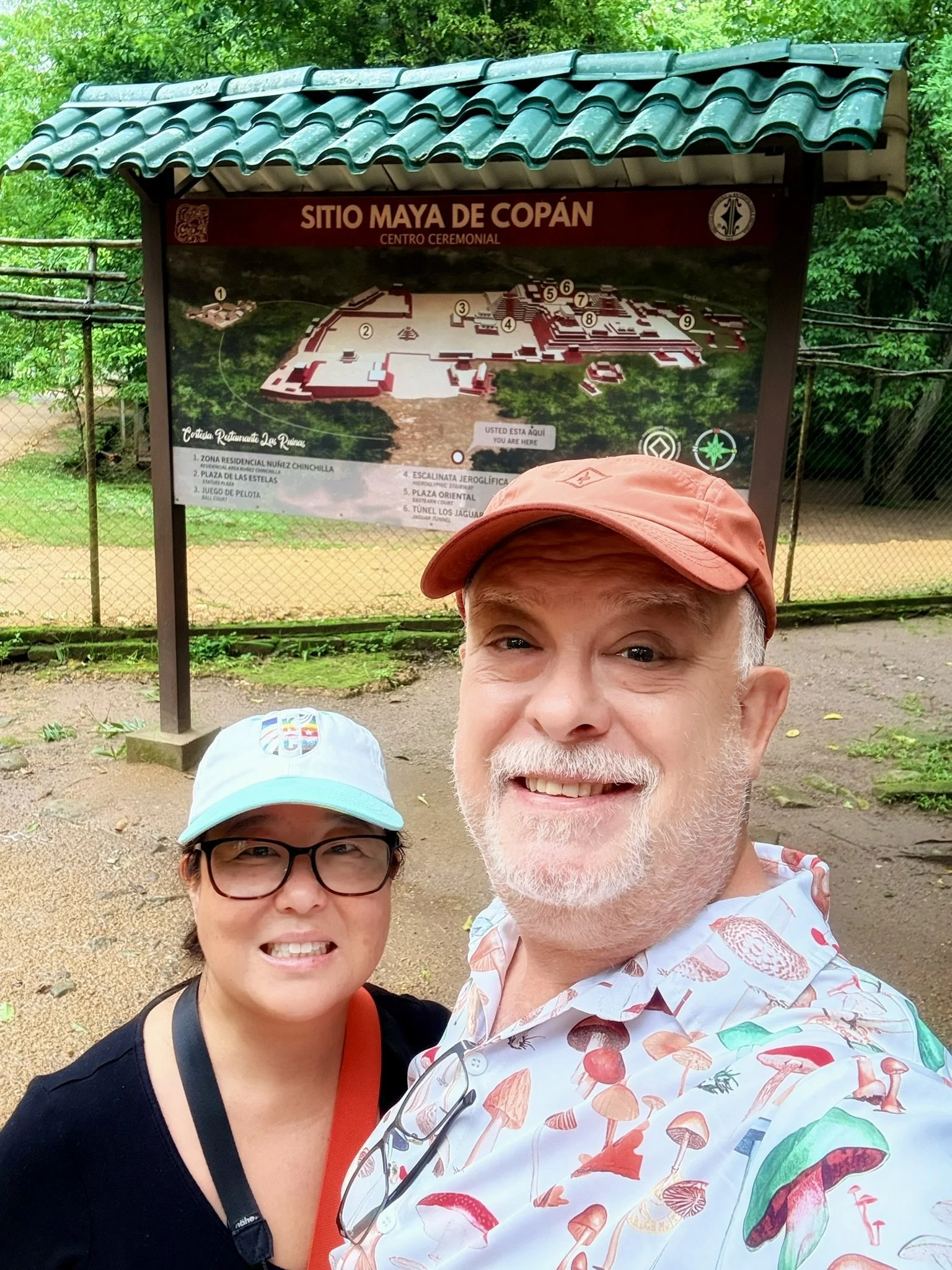
Here are some of the highlights.
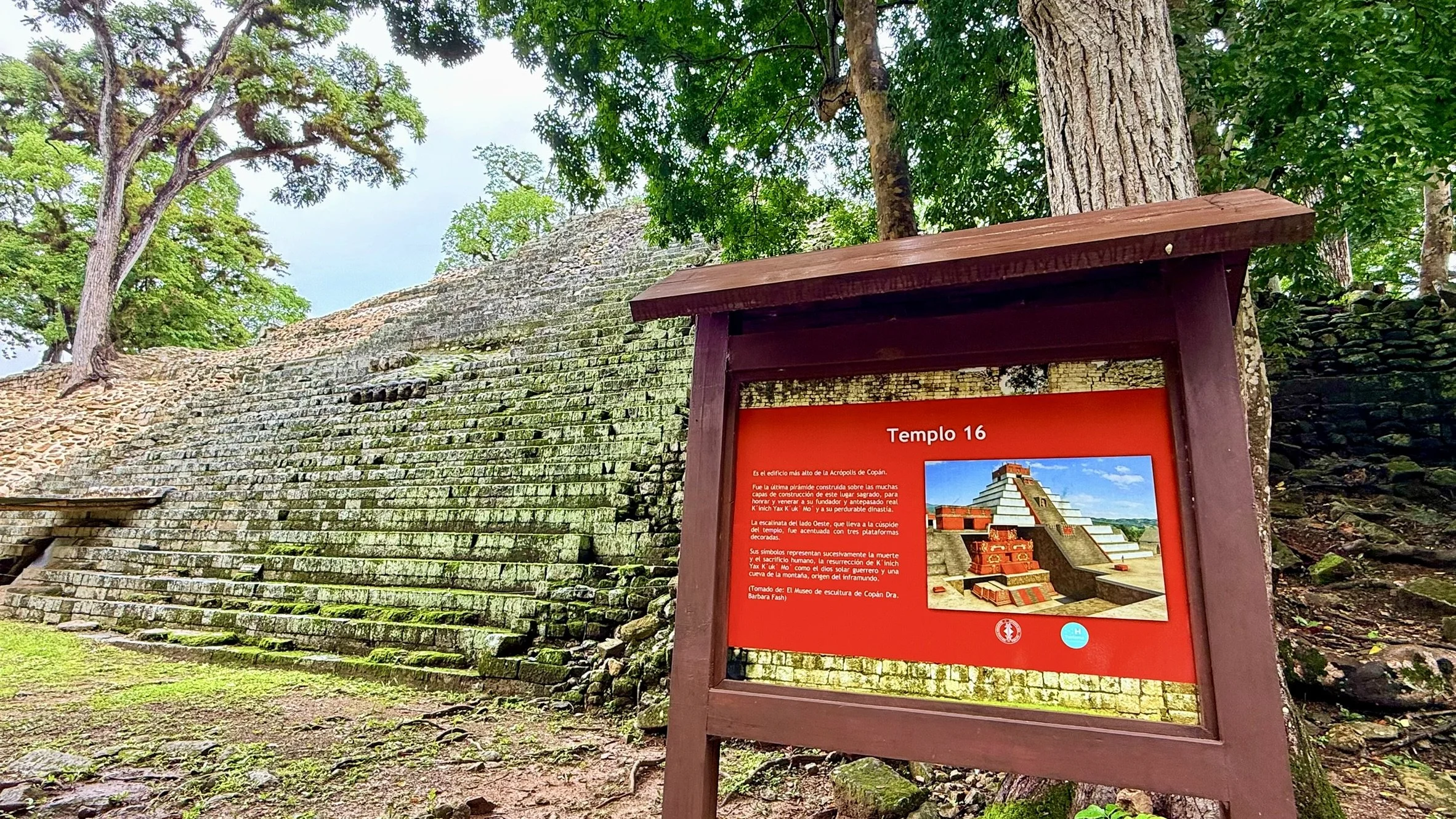
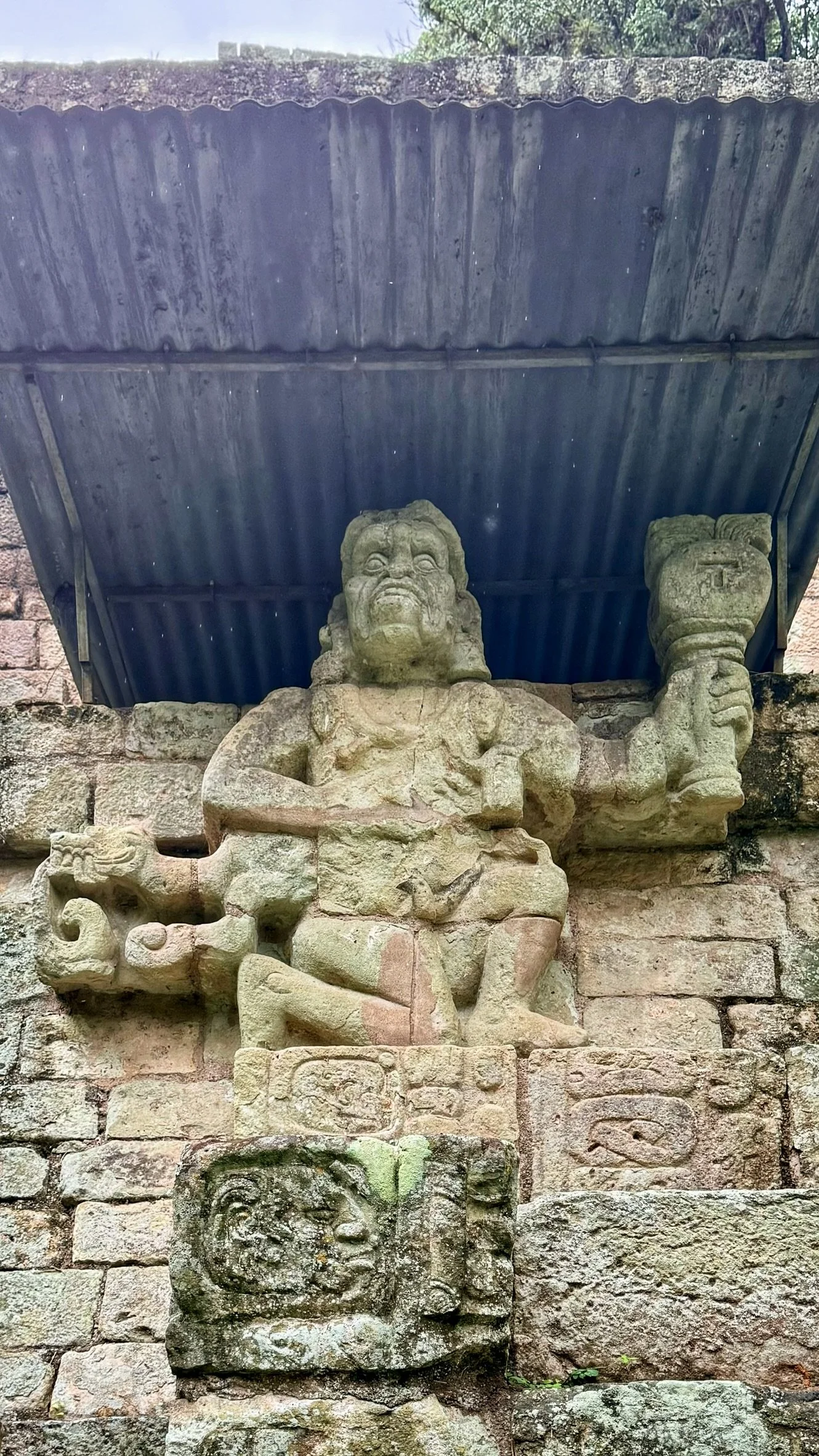
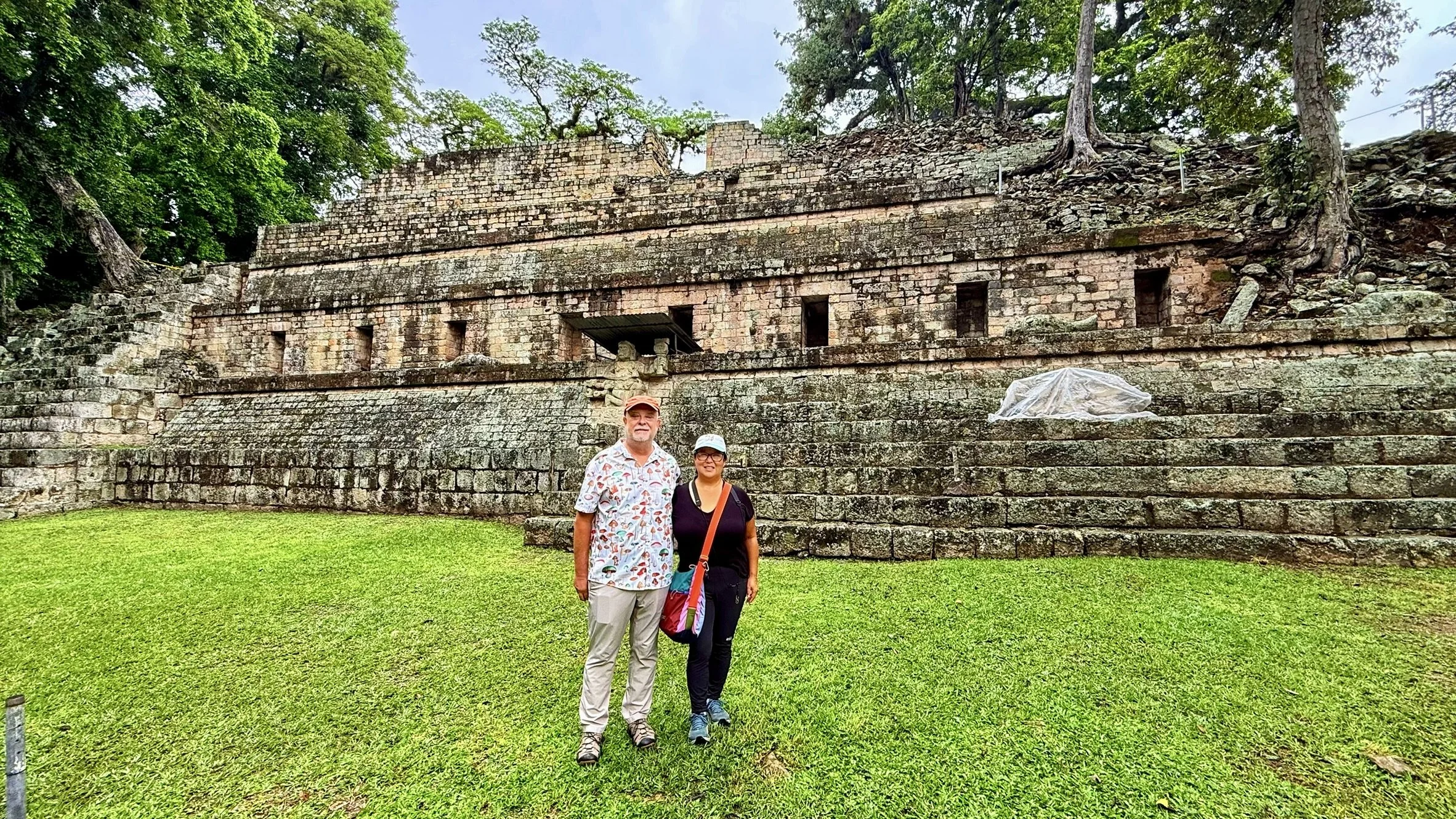
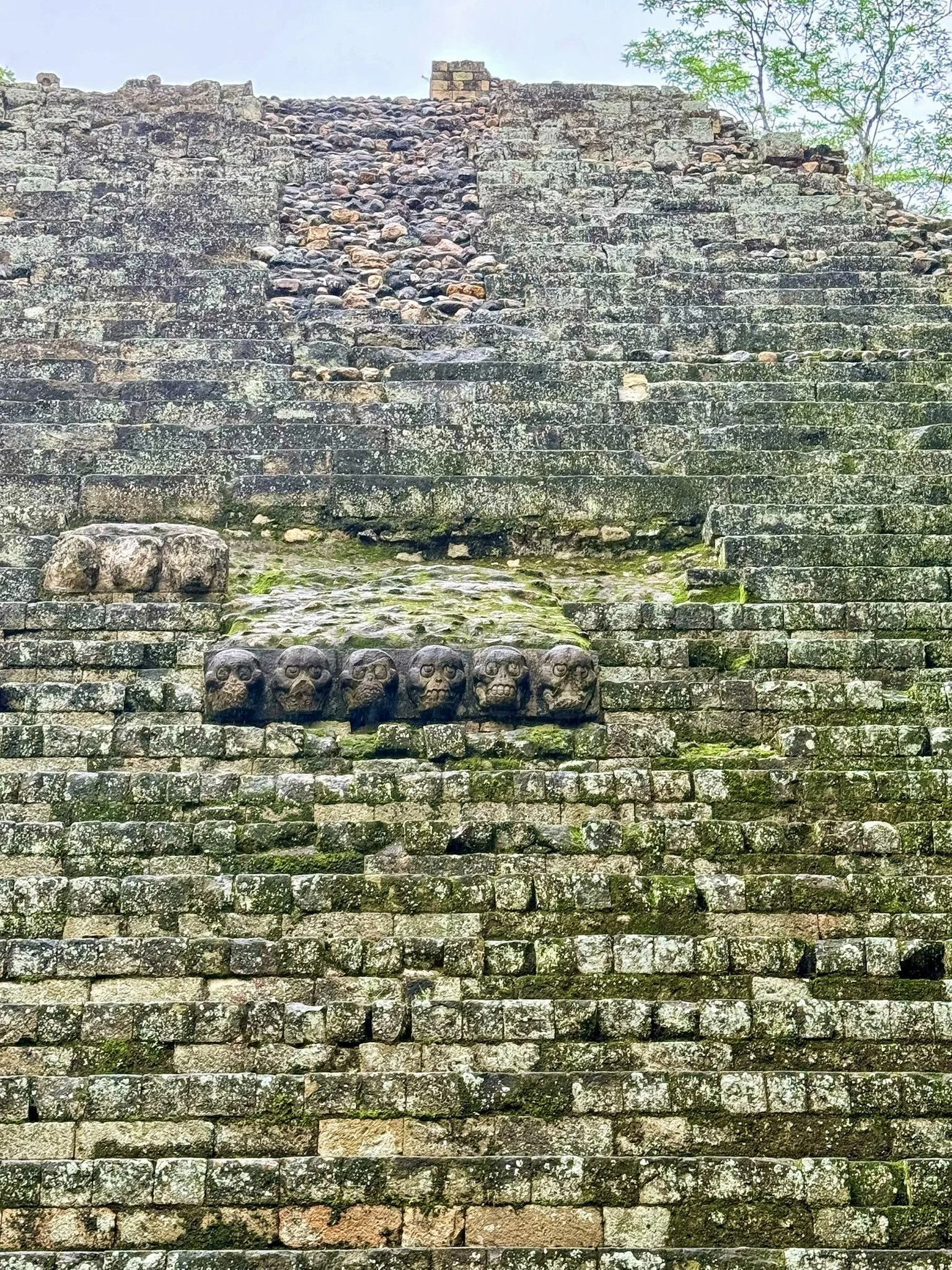
The Hieroglyphic Stairway
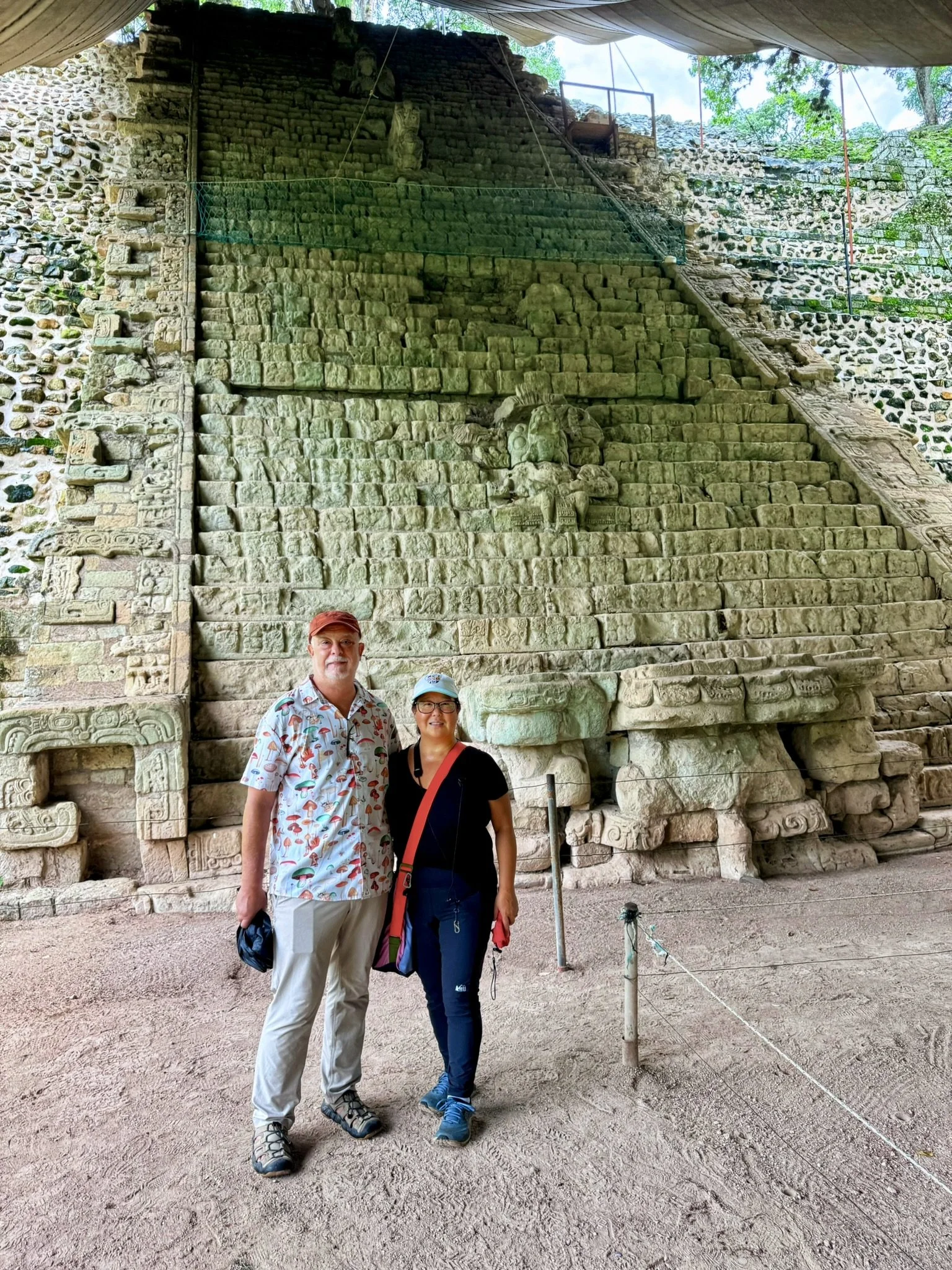
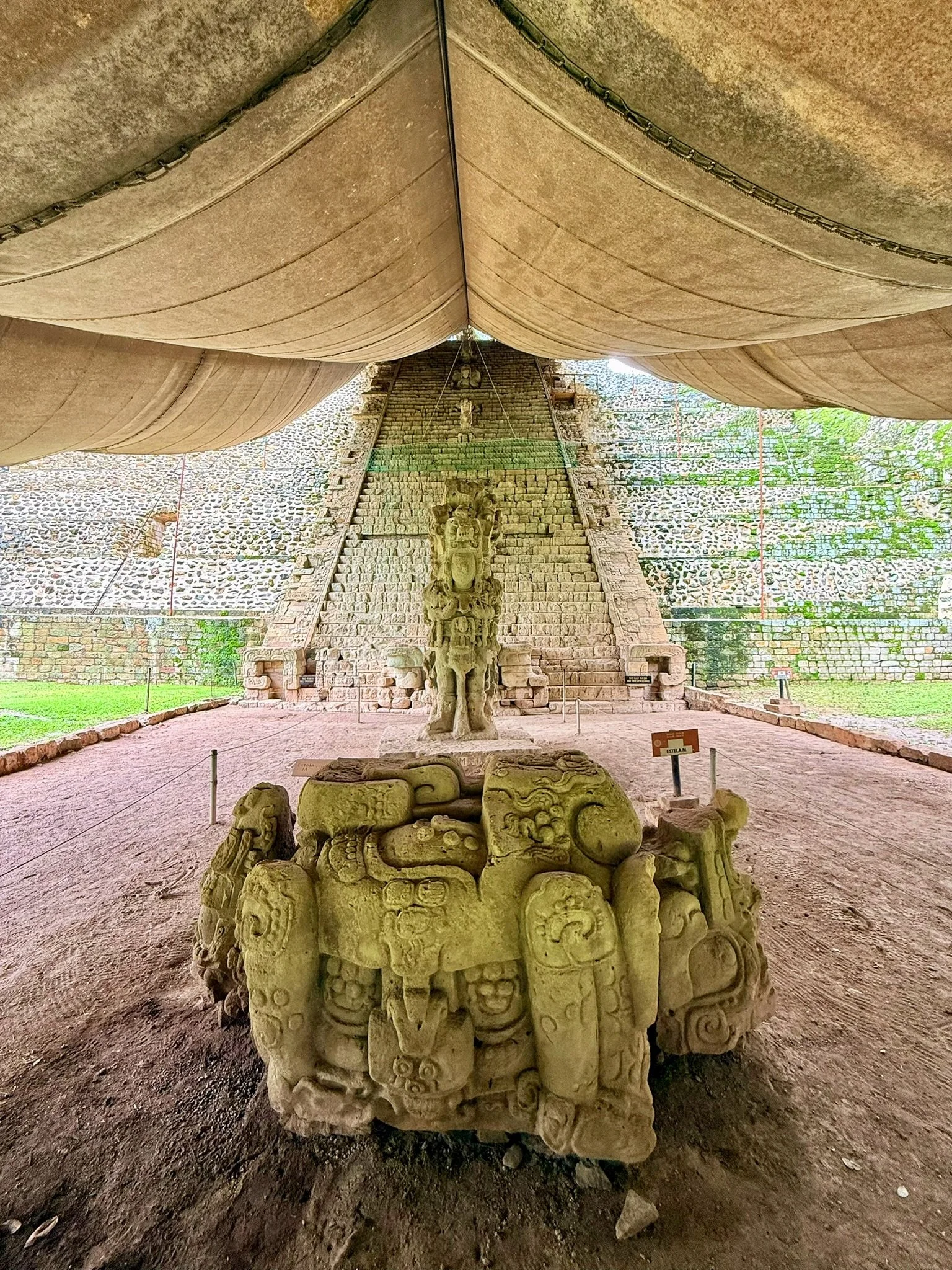
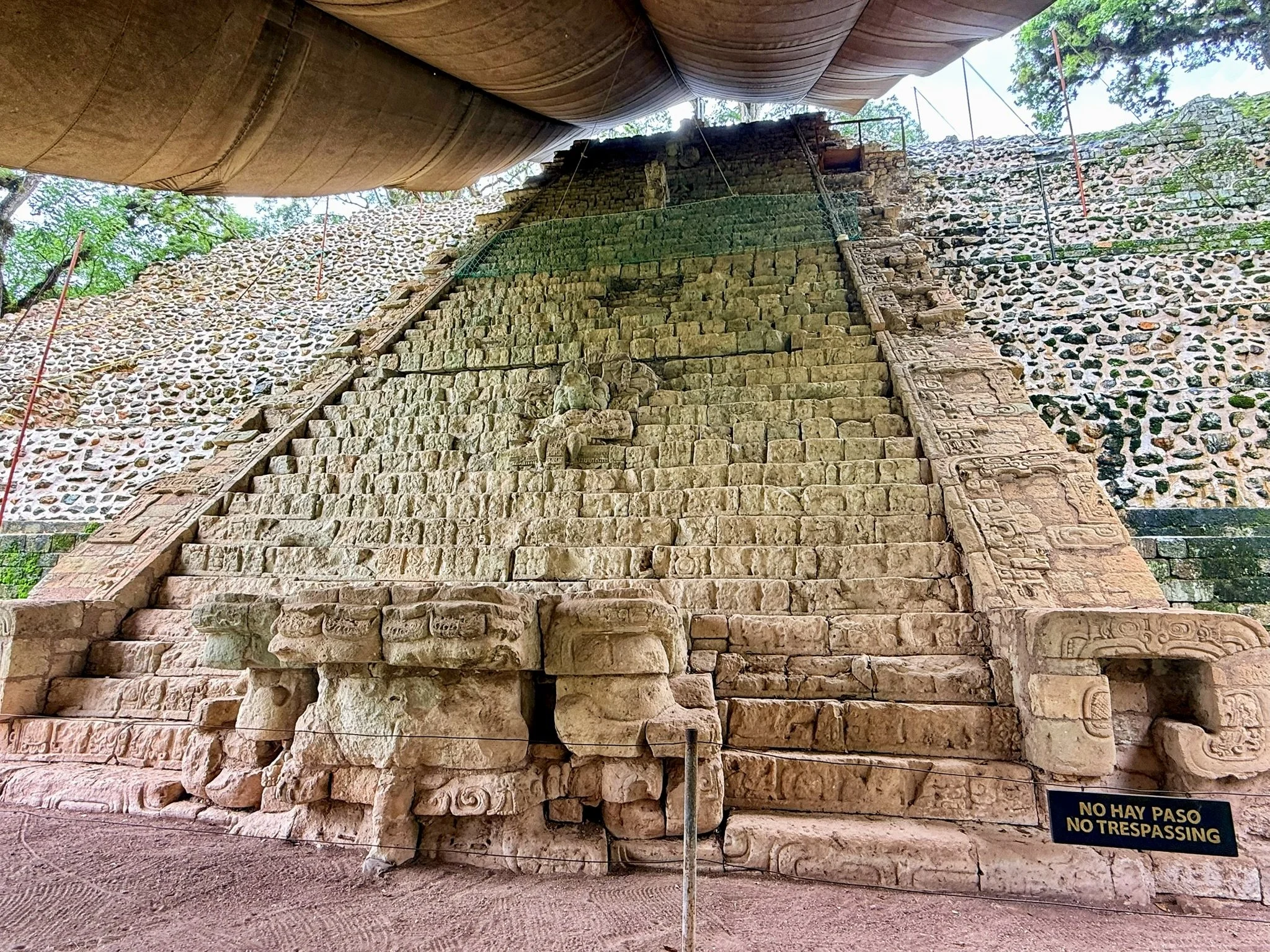
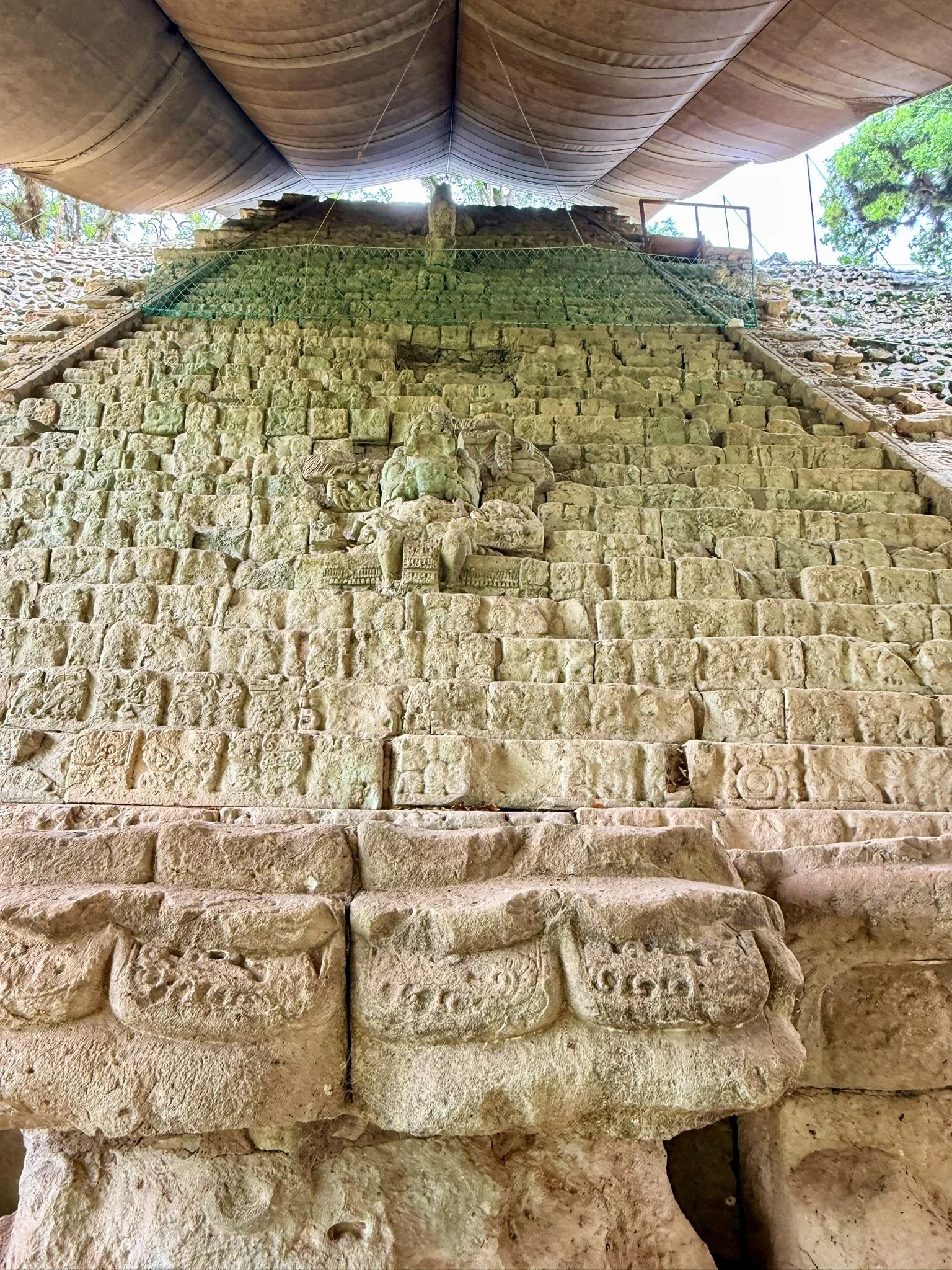
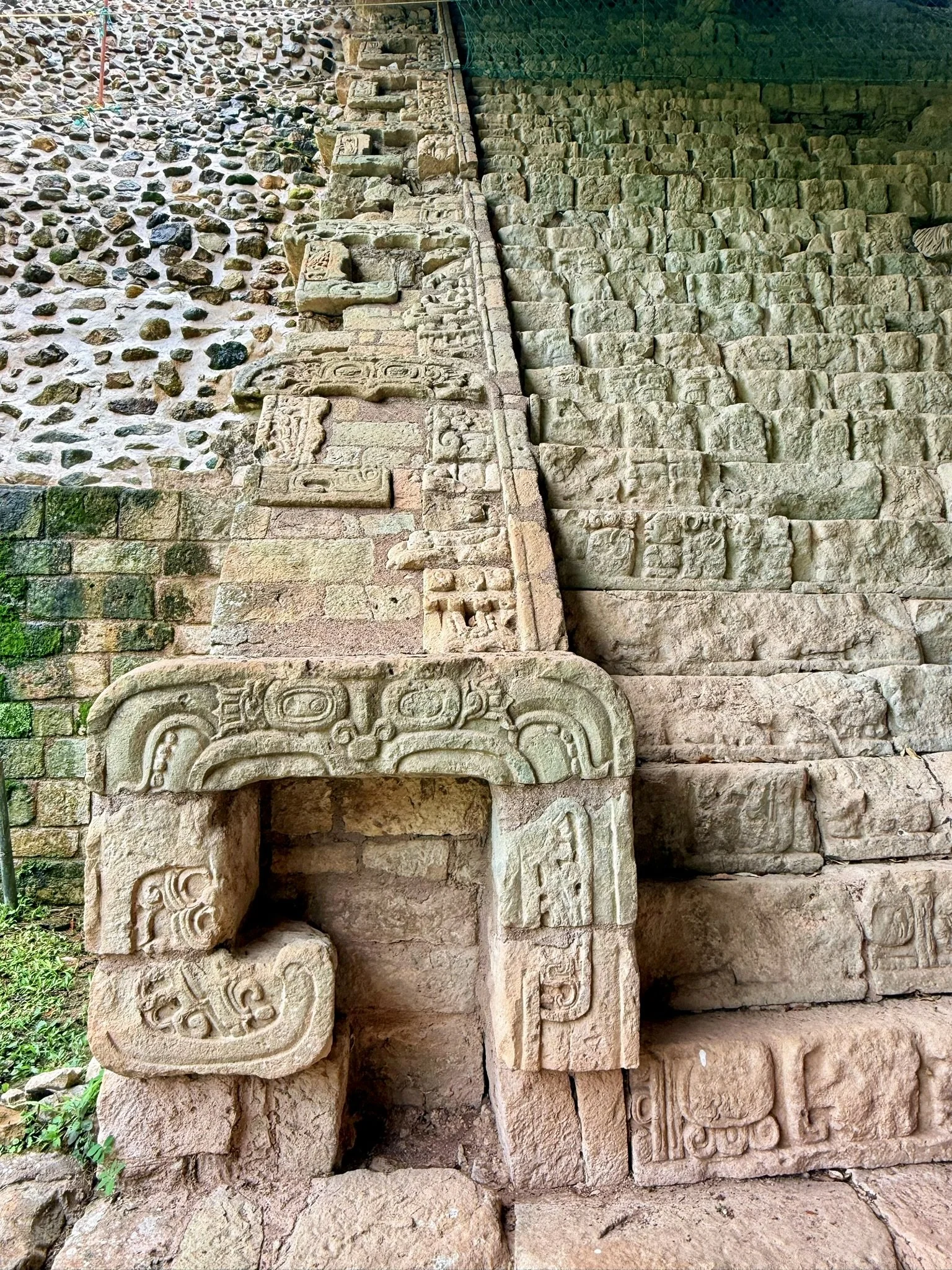
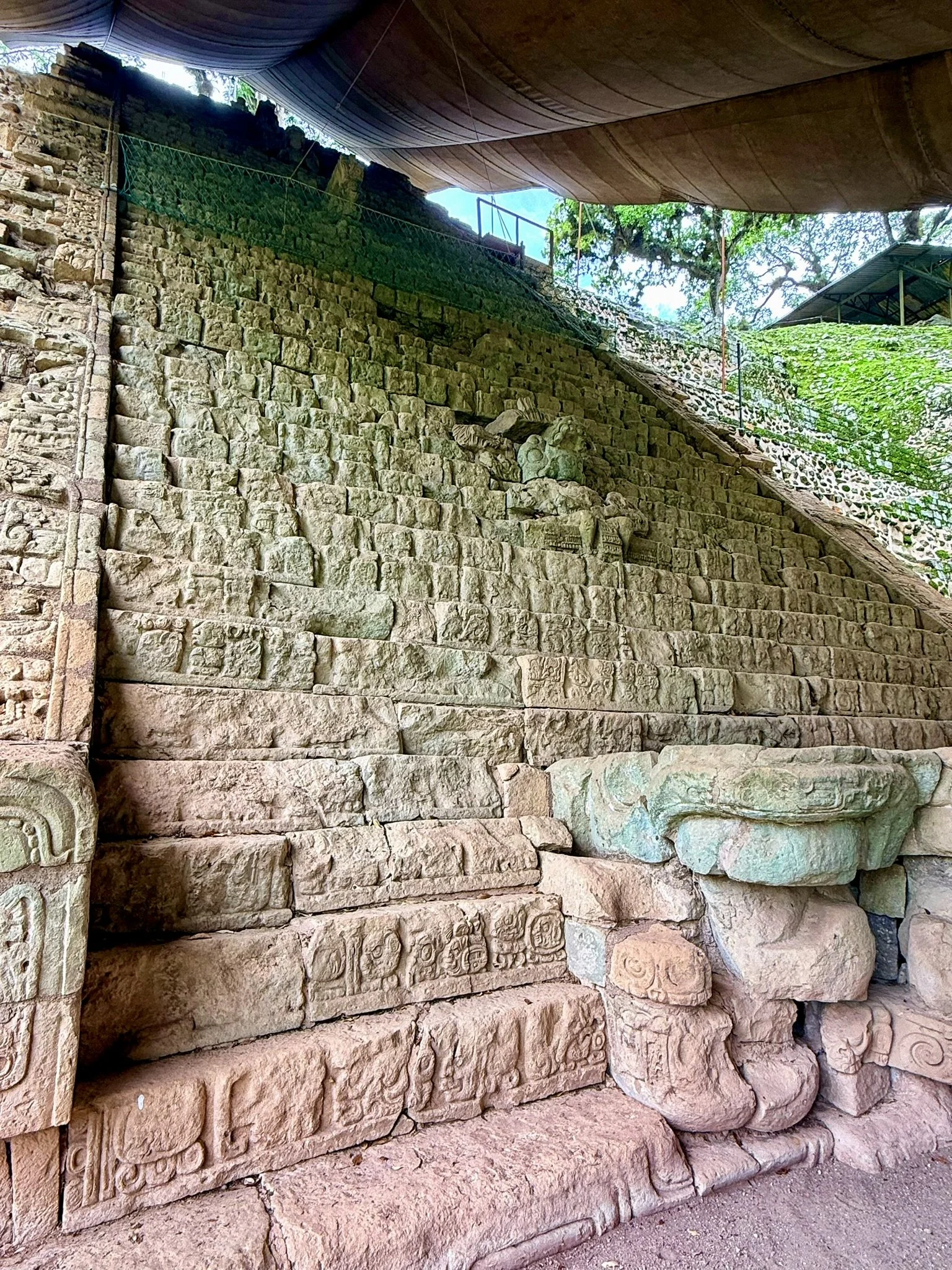
The site’s most famous feature is the Hieroglyphic Stairway (one very long history lesson, carved in stone), a monumental staircase whose steps bear more than 1,800 glyphs. It contains the longest known Maya hieroglyphic inscription, chronicling the dynastic history of Copán’s rulers. Imagine trying to keep track of an entire royal family tree without a spreadsheet!
The Great Plaza — A Forest of Kings
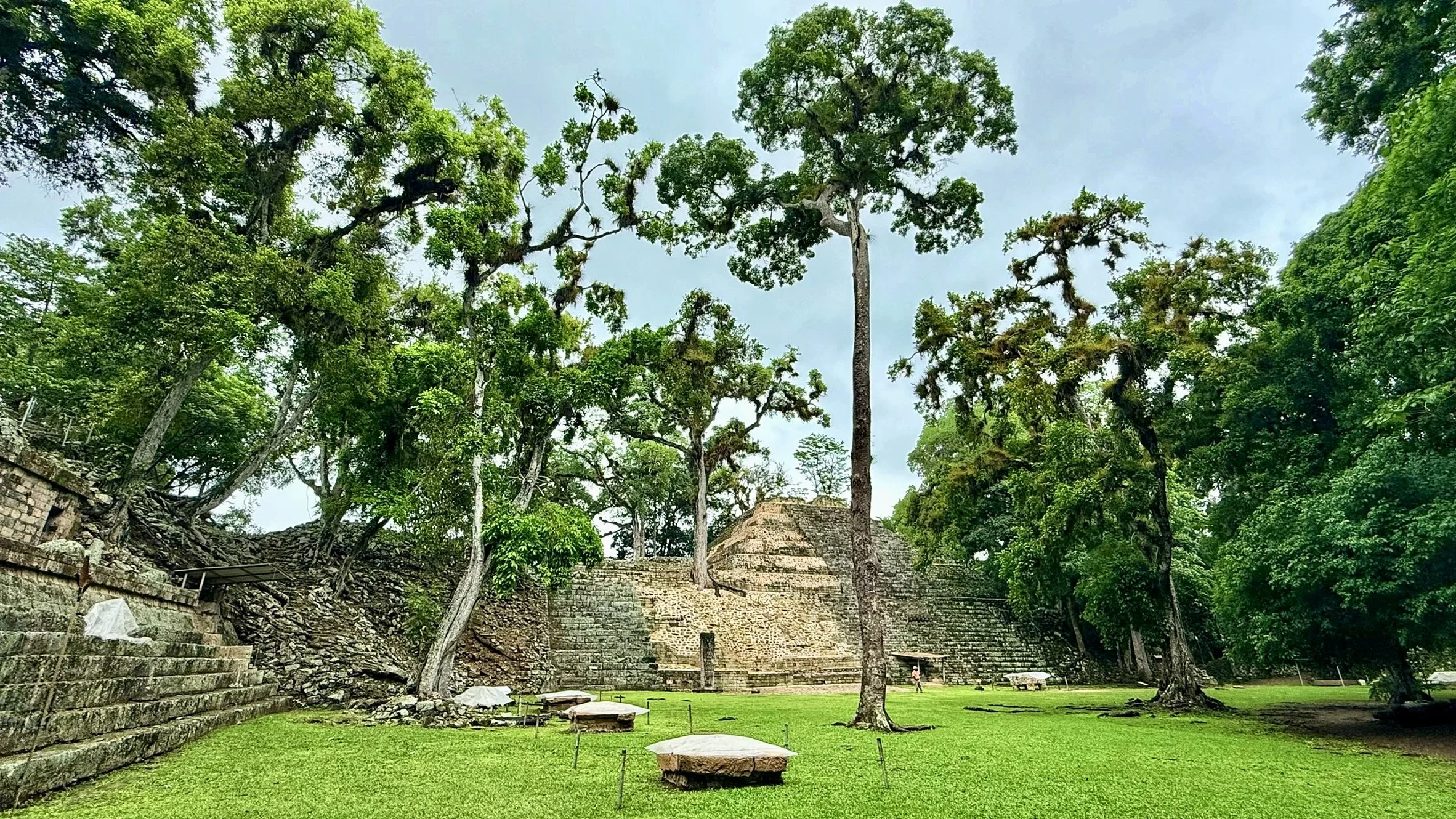
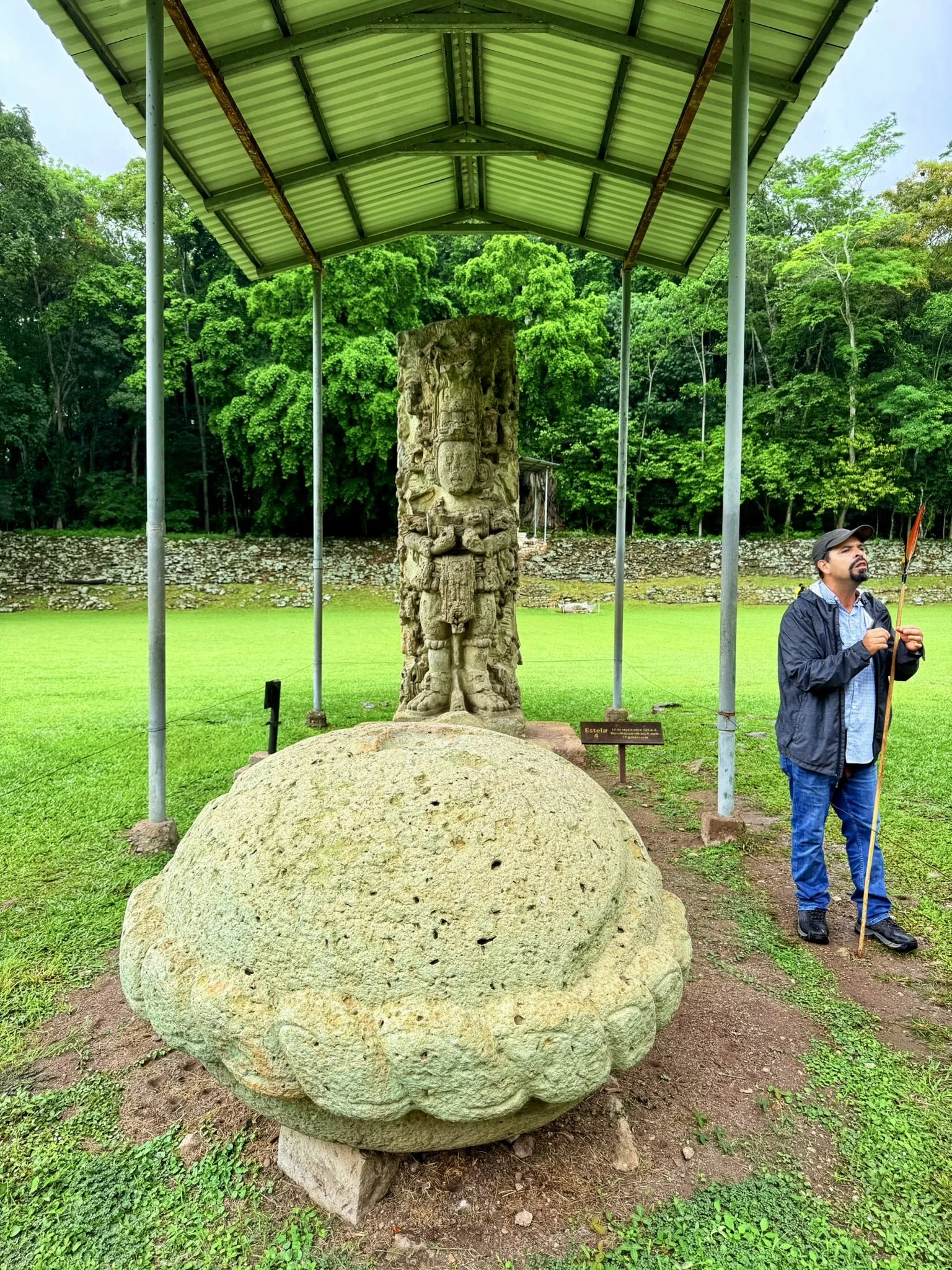
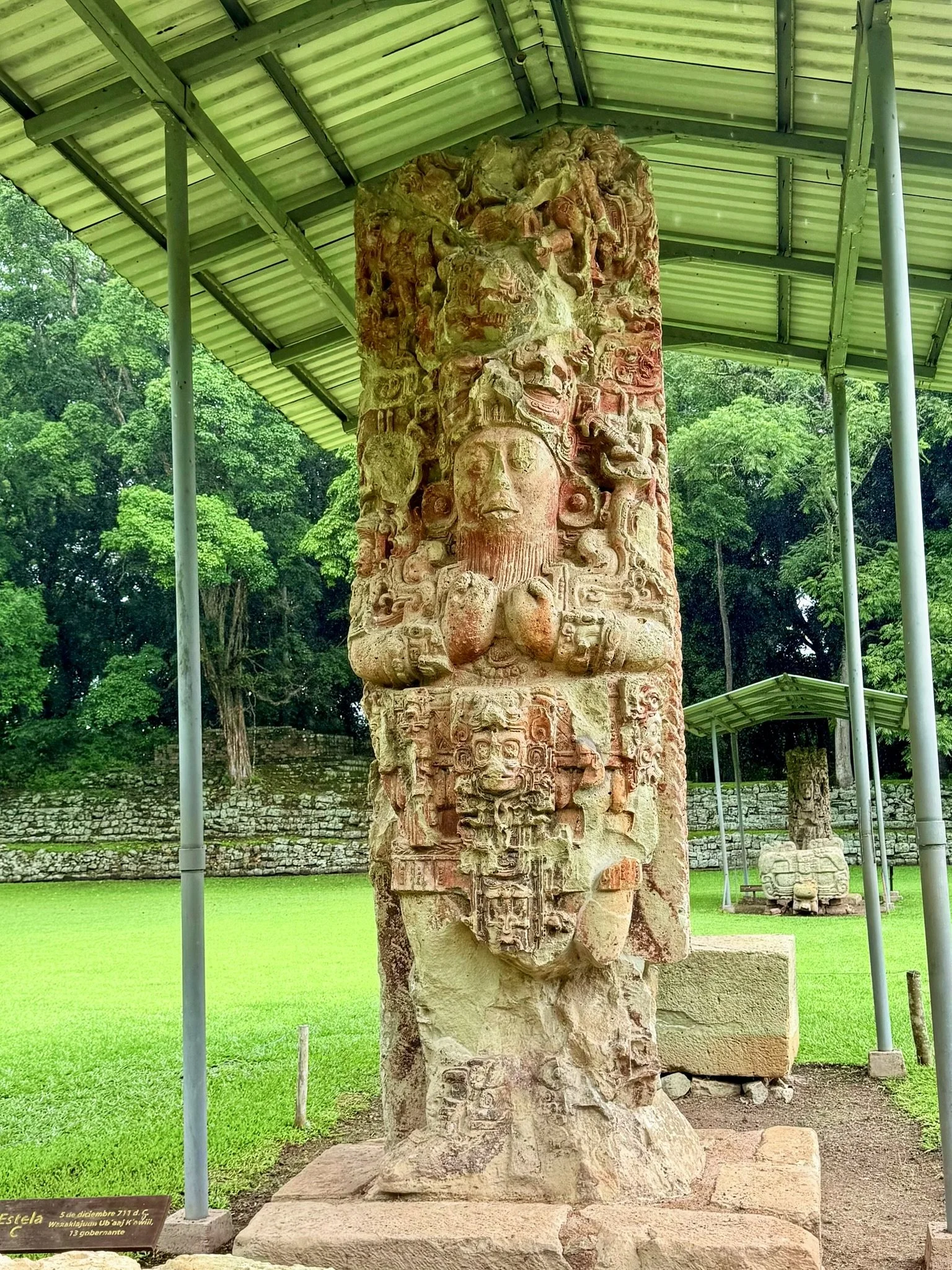
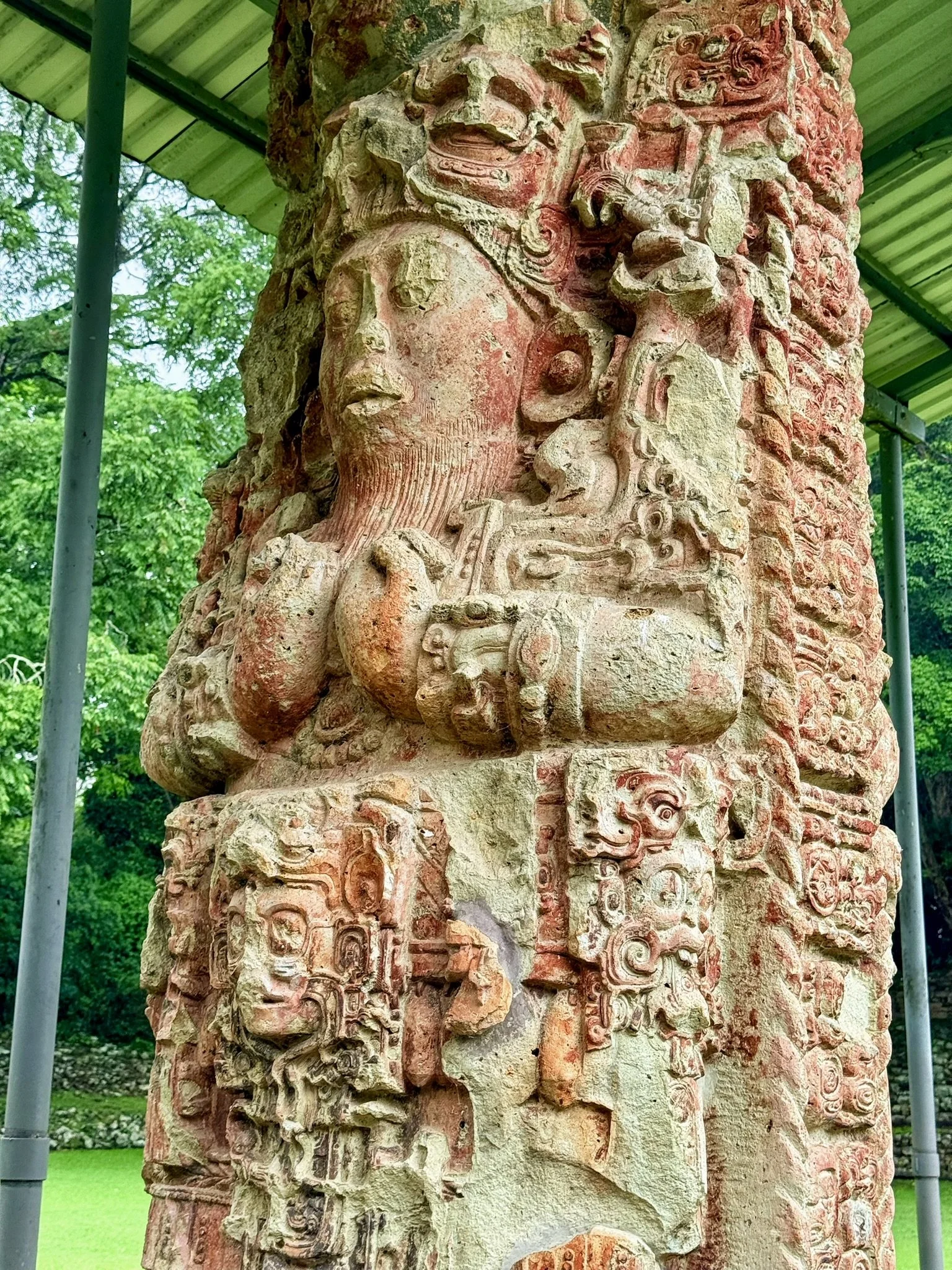
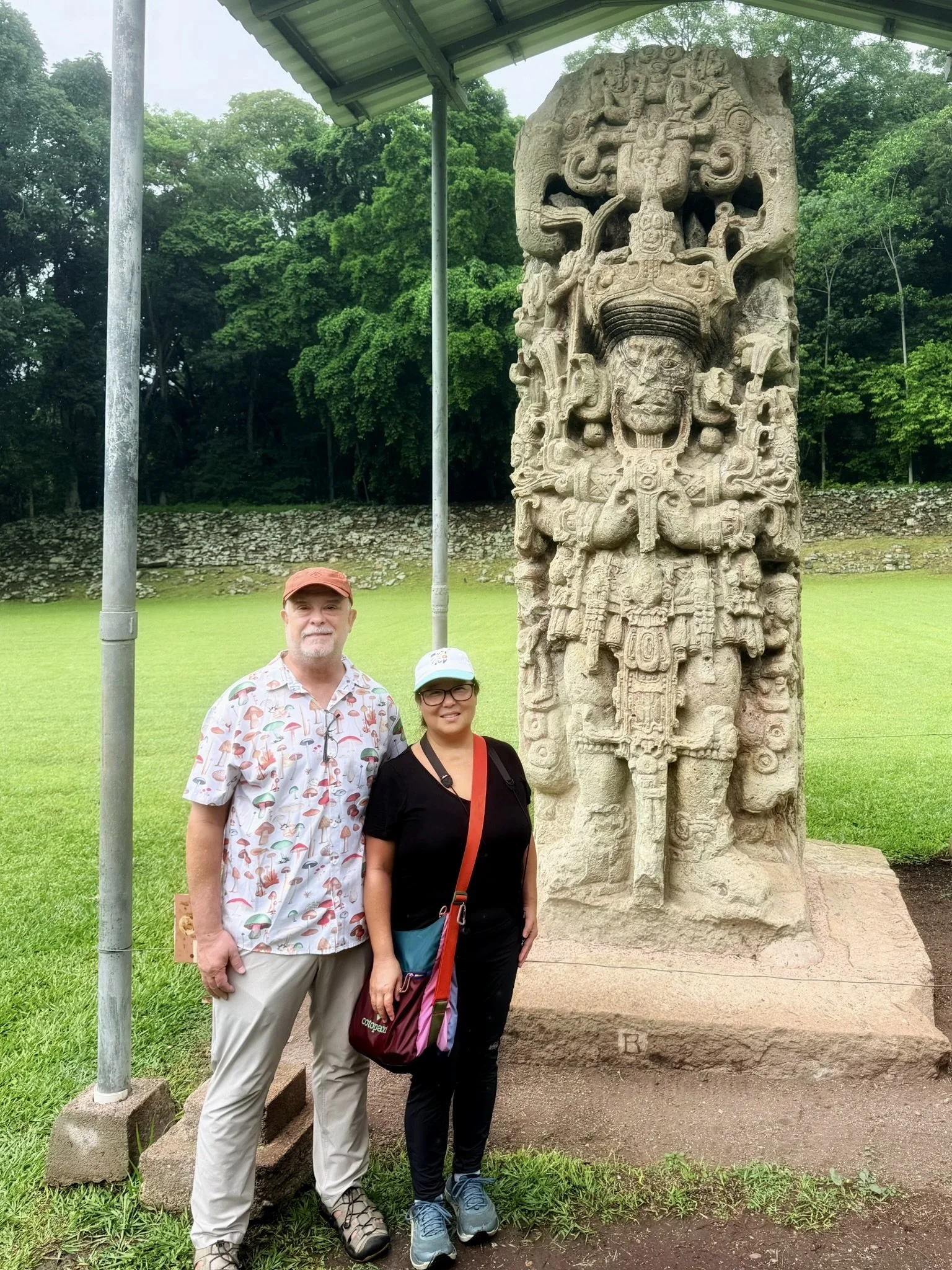
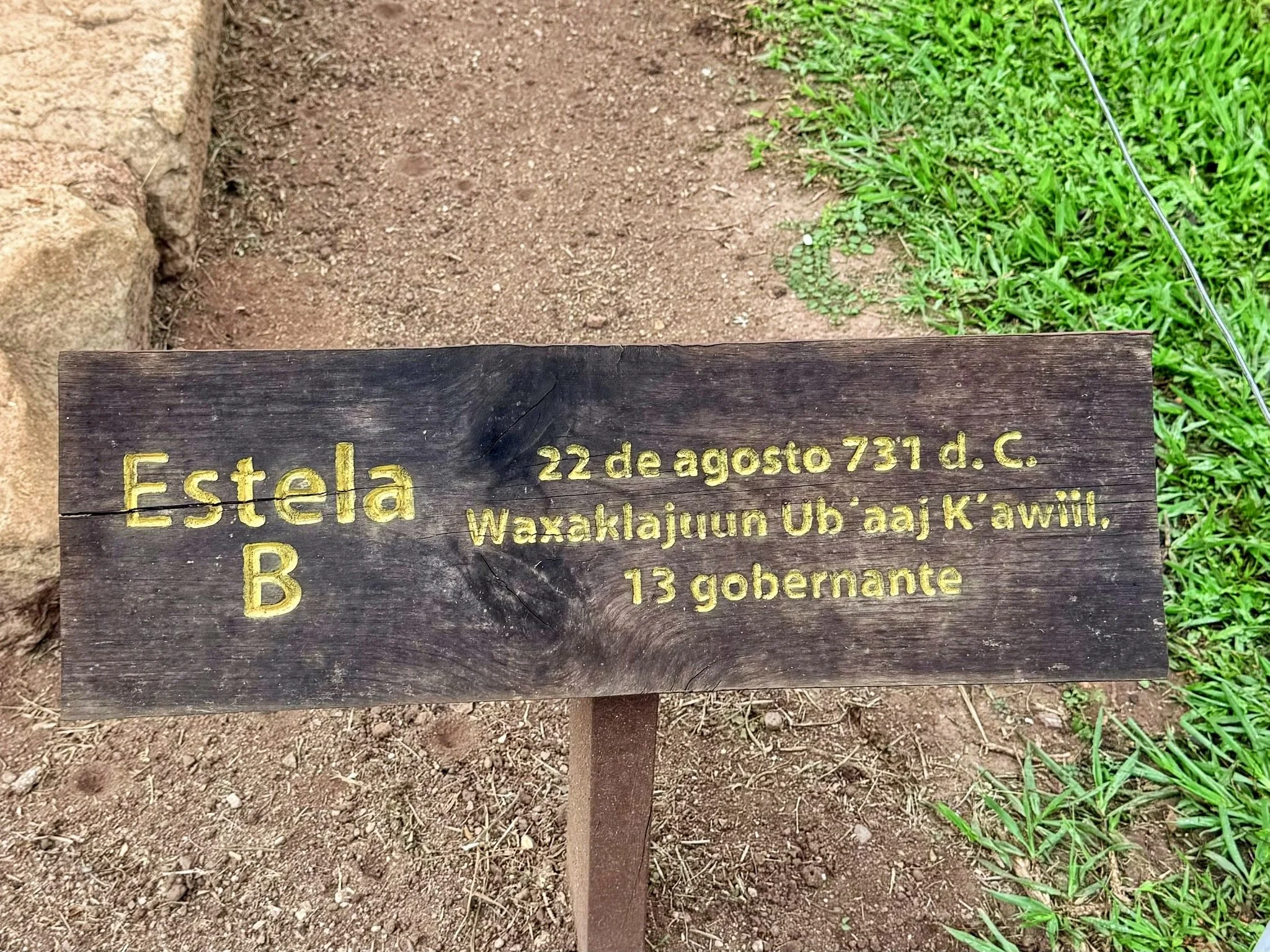
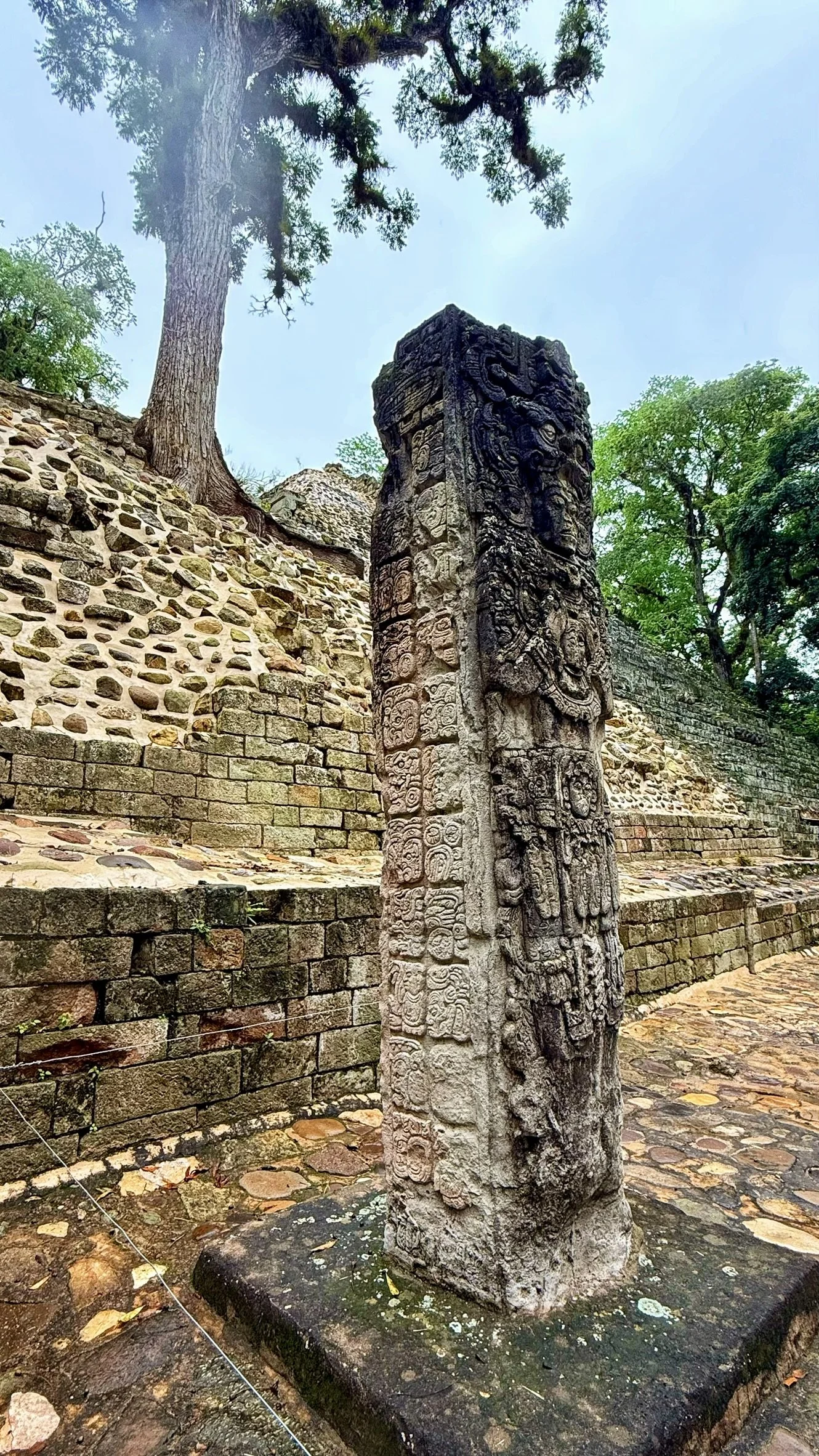
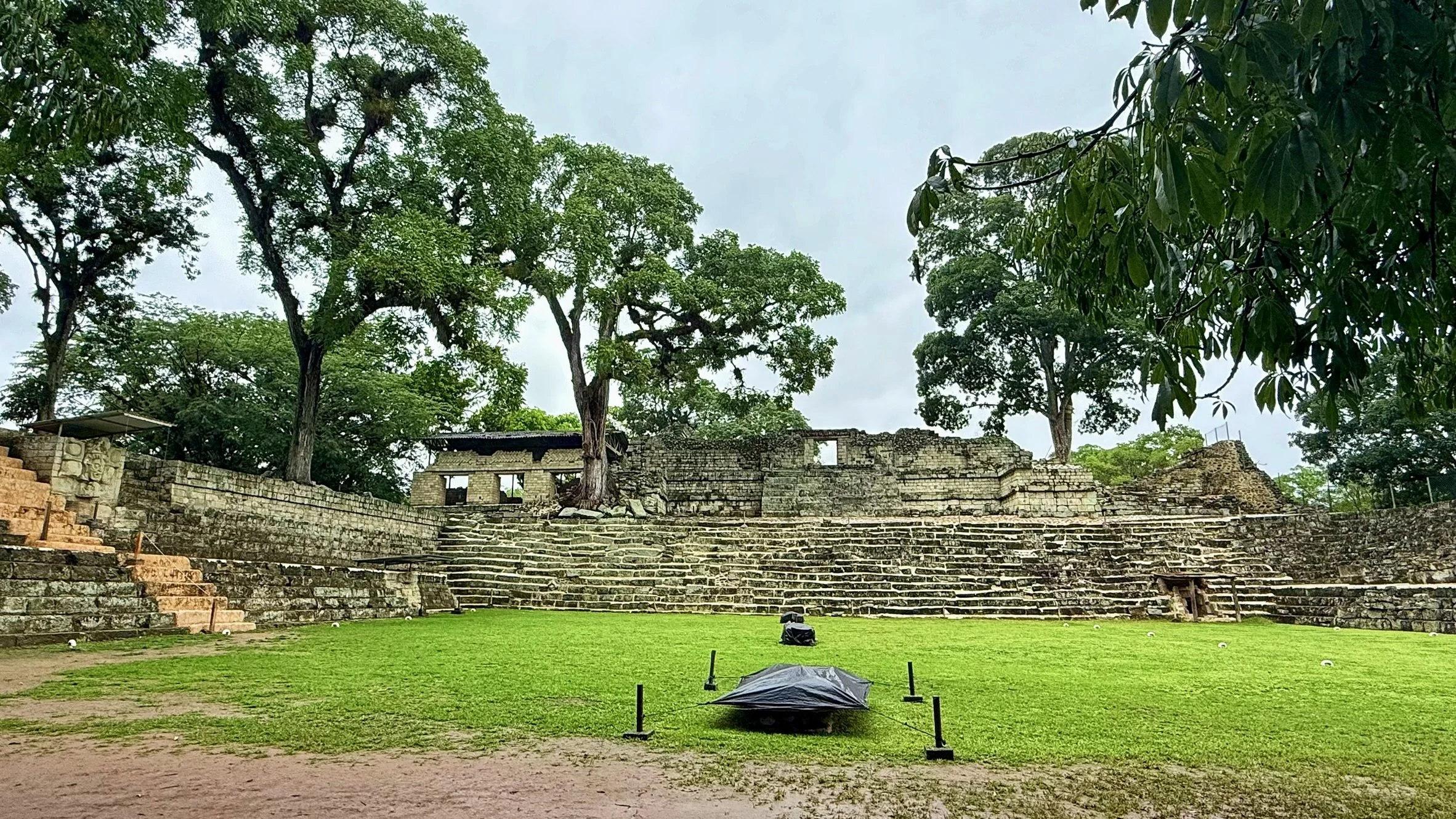
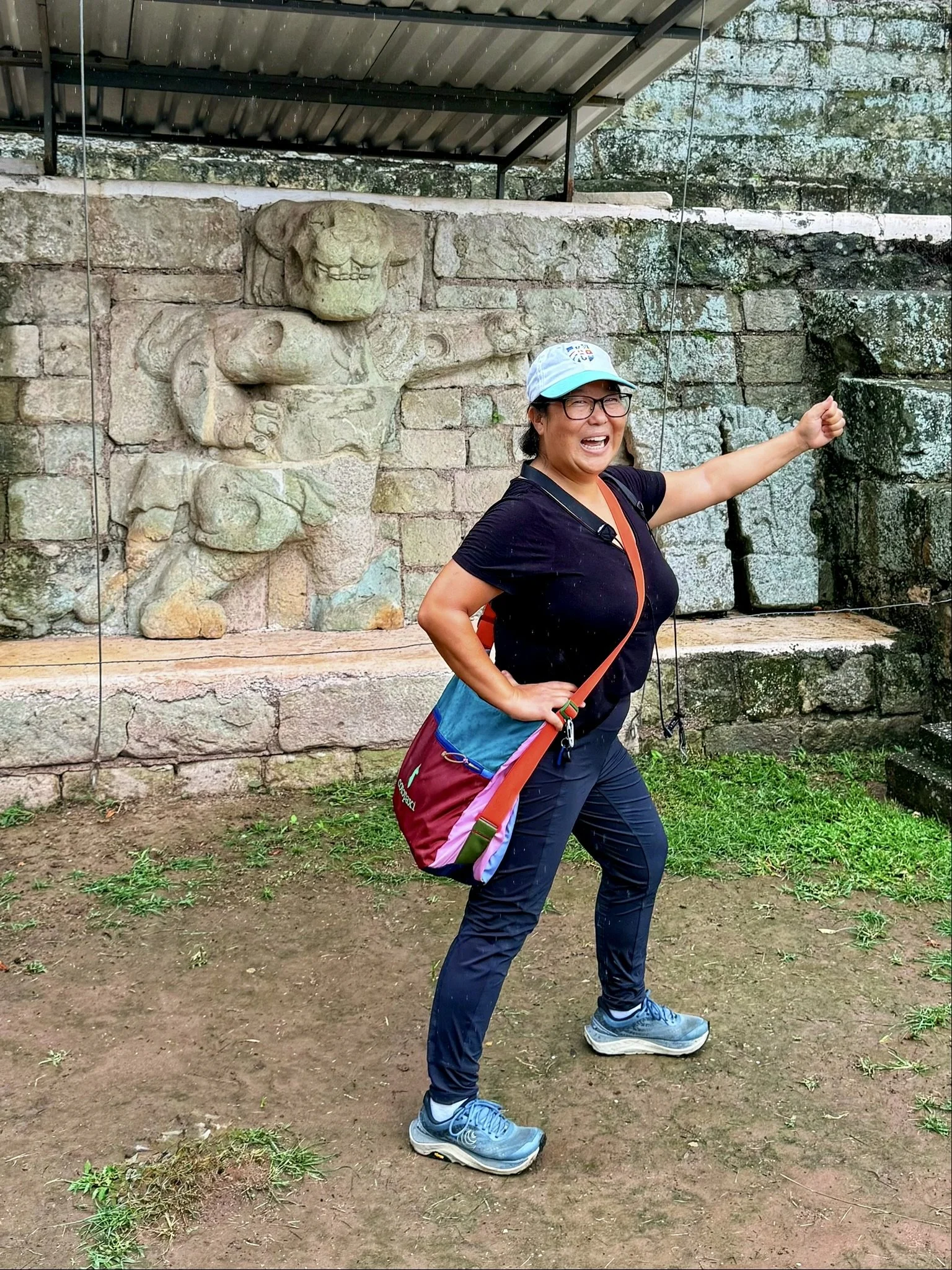
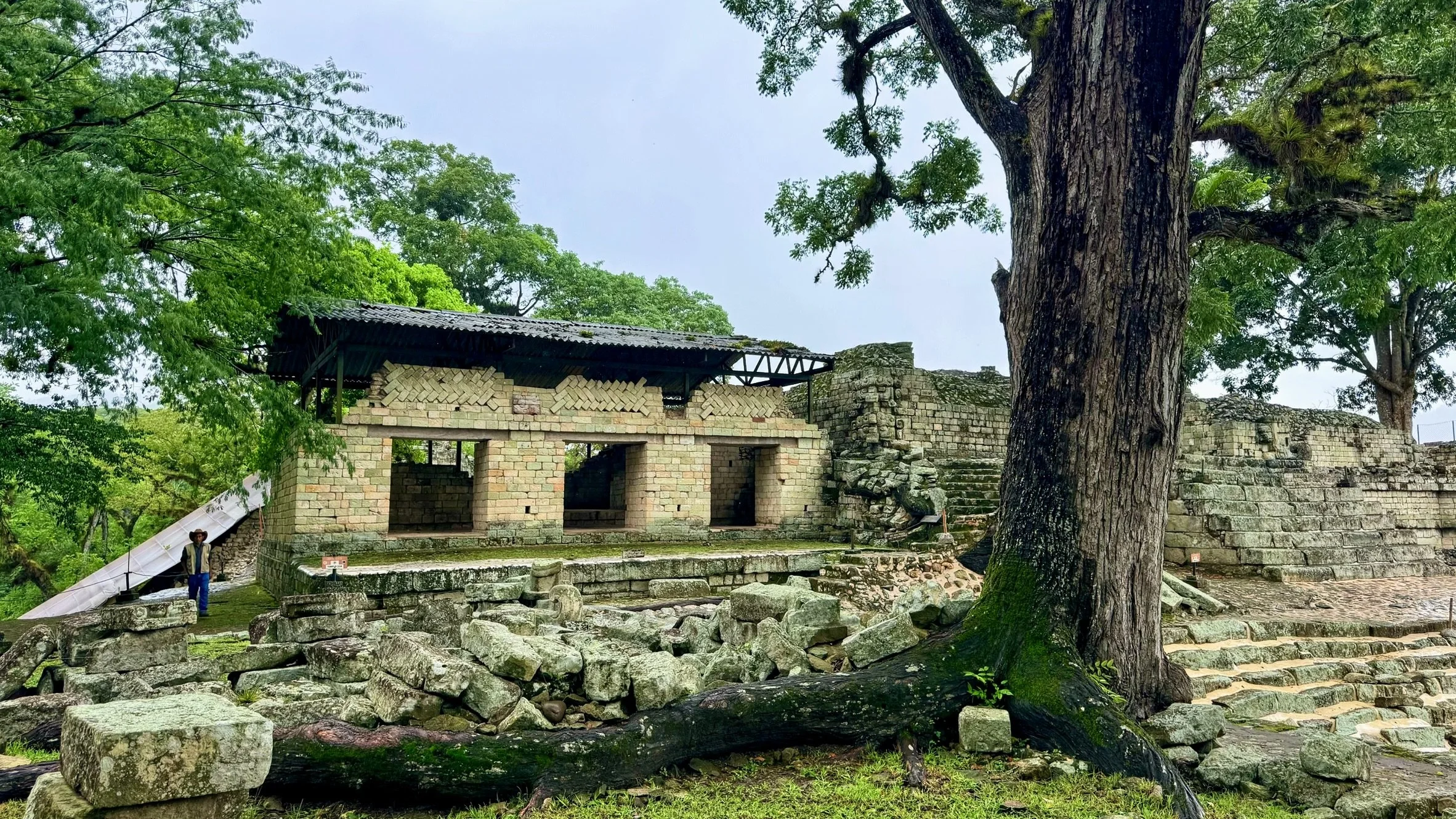
The Great Plaza is an expansive ceremonial space dotted with magnificent stone stelae, many depicting Copán’s rulers in elaborate headdresses and royal regalia. These aren’t your typical flat carvings. Copán’s sculptors worked the stone with exceptional depth and detail, creating figures that almost seem to emerge from the rock.
Sixteen Kings, One Dynasty
Copán’s royal dynasty began around 426–427 CE, when K’inich Yax K’uk’ Mo’ arrived and established a line of rulers that lasted for centuries. Sixteen kings presided over the city during its dynastic history, and at its height, Copán may have been home to tens of thousands of people.
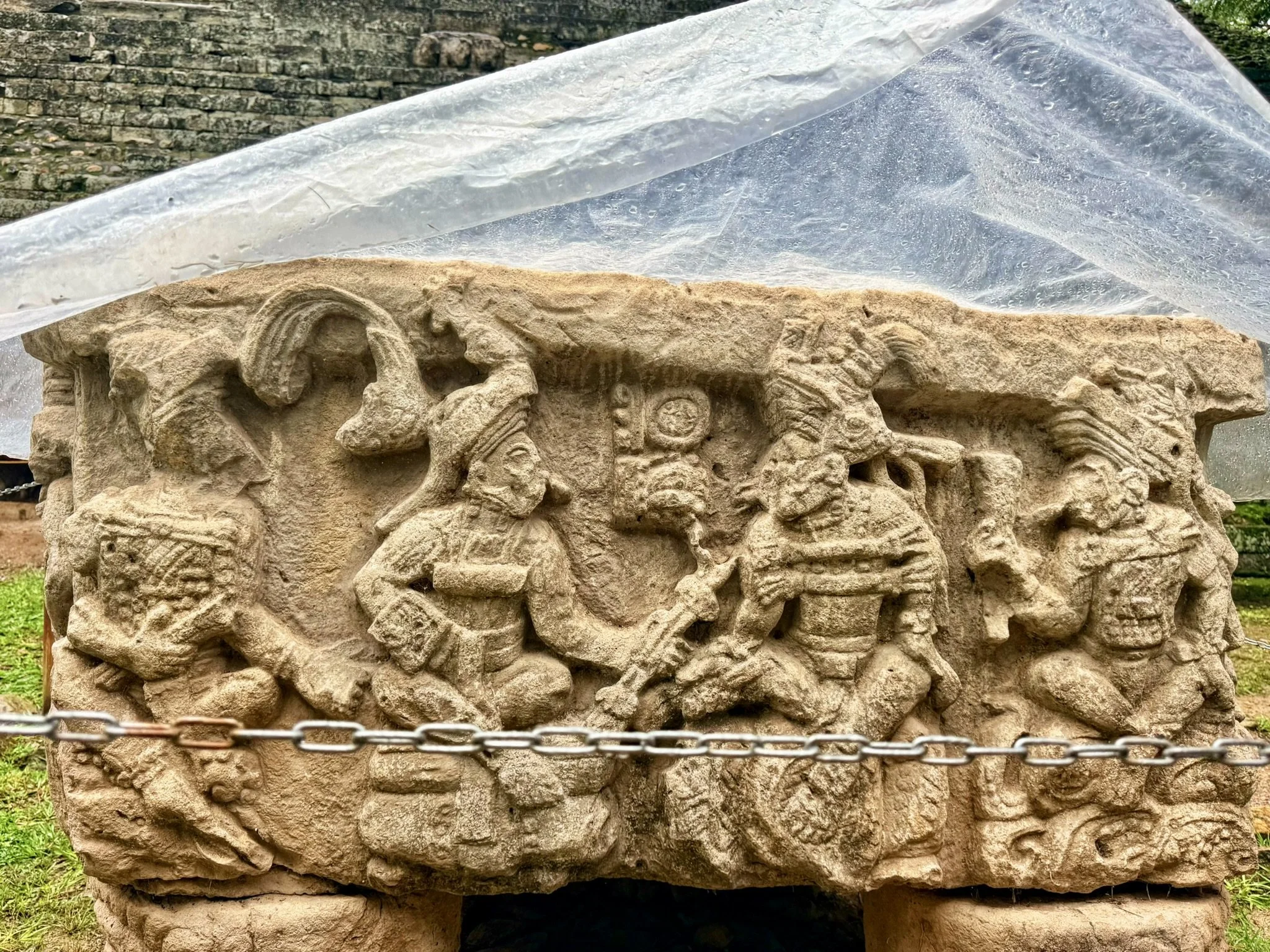
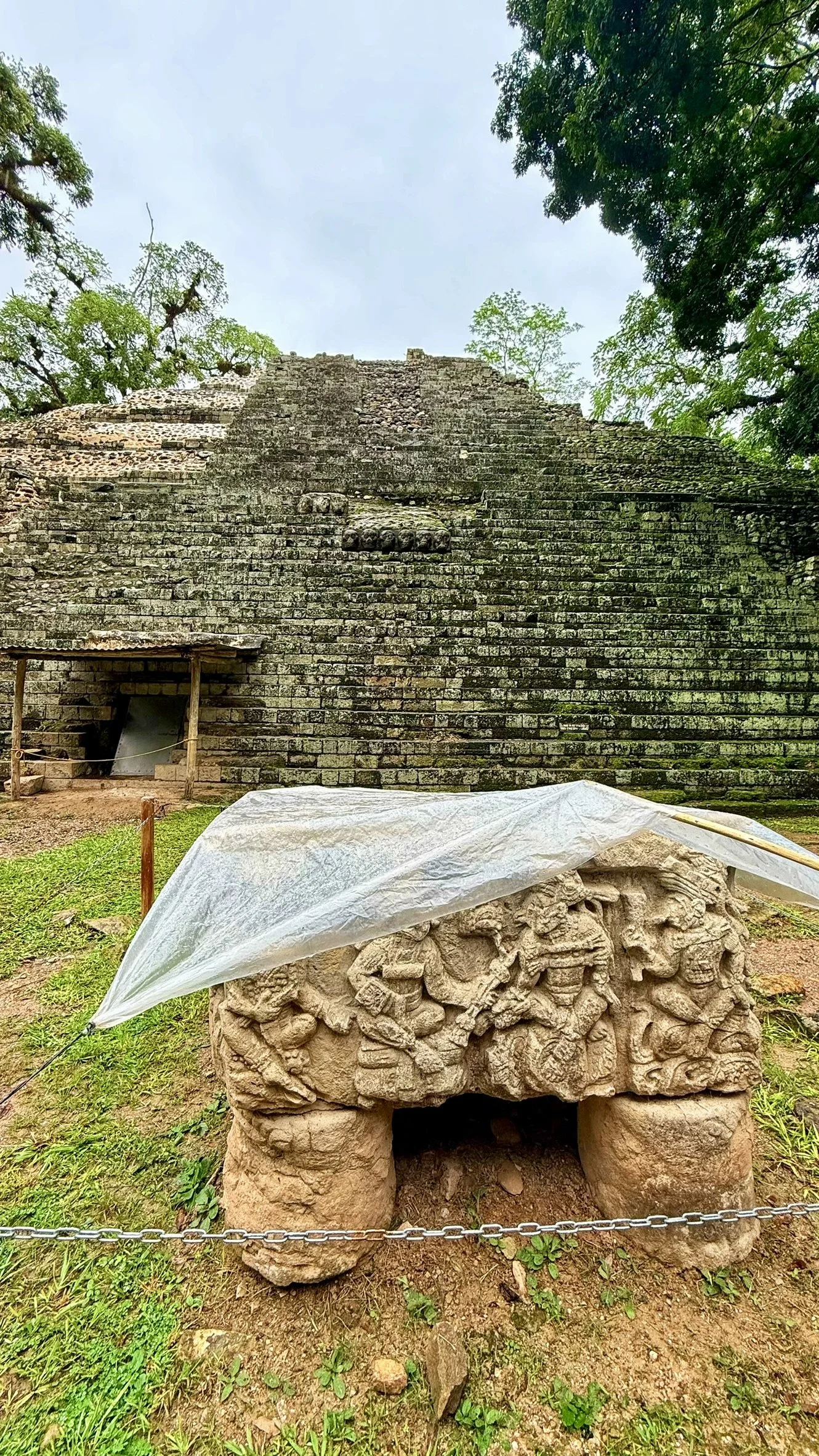
One of the most fascinating monuments is Altar Q, an unassuming rectangular stone structure that serves as a visual record of the dynasty. Its carvings depict all 16 rulers seated in sequence, with the dynasty’s founder passing authority to the last ruler represented in the monument. Not bad for a history book carved out of stone.
The Ball Court
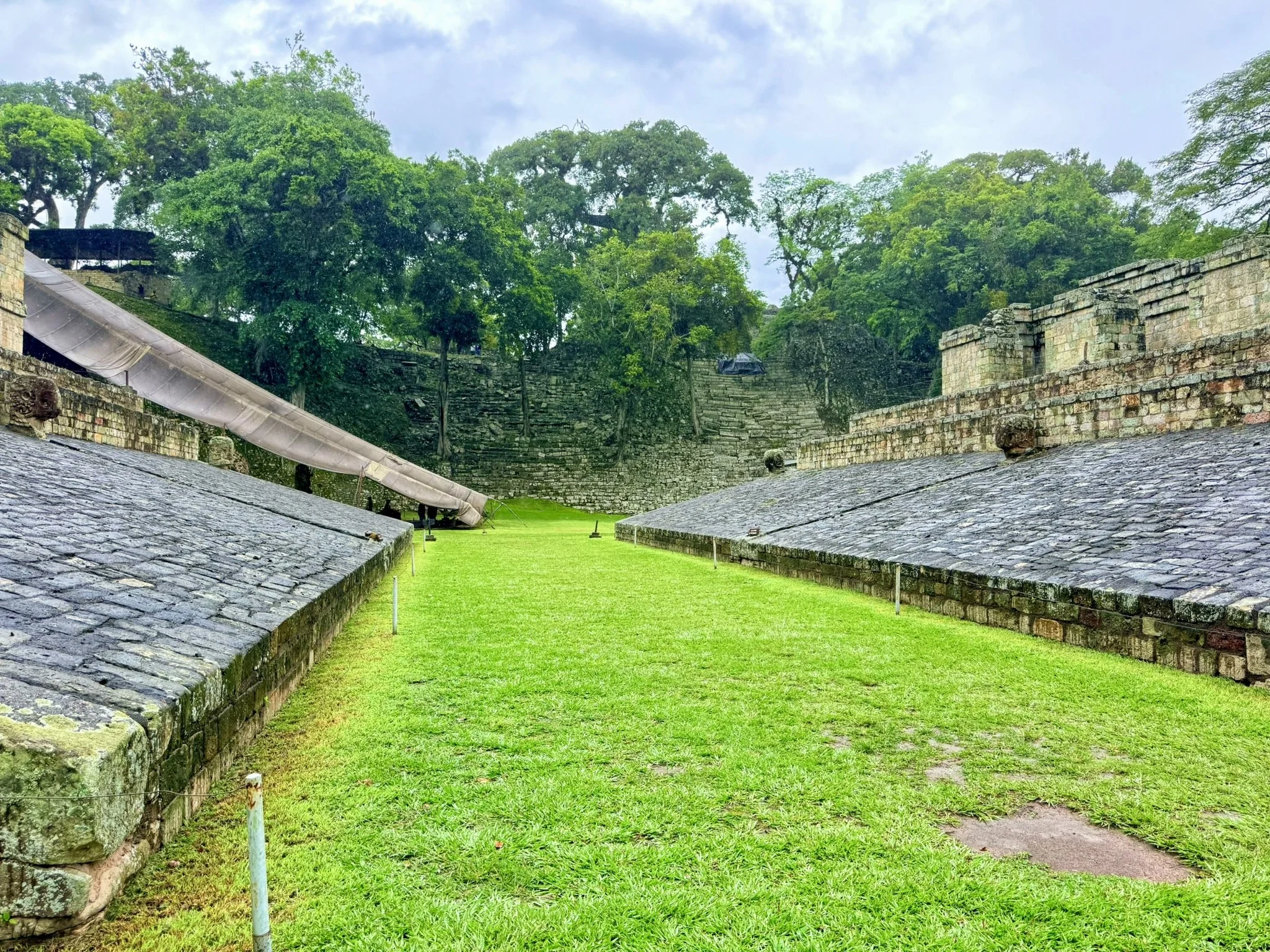
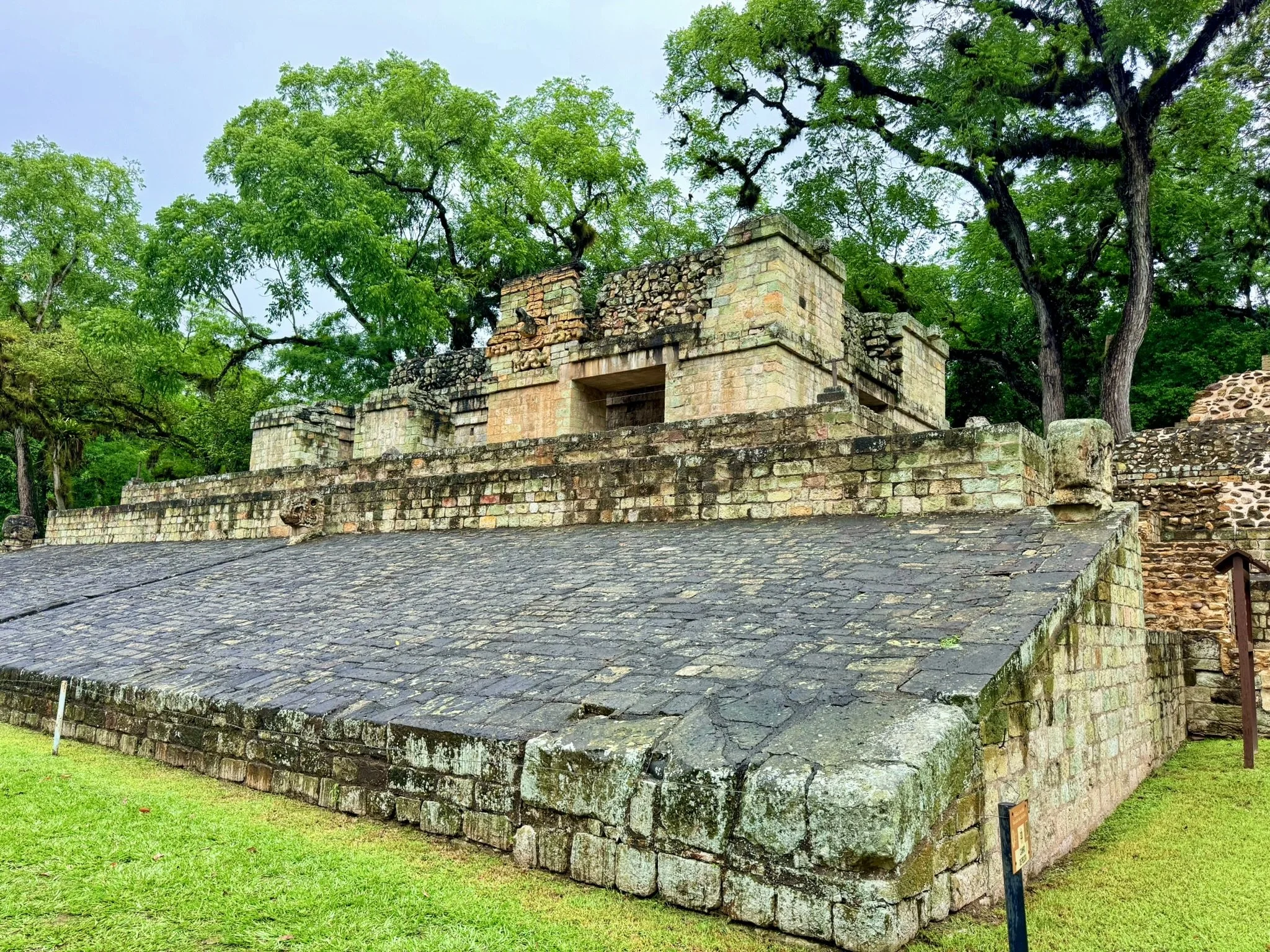
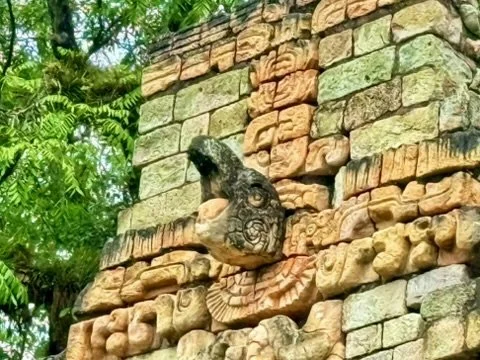
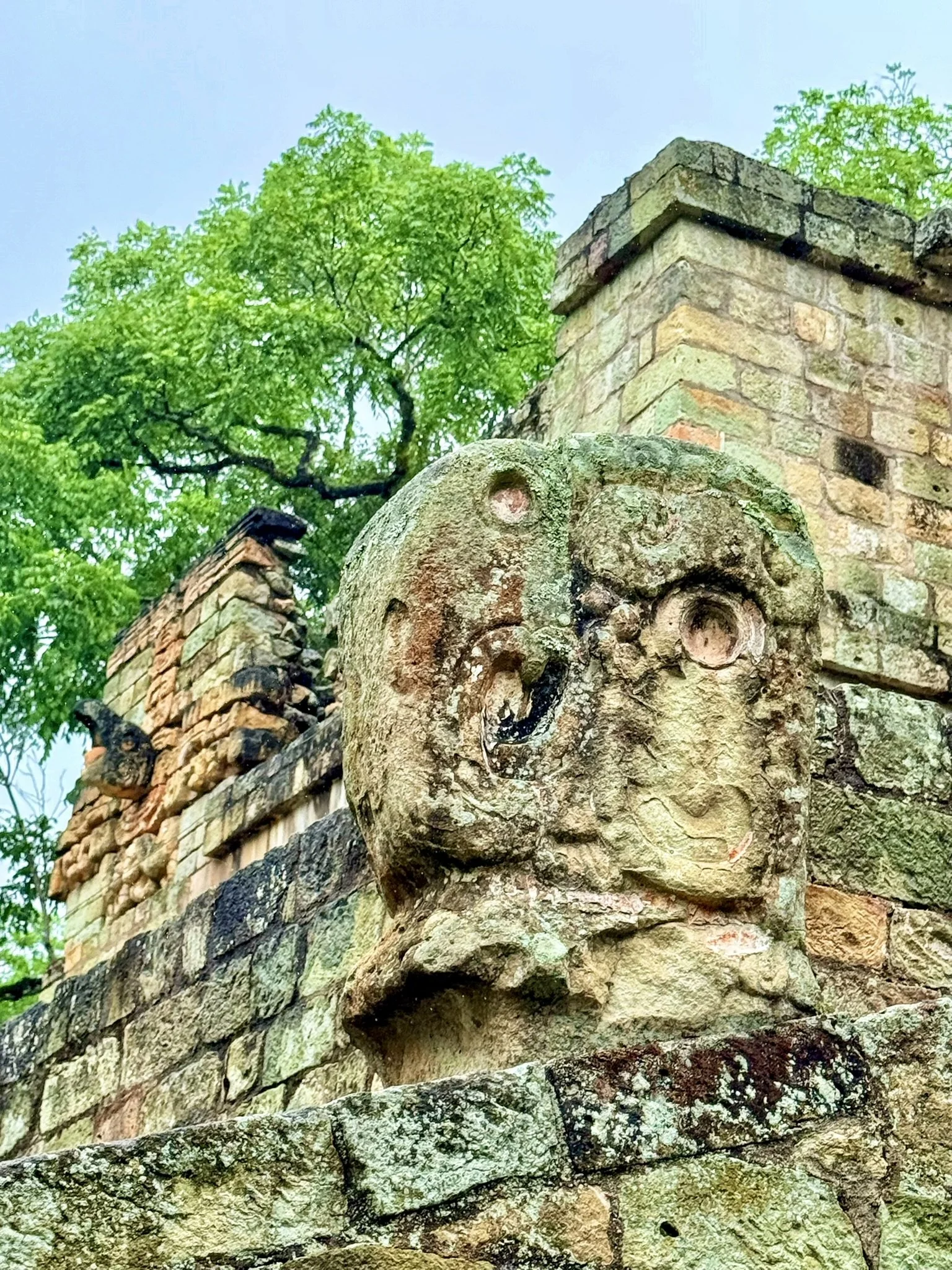
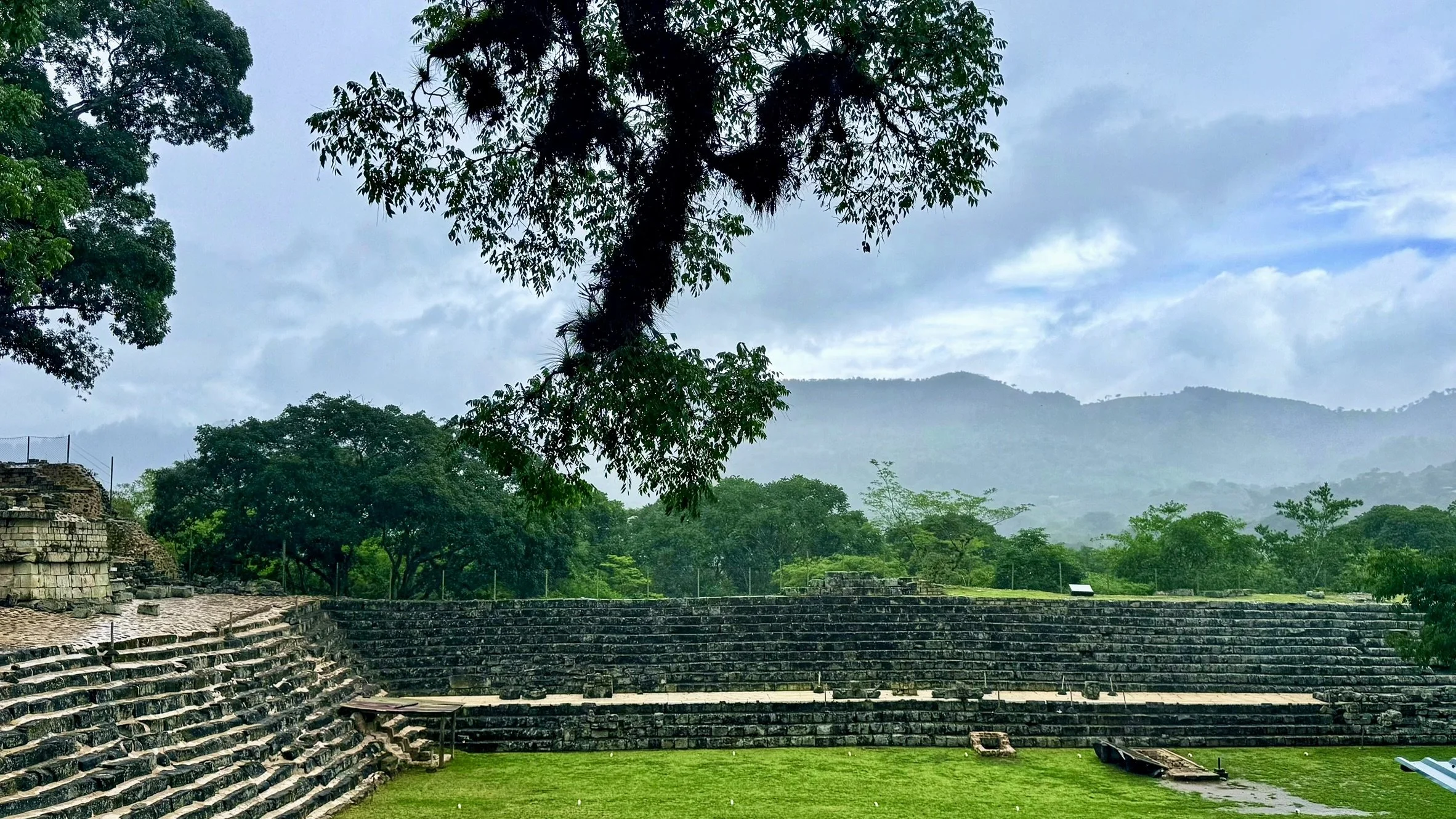
Copán’s ceremonial ball court is considered one of the most impressive in the Maya world. Its distinctive marker sculptures resemble macaw heads, a fitting tribute to a bird rich in symbolism in ancient Maya culture. The ball game itself was more than sport: it carried deep political, religious, and ceremonial significance.
What Happened to Copán?
Copán’s royal dynasty came to an end in the early ninth century. Its final dynastic monument dates to 822 CE, and the city’s political power subsequently declined.
The collapse wasn’t the result of one dramatic event. Like other Maya centers, Copán faced a combination of pressures, including population growth, environmental degradation, soil exhaustion, and political instability. These challenges likely contributed to the city’s decline, although the precise balance of causes remains debated.
A Little Maya History
The Maya civilization flourished across southeastern Mexico, Guatemala, Belize, and parts of Honduras and El Salvador. Rather than forming one unified empire, the Maya world consisted of independent city-states that sometimes traded and allied with one another and sometimes fought bitterly.
During the Classic Period (roughly 250–900 CE), cities such as Tikal, Palenque, Calakmul, and Copán became major centers of political power, architecture, and intellectual achievement.
A few things that make the Maya civilization particularly remarkable:
Governance: Independent city-states were ruled by kings, often referred to as ajaw, who claimed sacred authority.
Writing and science: The Maya developed a sophisticated hieroglyphic writing system, used a mathematical system incorporating zero, and made detailed astronomical observations.
Architecture: They built monumental temples, stepped pyramids, royal palaces, and ceremonial ball courts.
Agriculture and trade: Maize, beans, and squash formed the foundation of agriculture, while extensive trade networks moved goods such as jade, obsidian, cacao, and salt across the region.
And the story doesn’t end with the ancient ruins. Millions of Maya descendants live in Central America and southern Mexico today, preserving their languages, traditions, and cultural heritage.
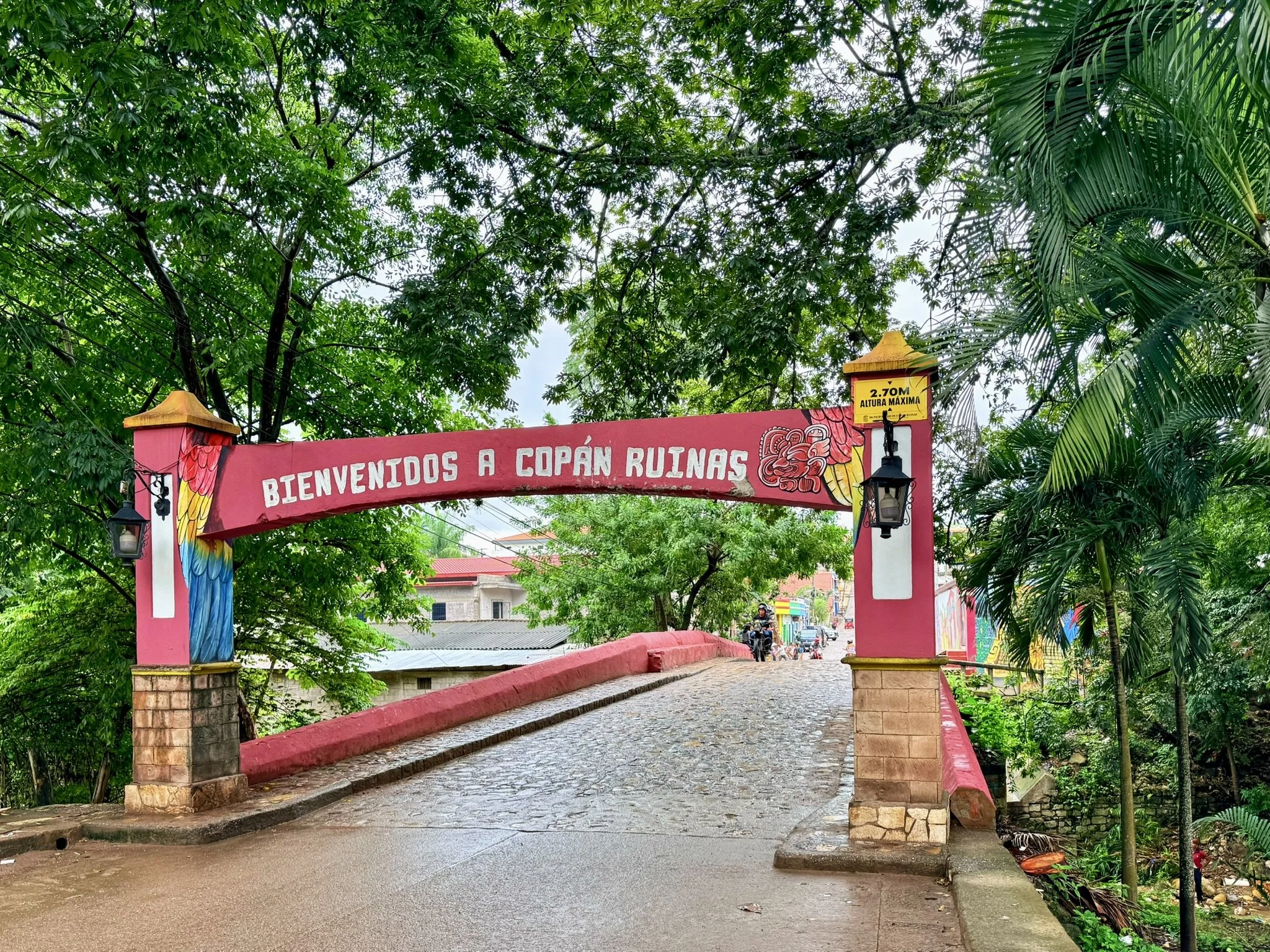
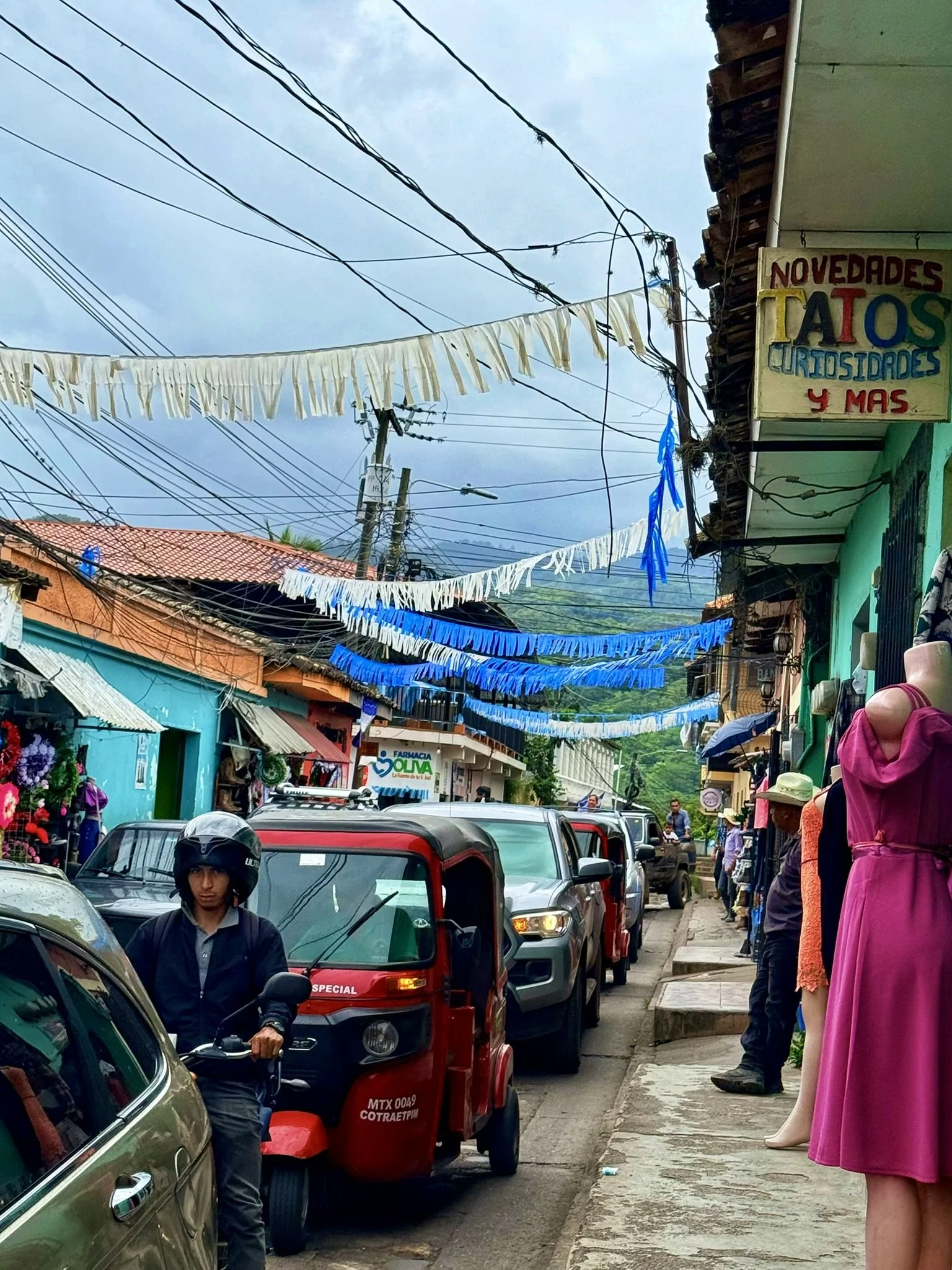
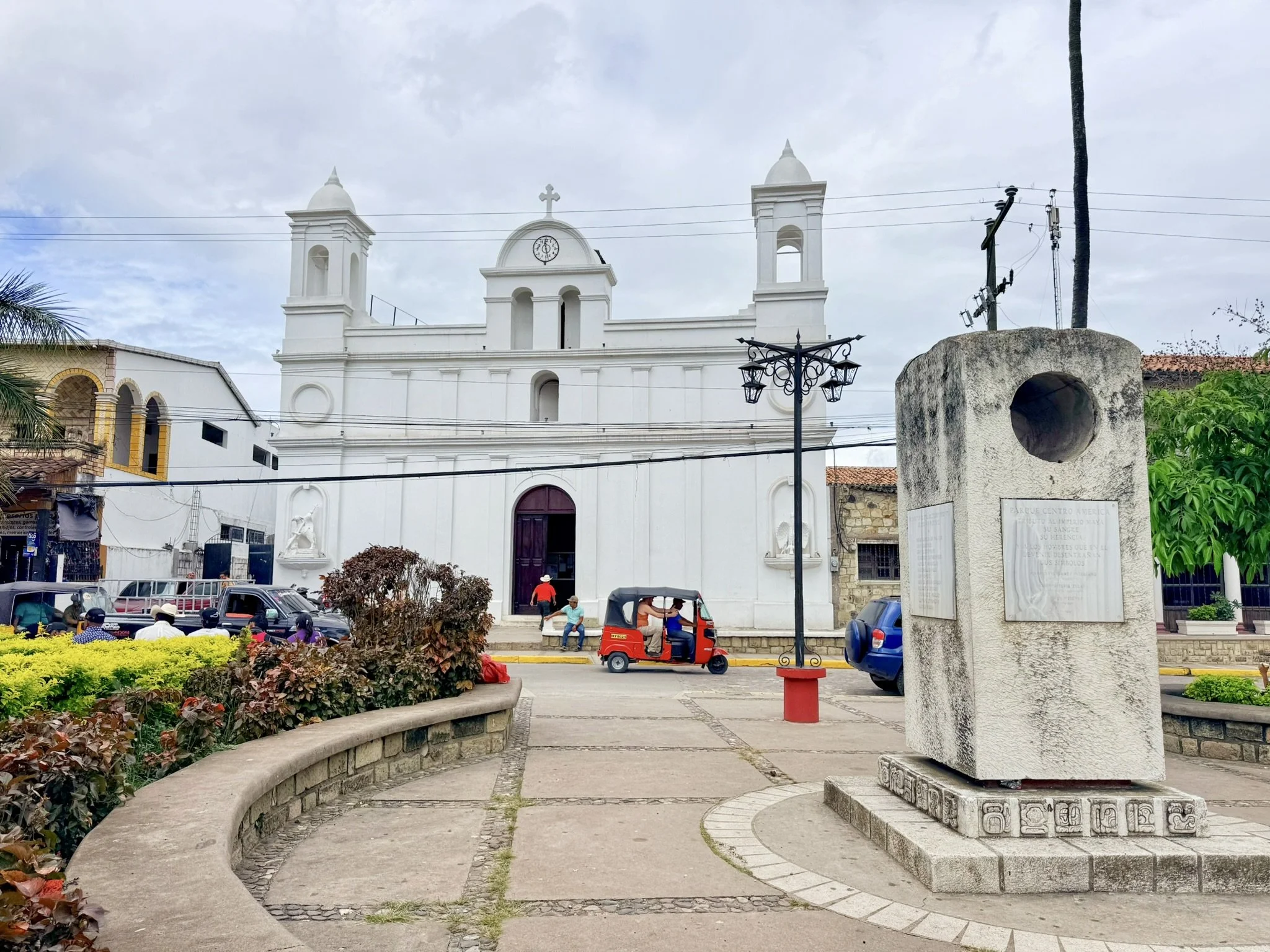
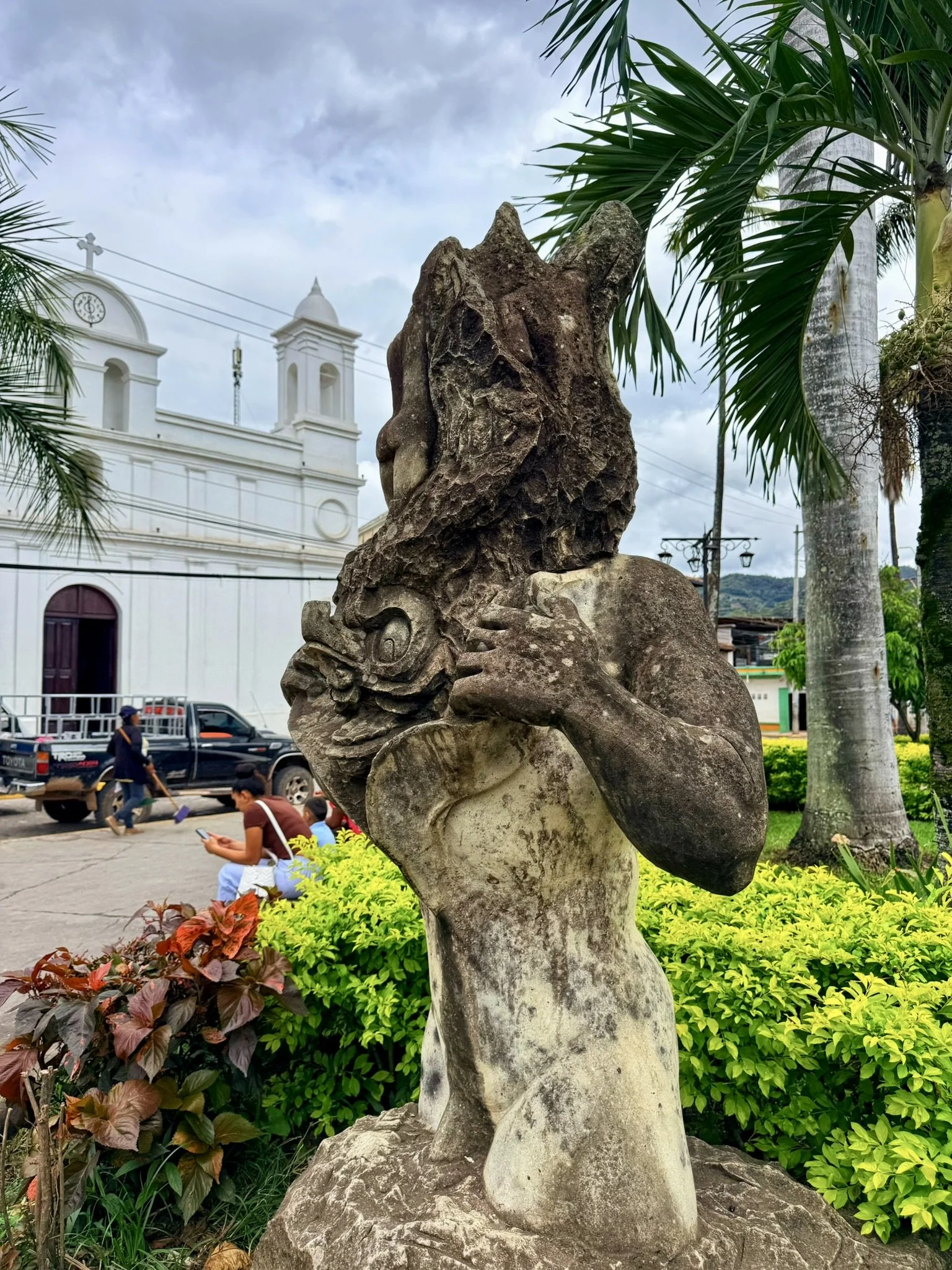
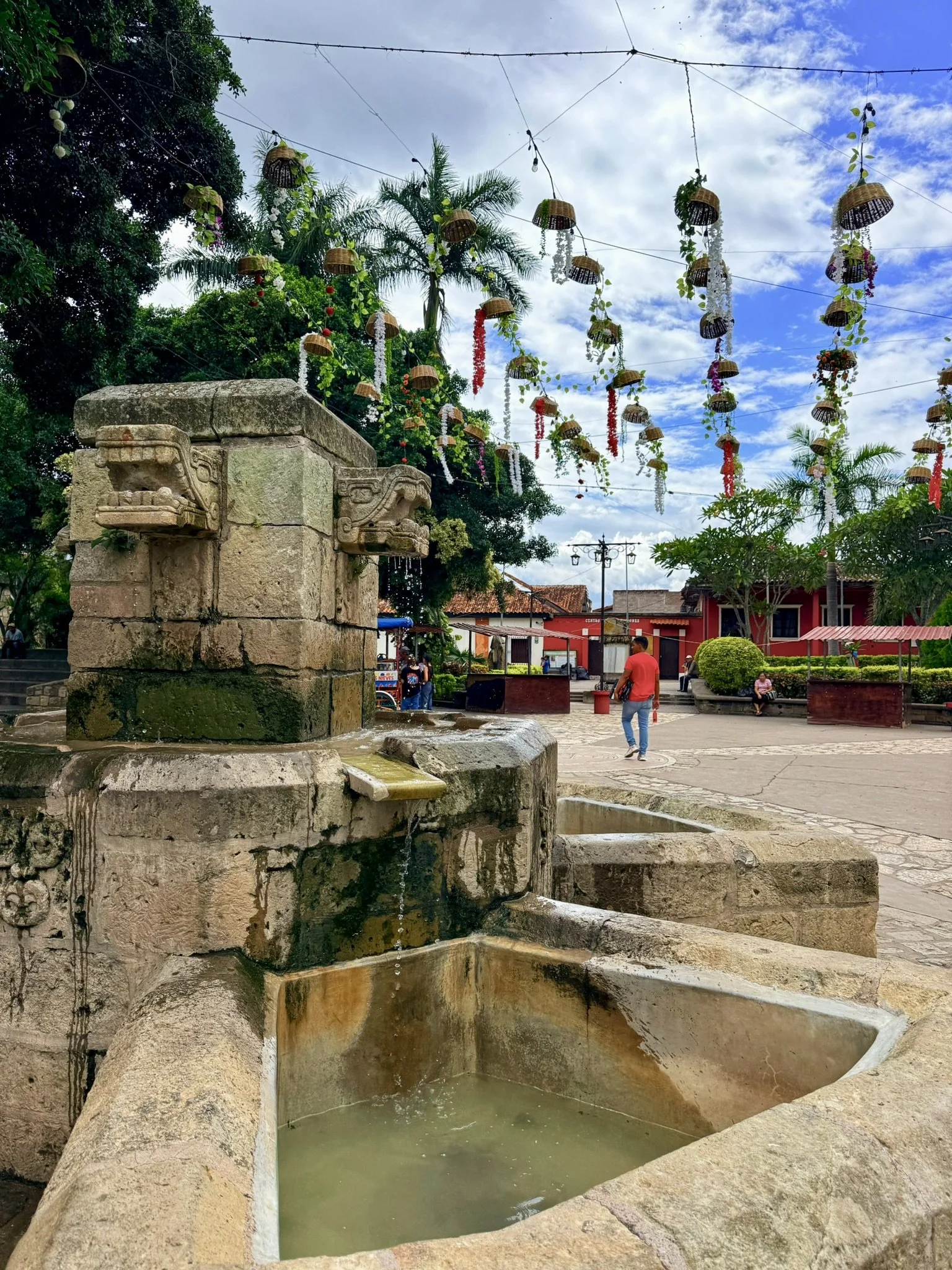
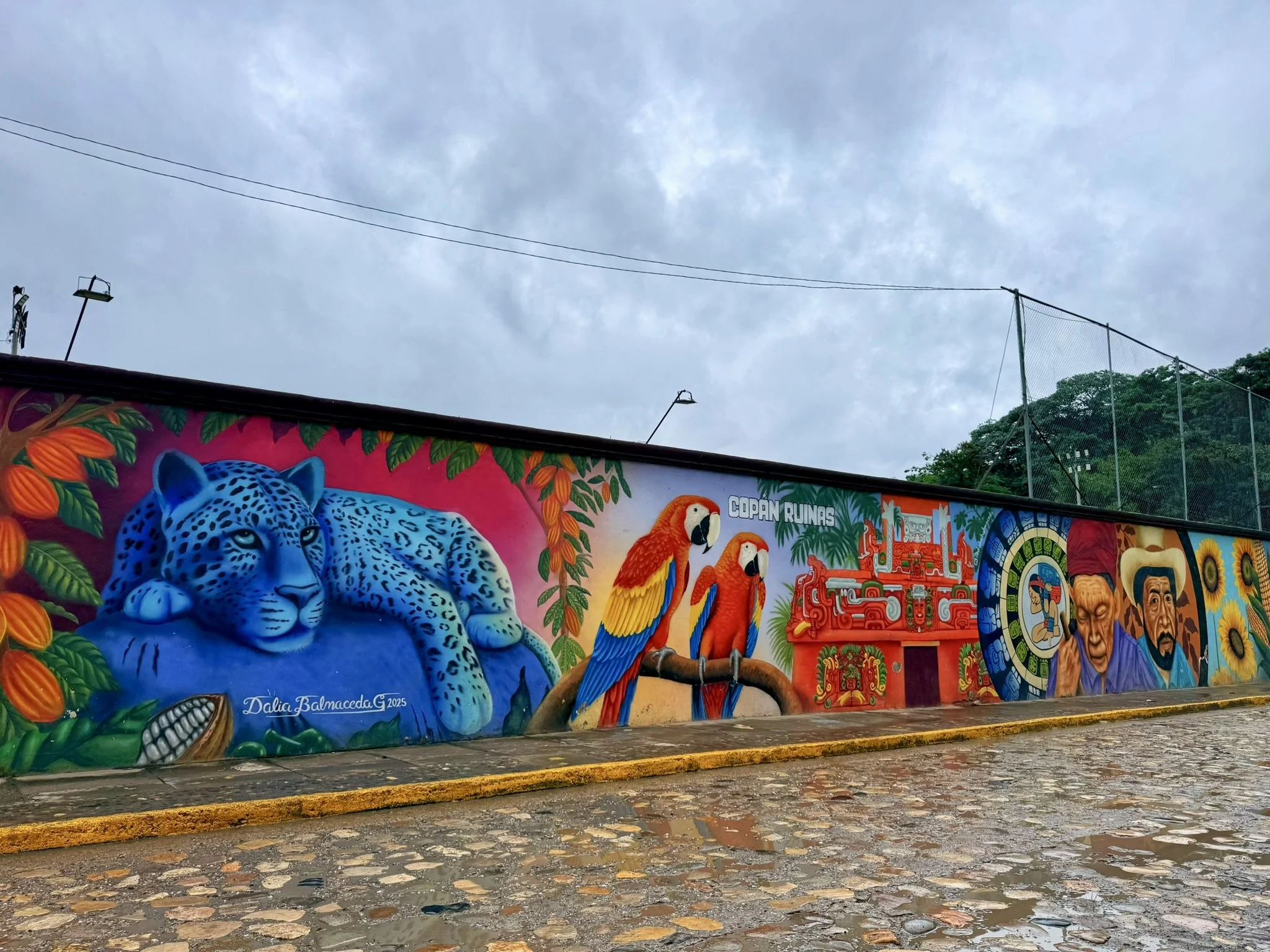
Copán Ruinas — Nueva (New)
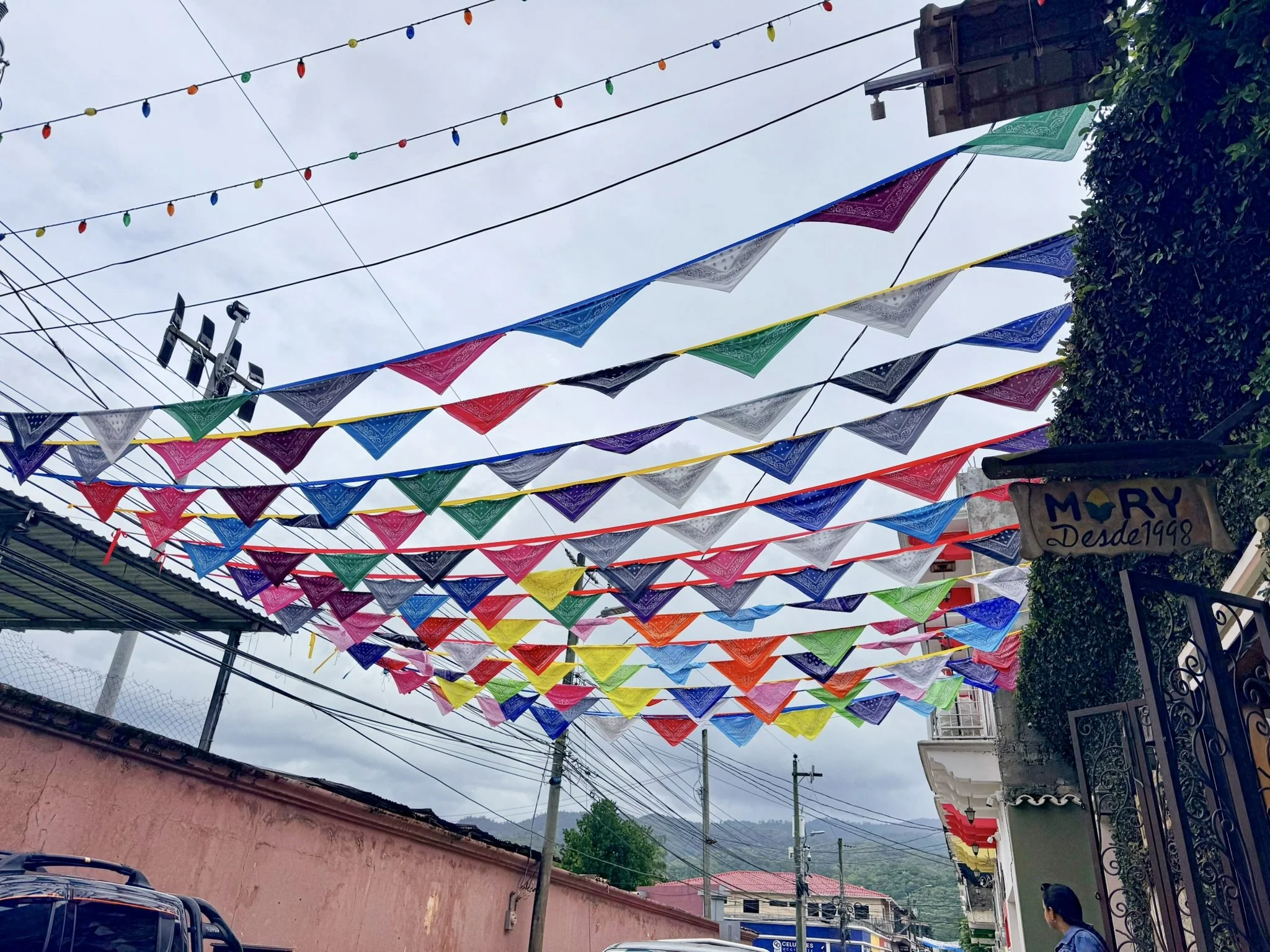
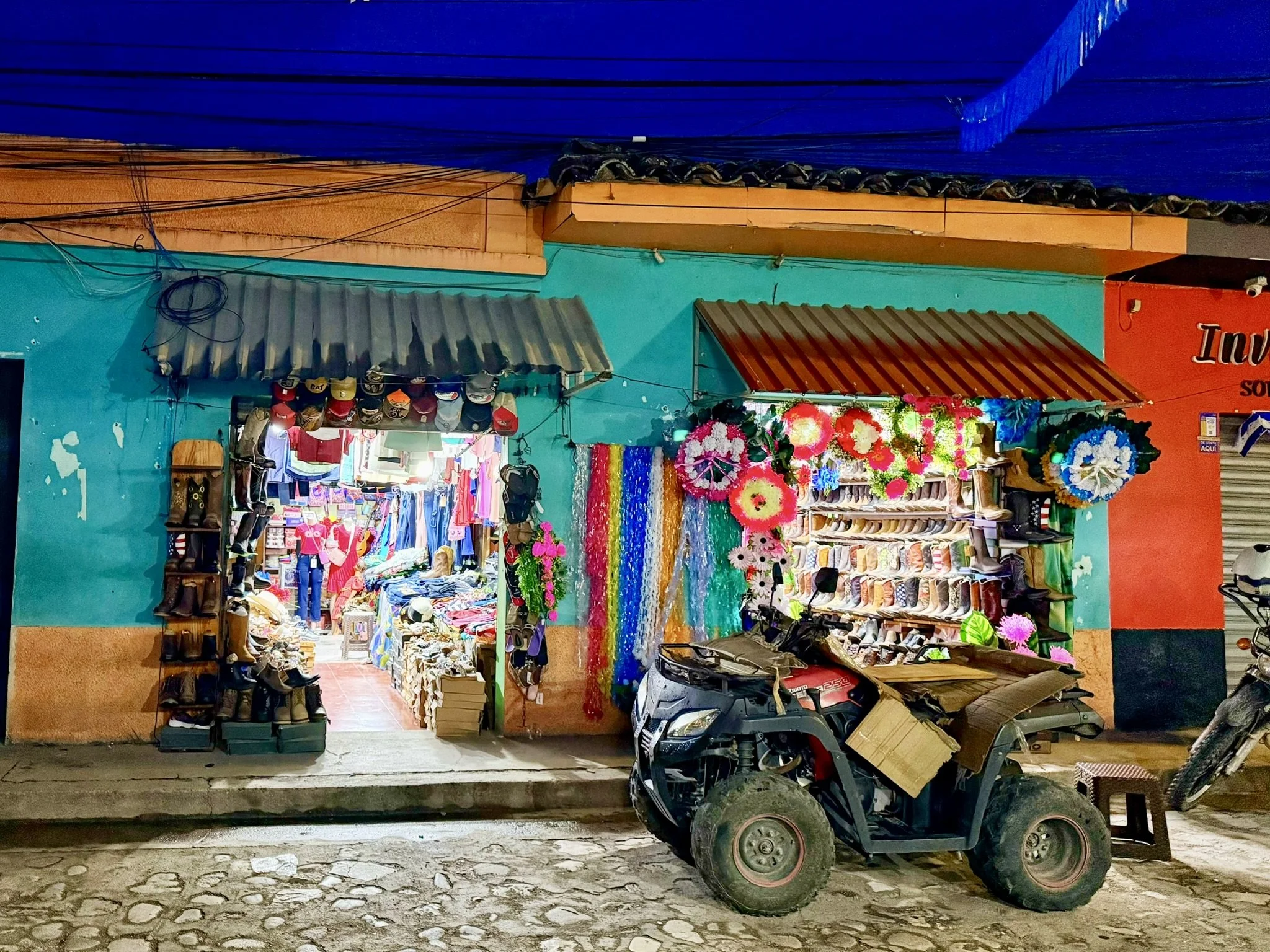
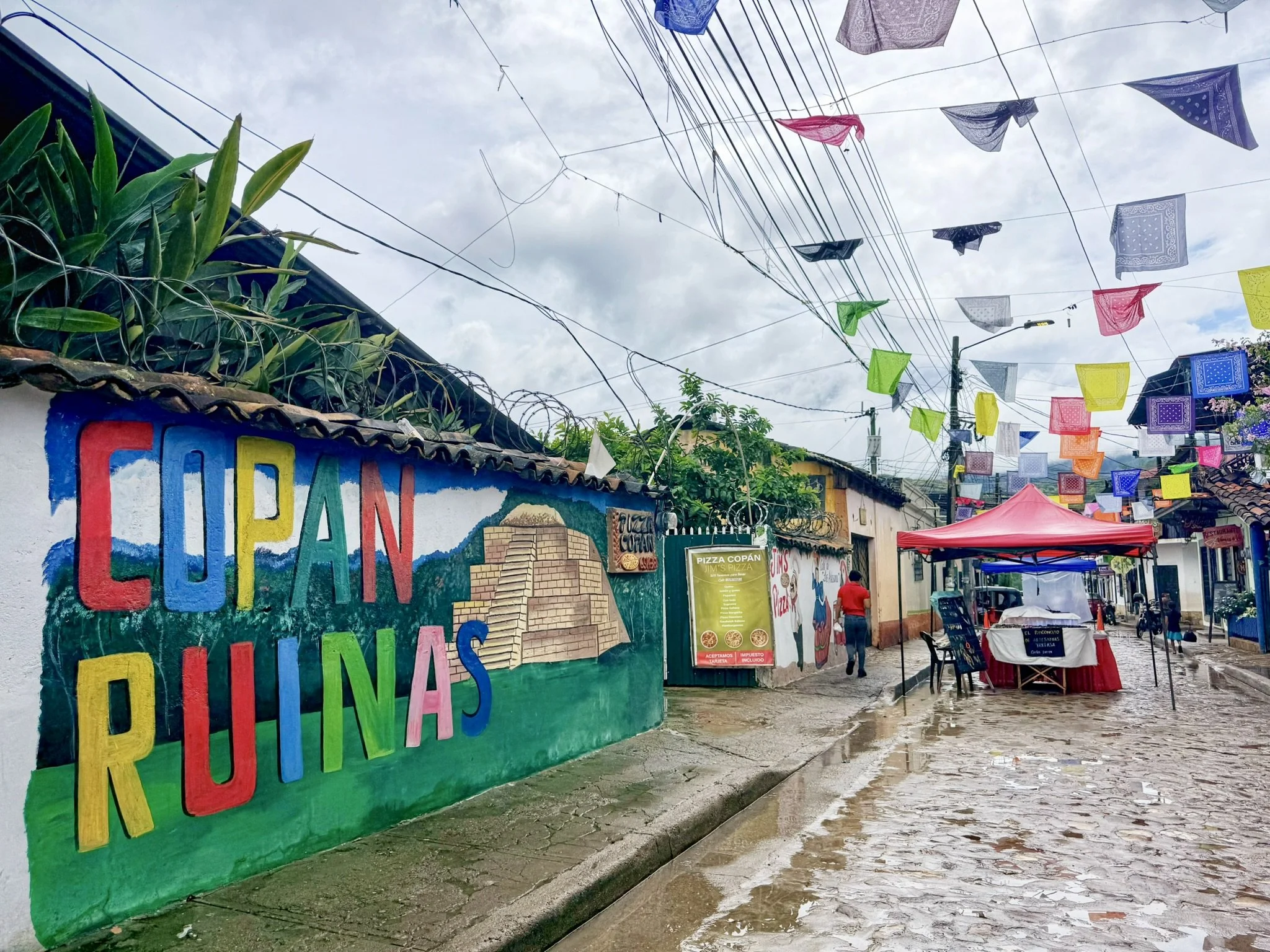
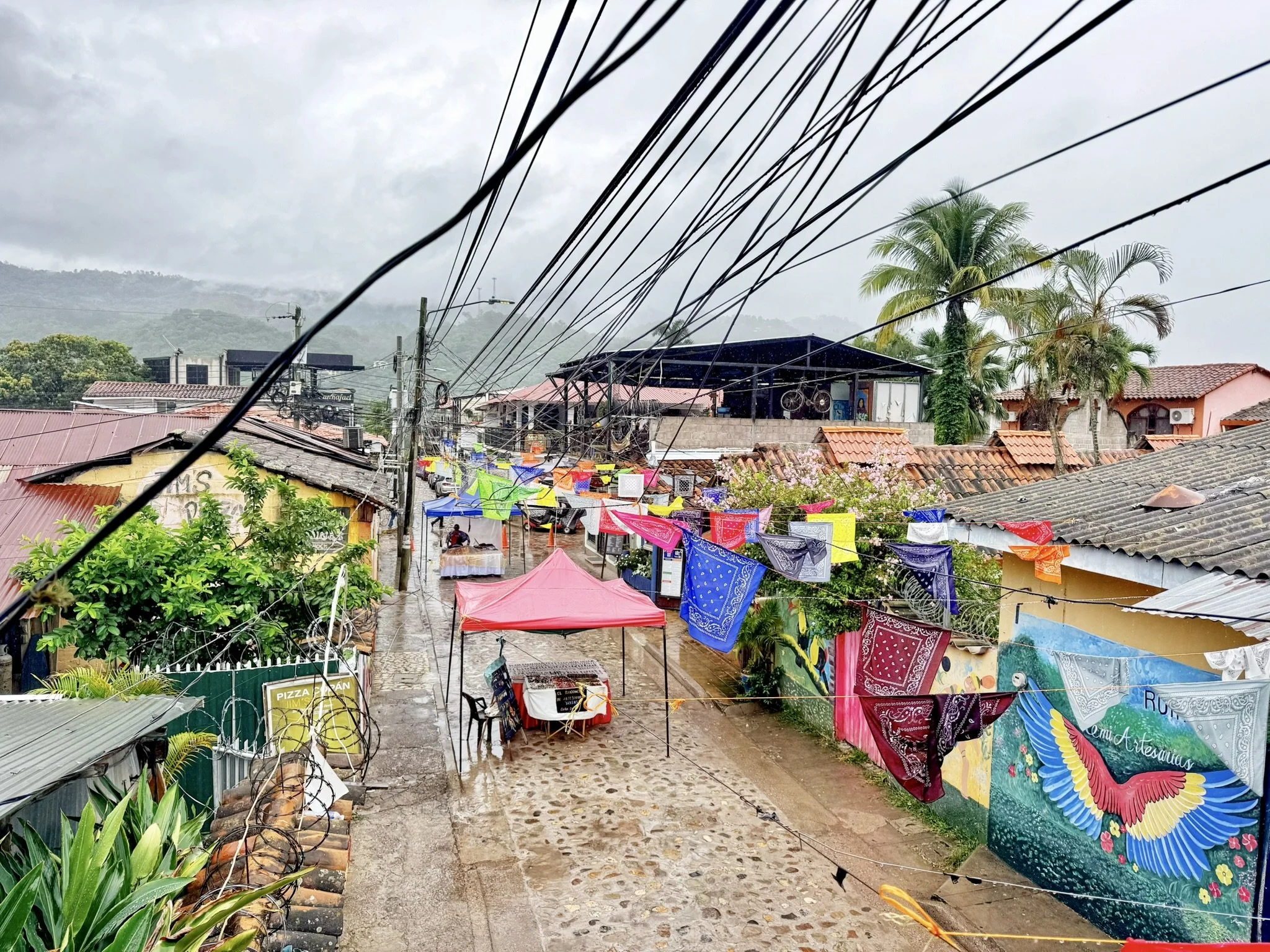
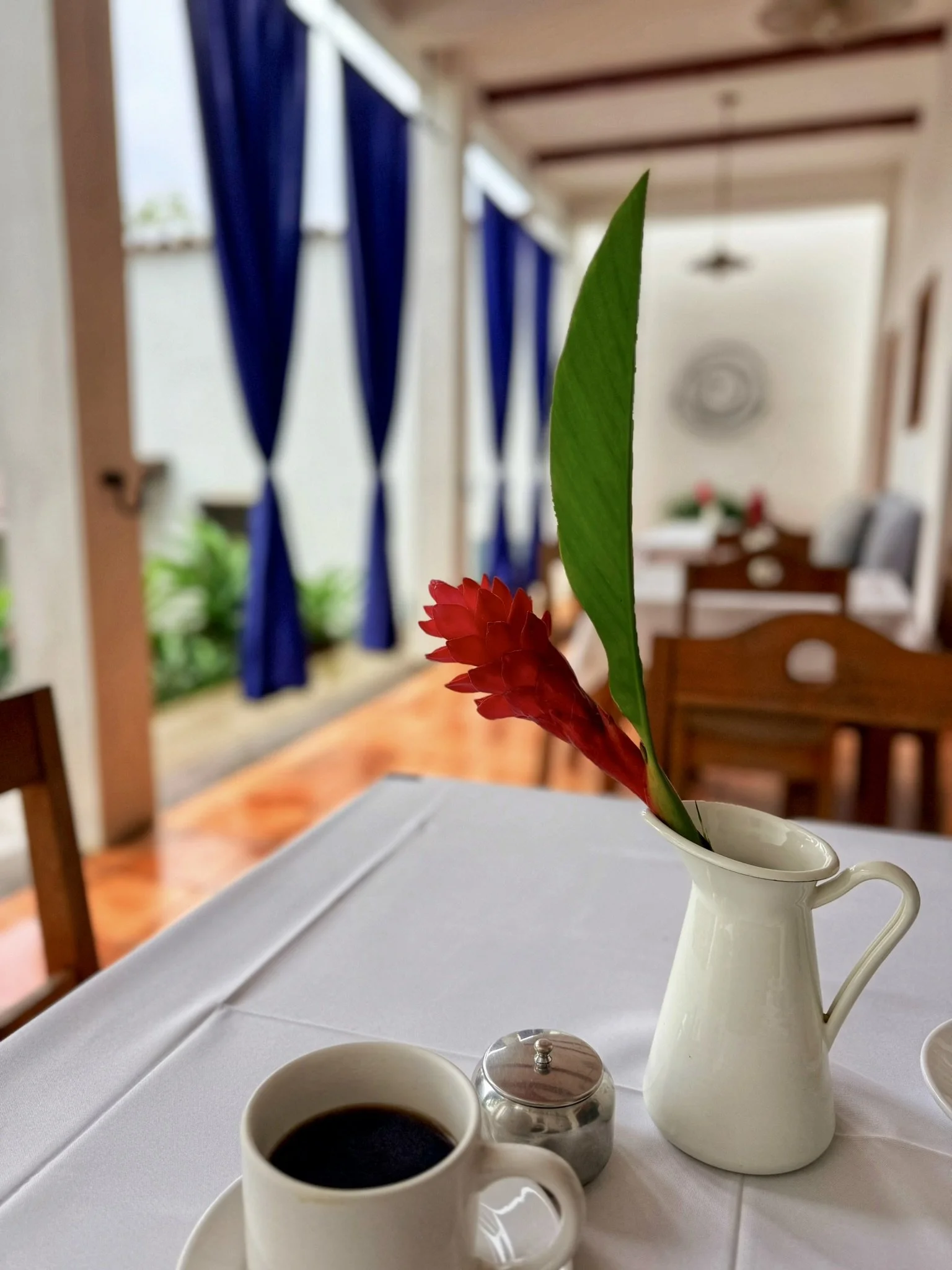
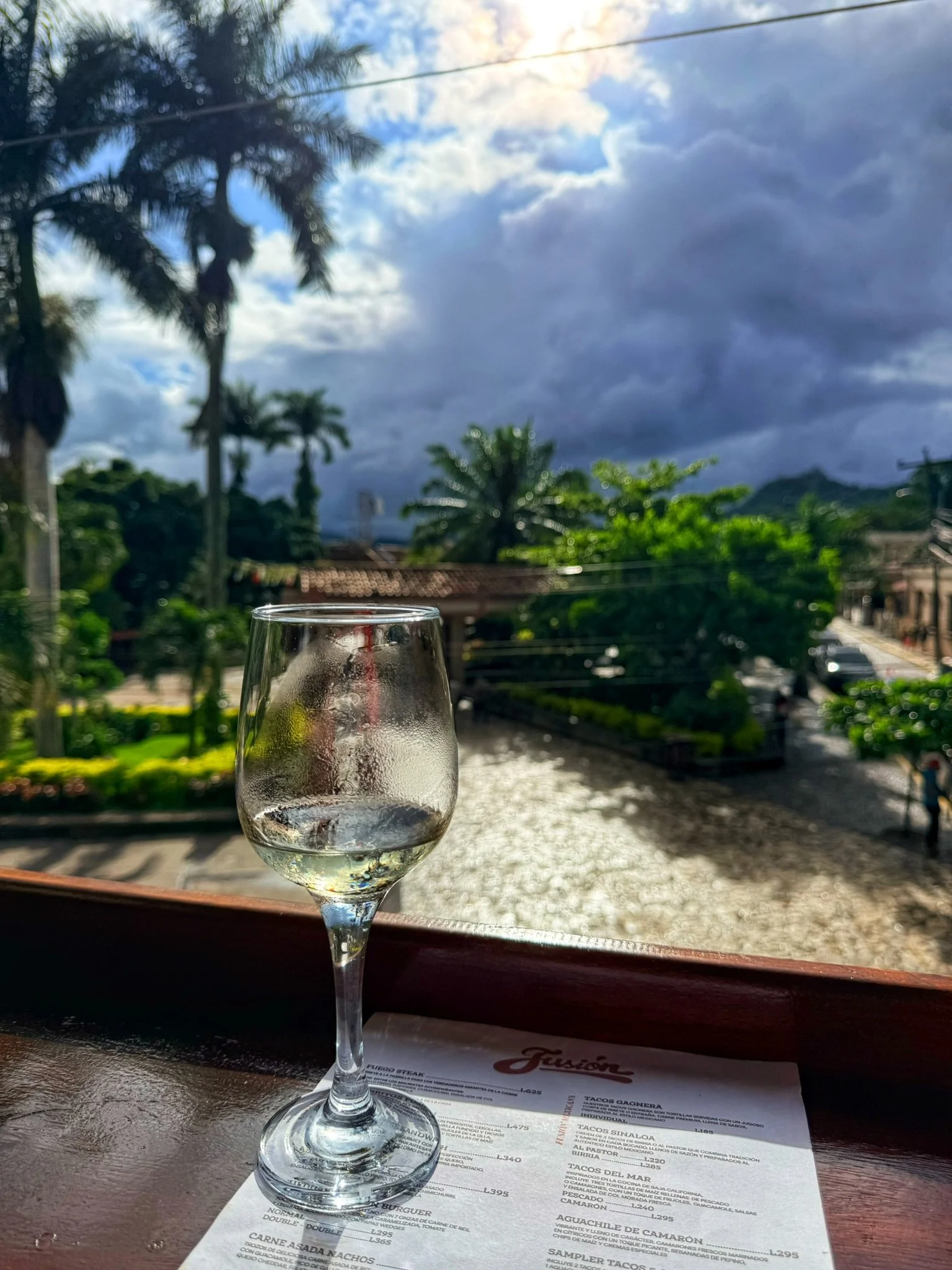
Fortunately, exploring the ancient ruins doesn’t mean you have to rough it in the middle of nowhere. Just a short walk away is the sleepy little town of Copán Ruinas, where we spent several days wandering around and getting to know the place.
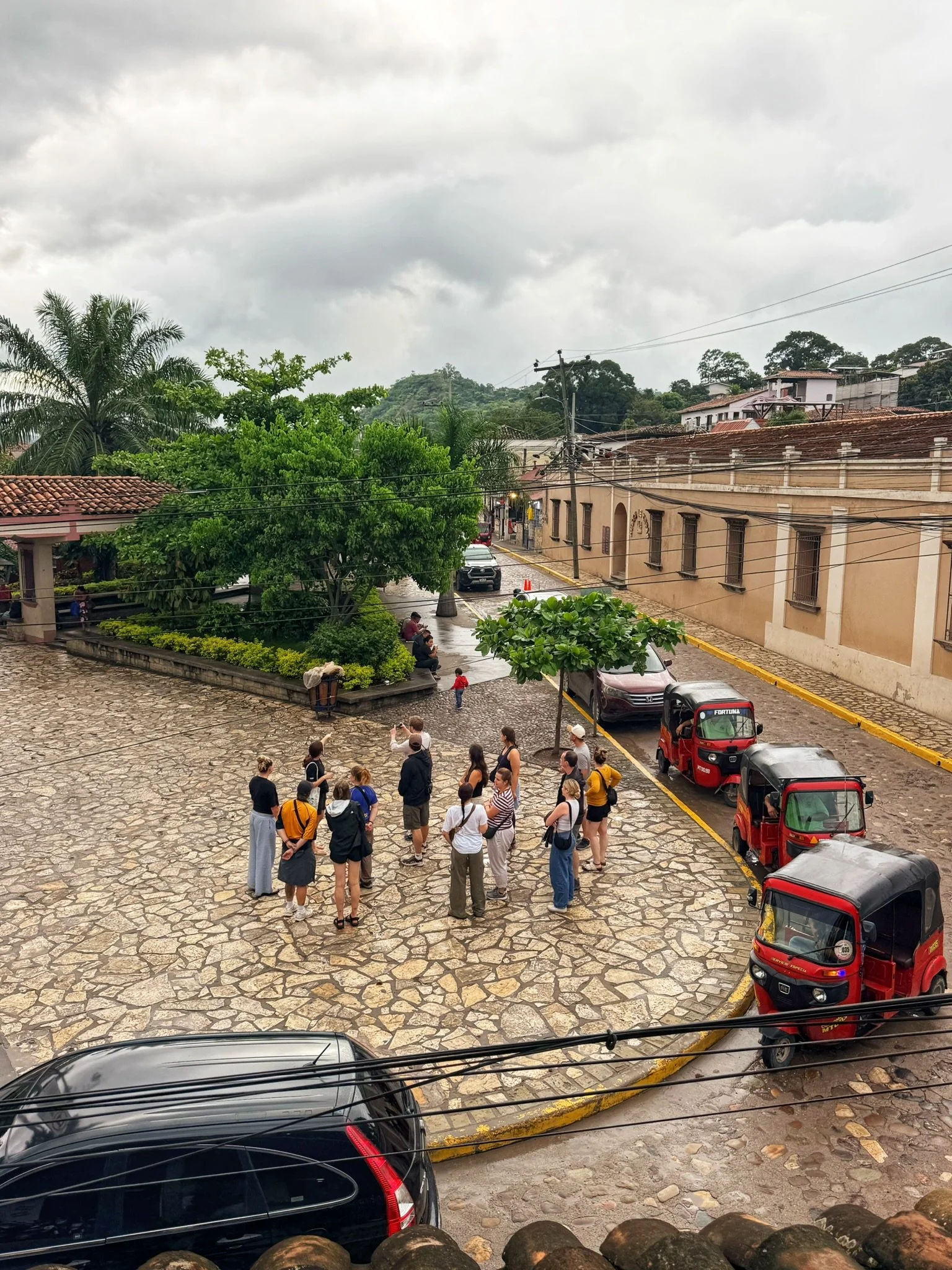
The town has plenty of charm: colorful murals, decent restaurants, and a lovely central square that serves as its social heart. It’s the kind of place where you can slow down, wander without much of a plan, and enjoy a few days of doing very little.
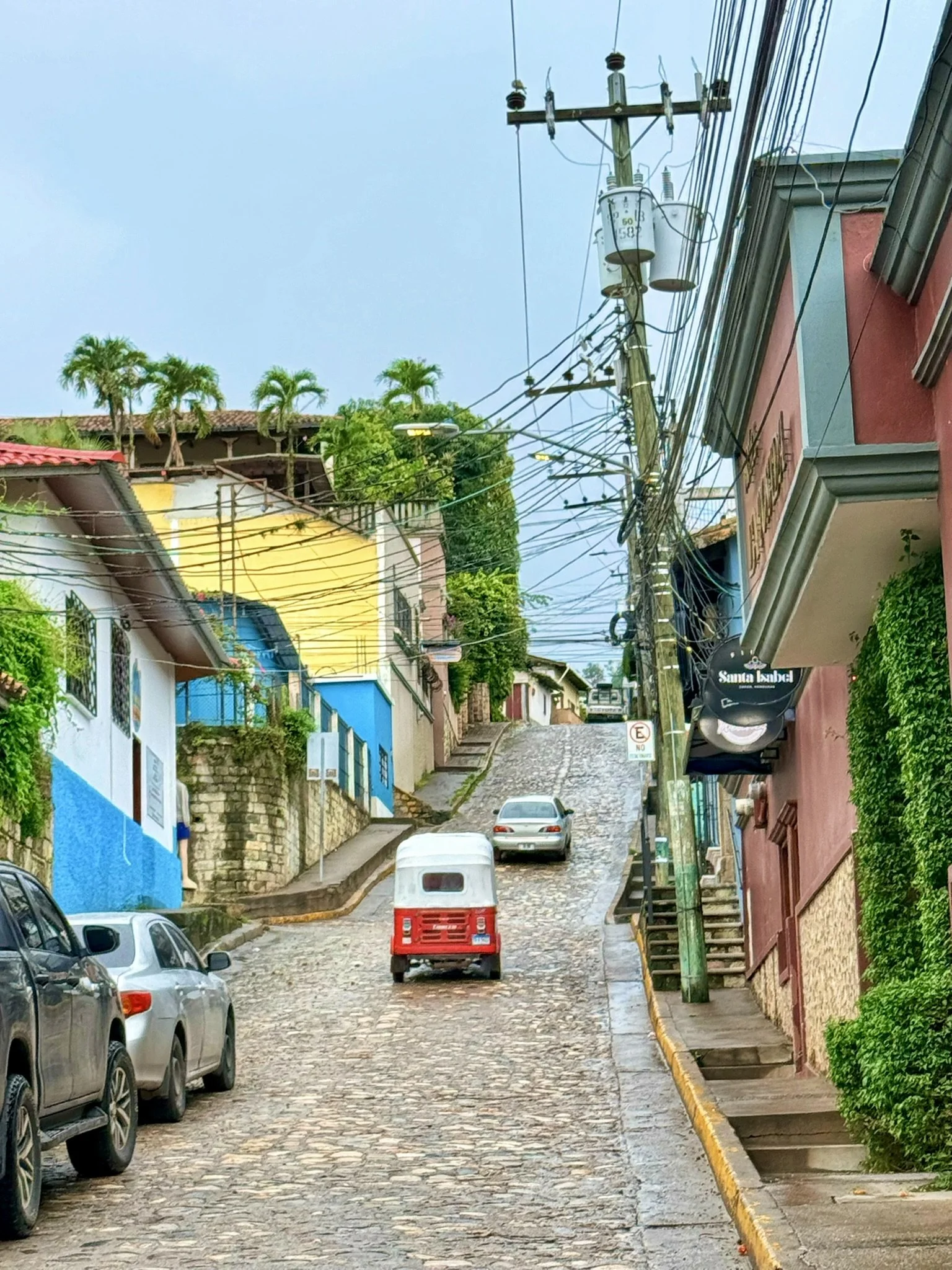
One thing we hadn’t quite anticipated was just how hilly the town is. The streets are steep, narrow, and lined with cobblestones, making even a short walk feel like a mini workout.
Our hotel was perched partway up one particularly steep street. We’d happily stroll downhill into town, but after a day of exploring, the uphill return was another story. Tuk-tuks became our preferred mode of transportation for the ride back. Sometimes, there’s no need to prove anything.
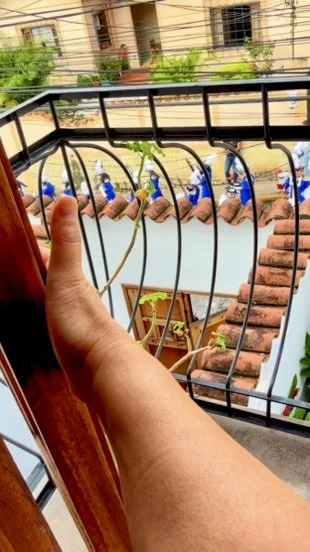
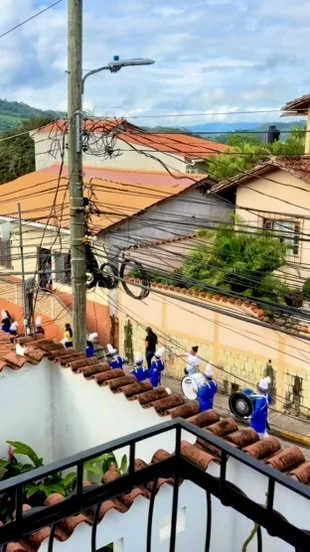
One morning, we were treated to a rather unexpected wake-up call: a school marching band parading right outside our hotel-room window. We were effectively serenaded by brass instruments and enthusiastic drumming as the students celebrated the school’s 48th anniversary.
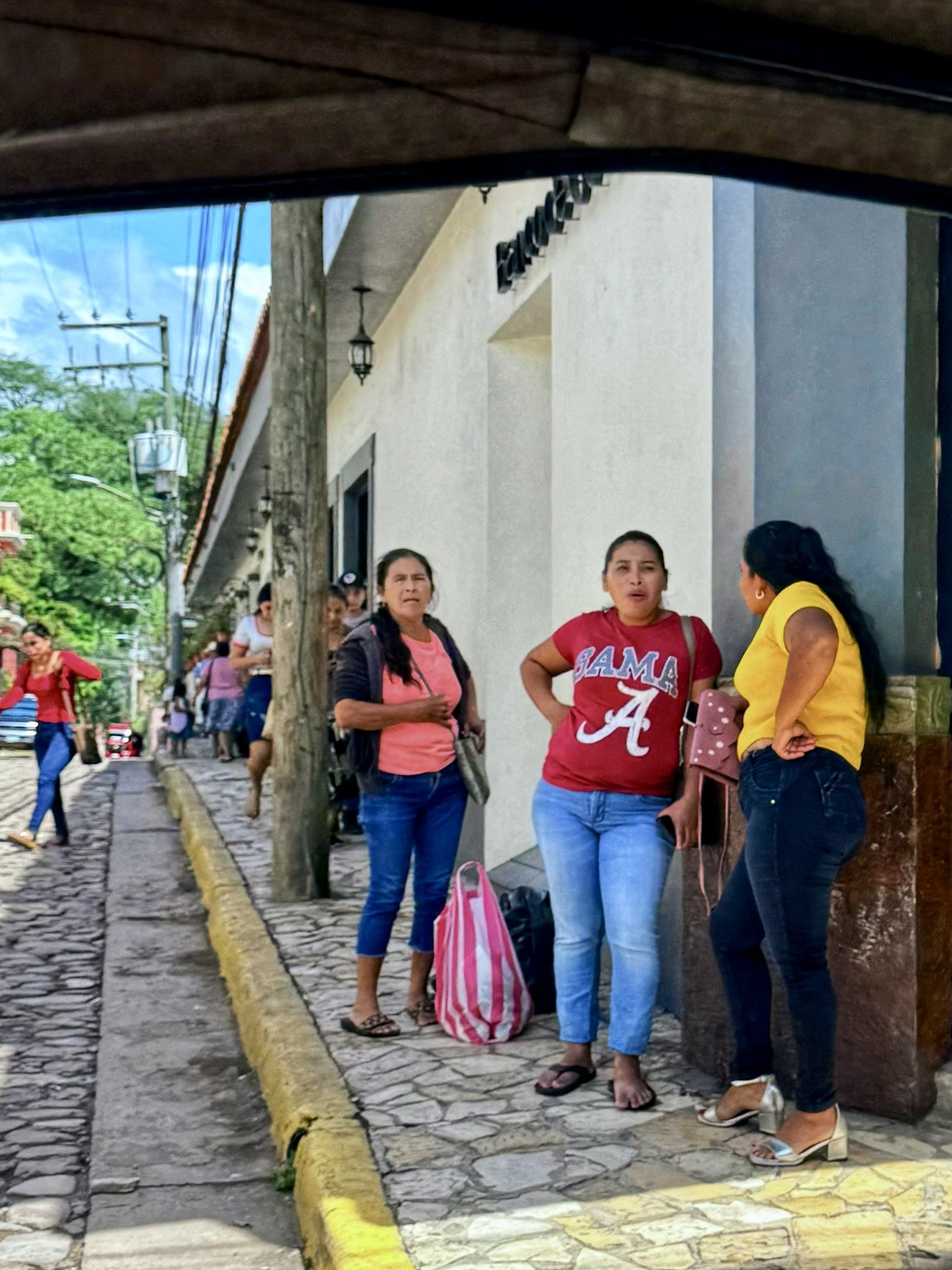
On another day, we spotted a local wearing an Alabama shirt! You can’t slip a crimson Bama shirt past us. We seem to run into Alabama gear everywhere we travel around the world, but somehow didn’t expect to find it in the remote corners of western Honduras. We’re pretty certain she had absolutely no idea what kind of glory she was wearing. 😂 Roll Tide!
Between the remarkable artistry of ancient Copán and the laid-back rhythms of modern Copán Ruinas, we found a destination well worth the effort it takes to get there. The ruins offer a glimpse into a sophisticated Maya kingdom, while the town provides a welcome place to slow down, explore, and soak up everyday Honduran life.
Old and new, vieja y nueva — both were worth the trip.