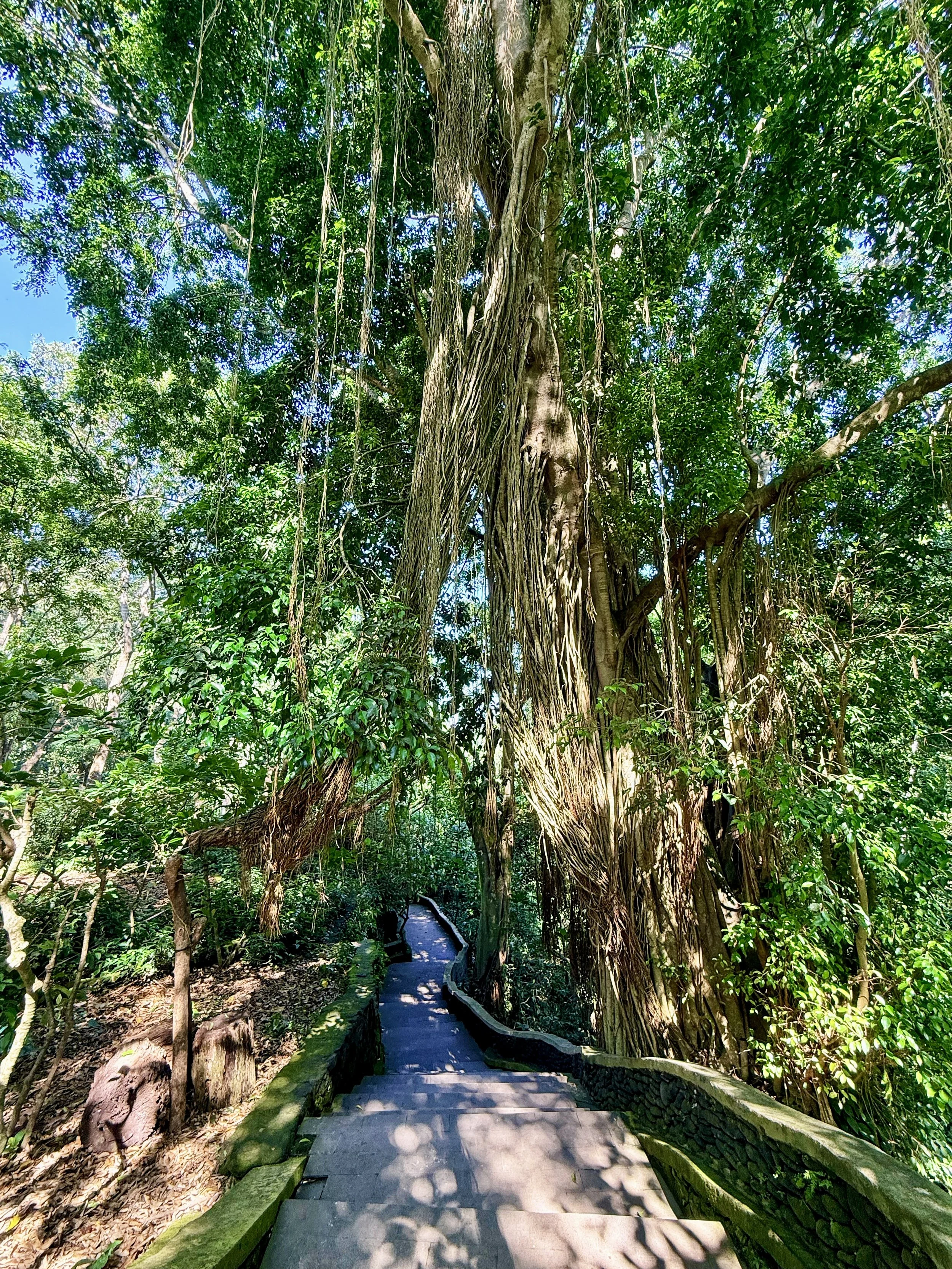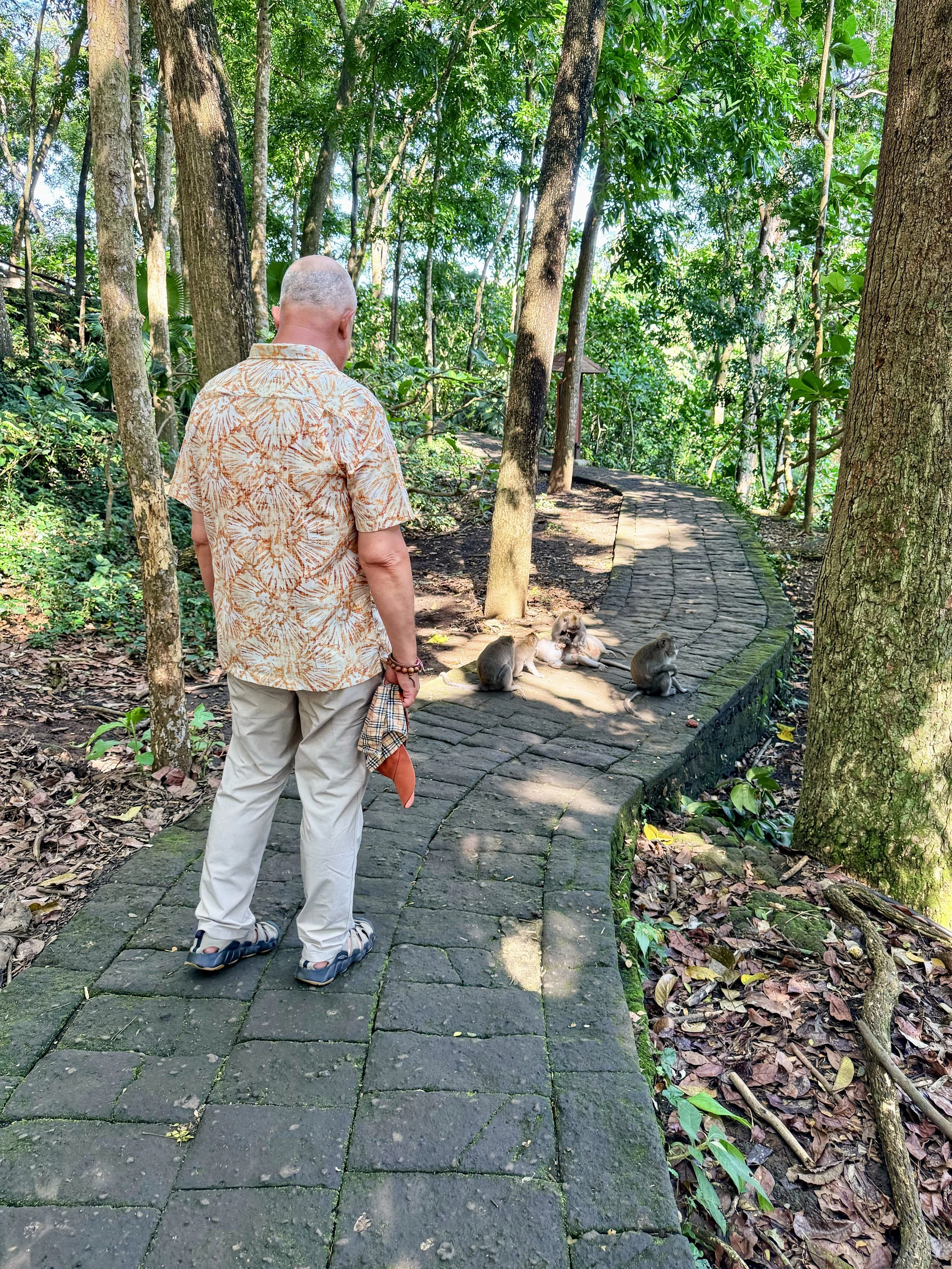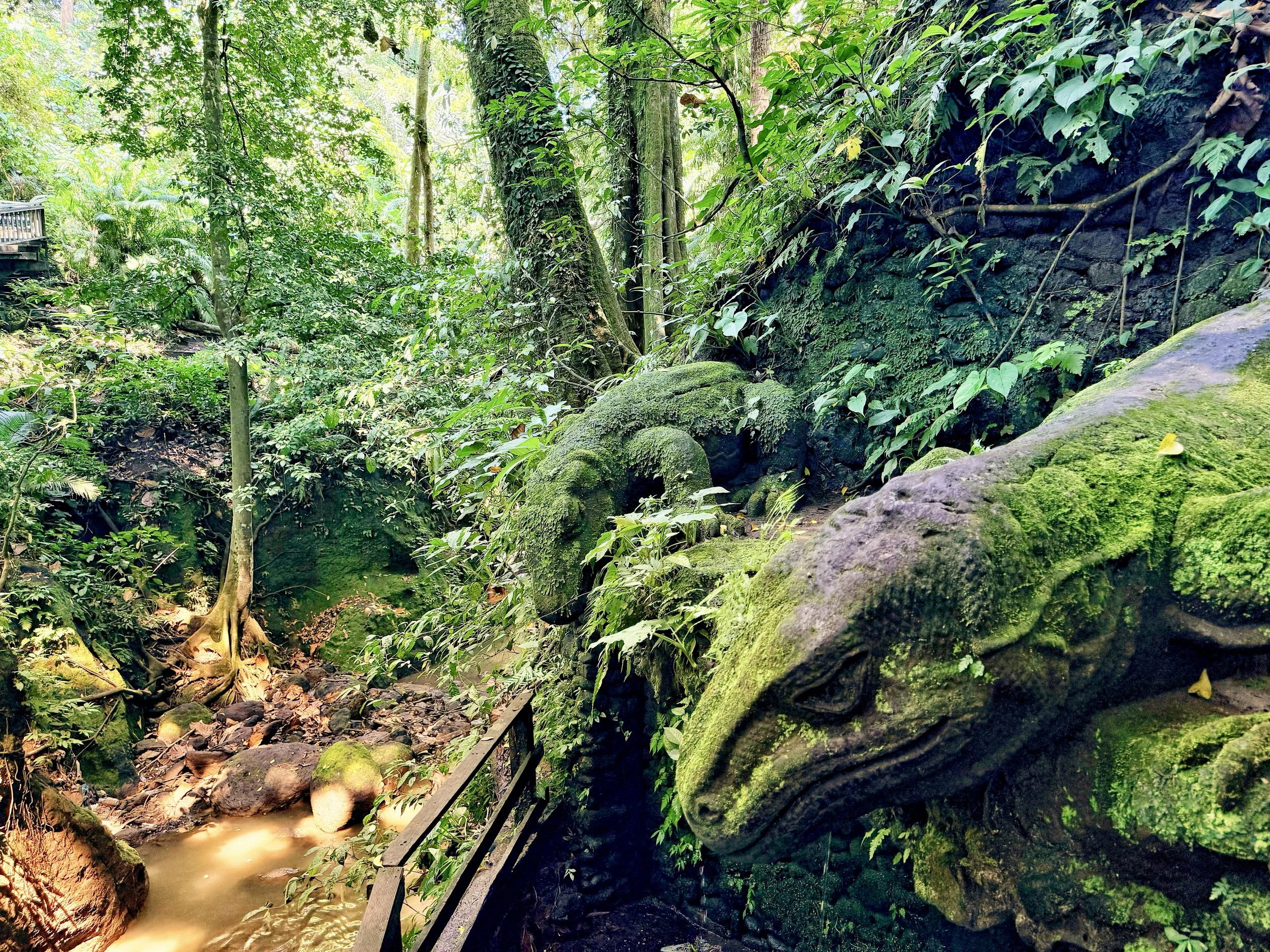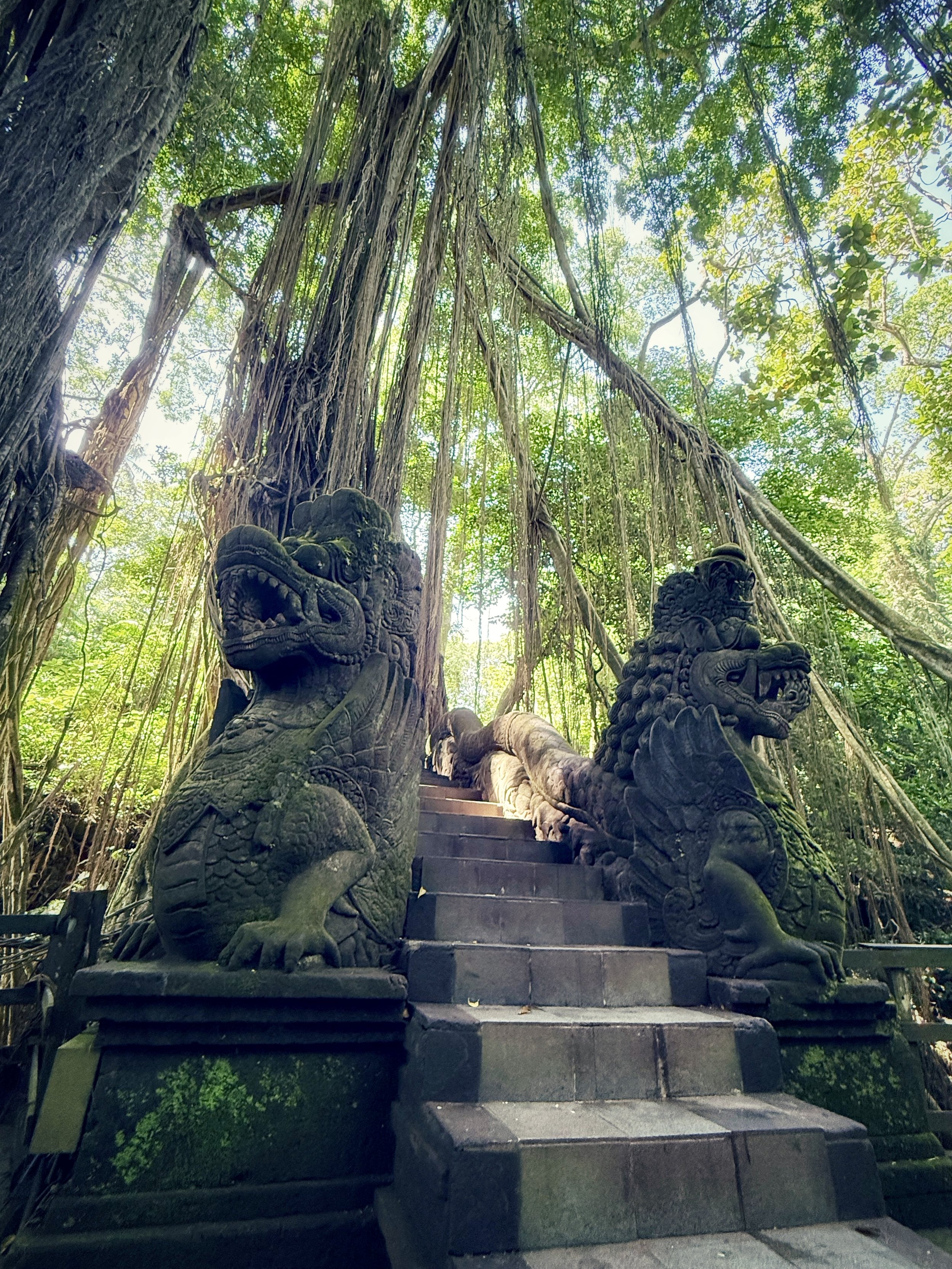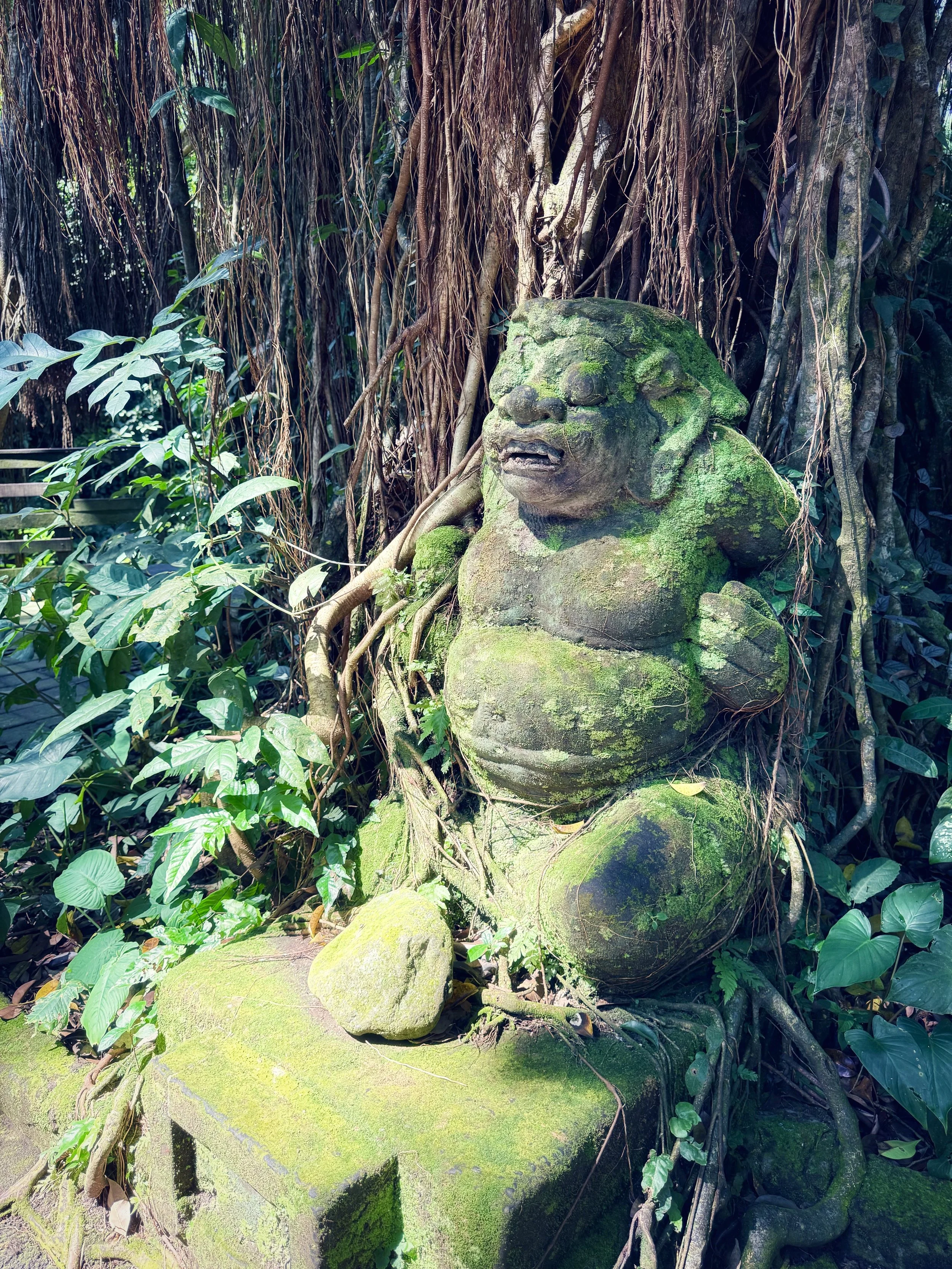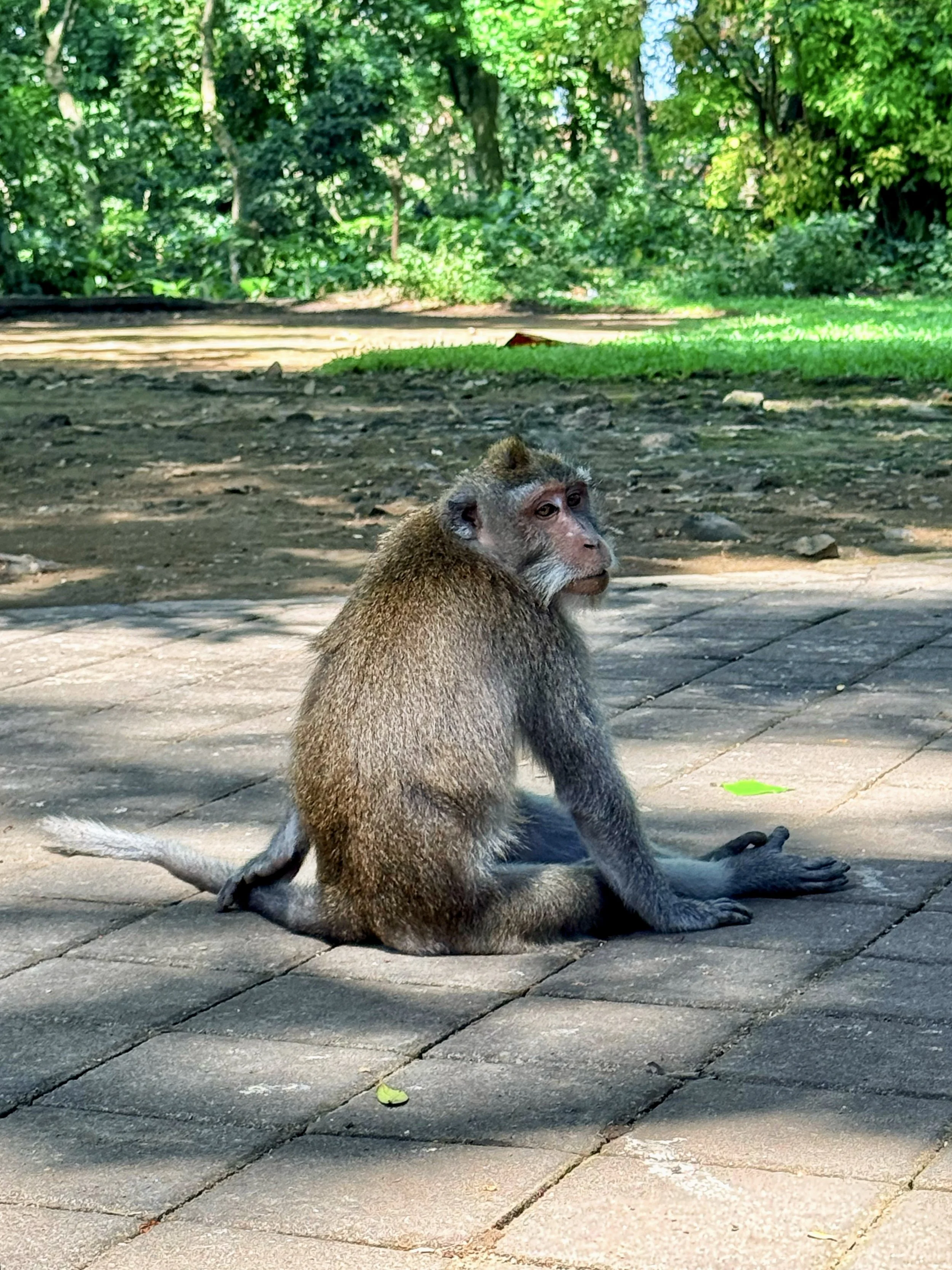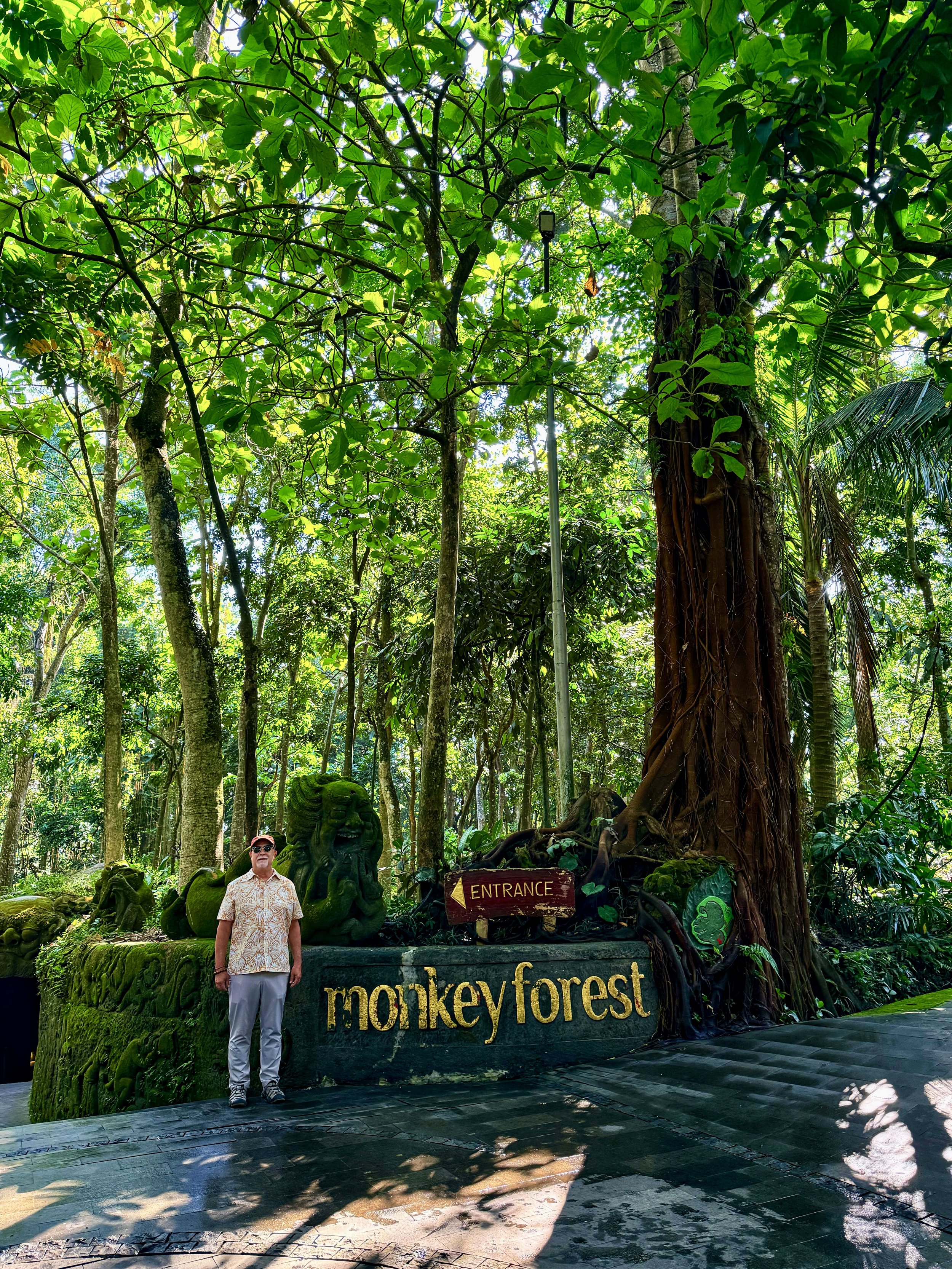
During the 14th century, way before Indonesia was even a conception of a country, the village of Padangtegal existed (now Ubud, Bali) next a sacred ancient forest that housed spiritual forces and guardian spirits. In particular, the long-tailed macaque monkeys have always been seen as sacred animals. They symbolize both protection and mischief with ties to the monkey god, Hanuman—fostering a unique Balinese Hindu connection between humans and wildlife based on Tri Hita Karana (three causes of well-being), which emphasizes harmony between humans, nature, and God.
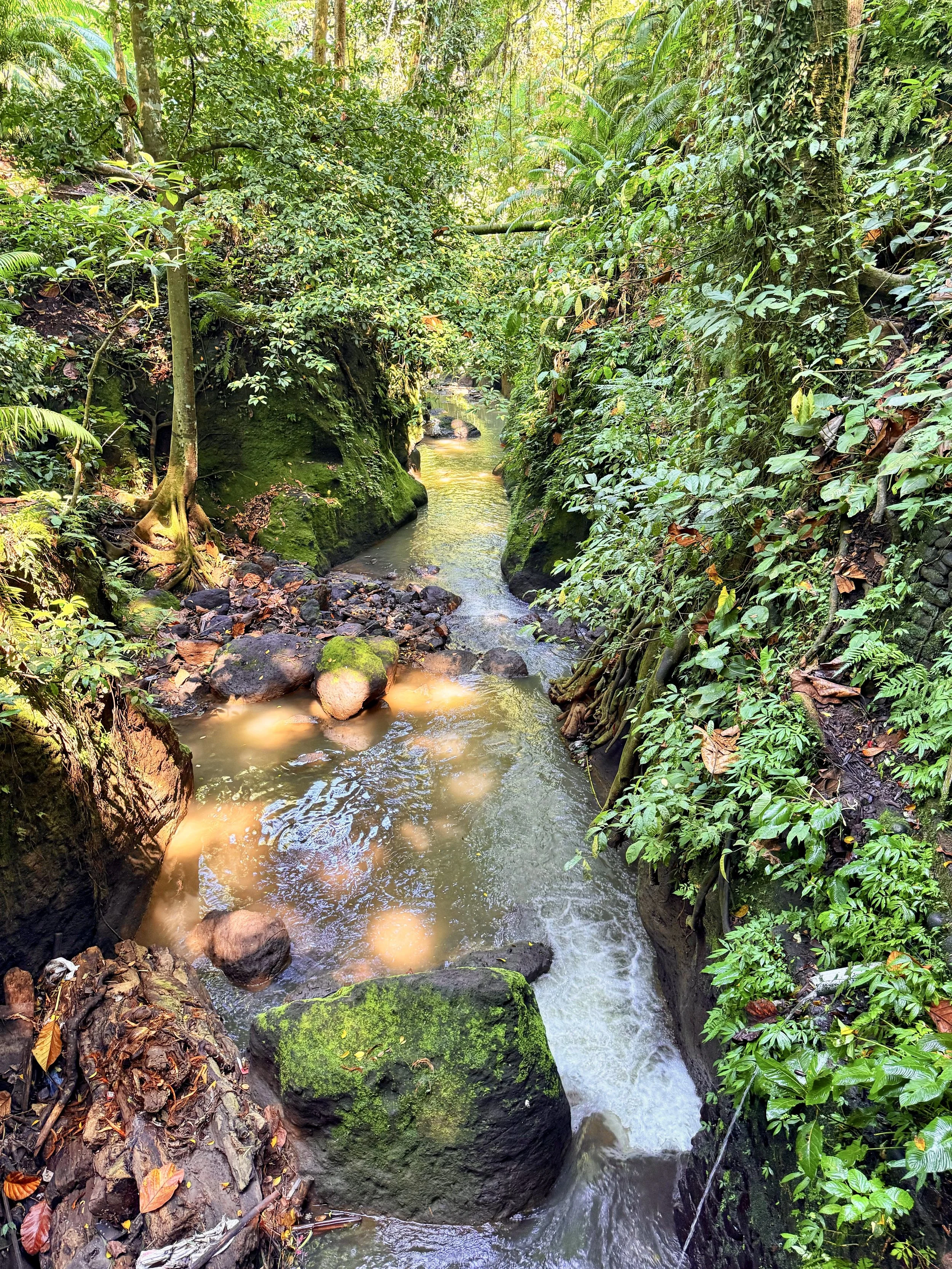
In 1982, the 30 acre forest was officially designated as a Sacred Monkey Forest Sanctuary and operates as a community-based, non-profit organization focused on conservation and research, welcoming visitors while preserving the habitat. Aside from the 1200 monkeys, the forest acts as a green lung for Ubud with its unique biodiversity of foliage and trees.
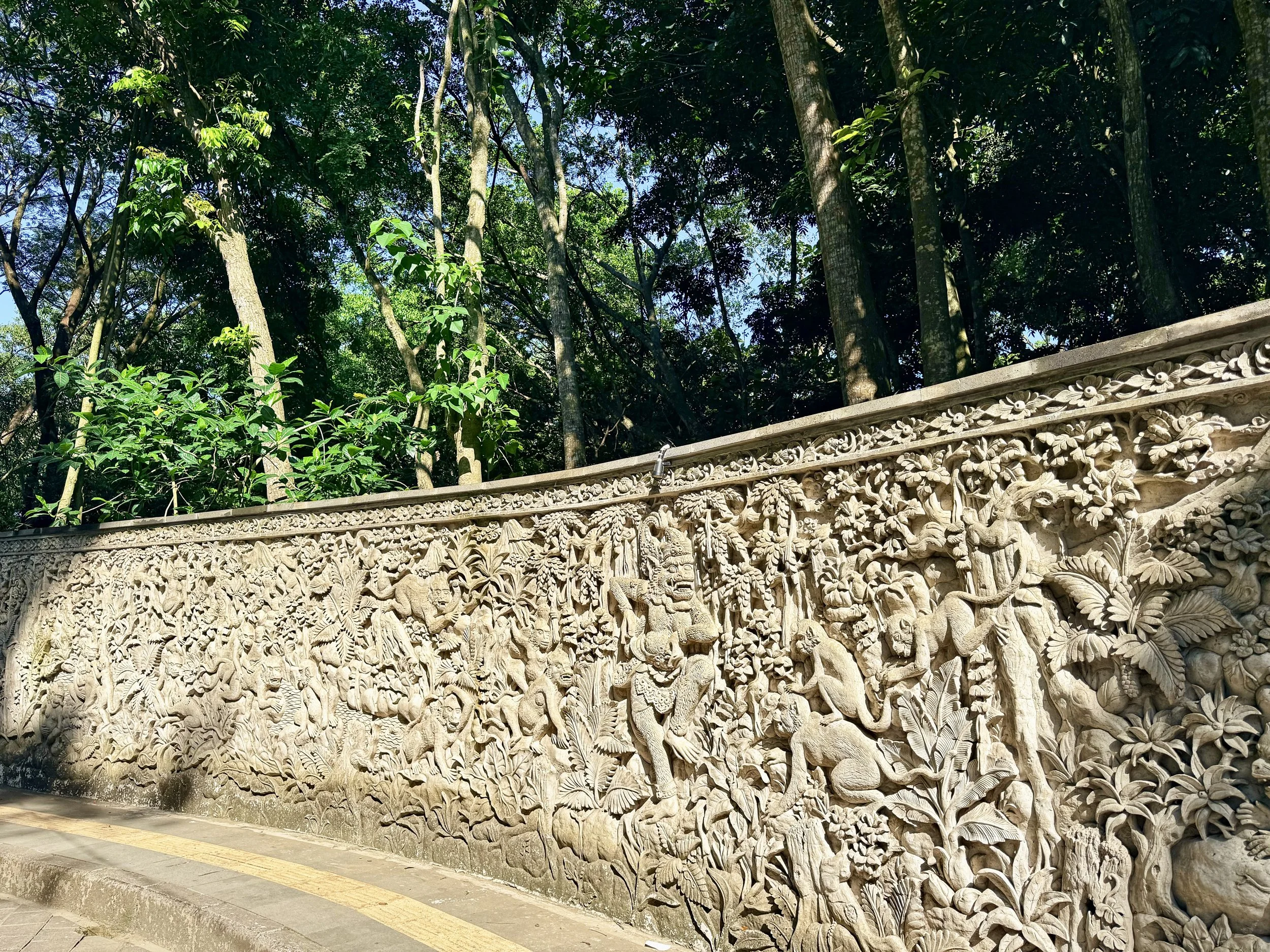
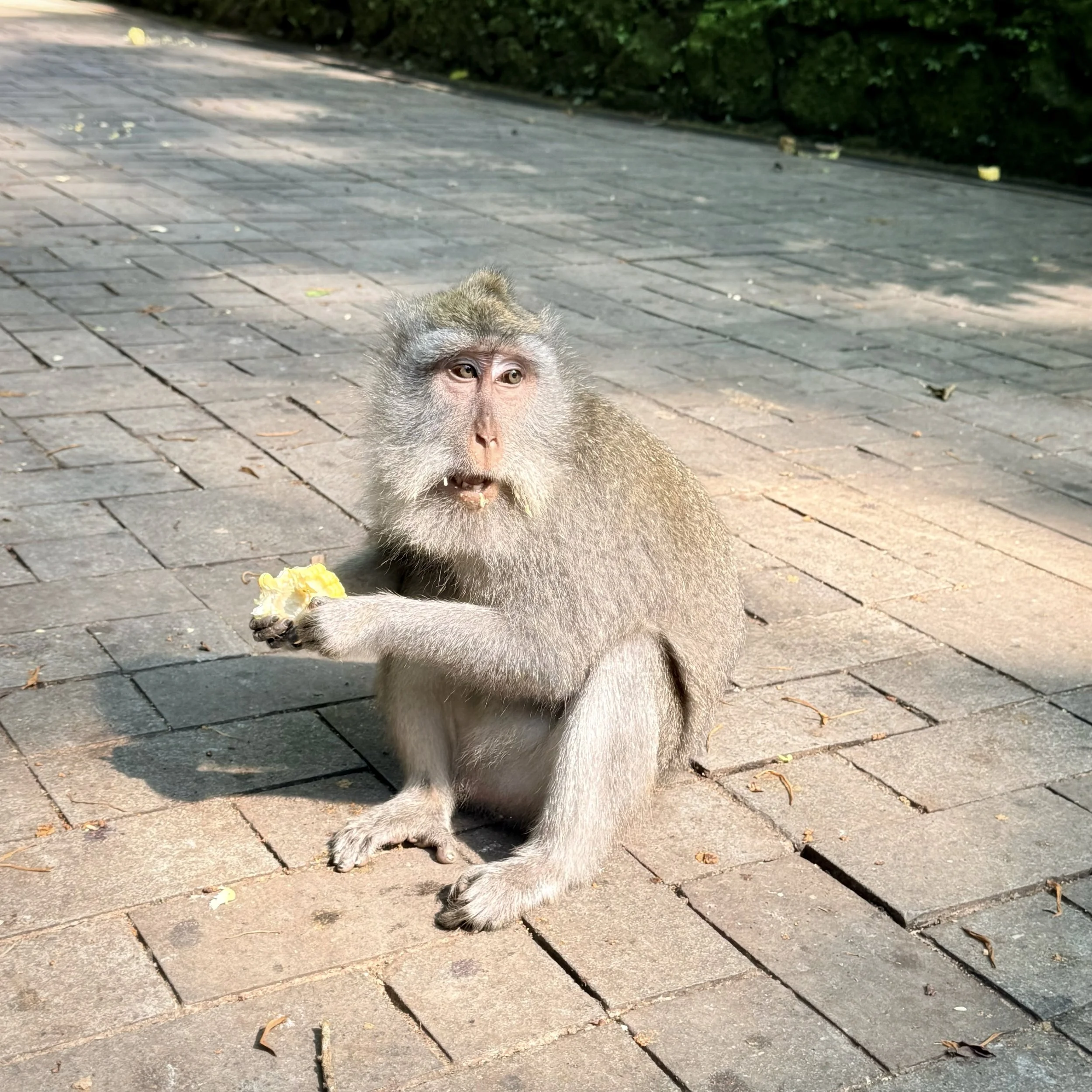
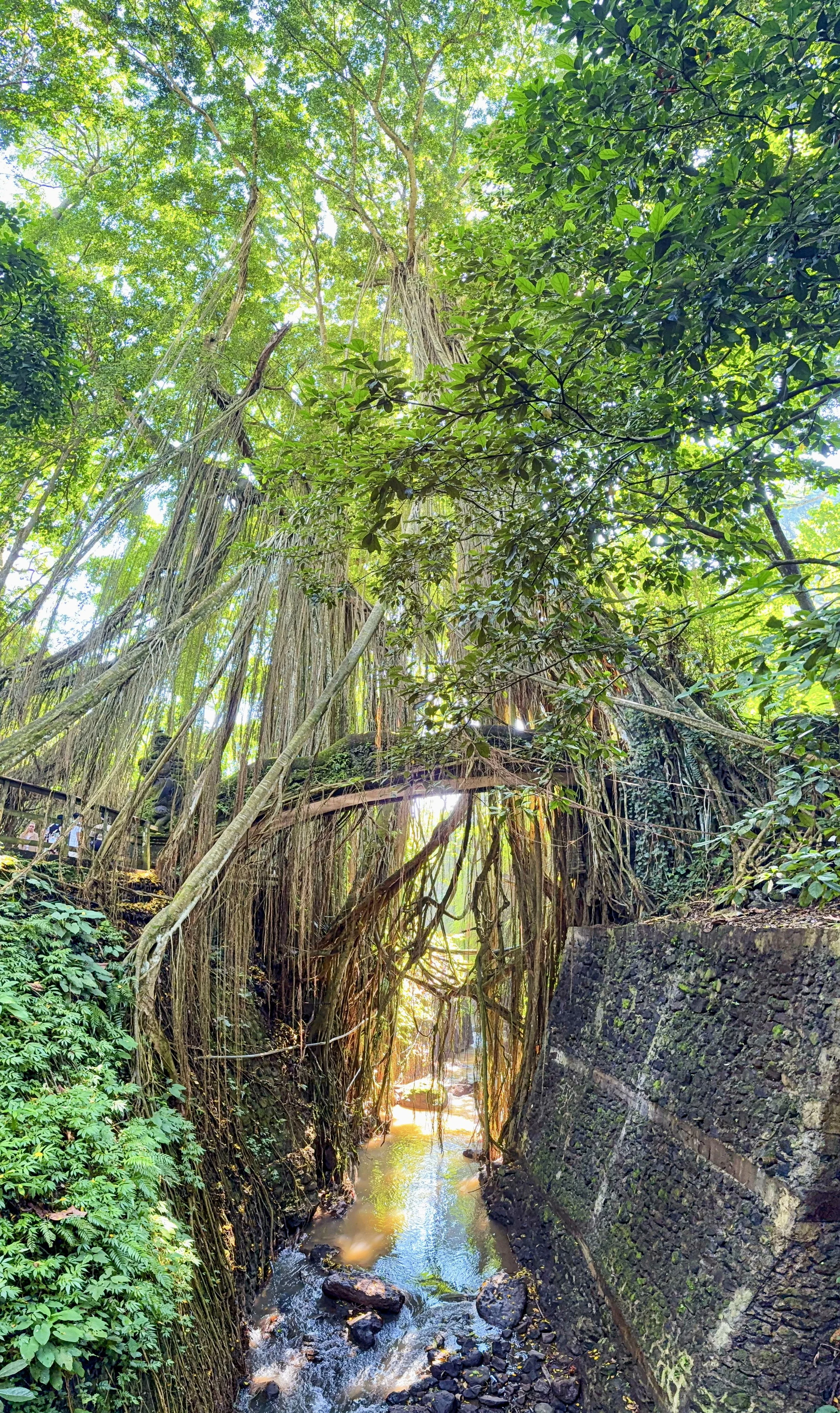
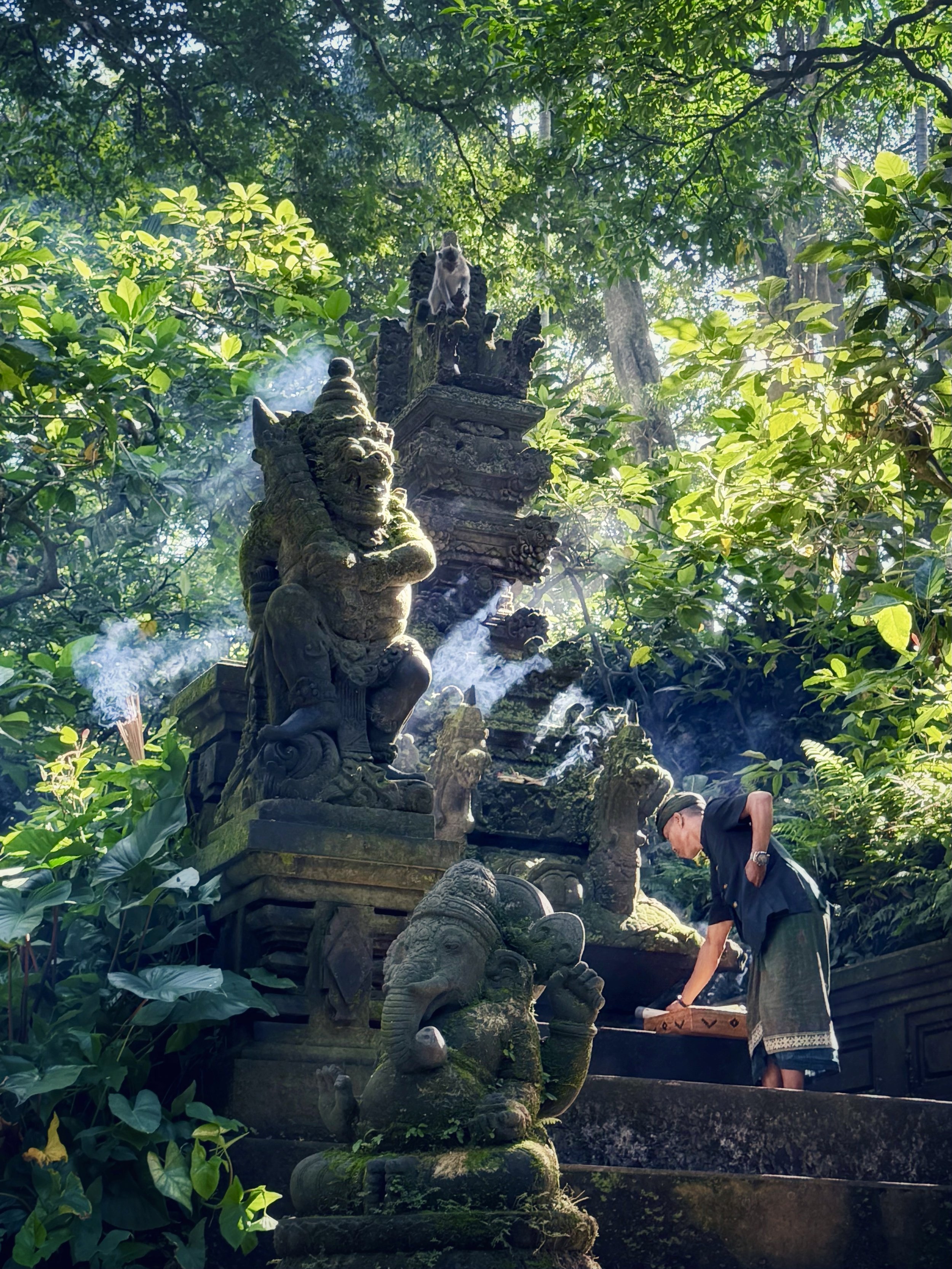
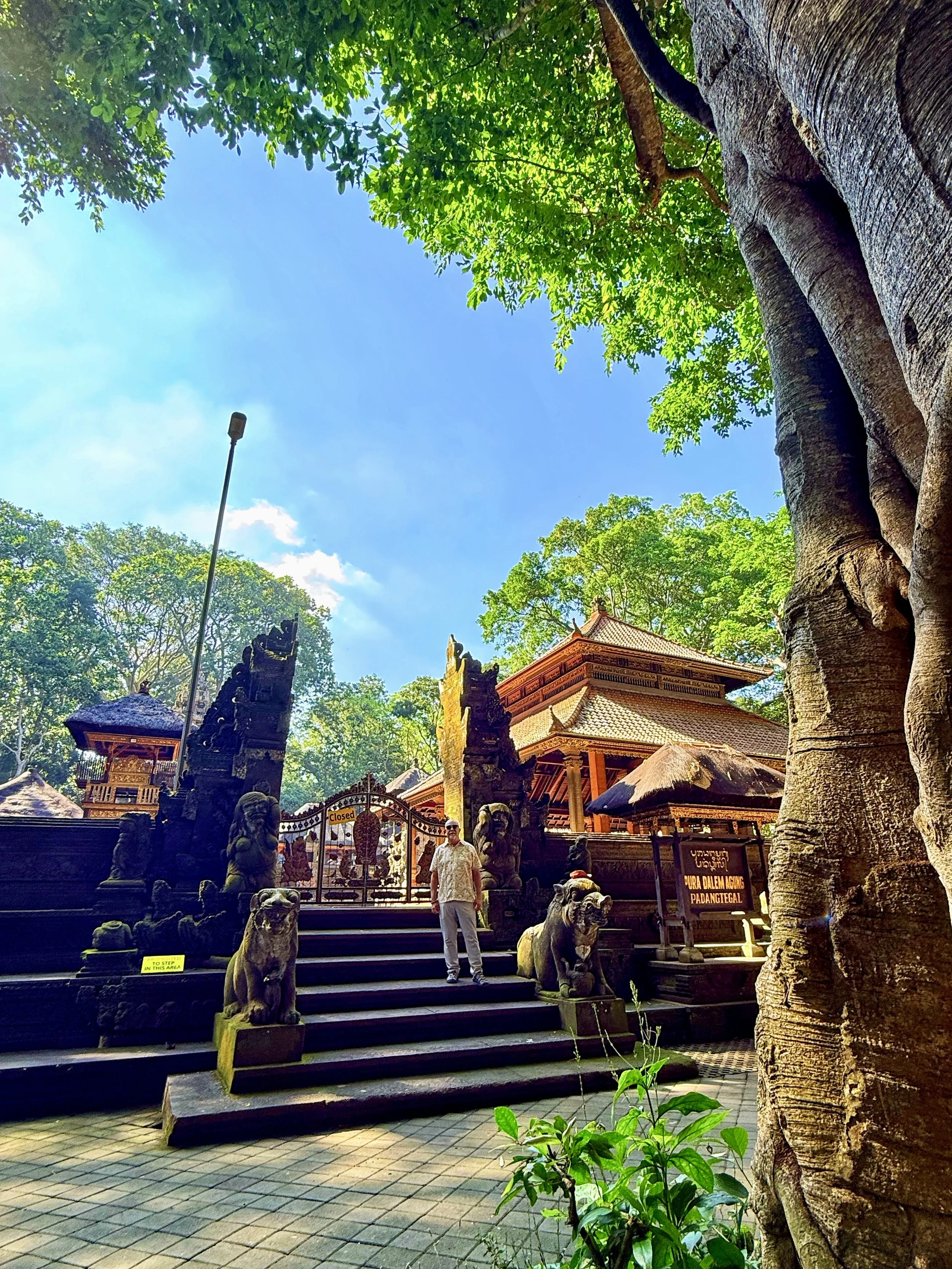
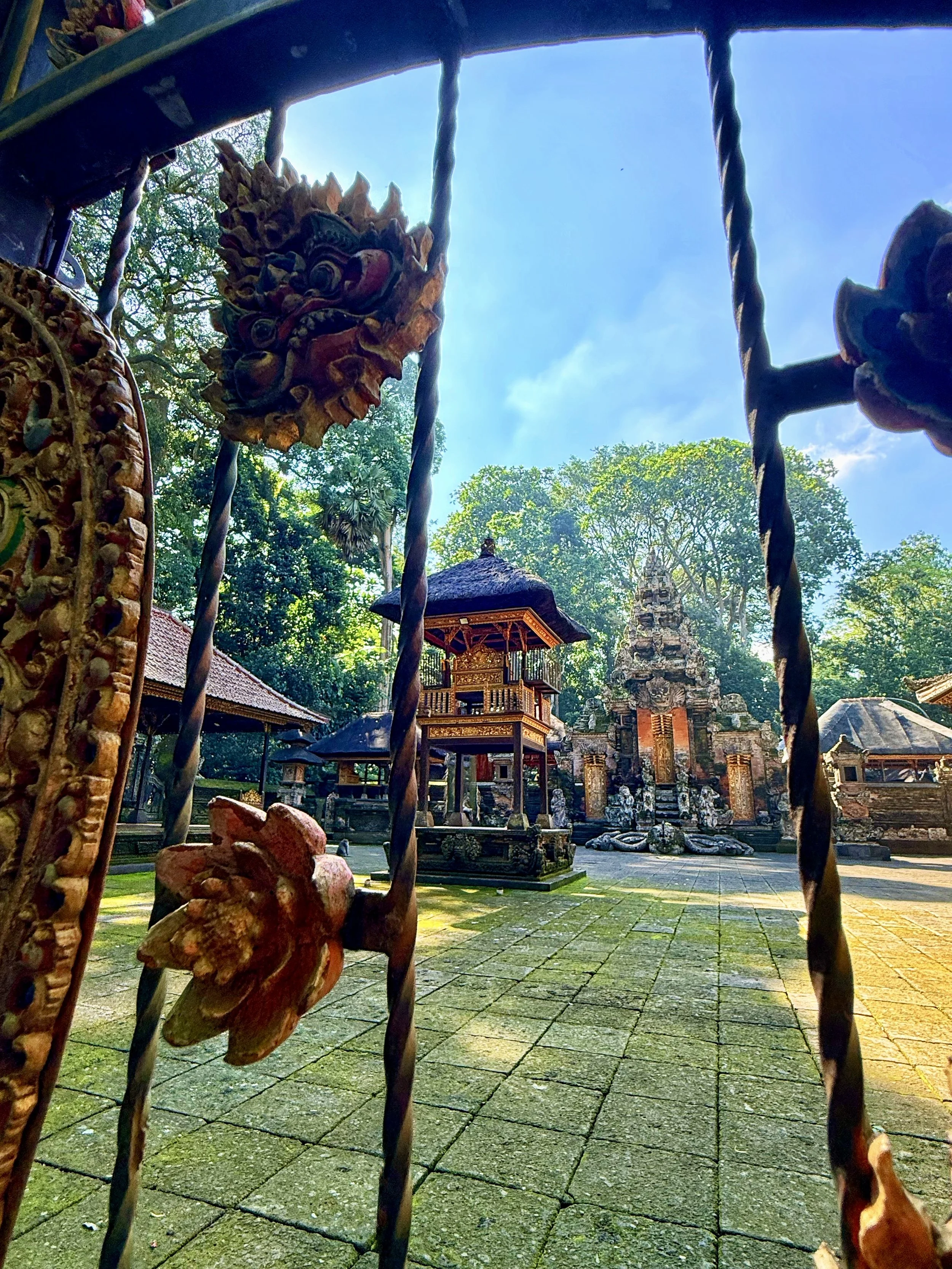
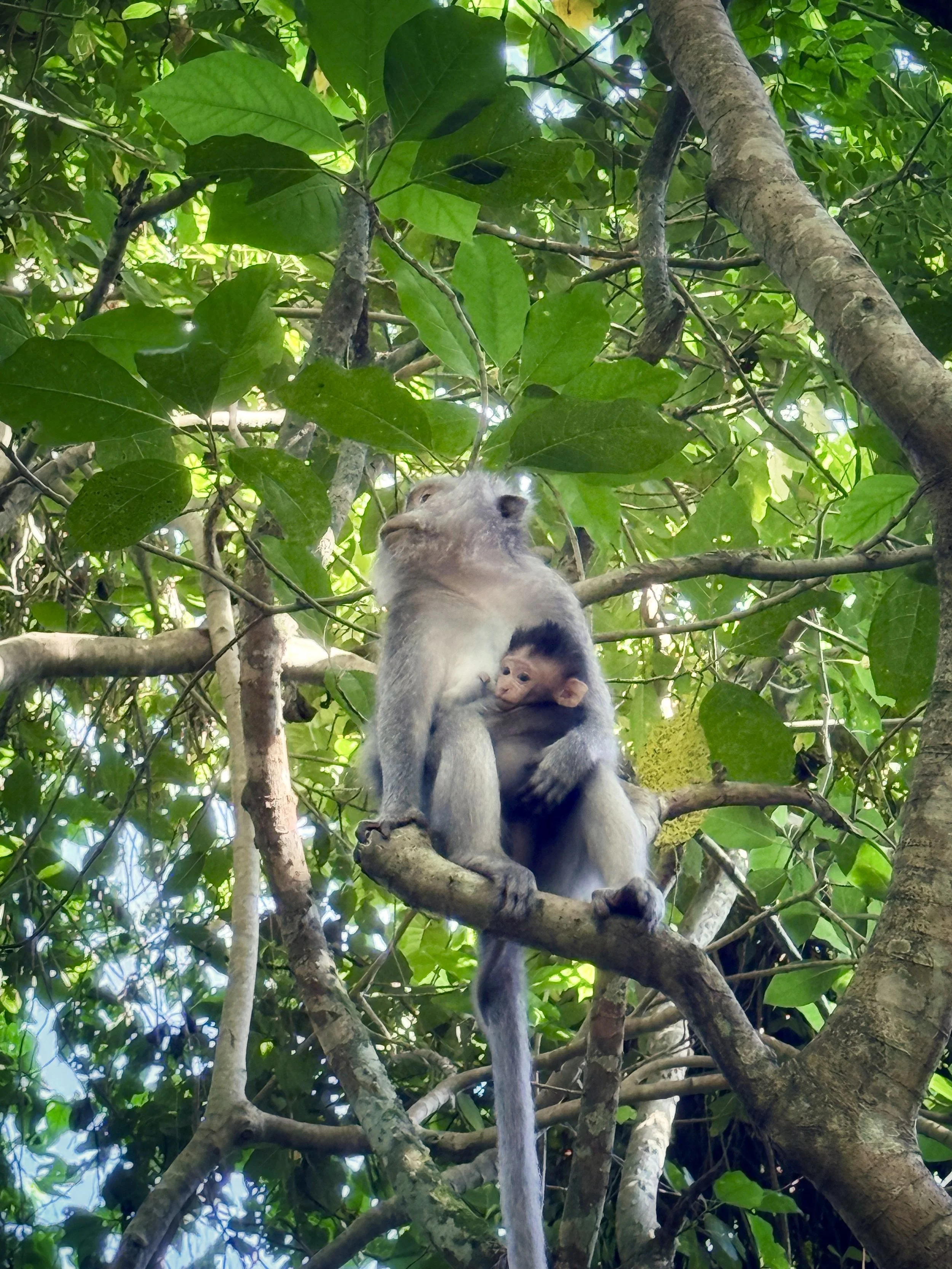
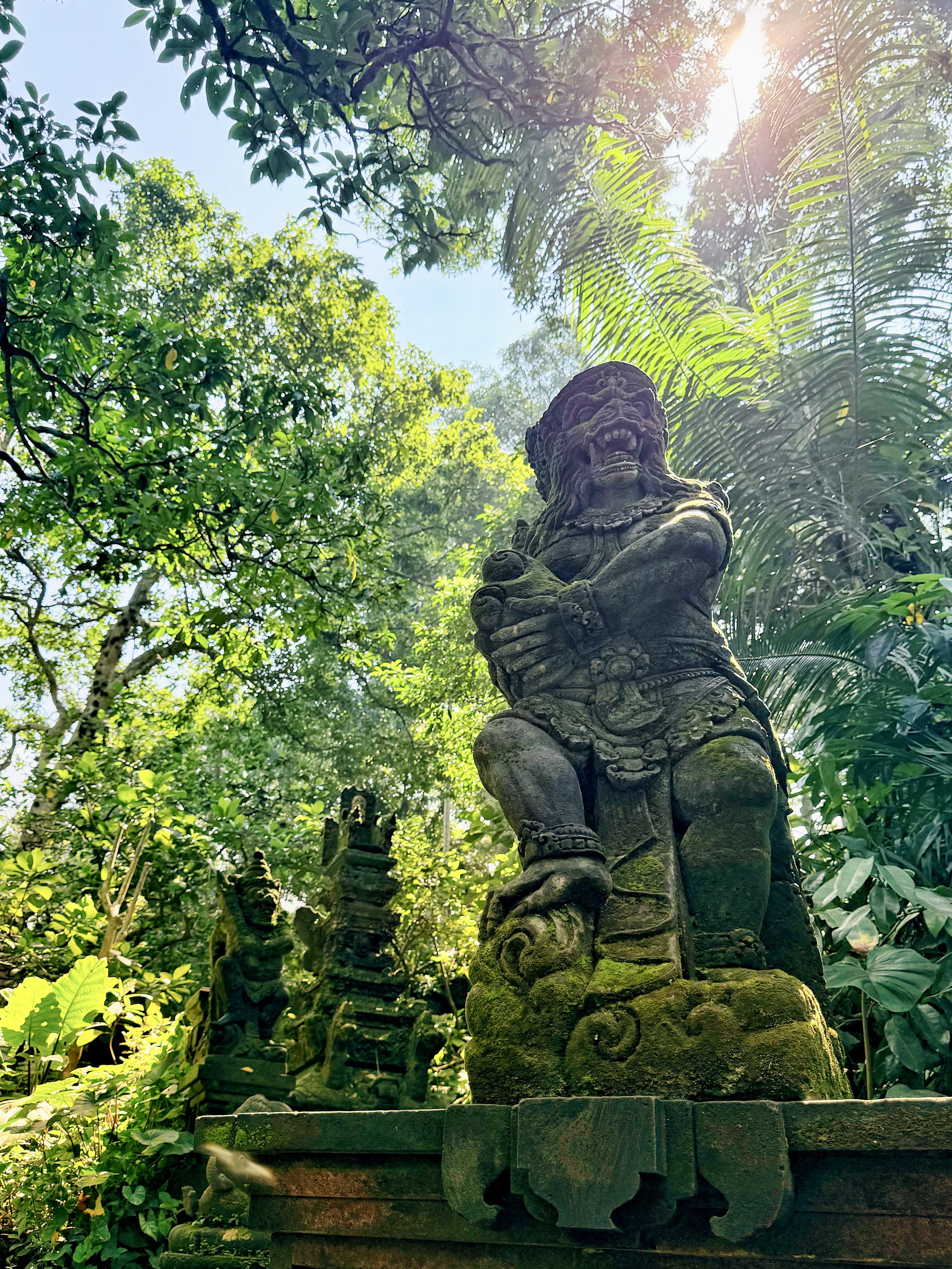
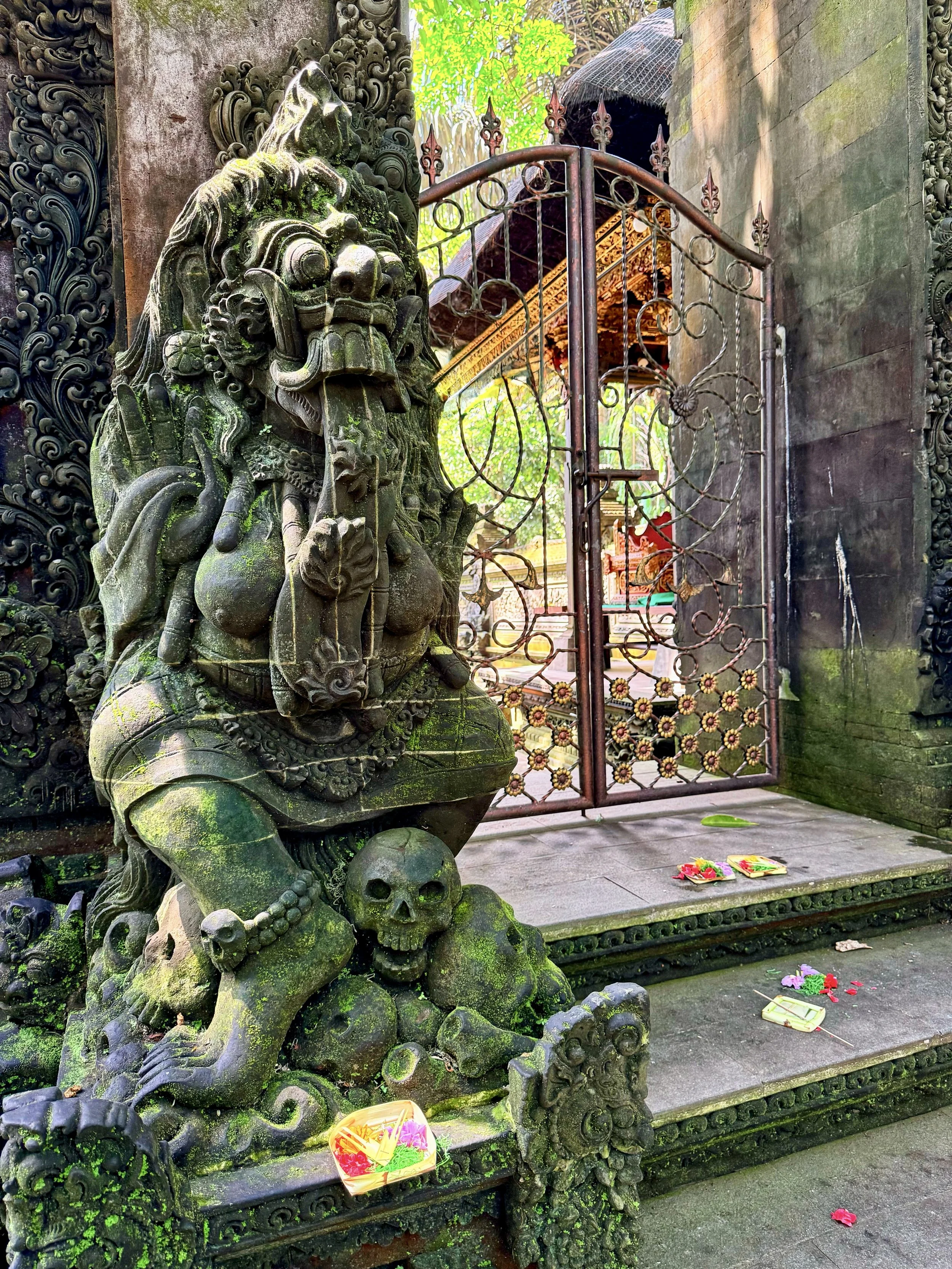
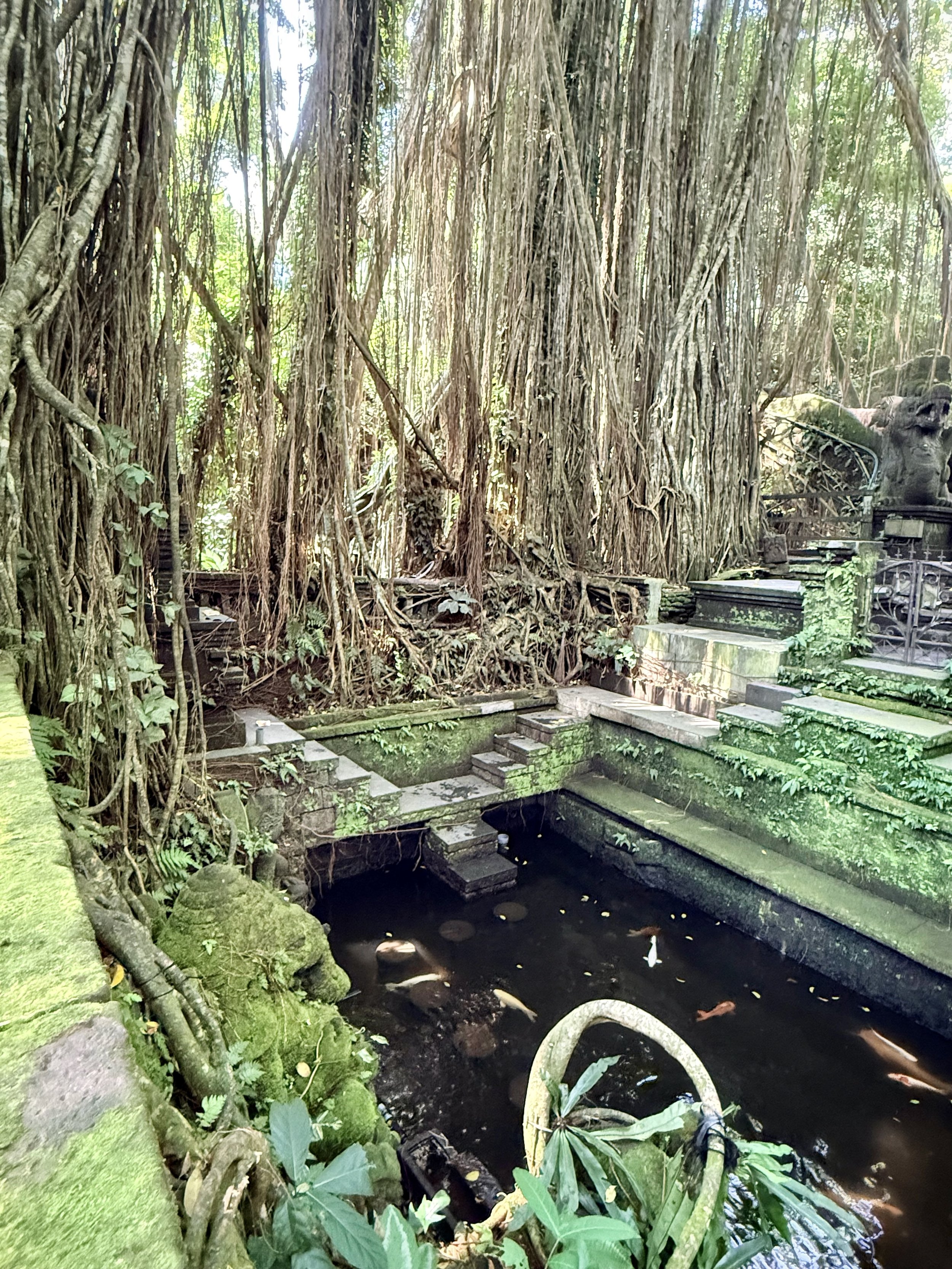
The forest is not just a tourist spot, but a functioning religious site where locals continue to perform rituals and uphold the sacred nature of the land. As such, visitors are not allowed on the three temiple grounds:
Pura Dalem Agung Padangtegal: The main temple, dedicated to Lord Shiva, the transformer.
Pura Beji: dedicated to Goddess Ganga for purification rituals.
Pura Prajapati: The cremation temple, used for funeral rites. A mass cremation occurs every 5 years. Until then, remains are buried on premise.