Welcome to Busan, South Korea! If J. Peterman from Seinfeld had a say, “It’ll always be Pusan to me.” The English spelling was updated to Busan in 2000 to reflect the actual Korean intonation. Because we chose to take a ferry from Japan, our first South Korea destination became the southern port city of Busan, known for its beaches and seafood! We showed up during the biggest holiday Seollal or Korean New Year Day, marking the first day of the lunar calendar, making note of places either closed or with limited hours. We need to start researching national holidays of the countries we’re heading to for better planning!
Here’s Our Brief Busan Experience
Review of Camellia ferry ride to from Fukuoka, Japan to Busan, South Korea
Pro tips on location finding, navigation, and transportation in South Korea
Korean food highlights
Short list of sightseeing, including a hidden secret spot for the best views of Busan
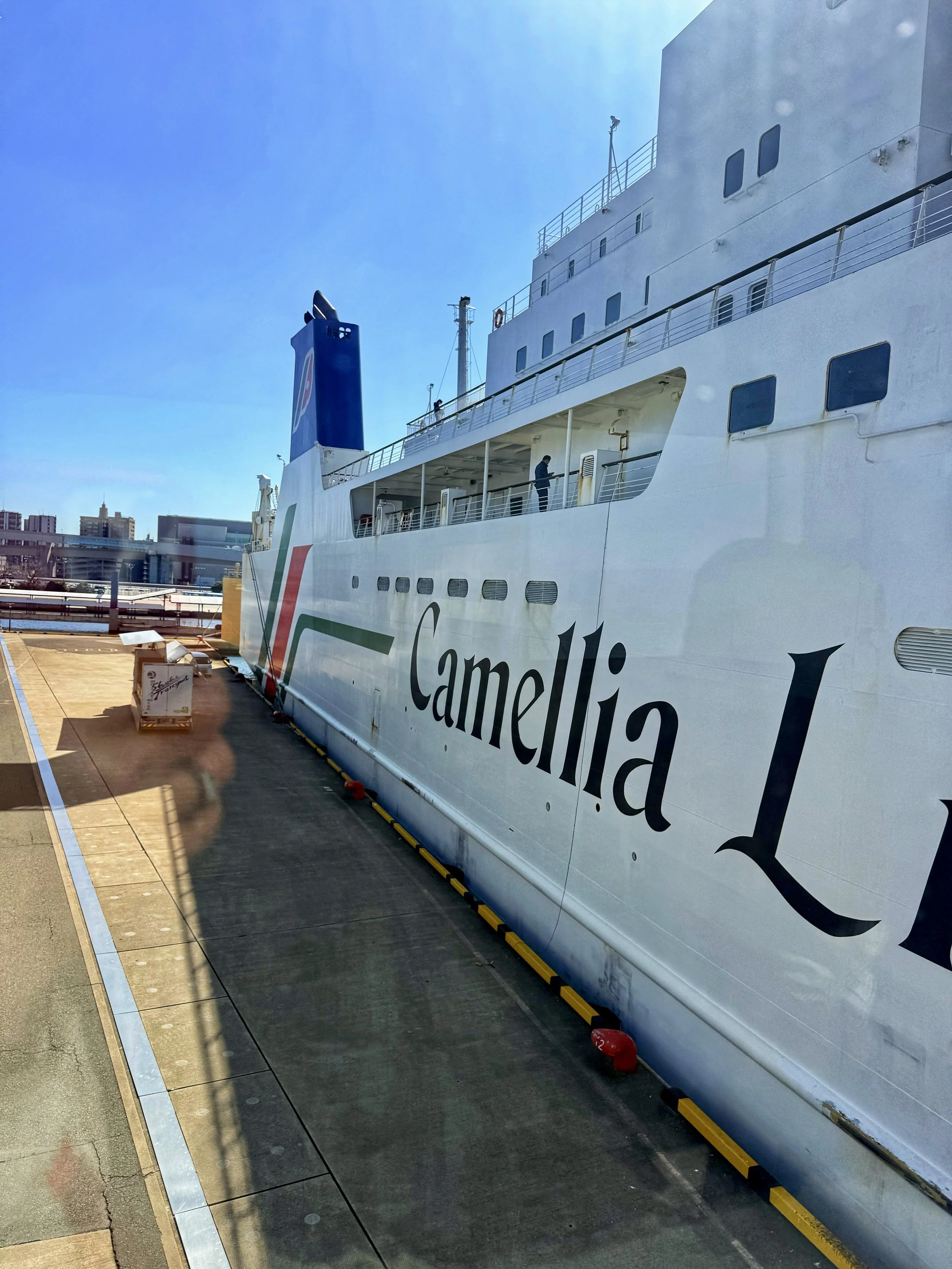
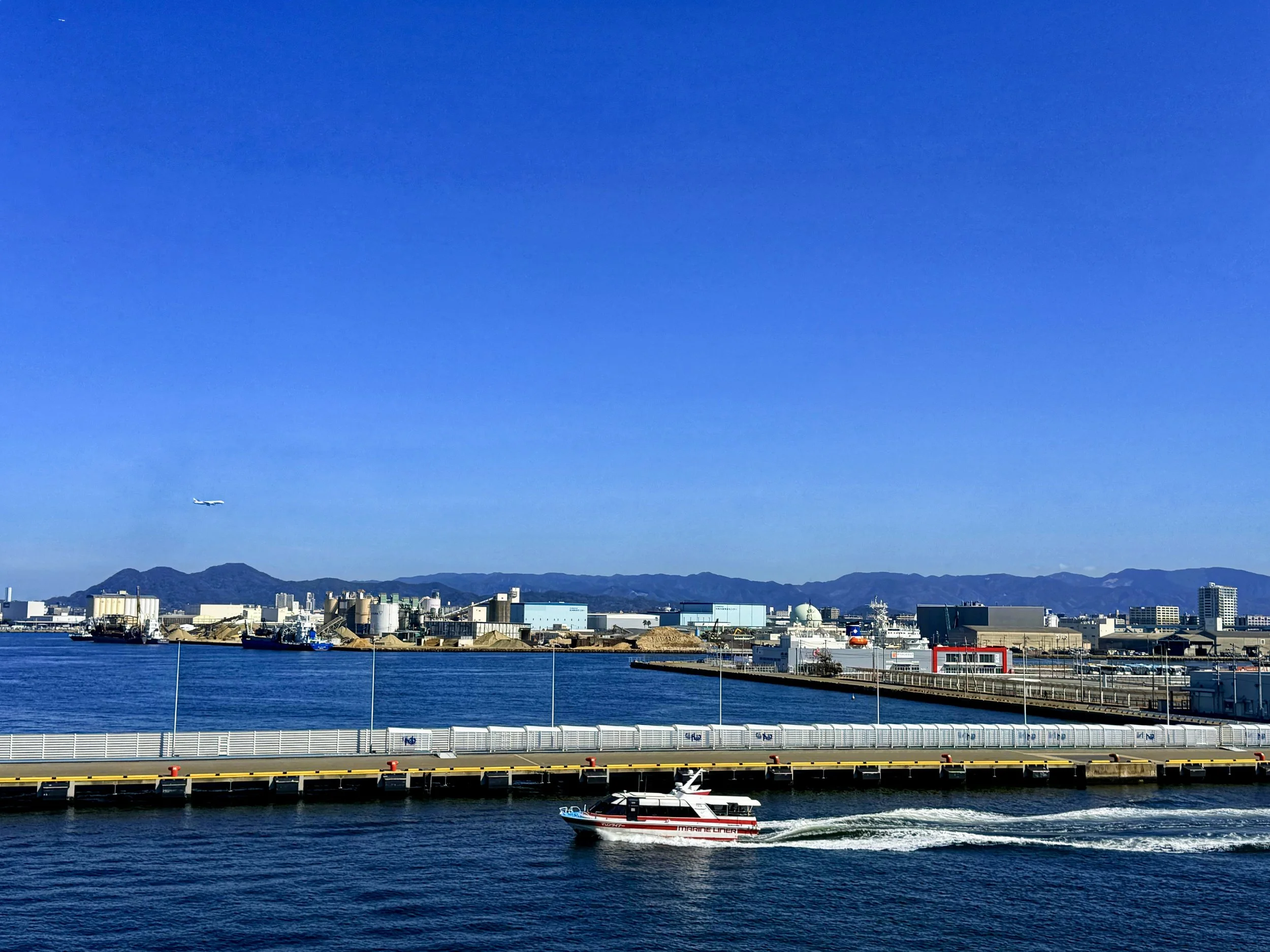
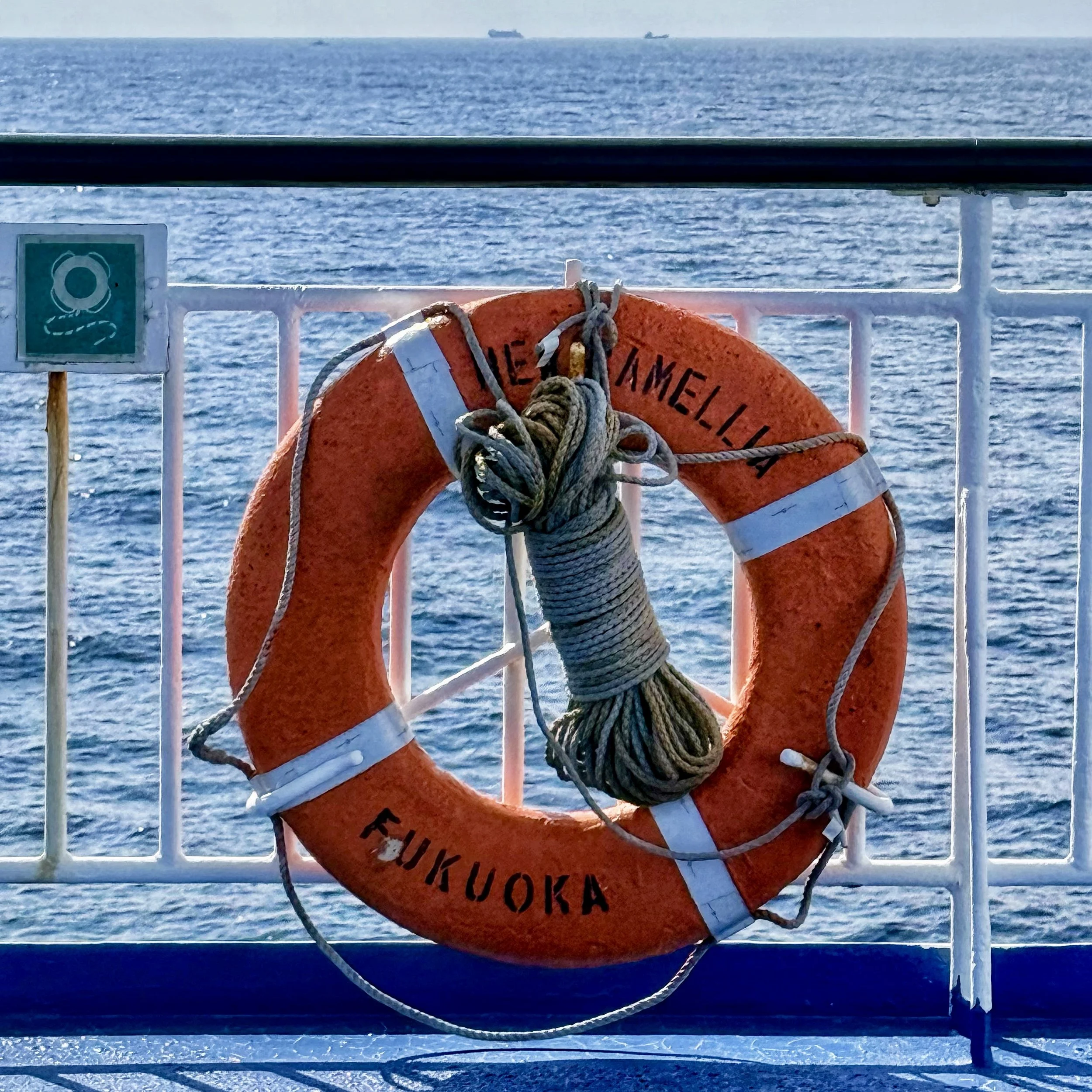
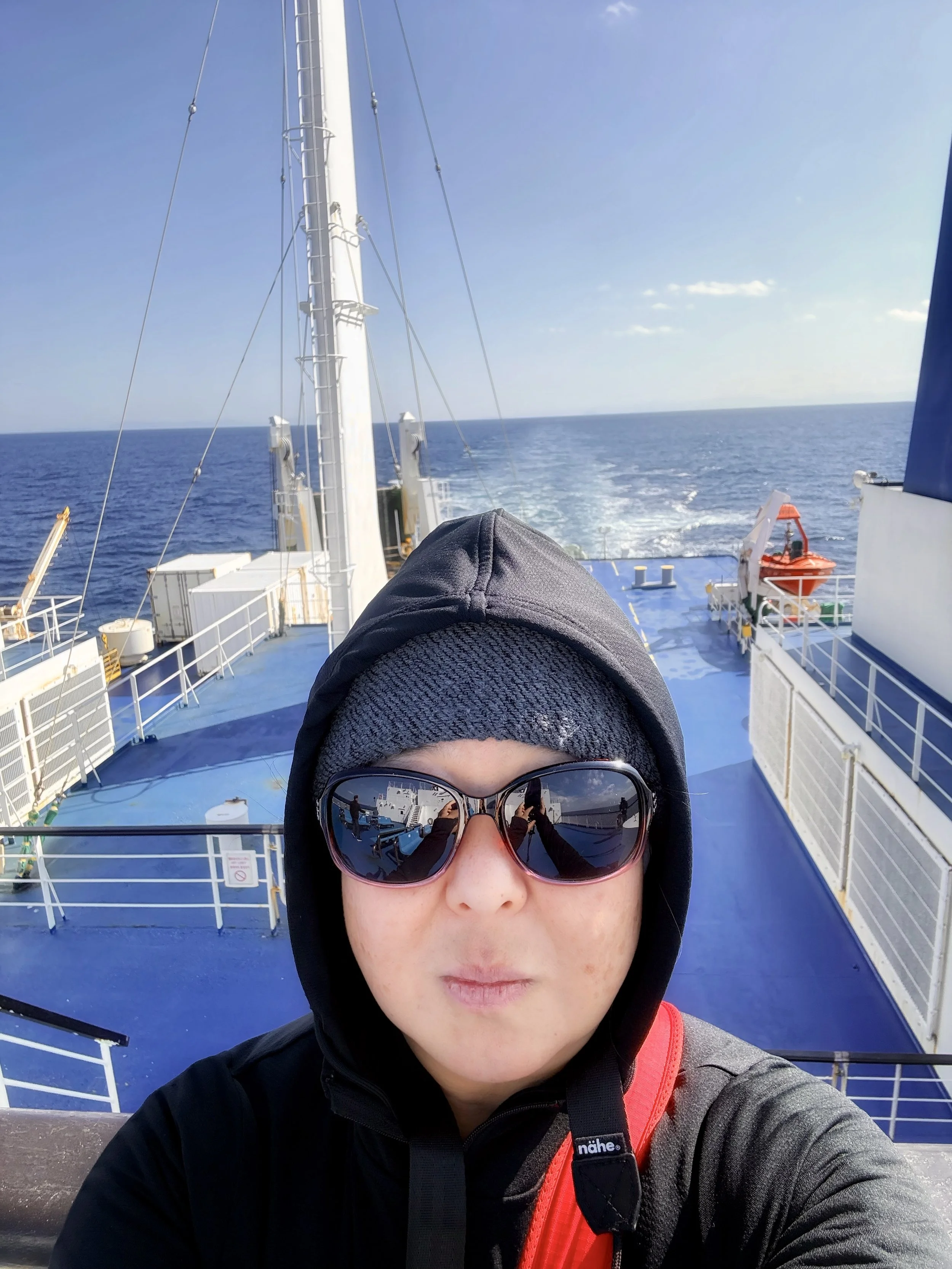
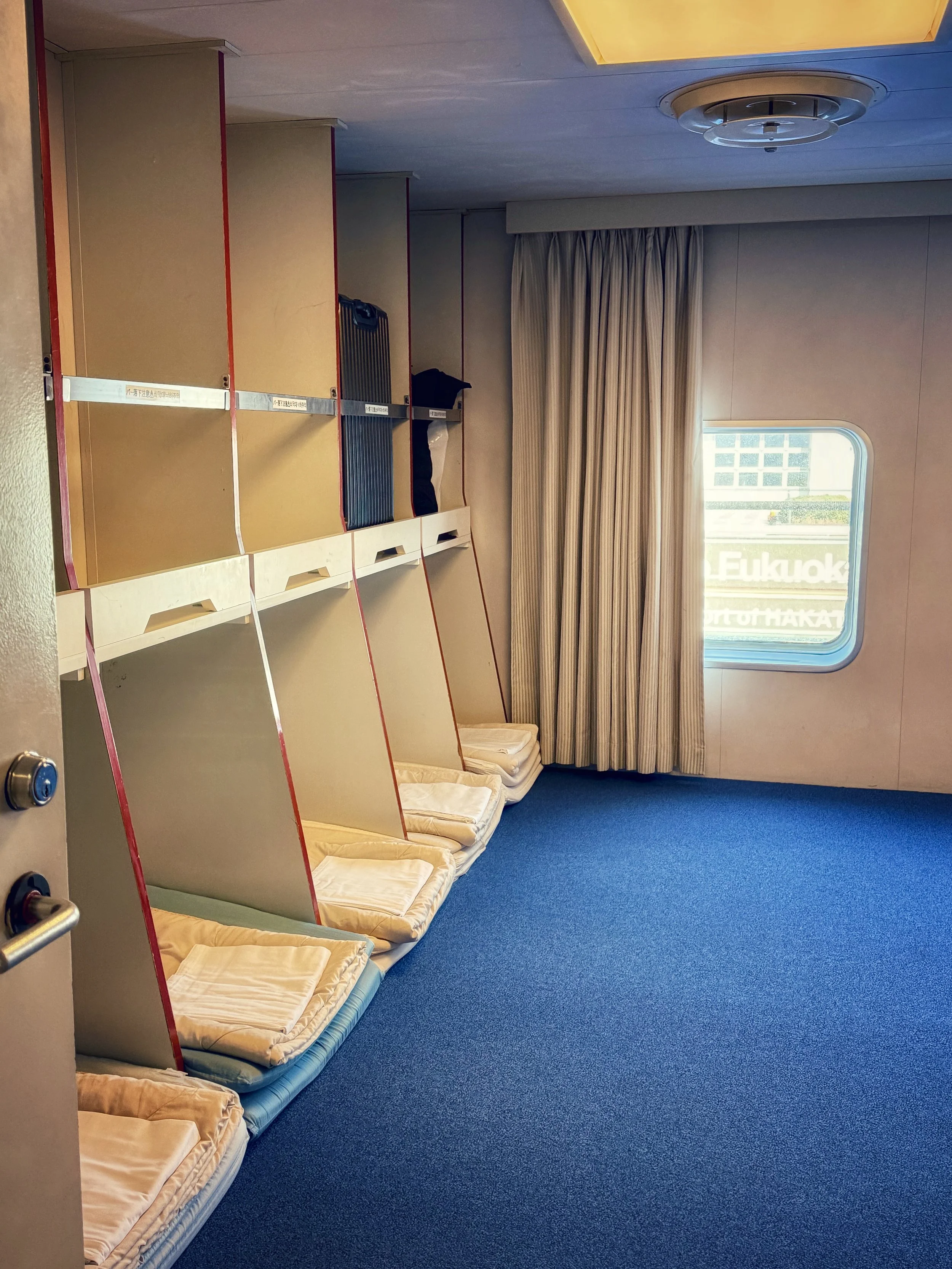
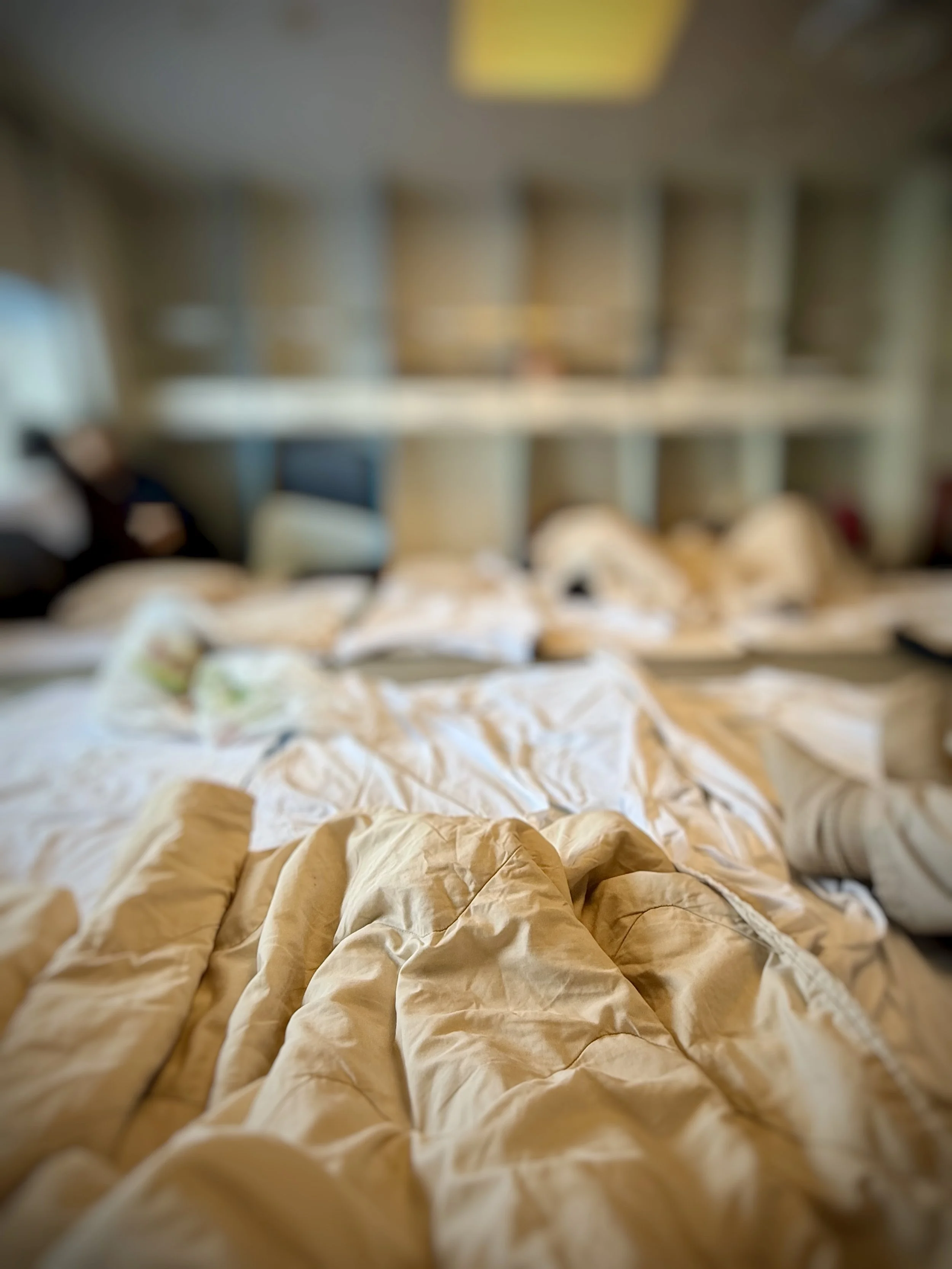
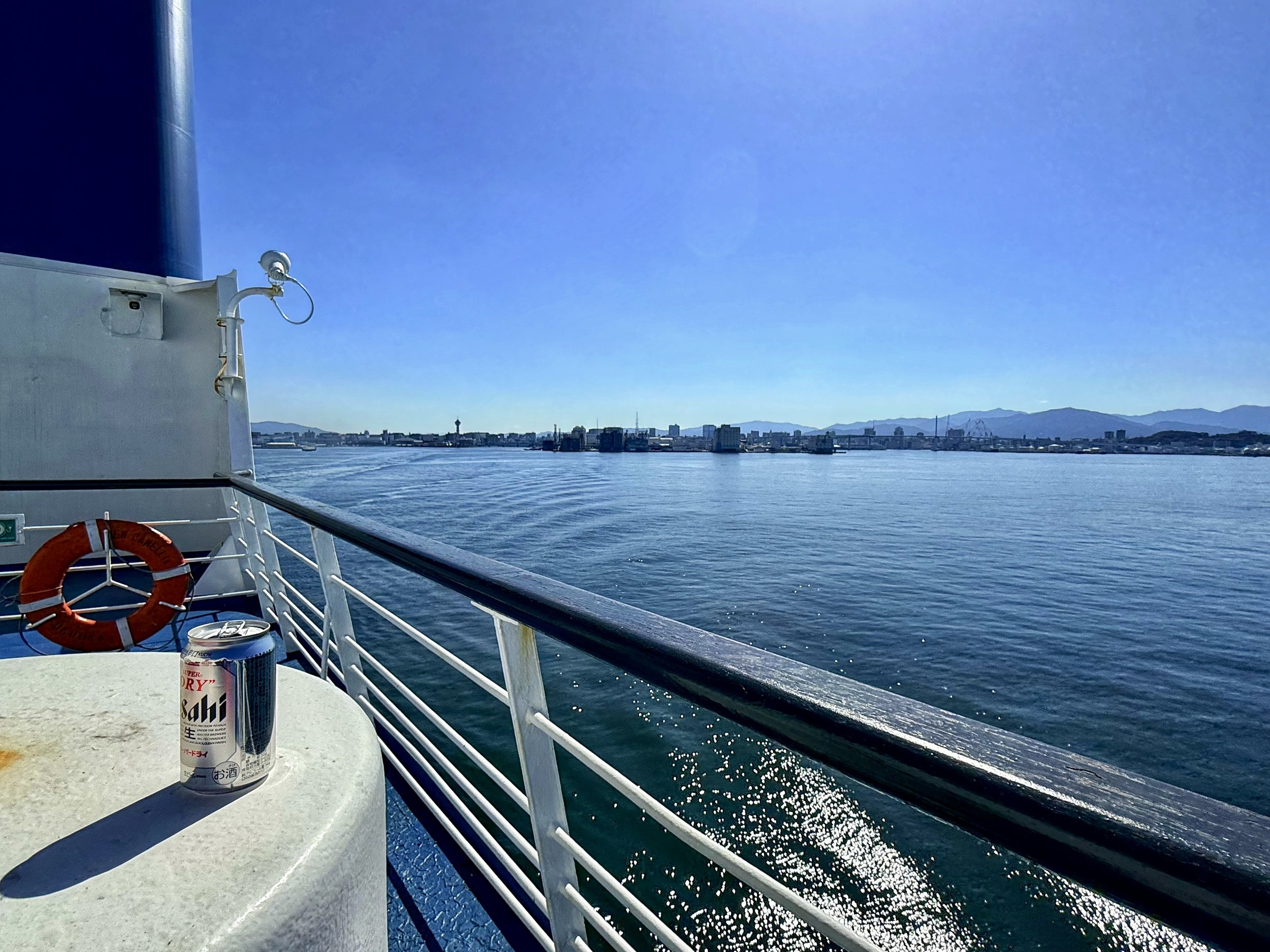
Camellia Ferry from Fukuoka, Japan to Busan
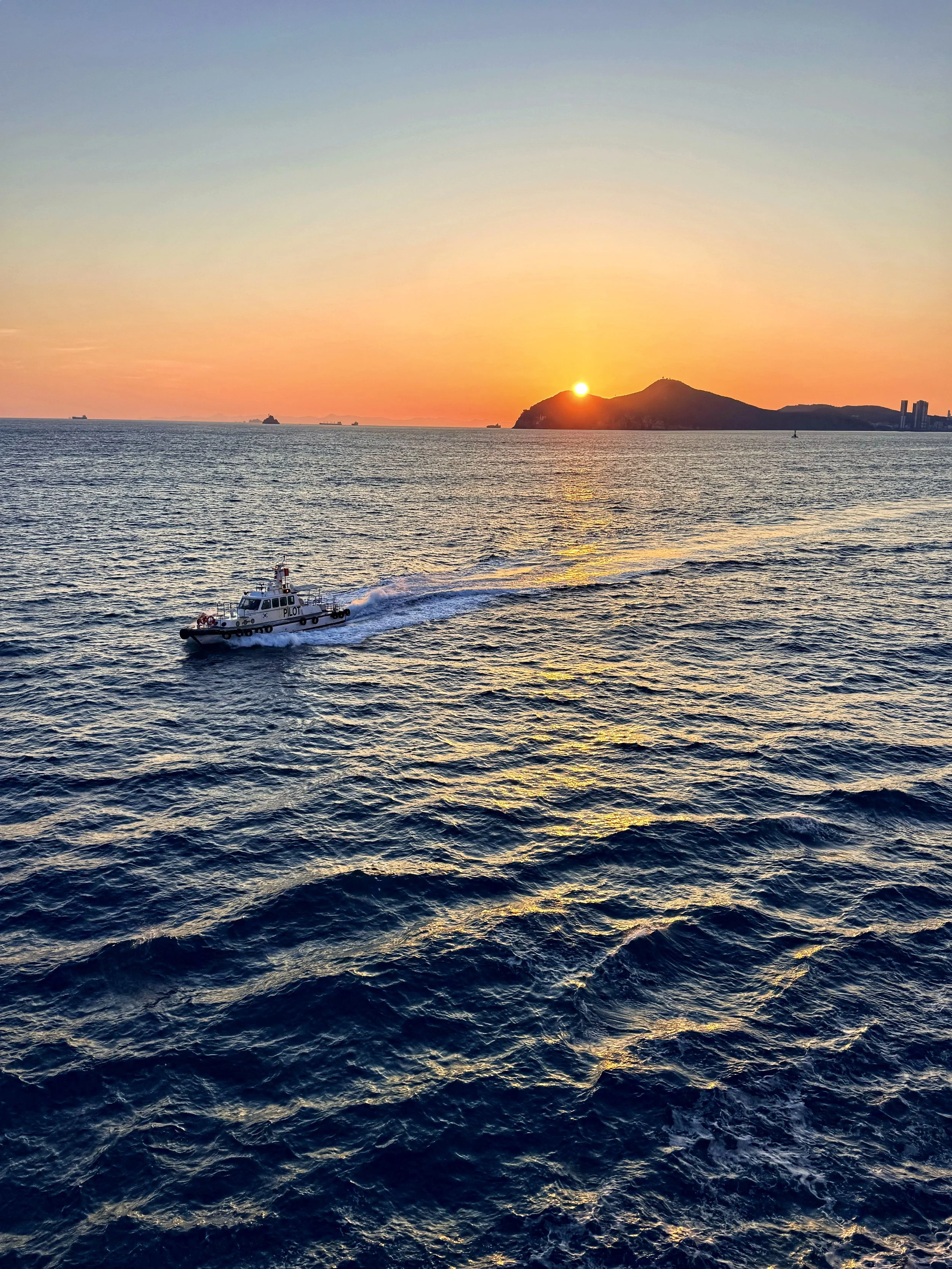
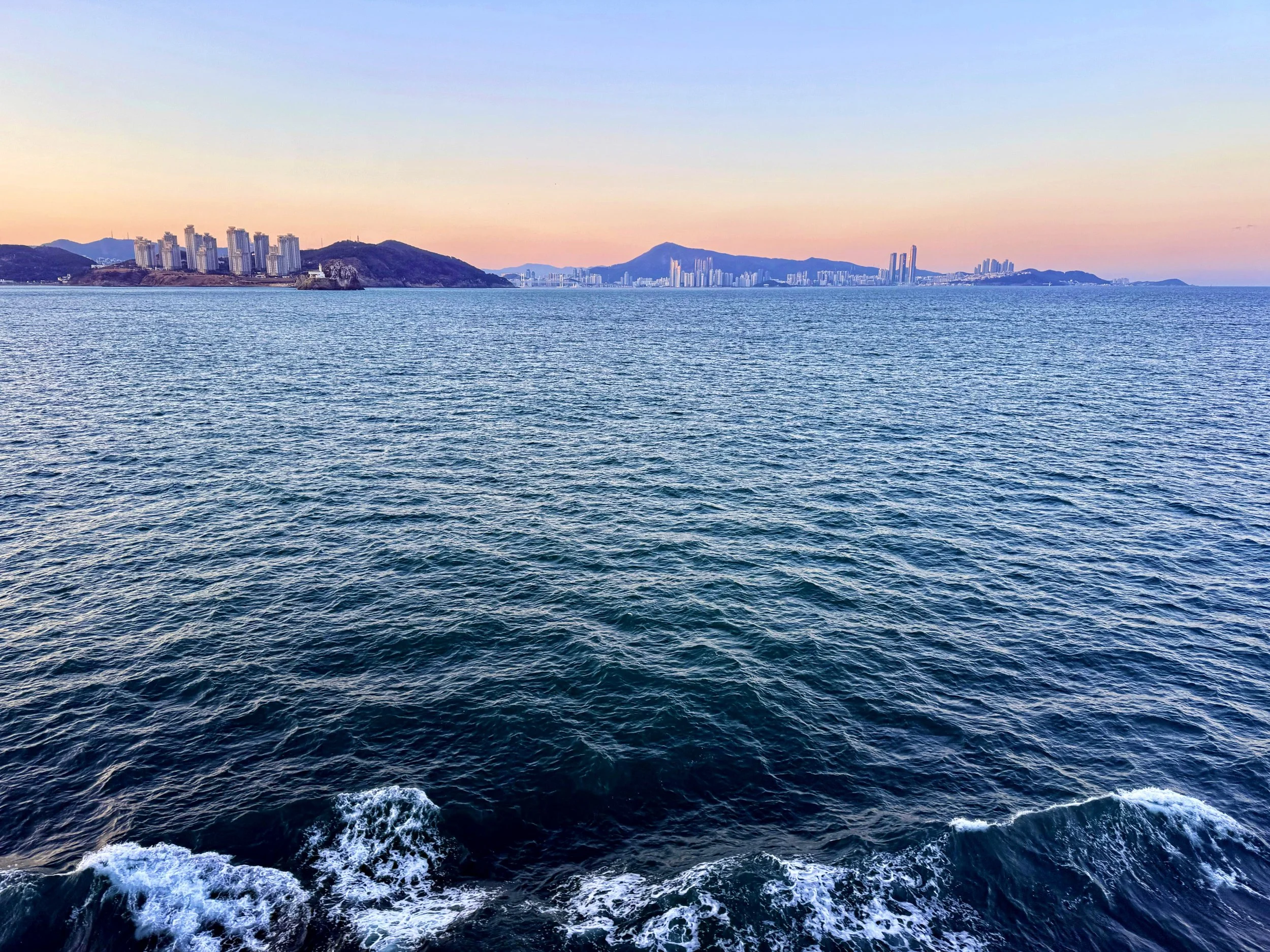
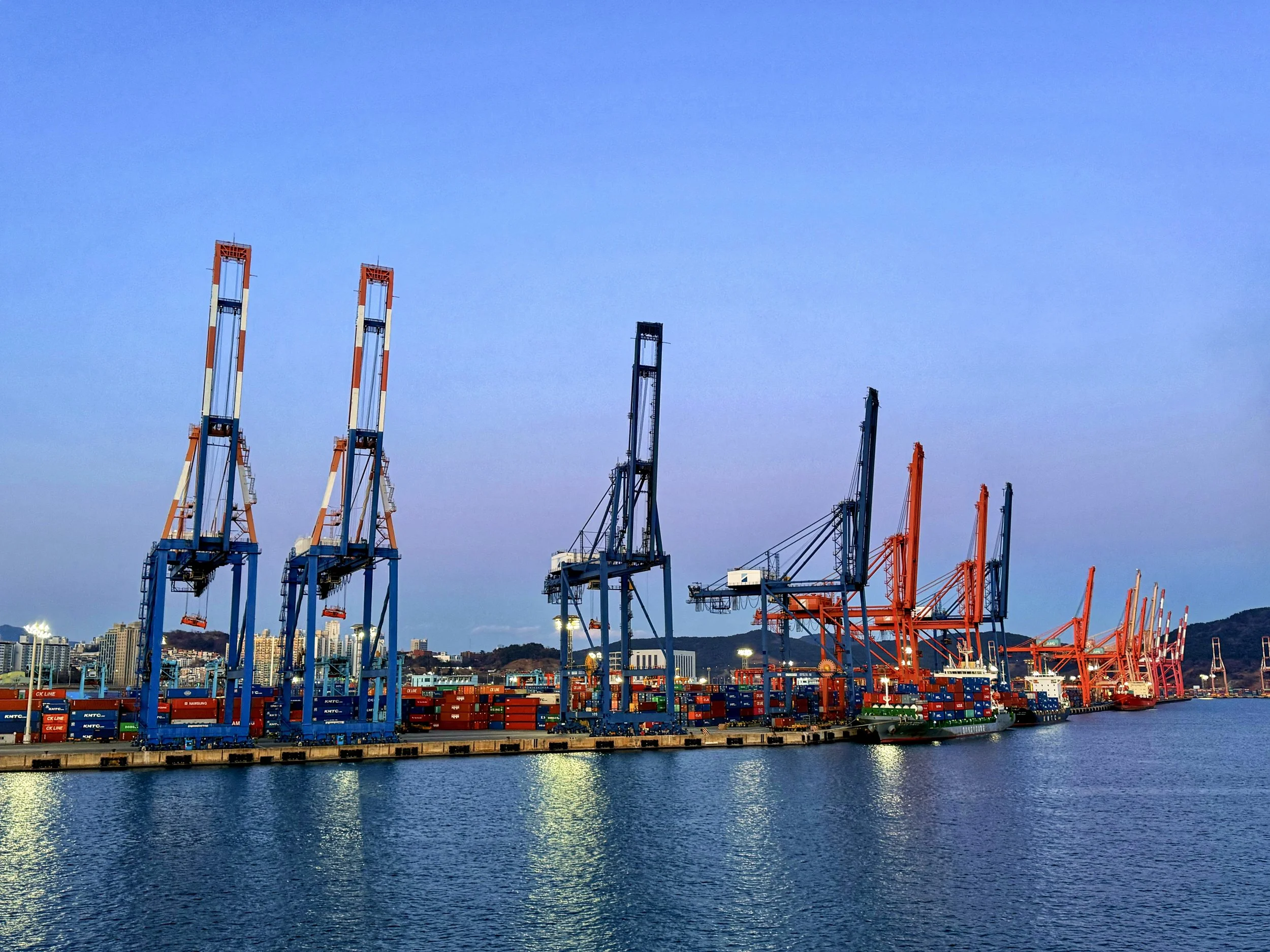
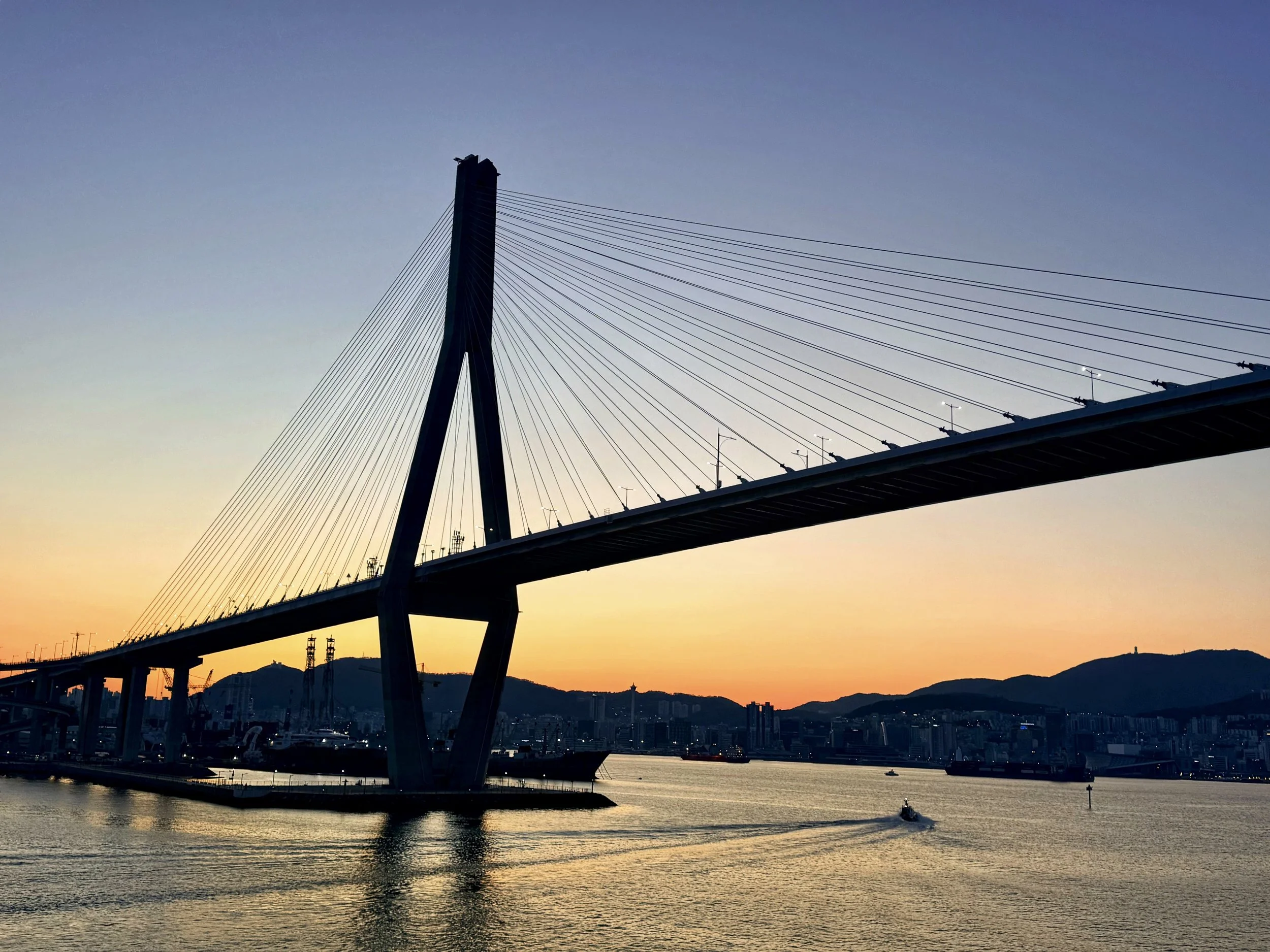
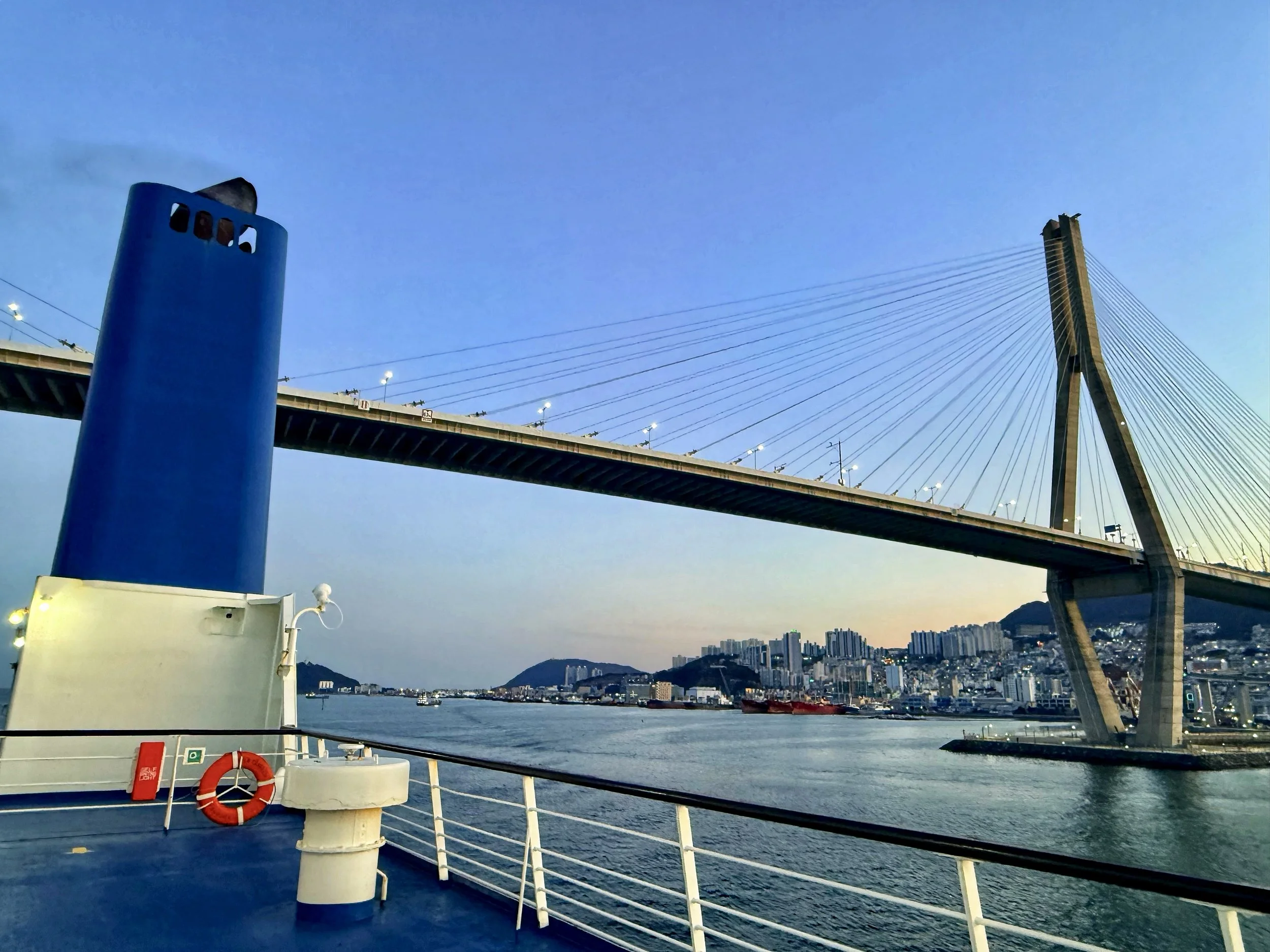
The (only) best part about the 6-hour boat ride was the views from the ferry during the last hour as the sun set behind the hills of Busan and the bay basked in the golden hour light as the twinkle of colorful city lights began to pop. Other than that, it was an experience we do not need to have ever again! Here’s our Google review on the matter.
Location, Navigation, and Transportation in South Korea
We were advised that Google Maps (or Apple) does not work well in South Korea, and to use the NAVER app instead. All true. Definitely, NAVER is a must navigation tool, but we also used Google Maps initially to find locations, then refine it with NAVER. Google doesn’t quite pinpoint the exact location while NAVER is more precise, but the main issue with Google is it doesn’t map routes or calculate ETA. We relied on NAVER for that. The biggest problem with NAVER is that unless we spelled the English location name in the exact way that NAVER has it recorded, the search comes up blank. For example, our hotel booking confirmation and Google said “SSH Myeongdong Dongdo Hostel” but in NAVER, it only appears as “SSH Dongdo Hostel.” The better option is to search in Korean, but we couldn’t always do that. Google occasionally has a location also written in Korean, which we copied and pasted into NAVER, then voila! Our Busan hotel called “Liebestay Motel” in Google exists as “리베스테이&모텔” in NAVER and also in Uber, which was a slight hiccup when trying to tell pin the location of our hotel destination. The joys of traveling.
Good news is, Uber works in South Korea, rides are ubiquitous, and inexpensive. Therefore, we didn’t even bother with the subway or bus system.
Later, we discovered that all the KTX/KORAIL or high speed trains to Seoul were completely sold out, likely due to the holidays, so we had to scramble with Plan B. Rather than spend triple the cost on a flight, the KOBUS Express Bus to Seoul was a very comfortable 4-hour ride in business class seats! We used the Klook app to book, as recommended by others, since booking directly through the company is challenging unless we have a local Korean phone number.
Staying in the Central District for Authentic Korean Food

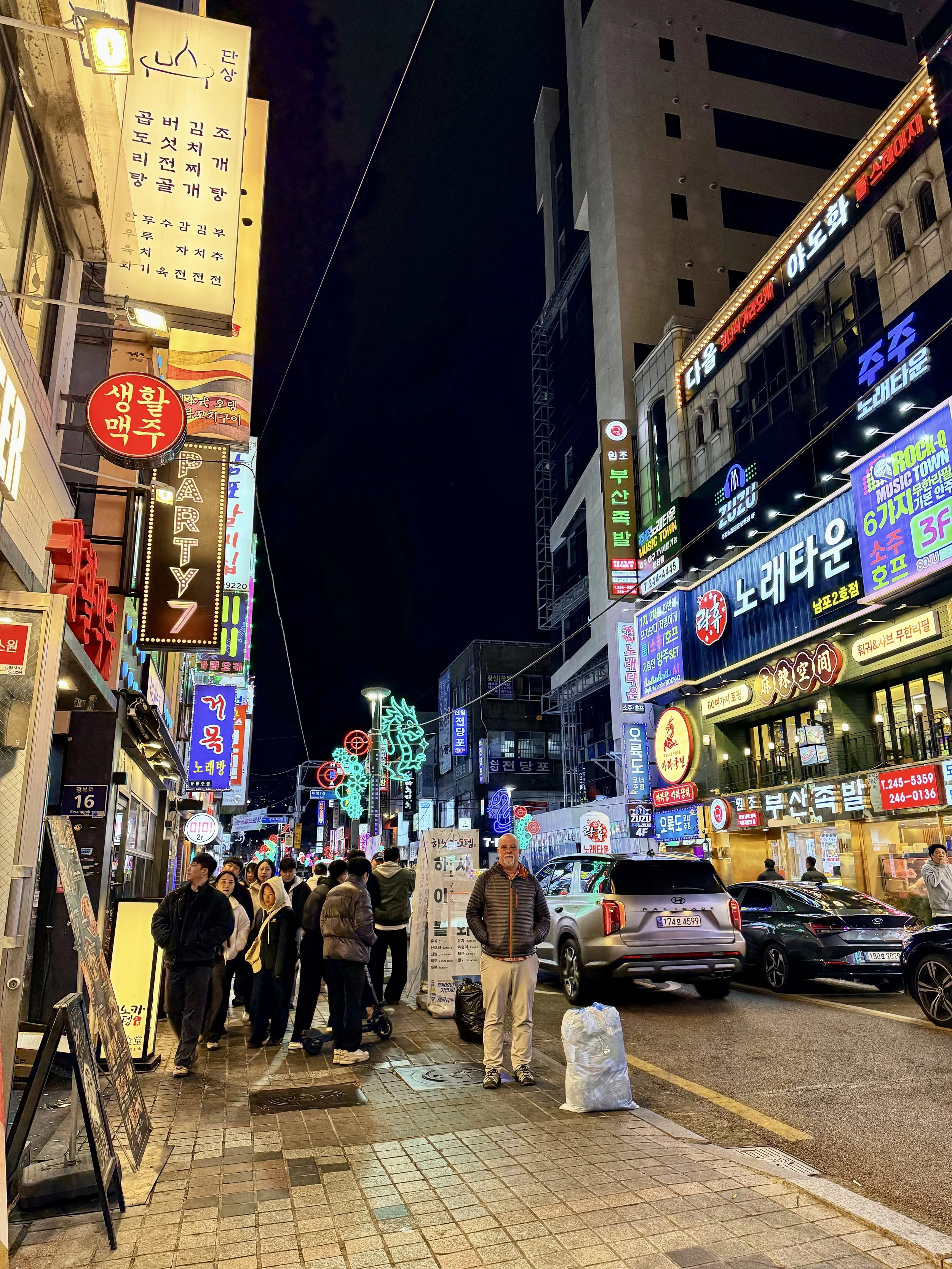
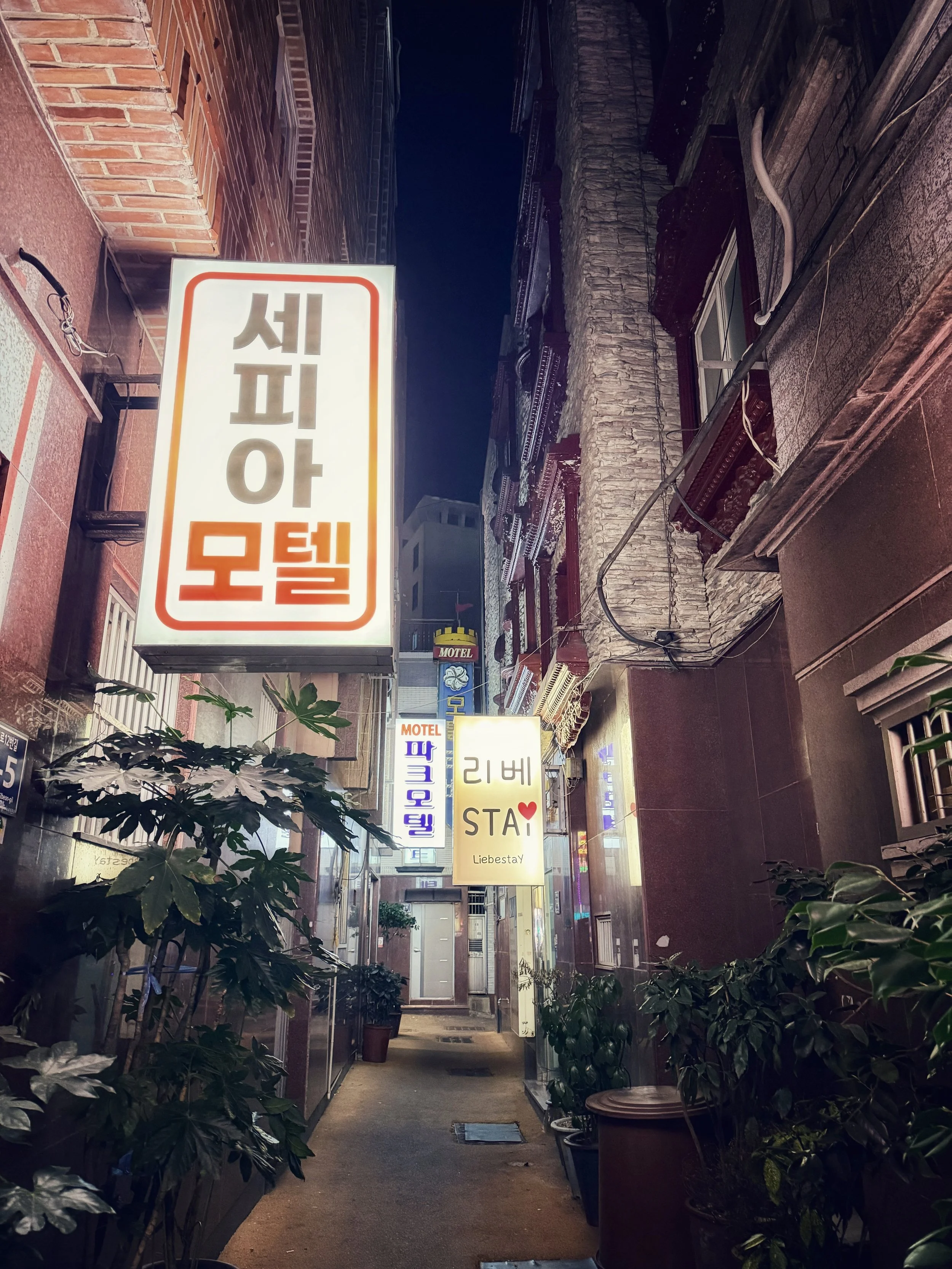
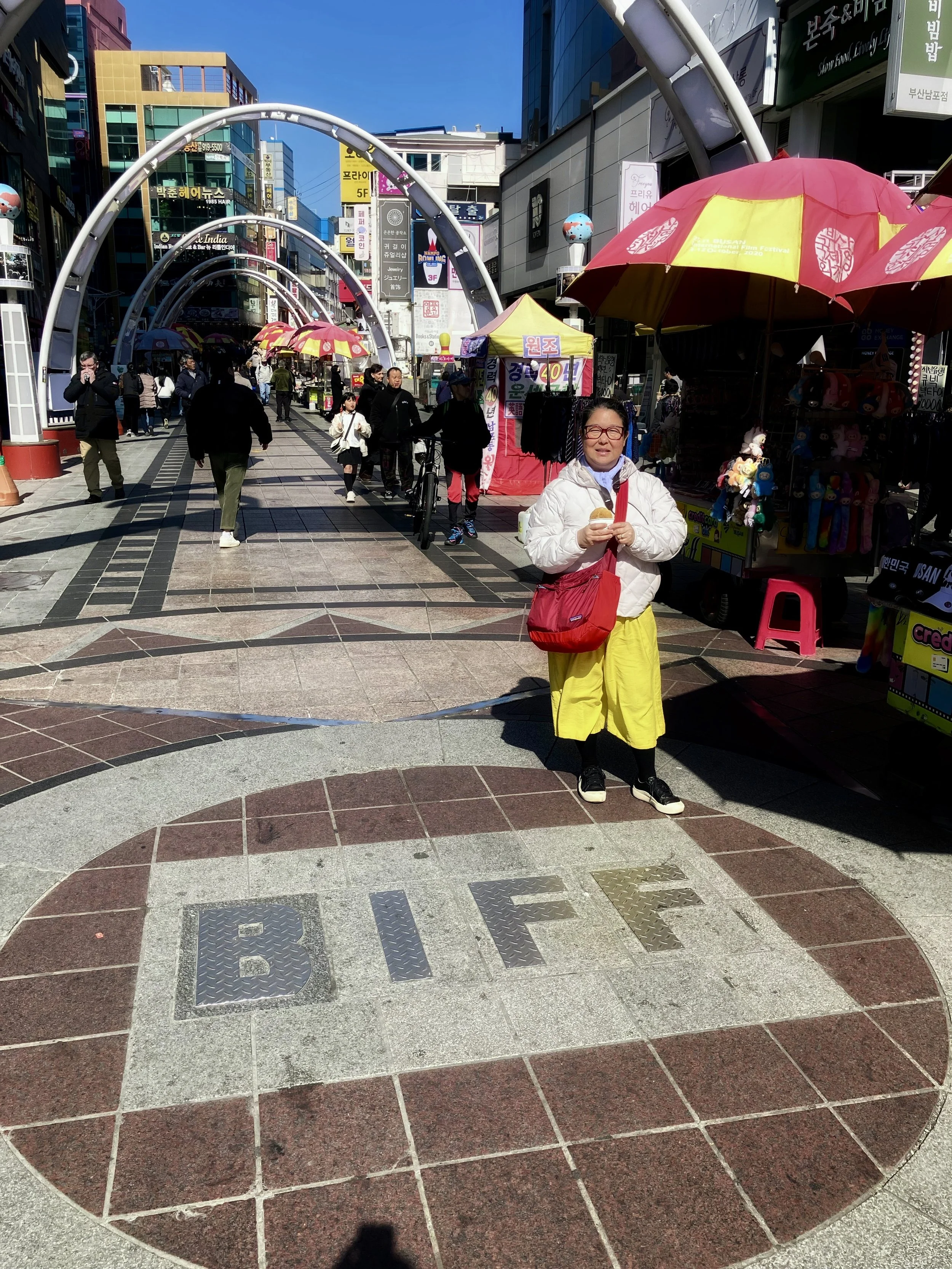

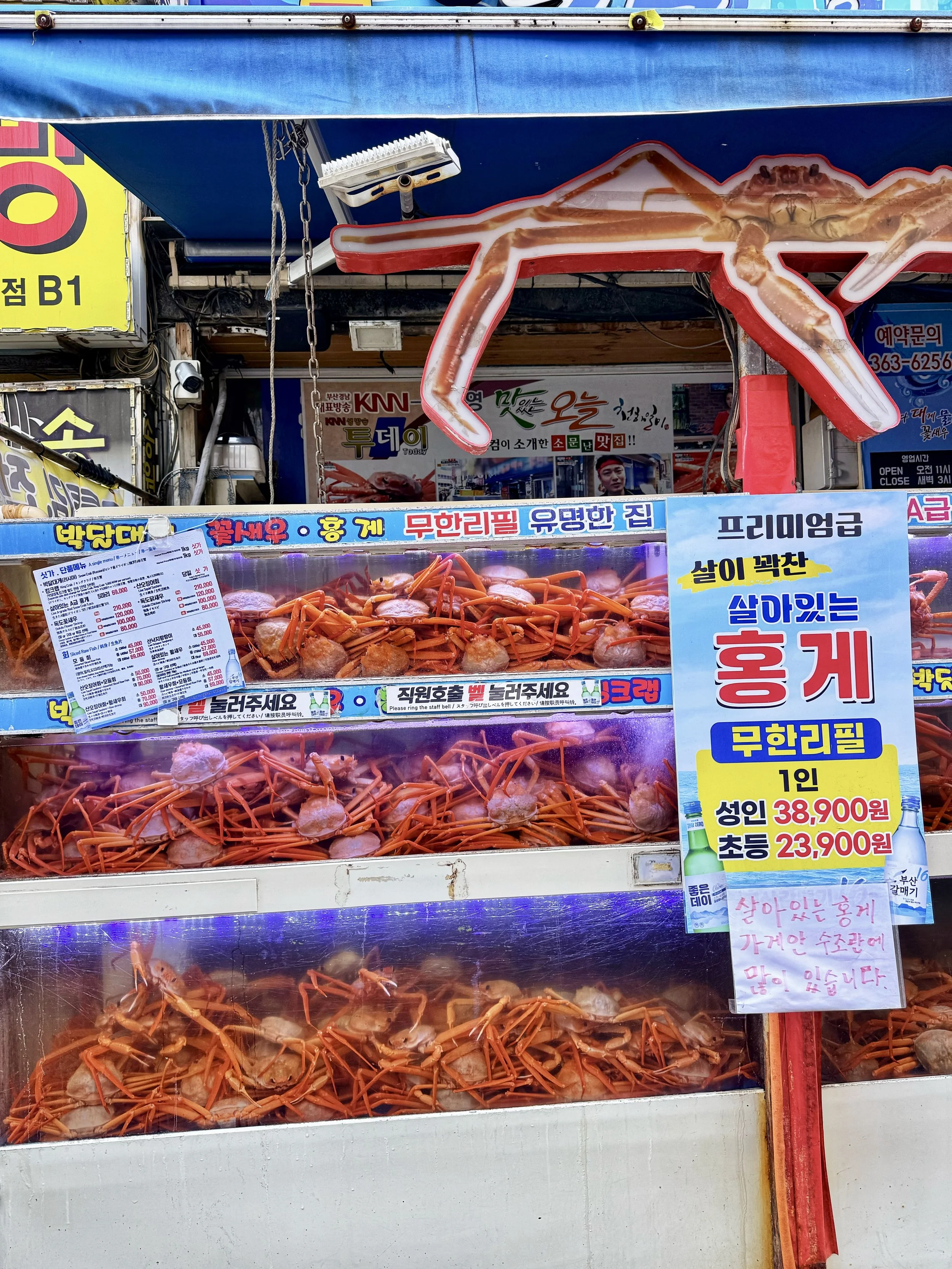
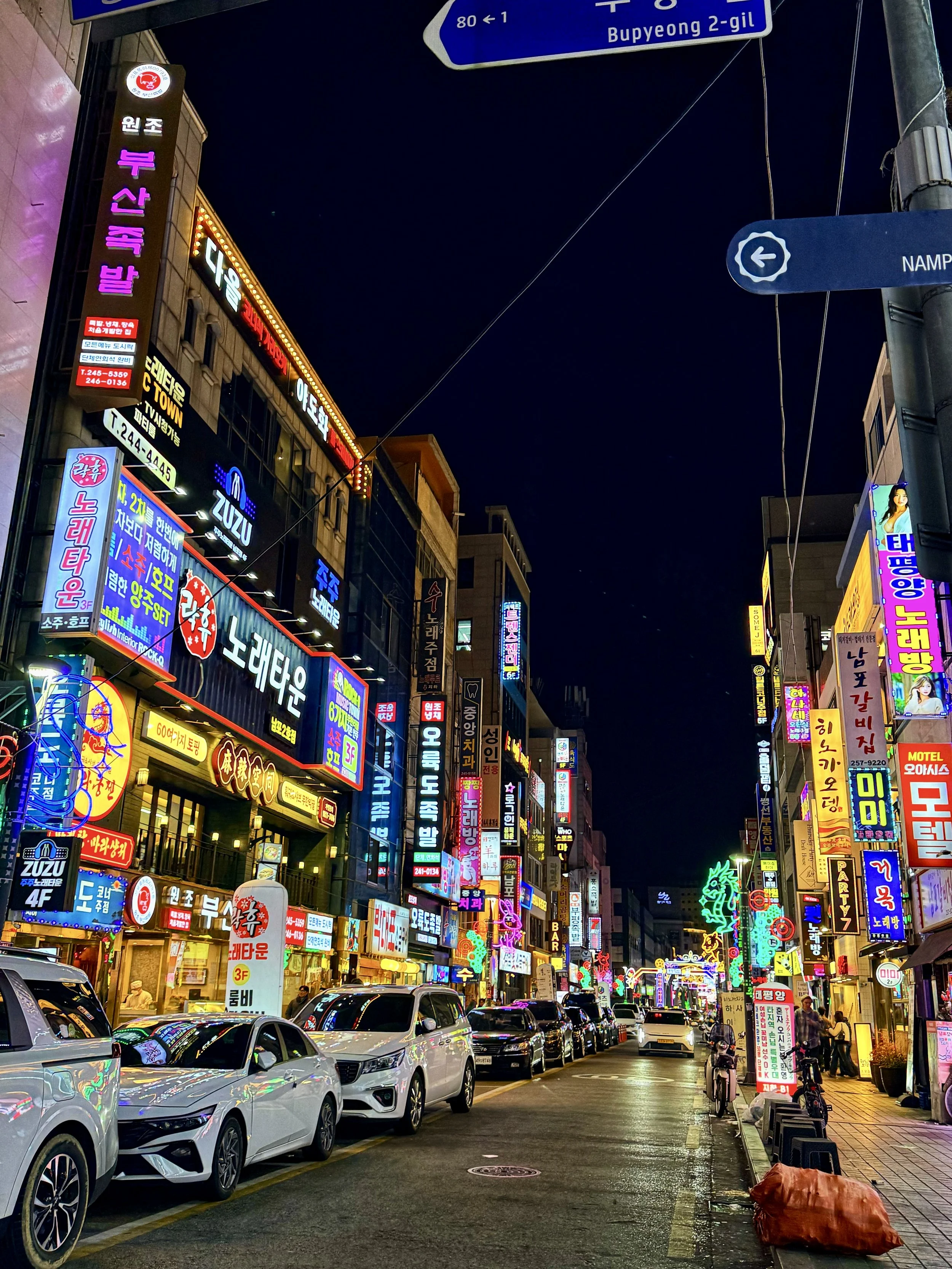

Our lodging was perfectly situated near Jung-gu (Central District), the popular Nampo-dong Pojangmacha food stalls and Jagalchi Fish Market…also close to the Busan International Film Festival (BIFF) Square, the epicenter where the film festival is held every October. A great locale for nightlife and best if you’re on a carnivore diet who loves to be overwhelmed by every conceivable version of Korean pork bbq / hotpot / stews in small mom-and-pop shops and standup street food stalls. If a more modern, trendy atmosphere with western style bars and restaurants appeal to you, or need more vegetarian options, don’t stay in this ‘hood because it’s not that diverse.
The Jagalchi Fish Market was closed for the holidays, otherwise we could have bought a fish and the upstairs restaurant could’ve prepared it for us.
We tried Samgyeopsal (삼겹살 - grilled pork belly) our first night. Samgyeopsal is one of the most popular South Korean pork barbecue dishes. It was so much more than just the grilled meat though. It came with a whole pile of vegetables to sauté, an egg omelet, side of kimchi ramen, unlimited banchan (side dishes), and rice. Our server ended up helping cook and prepare everything for us because we clearly looked clueless! We.were.stuffed.
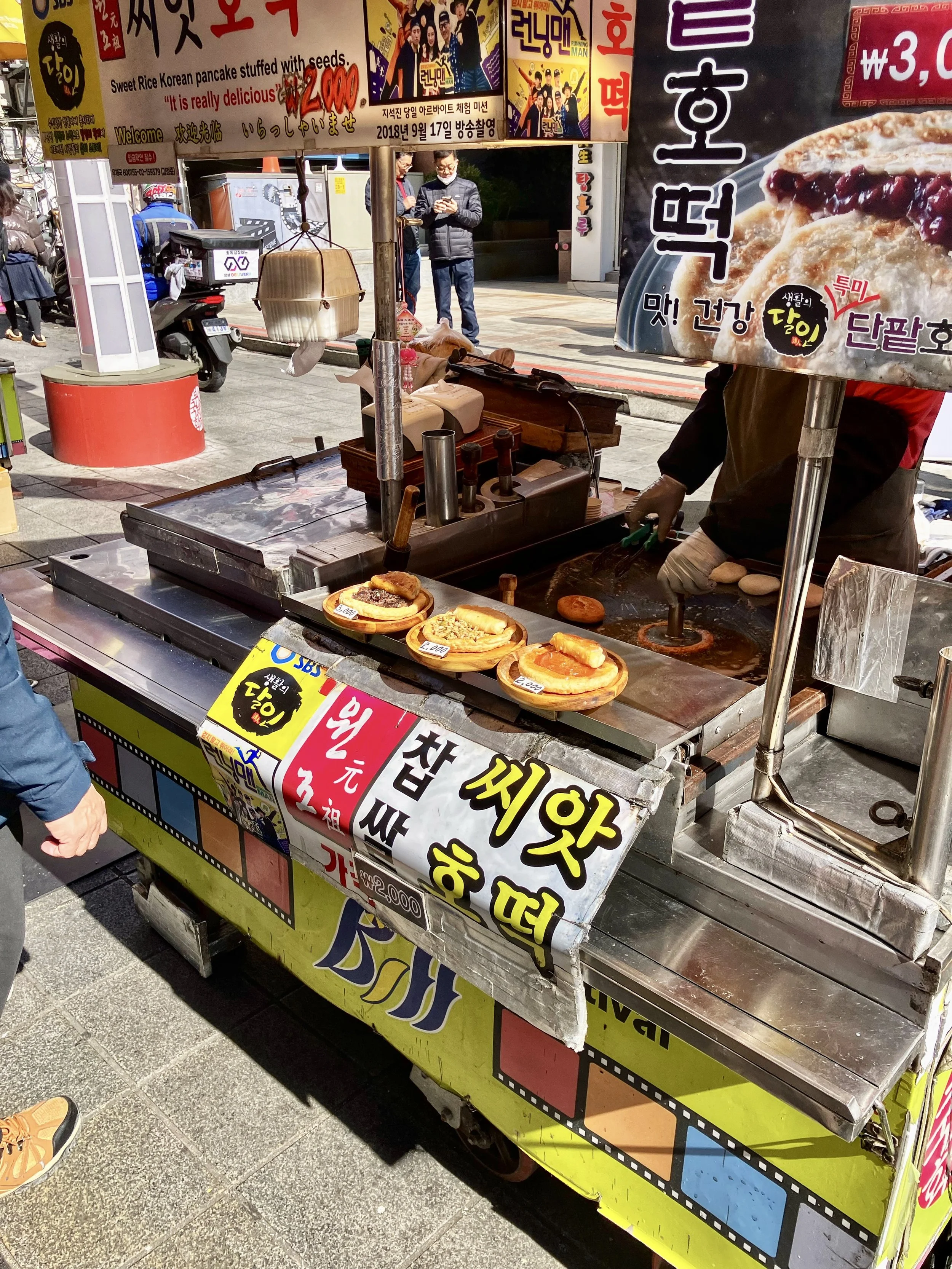
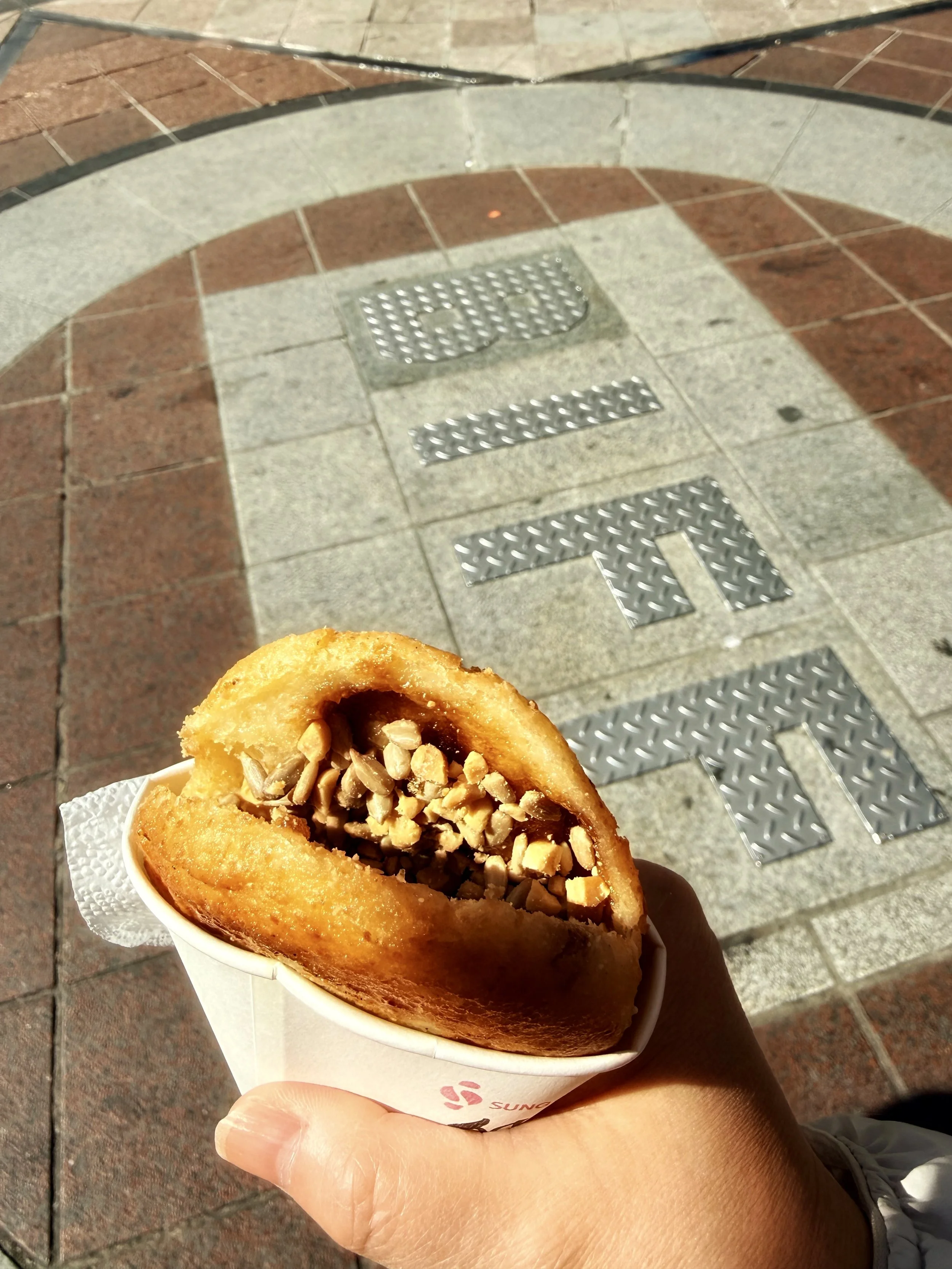
Busan is also famous for Ssiat Hotteok - a sticky sweet pancake (hotteok) with crushed sunflower, pumpkin and sesame seeds, almonds and peanuts. We went back at least twice to the food stall right at BIFF Square.
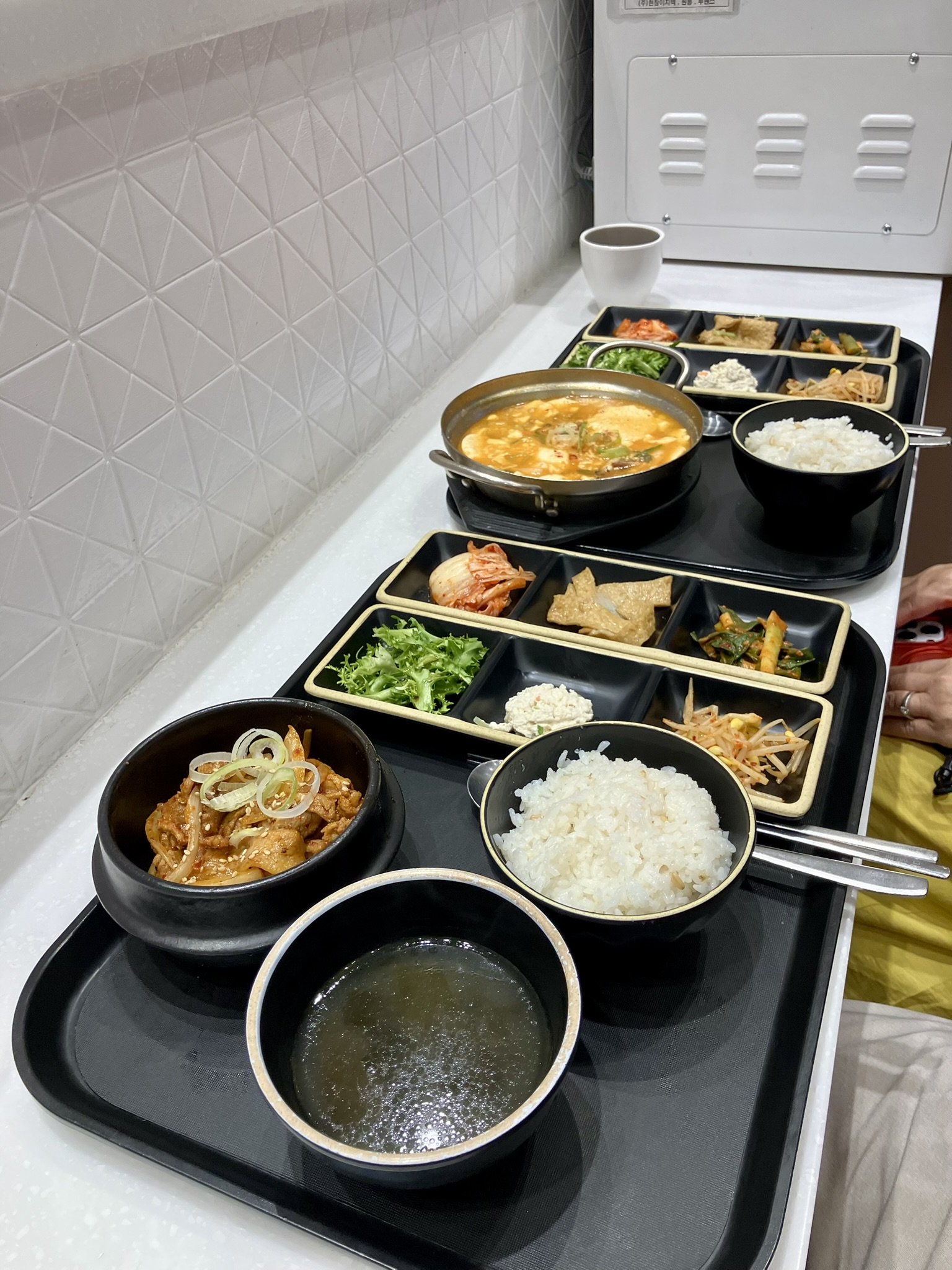
We also had Bibimbap and soul-comforting Sundubu-jigae, which aren’t regional or super adventurous, but they can be served full of veggies and tofu without the meat or seafood, to balance out our diet!
The Sightseeing Part: Meh, Ooh-Ahh, and Ta-Da!
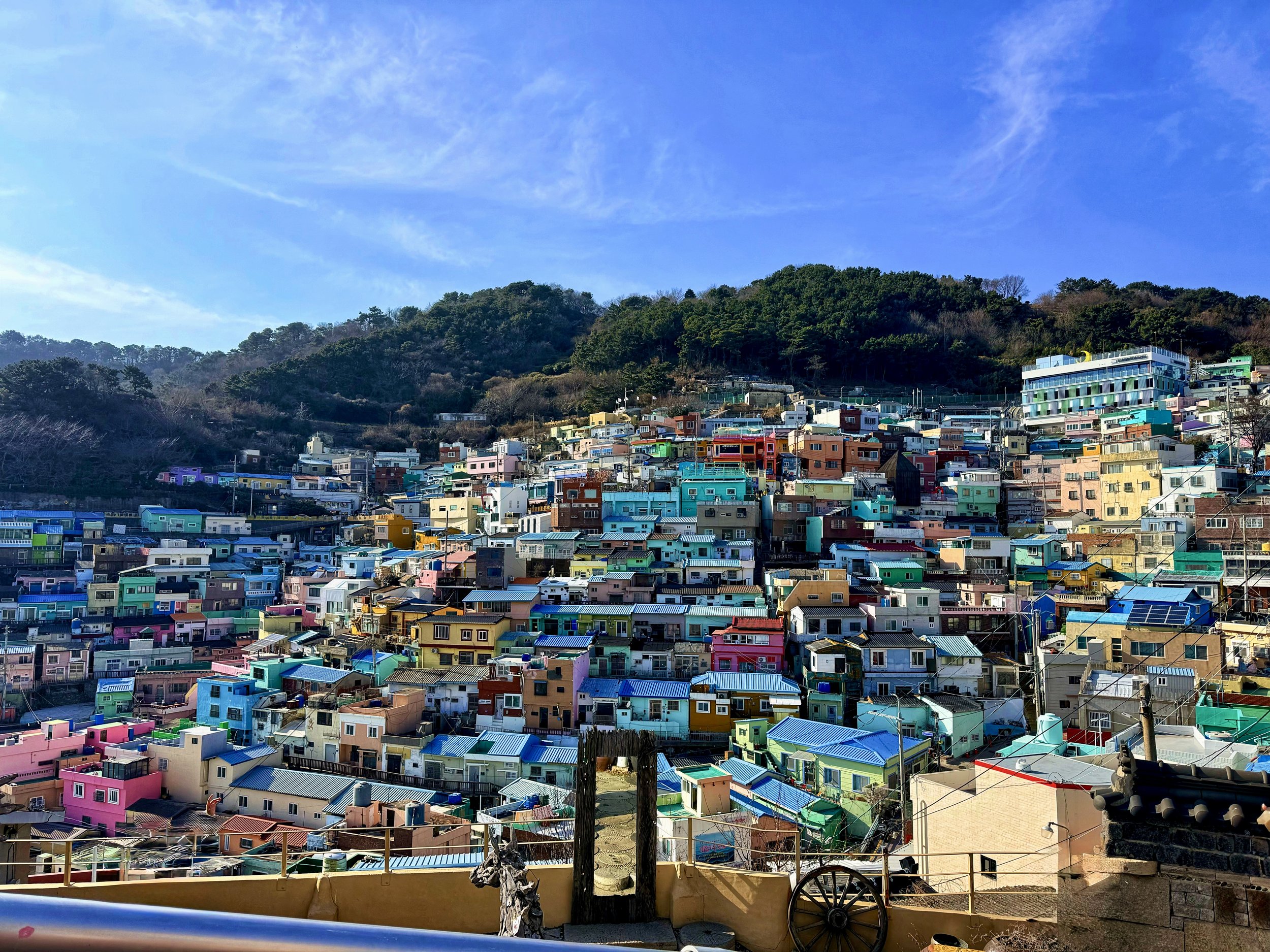
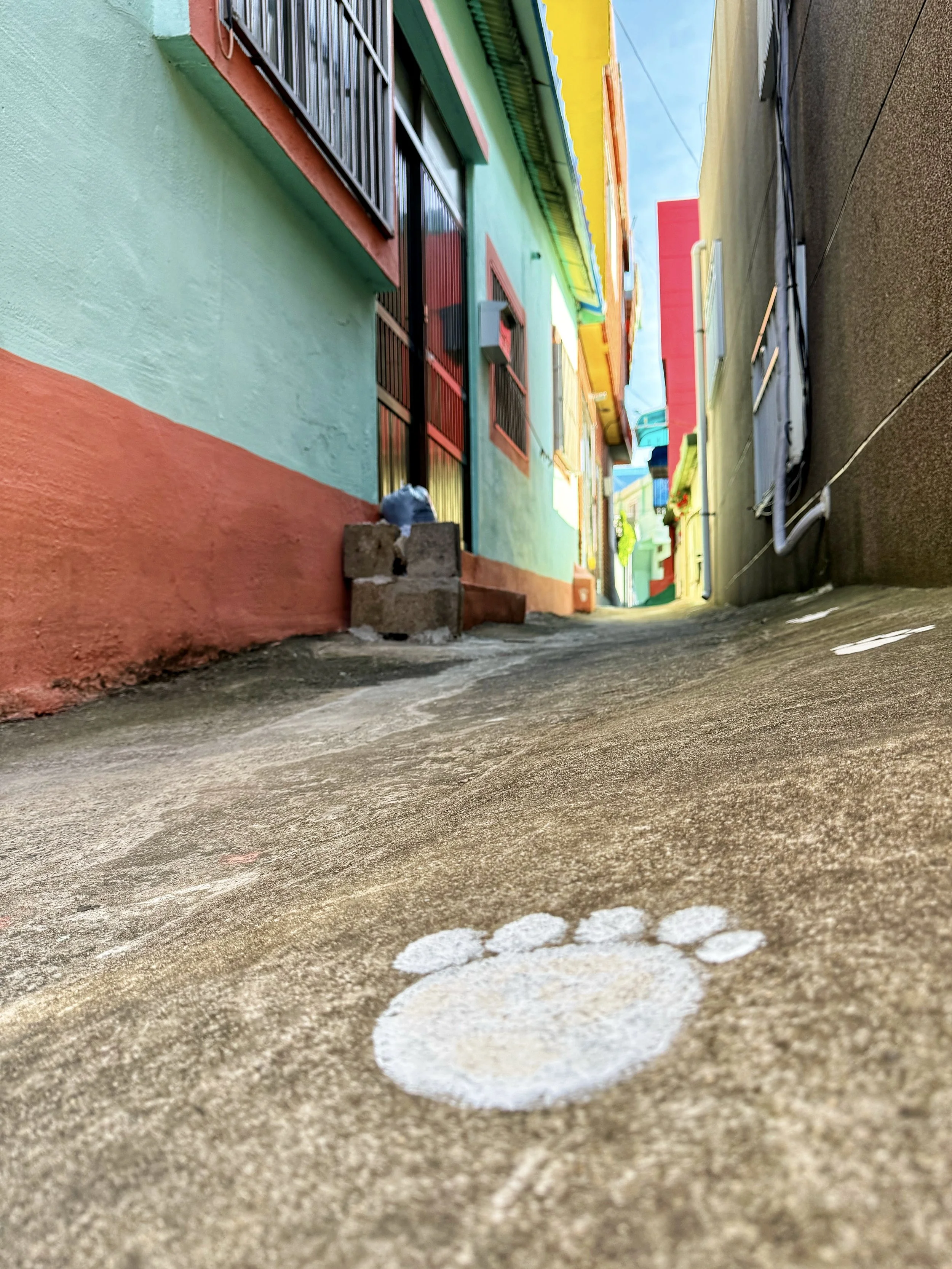
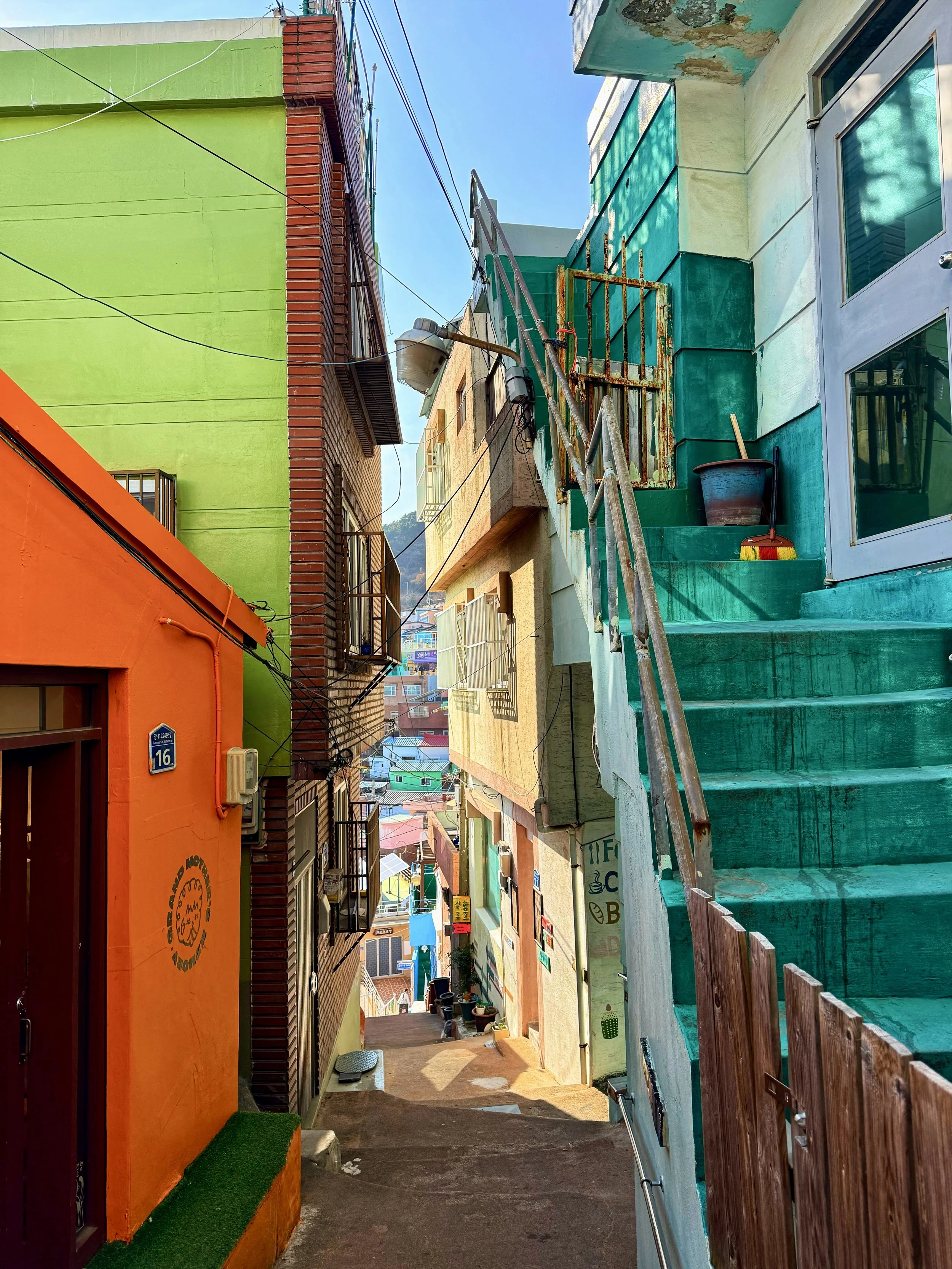
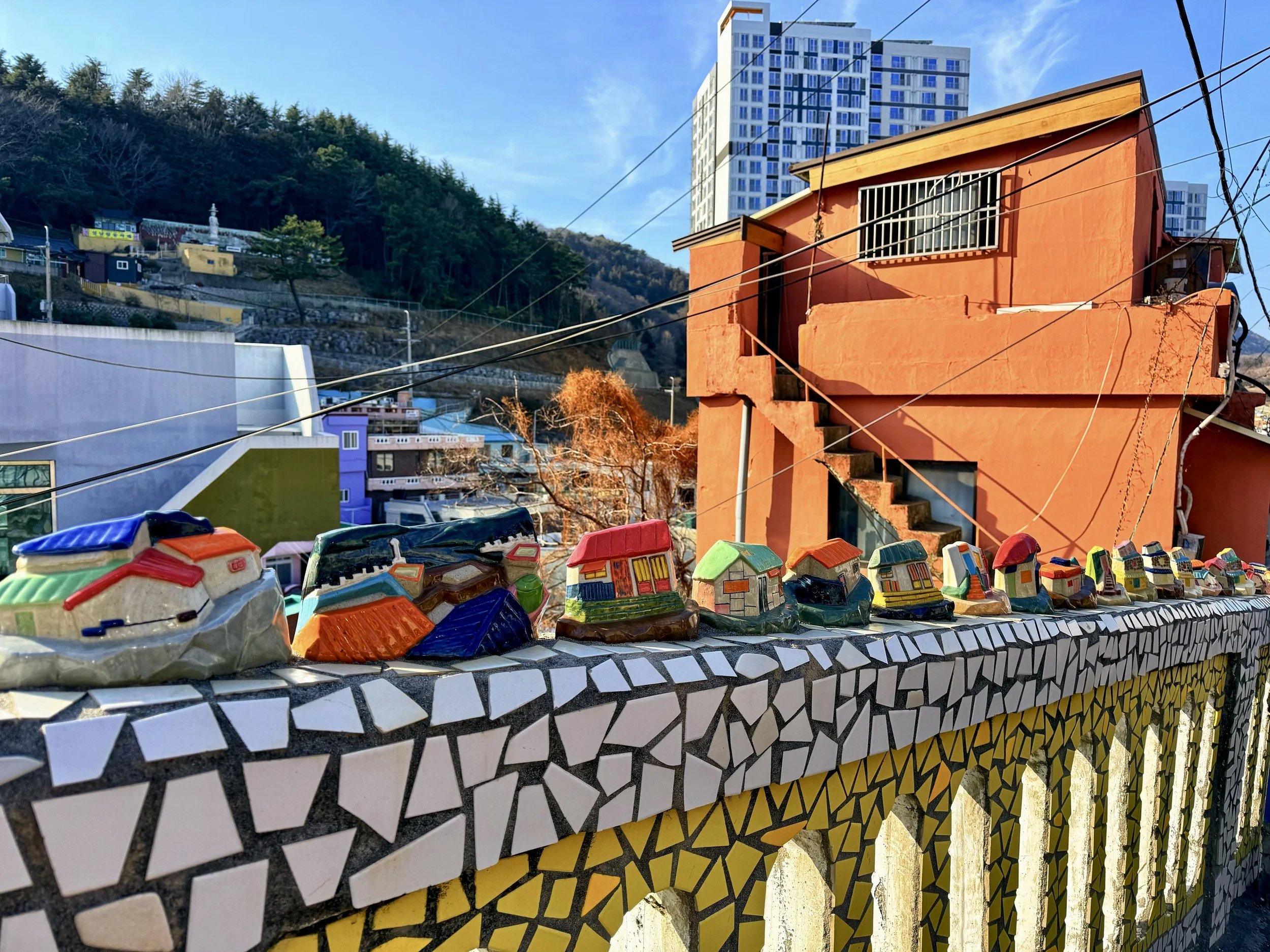
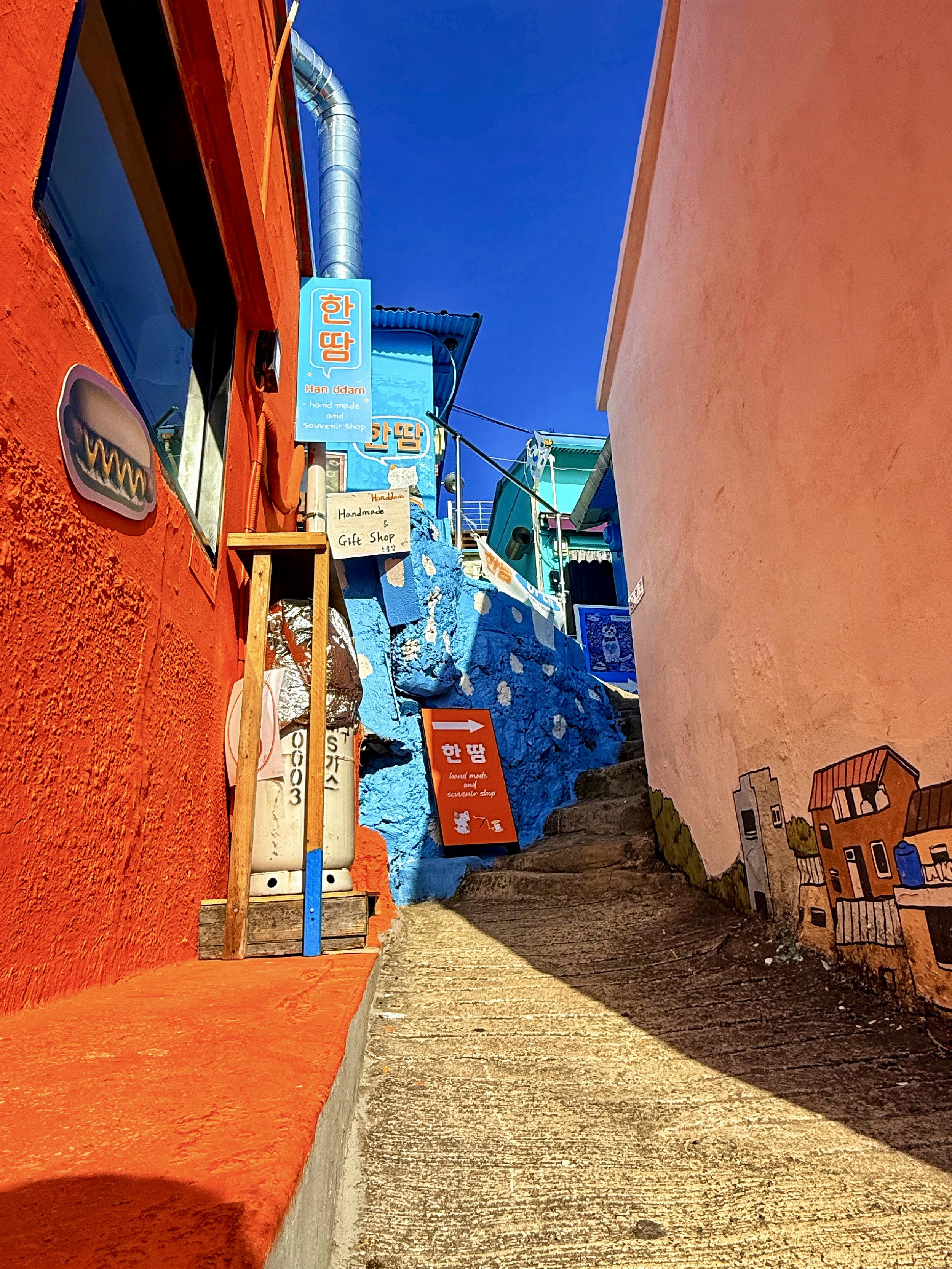
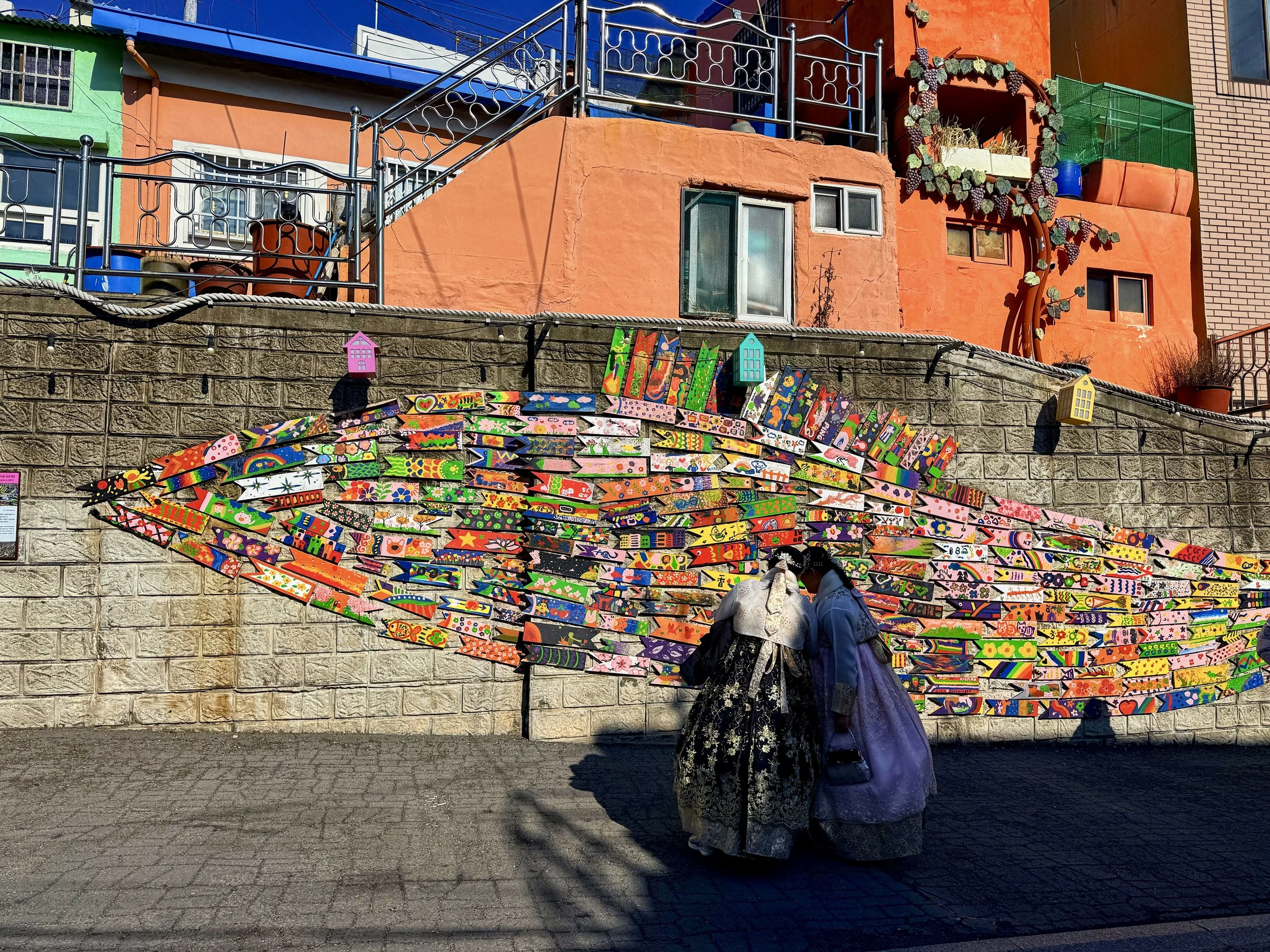
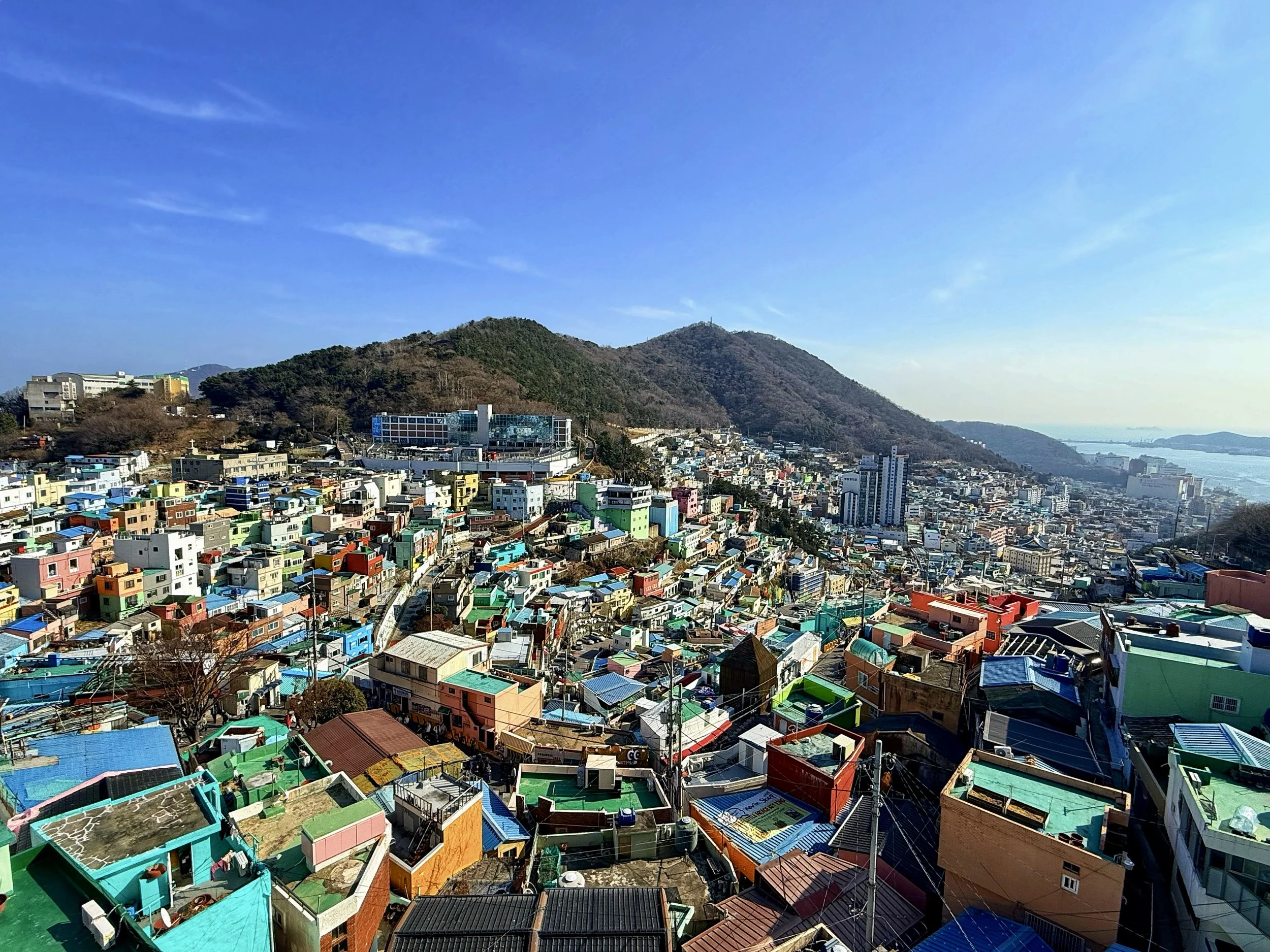
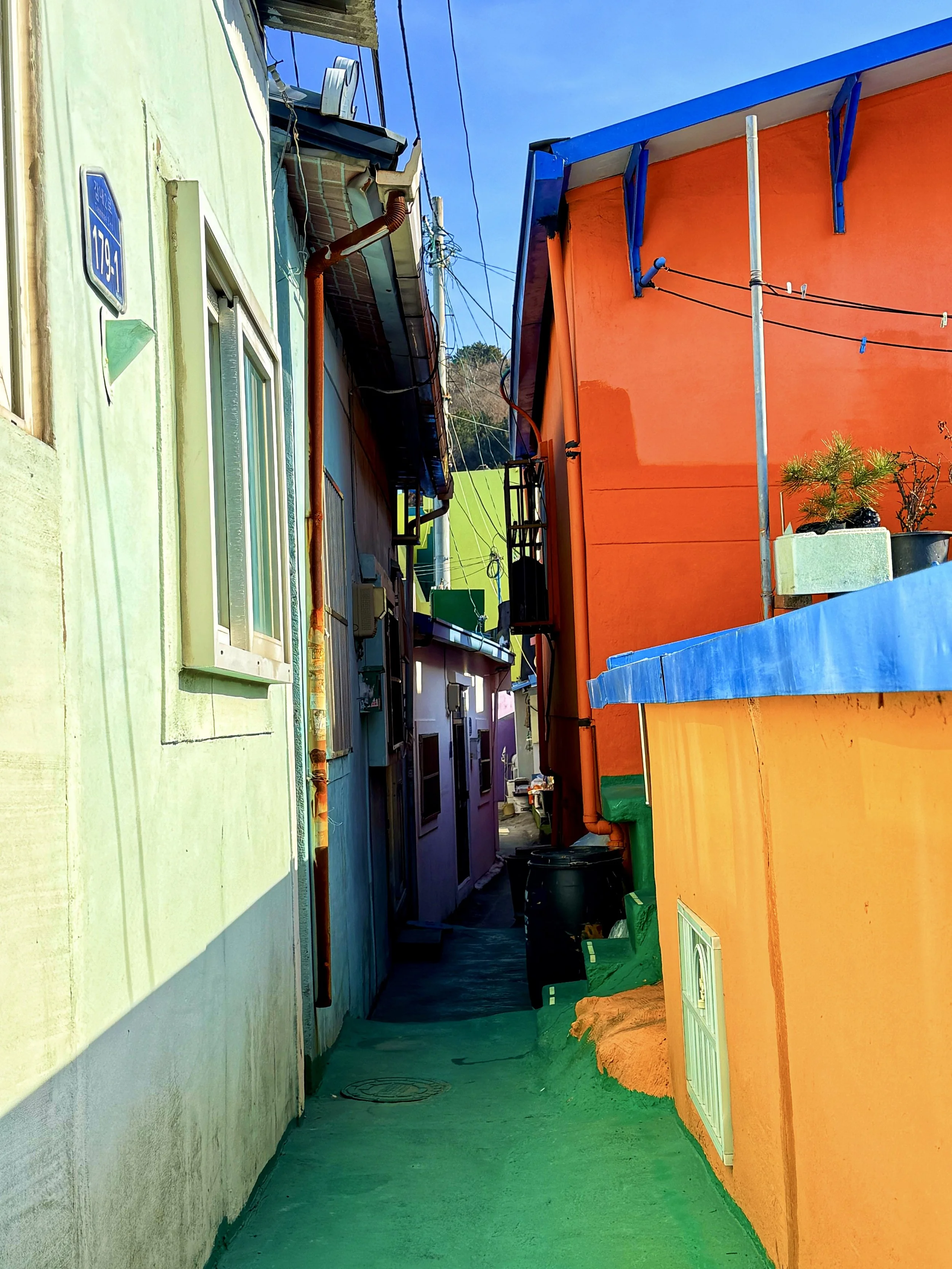
Gamcheon Culture Village was “Meh”. This former slum on a hillside originated in the 1950s as a settlement for Korean War refugees and followers of the Taegeukdo religion. Originally an impoverished shanty town, it was transformed starting in 2009 through a government-led artistic, community-focused revitalization project. It is now a famous tourist destination known for its colorful, stacked houses and, mural-lined alleyways. For us, the place was consumed by tourists and overtly commercialized with souvenir and sweet shops. People still actually live in this village and I felt bad for the inhabitants as we, too, guiltily pried. The colorful houses packed in the side of the mountain reminded us of similar slums in South America…except those aren’t commercialized for tourism and perhaps not the safest to visit either. The best part was the quiet walk back down to the city center through ordinary hillside neighborhood streets and alleys.
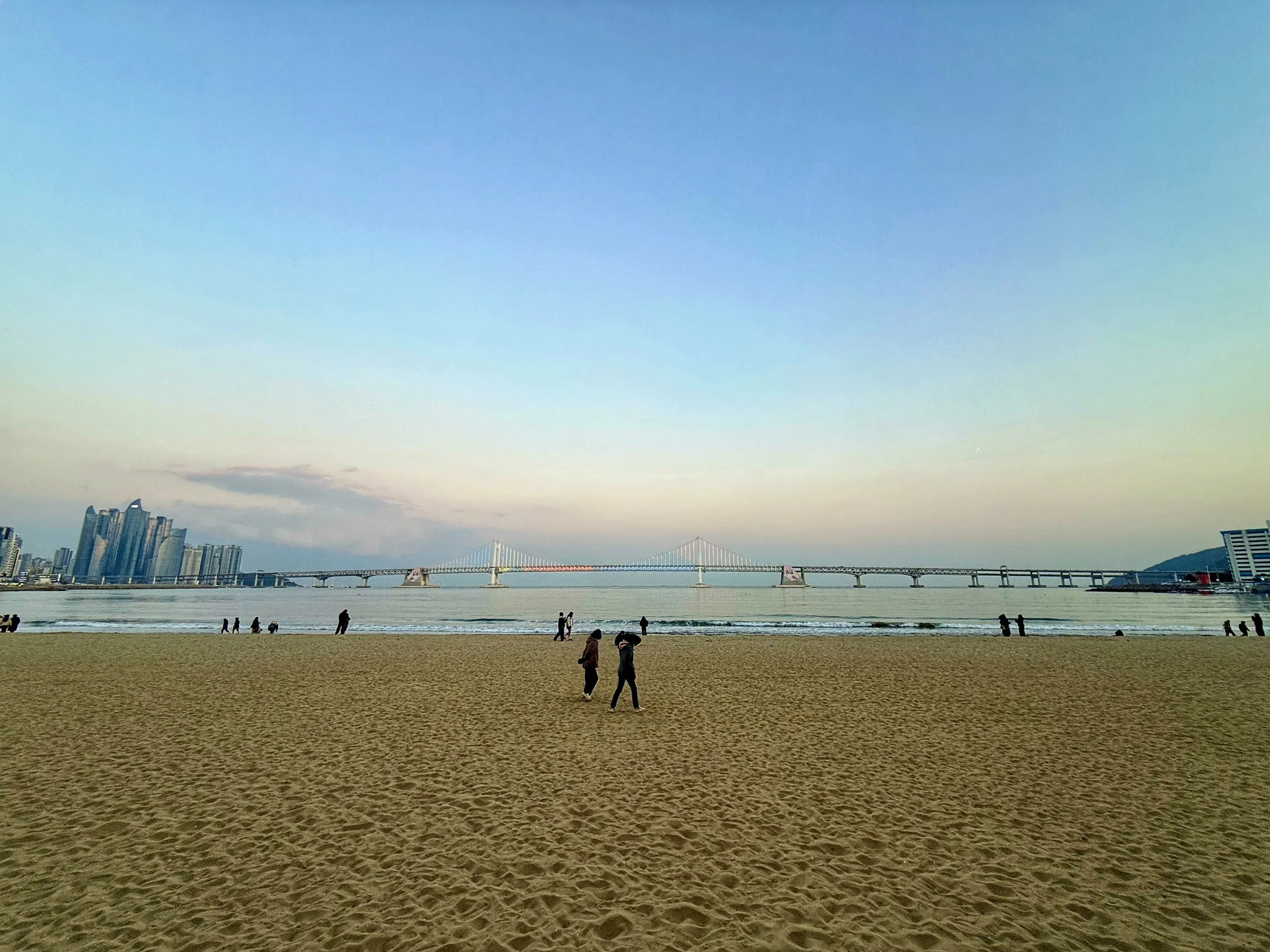
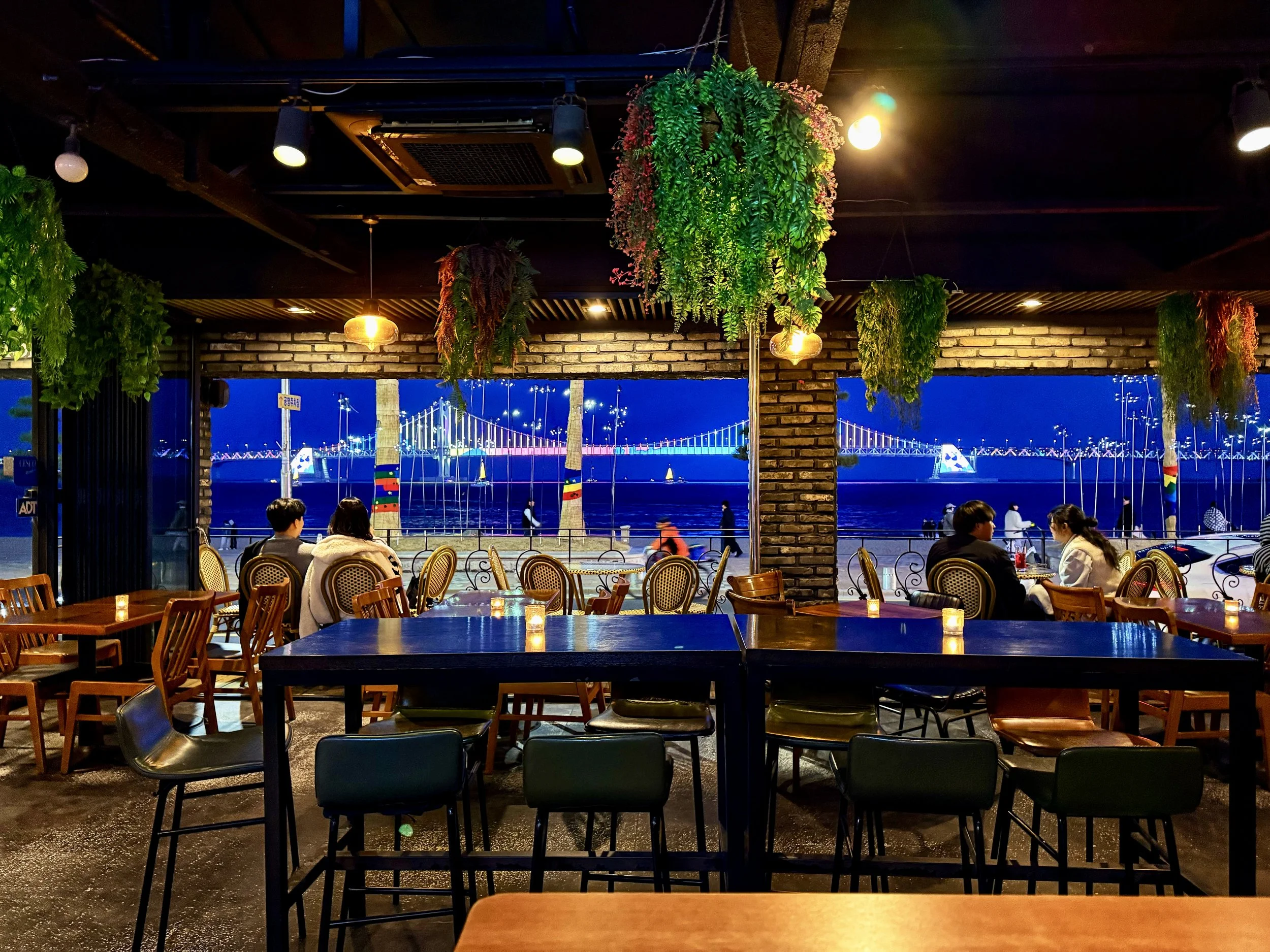
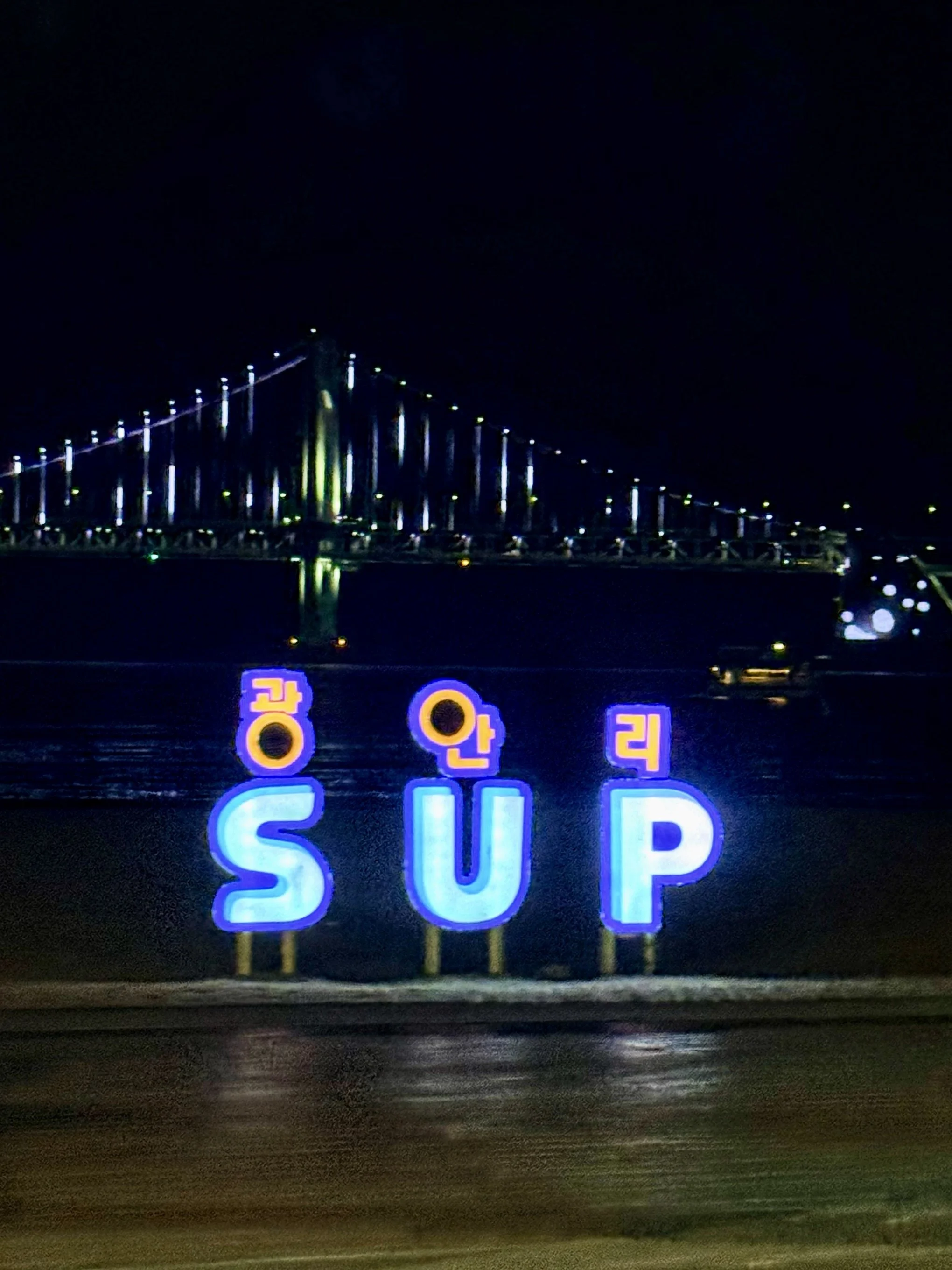
Gwangalli Beach on Lunar New Year was “Ooh-Ahh”. Busan has a lengthy sandy beach in the middle of the city! It’s lined with American style bars and restaurants along the esplanade with views of the Gwangan Bridge. We had an unexpectedly entertaining time watching a great LED light show on the bridge and LED “fireworks” by all the yachts floating below the bridge in celebration of the Lunar New Year.
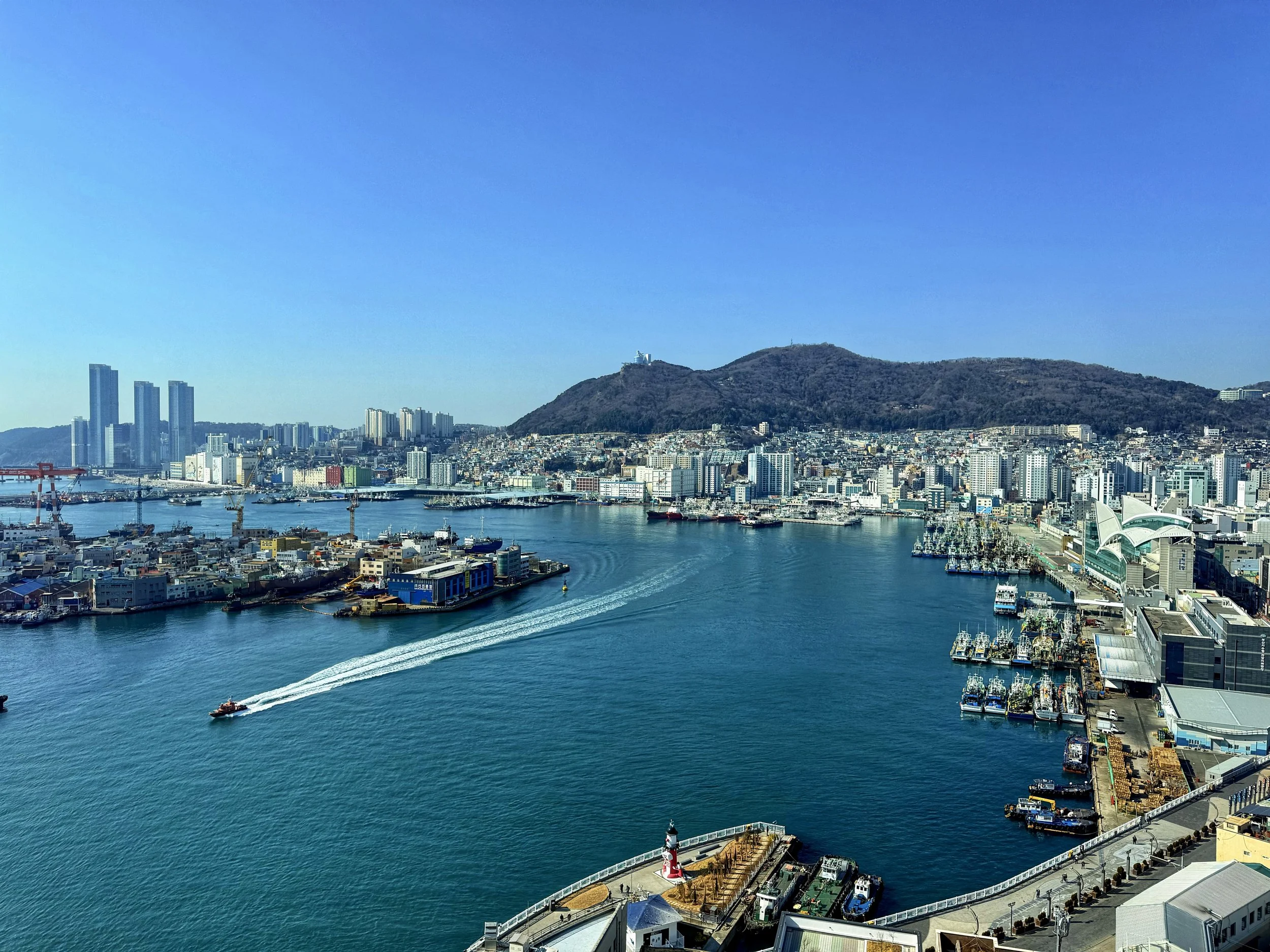
Lotte Mall Rooftop Observation Deck was “Ta-Da!” The Lotte Mall, near the Jagalchi Fish Market consists of a high-end department store on one side with nice restaurants and an upscale food court; and the other side is a multi-level supermarket and general merchandise store. But the BEST kept secret is the 13th floor observation deck! It’s free to go up there, the space is huge with a 360 degree views of Busan, and hardly any people.