Country #59: Kosovo
Before visiting Kosovo, we knew surprisingly little about the country beyond hearing that it had once been part of Yugoslavia. Like many Americans, we vaguely remembered NATO’s involvement during the late 1990s, but had little understanding of how deeply that history still shapes everyday life. As we prepared for our trip, we quickly realized that Kosovo isn’t simply another country to check off a list—it is a place where understanding the past profoundly enriches the experience of the present.
Understanding Kosovo Before Visiting
Nestled in the heart of the Balkans—a name derived from the Turkish word for “mountains”—Kosovo has spent centuries at the crossroads of empires and civilizations. Romans, medieval Serbian kingdoms, the Ottoman Empire, and later Yugoslavia all ruled this small but strategically important region.
One of the first things we learned was why Kosovo remains one of Europe’s most politically sensitive places. For Serbs, Kosovo is the cradle of their medieval kingdom and home to some of their most sacred Serbian Orthodox monasteries. The 1389 Battle of Kosovo, despite ending in defeat against the Ottoman Empire, became one of the defining moments of Serbian national identity. That enduring historical connection explains why Serbia still does not recognize Kosovo as an independent country.
Five centuries of Ottoman rule dramatically transformed the region. Many inhabitants converted to Islam, while ethnic Albanians gradually became the overwhelming majority. Today, roughly 90% of Kosovo’s population is Albanian. They speak Albanian, maintain close cultural and family ties with neighboring Albania, and naturally identify far more with Albania than Serbia. Although Kosovo has developed its own national identity, its language, traditions, and people remain overwhelmingly Albanian.
Modern tensions emerged in 1989 when Serbian leader Slobodan Milošević revoked Kosovo’s autonomy, fueling unrest that eventually erupted into the Kosovo War (1998–1999). Following widespread ethnic cleansing against Kosovar Albanians, NATO launched a 78-day air campaign that forced Serbian forces to withdraw. Kosovo was subsequently placed under United Nations administration before declaring independence in 2008. Today, more than 100 countries—including the United States and most European Union members—recognize Kosovo as a sovereign nation, while Serbia continues to consider it part of its own territory.
That dispute even affects travelers today. If you enter Kosovo from Albania, North Macedonia, or Montenegro, you generally cannot continue directly into Serbia because Serbian authorities regard that as an illegal entry into what they consider Serbian territory. Unless you first entered Kosovo from Serbia, you’ll typically need to enter Serbia through a third country.
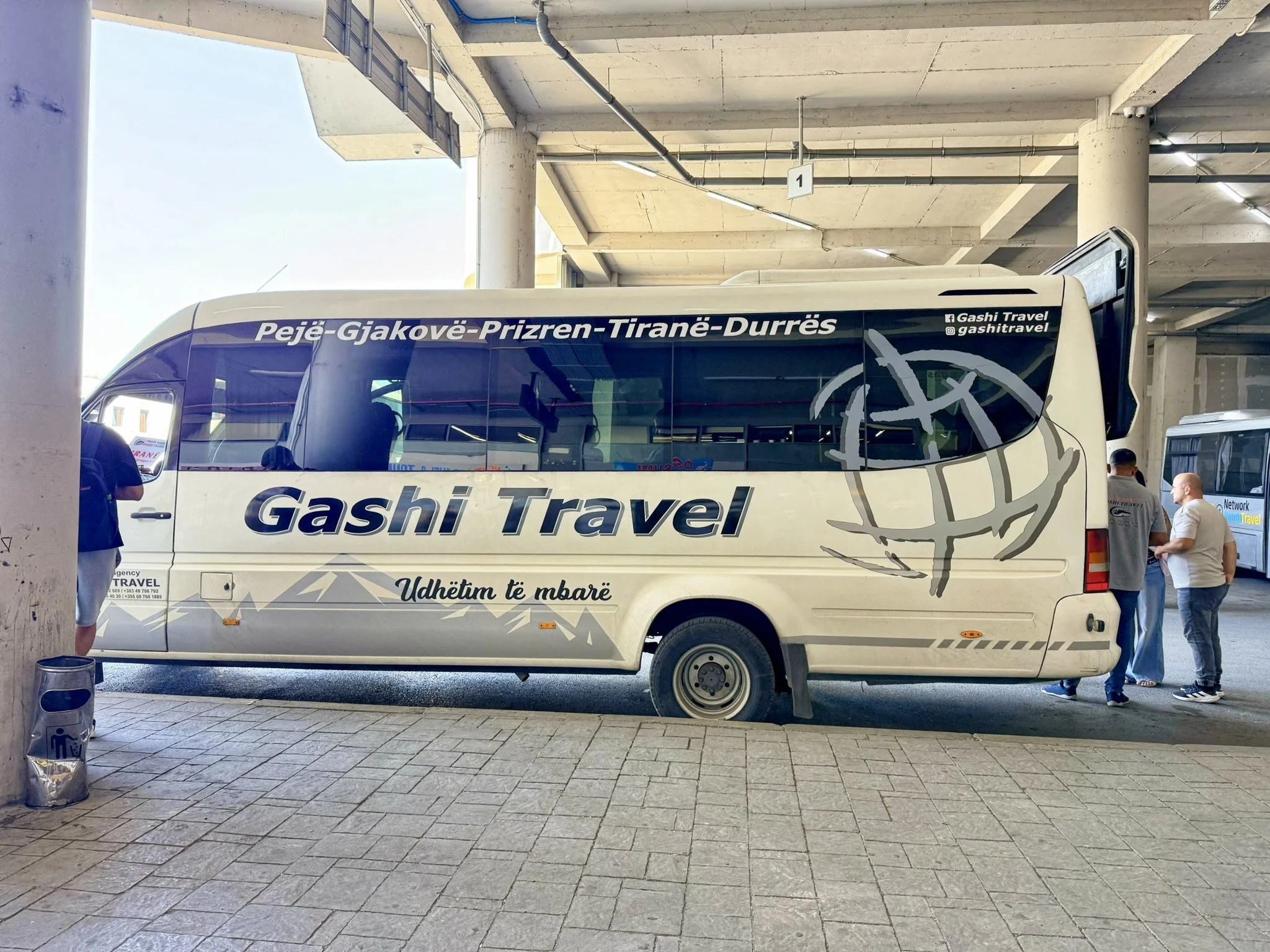
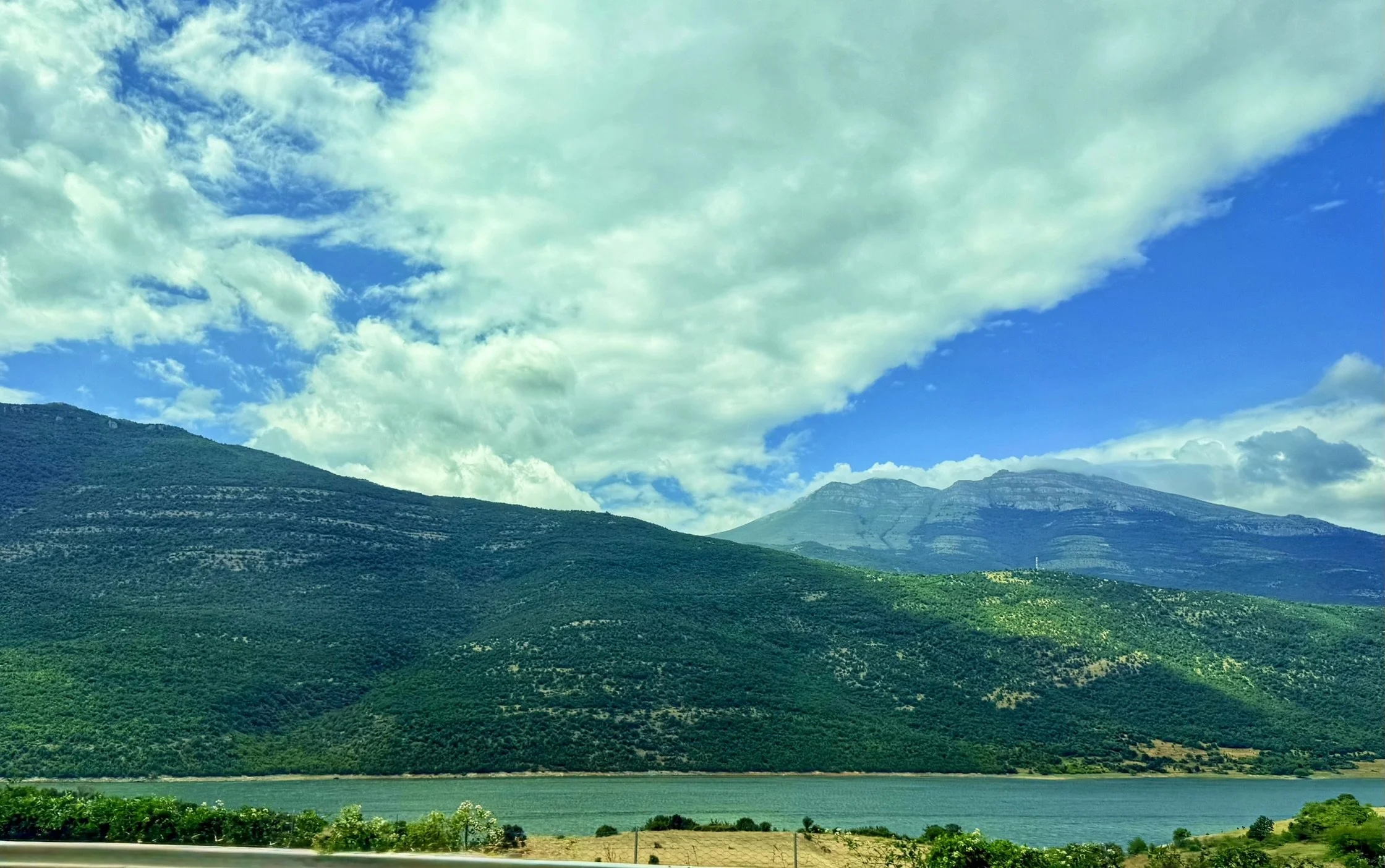
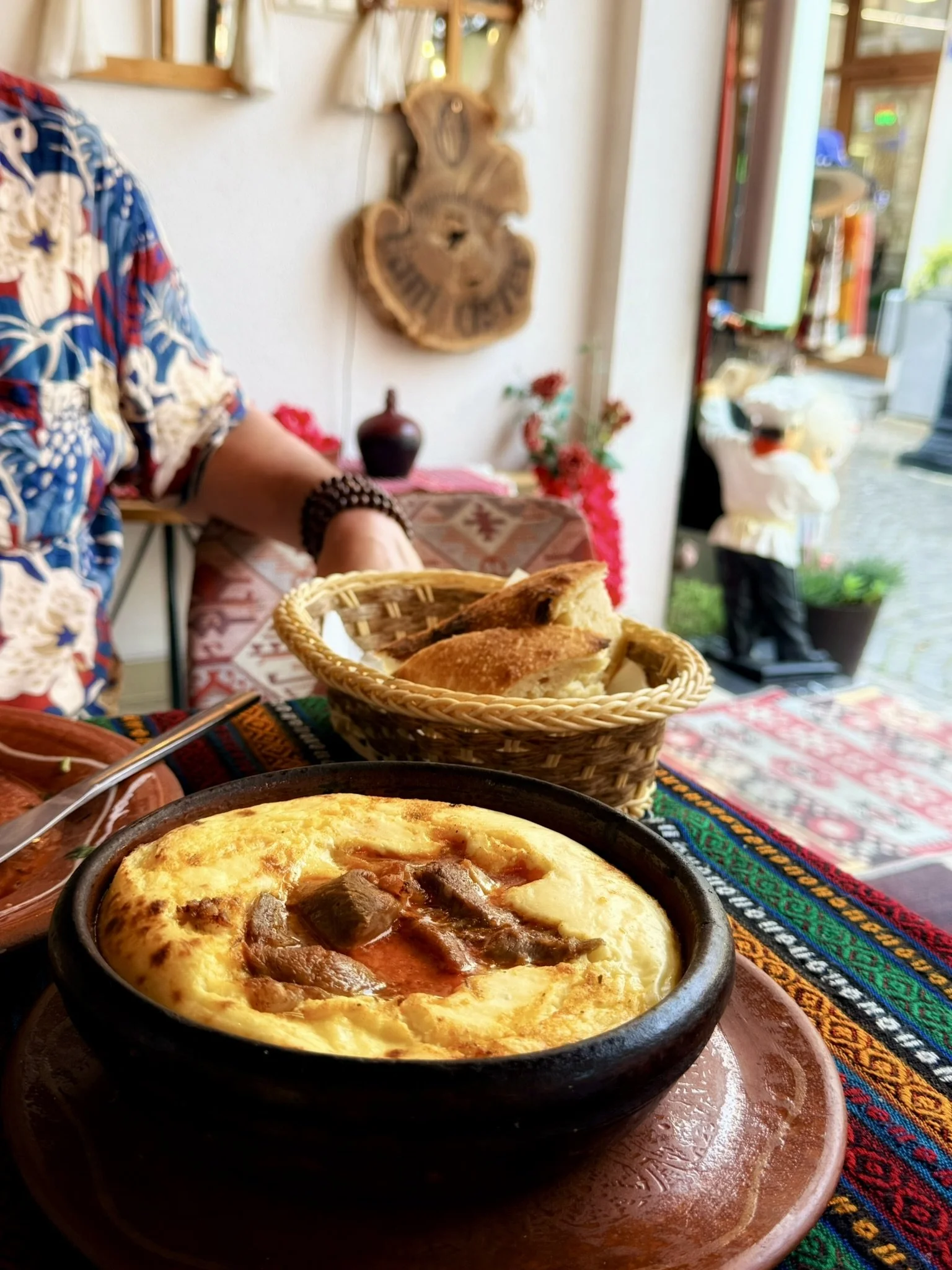
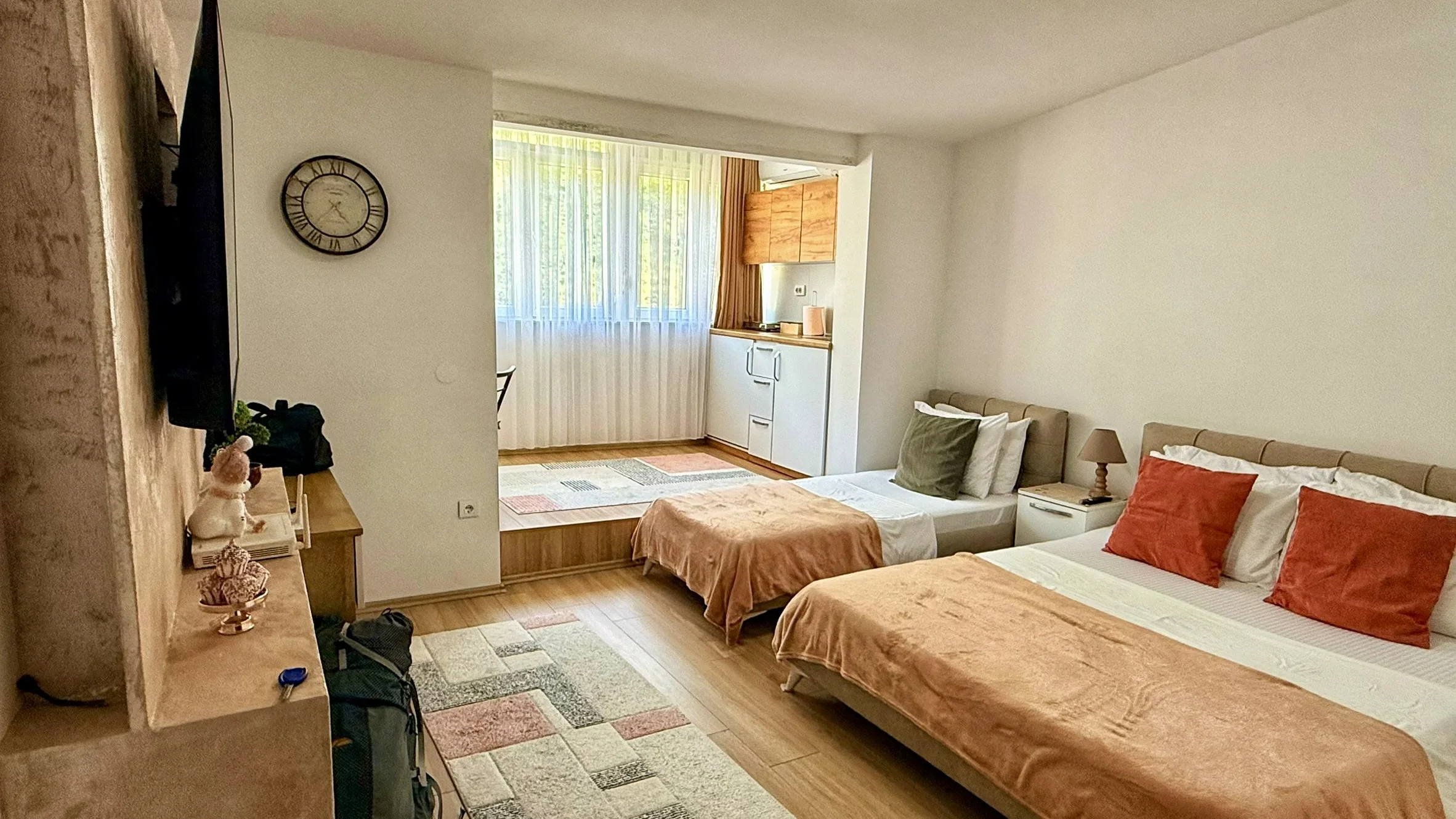
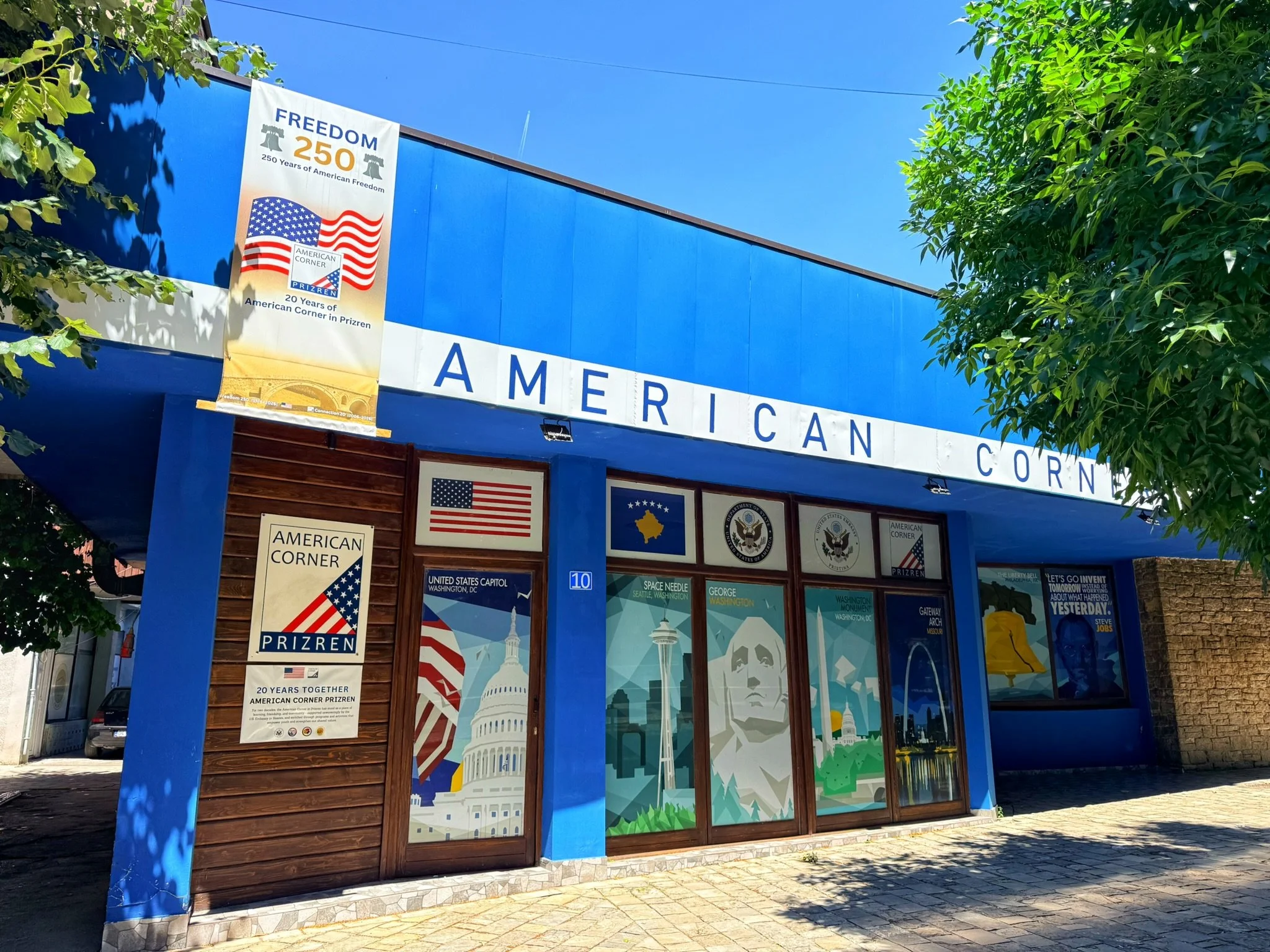
One thing we certainly didn’t expect was just how pro-American Kosovo is. American flags fly from government buildings, businesses, restaurants, and even private homes. For many Kosovars, the U.S.-led NATO intervention ended the violence and helped pave the way for independence. The United States was also among the first countries to recognize Kosovo in 2008, and that gratitude remains highly visible throughout the country.
It was fortuitous that we happened to arrive in Prizren for the 250th Birthday of the United States on 4th of July. We enjoyed learning about the Kosovo-American relationship at the “American Corner” in Prizren, as well as some Kosovars congratulating us on the 4th of July.
By the time we arrived, we realized Kosovo isn’t simply another Balkan destination. It is a place where centuries of history continue to influence politics, national identity, and even border crossings.
Understanding that history made everything we experienced far more meaningful.
Kosovo’s Cultural Capital: Prizren
If there’s one place that encapsulates Kosovo’s rich and complicated story, it’s Prizren.
Often called the country’s cultural capital, Prizren has served as an important religious, commercial, and political center for centuries. Few cities in the Balkans showcase such a remarkable layering of civilizations within such a compact historic center. In the span of a leisurely walk, we encountered reminders of the medieval Serbian kingdom, centuries of Ottoman rule, the Albanian National Awakening, and modern Kosovo—all woven together into one remarkably picturesque city.
Walking Through Prizren’s Old Town
Our walking tour began with one of the city’s smallest yet most intriguing landmarks.
Old Stone Bridge
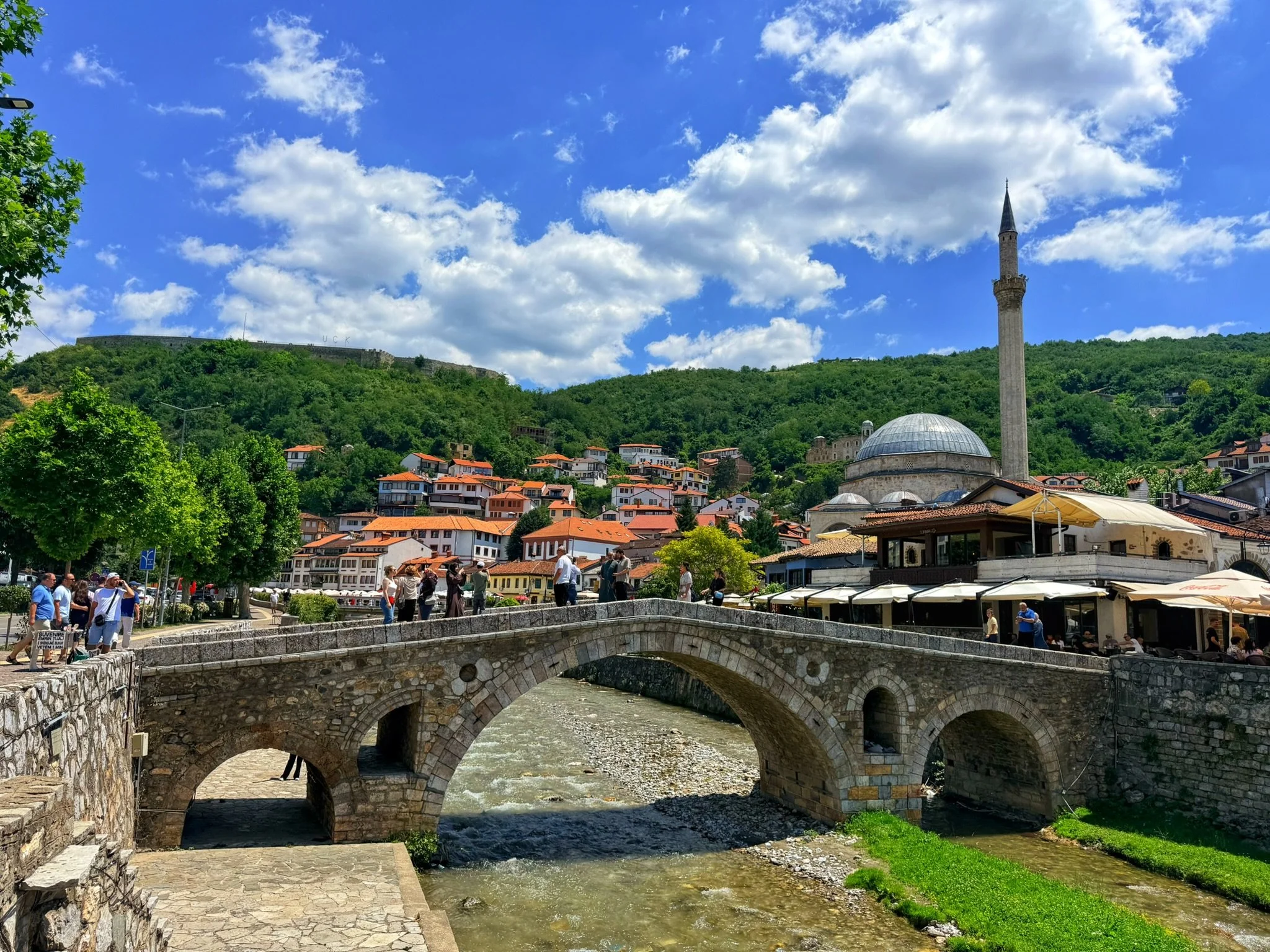
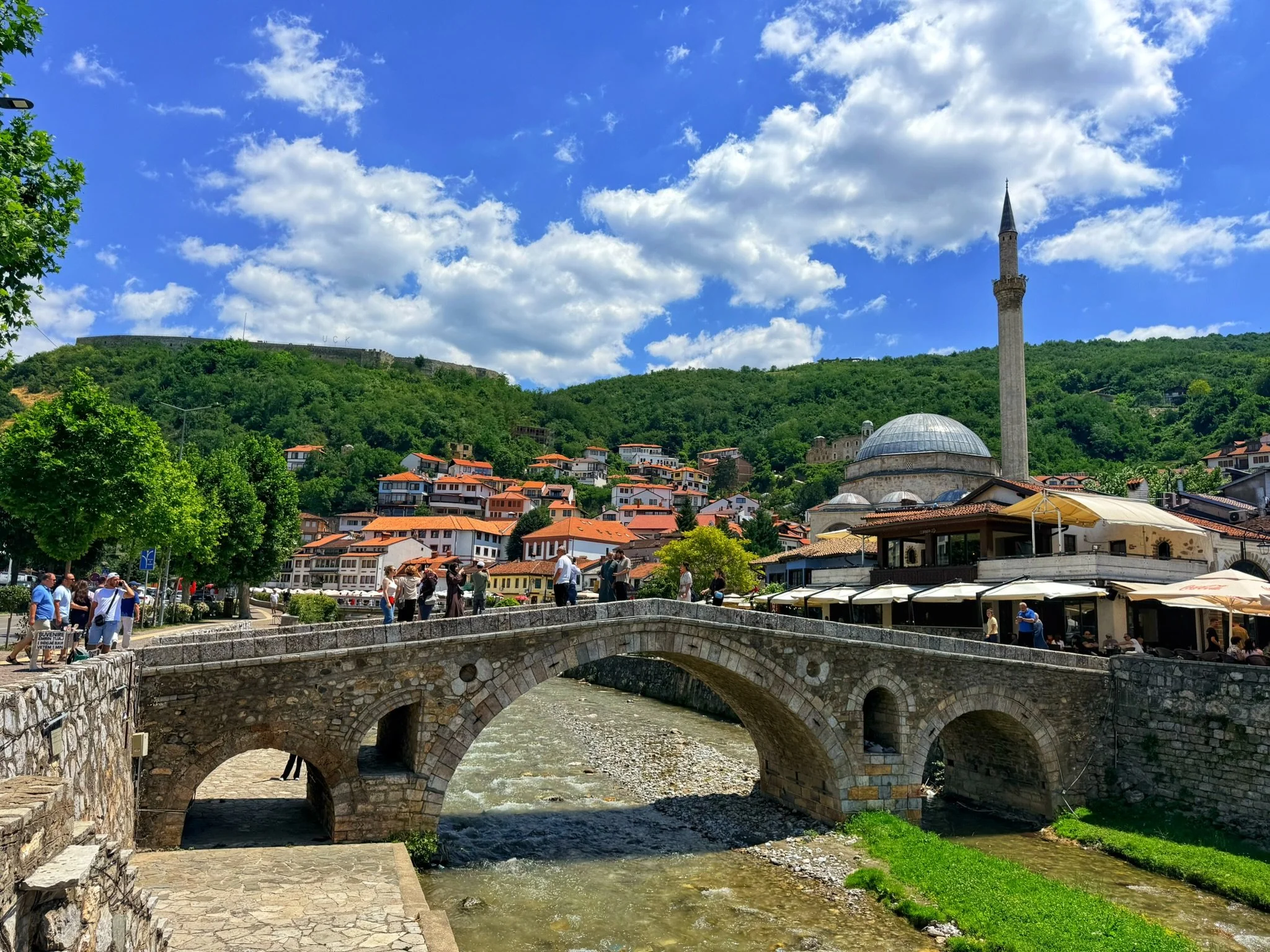
Few places symbolize Prizren more than the graceful Old Stone Bridge (Ura e Gurit).
Dating to the 15th century, this roughly 600-year-old bridge spans the Lumbardhi River, linking lively Shatërvan Square with the historic Saraçhane district. Framed by the distant mountains, it perfectly captures the timeless character of Prizren and has become the city’s most photographed landmark.
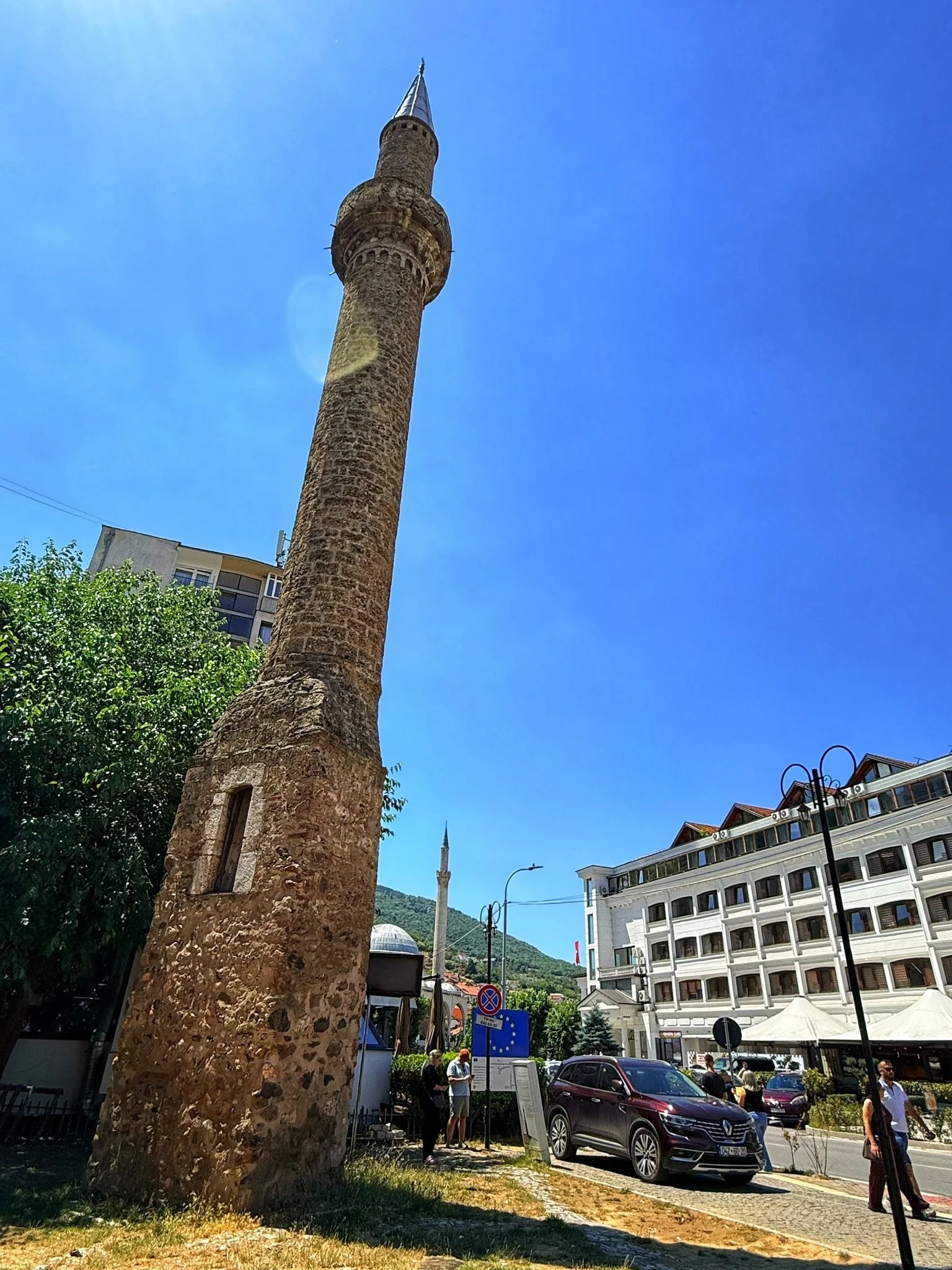
Arasta Minaret
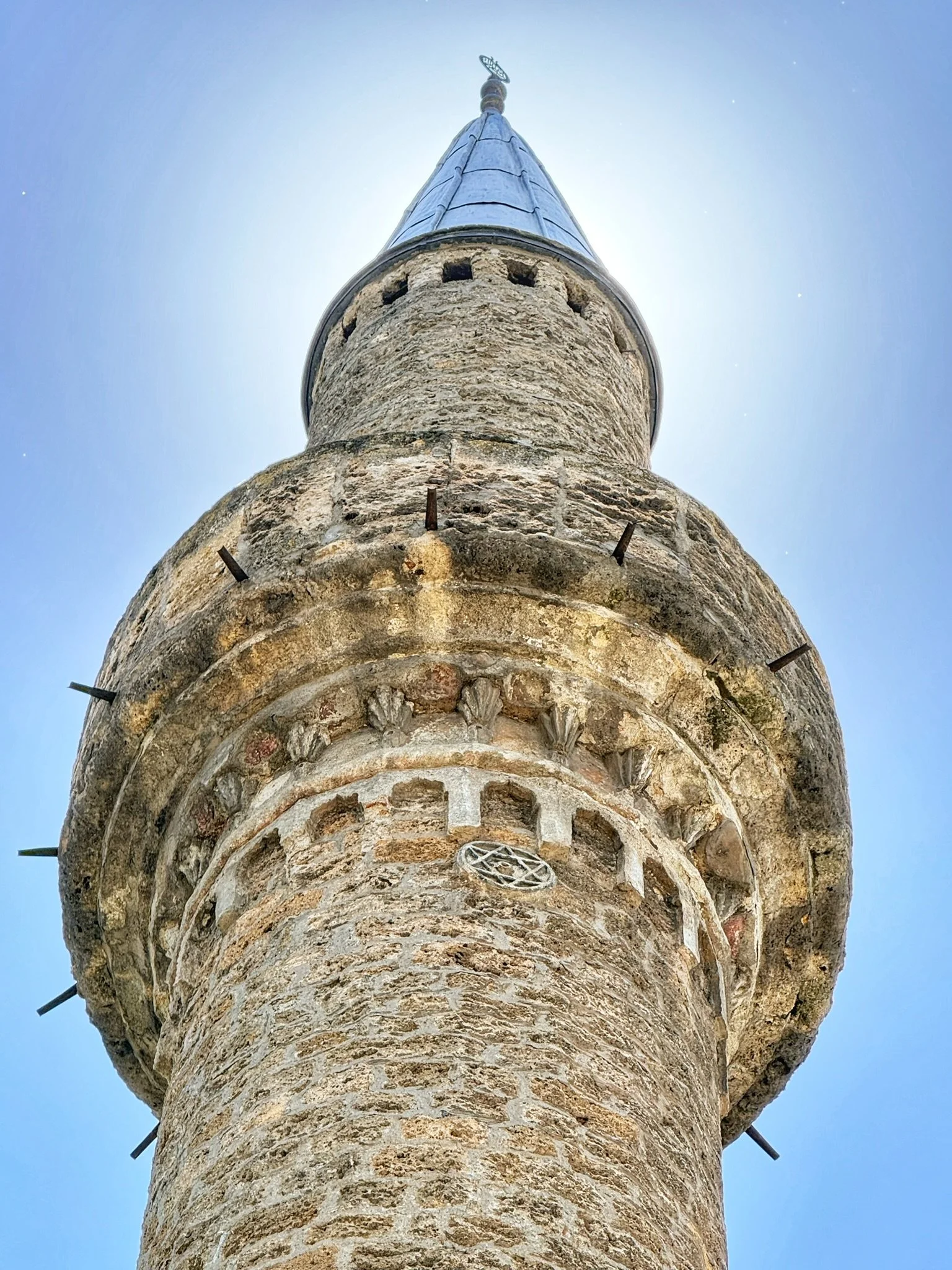
The Arasta Minaret is the only surviving remnant of the Evrenos Jakup Bey Mosque, built between 1526 and 1538. What makes it especially fascinating is its rare six-pointed “Seal of Solomon,” an Islamic talismanic symbol frequently used in Ottoman architecture centuries before most people came to associate the shape with the Star of David. It serves as an interesting reminder that symbols often carry very different meanings across cultures and religions.
Gazi Mehmed Pasha Hammam
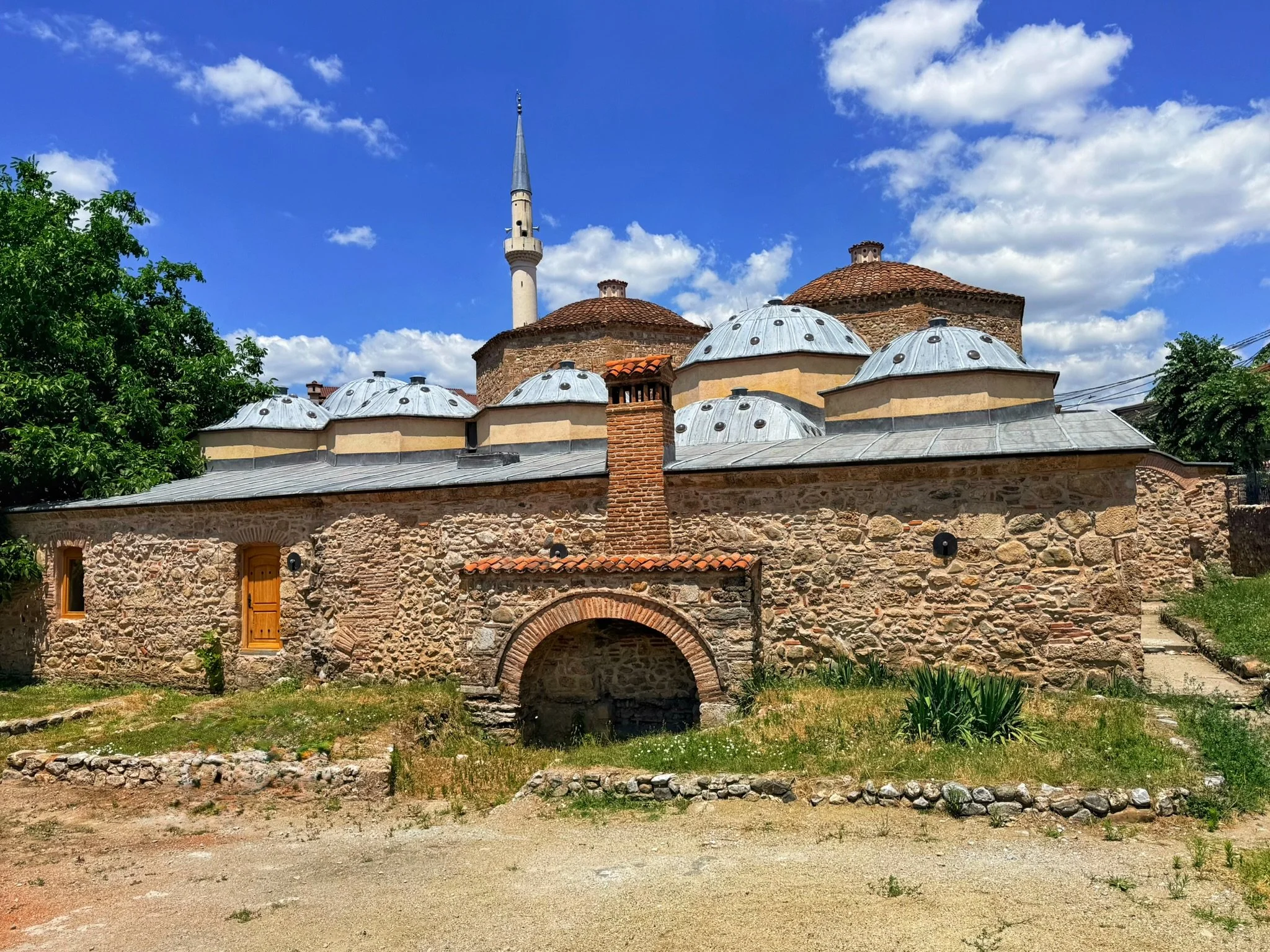
Built between 1563 and 1574, this beautifully preserved Ottoman bathhouse ranks among the finest in the Balkans. Twenty domes crown the sprawling complex, with the largest covering the reception halls and smaller lead-covered domes sheltering the hot steam chambers. The sophisticated engineering demonstrates just how advanced Ottoman public architecture had become.
Albanian League of Prizren Museum
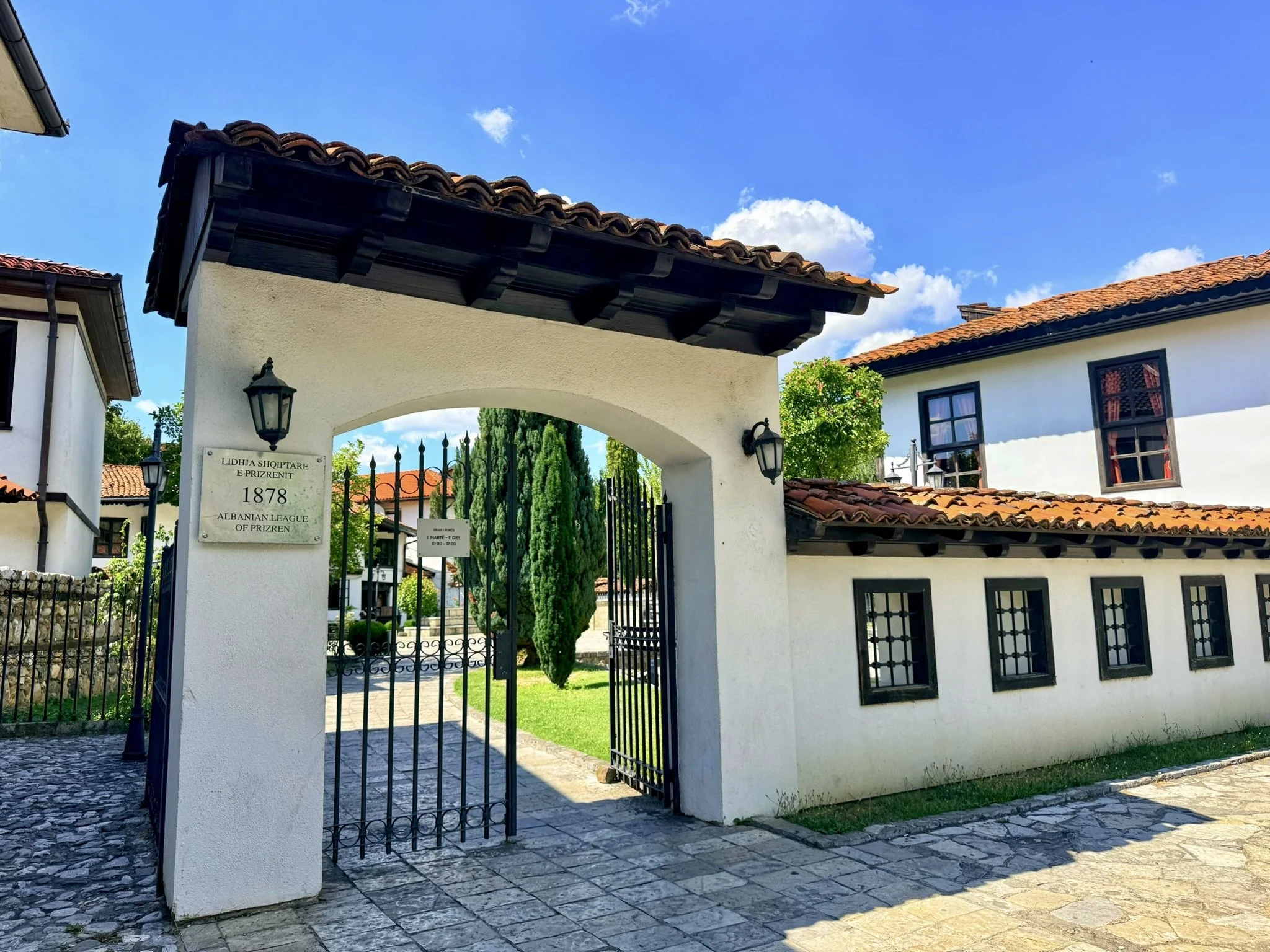
While we didn’t go inside, one of the most interesting historic places we learned about was the Albanian League of Prizren Museum. The museum tells the broader story of the Albanian people as an ethnic, linguistic, and cultural nation—a story that deeply includes Kosovo.
This building marks the birthplace of the Albanian National Awakening. On June 10, 1878, more than 300 Muslim, Catholic, and Orthodox delegates gathered here to establish the Albanian League of Prizren in response to the proposed partition of Albanian-populated territories following the Russo-Turkish War. Although the Ottoman Empire suppressed the League only three years later, its influence endured. It inspired the Albanian Renaissance, promoted Albanian language and education, laid the groundwork for Albania’s independence in 1912, and profoundly shaped the national identity of modern Kosovo.
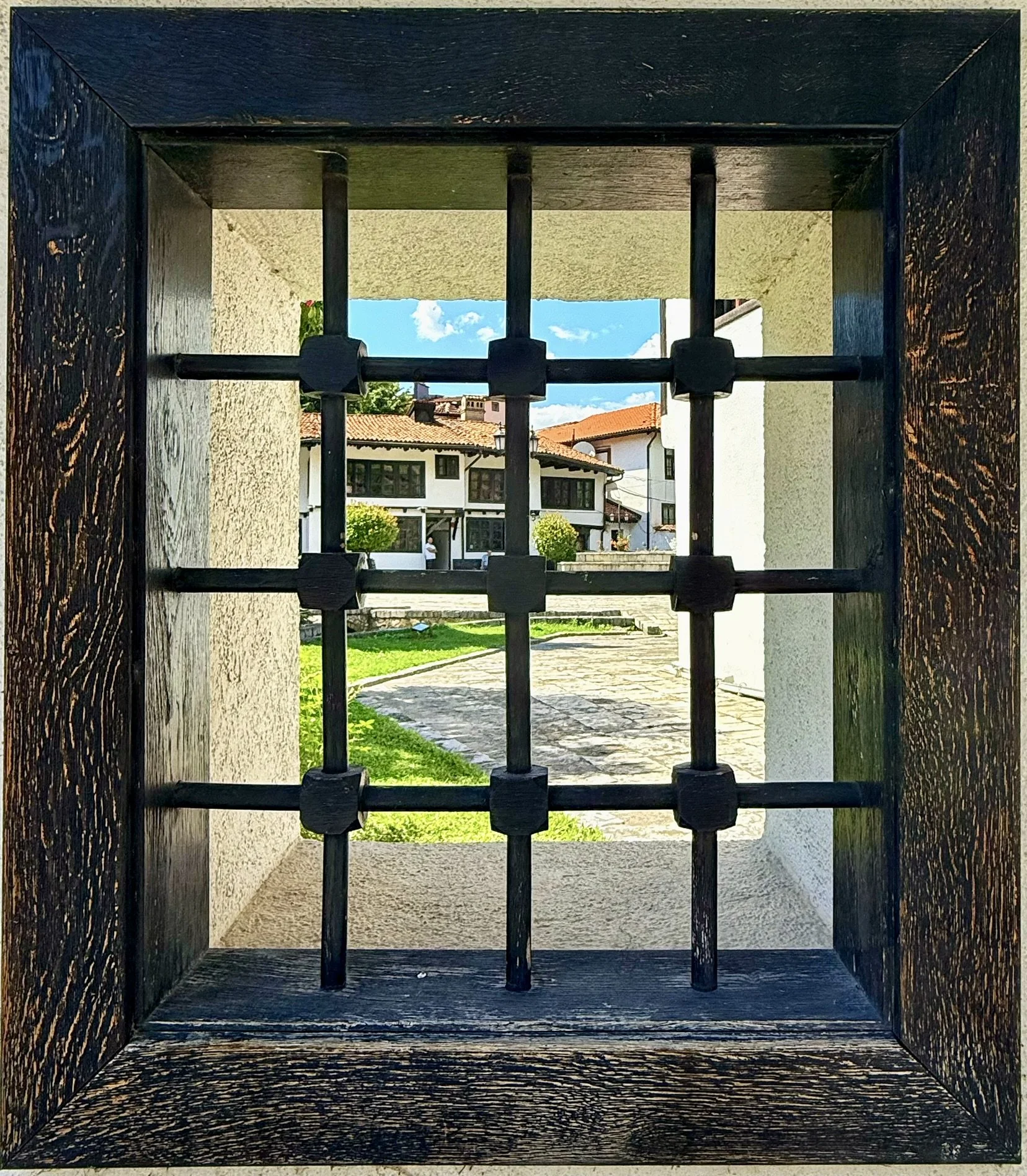
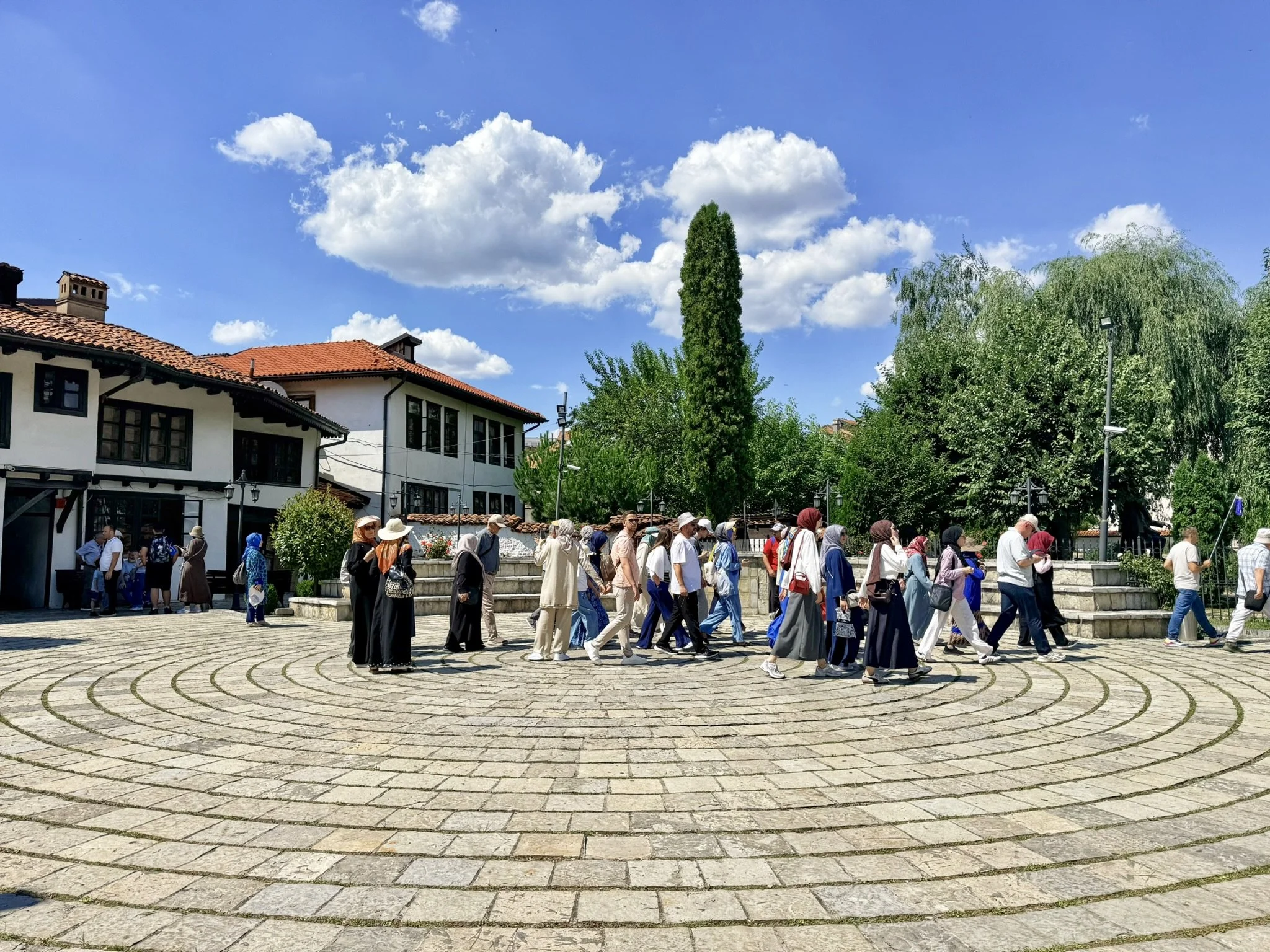
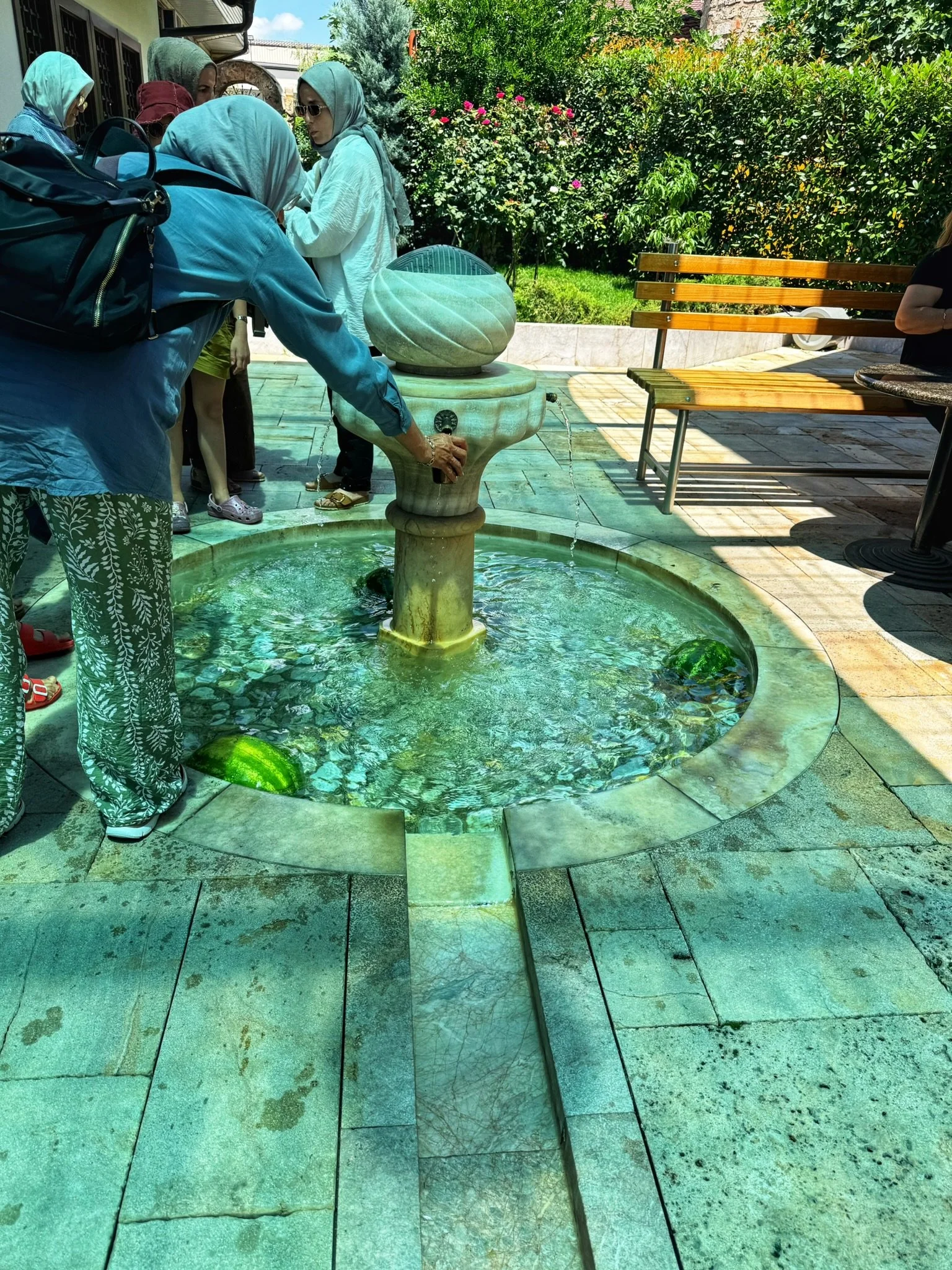
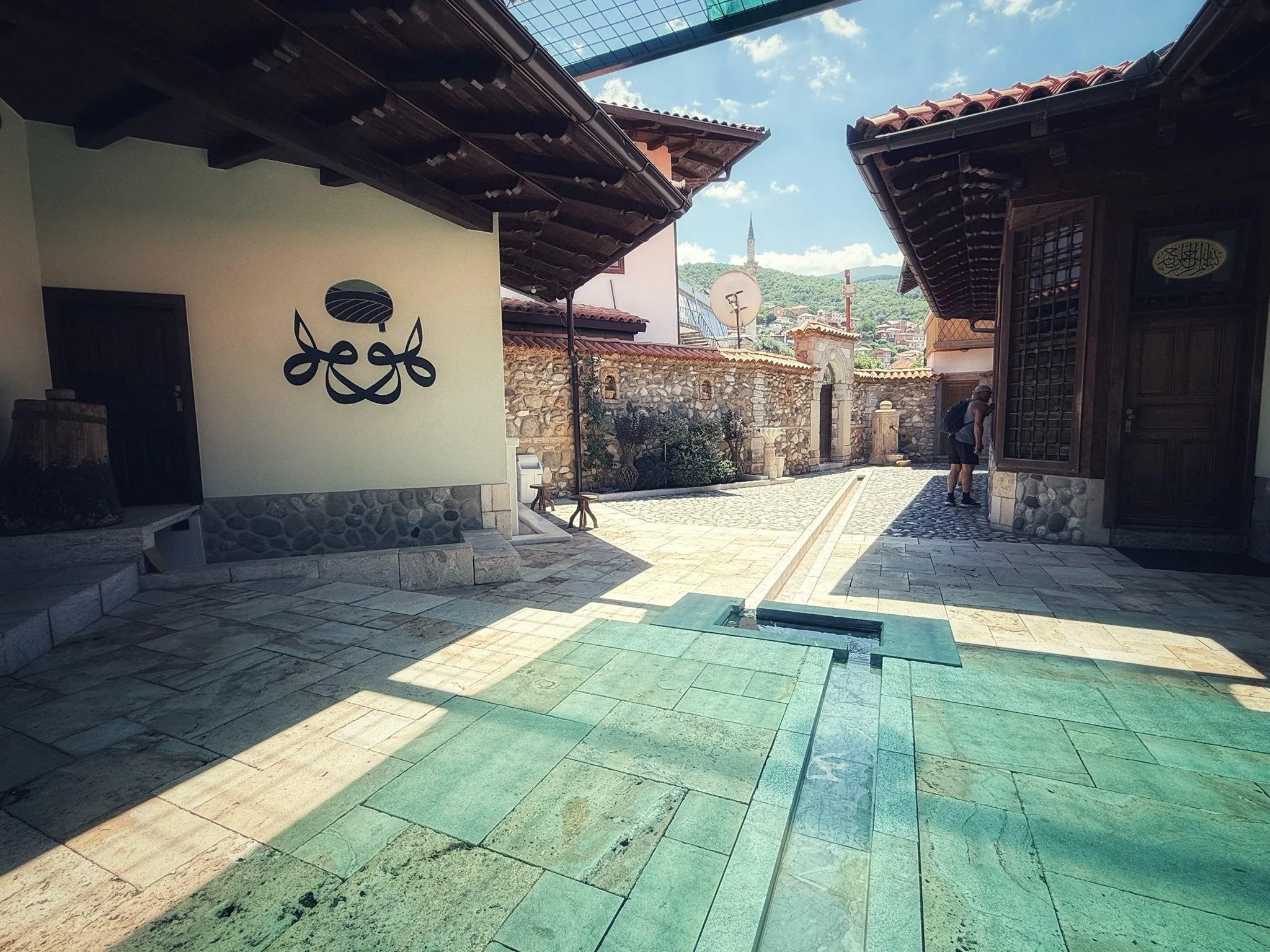
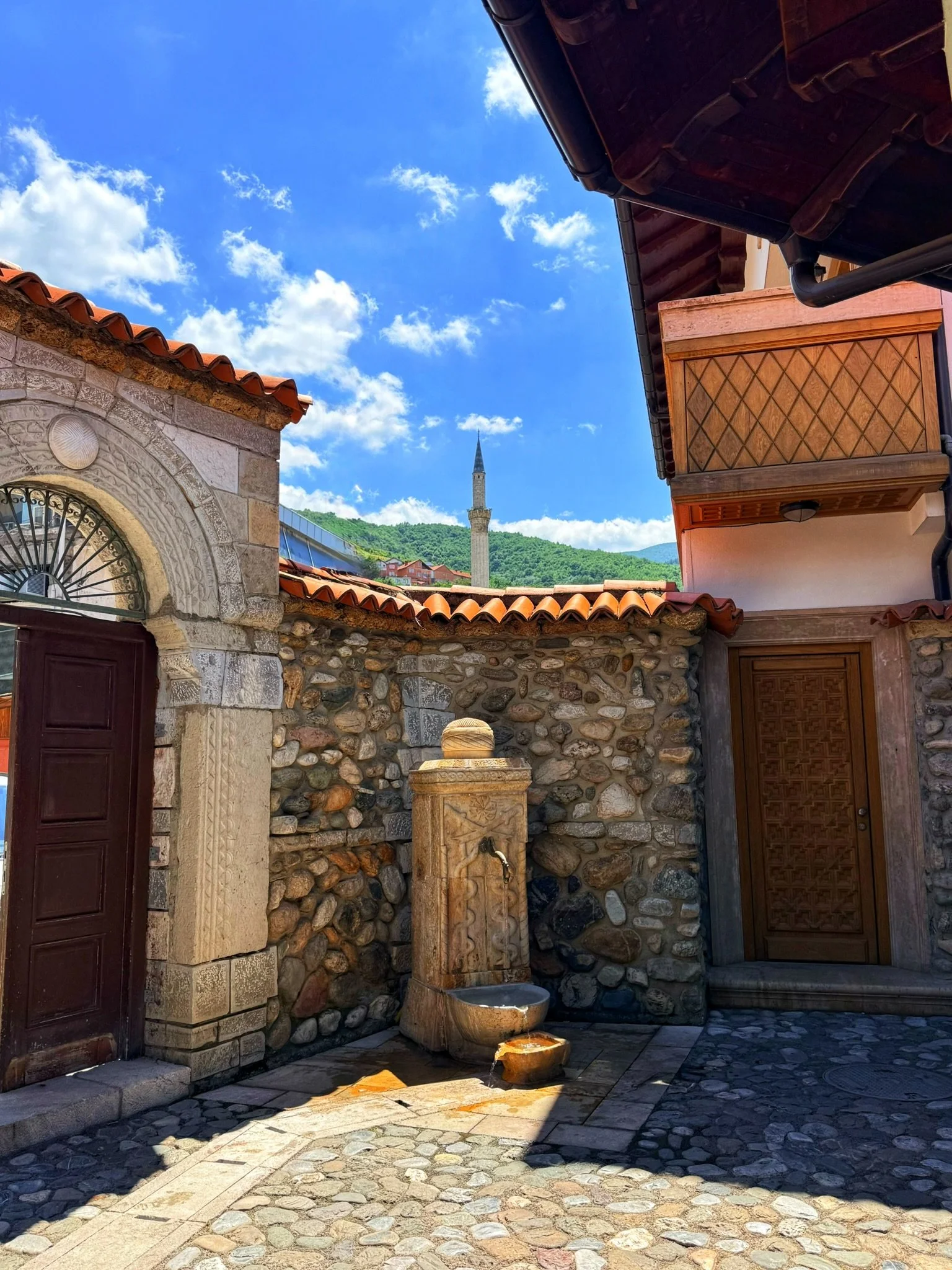
Teqja e Saraçhanës
Hidden within the old town is the beautifully preserved Halveti Teqe, a 350-year-old Sufi lodge founded in 1712 by Sheikh Pir Osman Baba.
Still maintained by the same family centuries later, this peaceful sanctuary remains an active place of worship. Sufism, often described as the mystical branch of Islam, emphasizes humility, selflessness, and developing a deeply personal connection with the divine.
Shatërvan Square
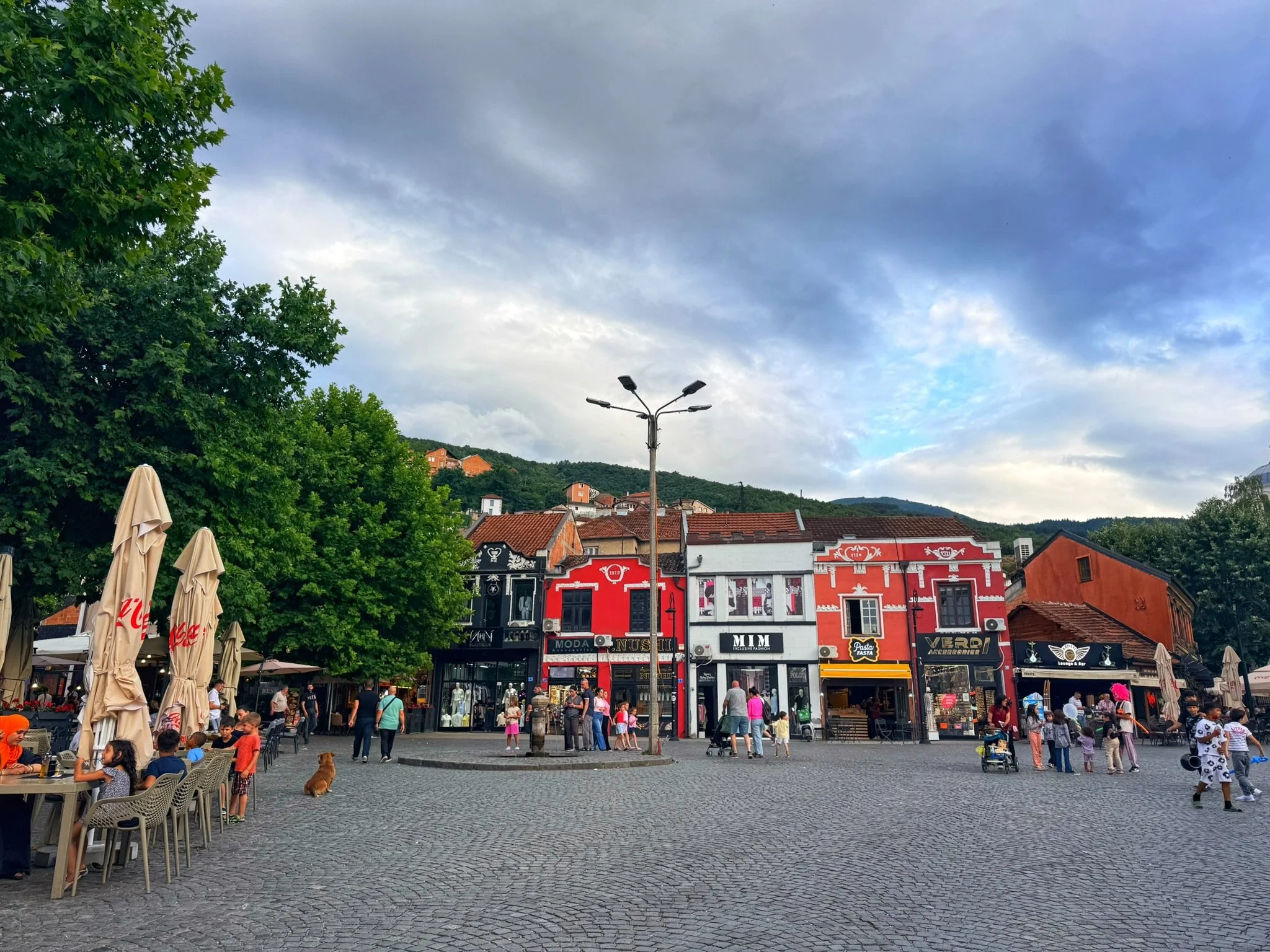
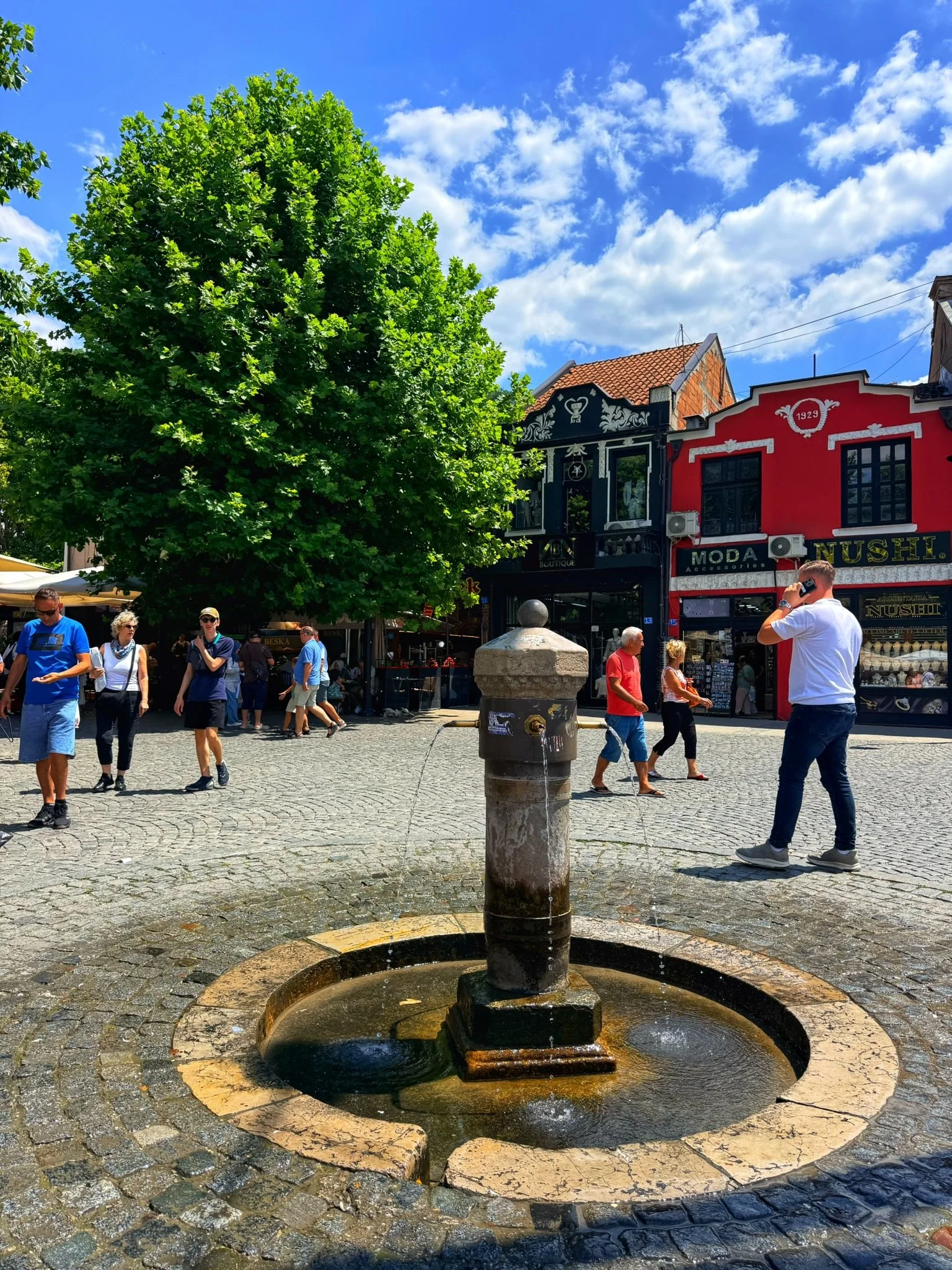
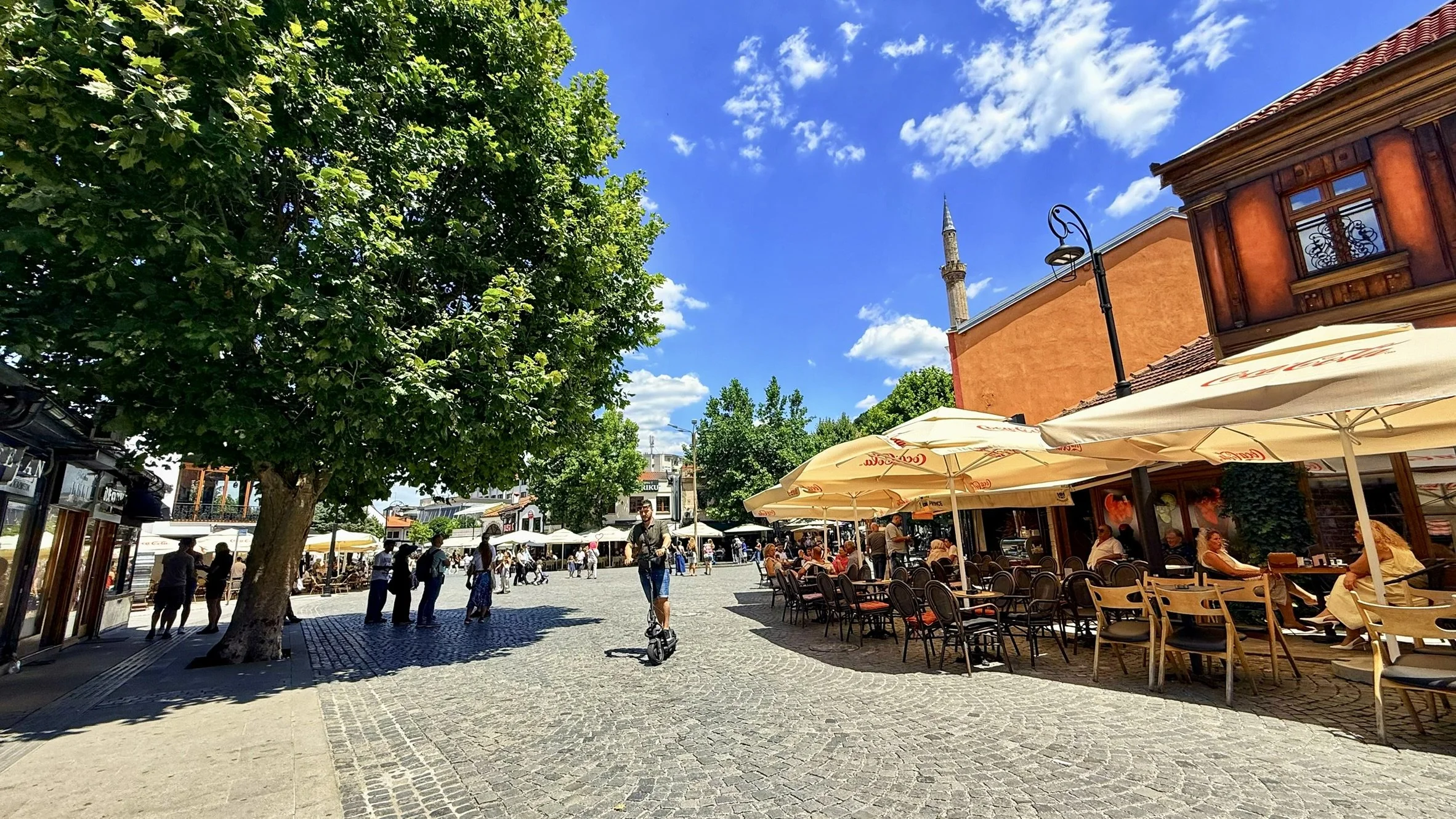
At the heart of Prizren lies Shatërvan Square.
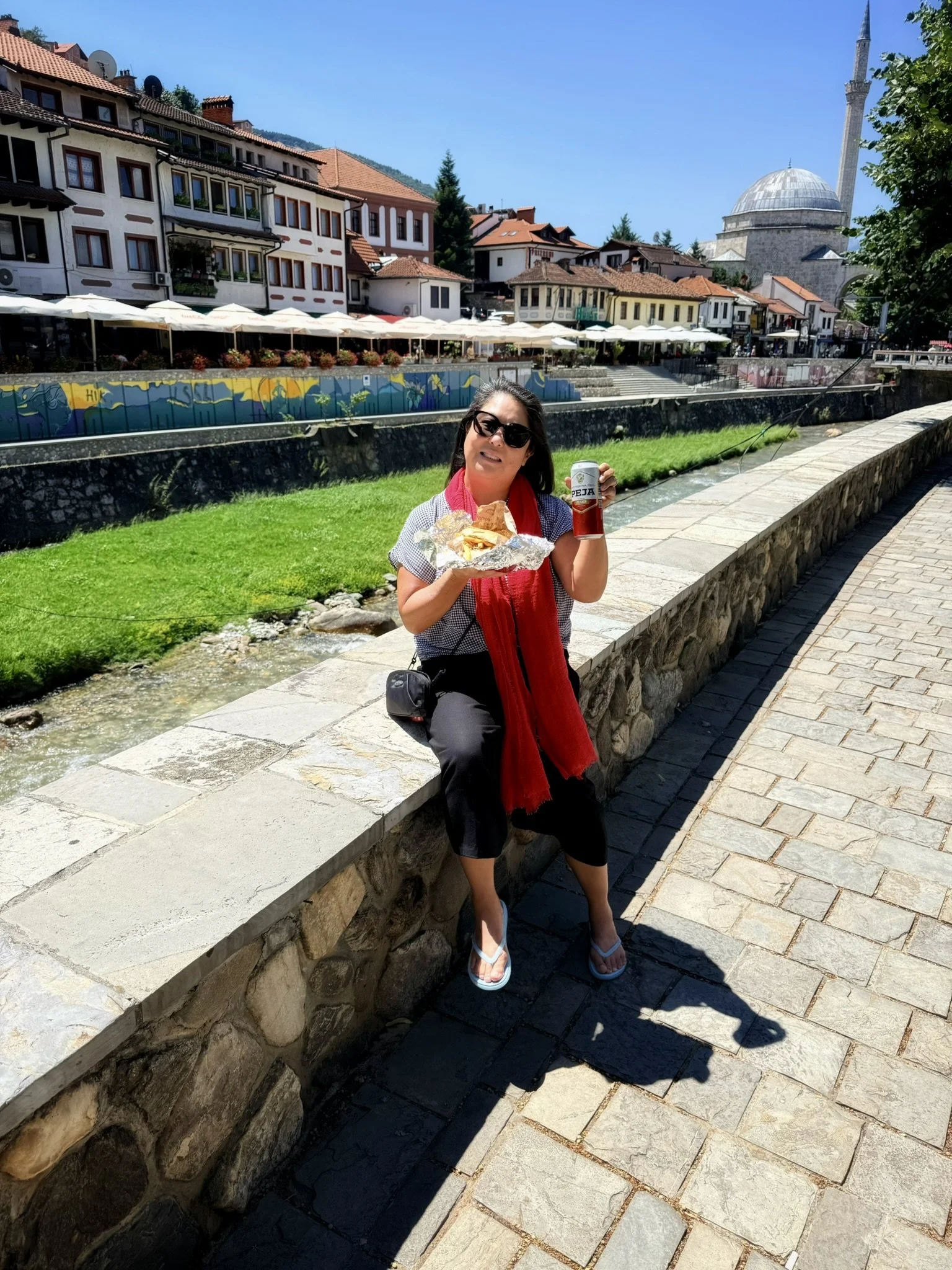
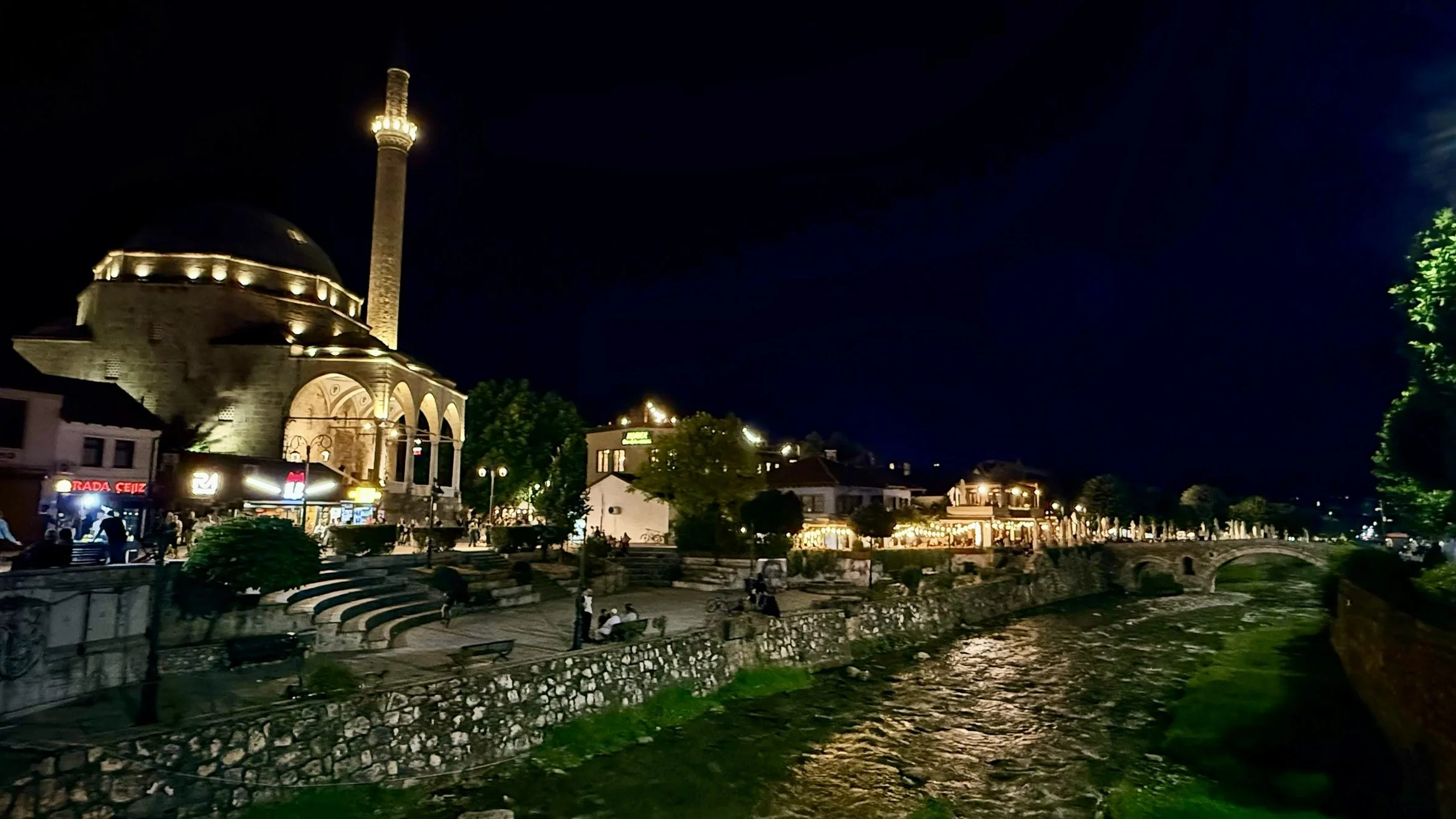
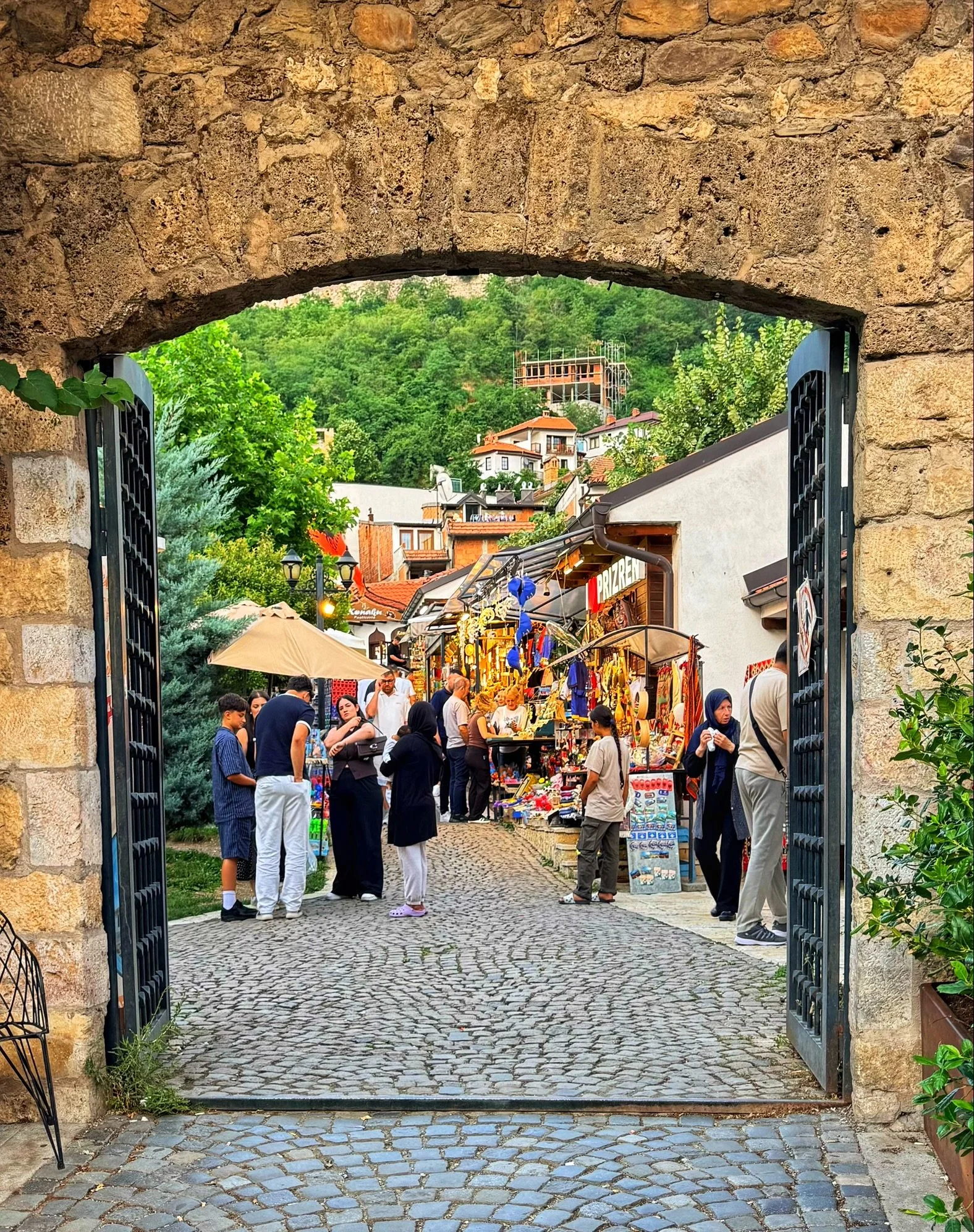
Surrounded by elegant Ottoman-era buildings and narrow cobblestone streets, the square serves as the city’s outdoor living room. Locals gather over coffee, children play, visitors linger, and life unfolds at a slower pace. It was the perfect place to simply sit and absorb the atmosphere.
Sinan Pasha Mosque
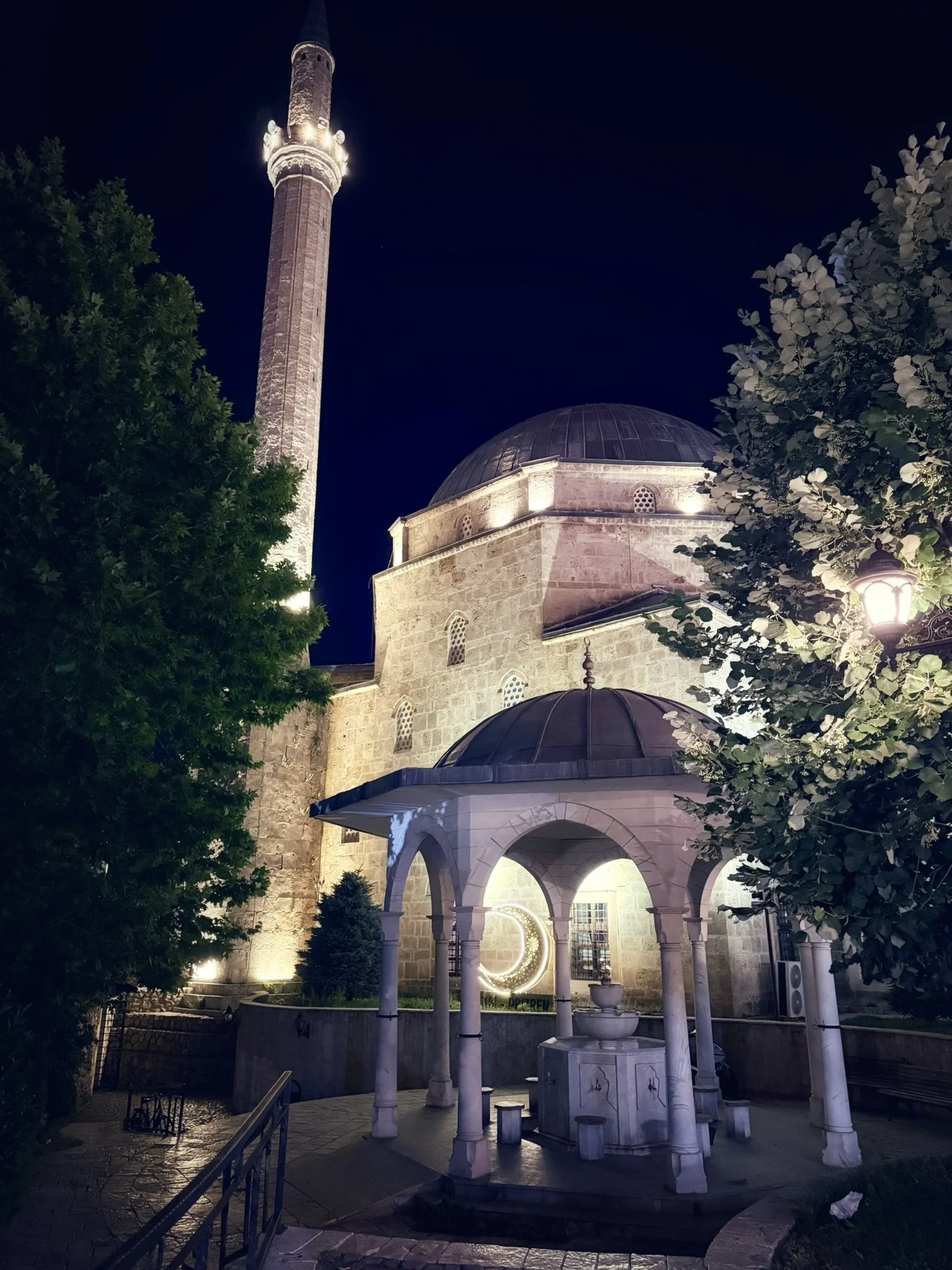
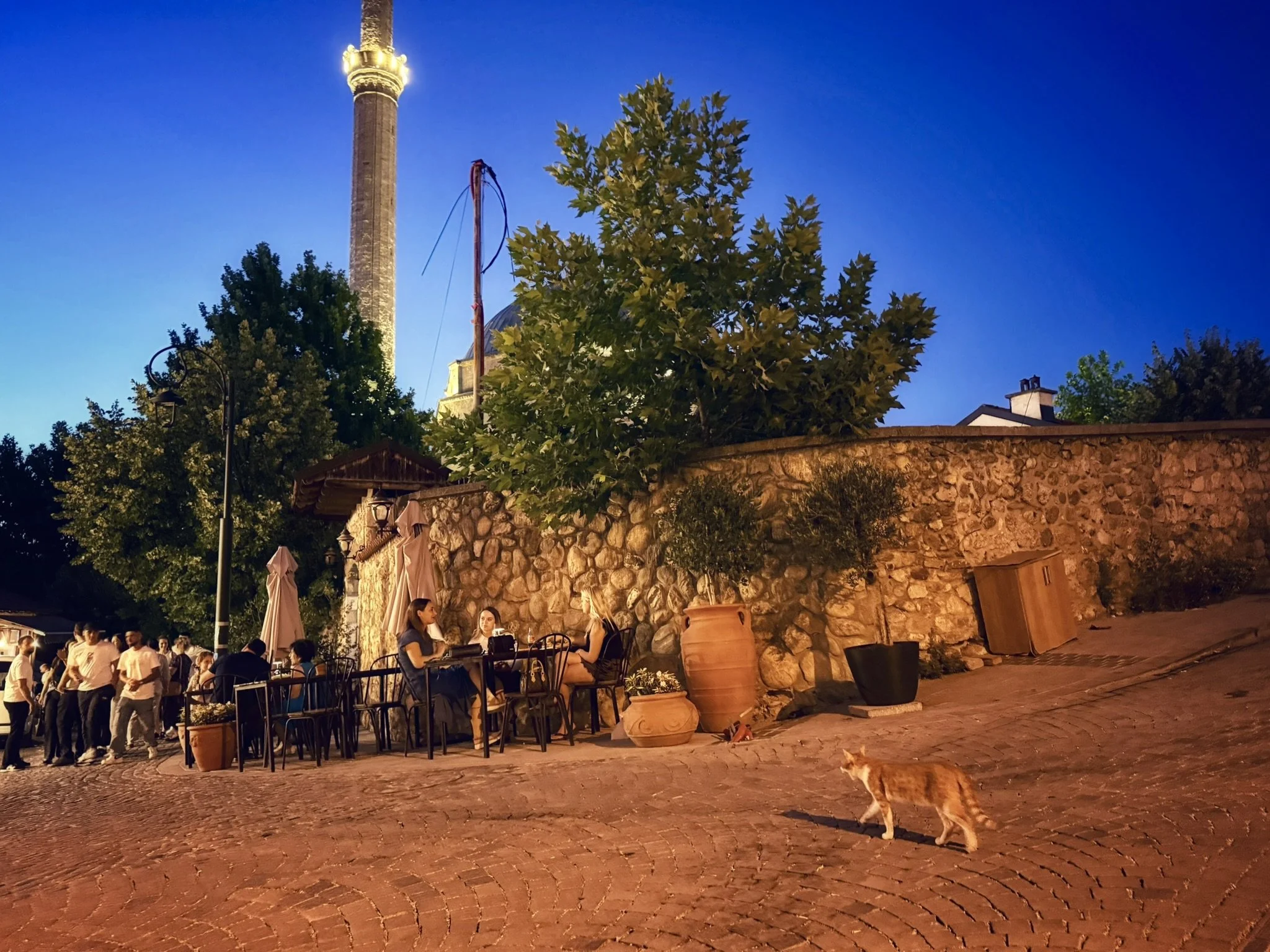
Dominating Prizren’s skyline is the magnificent Sinan Pasha Mosque.
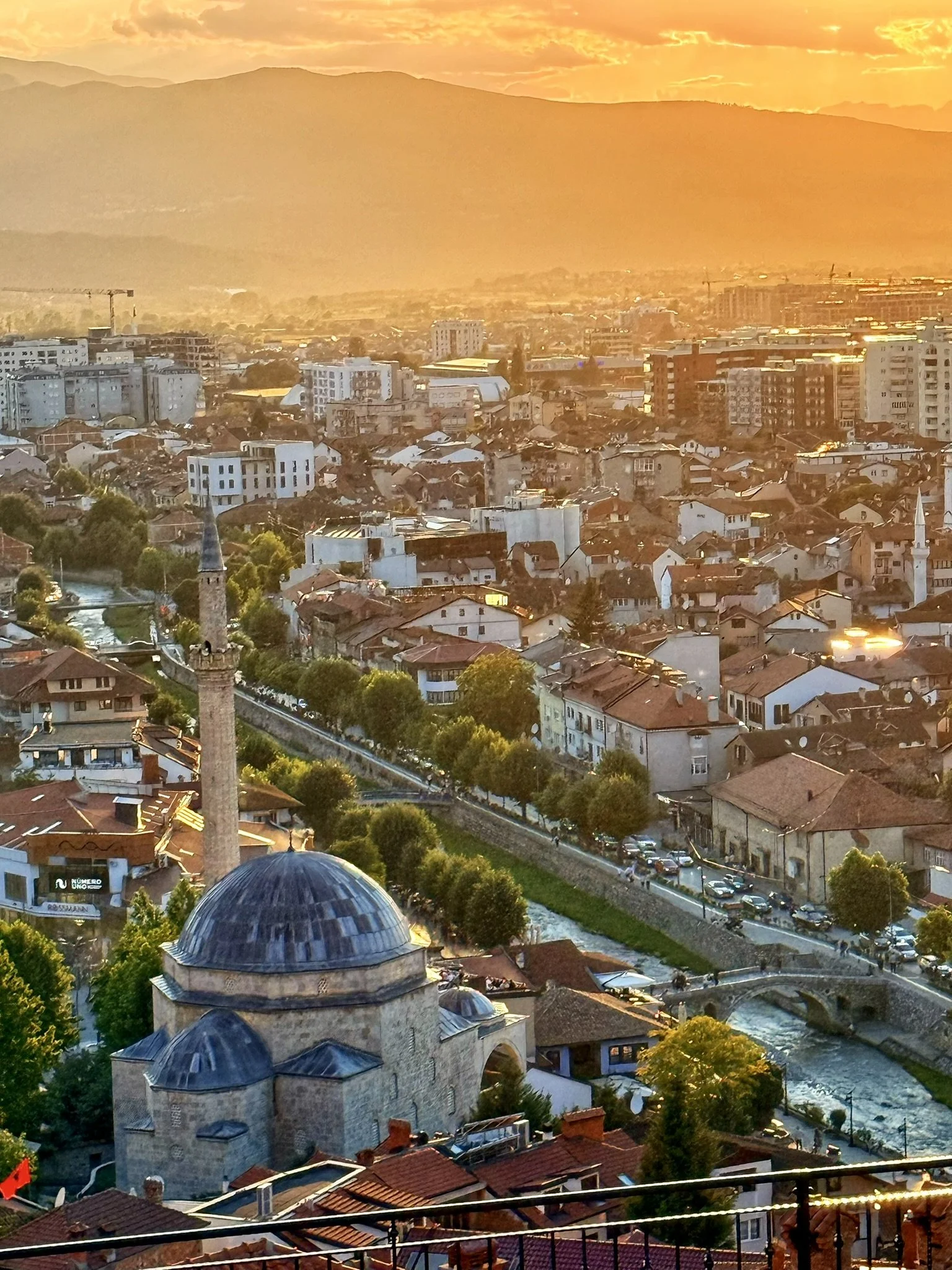
Constructed between 1607 and 1615 by Sofi Sinan Pasha, an Ottoman Albanian governor, the mosque is one of Kosovo’s most significant examples of Ottoman architecture. Its soaring dome and minaret reflect both the wealth and artistic sophistication of the empire at its height.
Archaeological Museum of Prizren
The Archaeological Museum felt like walking through layers of time.
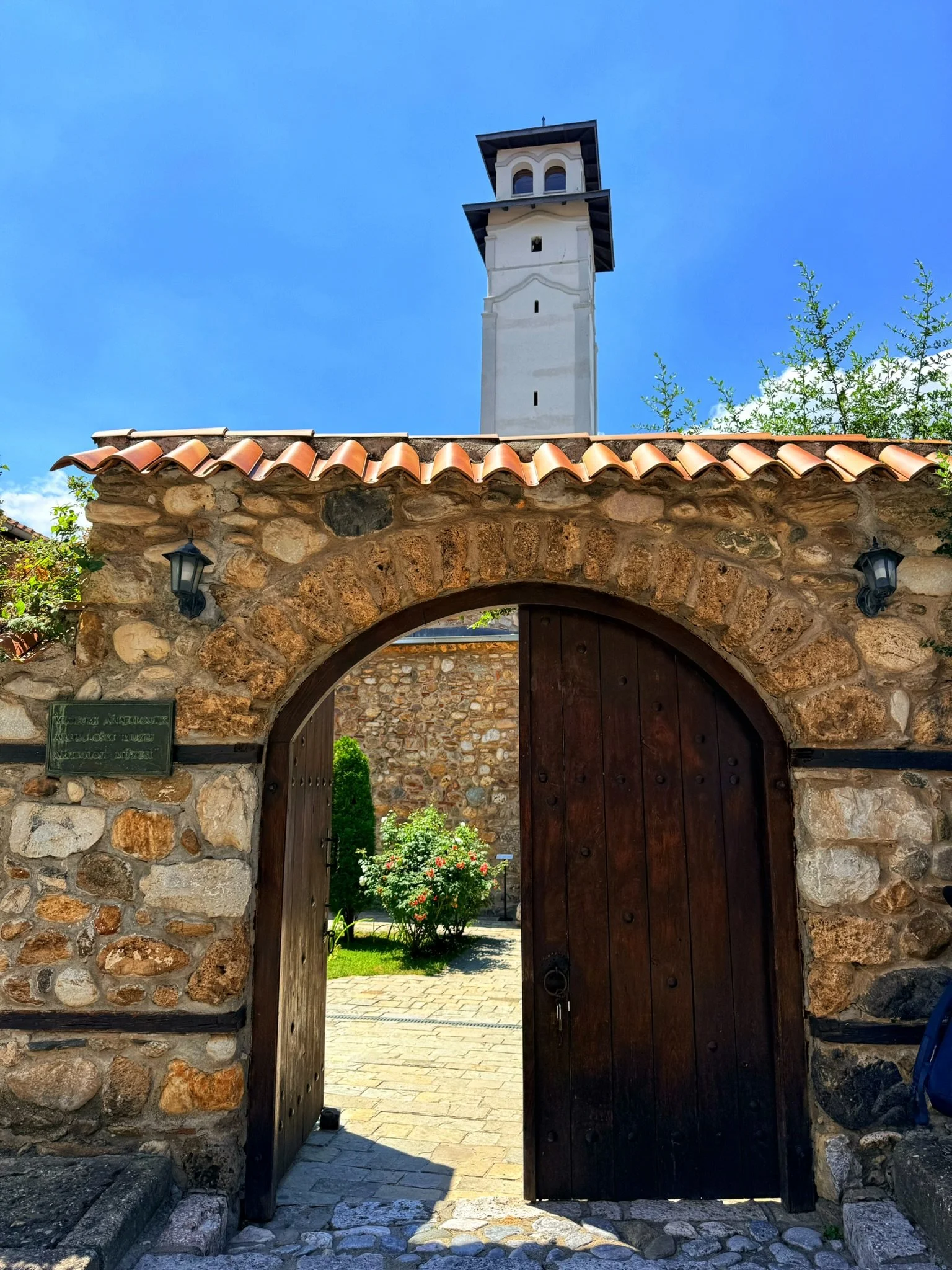
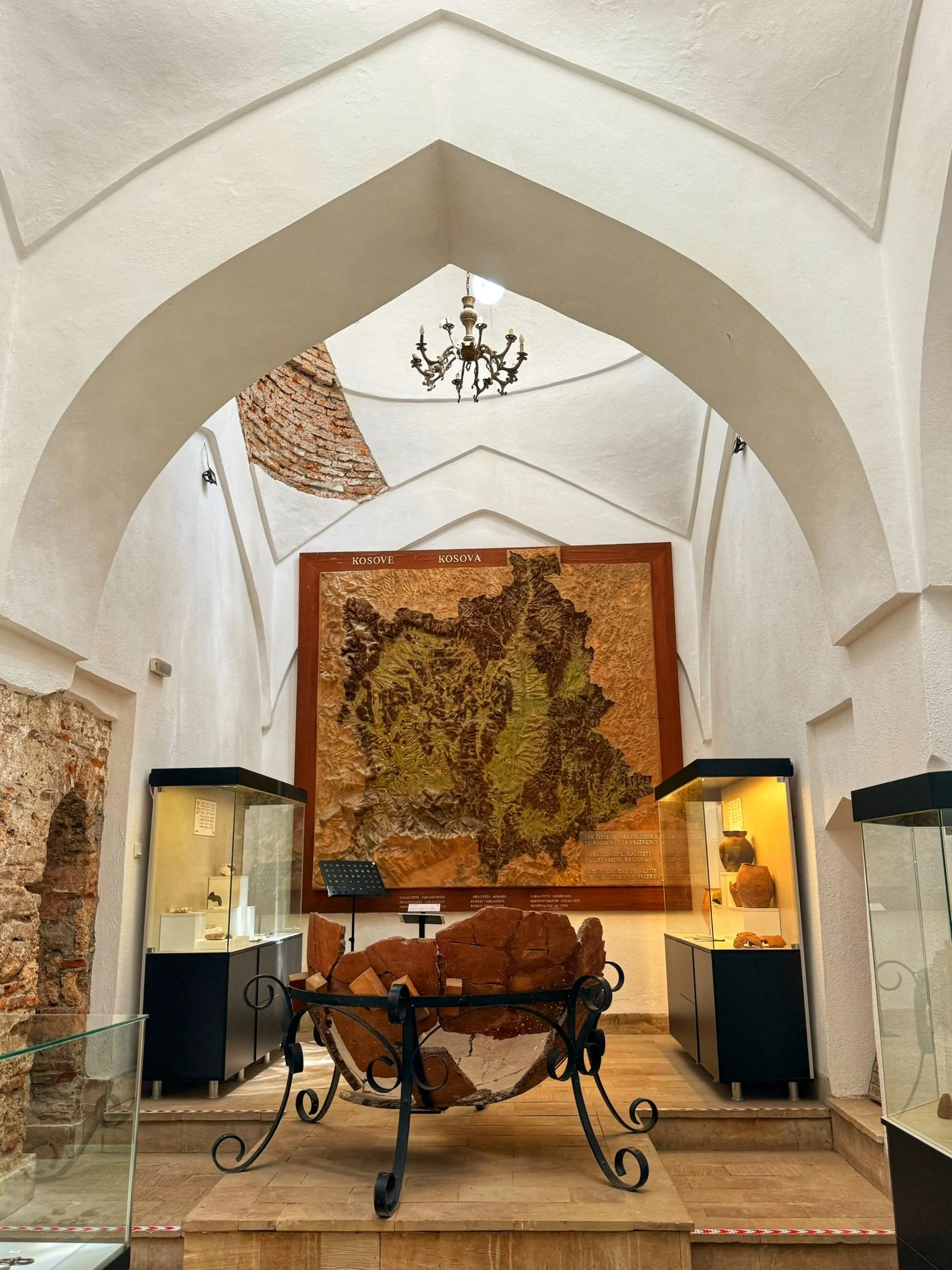
Housed inside the beautifully restored Ottoman Hamam of Shemsedin Ahmet Bey, built in 1498, the museum itself is part of the exhibit. Former bathing chambers now display artifacts spanning thousands of years of human history.
What we liked most was how thoughtfully the excavated artifacts were organized by each era this region has been civilized—from the Stone Age and Neolithic period through the Bronze and Iron Ages, into Roman rule, and finally the Middle Ages. Rather than isolated displays, the museum presents a continuous story of technological innovation, cultural exchange, and human adaptation.
Church of Our Lady of Ljeviš
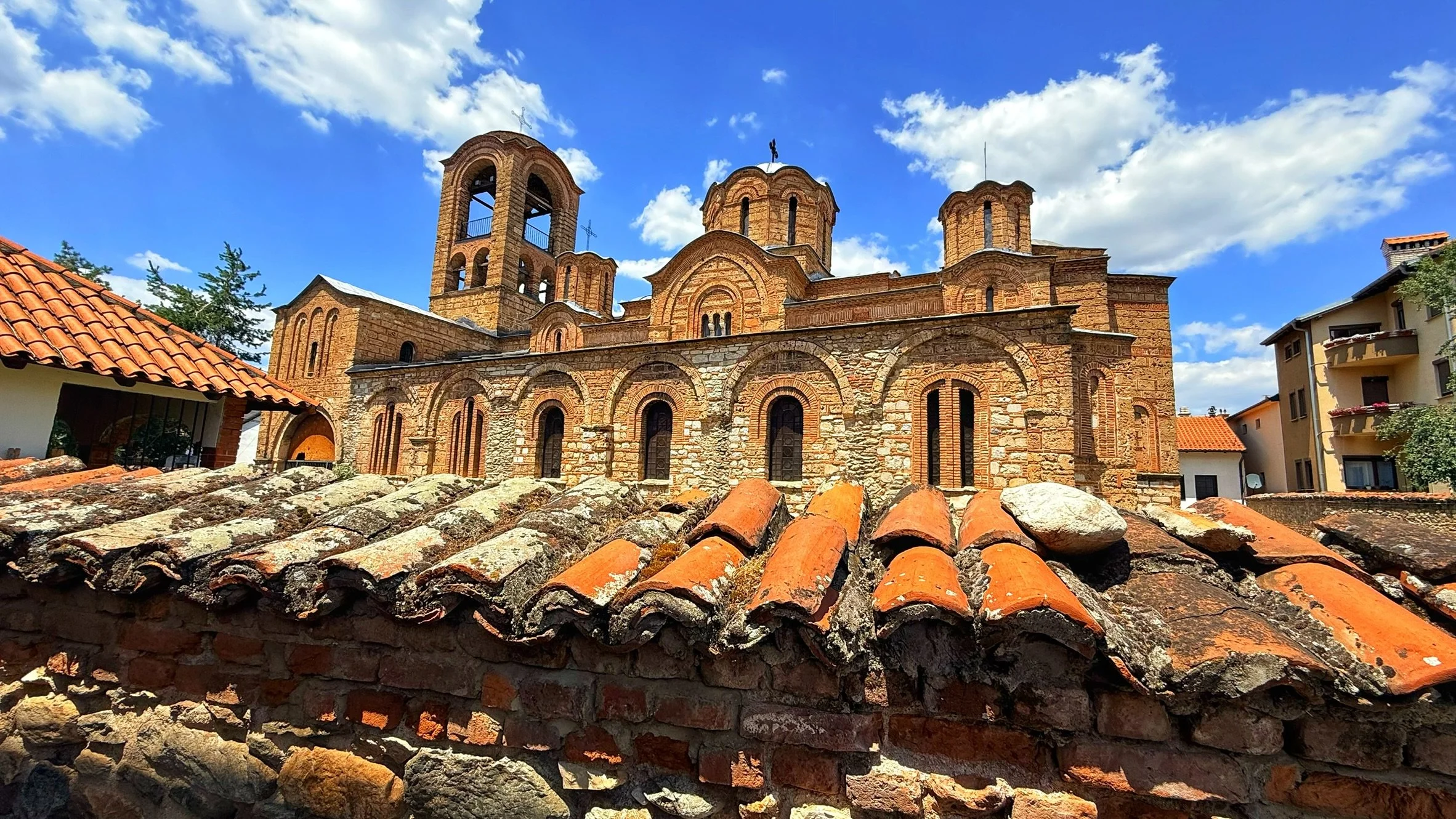
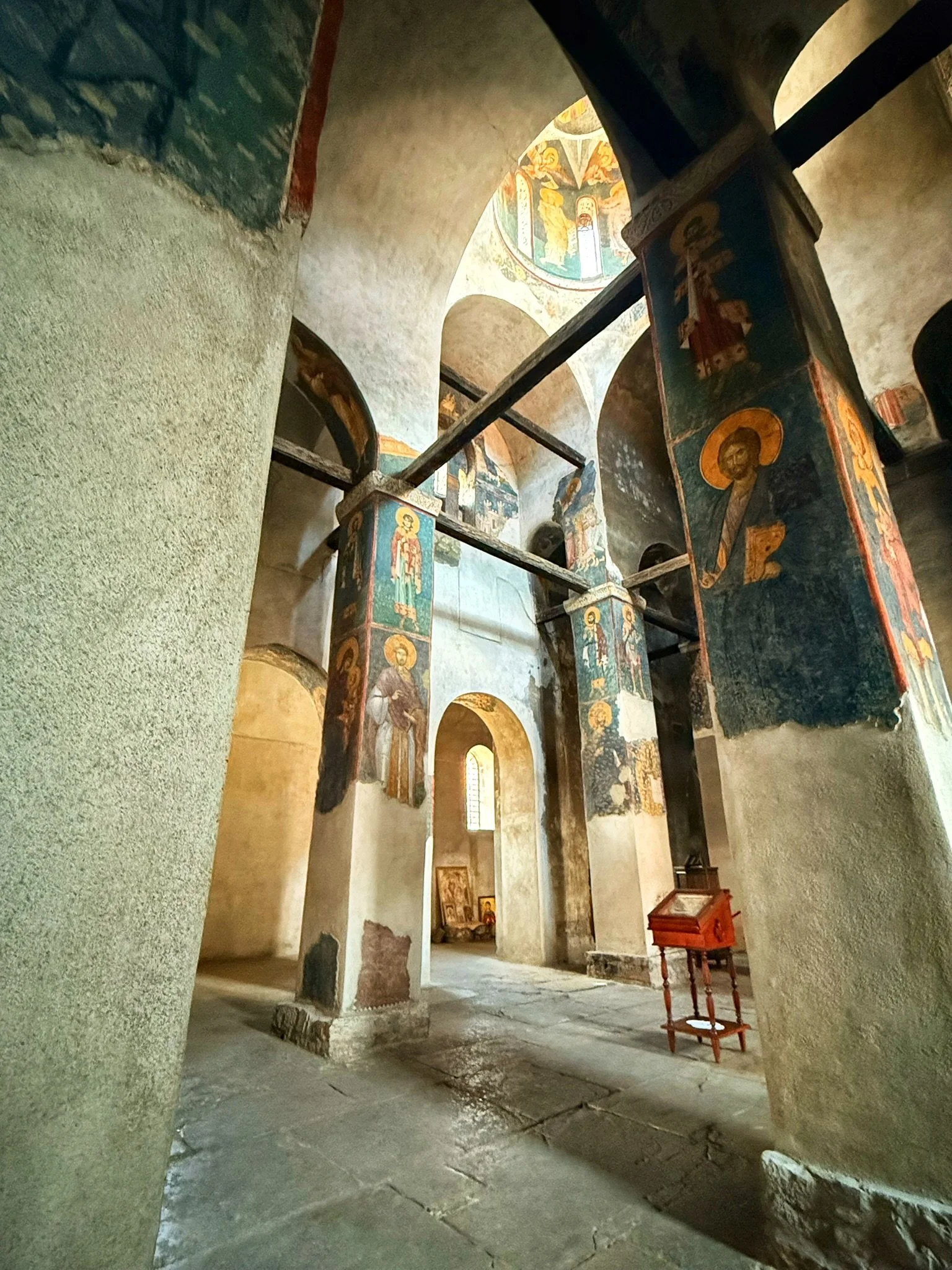
One of the most memorable interiors we encountered was the Serbian Orthodox Church of Our Lady of Ljeviš.
Inside this 14th-century UNESCO World Heritage Site, the brilliantly preserved frescoes immediately reminded us of Gustav Klimt’s luminous palette. Their extraordinary richness and vibrant colors felt astonishingly modern despite being over 700 years old. Photography wasn’t permitted, but we couldn’t resist quietly capturing a single image to remember such an unforgettable space.
Prizren Fortress
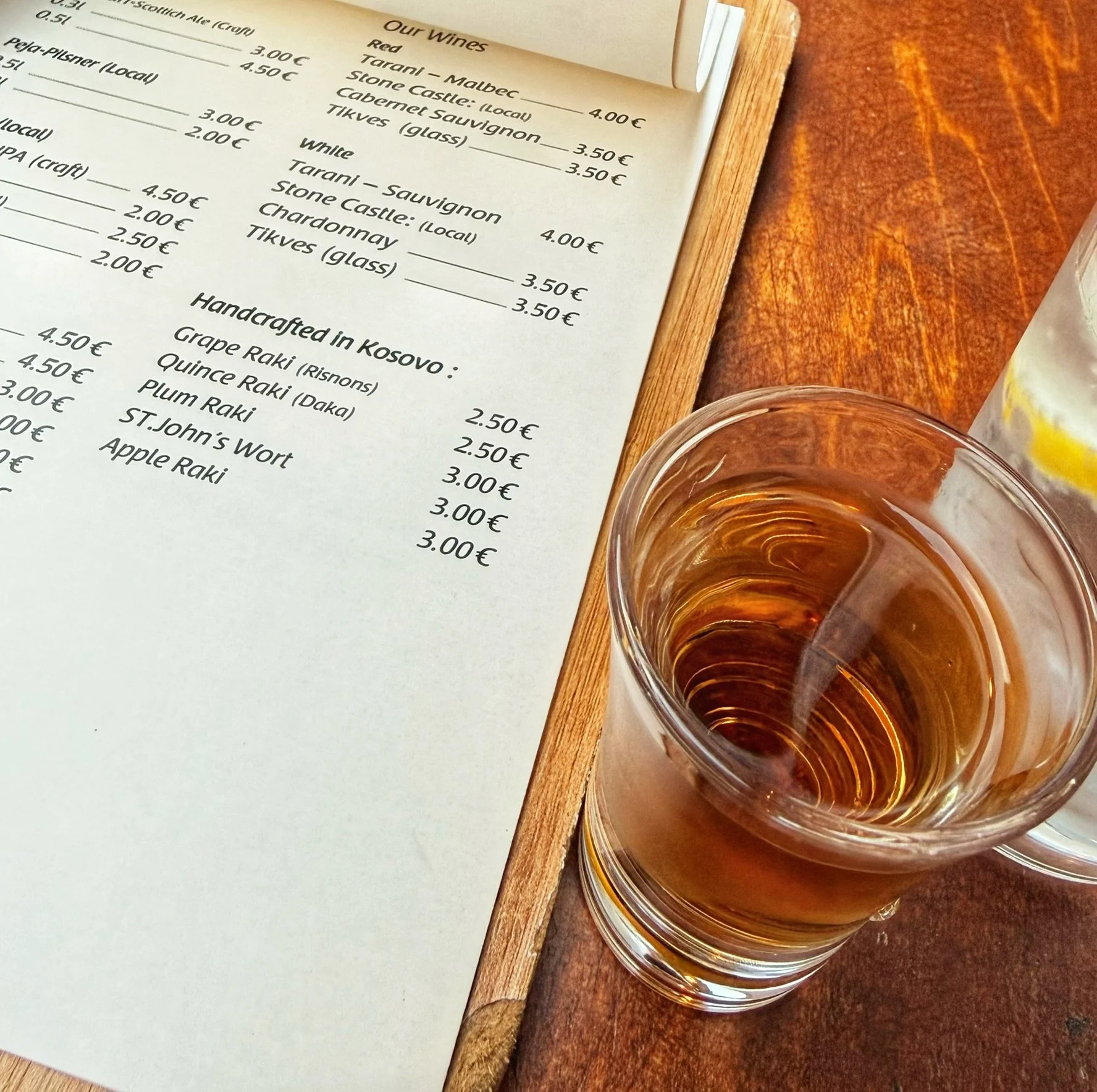
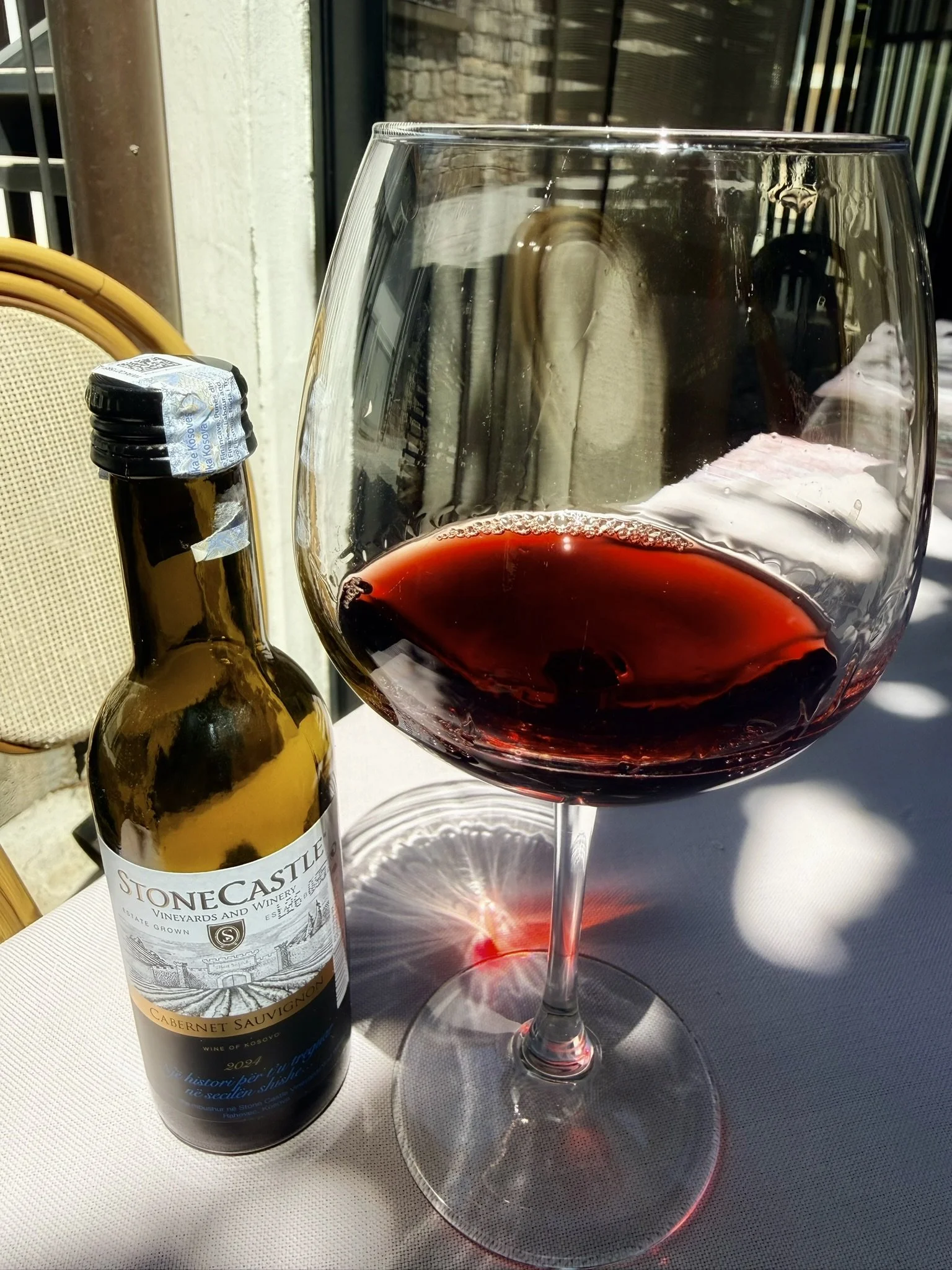
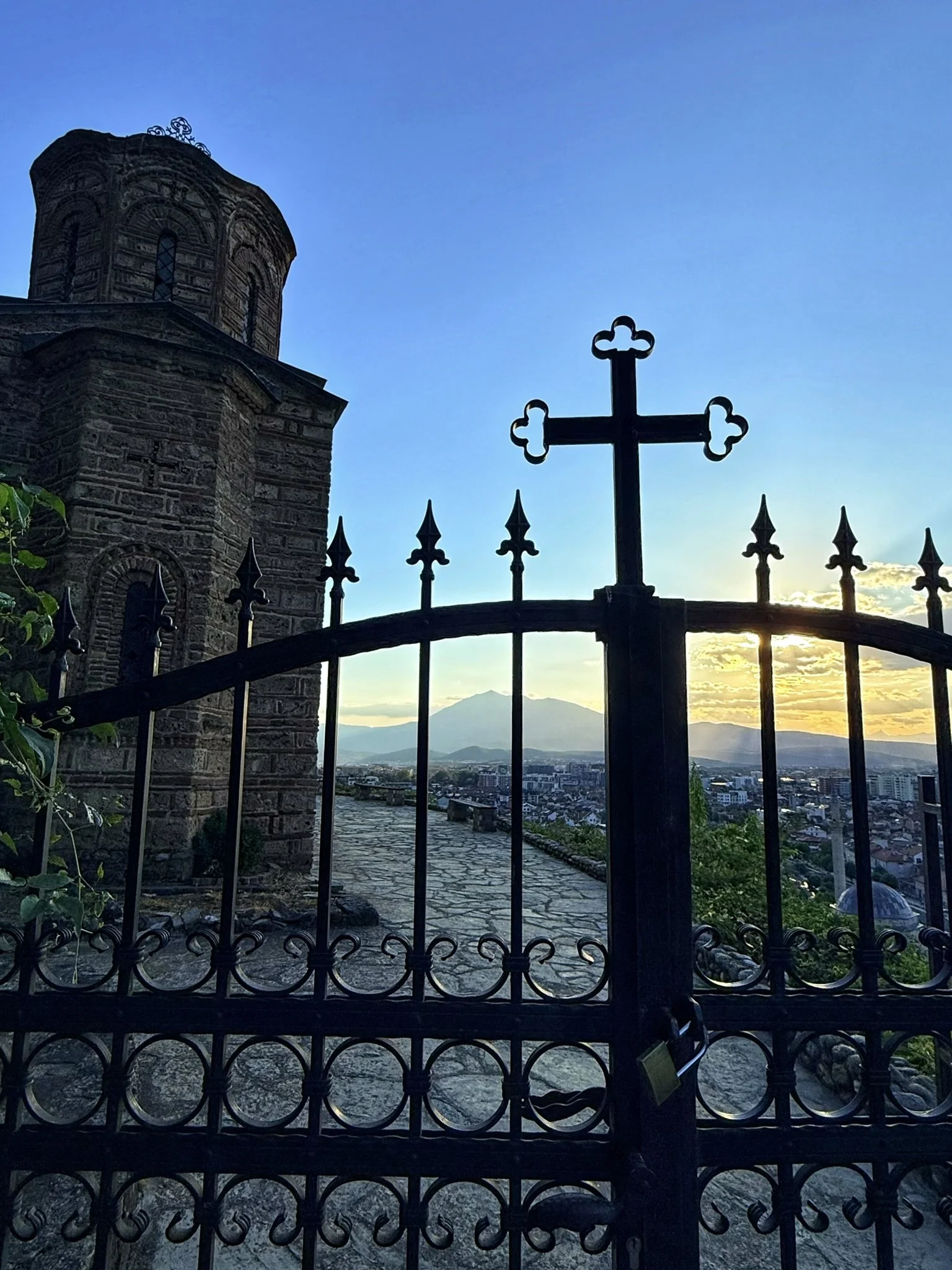
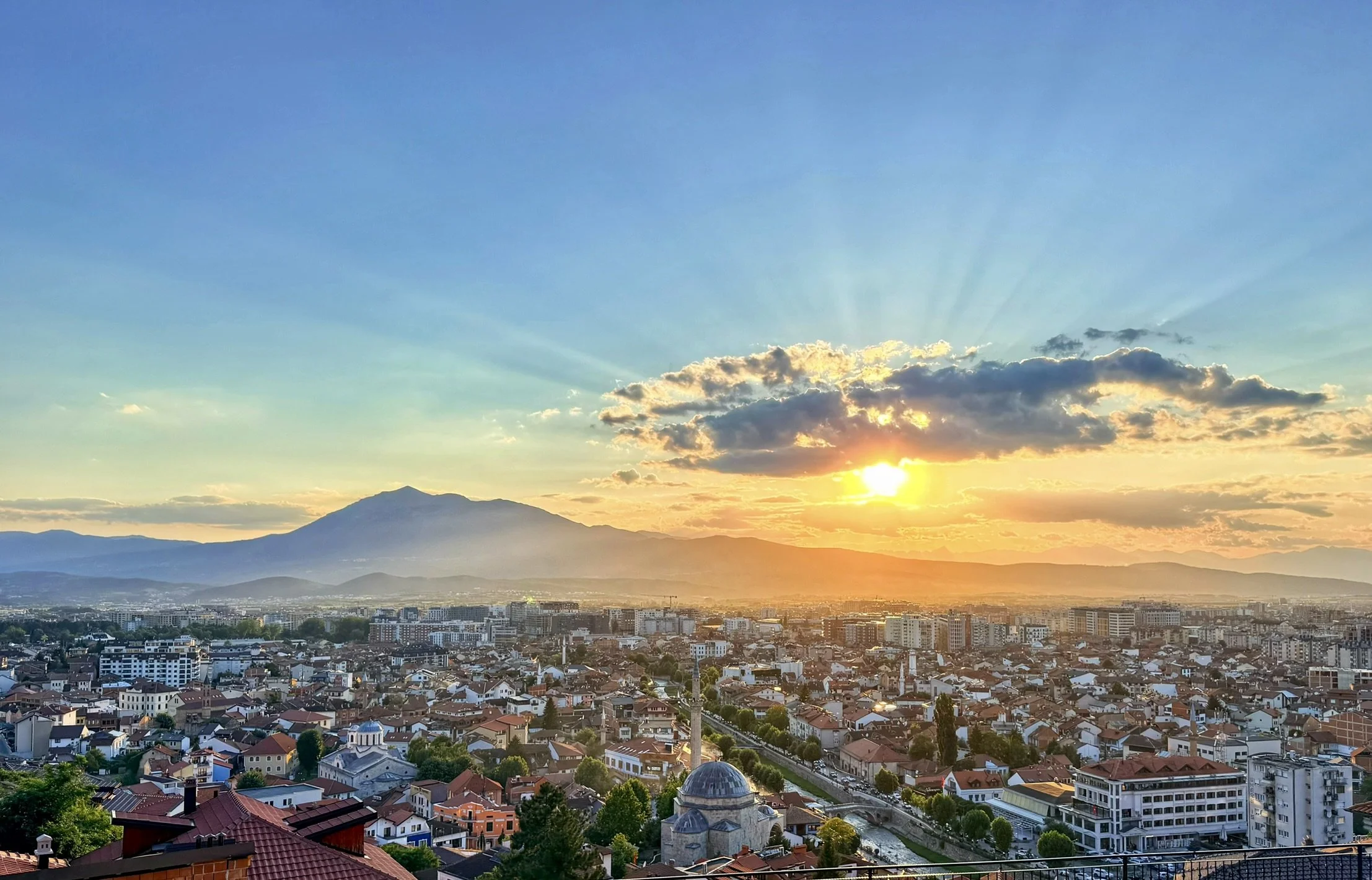
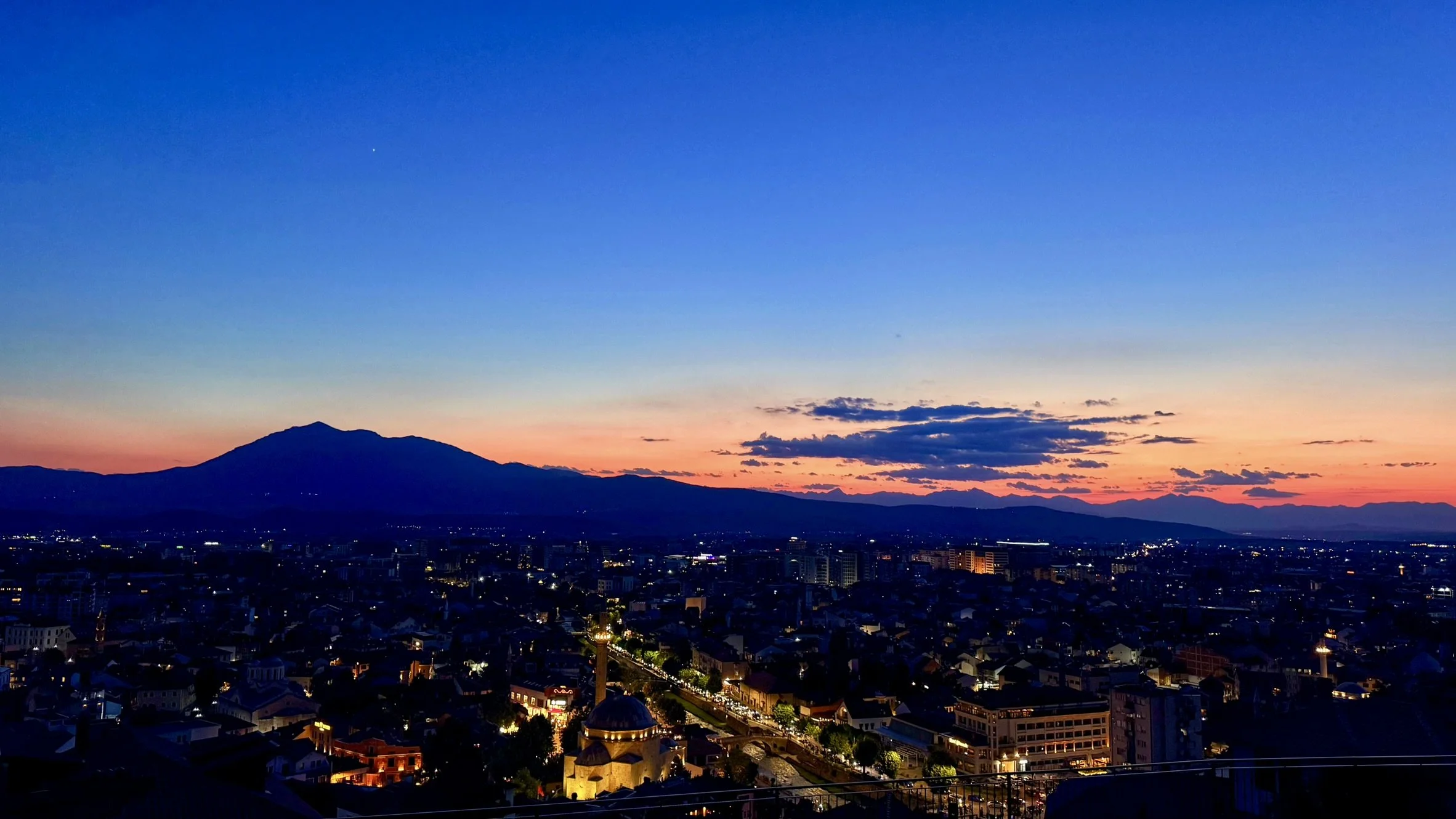
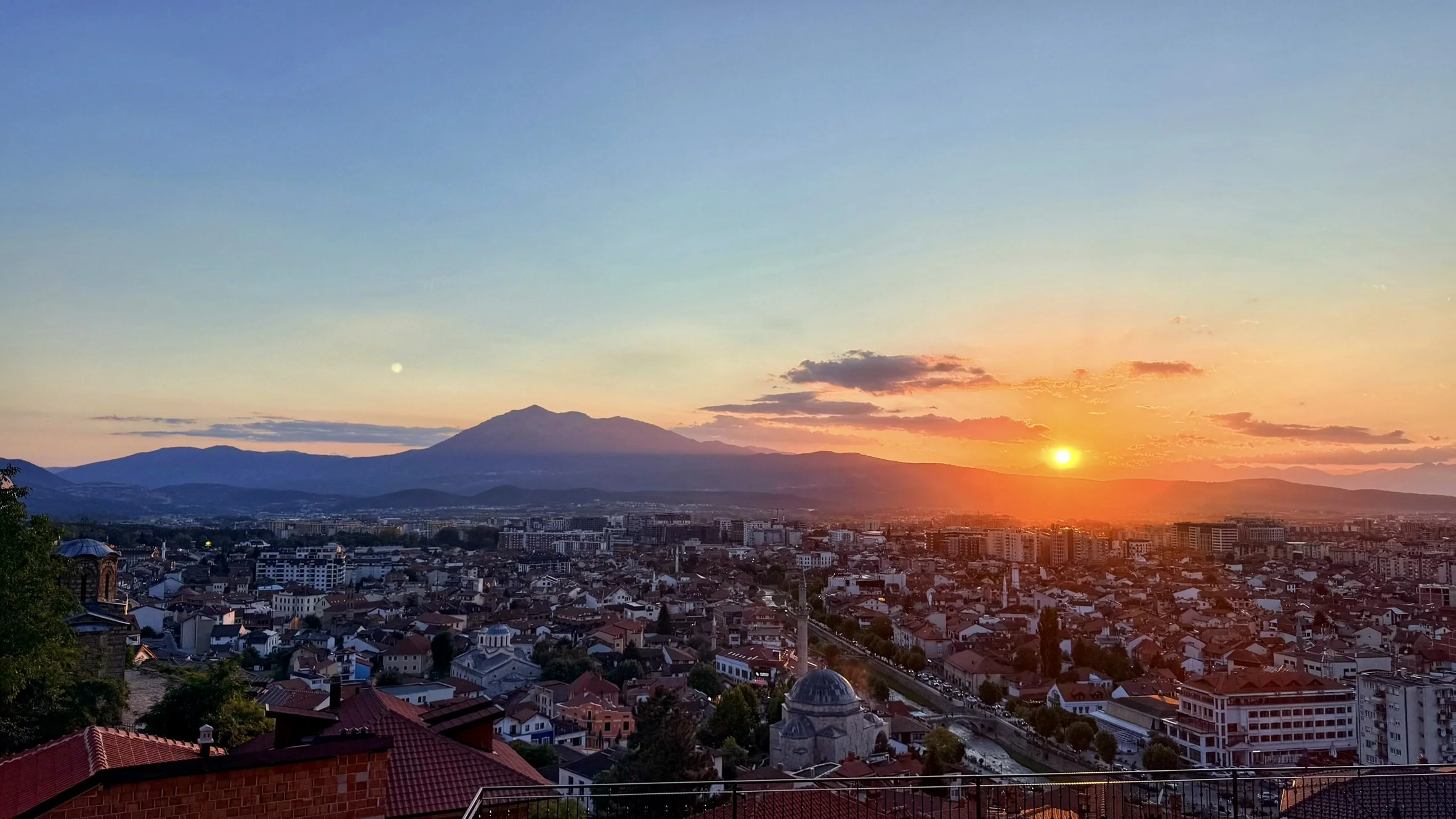
We ended our day climbing towards Prizren Fortress, but was unaware that it closed before sunset at 7pm. One disappointment led to an even better moment when we encountered a newly opened cliff side cafe with equally breathtaking panoramic views…with a table and wine!
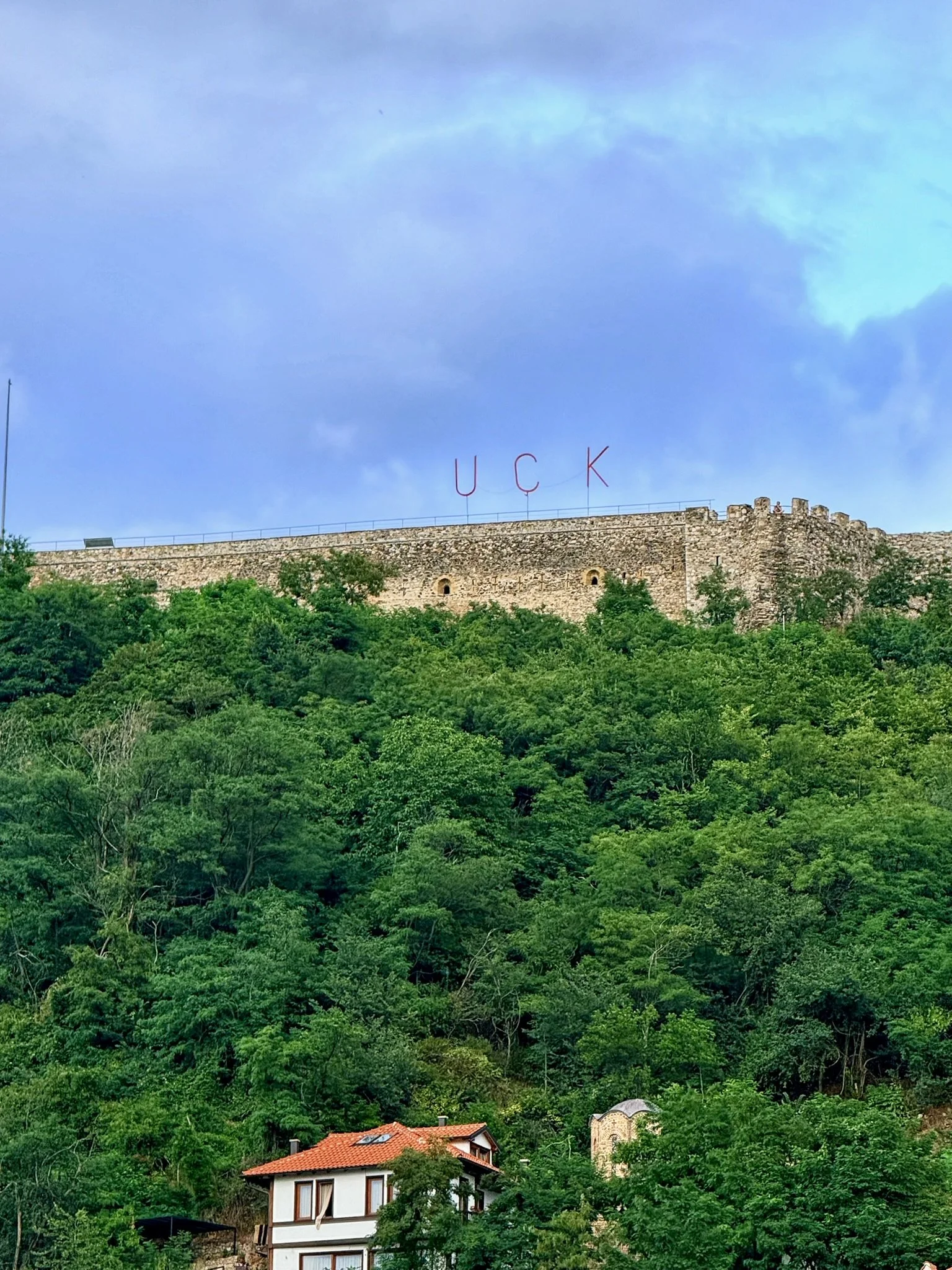
The hilltop has been continuously occupied for nearly 4,000 years by Illyrians, Romans, medieval Serbian rulers, Ottomans, and more recently became a symbolic location during the Kosovo War.
Throughout Prizren—and especially near the fortress—there’s graffiti and monuments bearing the acronym UÇK (or UCK), which stands for Ushtria Çlirimtare e Kosovës, or the Kosovo Liberation Army (KLA). The KLA was an ethnic Albanian separatist force that fought against Yugoslav and Serbian state forces during the Kosovo War of the late 1990s. Whether viewed as liberators or militants depends largely on historical and political perspective, its presence reflects how recent—and how deeply felt—the conflict remains.
Final Thoughts
As our 59th country, Kosovo surprised us in every possible way. We arrived expecting another stop in the Balkans. We left with a much deeper appreciation for a young nation whose history, resilience, and hospitality made it one of the most fascinating destinations we’ve visited. Despite its complex past, Prizren today feels warm, welcoming, and wonderfully alive!
