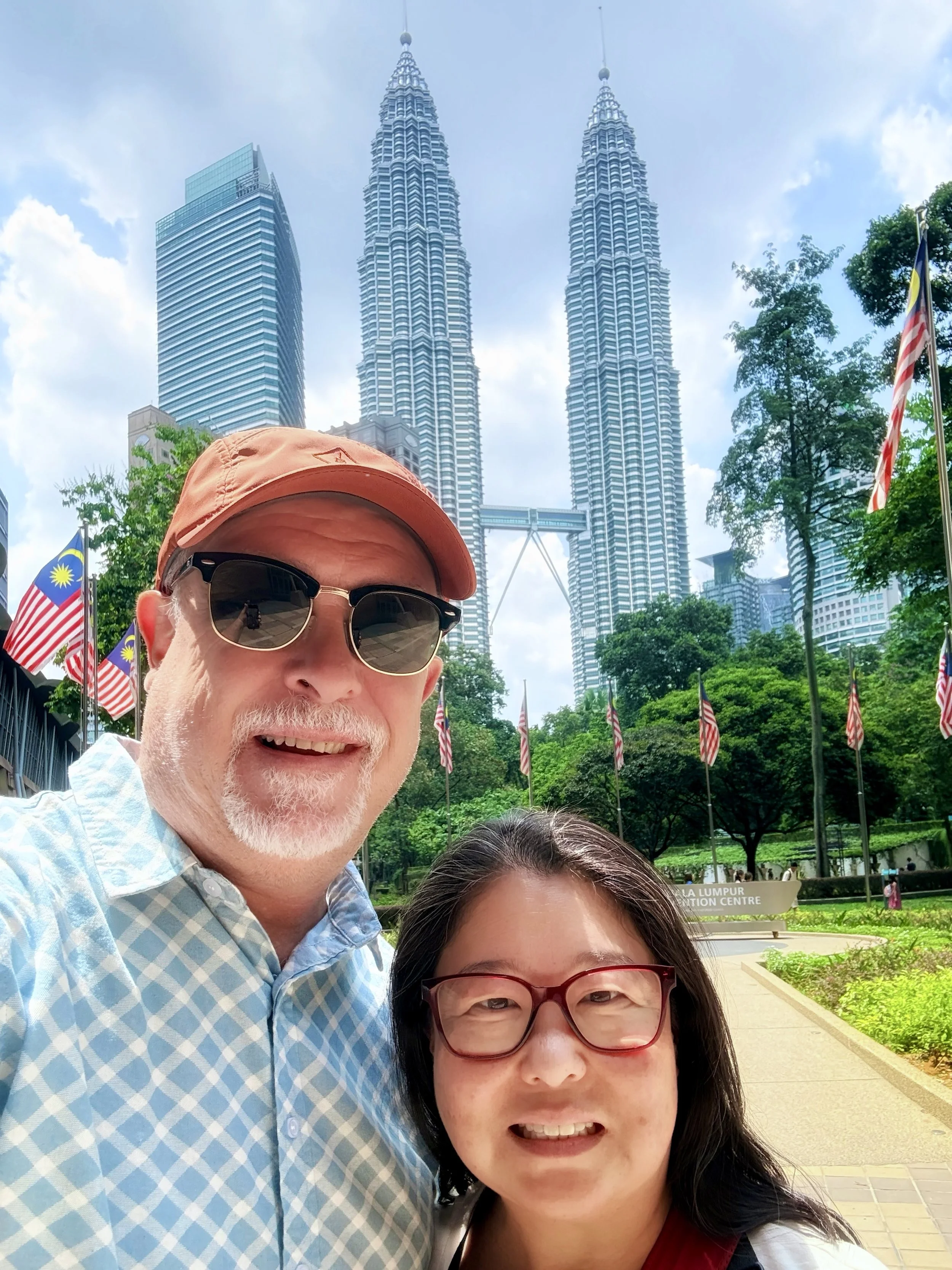
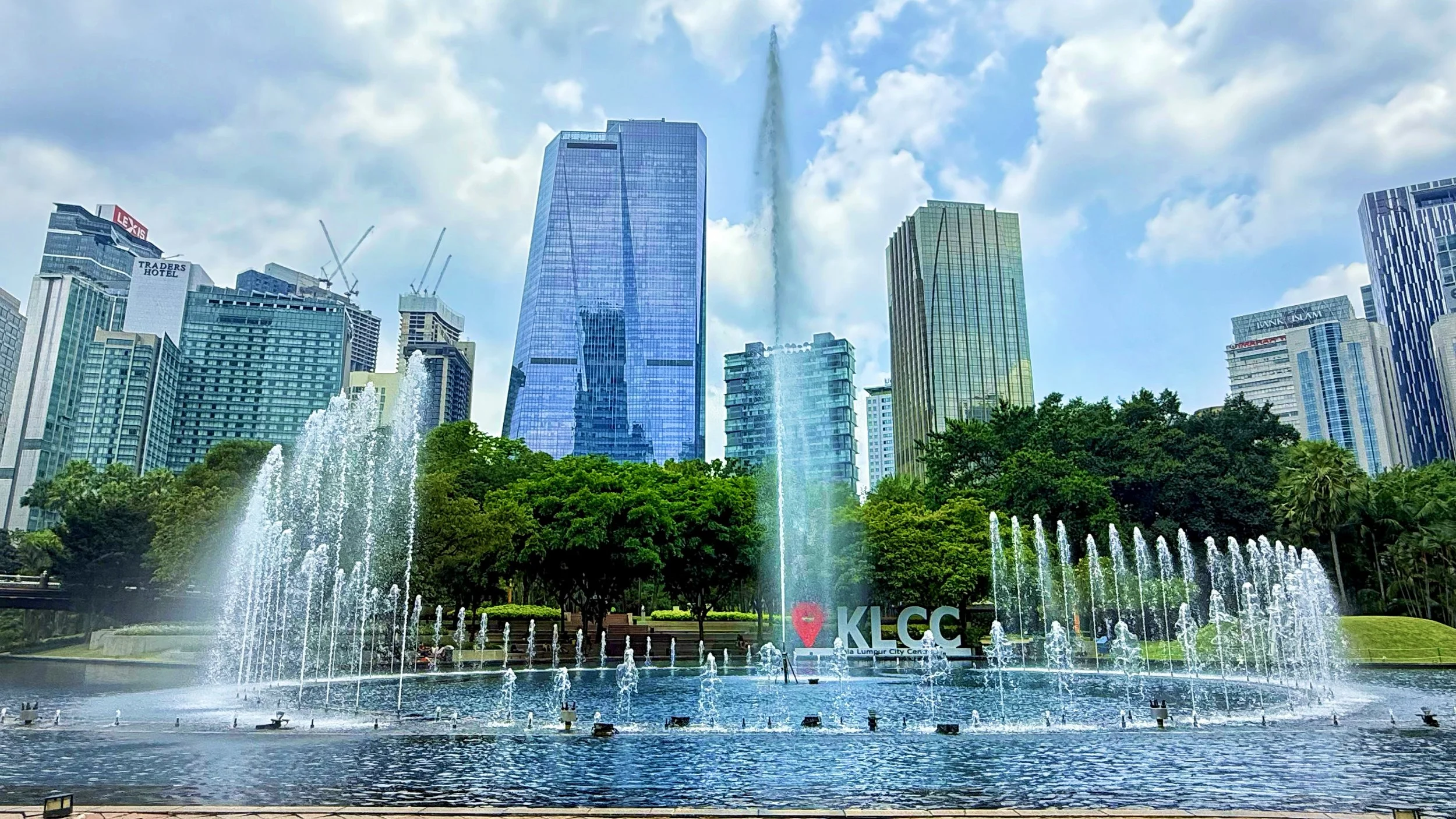
At KLCC Park with Petronas Twin Towers behind us. Kuala Lumpur, Malaysia.
We made it to Malaysia! Bama Mike’s new country number 55! (Akiko’s been to Malaysia before as a little girl). The locals told us that they don’t encounter too many American visitors in Malaysia. We get it, it’s far away, but put it on your list! Malaysia is diverse, multicultural, has great food, inexpensive, one can enjoy the city / colonial towns / beaches / jungle for whatever your heart desires, there’s English everywhere, and has all the modern infrastructure for comfort.
Specifically, we kept hearing how people love Kuala Lumpur (KL), Malaysia; and yet, when trying to research what makes KL so great, we were hitting a non-descript wall. So, what does one “do” in KL? 🤷🏻♀️
For being a very culturally diverse city, KL doesn’t rank high in unique must-see or do attractions. KL grew to be a big city hub through oil and gas and semiconductors, attracting lots of foreign investors while modernizing and building world-class hotels and shopping malls.
What we’ve learned. KL ranks as the third most livable city in Asia and eighth livable city in the world by expats. Watch Nomad Capitalist’s “Kuala Lumpur Pros and Cons” YouTube video for an interesting analysis. A city doesn’t require tourist attractions to make it super livable!
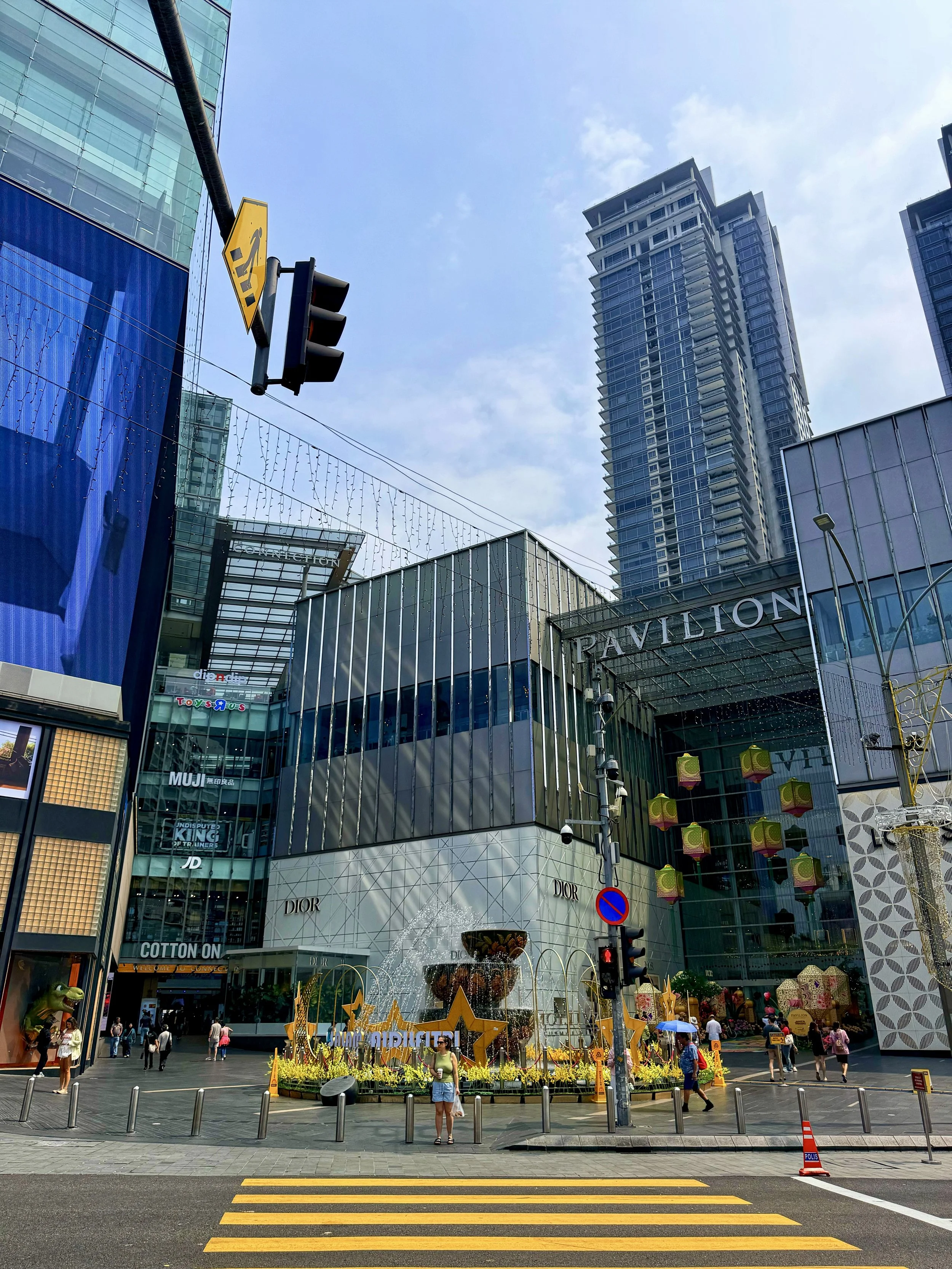
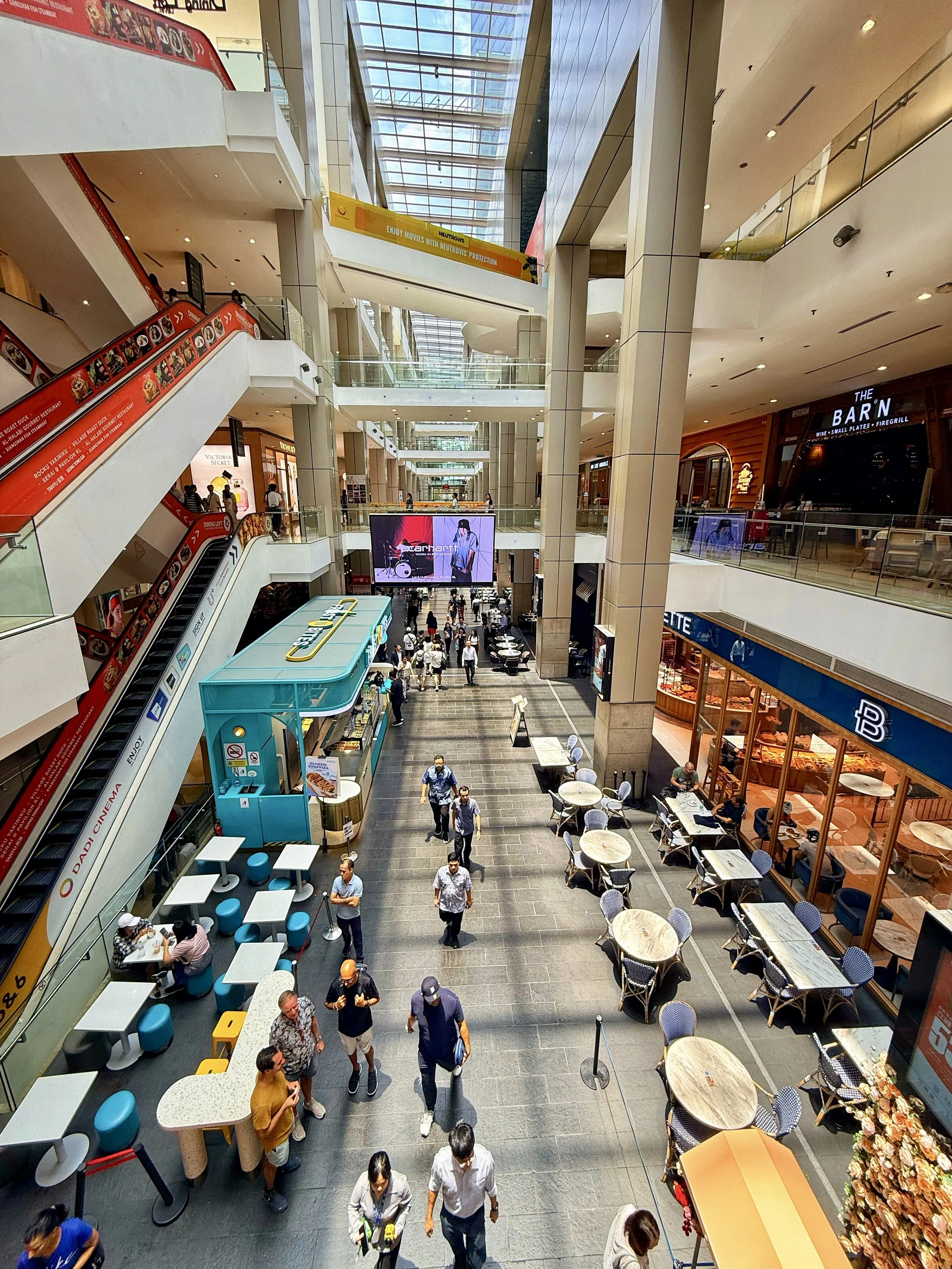
KL has a lot of affordable (for expats, anyway) premium housing close to the city center surrounded by mega malls with every conceivable high-end retail and global restaurants represented. We had to replenish some supplies and update our travel wardrobe. KL was the perfect place to go shopping at similar stores we’re familiar with.
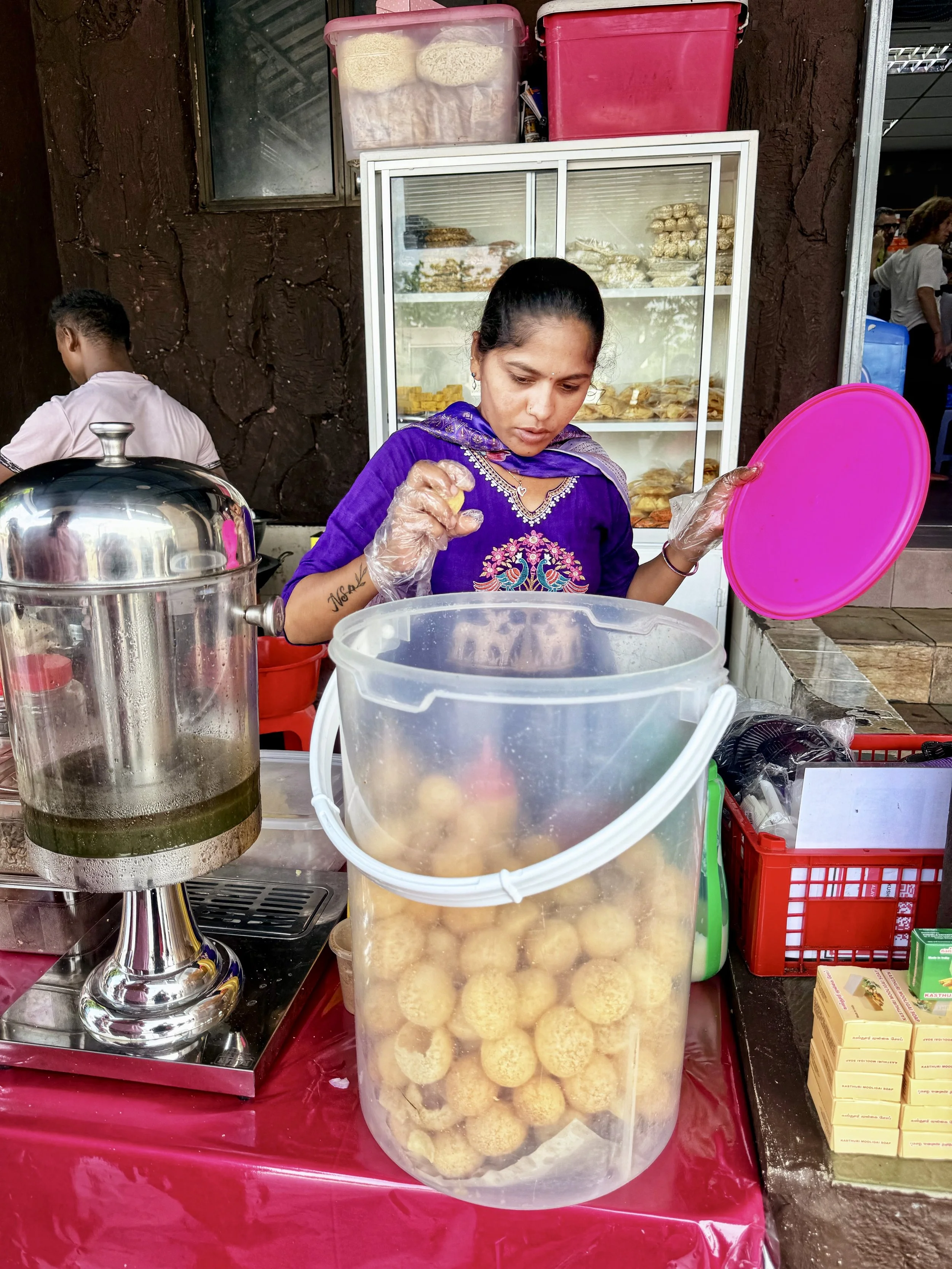
As far as the food (an important livability “index” for us!), there is so much of it everywhere. Malay food is so diverse, having been a fusion of Chinese, Indian, and indigenous Malay for centuries; one can eat locally and cheaply all day and all night. Or, in KL all other foods from Asia, Europe and the West are available at every price point. Craving Taco Bell or A5 Wagyu beef? Your choice.
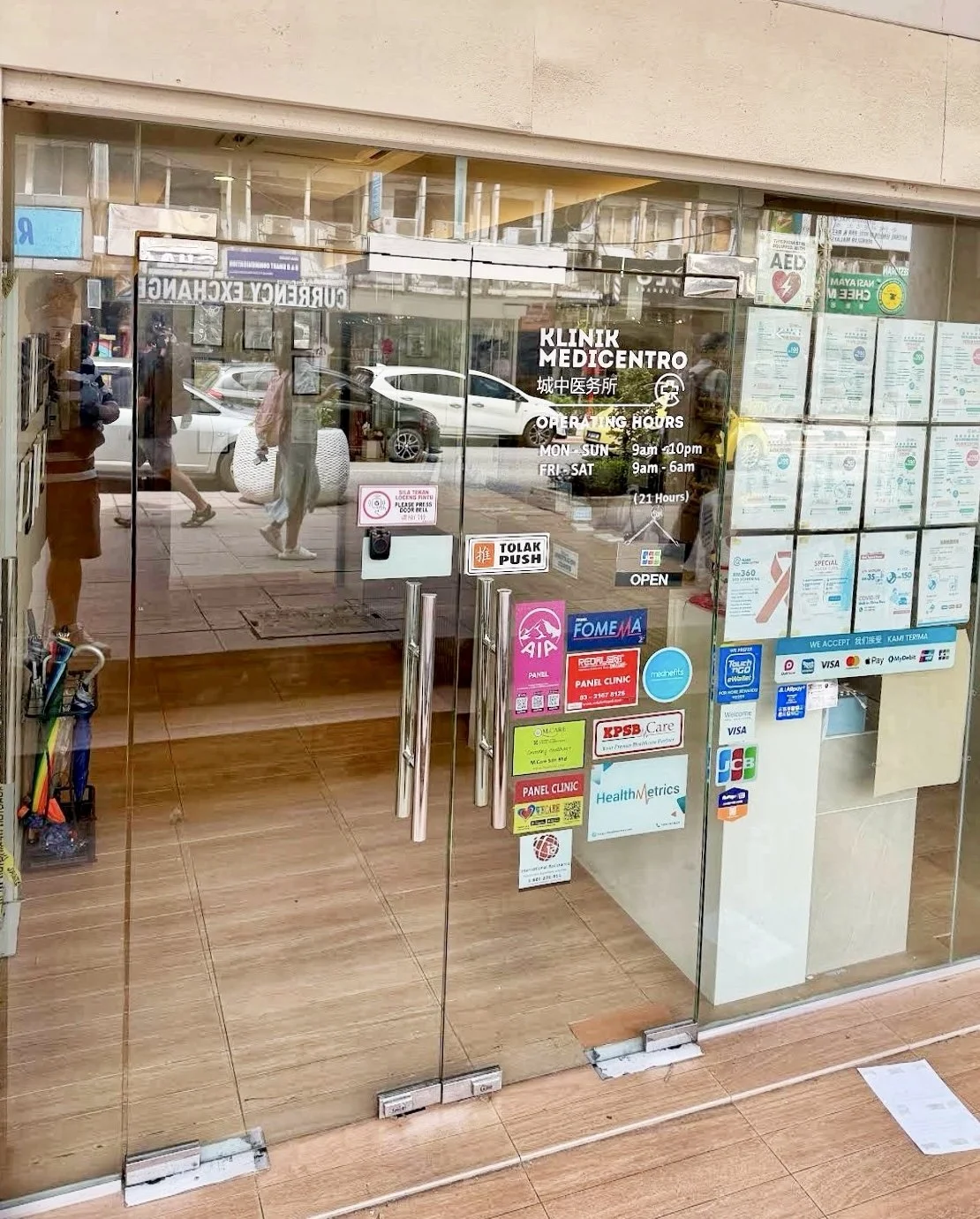
Klinik Medicentro, Bukit Bintang, Kuala Lumpur.
KL is one of the top destinations for medical tourism. We skimmed just the surface of Malay’s world class, accessible-to-all, efficient, and affordable healthcare. As Americans, it was a surprisingly refreshing experience that further highlights how broken our US healthcare system is. Don’t even get us started 😔.
After learning we couldn’t get our prescriptions shipped, a pharmacist in KL updated the prescriptions and we obtained all the medications, including any equivalents or substitutes within 15 minutes and $250 out of pocket (reimbursed by our global health insurance).
While in KL, we also took advantage of affordable diagnostic care by walking in to a Klinik Medicentro without an appointment for a USD$100 physical exam (Also reimbursable). They took us right in and proceeded to perform a bioimpedance analysis, 12-lead ECG, chest xray, ultrasound scan, blood and urine tests, and a physical exam, plus 45 minutes of the physician’s time. The doc assumed that all primary providers in the States perform this comprehensive level of exam annually per patient. He was shocked and confused to learn that they barely perform a physical exam, let alone all the noninvasive tests.
So, how else did we spend our 2 weeks in KL? It was a great landing spot to get a taste of expat life by taking advantage of the conveniences and access to all the retail, services, medical care, and restaurants before we move on again to more inconvenient destinations. Between taking care of business (and being sick from food poisoning) we managed to explore Malay food, experience a modern Muslim-majority culture coexisting with so much diversity and acceptance, plus a few cultural and historical sights.
Selamat Hari Raya Aidilfitri!
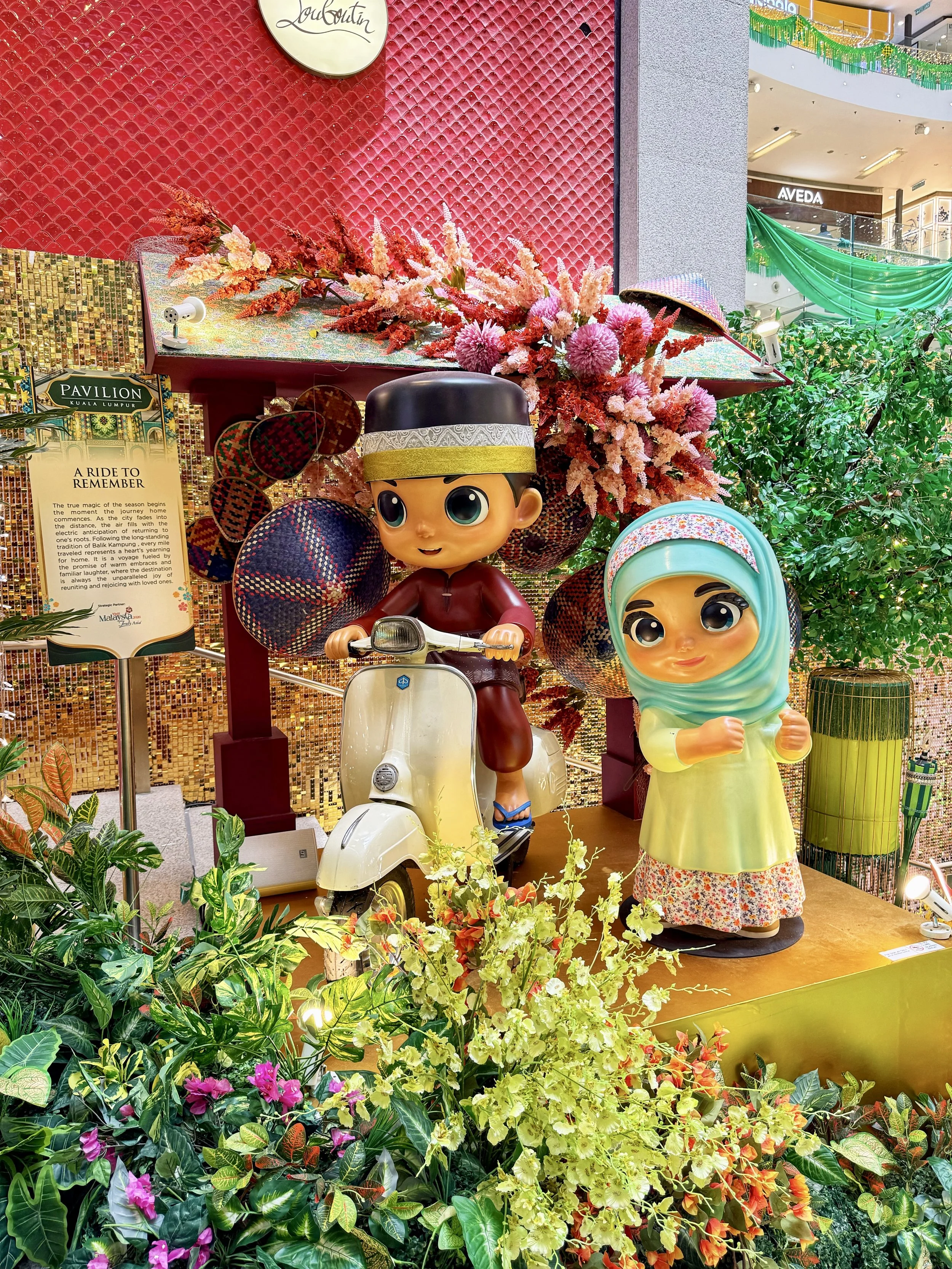
We arrived in KL on Hari Raya or Aidilfitri (Eid al-Fitr)—an important religious holiday celebrated by Muslims worldwide that marks the end of Ramadan! The all-week Aidilfitri festivities reminded me of the Japanese New Year holiday week. Everyone takes several days off to visit family and relatives, feast all day and night, and wear their “Friday best” (instead of Sunday best!) to visit the mosque. Children receive money in beautiful envelopes and special Eid food is shared and eaten. Most Malaysians go to their hometown to celebrate with their families, so Kuala Lumpur was less busy than usual. We loved learning about this celebration from @WaleedTravels, who was right there in KL at the same time, filming his YouTube video “Celebrating Eid ul Fitr in Malaysia | This is What Real Eid Looks Like”.
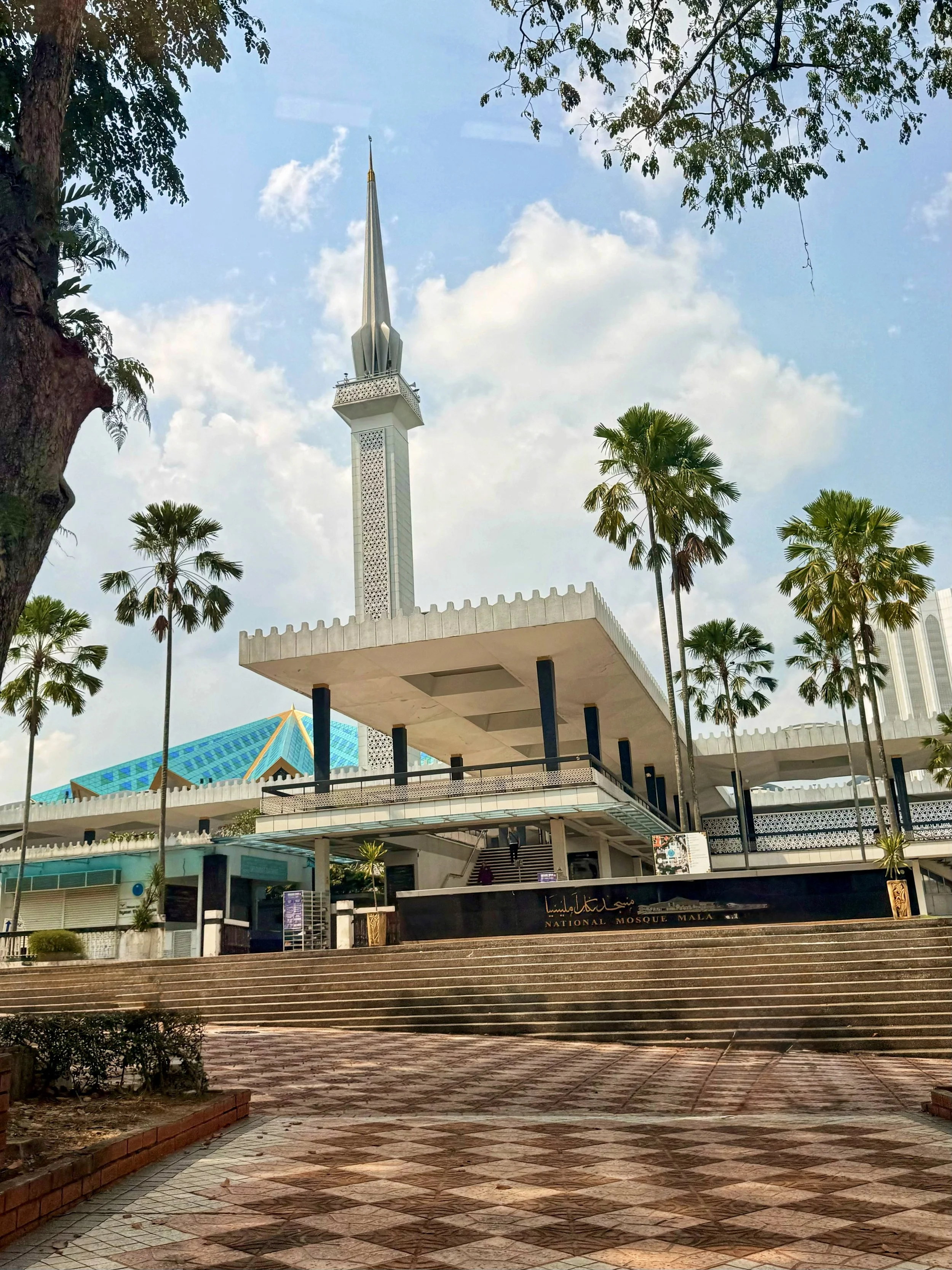
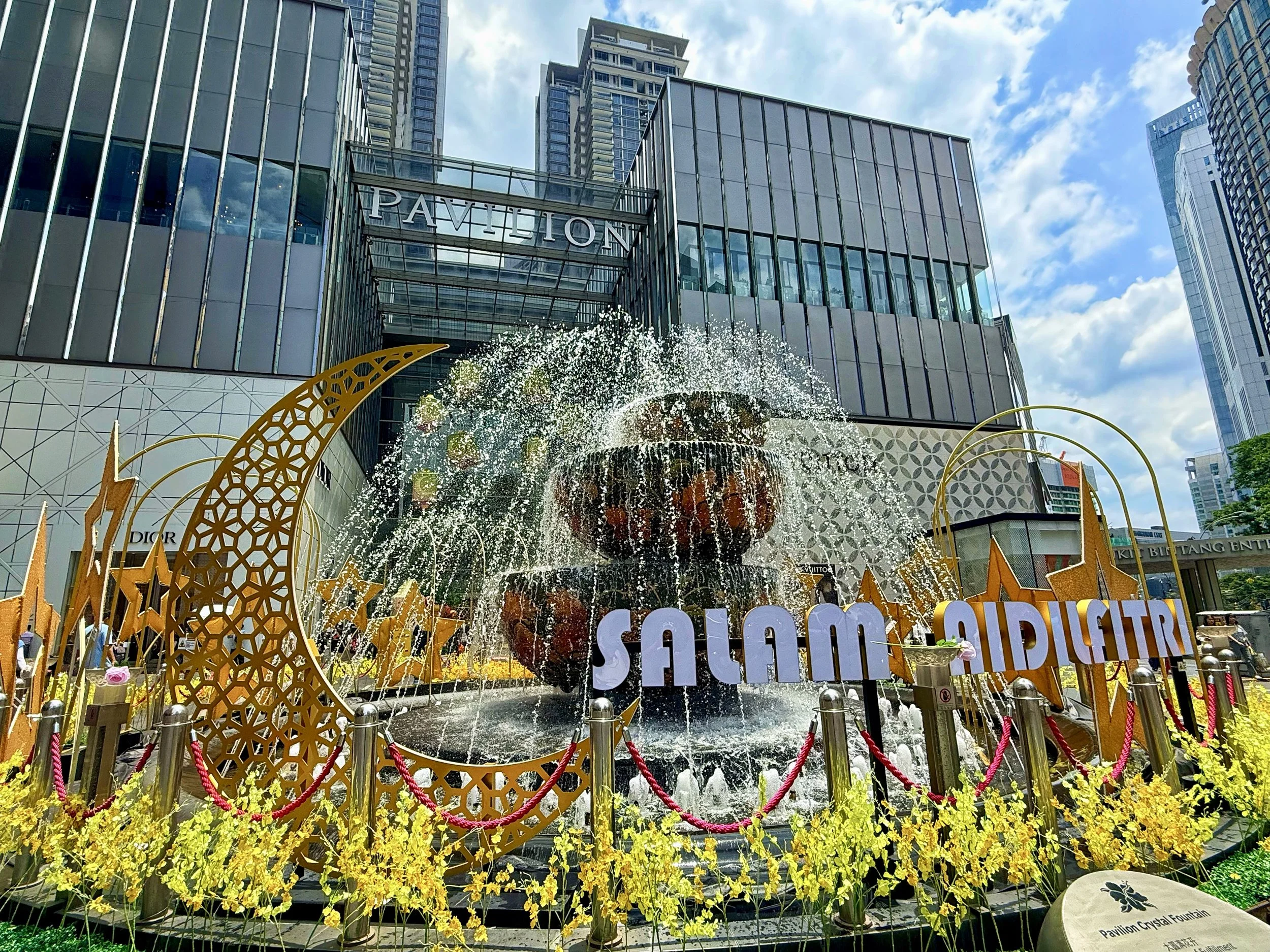
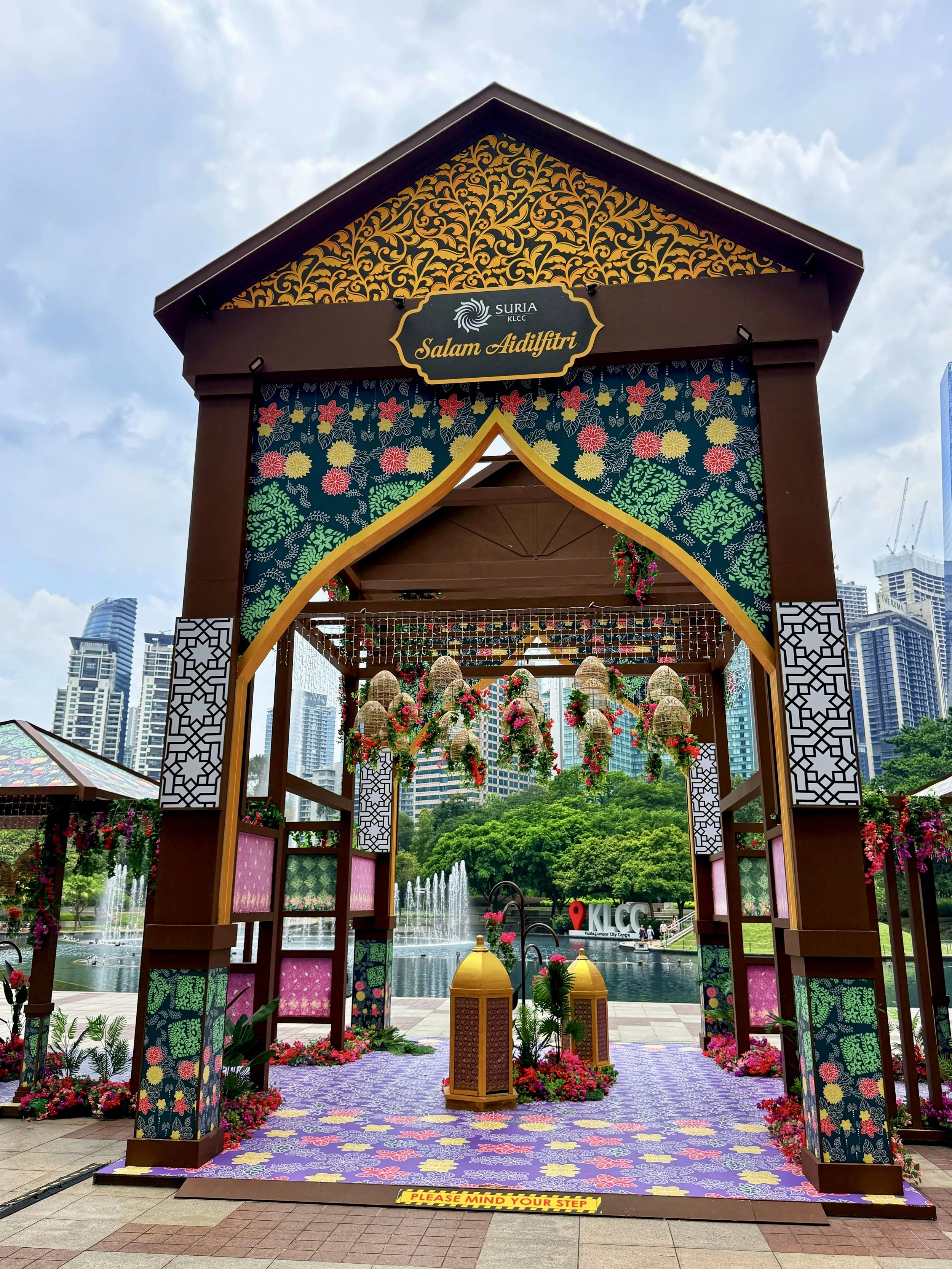
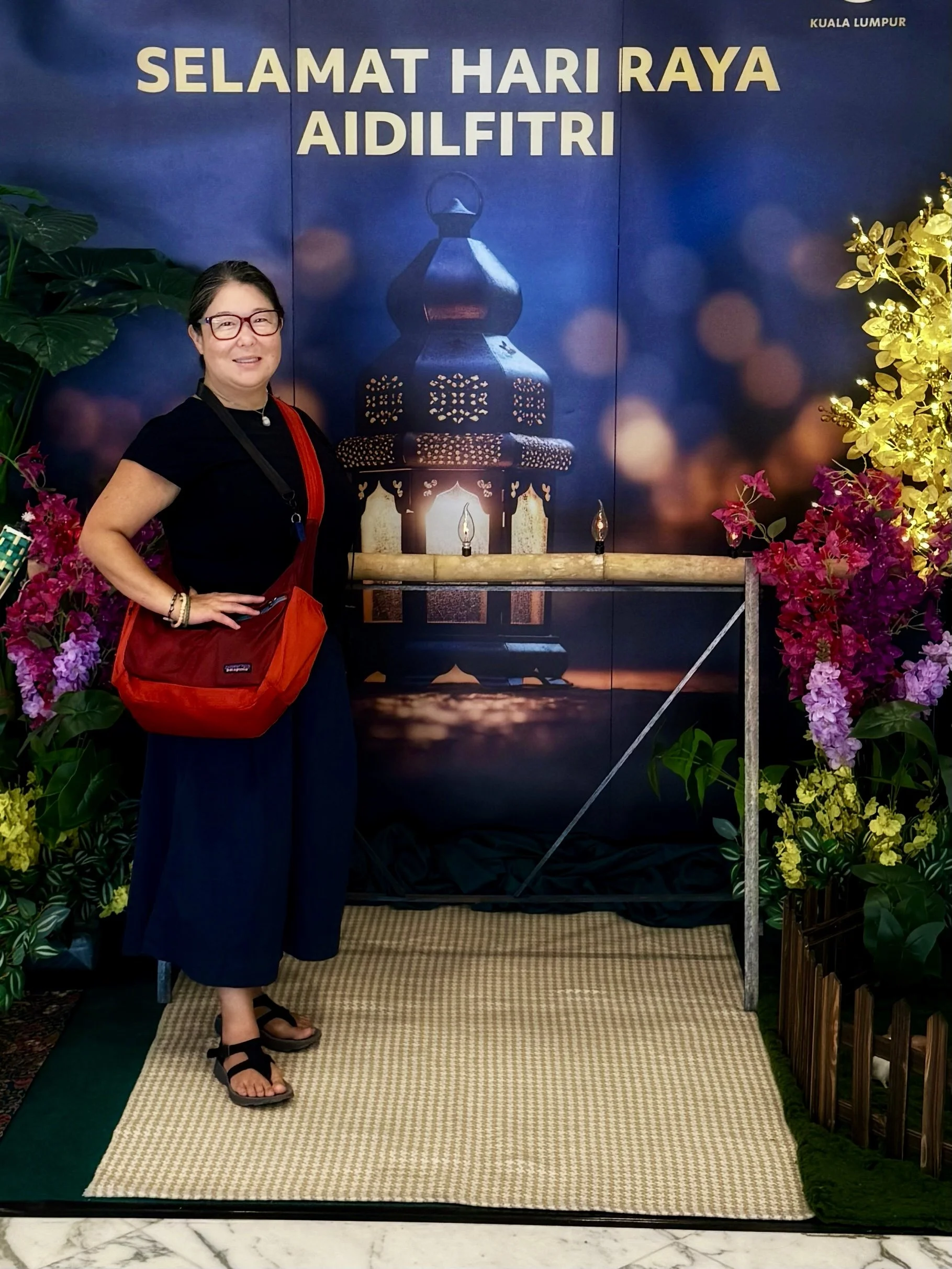
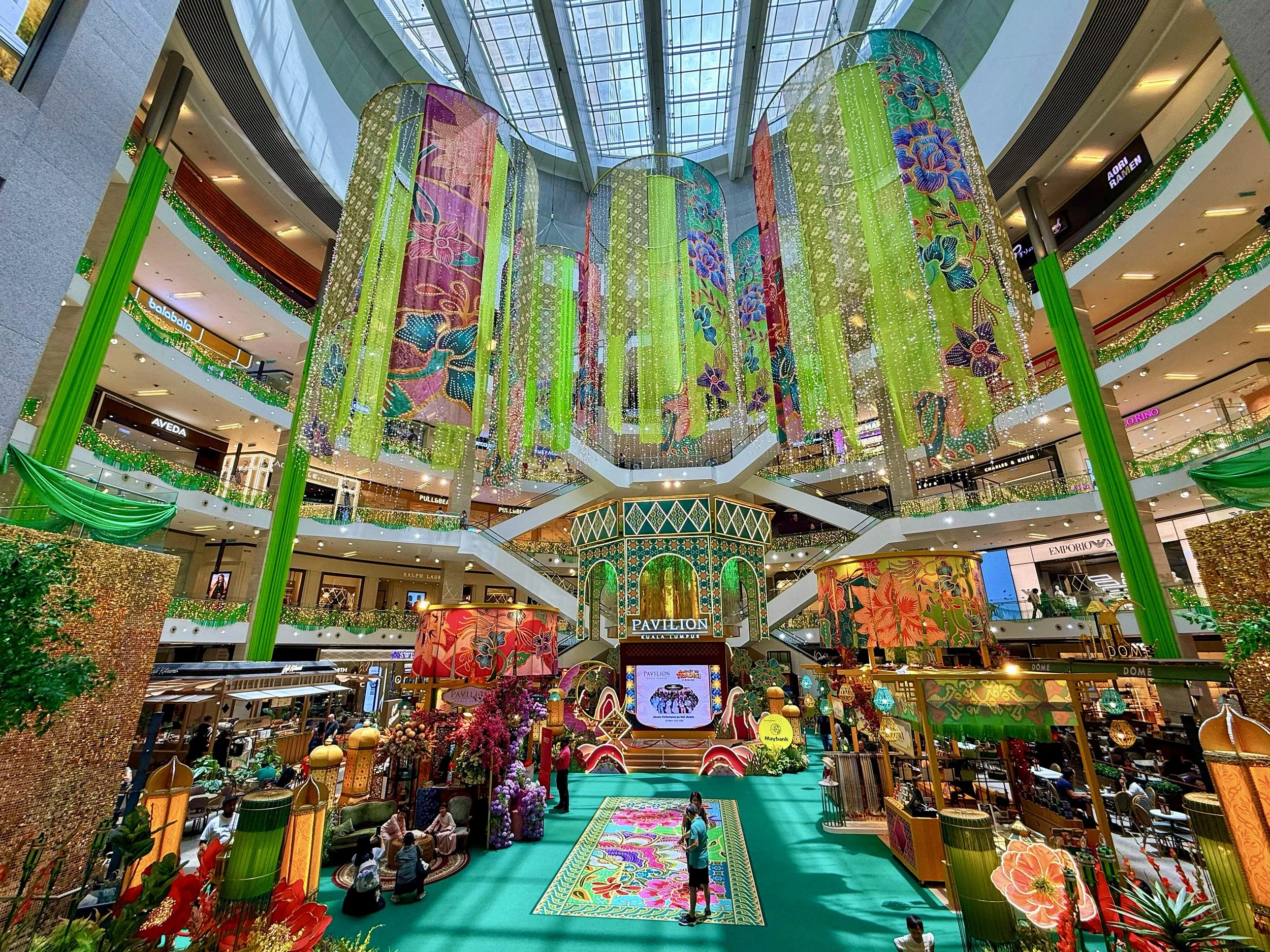
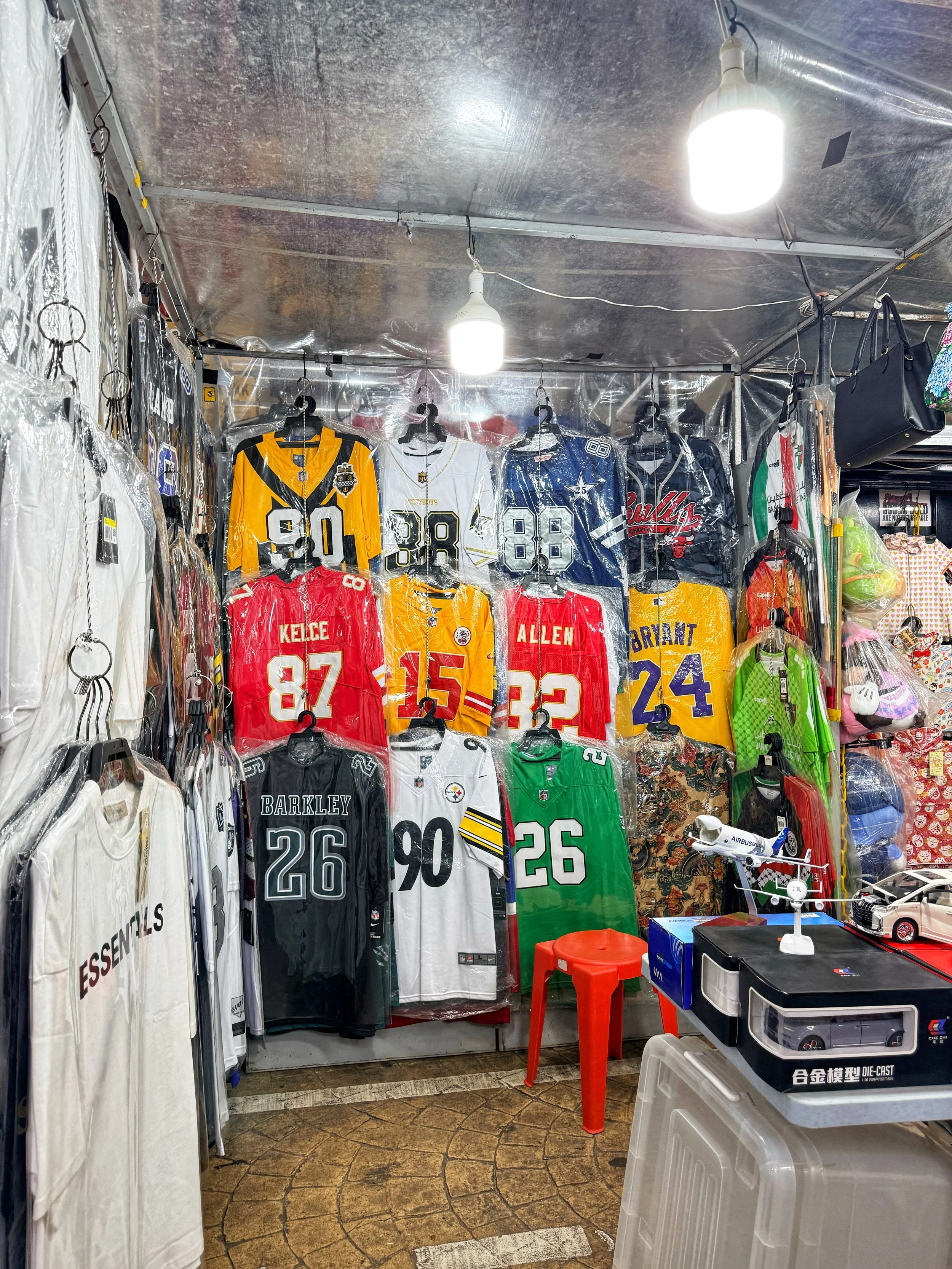
In comparison to others, so far, Malaysia is the most progressive and modern Muslim-majority country we’ve visited. It’s been enjoyable to window shop in a place that caters to Muslim fashionistas. There are all the western brands, too…maybe too many. While everyone else might be yearning for Louis Vuitton and Chanel, I was awed by the stylish robes and hijab scarves! They’re elegant and beautiful to look at but no way could I wear all that without dying of a heat stroke. Much respect to these women who look flawless and cool as a cucumber. In fact, everyone cares to dress nicely at all income levels here, even in 90 degree heat and 100 percent humidity. No Walmart crowds here.
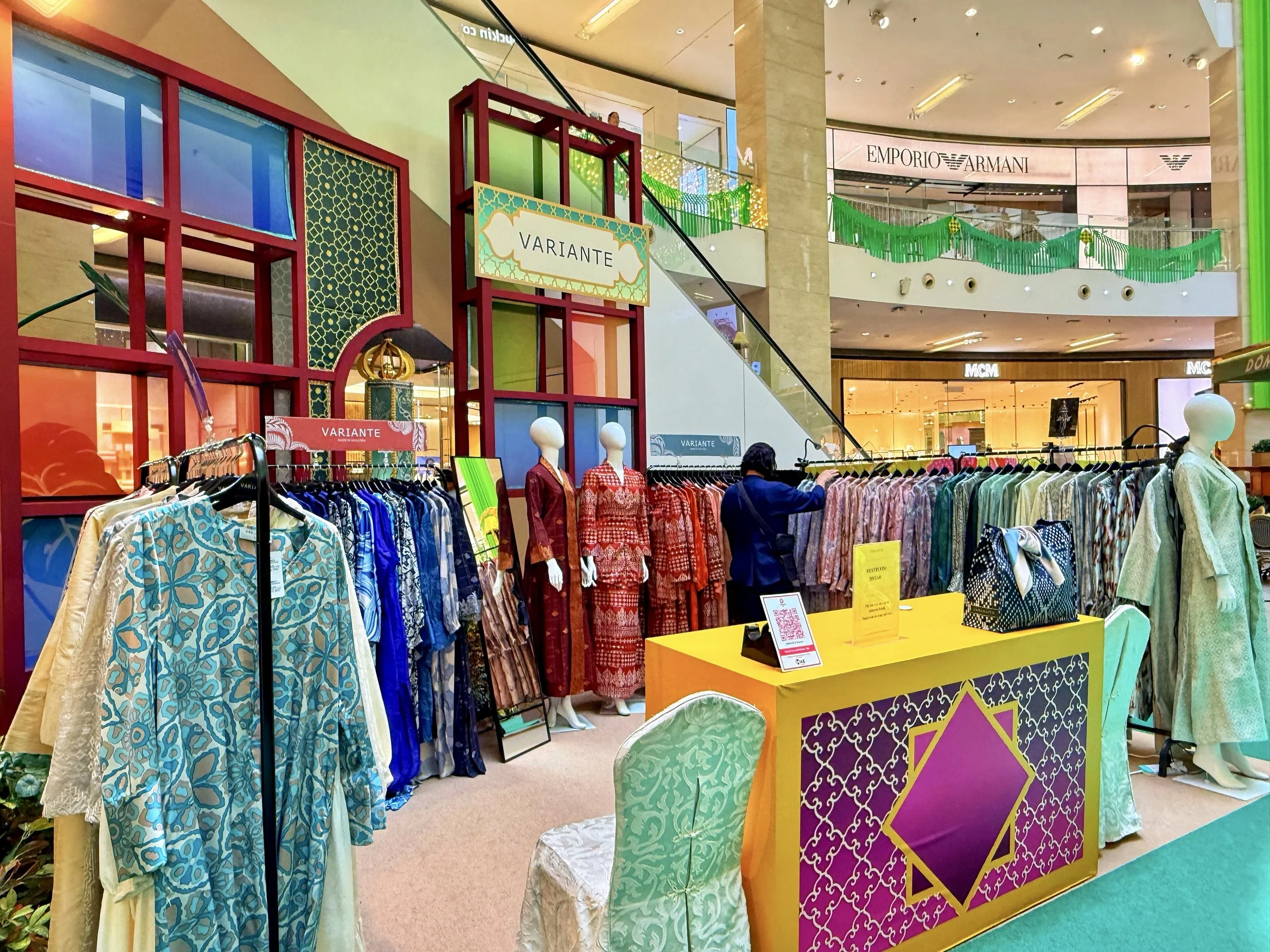
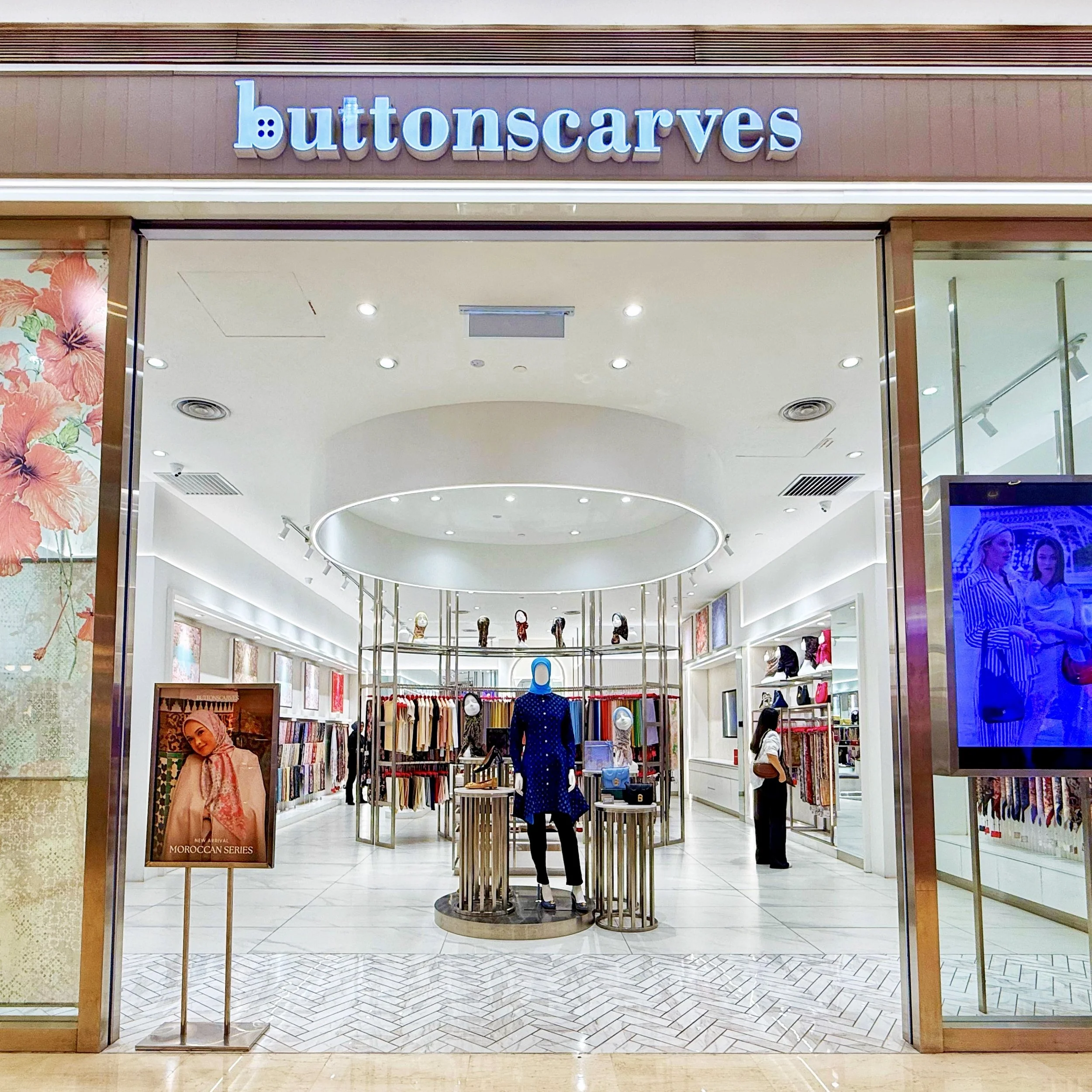
Bukit Bintang Area
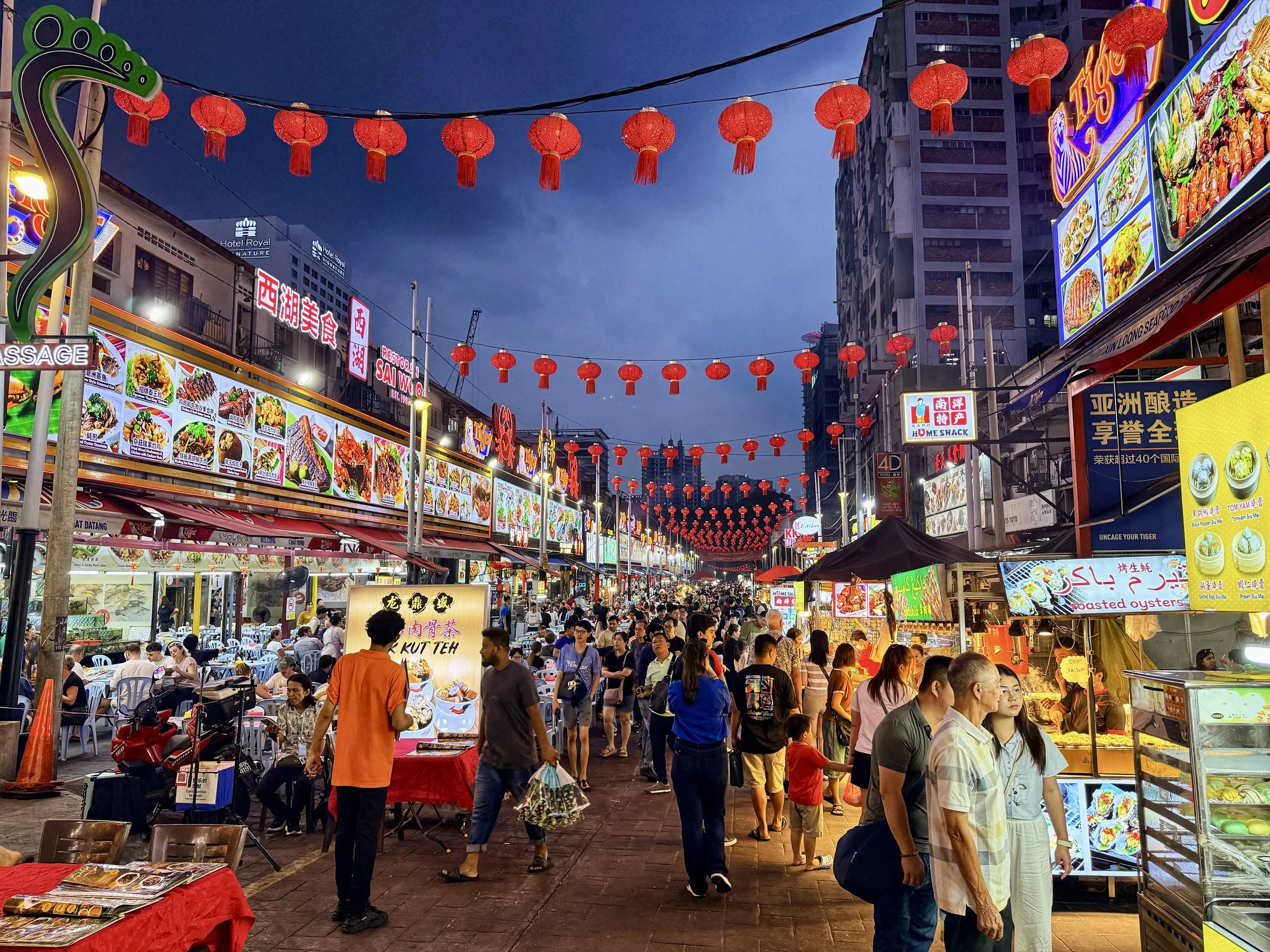
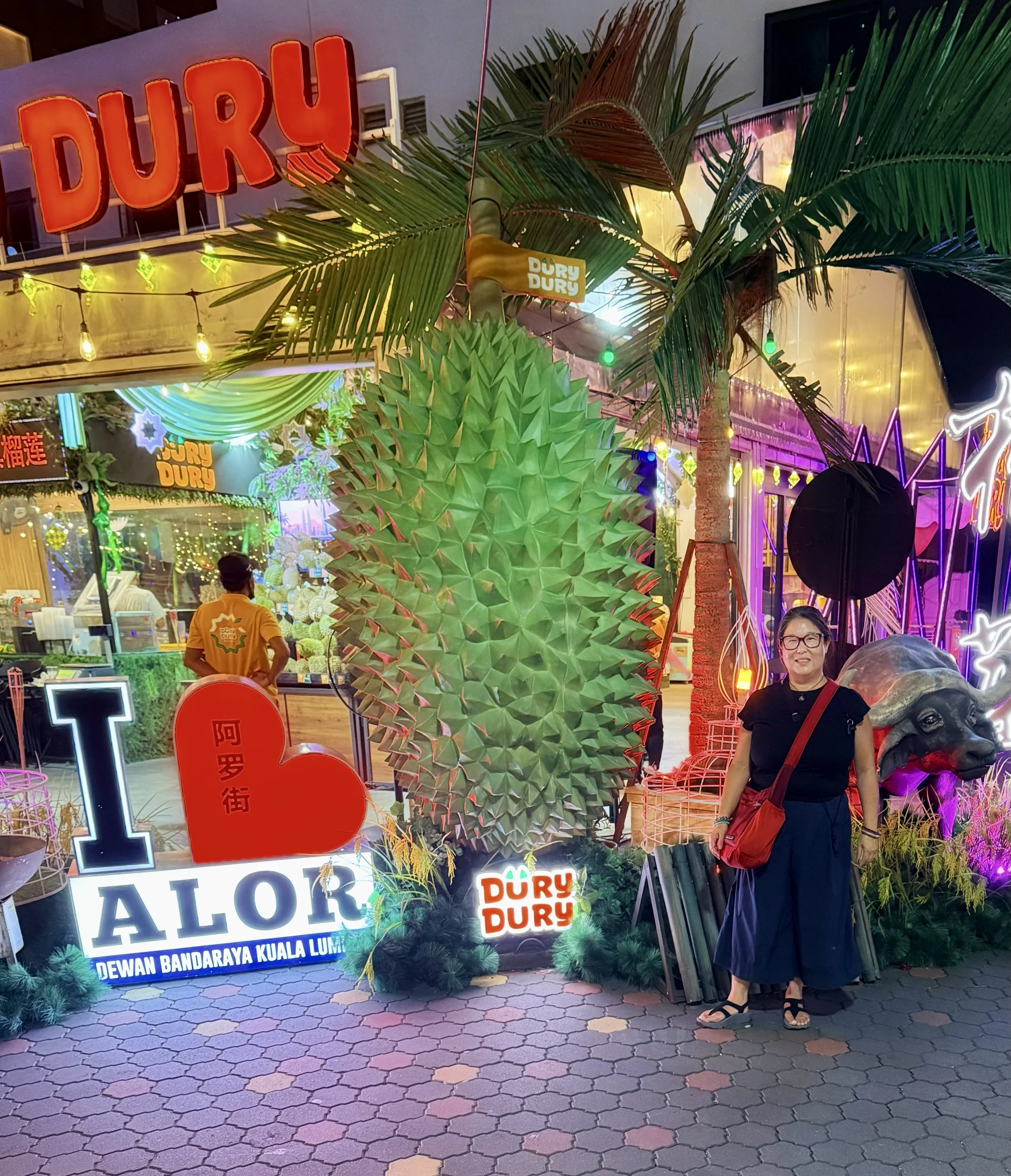
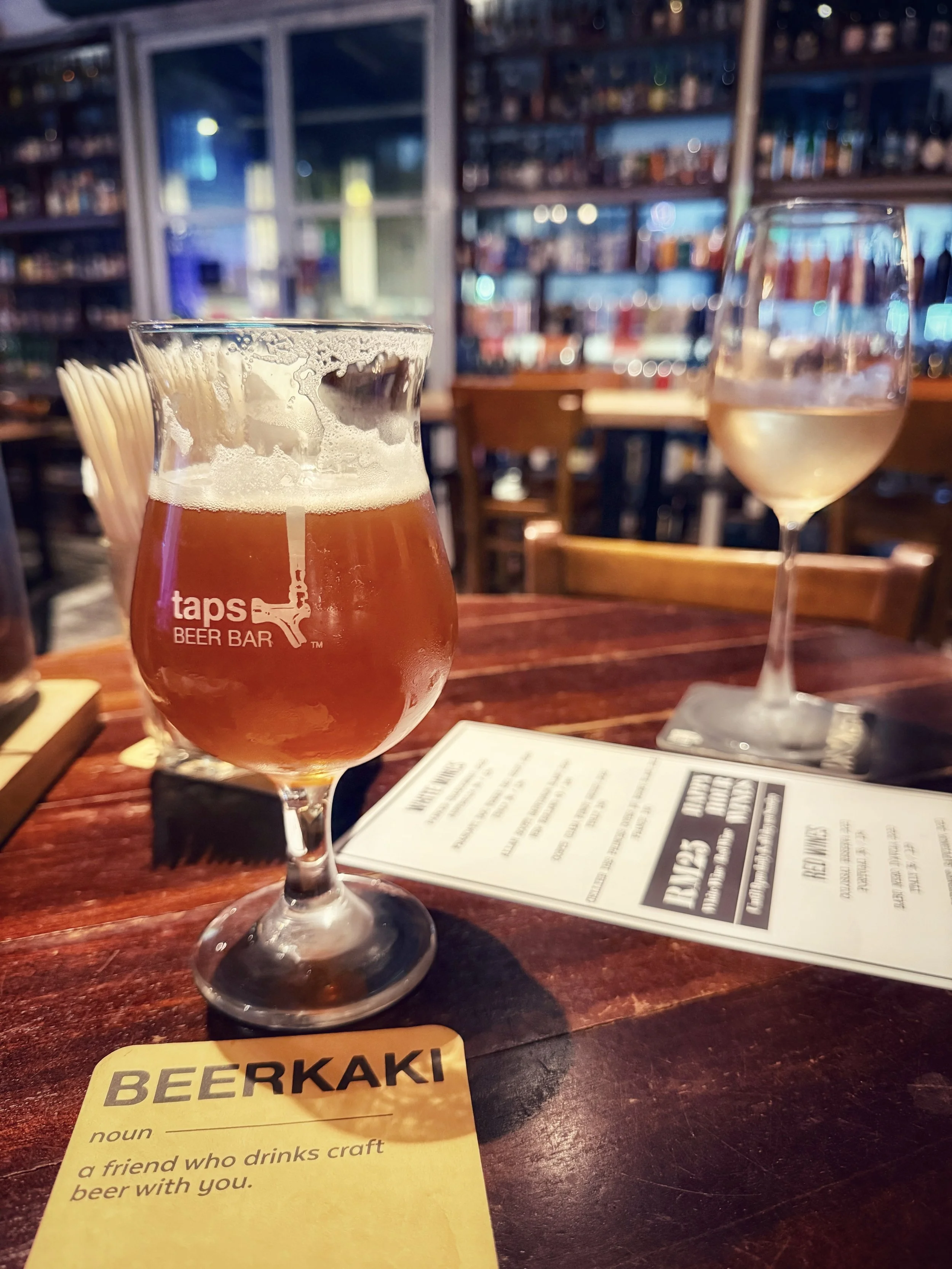
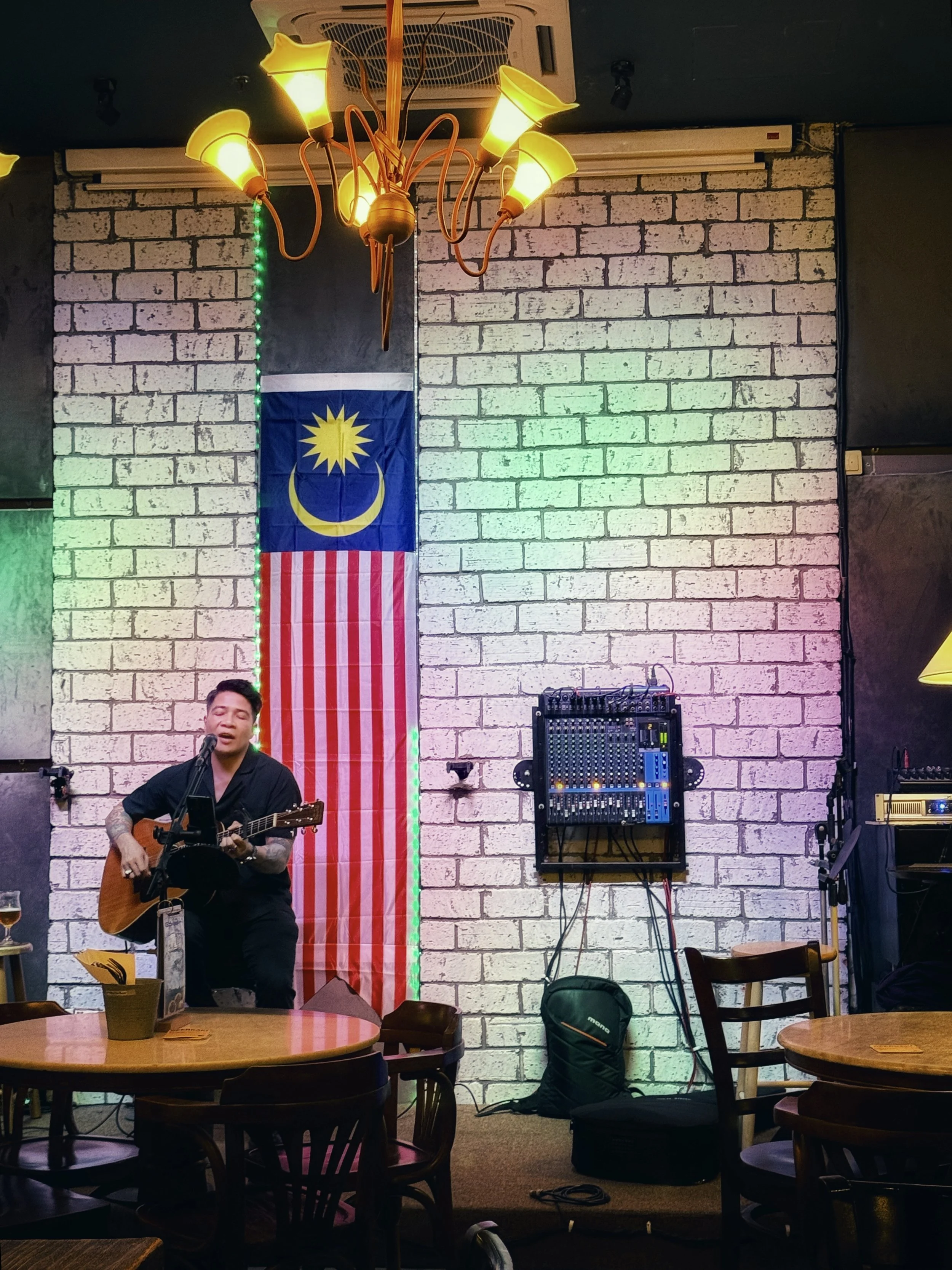
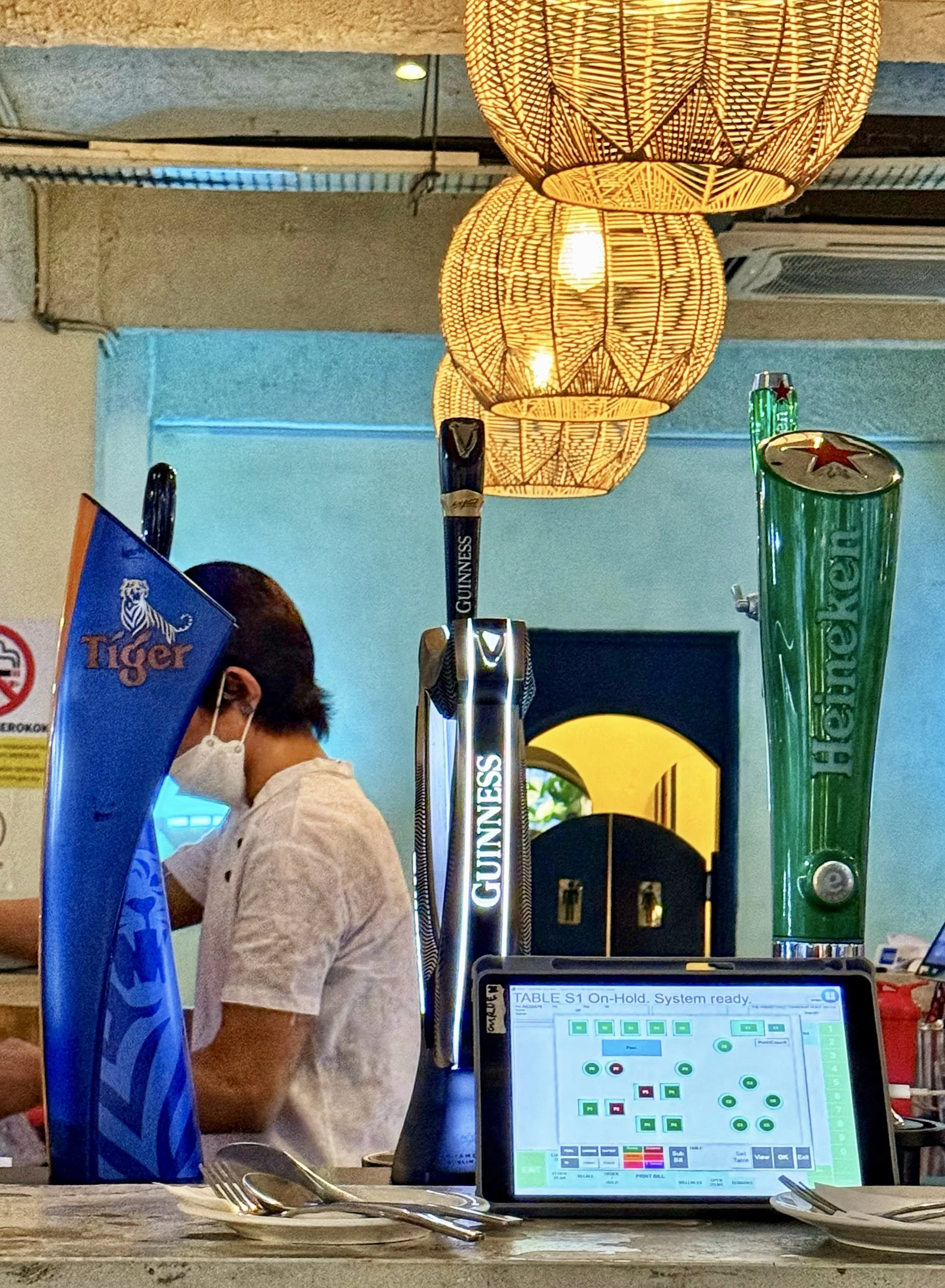
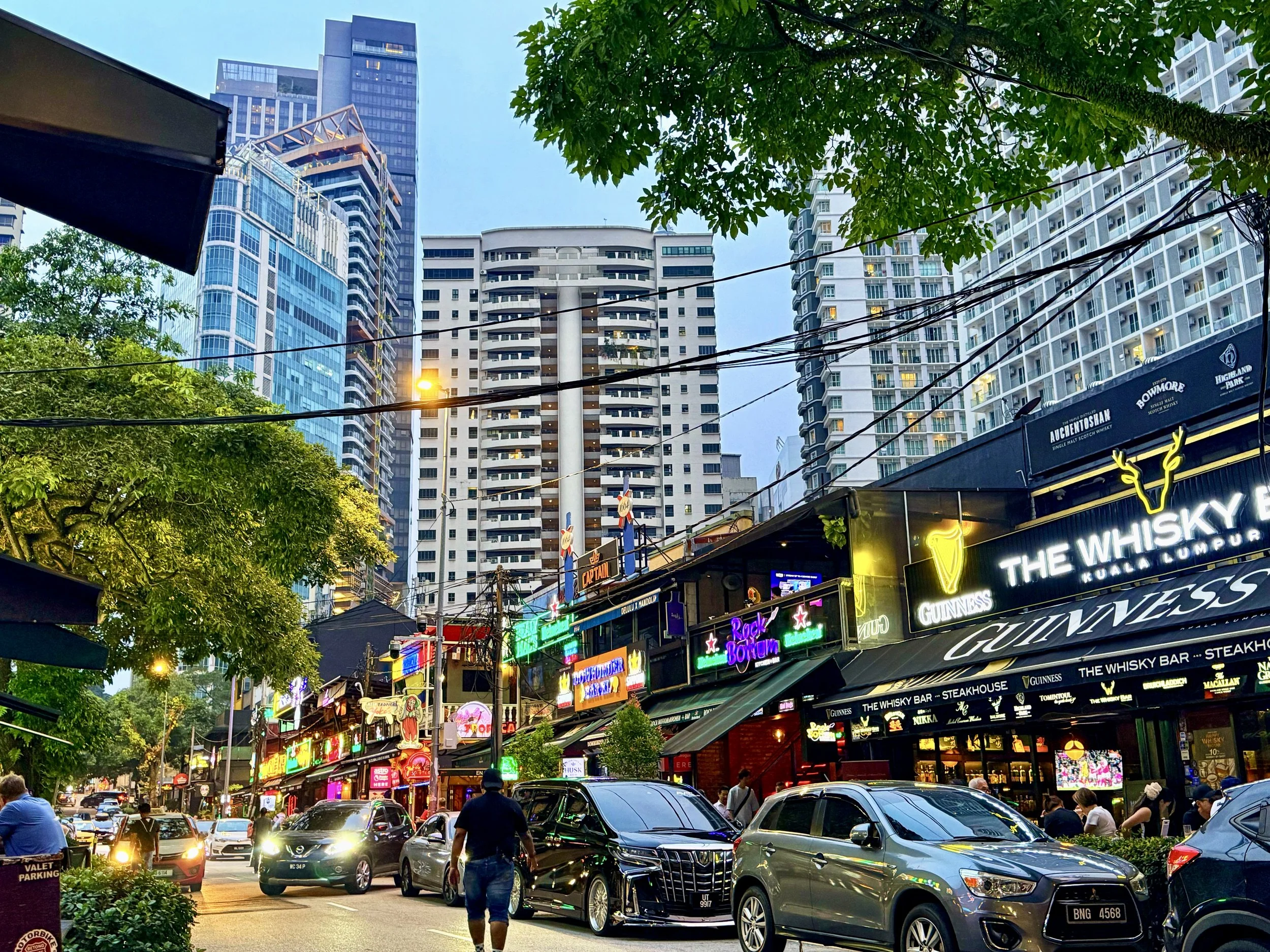
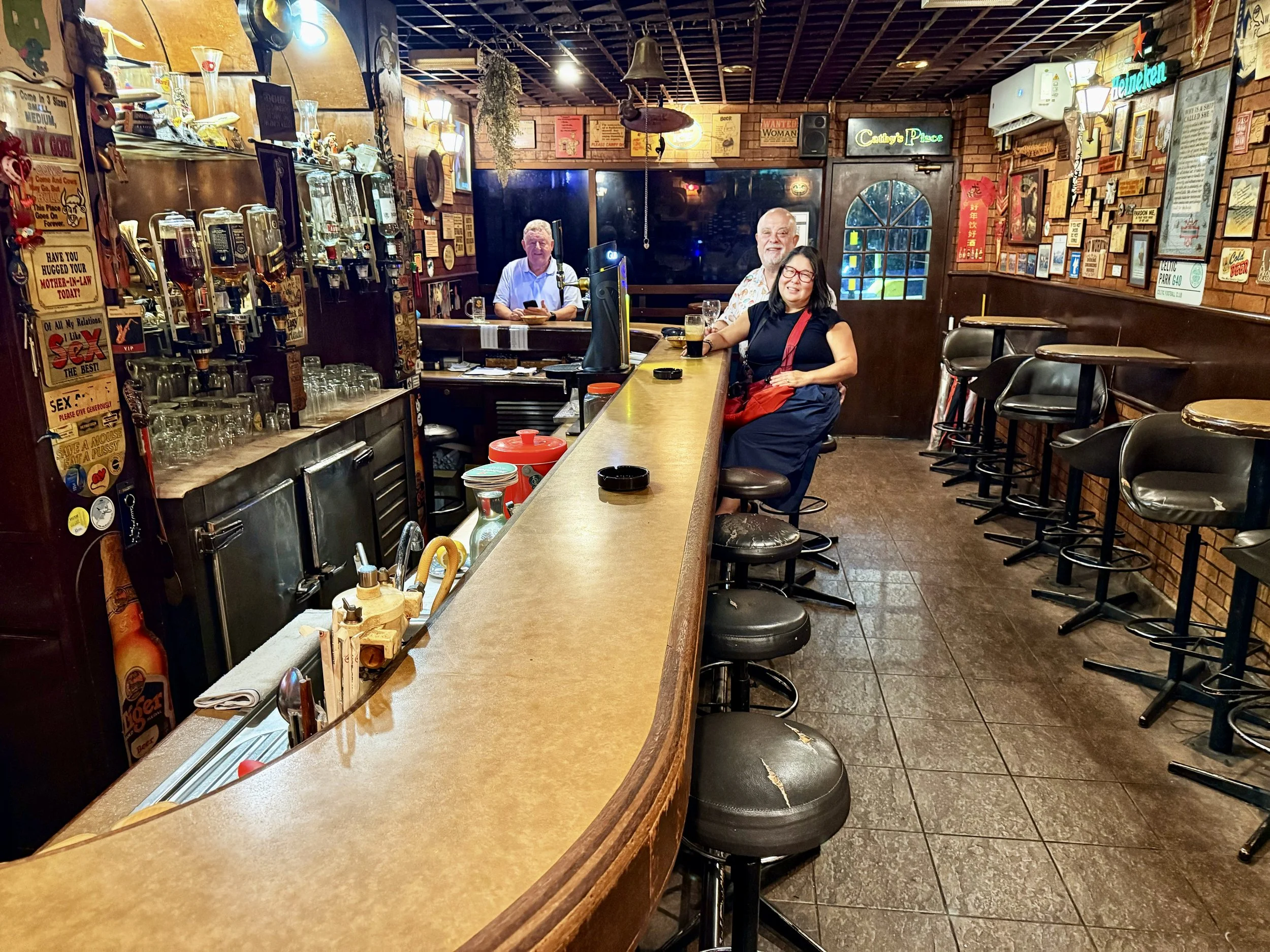
We were advised that first timers to KL should stay in the Bukit Bintang area. We agree. It’s in the KL core and walking distance to almost everything. For us, the best hotel—location wise—was the humble Holiday Inn Express Kuala Lumpur City Center, rather than one of the myriad 5-star luxury skyscraper hotels in the area (although we did run into a few “lemons” during our stay, which we documented in Real Life Reels). Within a 10-minute walk in every direction, we could be at the massive Pavilion Mall; Changat Bukit Bintang “Pub Street” or what we like to call the “Tiger, Guinness, Heineken Street”; the famous Jalan Alor Food Street; the monorail station; KLCC Park via an air conditioned walkway; a Family Mart and grocery store next door; and our favorite comfy home-away-from-home place called Taps Beer Bar that we went to almost every evening for the best wine happy hour in town, craft beers, food, and quality live music. (It wasn’t the Hyvee Bar though. IFYKYK 😂). We also wanted to like Cathy’s Place—a dive bar since 1987—very close to our hotel and full of locals, but we weren’t feeling the vibe.
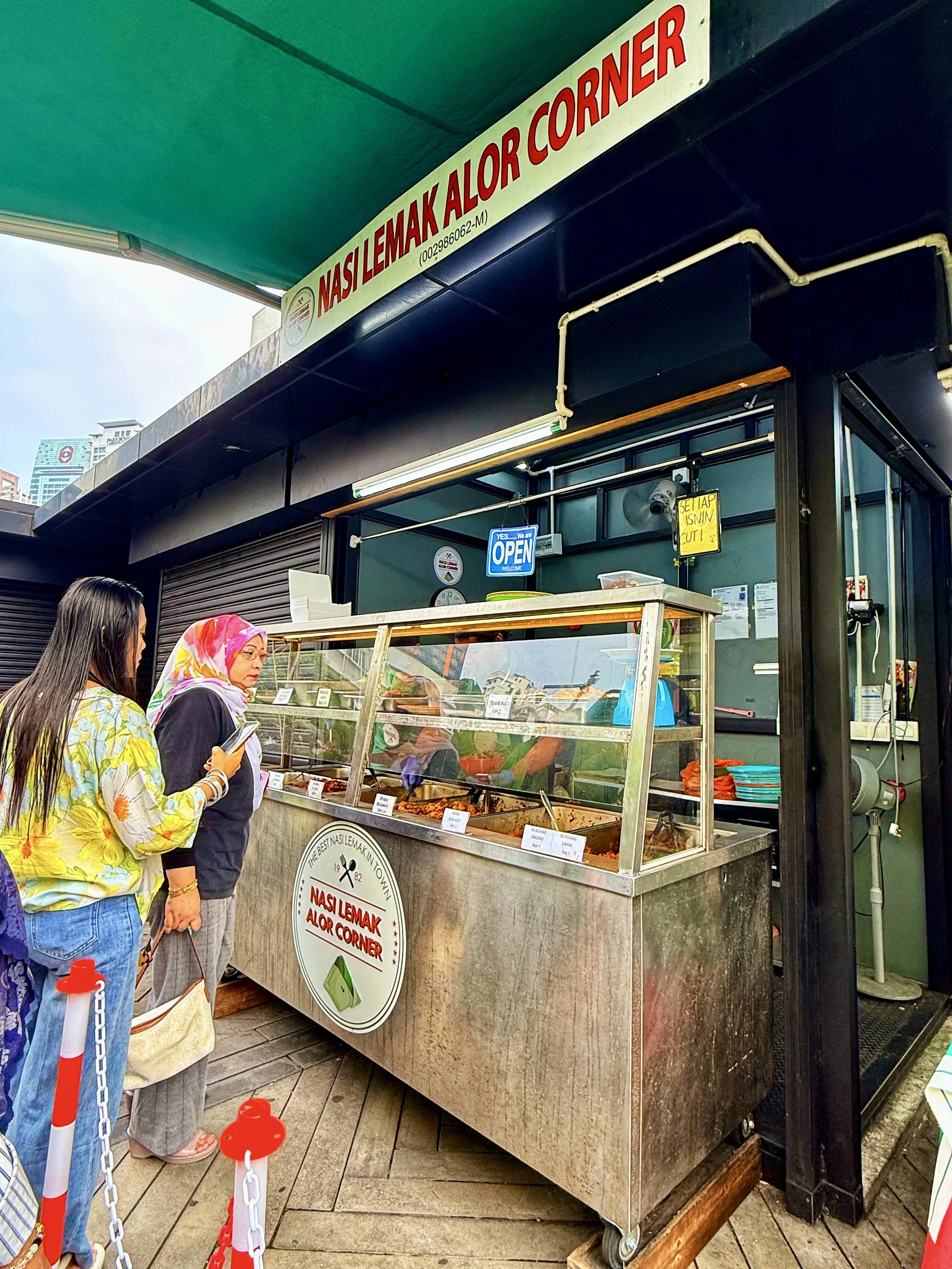
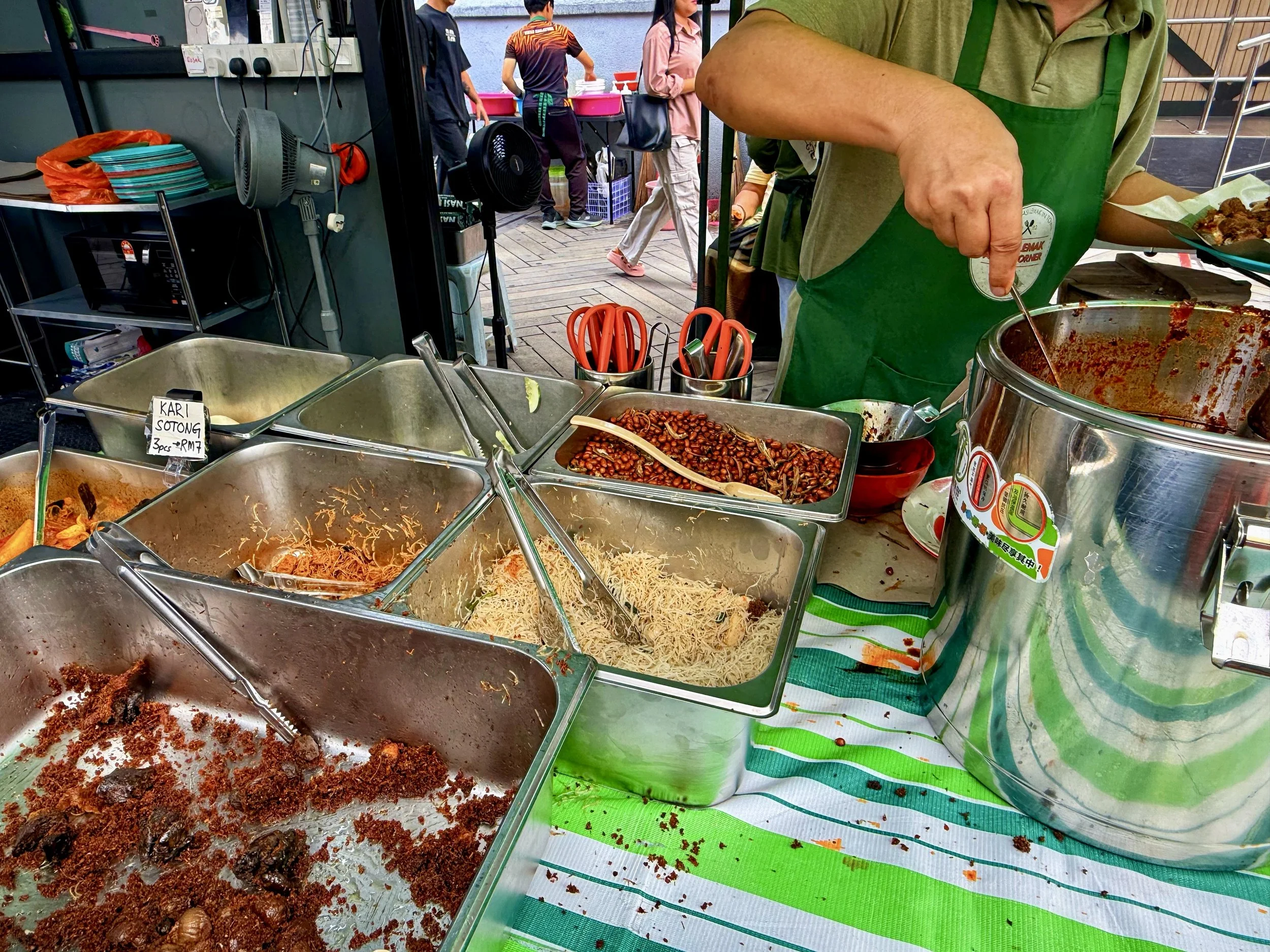
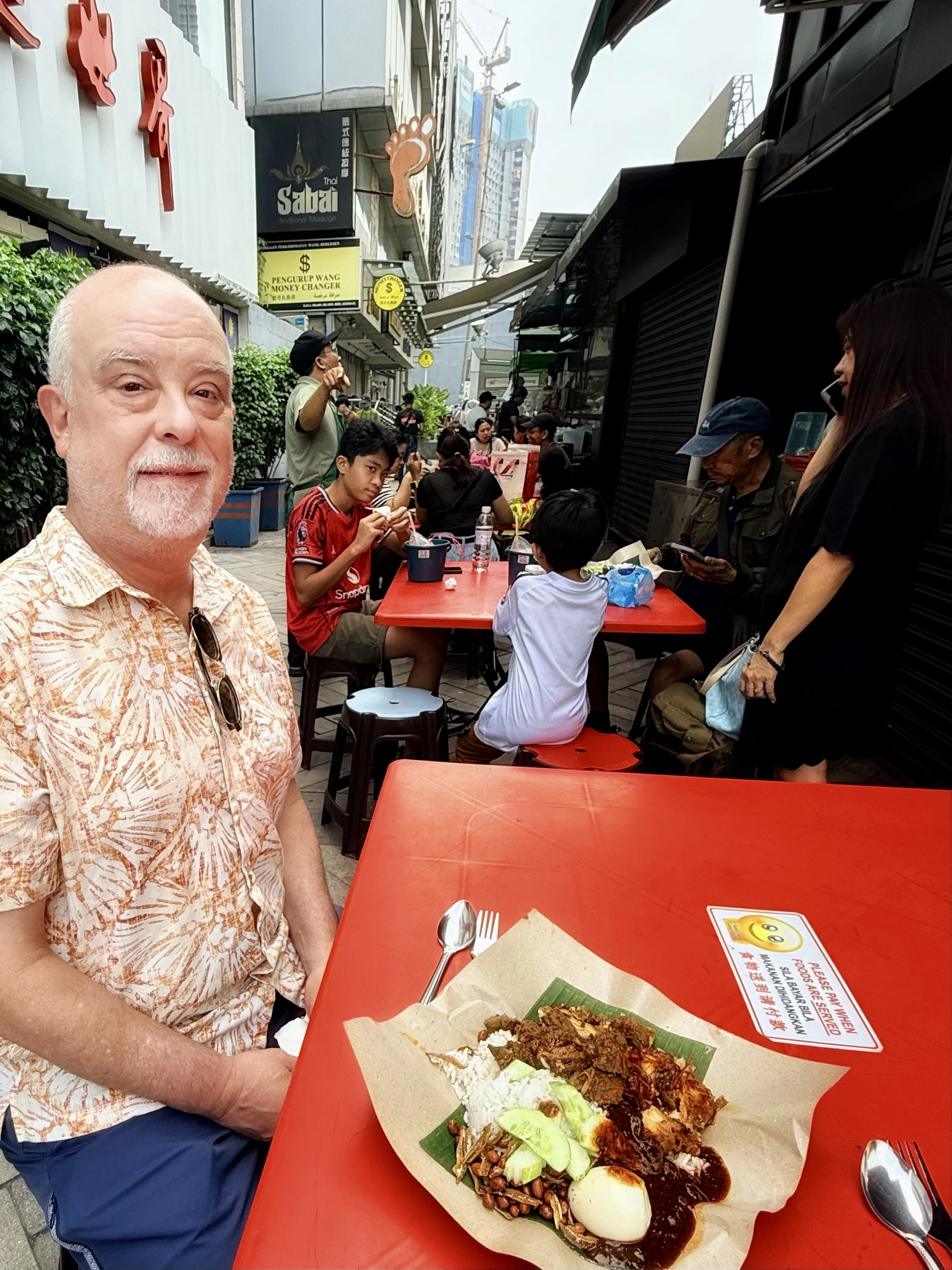
While in Bukit Bintang, we ate our first Nasi Lemak—Malaysia’s national dish—at Nasi Lemak Alor Corner. It is a signature dish of rice cooked in coconut milk and pandan leaves, commonly served with spicy sambal, fried anchovies (ikan bilis), roasted peanuts, hard-boiled egg, and cucumber slices. We ordered ours with a meat combination of beef rendang and ayam (chicken) belado (cooked in chili sauce). They were very kind to help us figure out how to pick and choose our Nasi Lemak from all the pots and trays of food; then found us a plastic table to sit at on the sidewalk. Lovely experience!
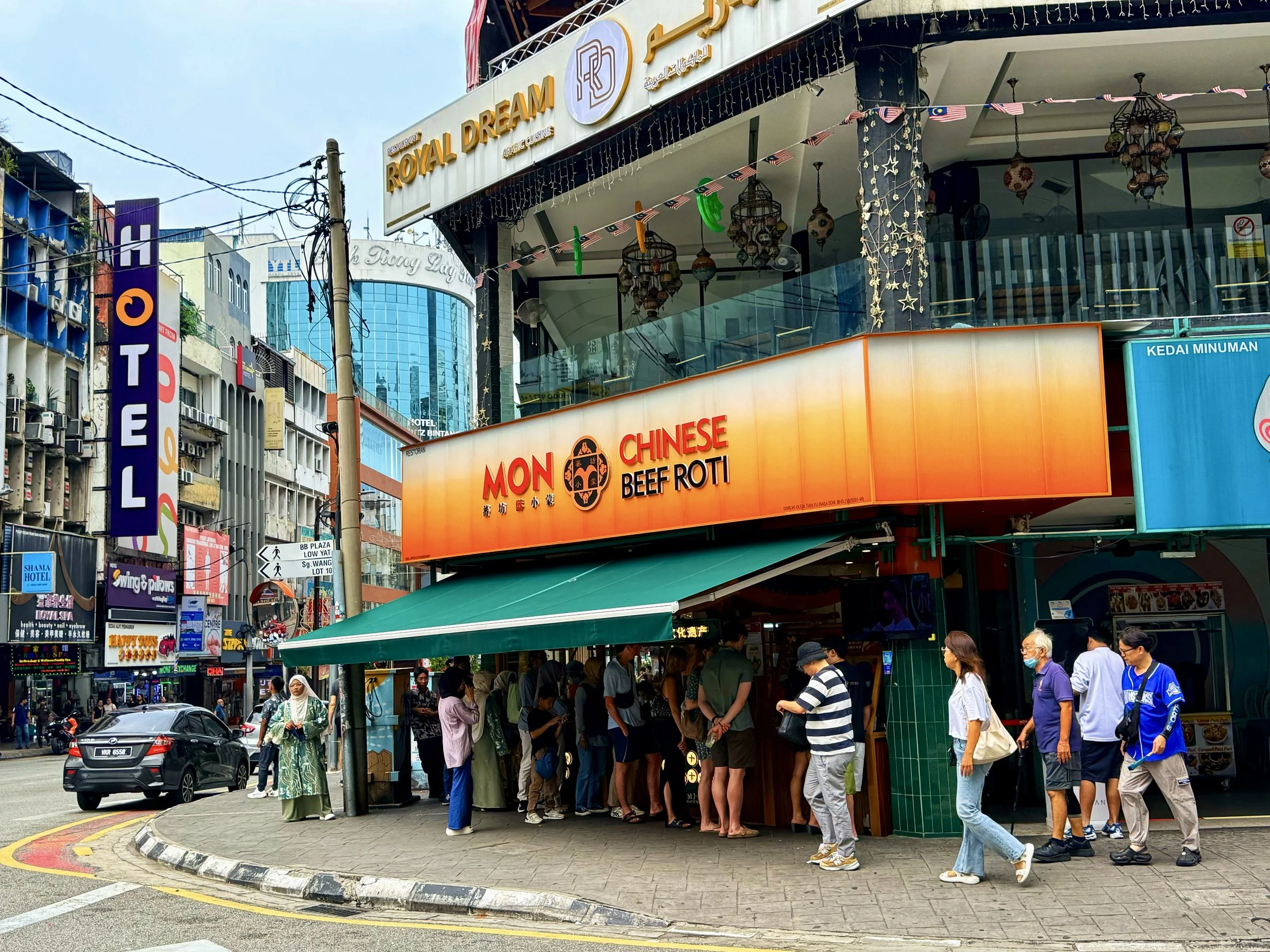
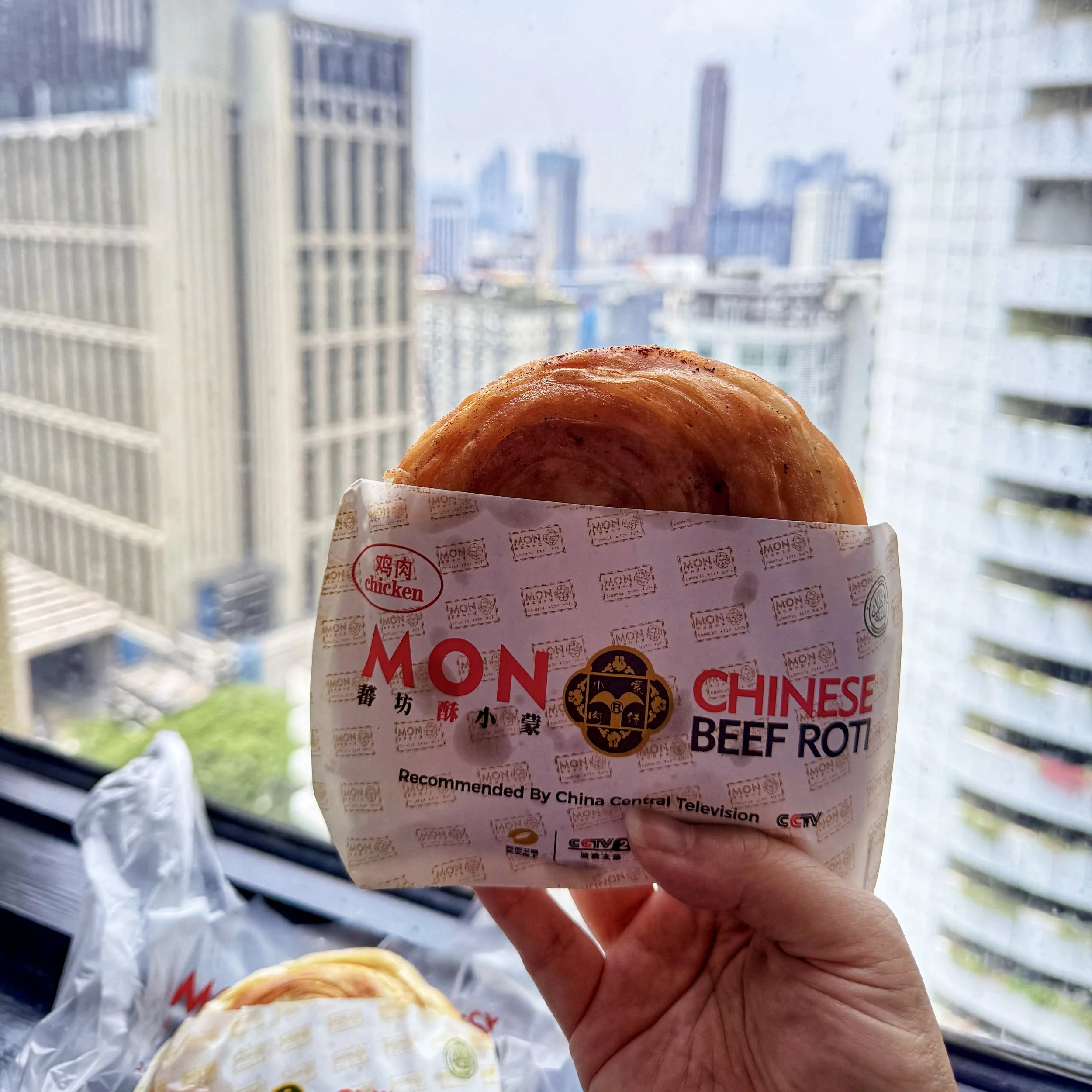
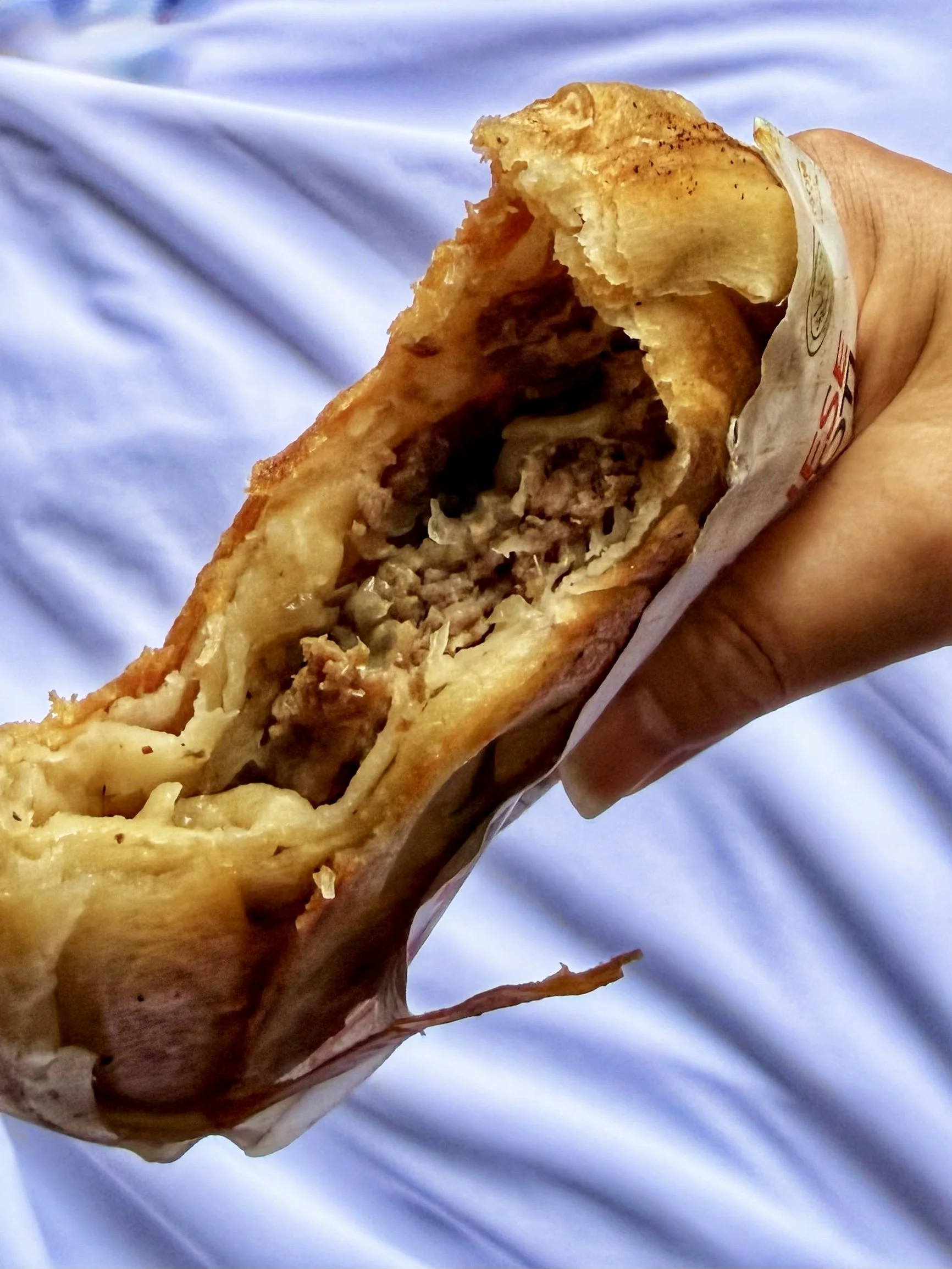
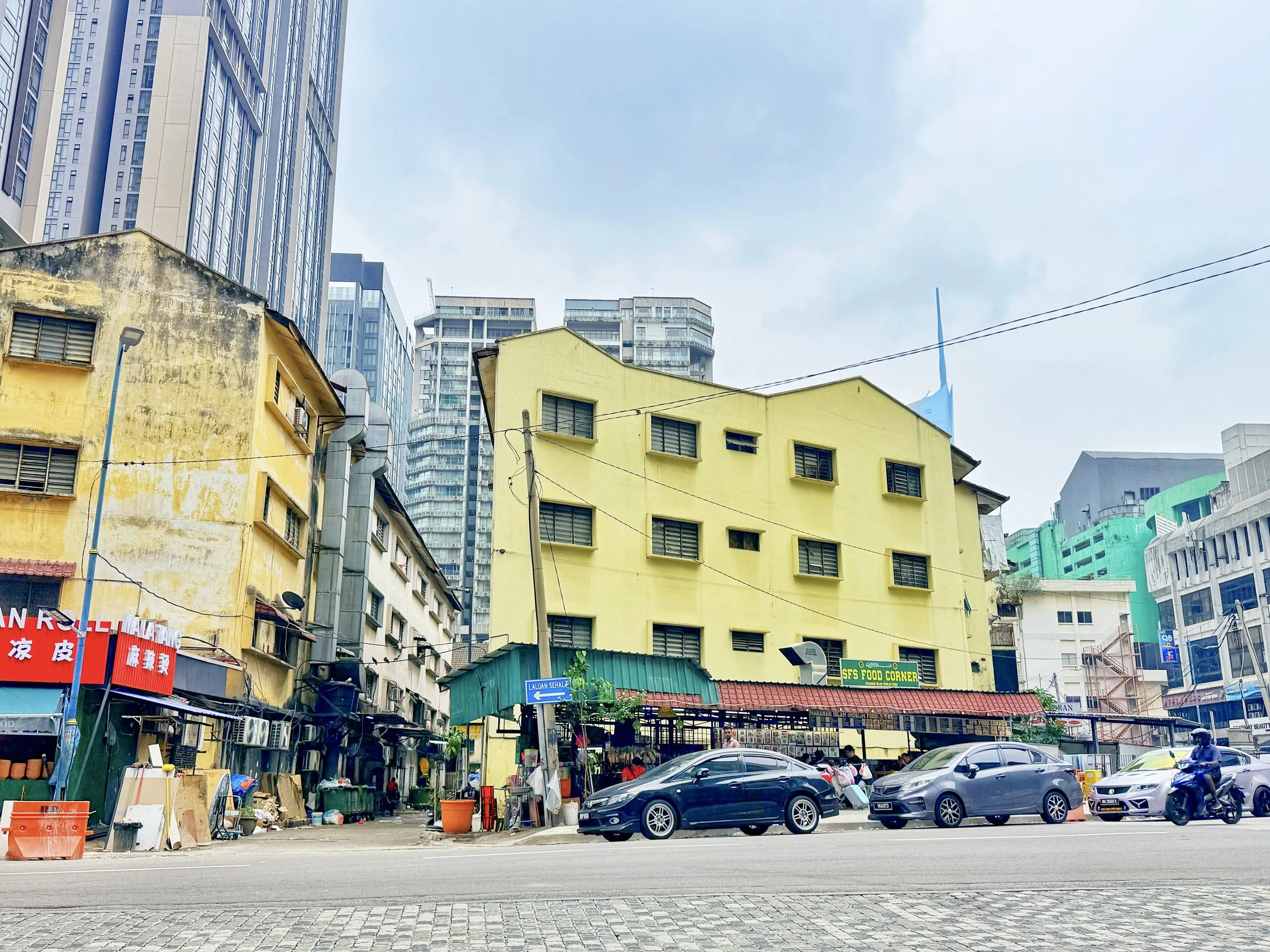
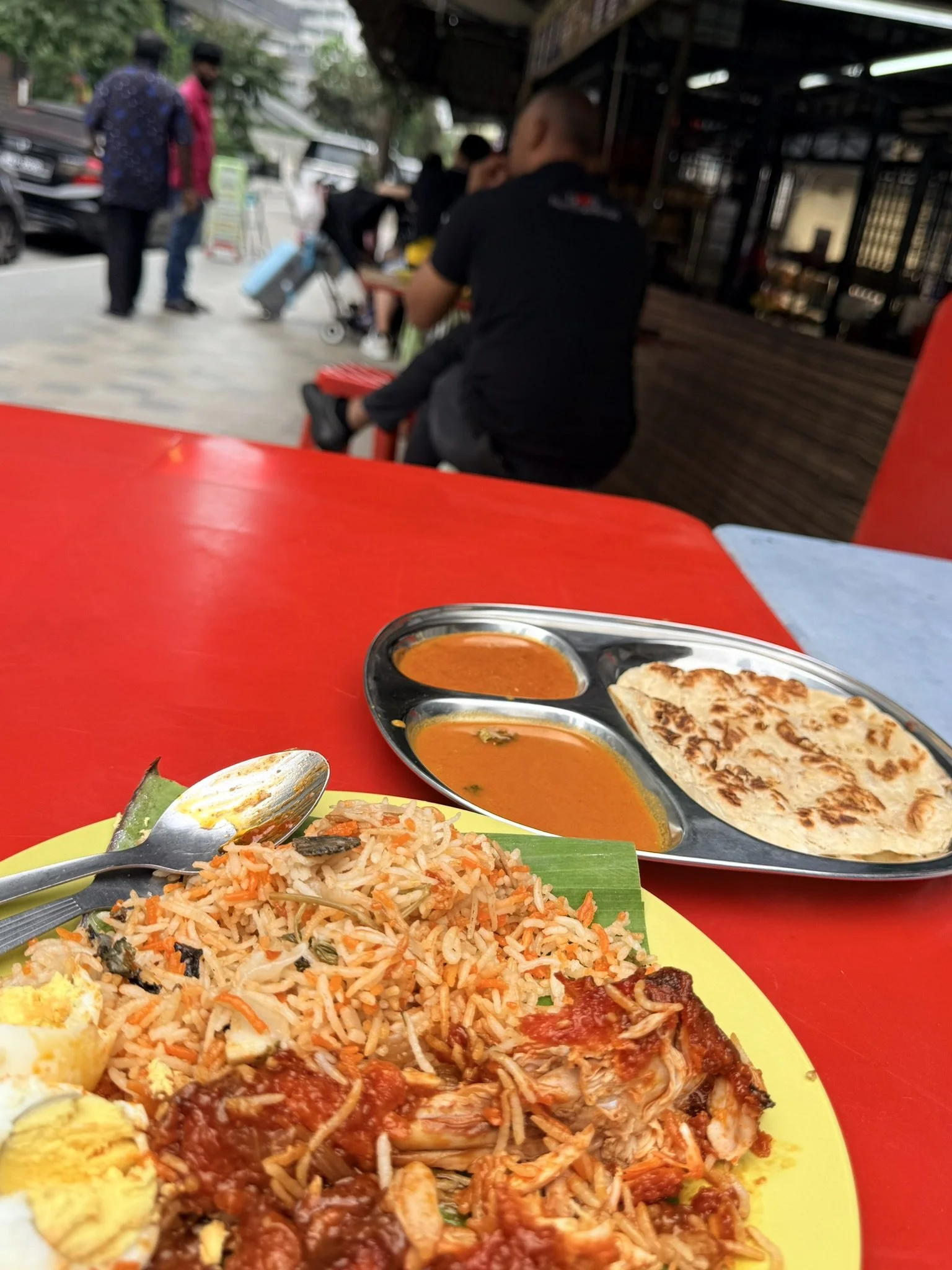
Roti—traditional Indian flatbread—comes in many forms in Malaysia. There’s a Chinese version called Mon Chinese Beef Roti or Guokui, which features a crispy, flaky, pan-fried pastry filled with minced beef or chicken spiced with cumin, coriander, and white pepper. We also had Roti Canai at SMS Food Corner, a street food stall in the shadows of the Ritz Carlton and JW Marriott.
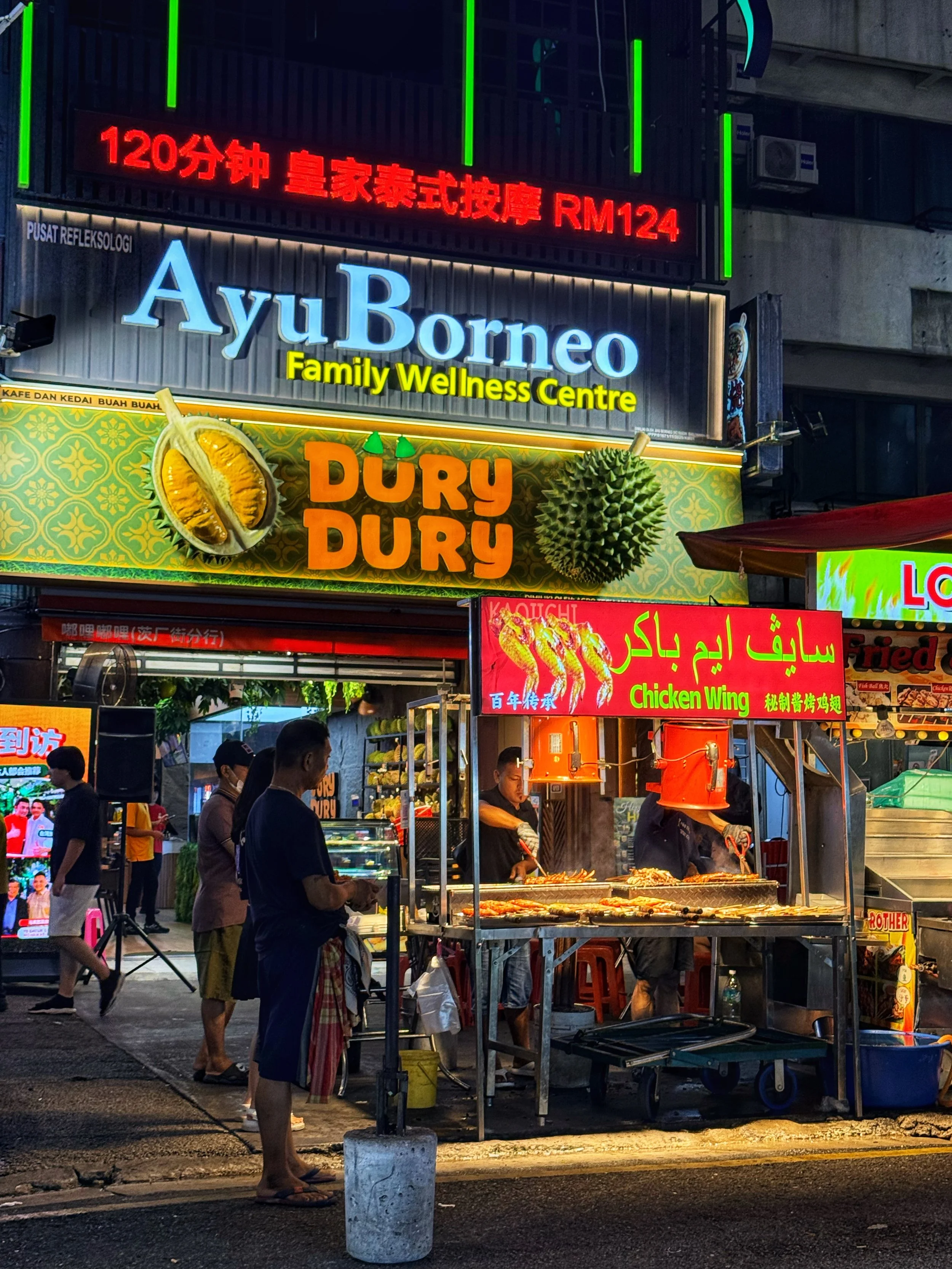
Per capita, Malaysia has the highest consumption rate of durian! Durian is everywhere, on every street corner. There are brick and mortar restaurants that only serve durian. Wowza. The “Musang King” is the highly prized variety and is a premium, status-symbol snack.
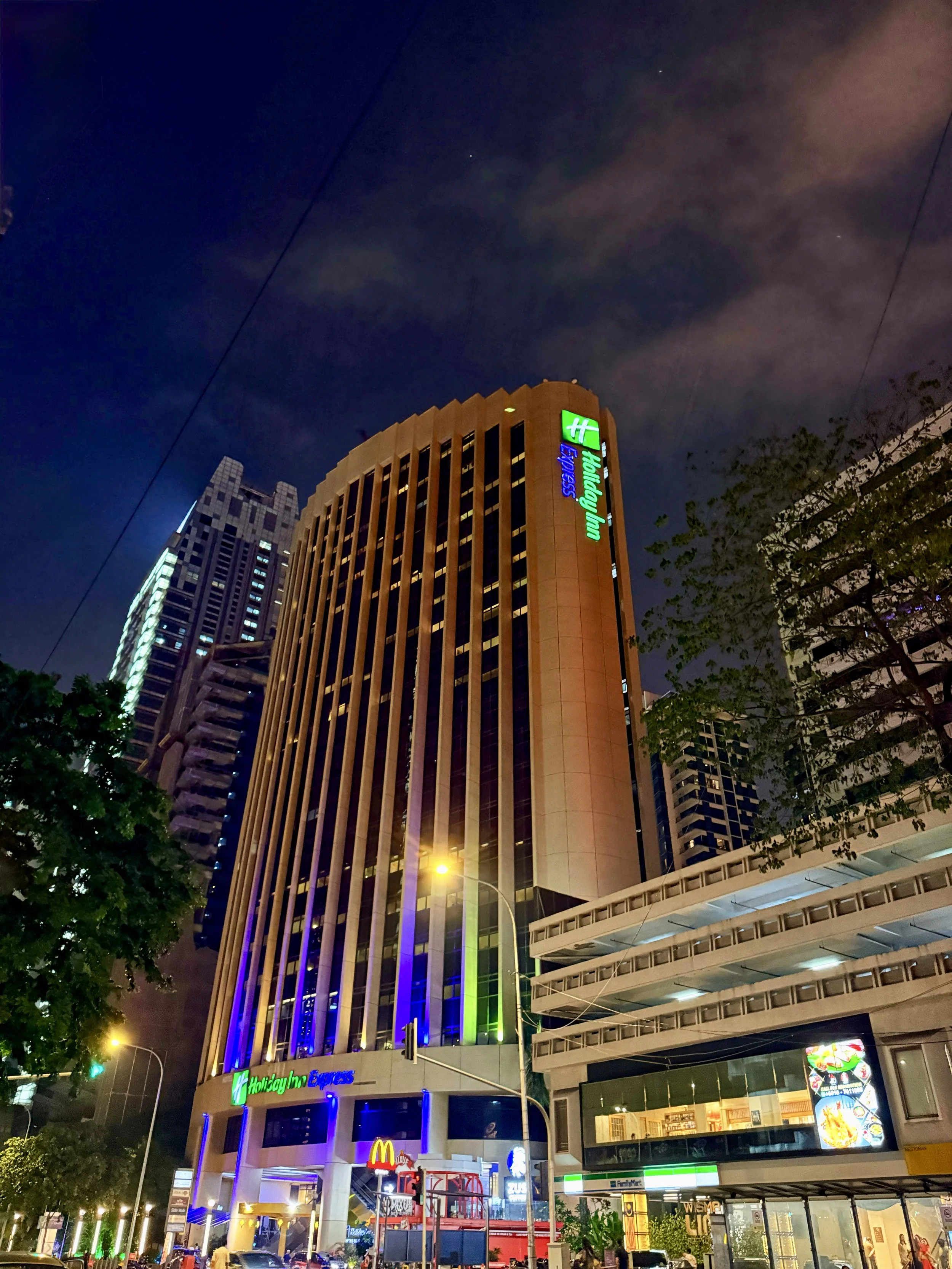
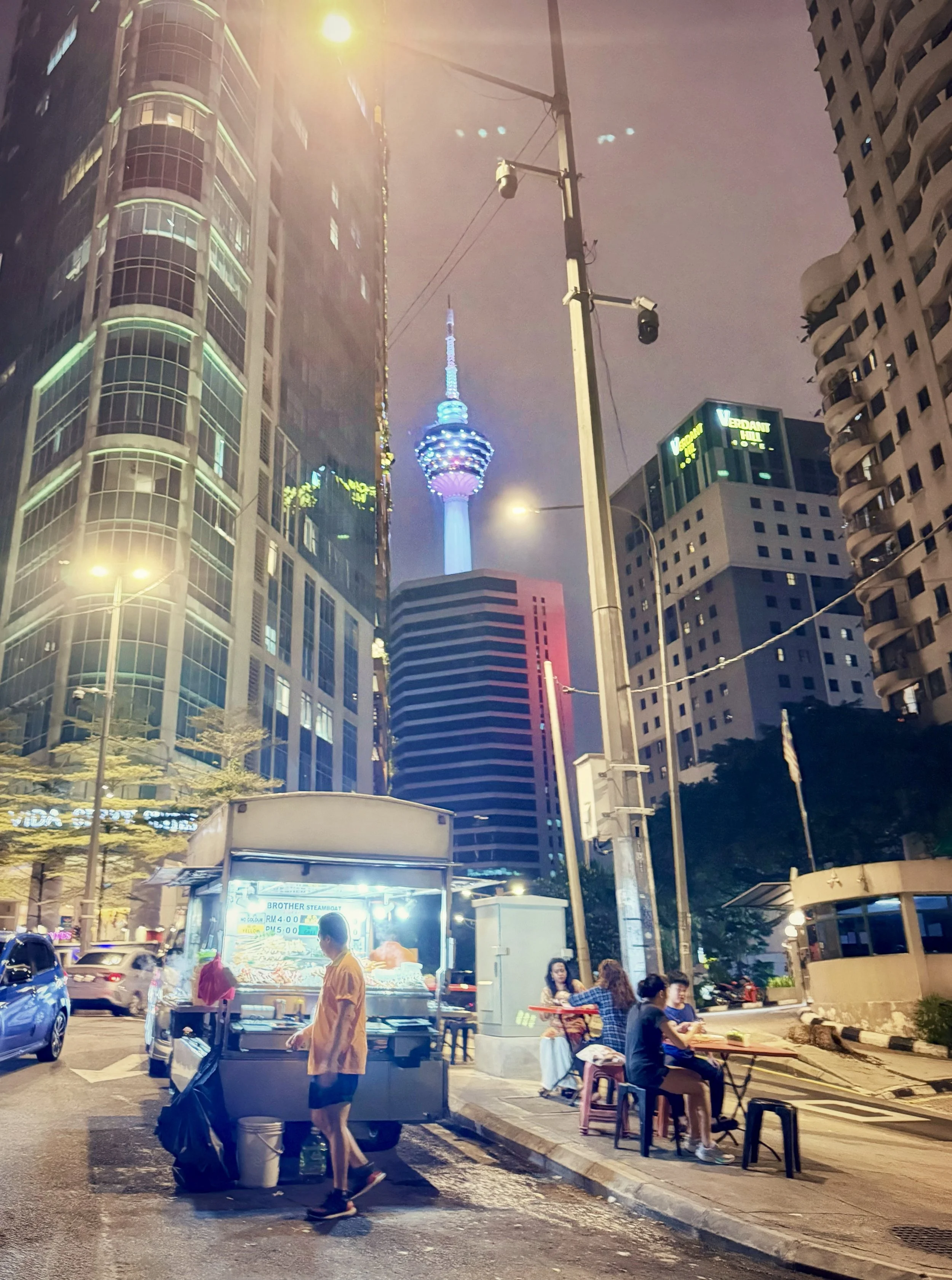
KLCC Park and Skyline
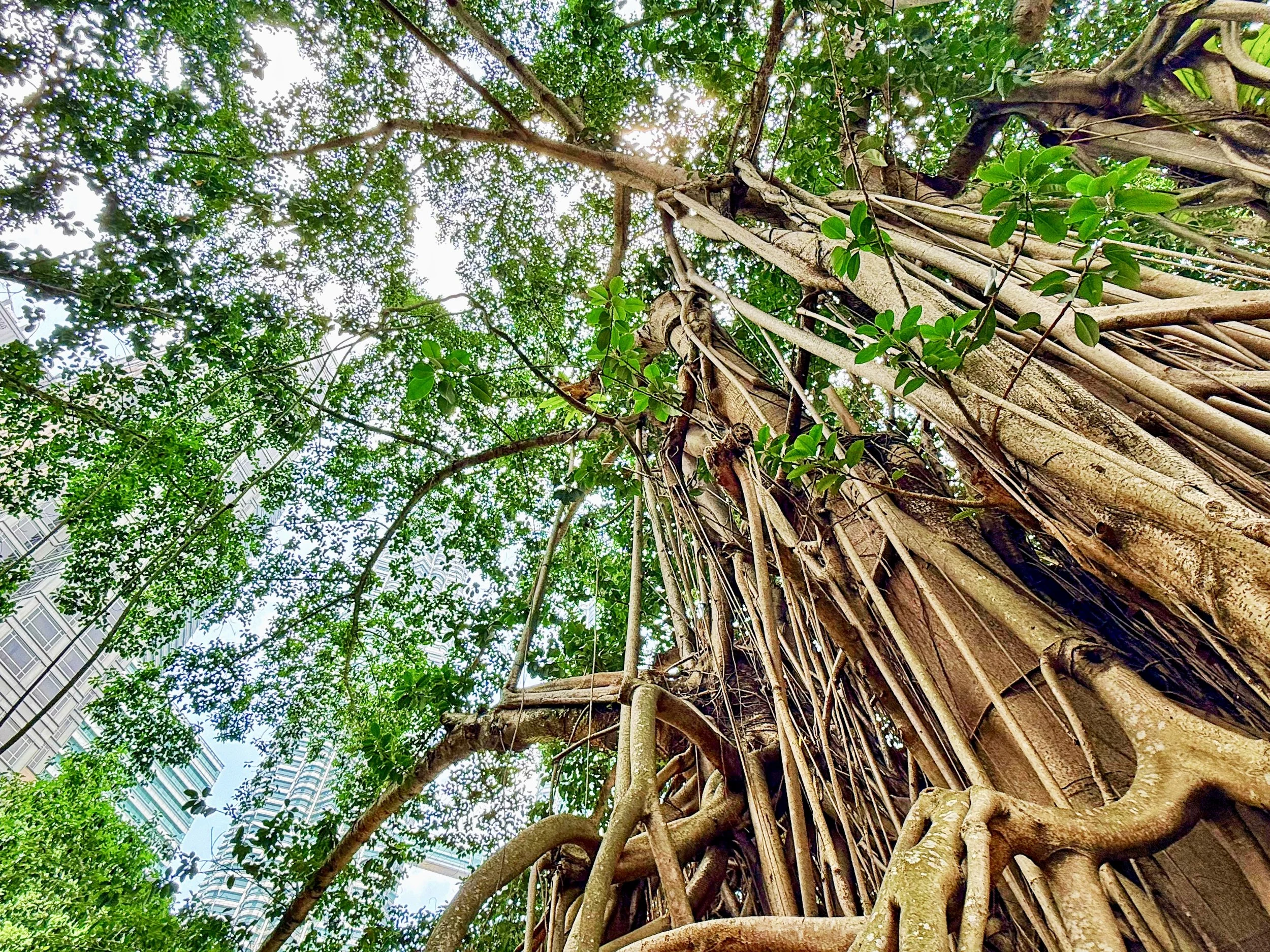
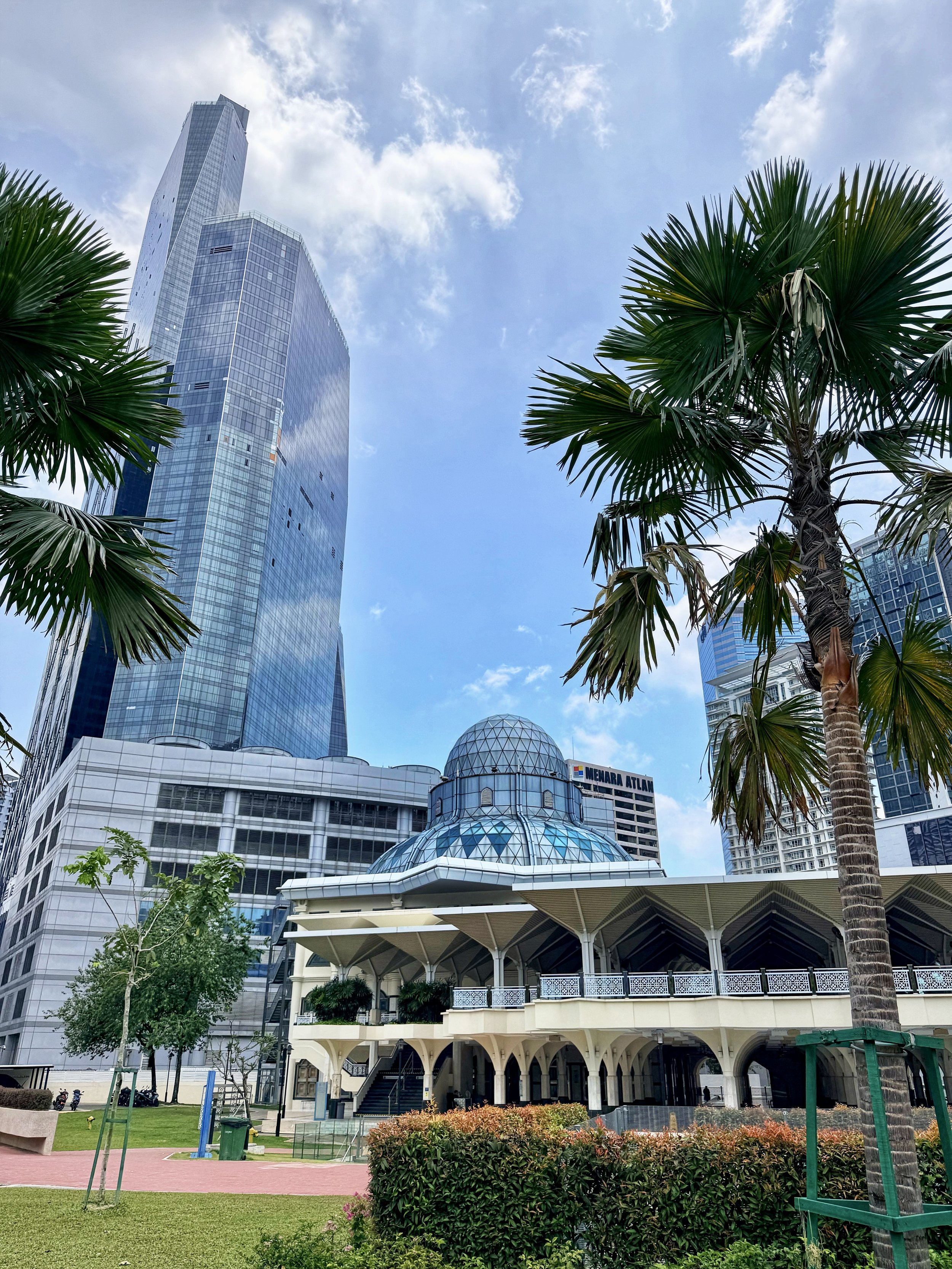
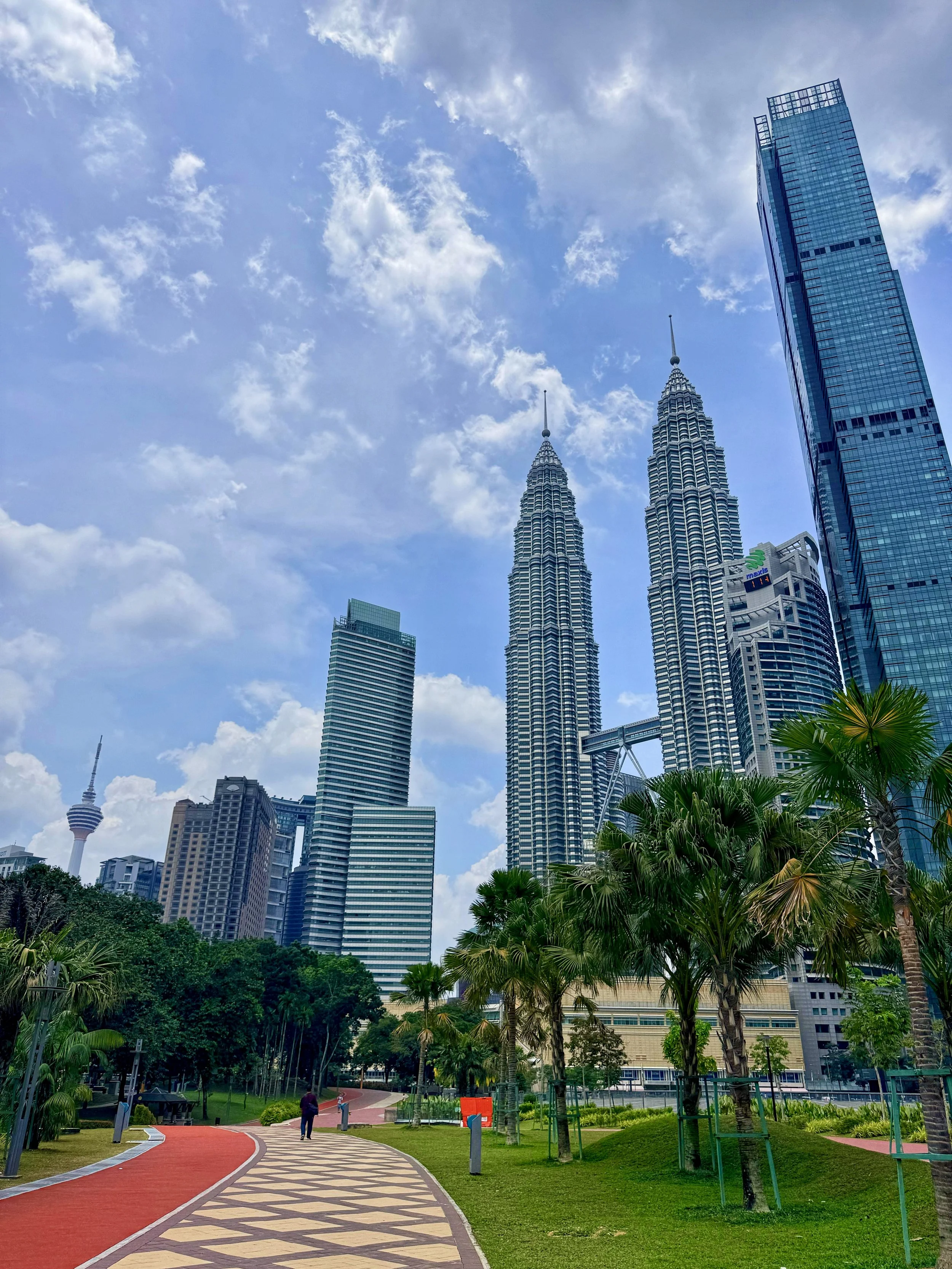
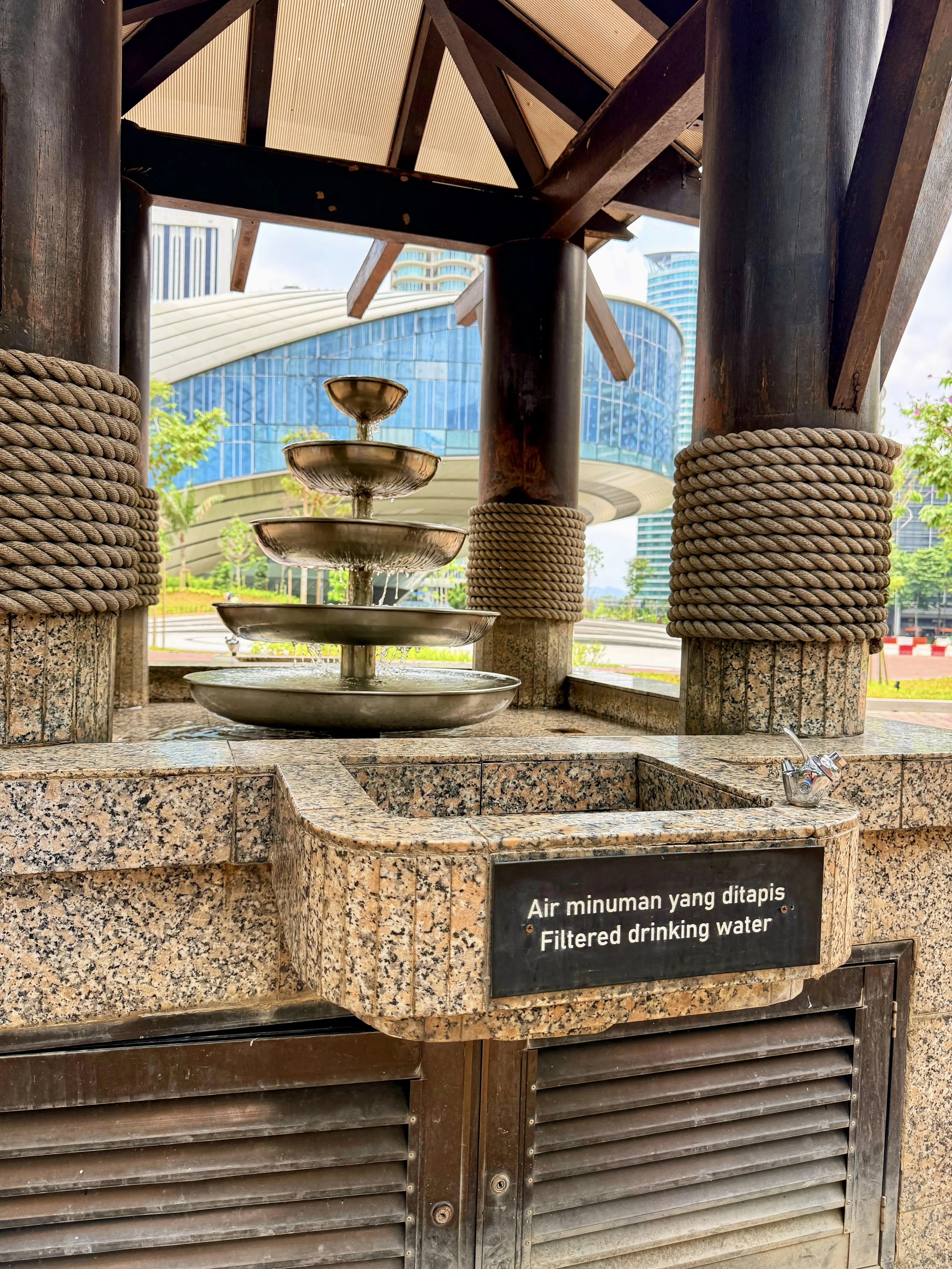
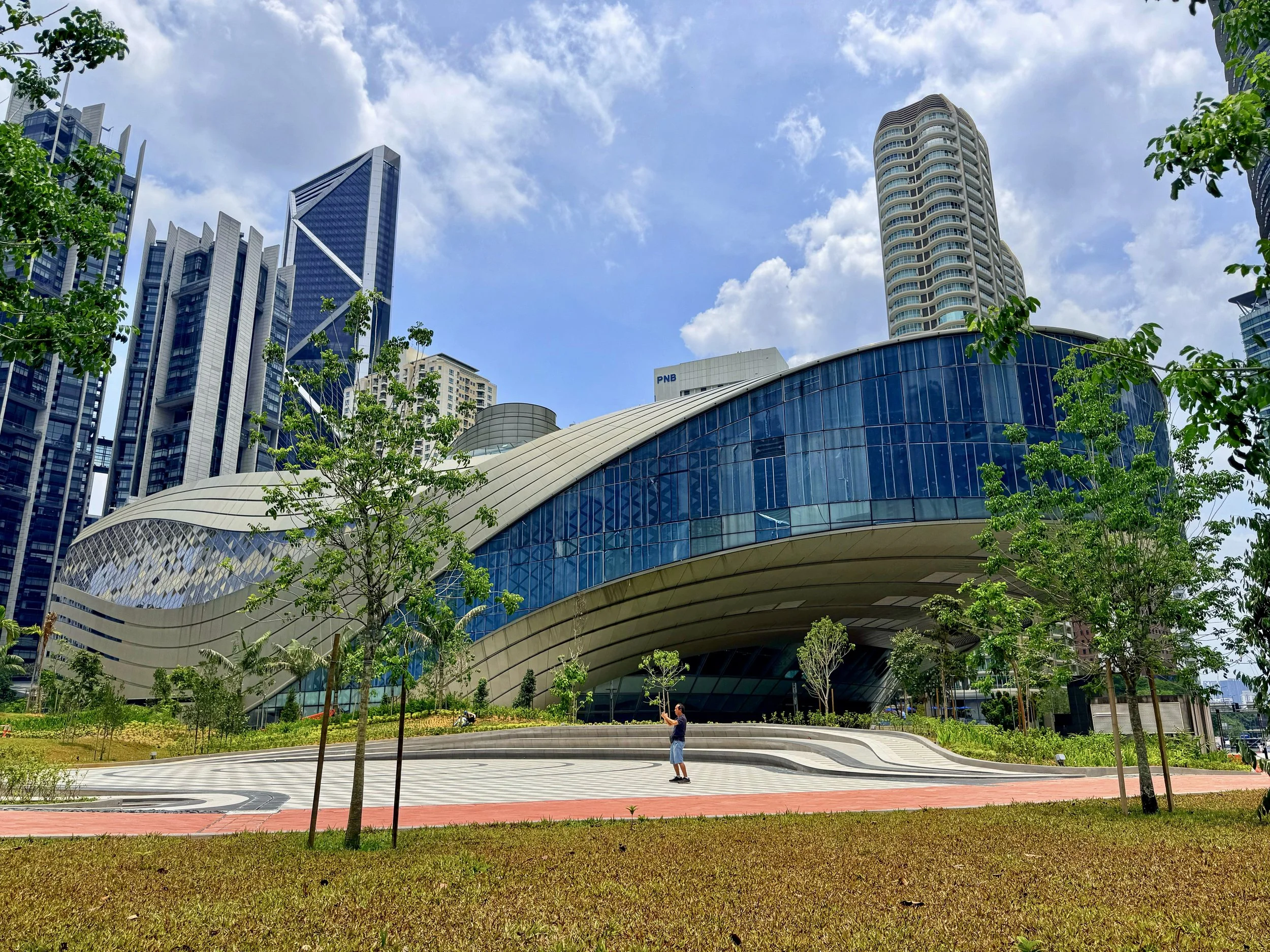
Green space in a city is always a nice reprieve from the hustle and bustle. Conveniently, KLCC Park is within the Golden Triangle of KL and is connected by a series of elevated and air conditioned(!) walkways close to our hotel. KLCC Park itself was not very big for an urban park in a big city, but the Las Vegas Bellagio-esque fountain was a nice touch. There are lots of paths and benches under heavy shade where many people were relaxing to get away from the afternoon heat. I listened to the lull of the call to prayer from the Asy-Syakirin Masjid mosque by the park. The park also offers a great view of the Petronas Twin Towers and the KL Tower together.
Chinatown
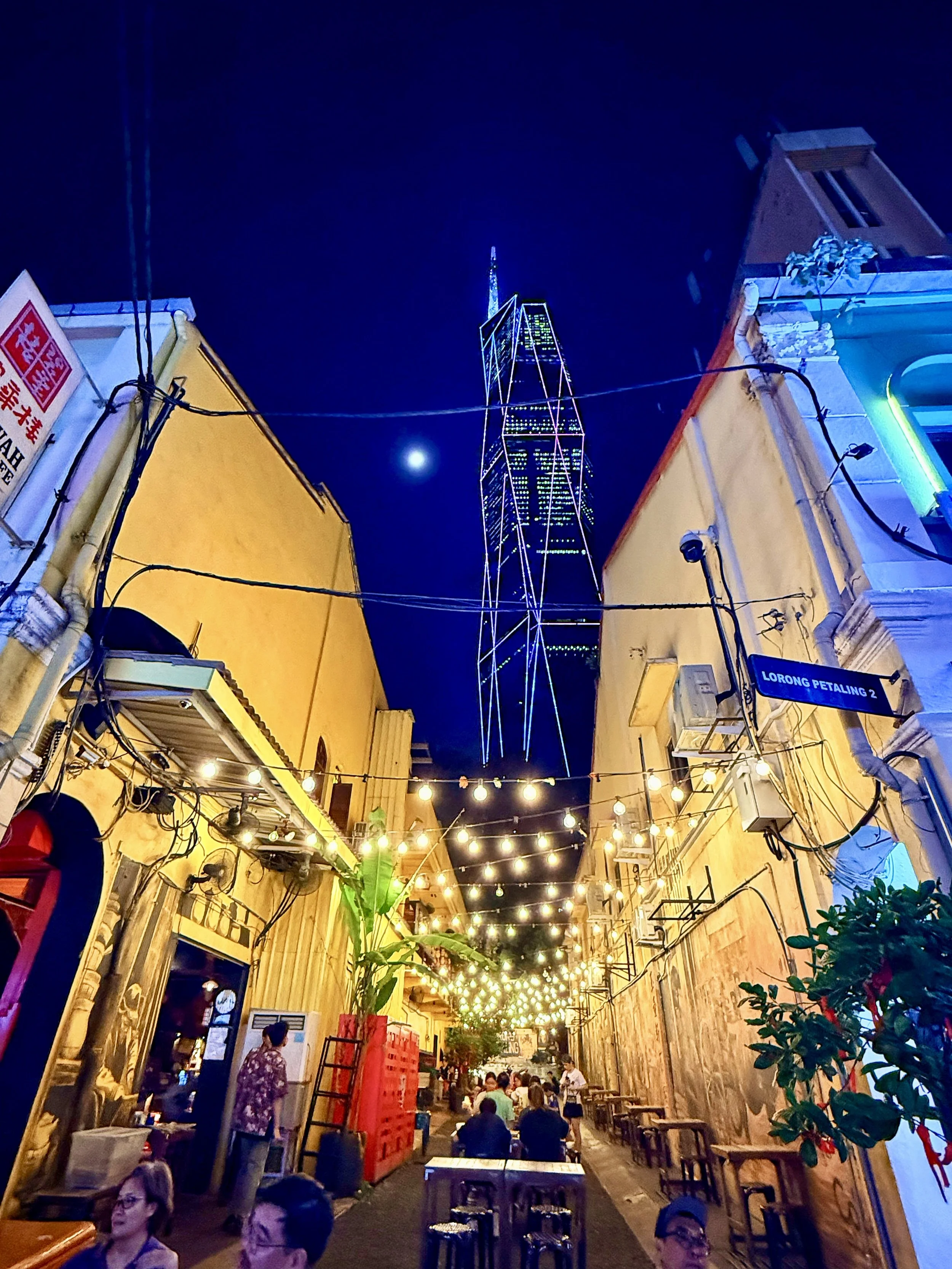
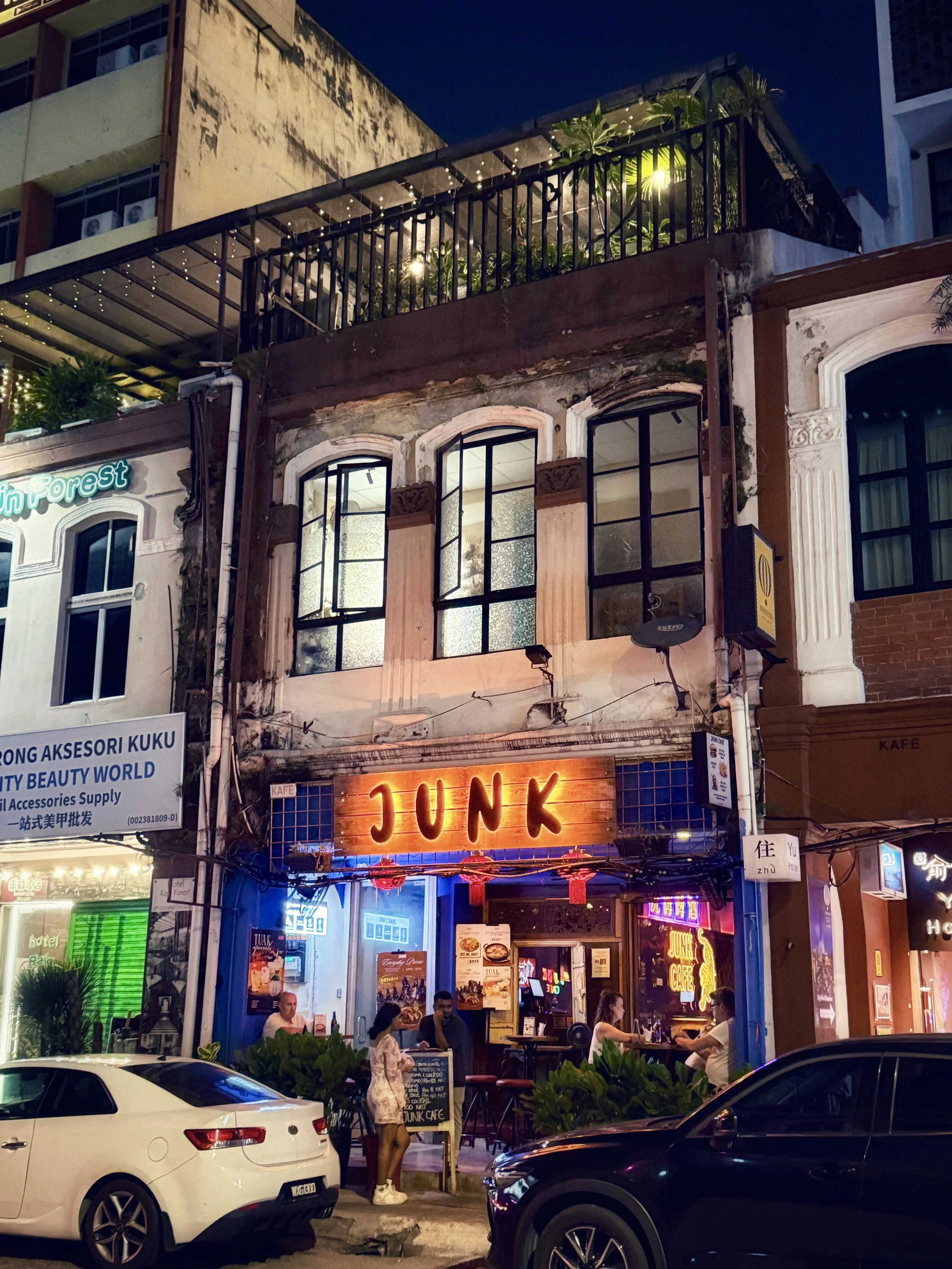
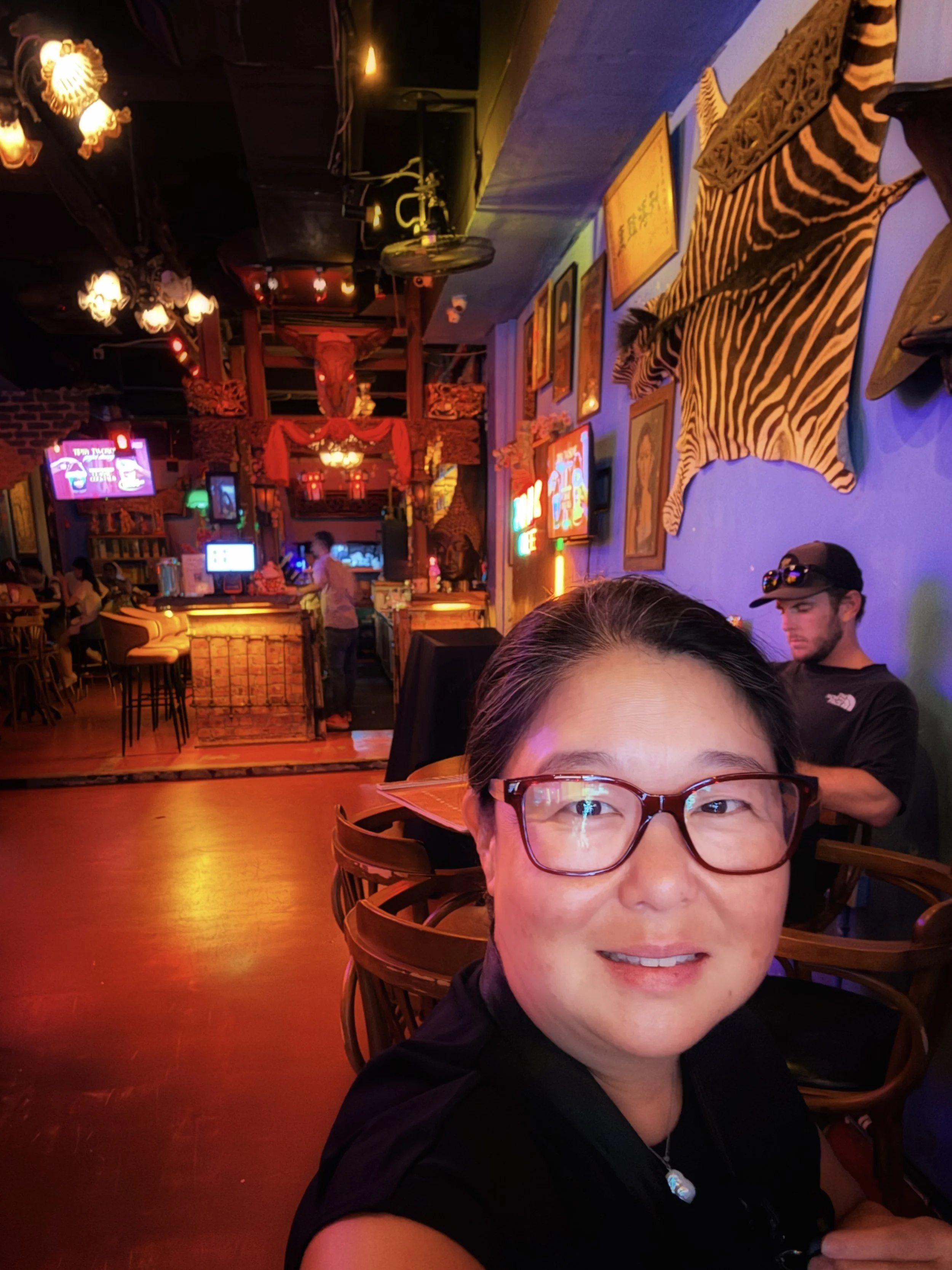
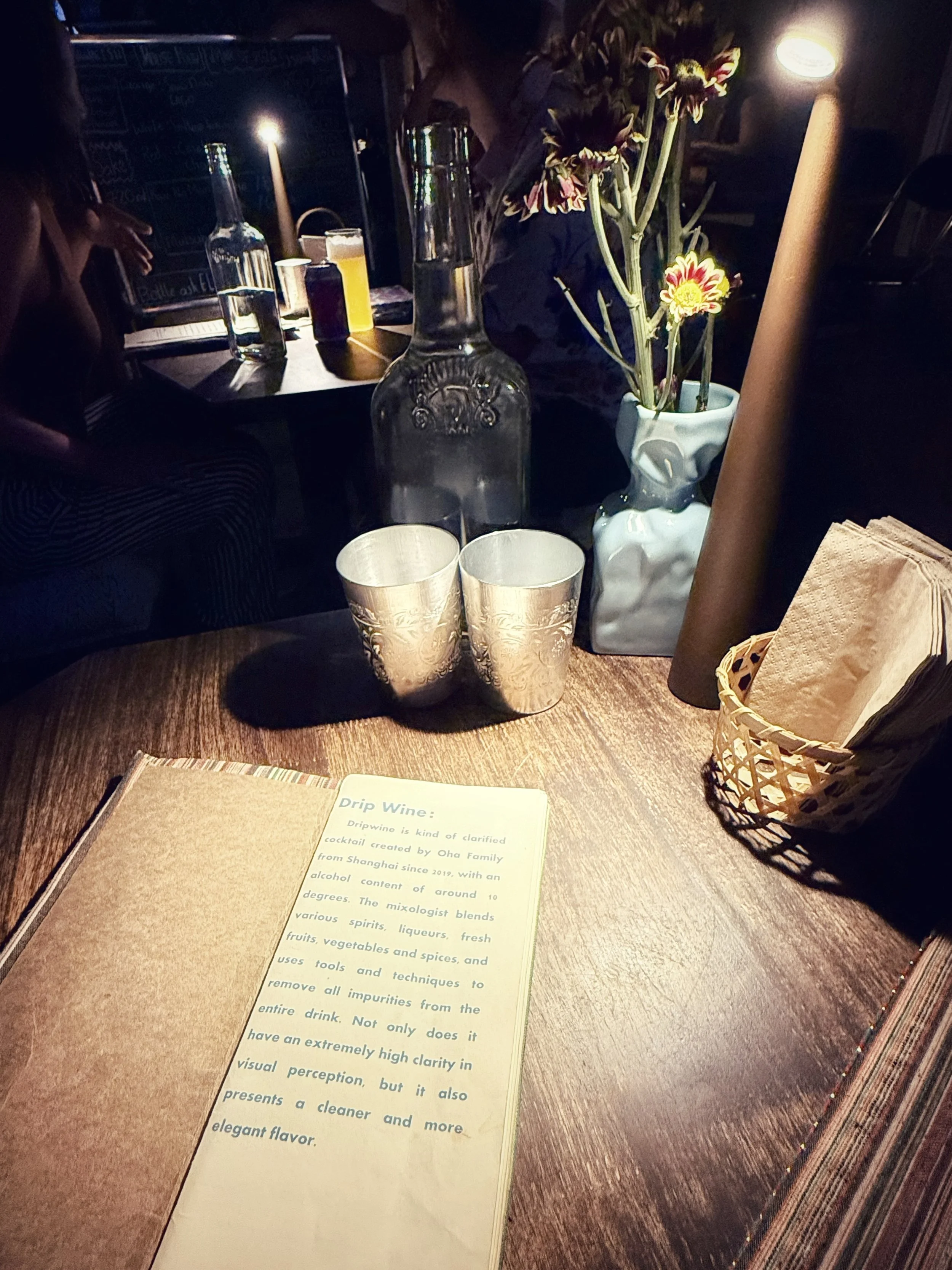
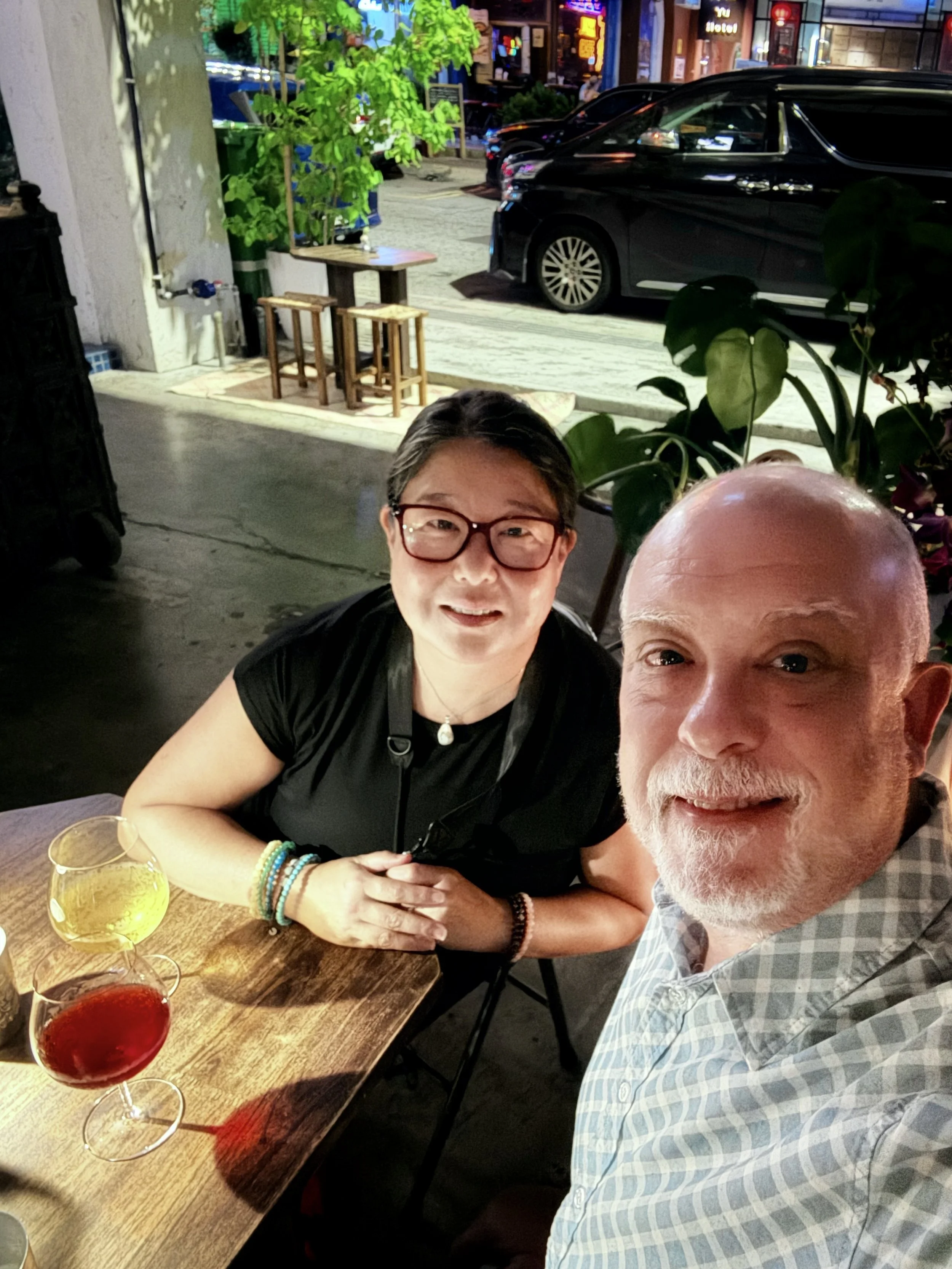
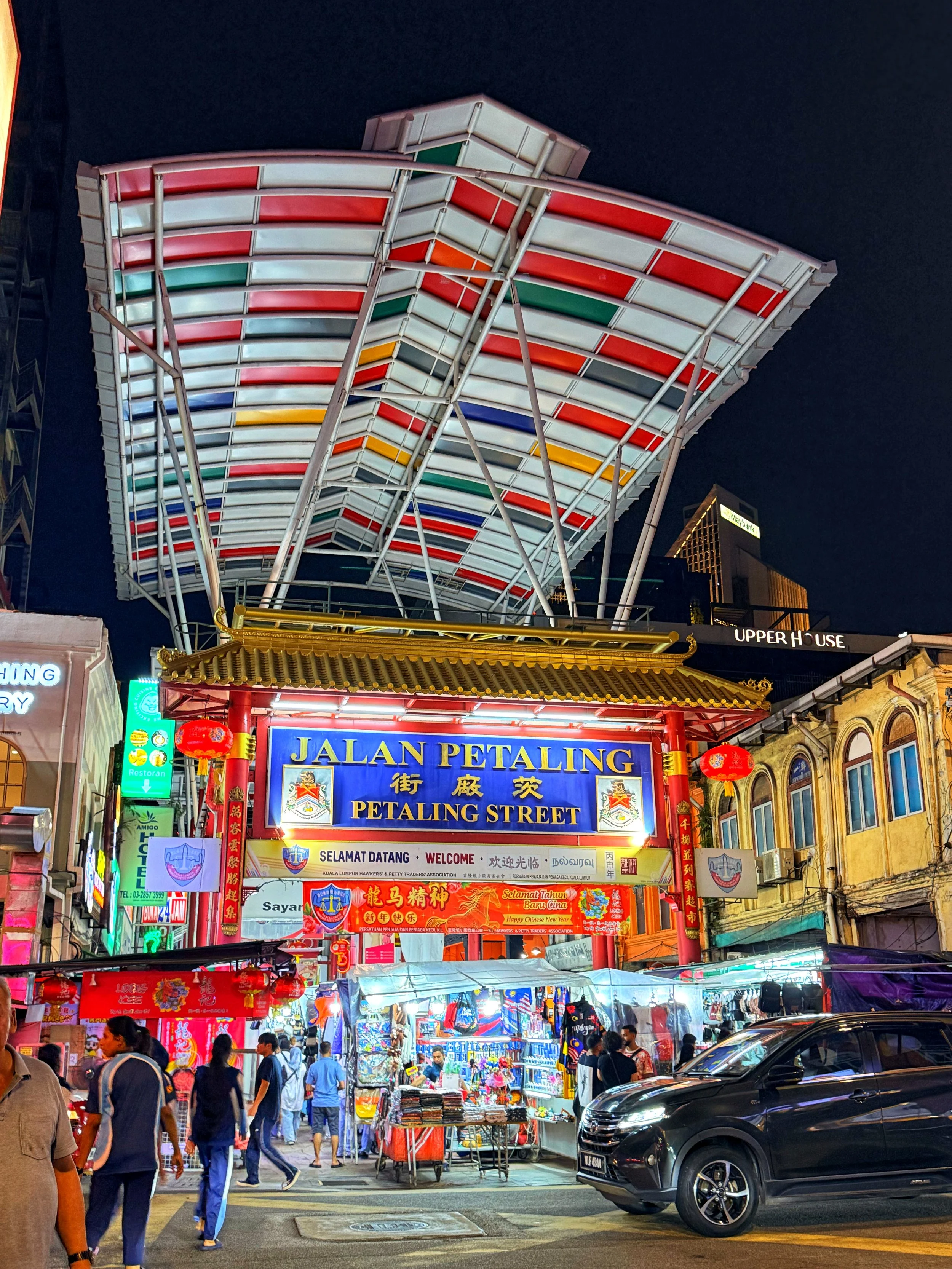
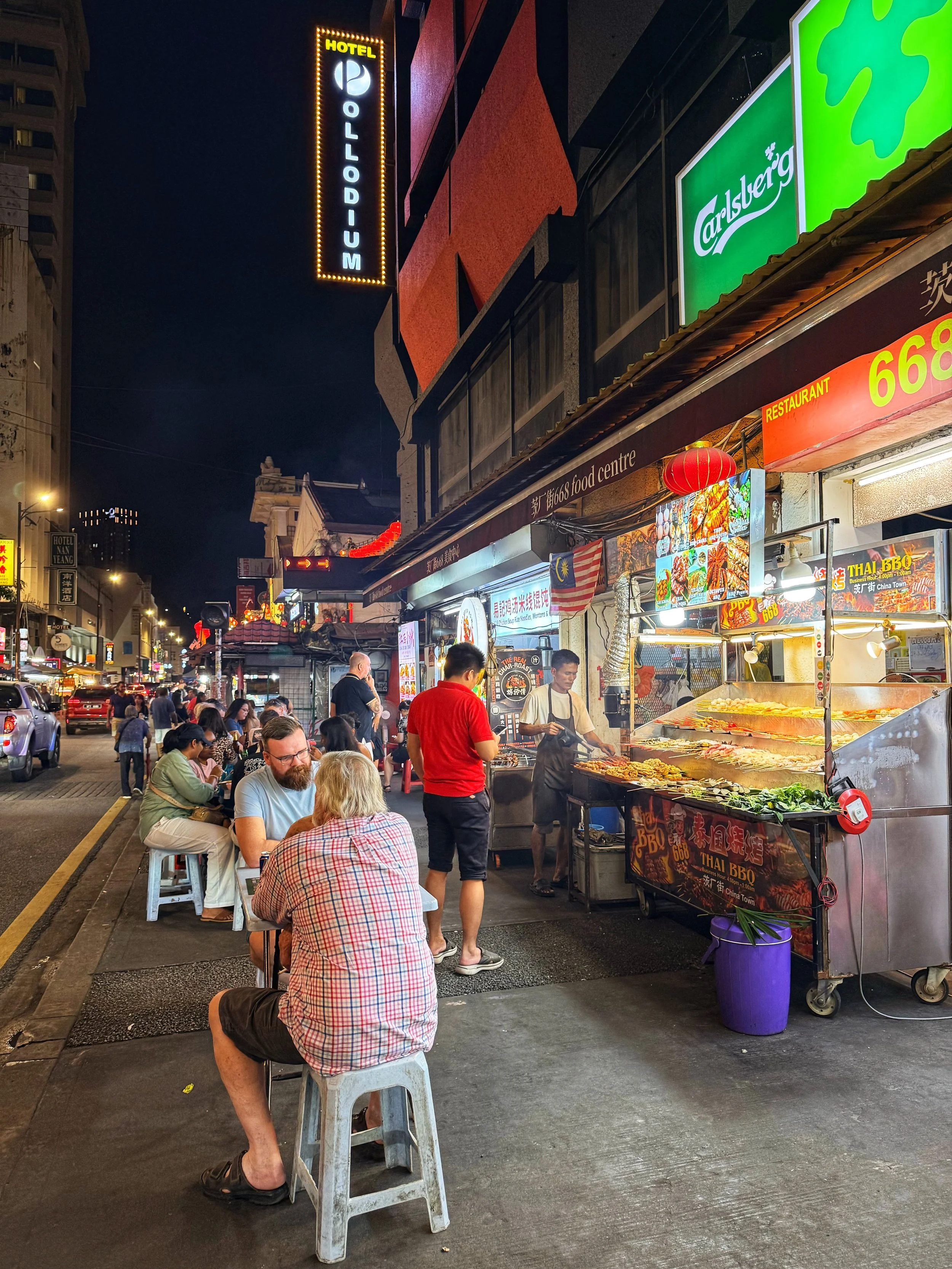
KL Chinatown finally made us feel like we’re actually in Southeast Asia with the older buildings, outdoor market, the colorful neon signs, and lots of food. The most interesting find along South Petaling Street was Wawafish. In Google, this place is classified as a “wine bar”, and they definitely do serve regular wines—good wine, by the way—but the more prominent claim to fame is their drip wine, which is not wine in the traditional sense at all, but cocktails made from a combo of liquor, spirits, fruits, vegetables, spices, etc. which are clarified slowly through some process. The finished product was soooo smooth and drinkable and unique. The menu features many varieties and almost too many to choose from. We ended up with Flower Mantis which is whisky based with bitter melon; and the wine-based Sandalwood. Very interesting and hard to describe how delicious they were. You better just come to KL and try them.
Islamic Arts Museum
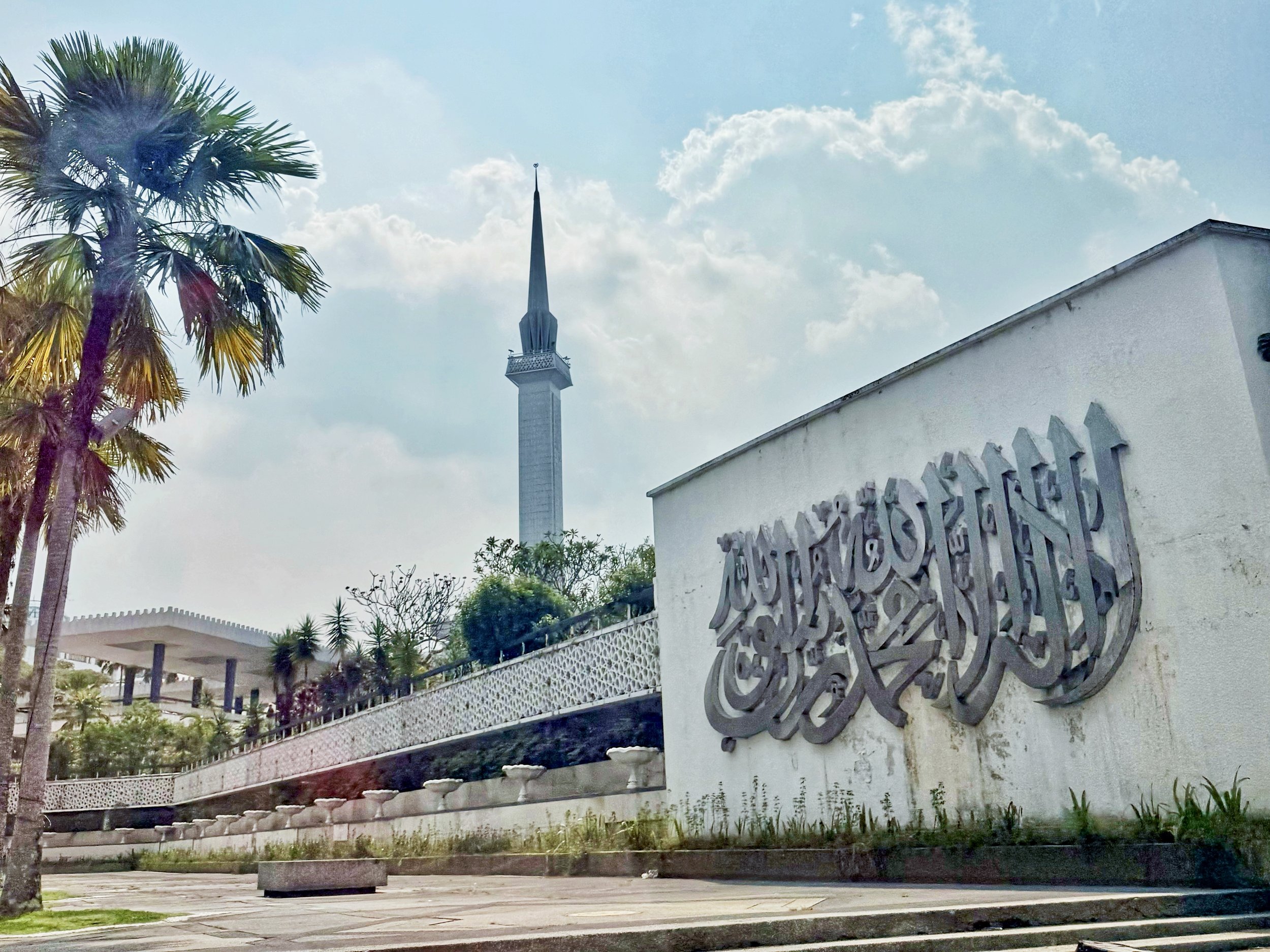
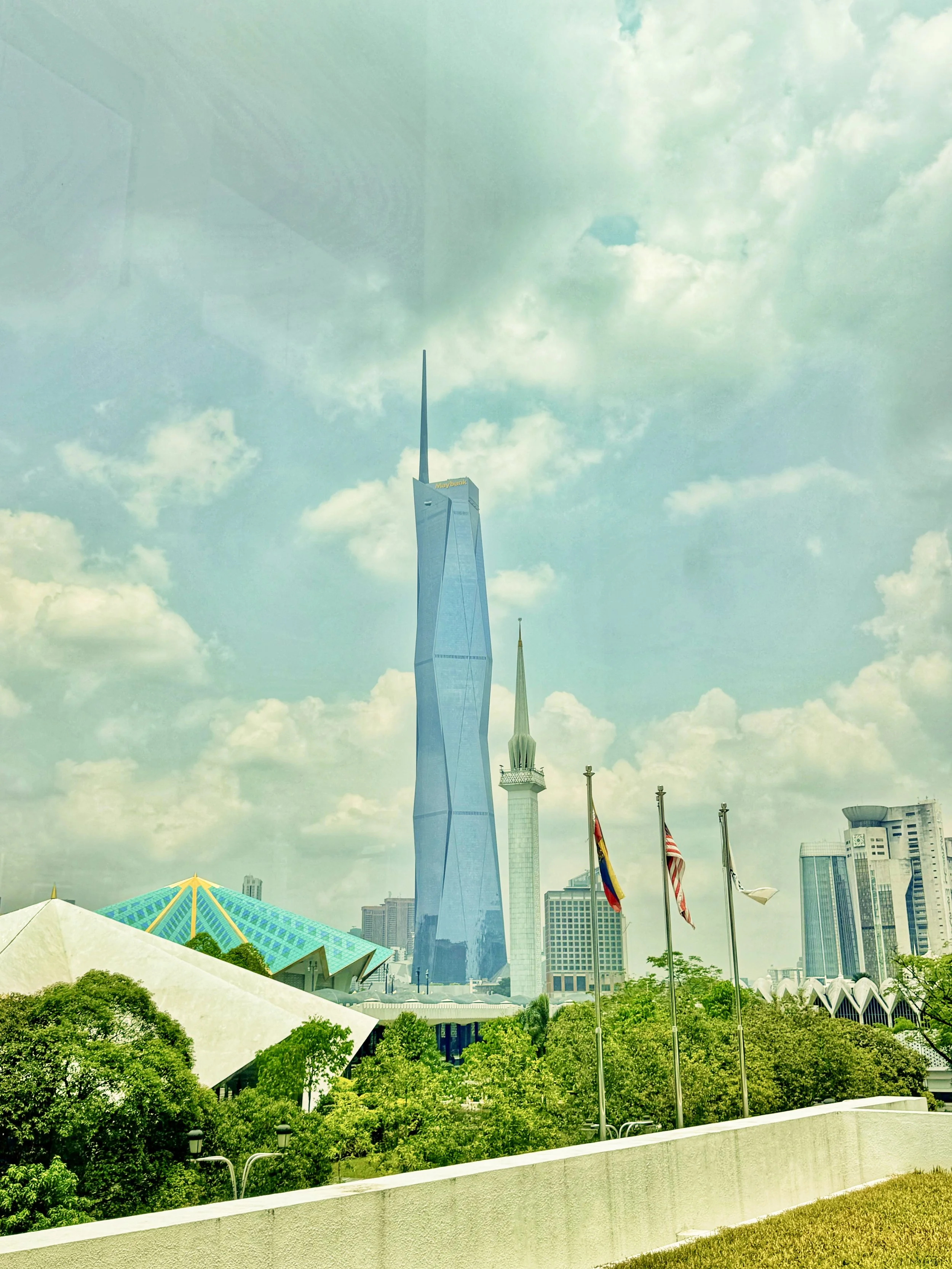
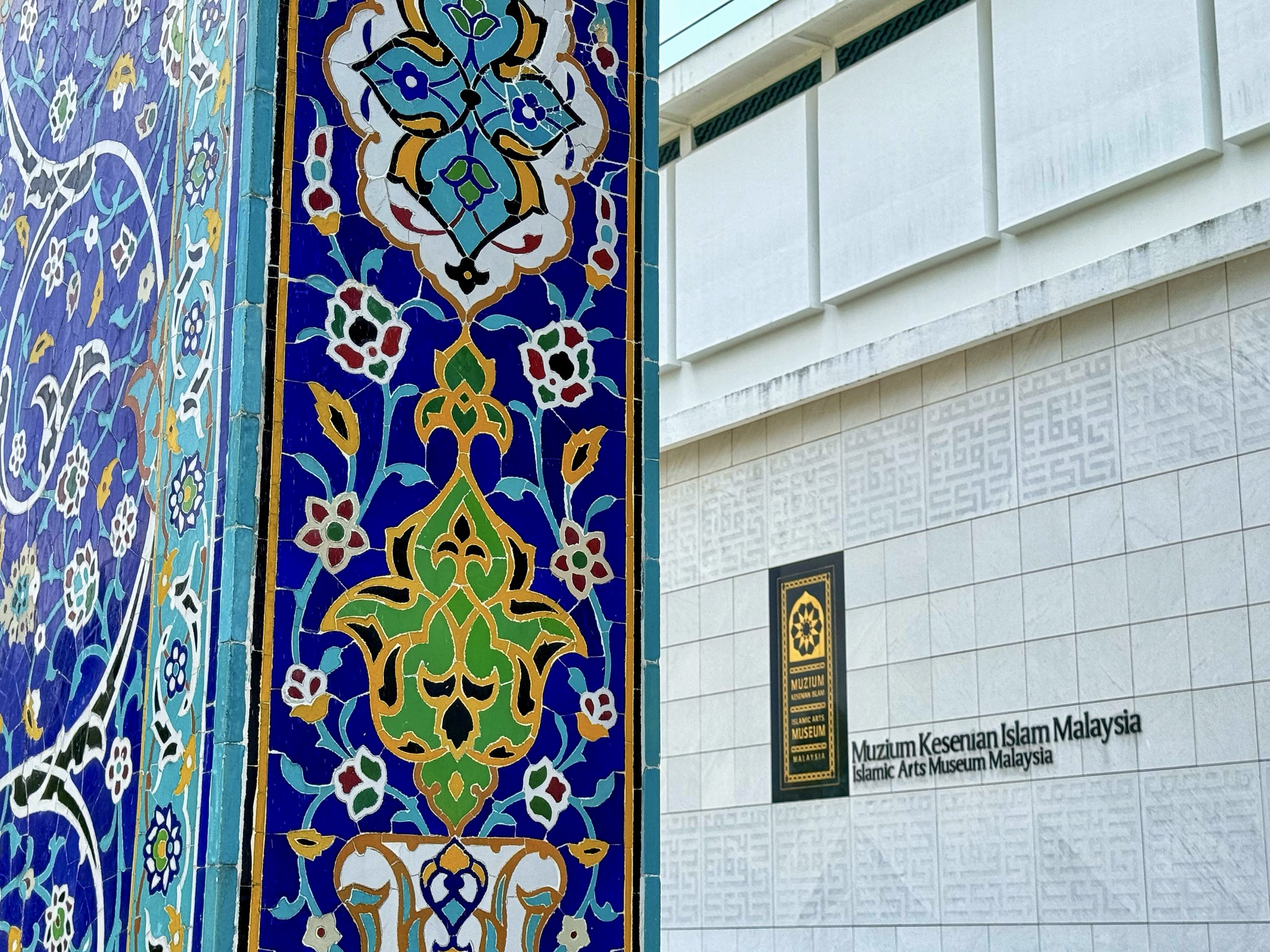
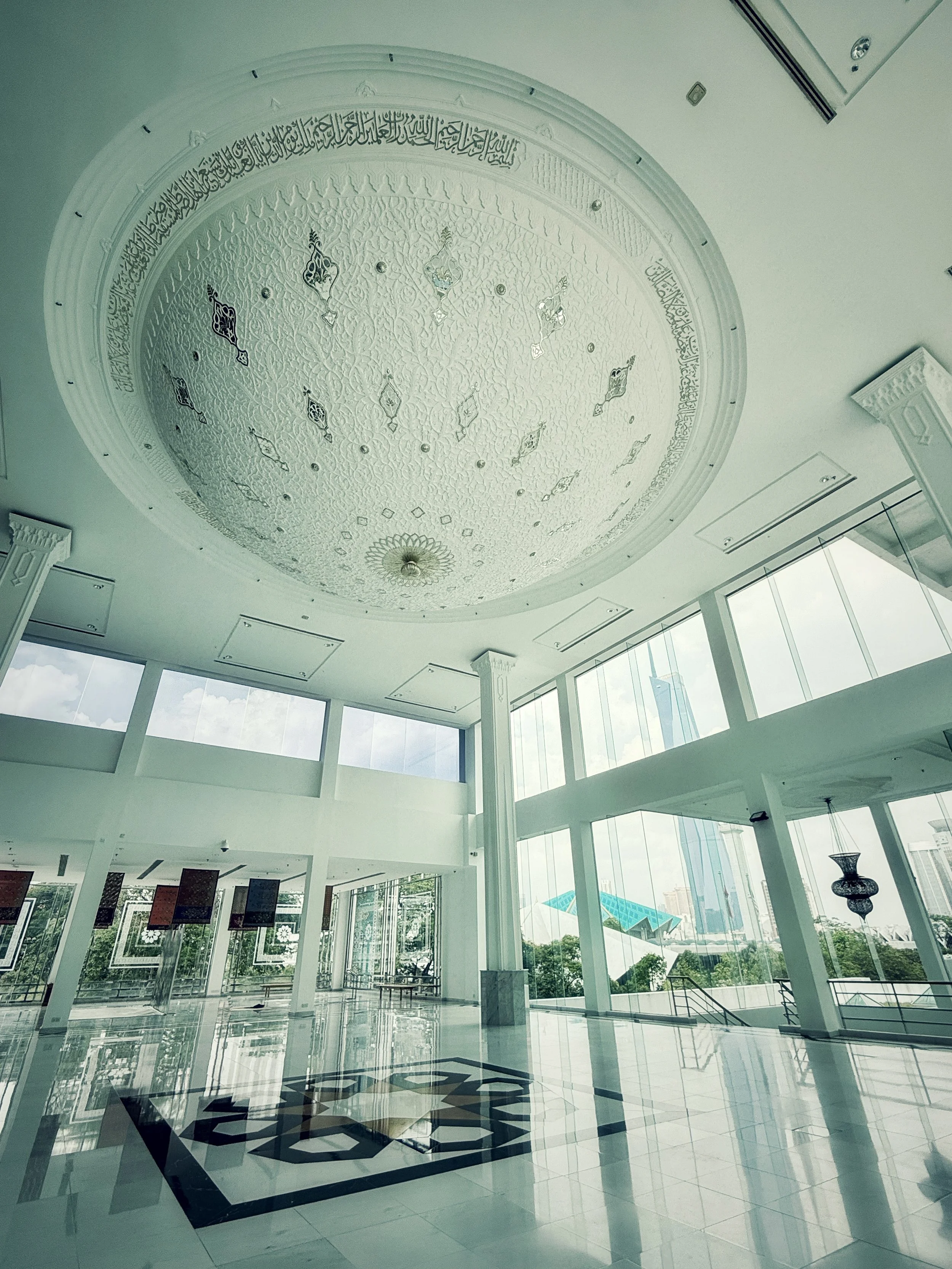
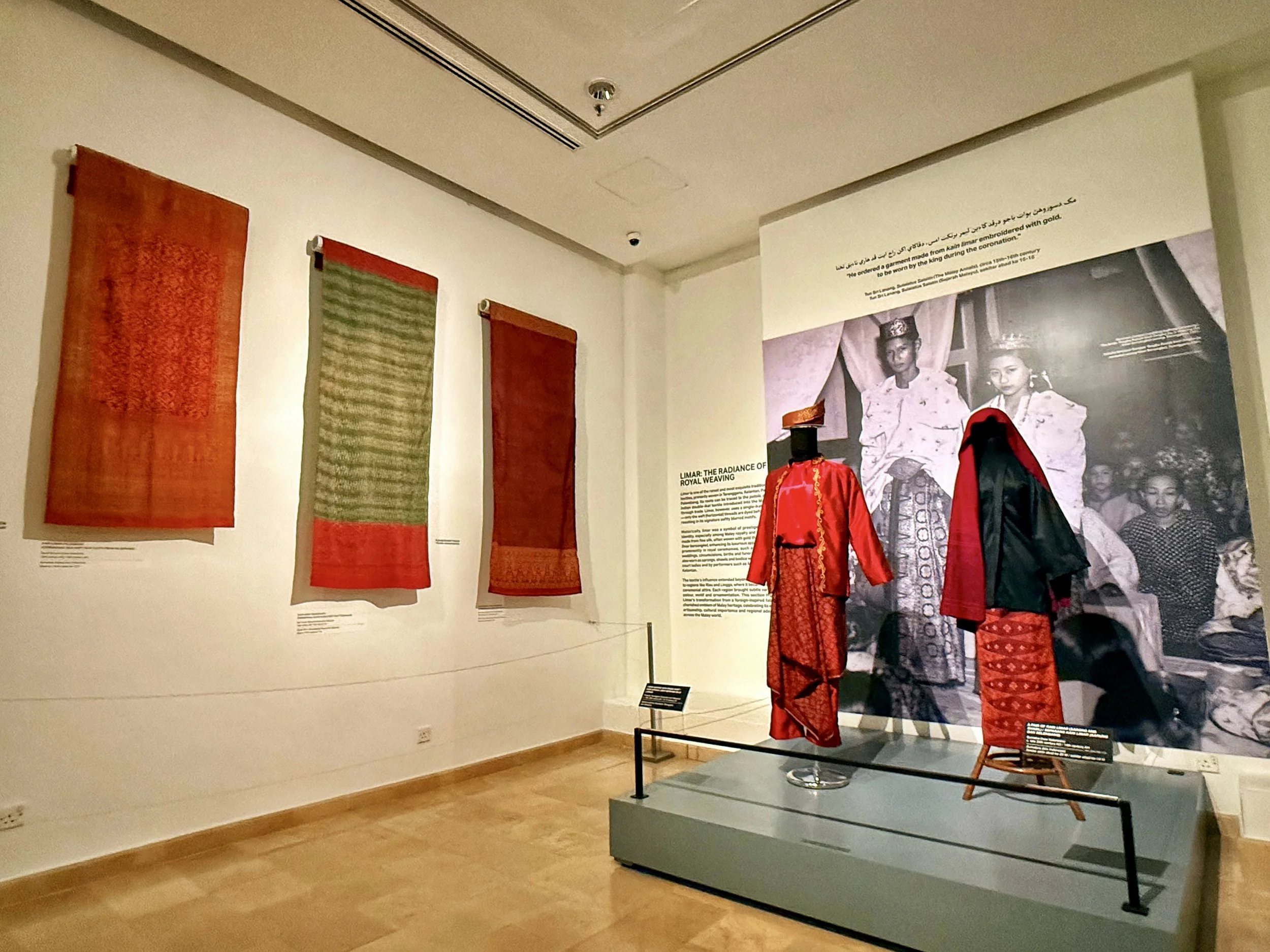
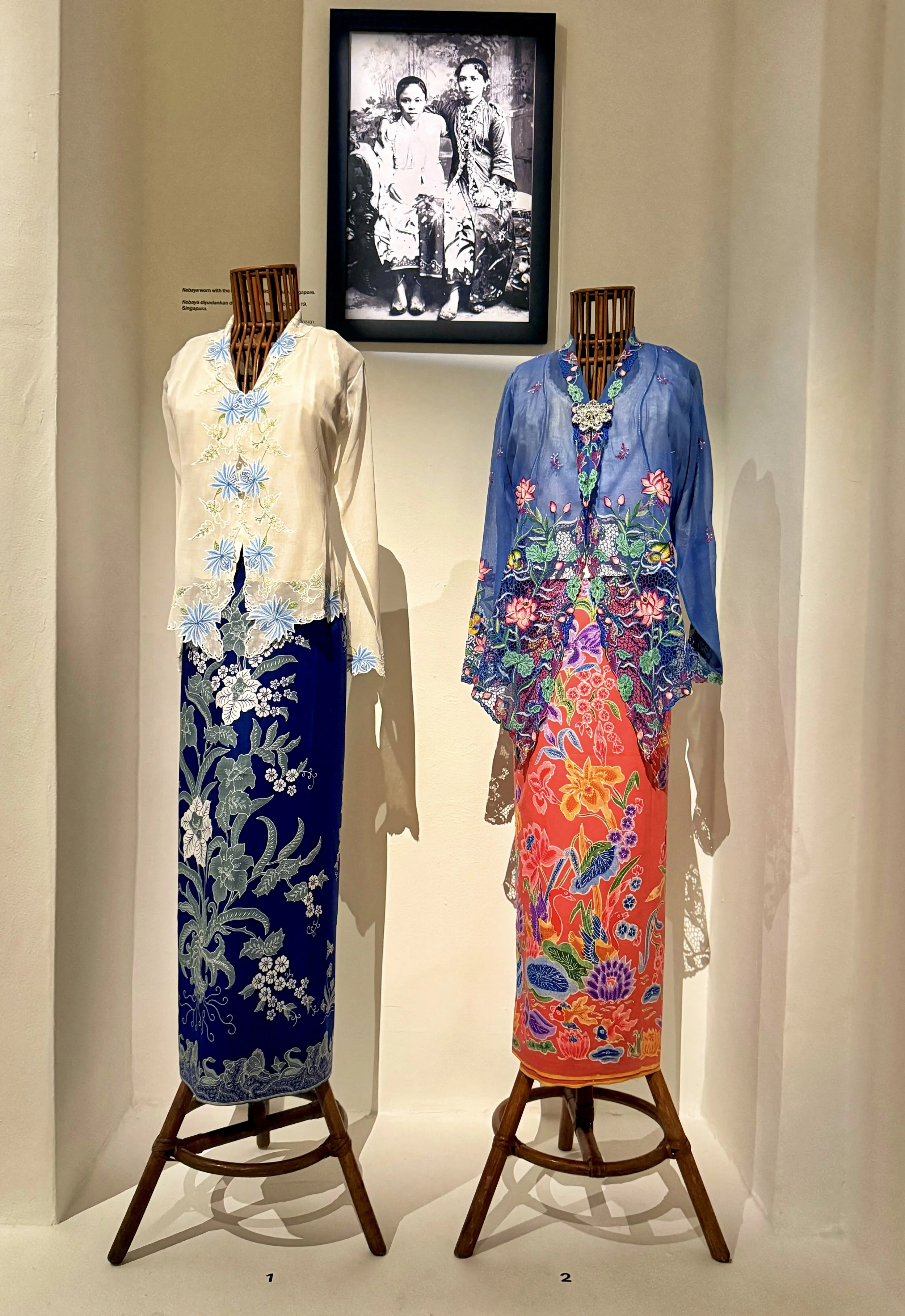
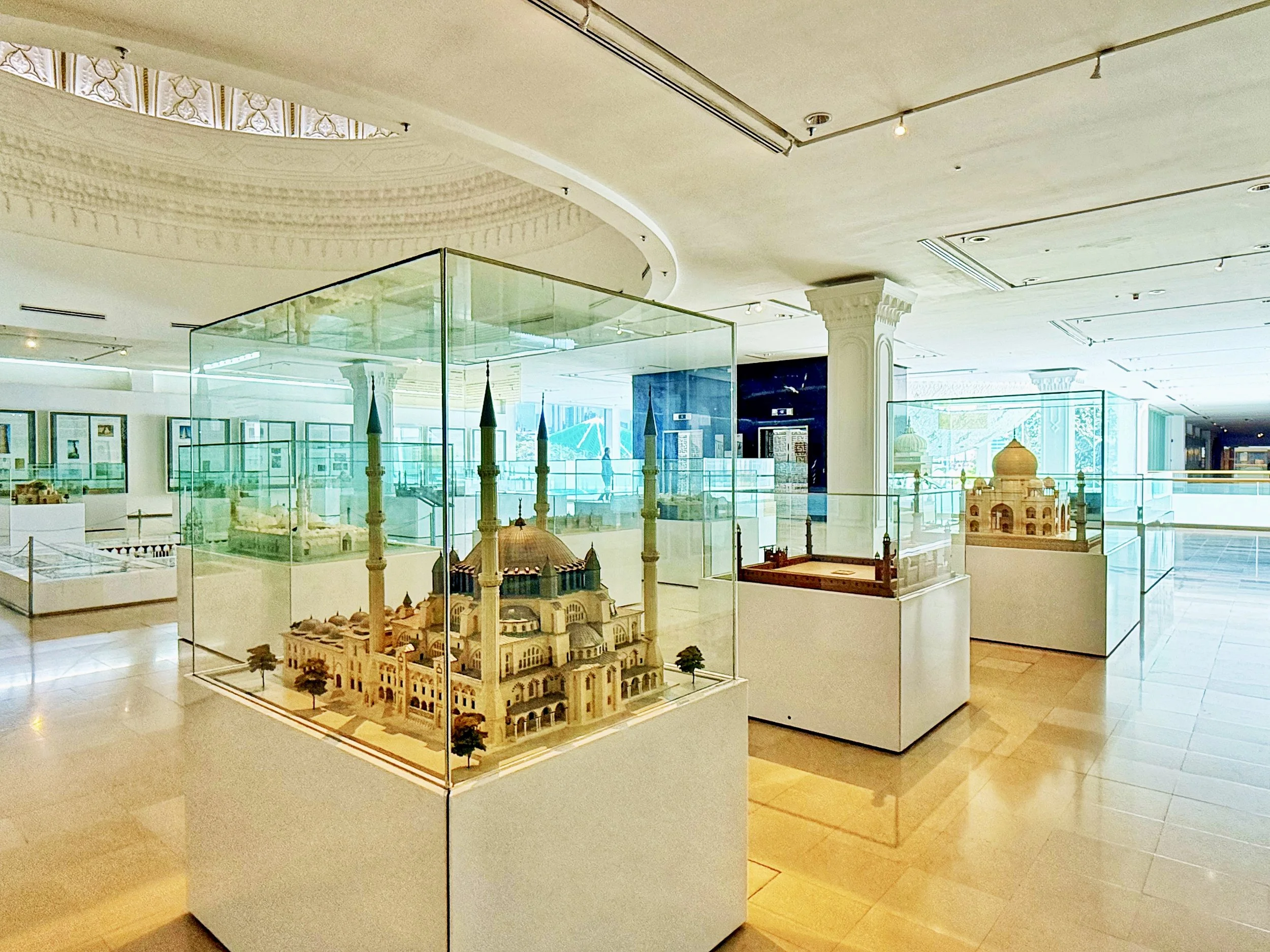
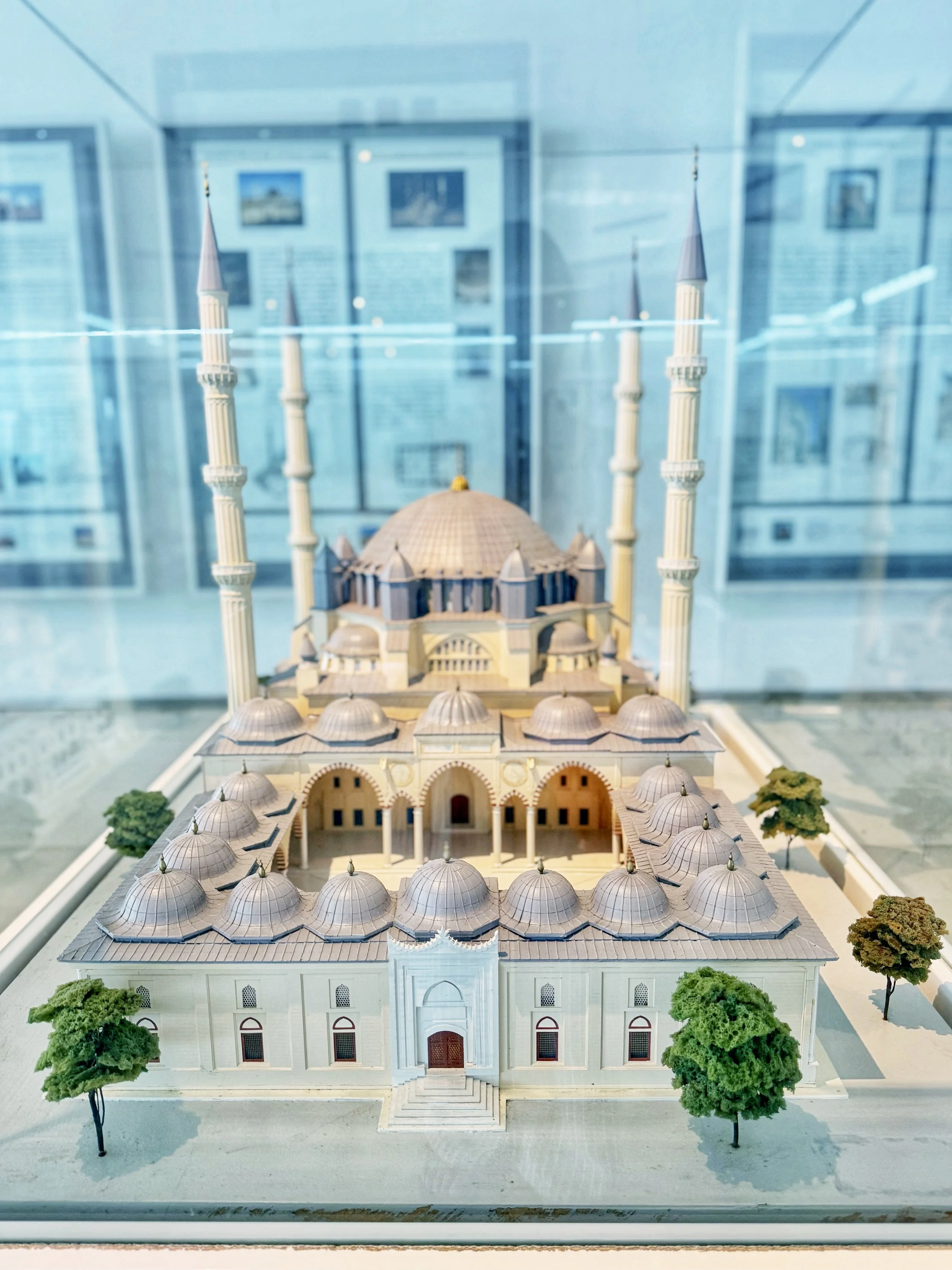
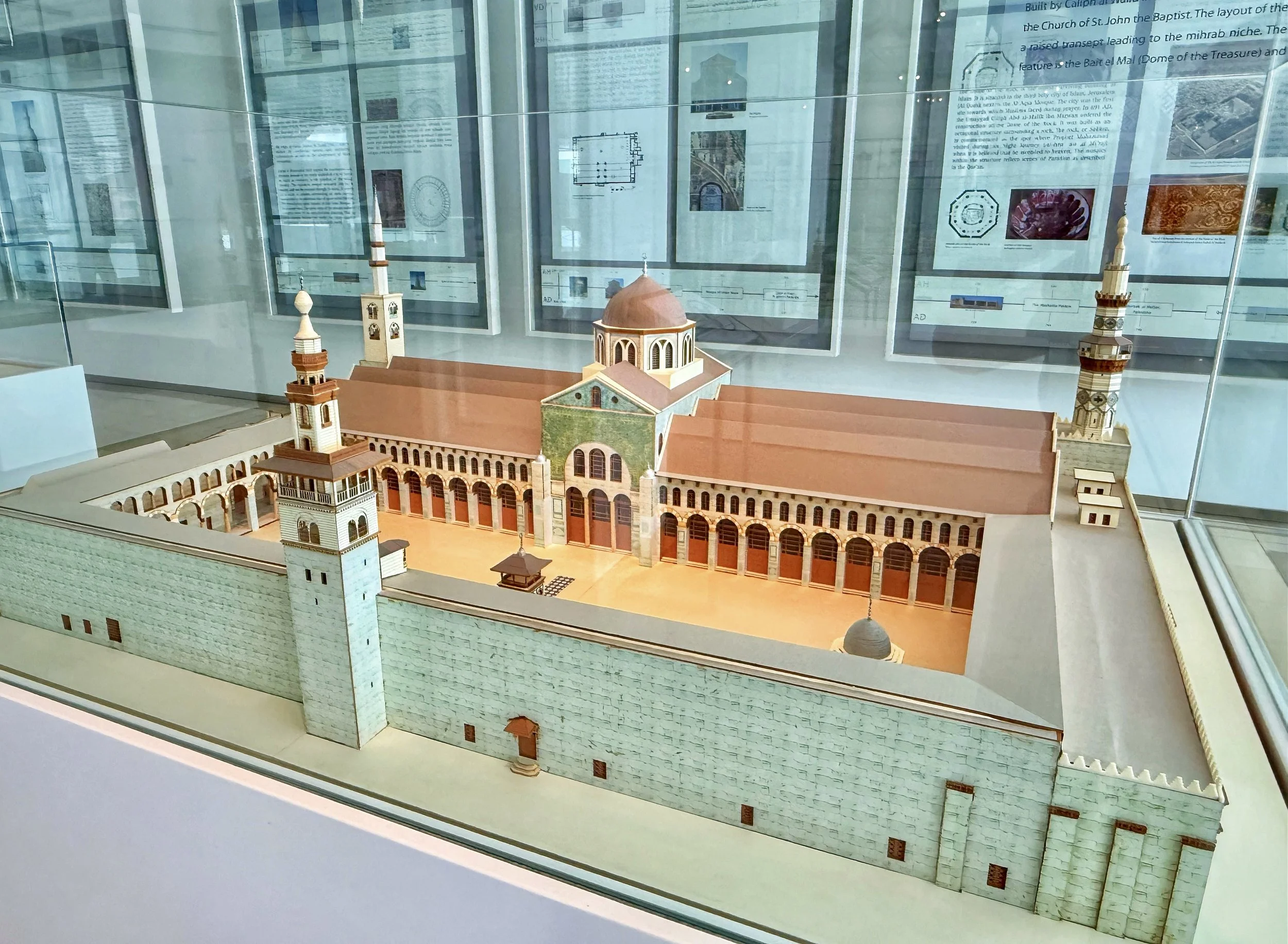
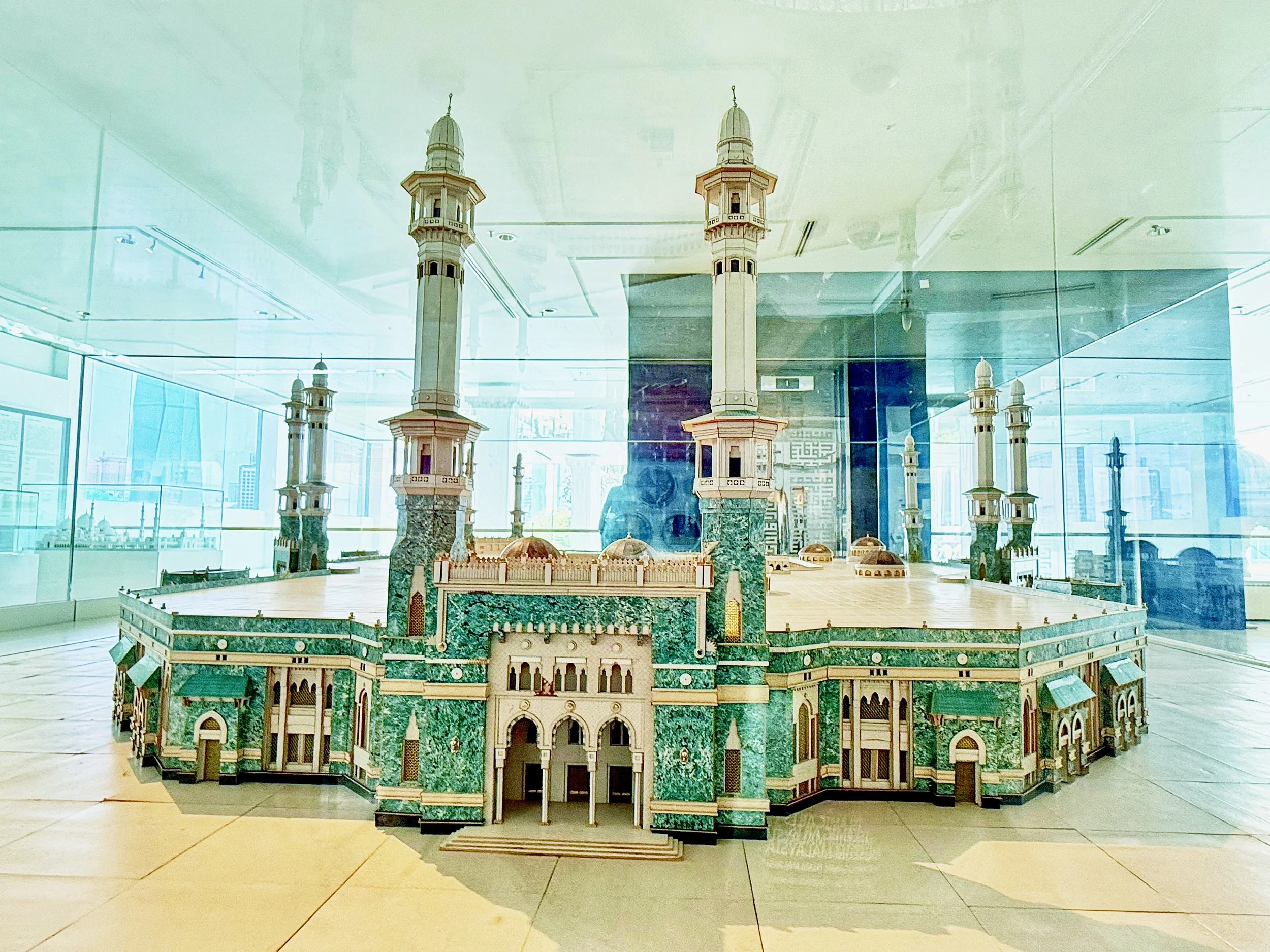
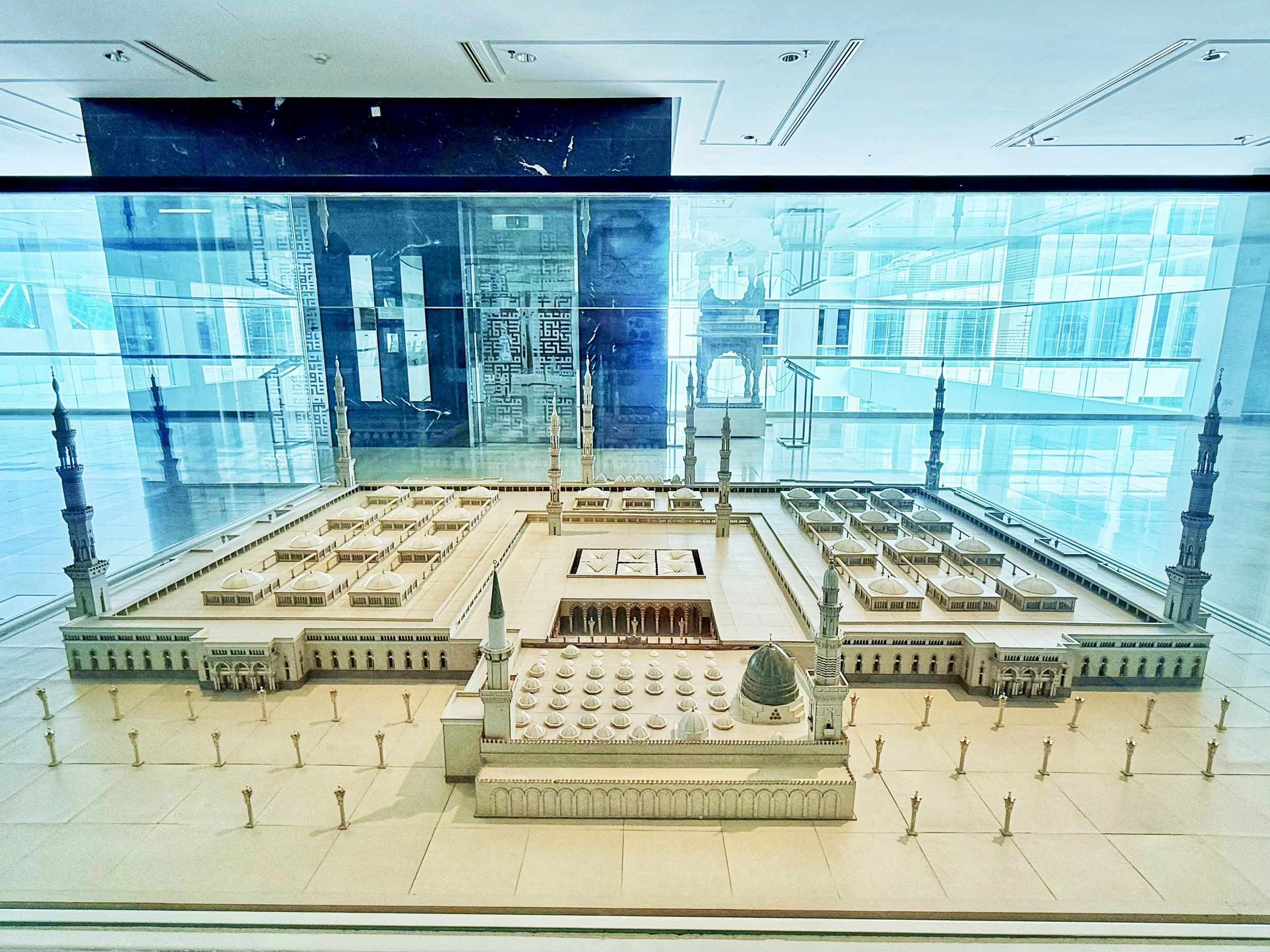
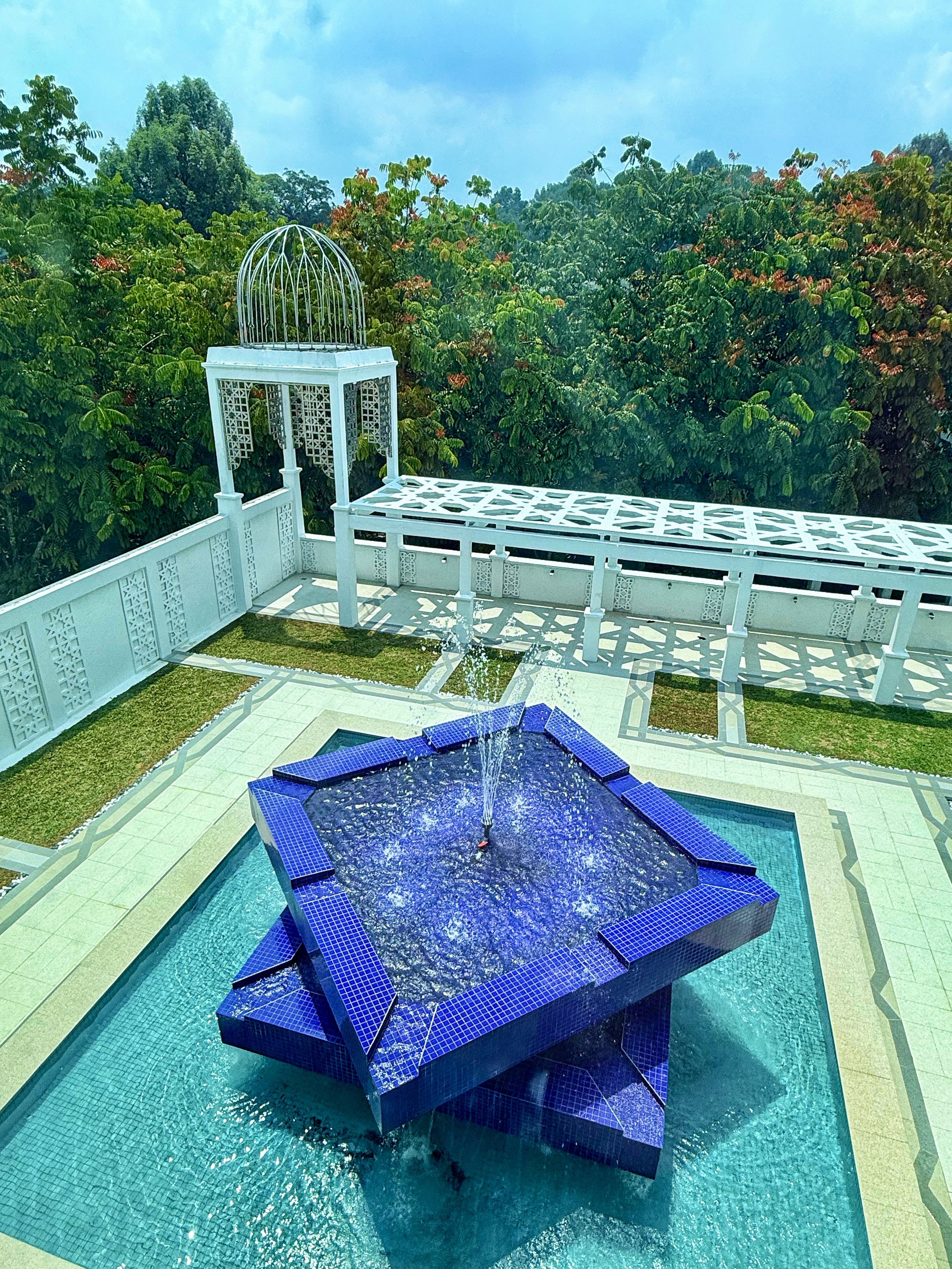
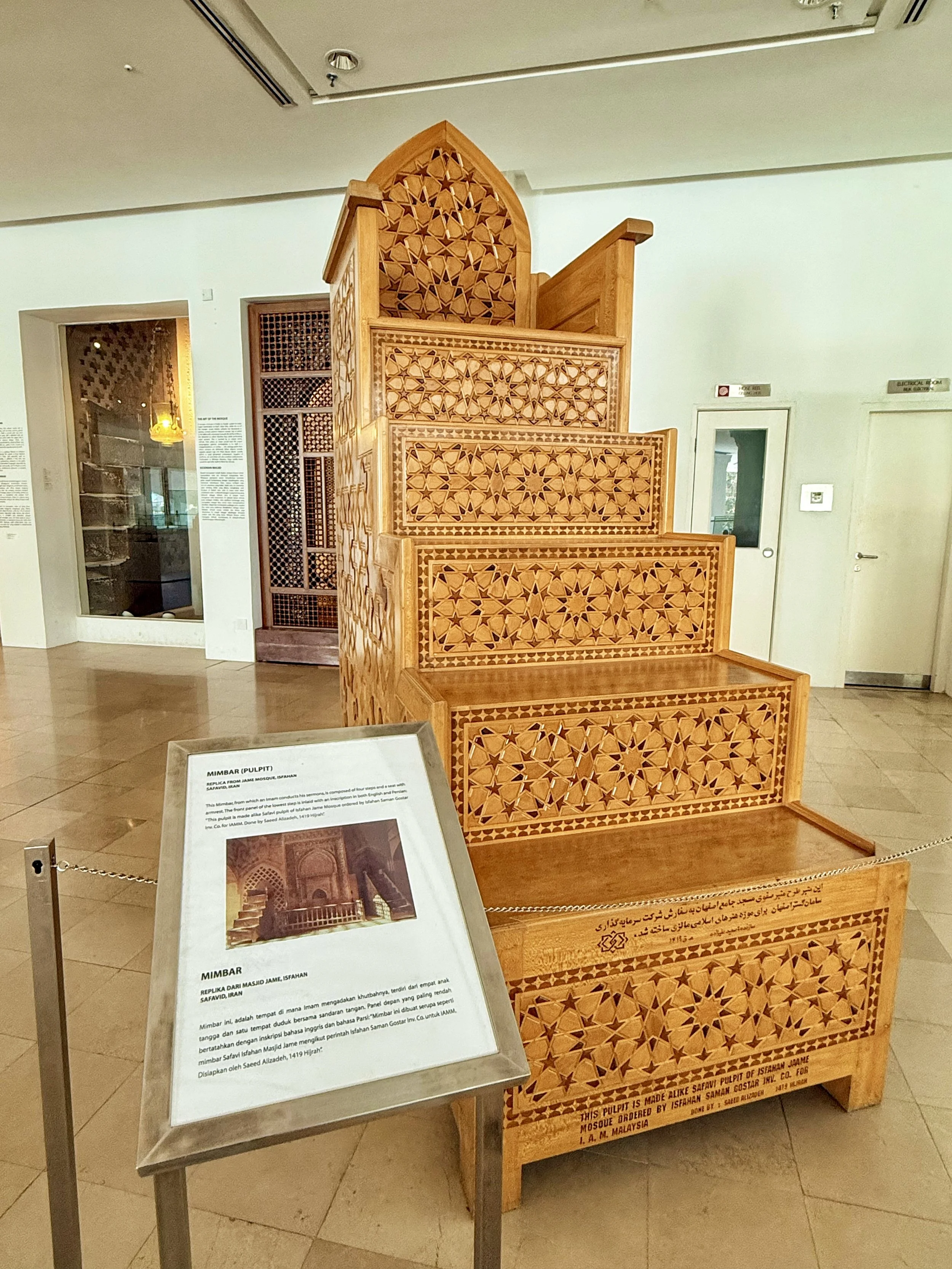
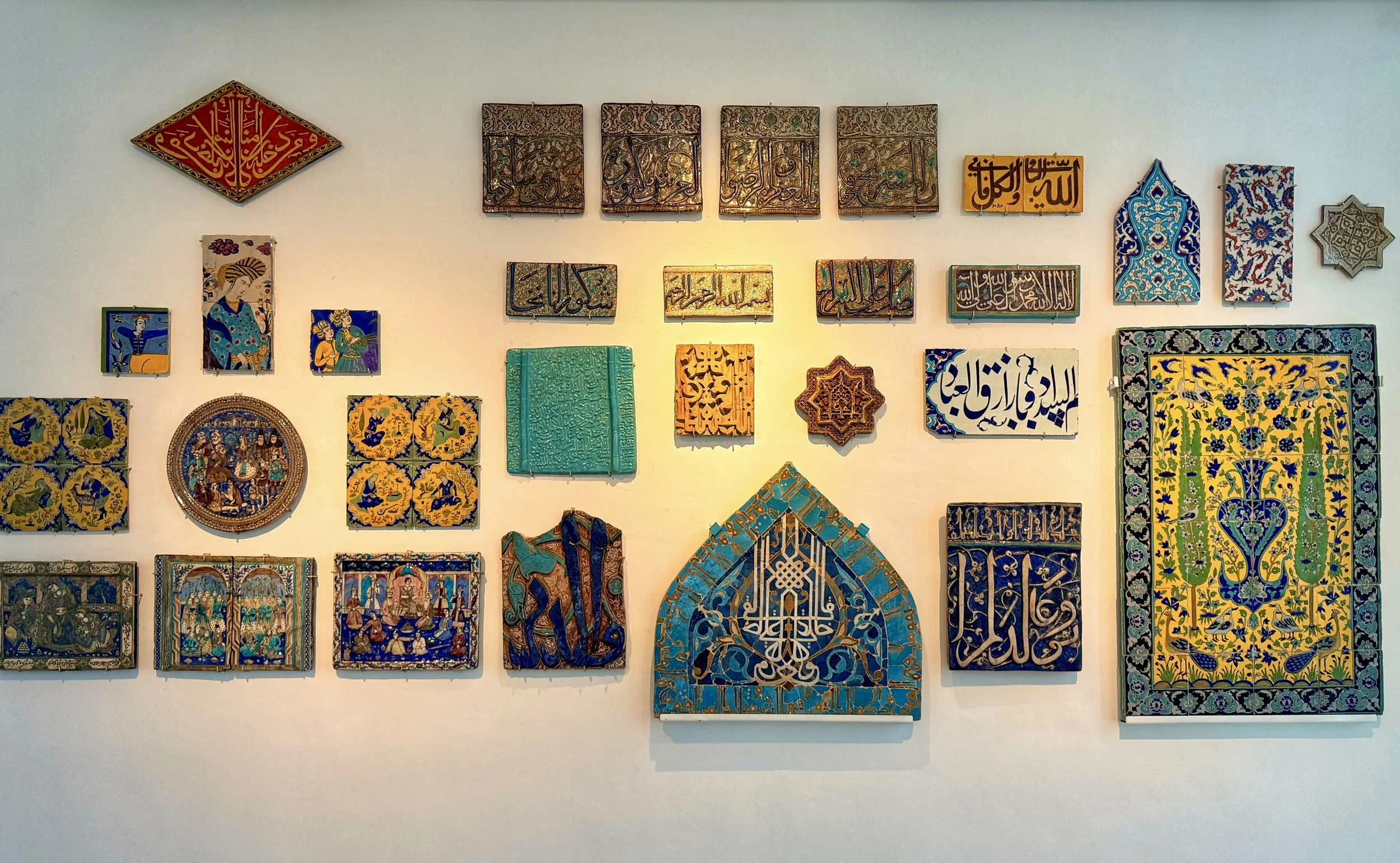
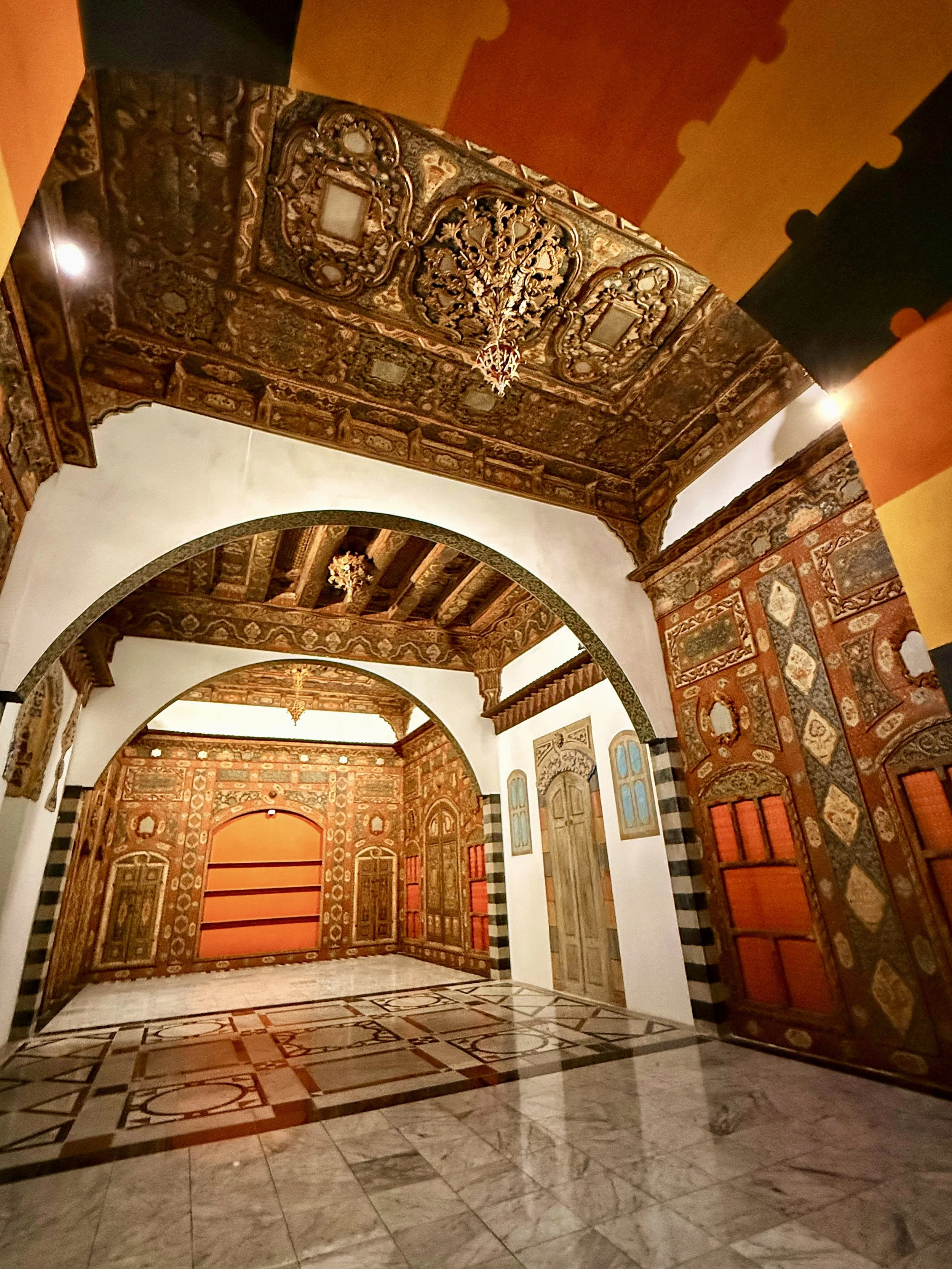
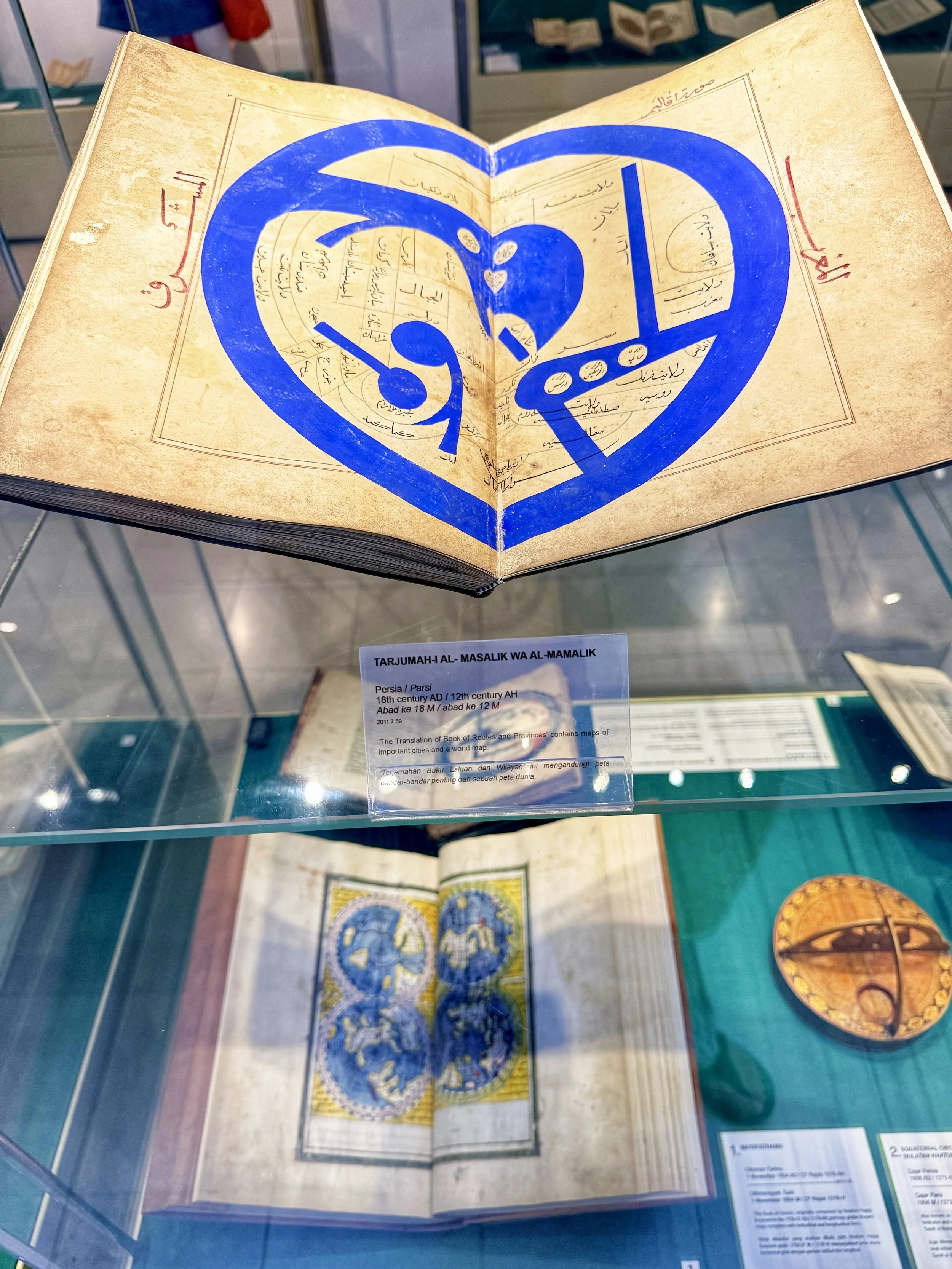
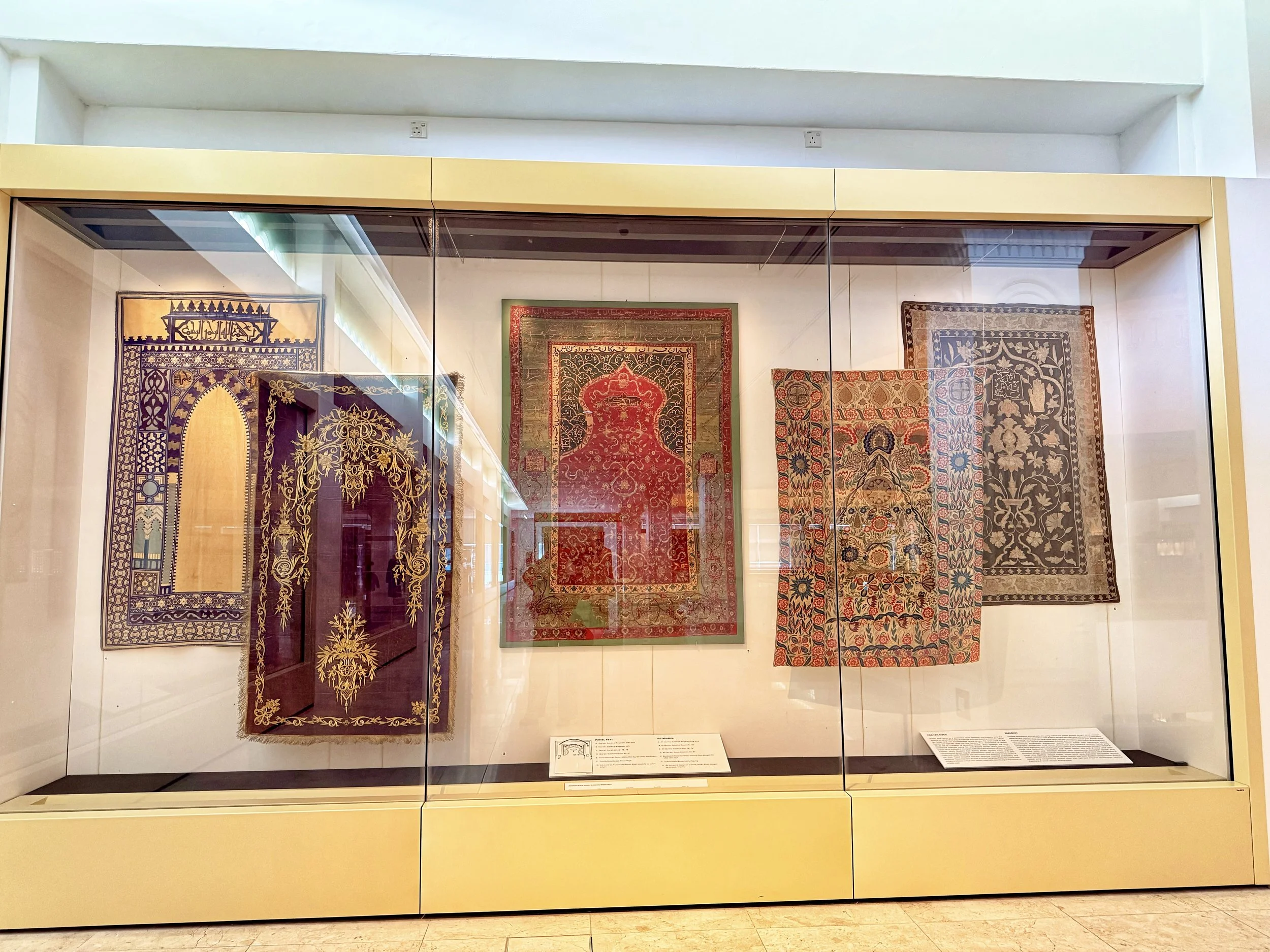
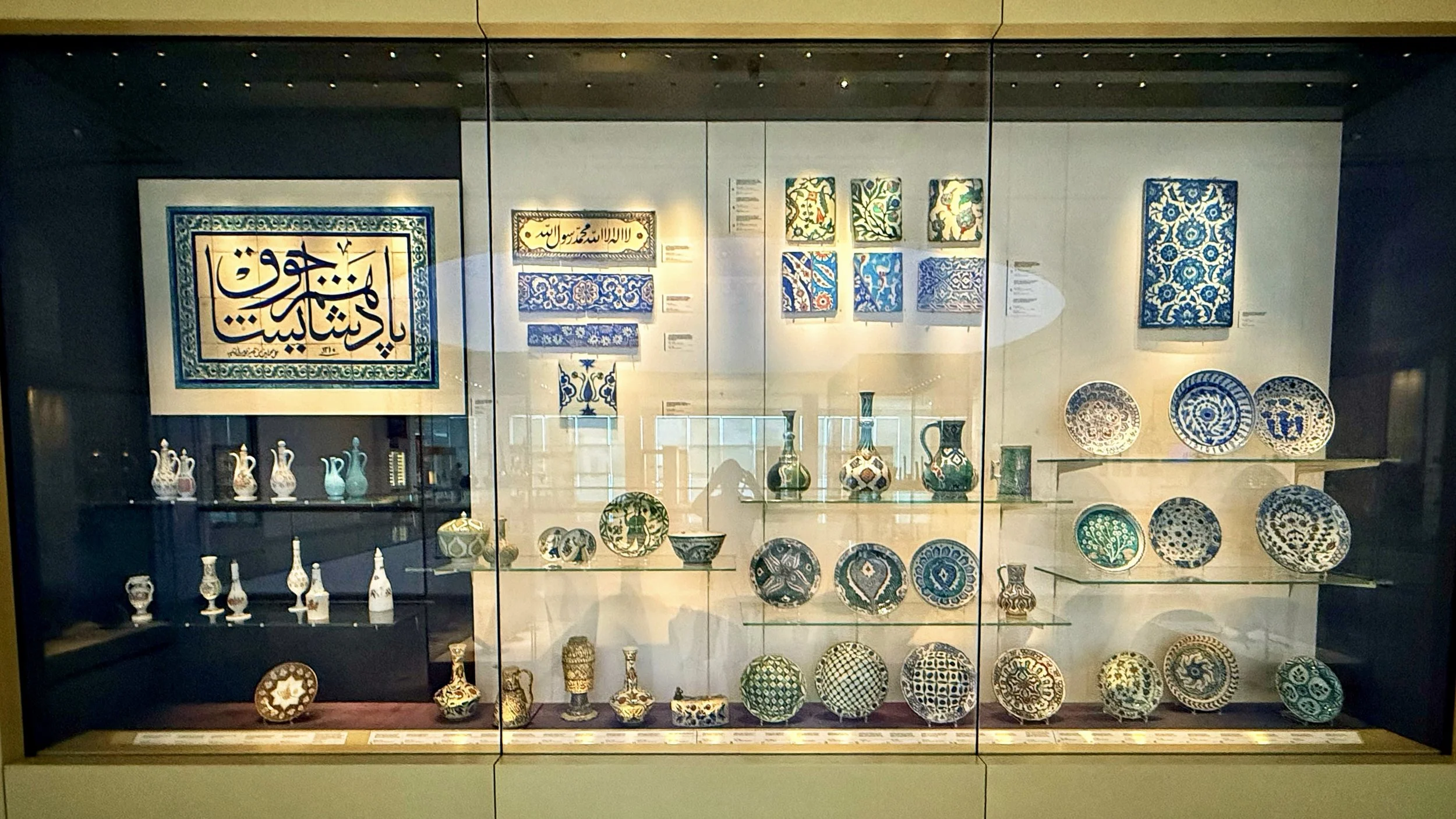
We enjoyed a visit to the Islamic Arts Museum, located next to the National Mosque of Malaysia. The indoor inverted dome on the ceiling was beautiful, as well as all the tile motifs, inscriptions, and carpets. The most interesting display was a miniature replica of all the main mosques around the world in great detail. We recognized some that we’ve visited, while taking note of several that we may never be able to visit. These replicas may be the closest we get to seeing the mosques in Mecca, Medina, or Damascus.
Batu Caves
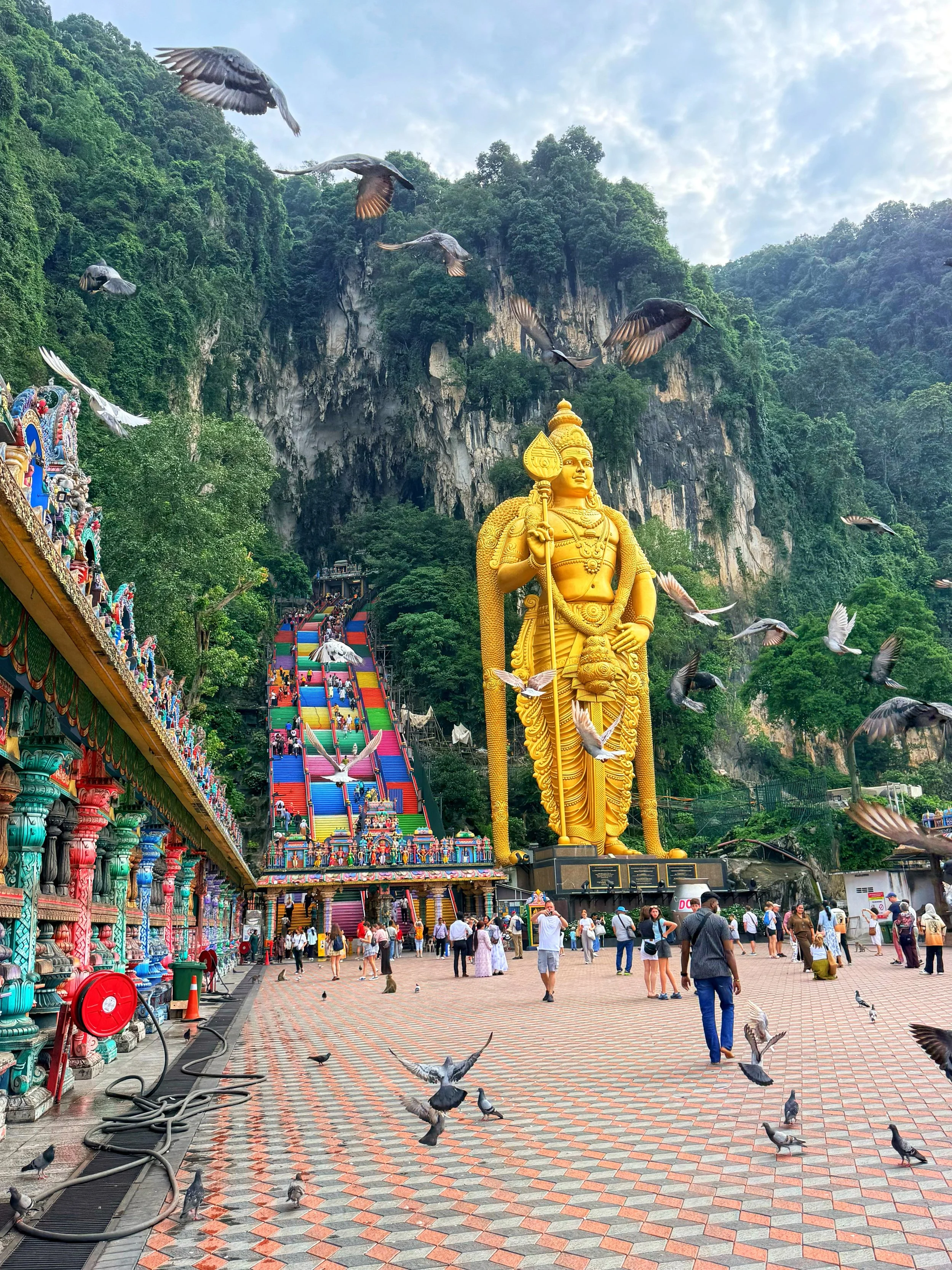
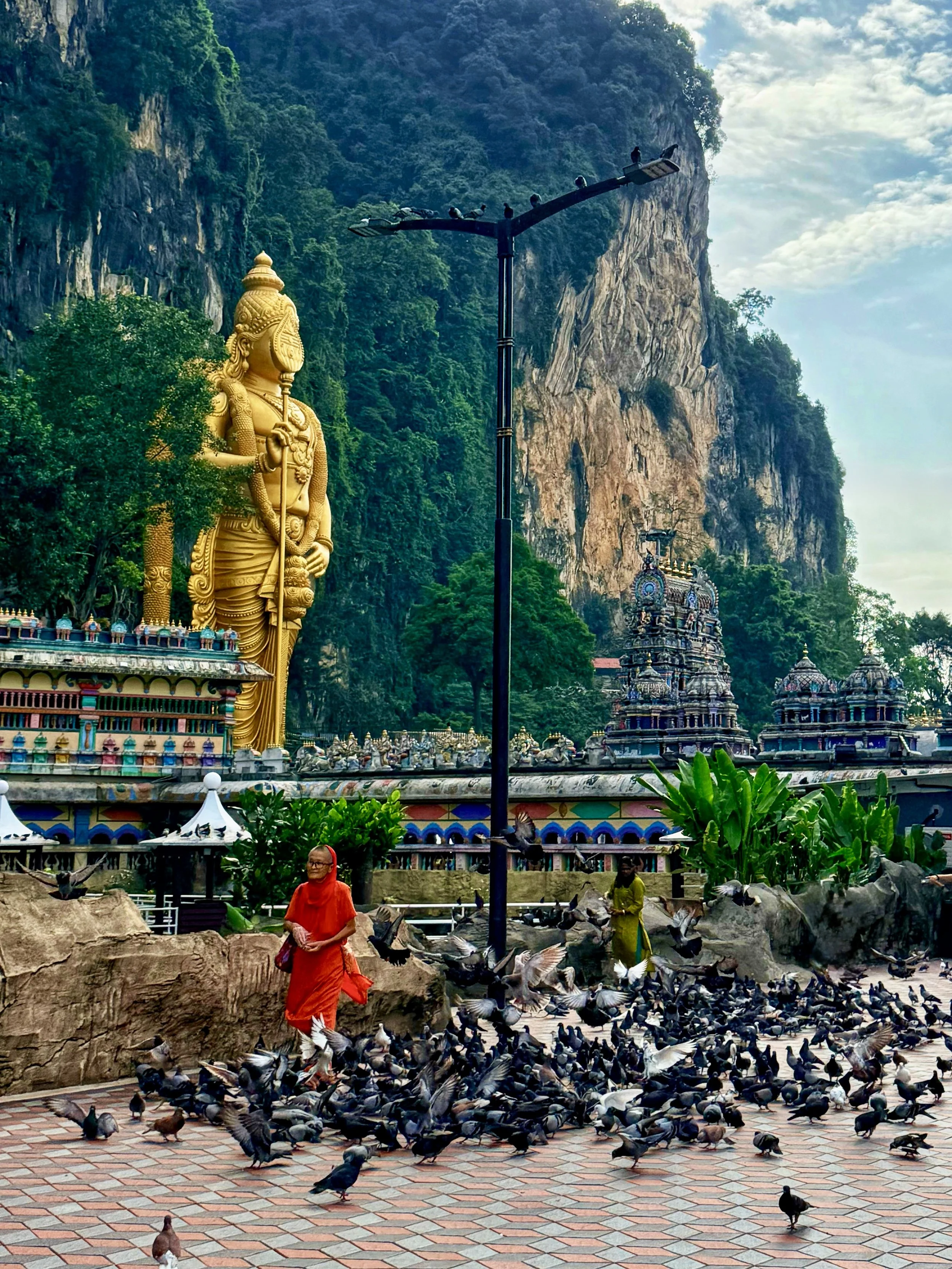
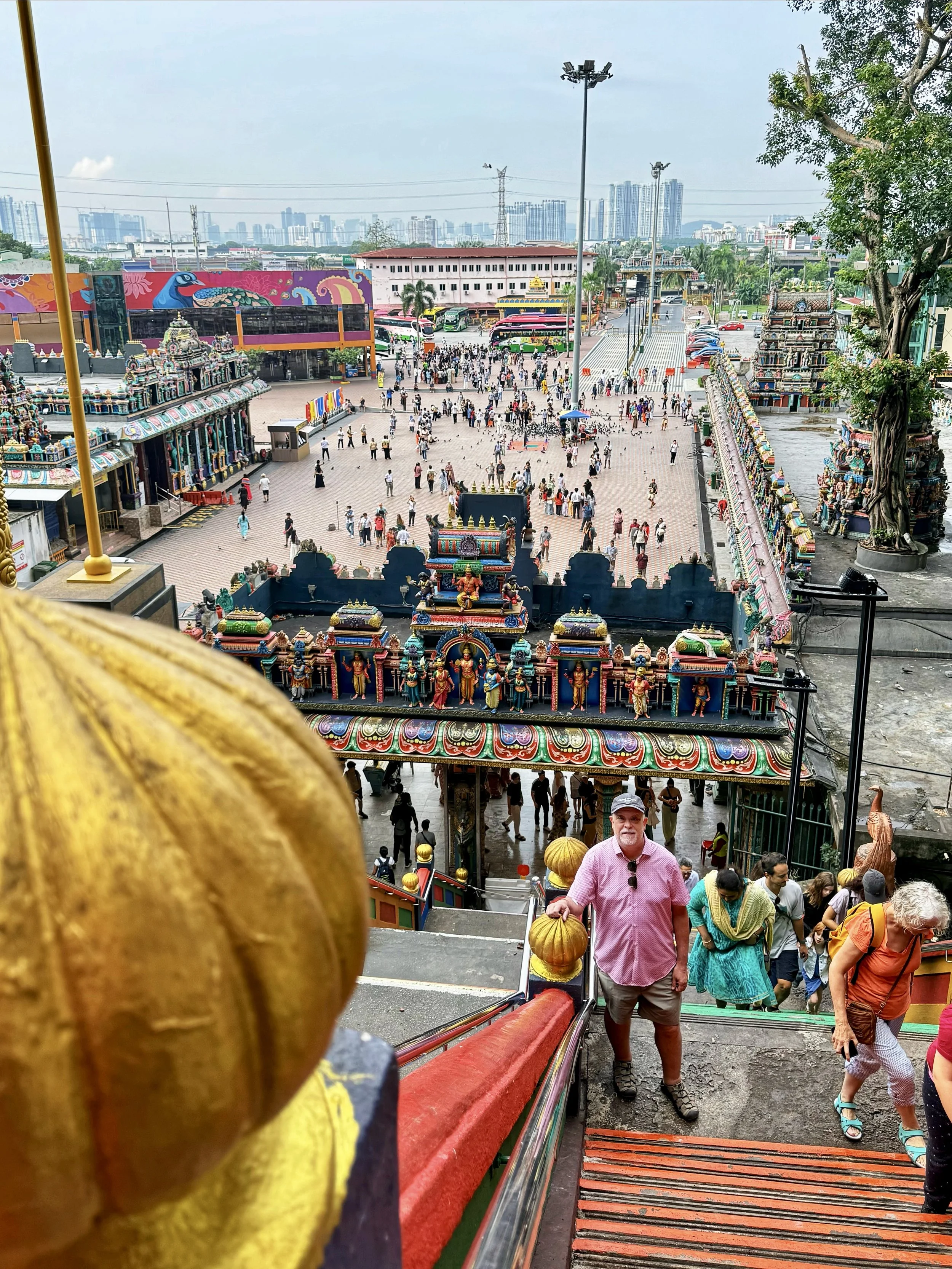
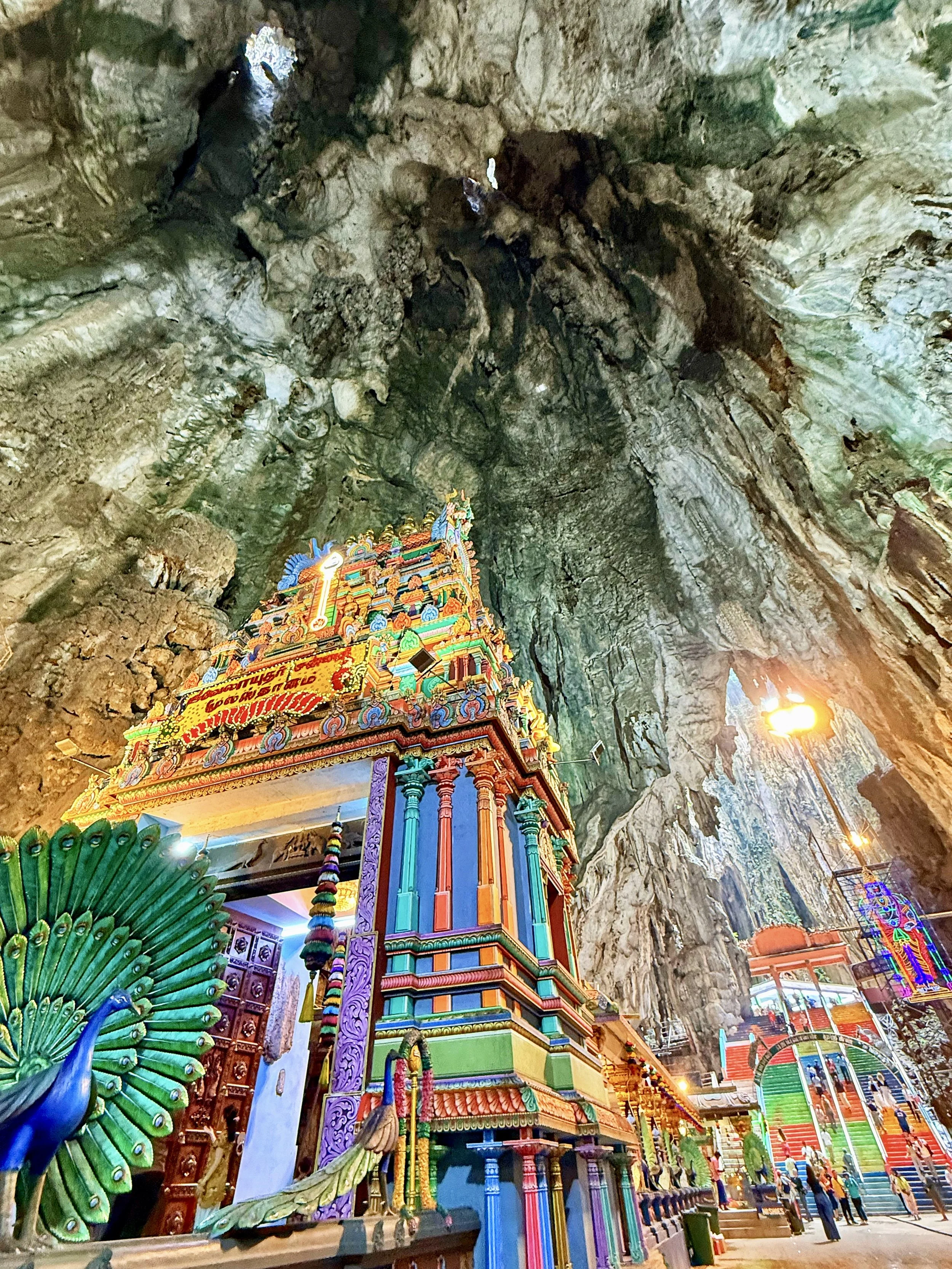
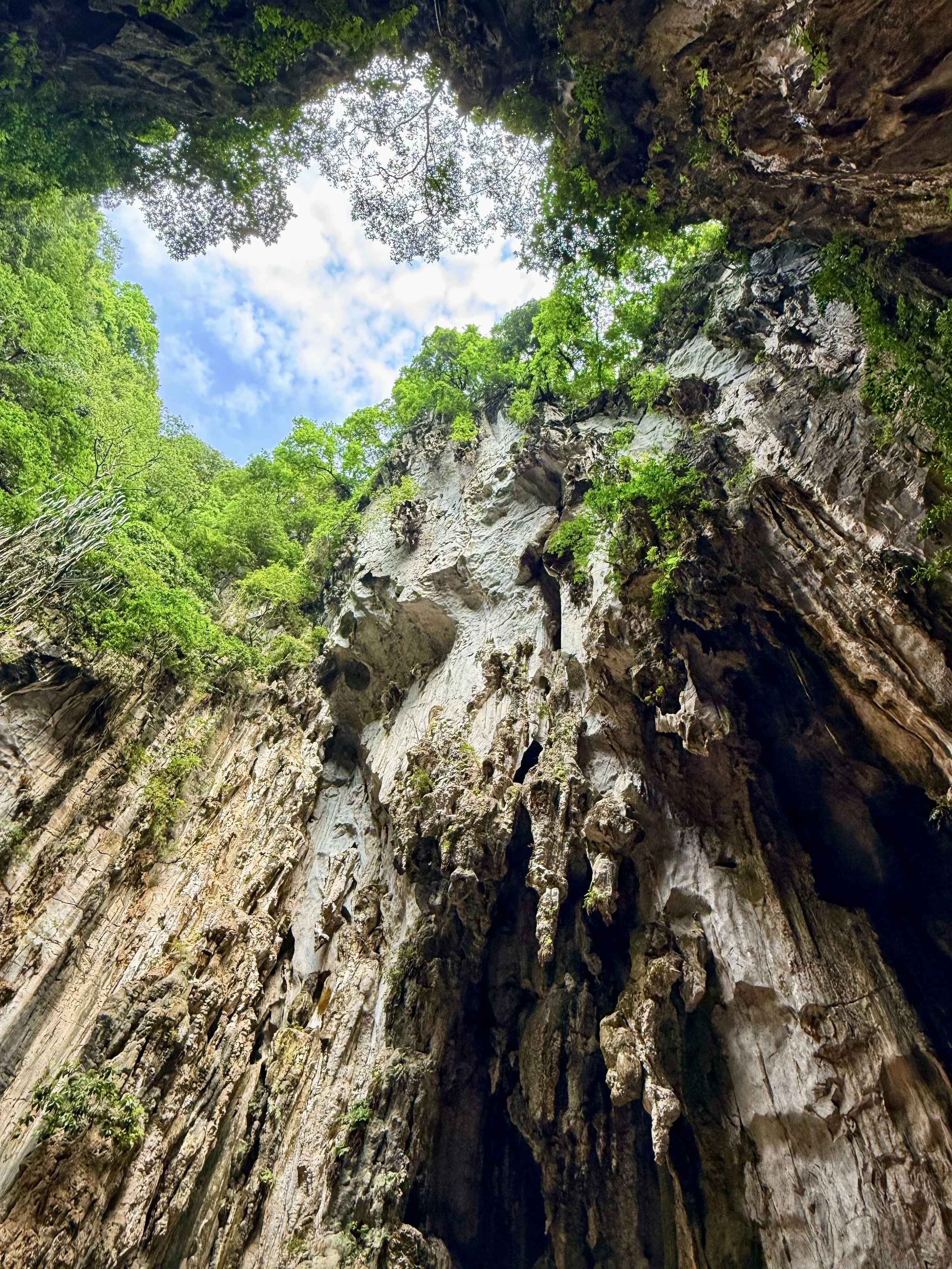
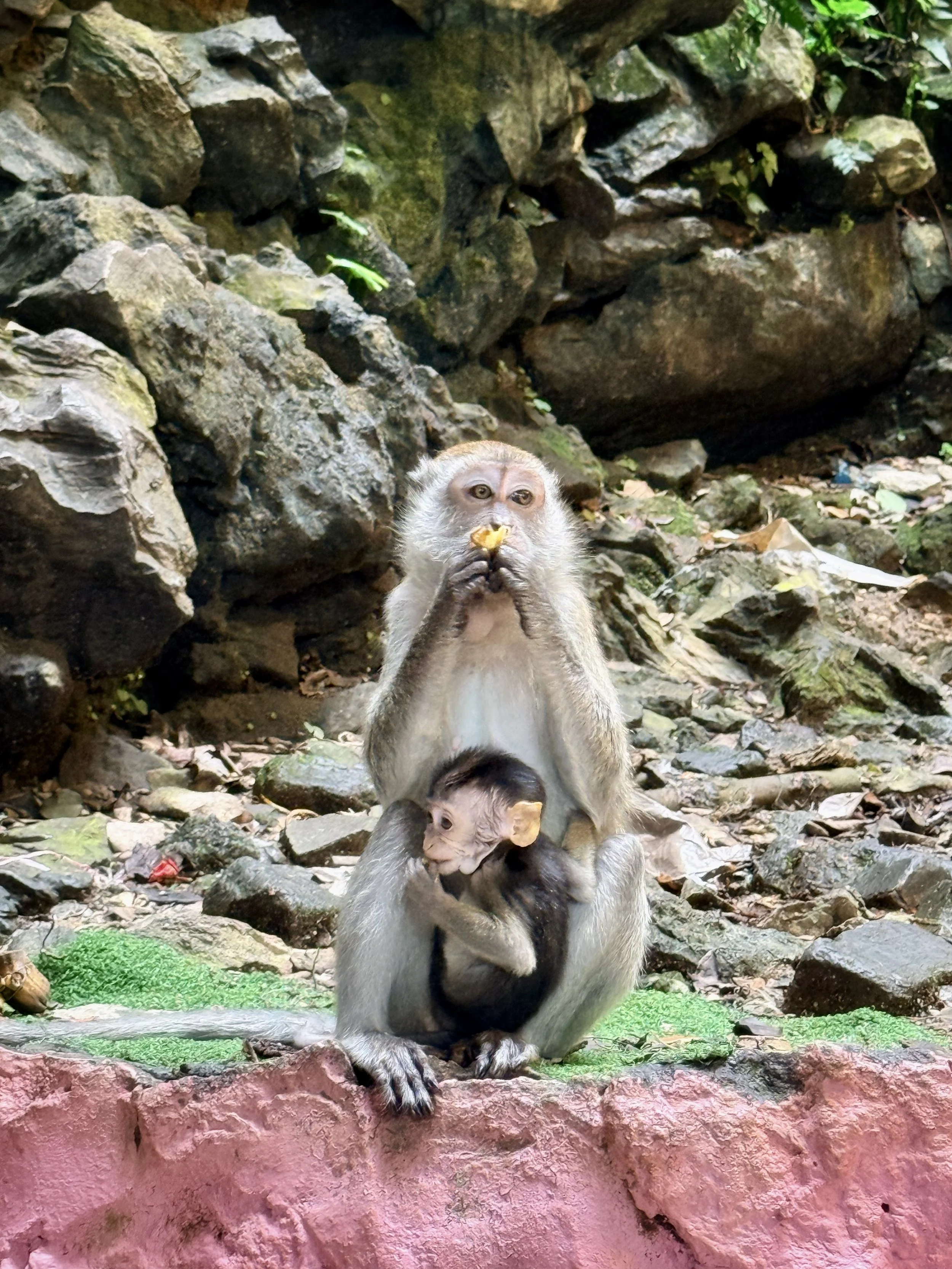
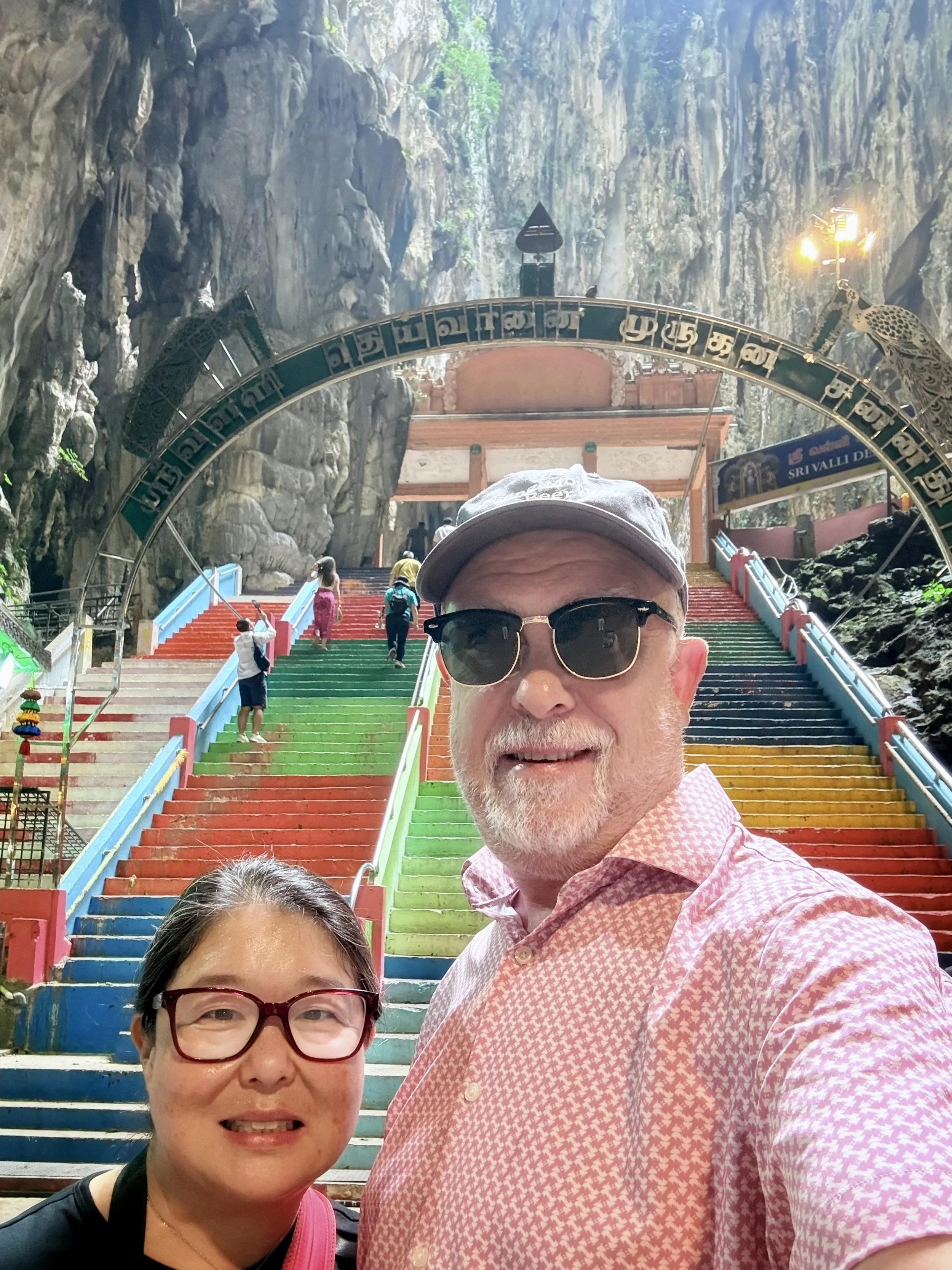
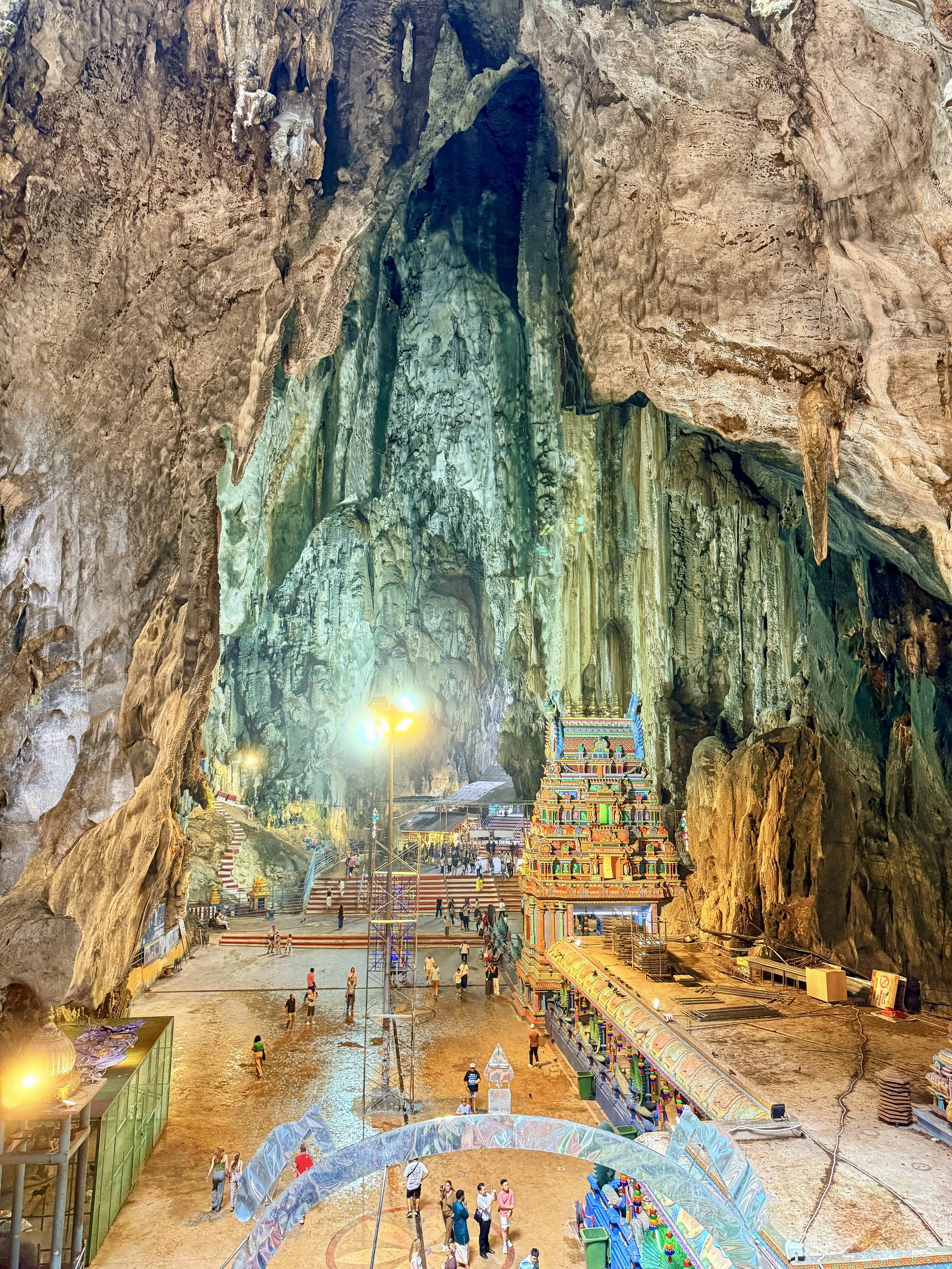
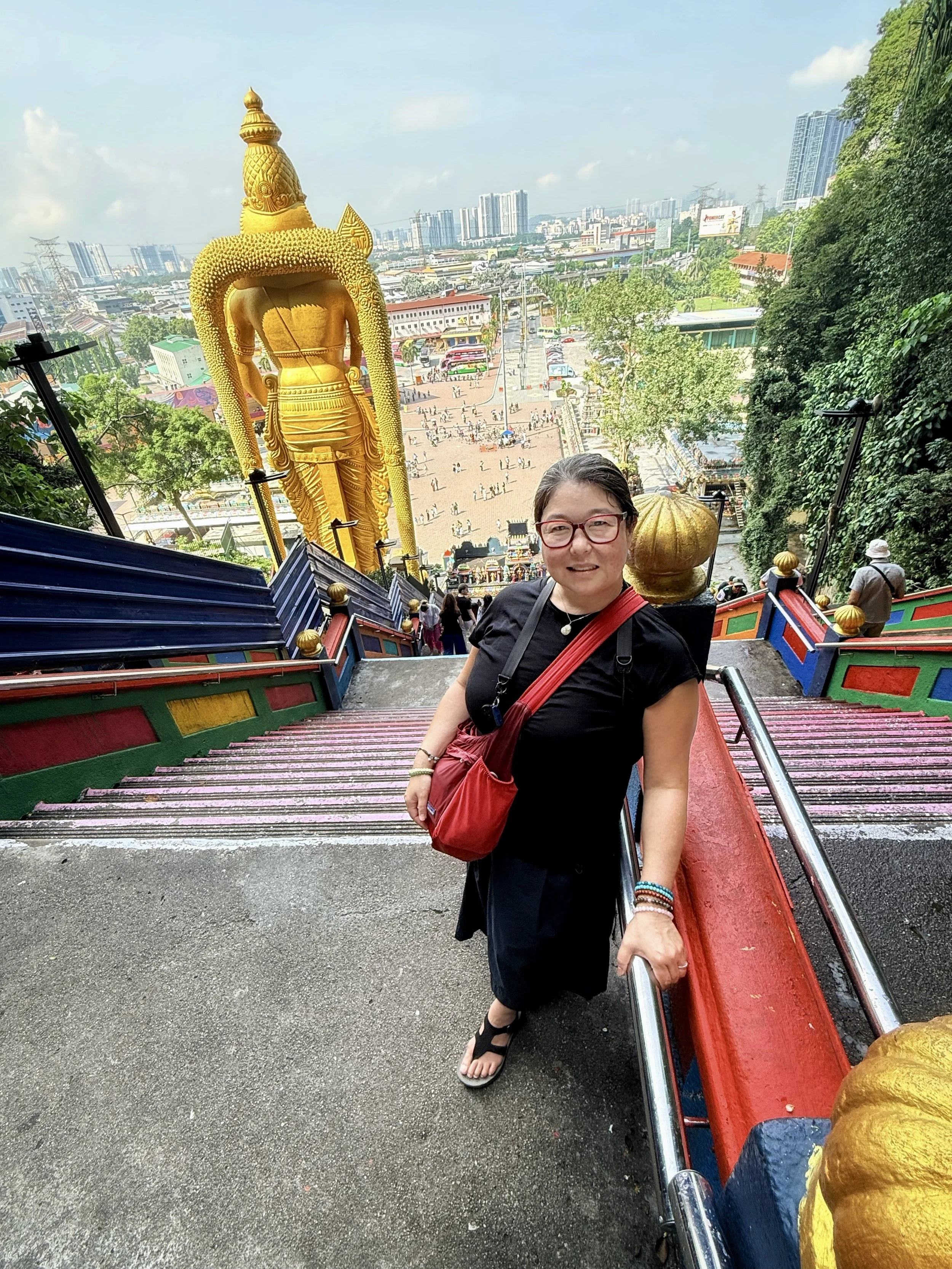
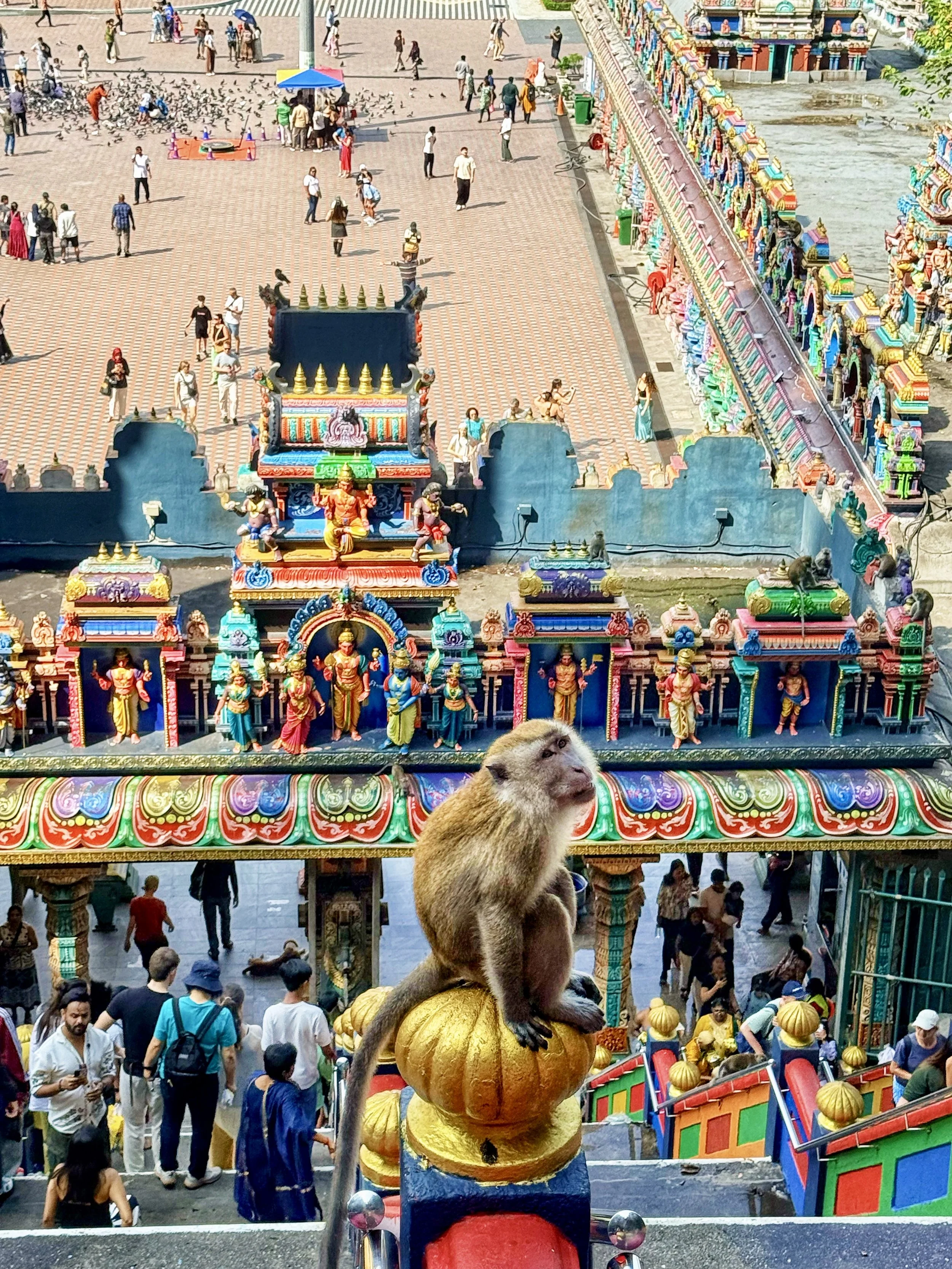
It’s hard to believe that there’s a huge towering limestone hill 20 minutes drive north of KL. The Hindus built a temple inside Batu Caves in 1920, greeted by a 140-foot tall golden statue of the Hindu God, Lord Murugan, which stands at the foot of the 272 colorful steps leading up to the temple. The views were spectacular from the top with KL on the horizon. Be prepared to sweat profusely from every pore and watch all your belongings to avoid thievery from the bold monkeys.
So, are we bought into the 3rd most livable city in Asia?! Absolutely. We’d settle in KL for a few months no problem.
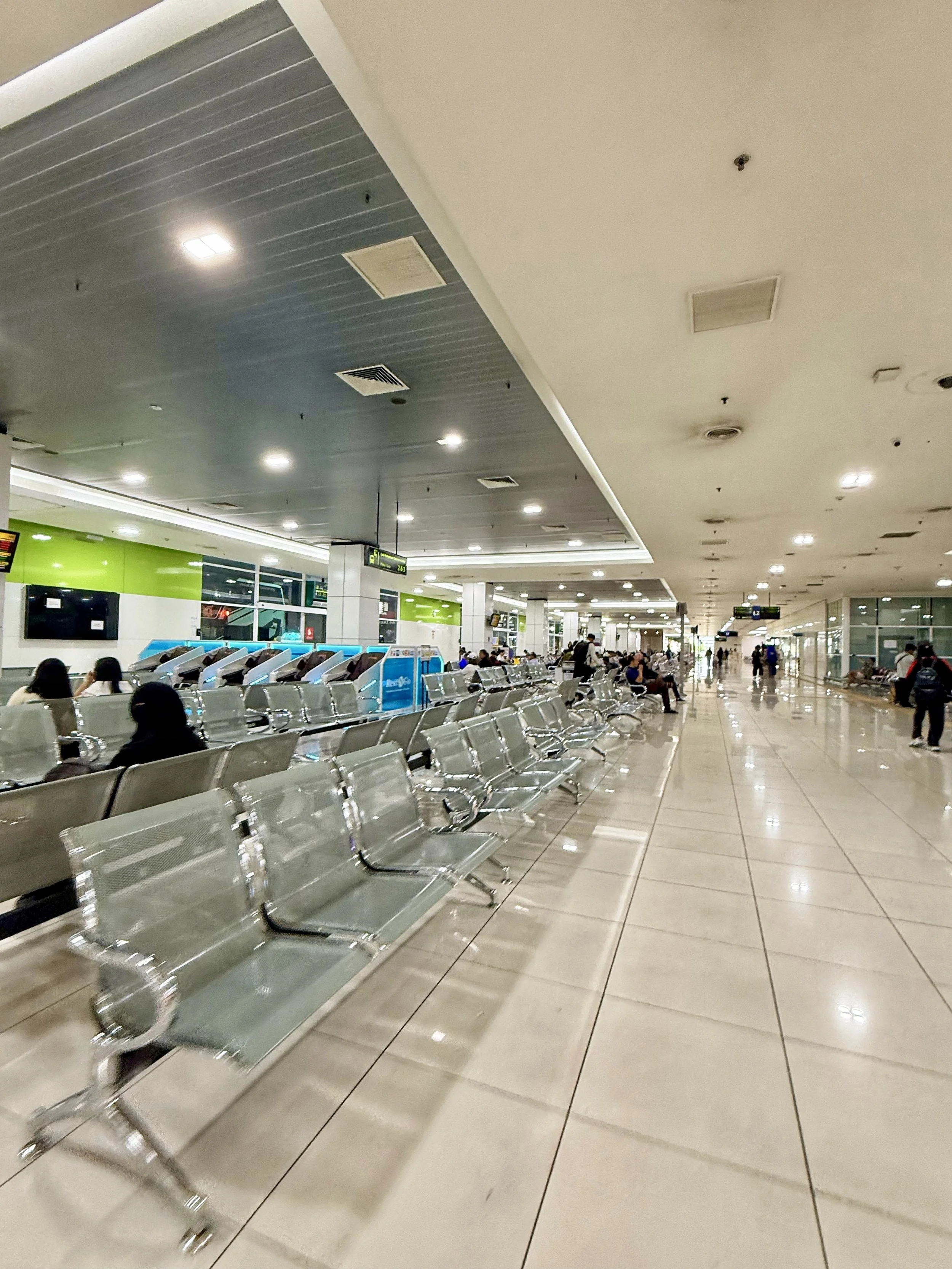
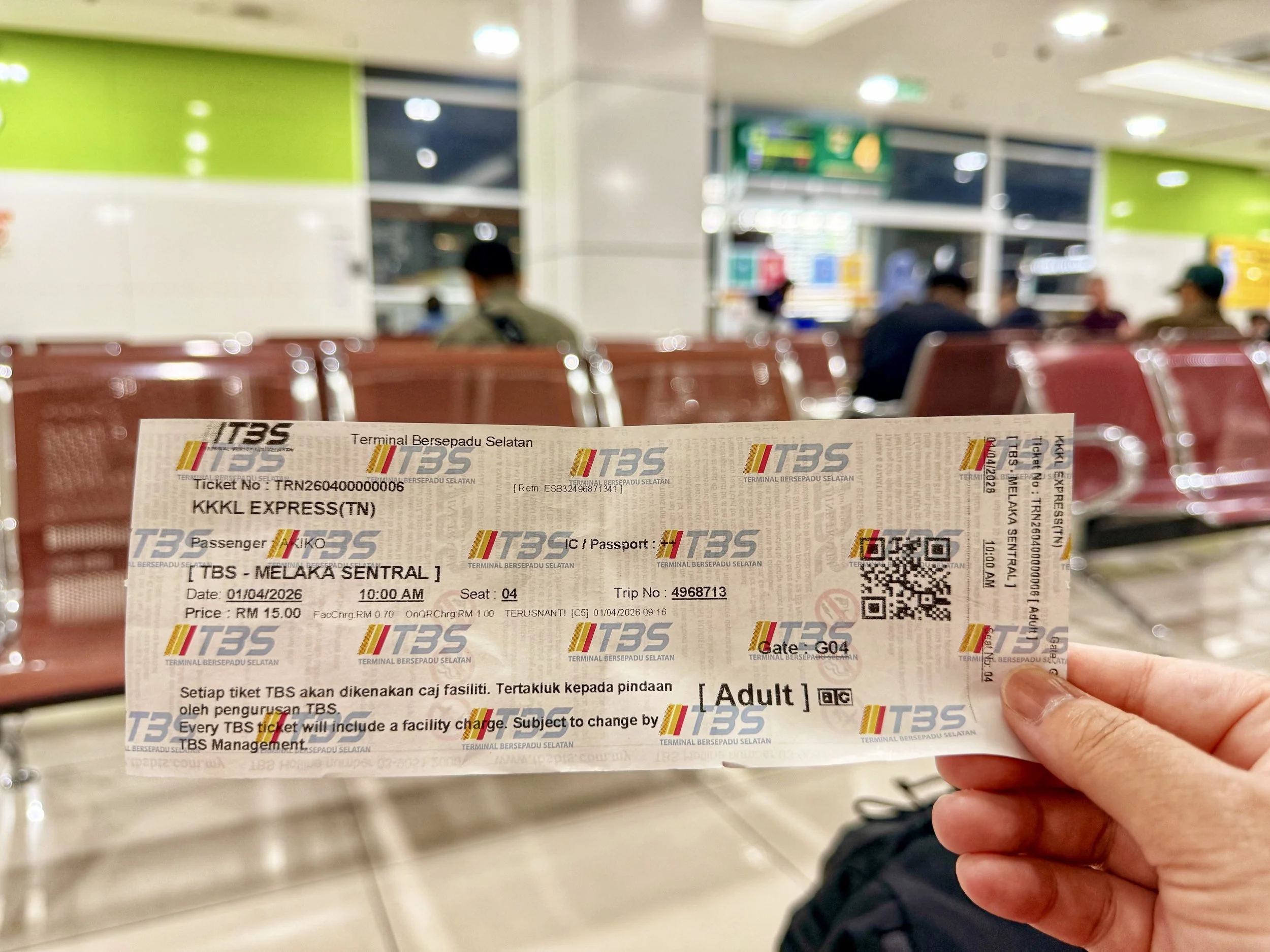
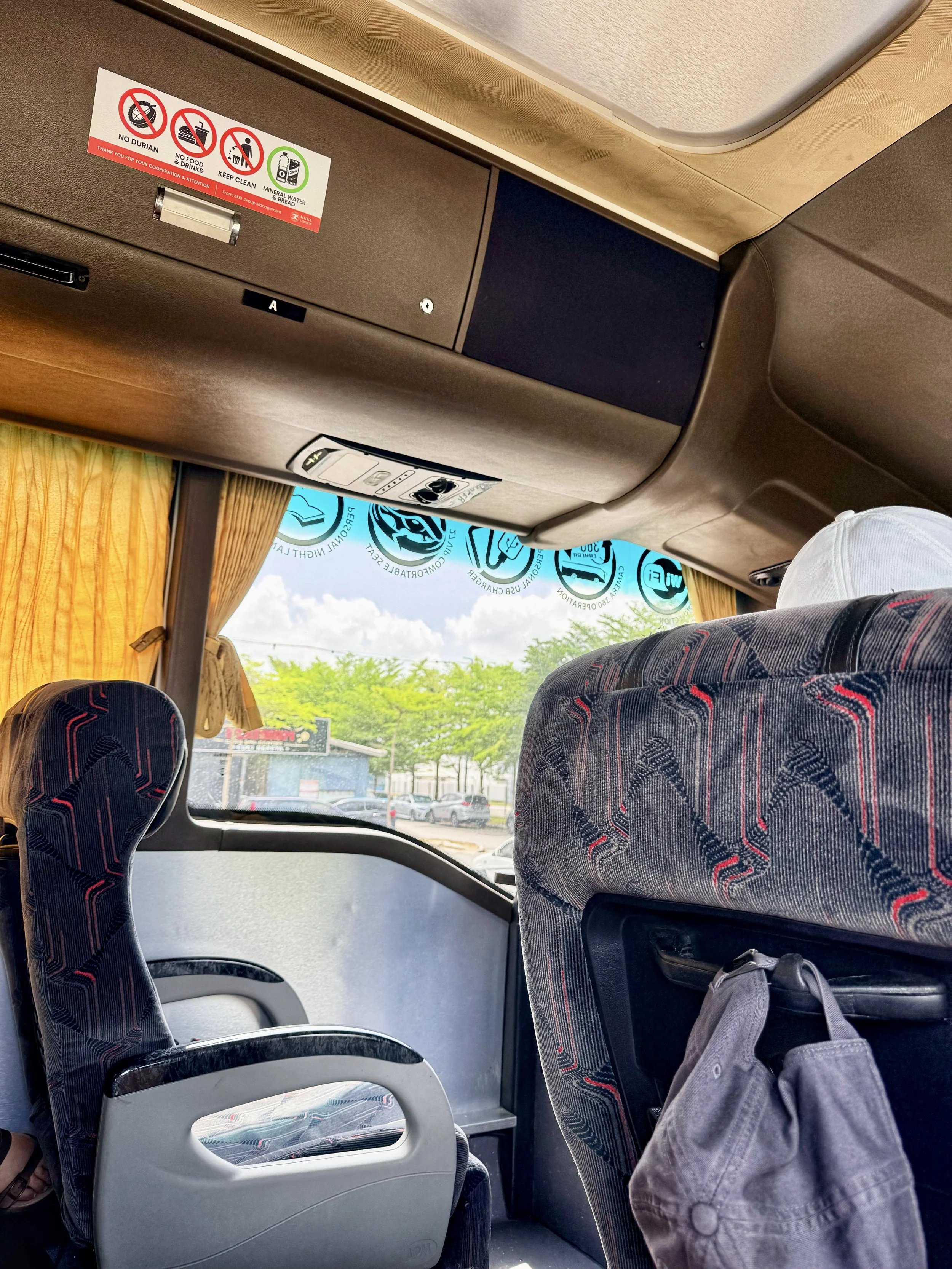
For now, onward to Melaka, Malaysia via bus! Terminal Bersepadu Selatan (TBS) where we took the 2-hour KKKL express bus to Melaka was modern, high-tech, and easy to navigate.