June 10, 2026 — Mae Sariang → Khun Yuam → Mae Hong Son Town
One thing we noticed as we continued deeper into the Mae Hong Son Loop: English is rapidly disappearing.
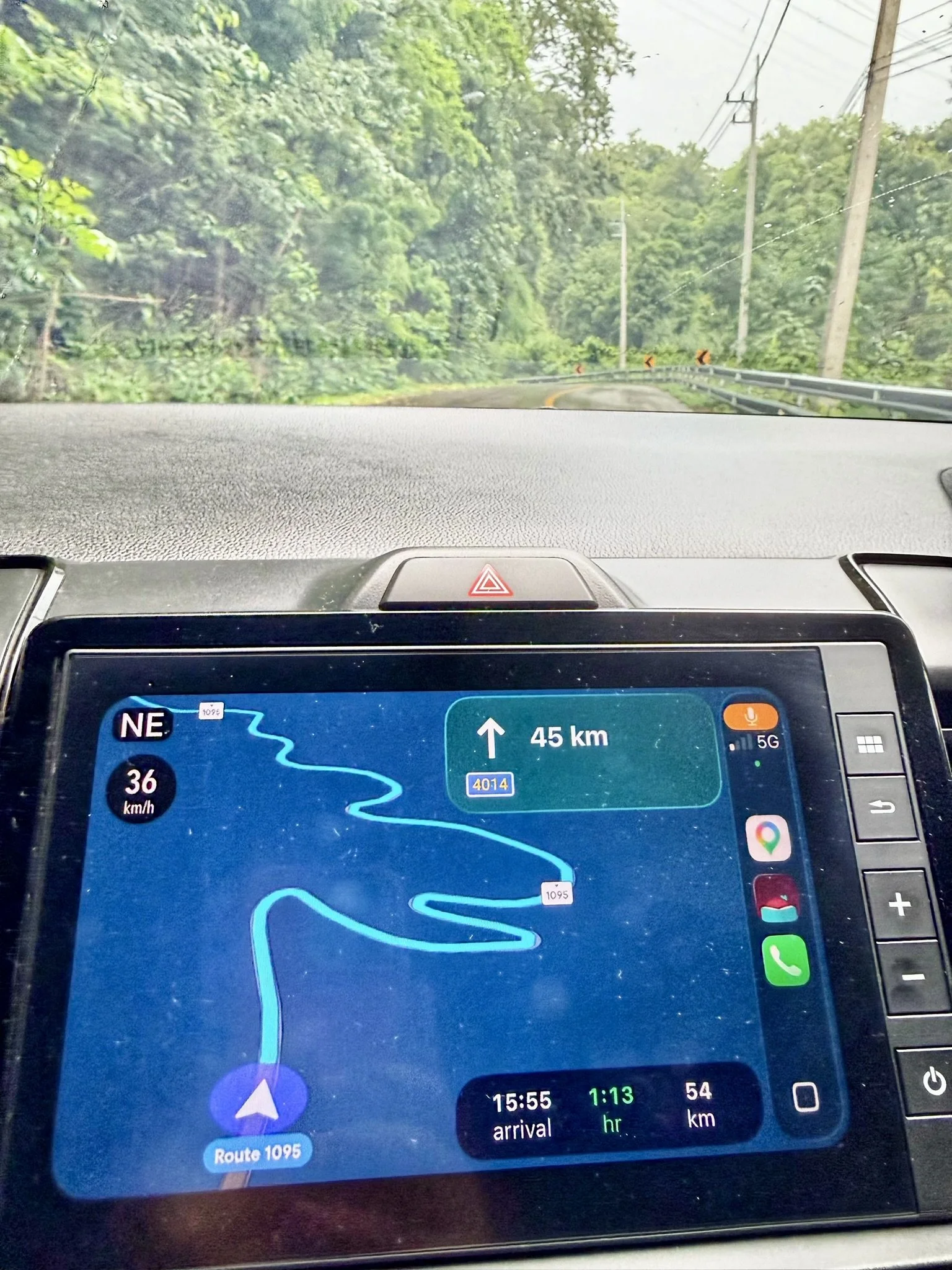
In Chiang Mai, it’s easy to forget you’re in a foreign country. English menus, English signs, English-speaking staff—it all feels very accessible. But out here, that safety net is gone. Even Google Maps has largely abandoned English translations, leaving us squinting at Thai script and relying on road numbers to make sure we’re heading in the right direction.
Fortunately, there aren’t many roads to choose from.
Khun Yuam: Visiting Friends!
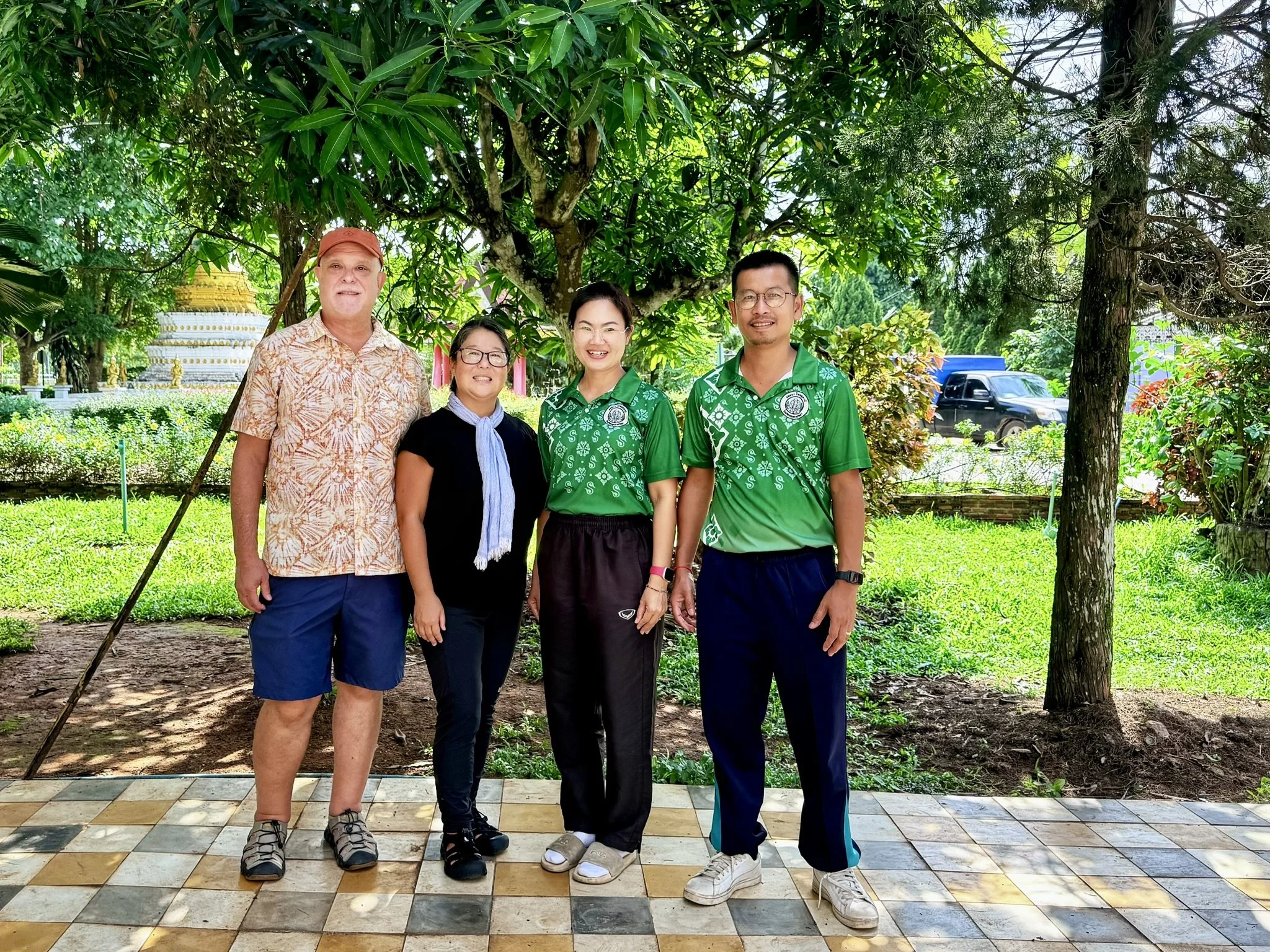
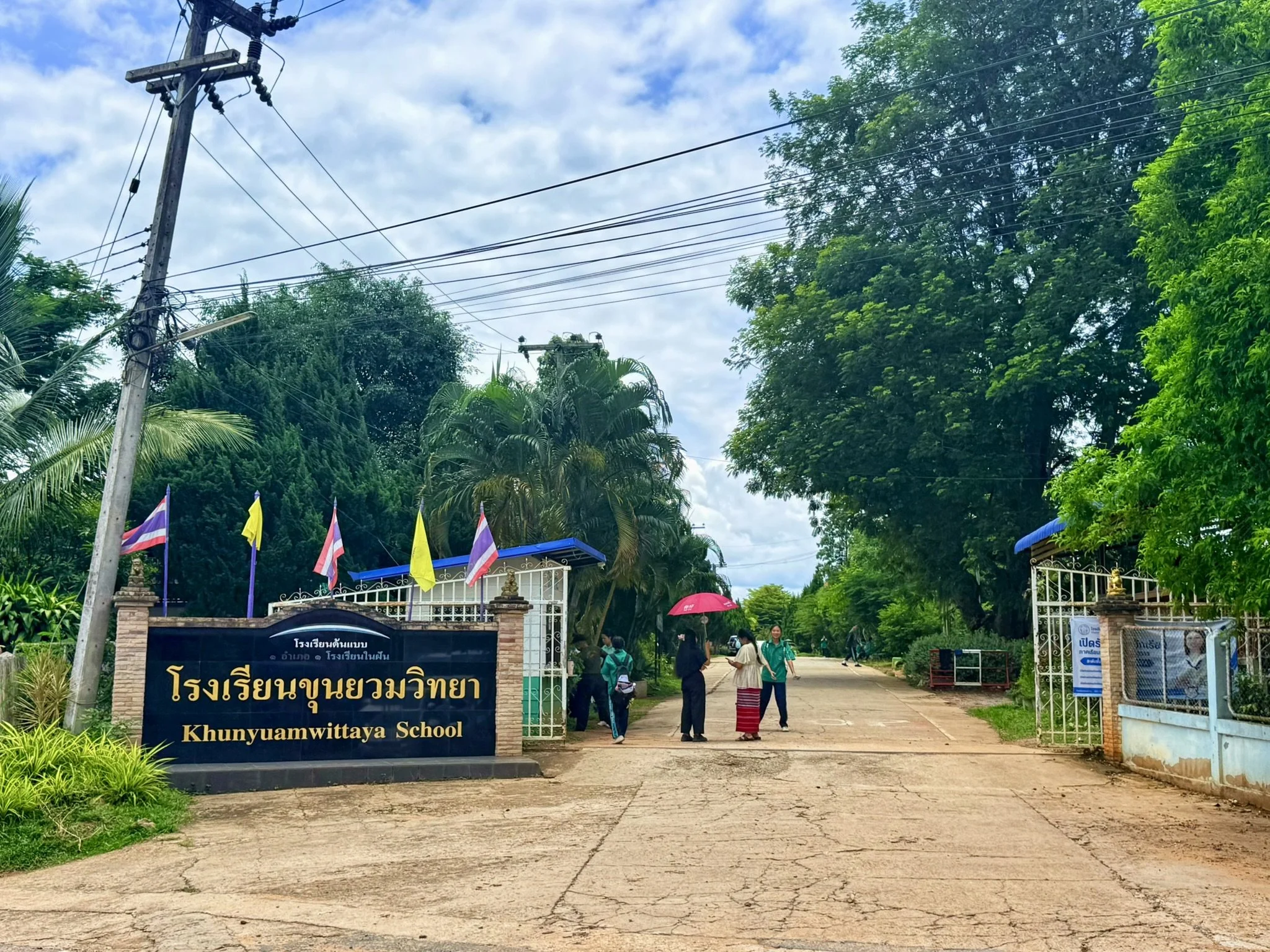
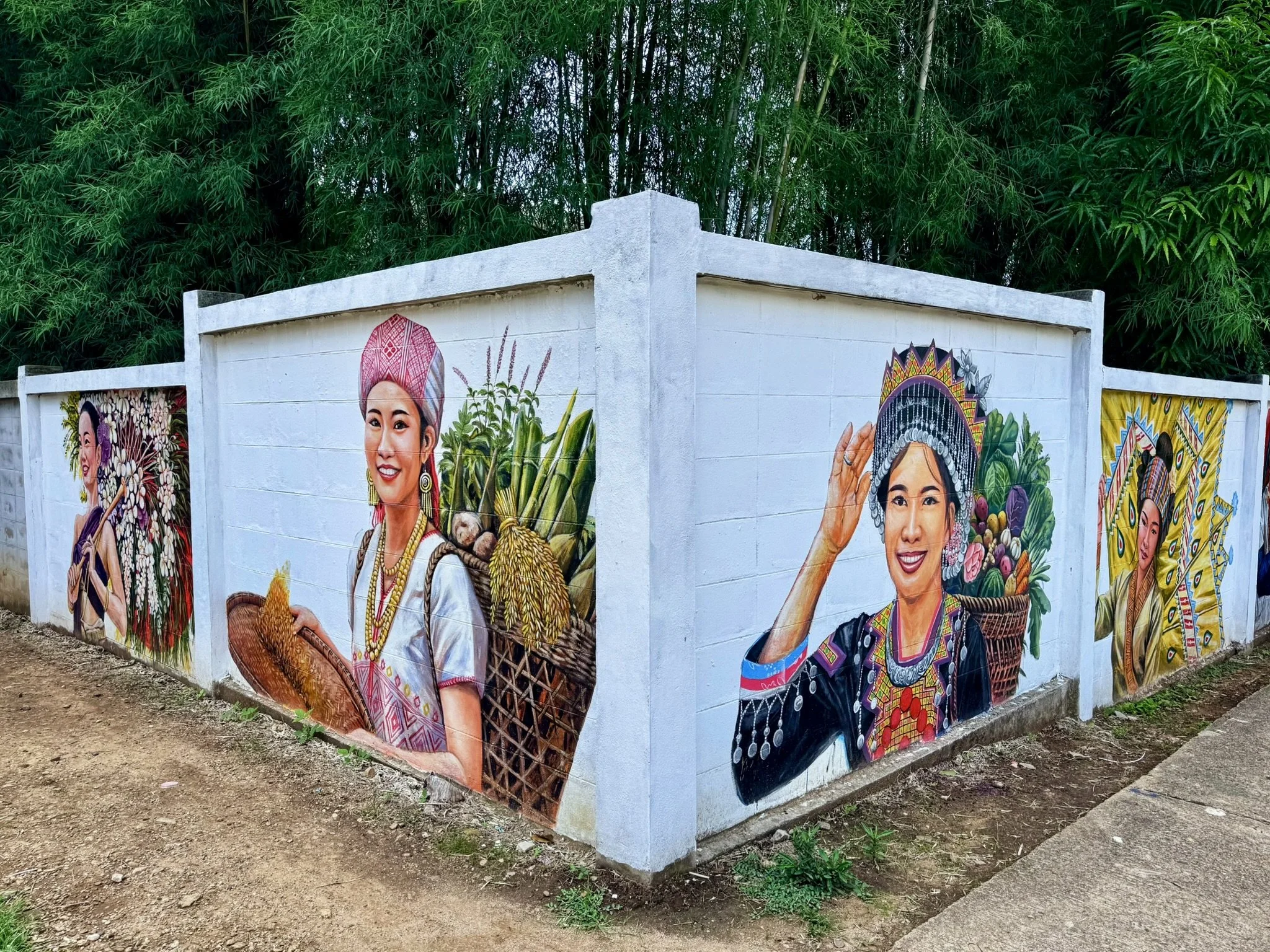
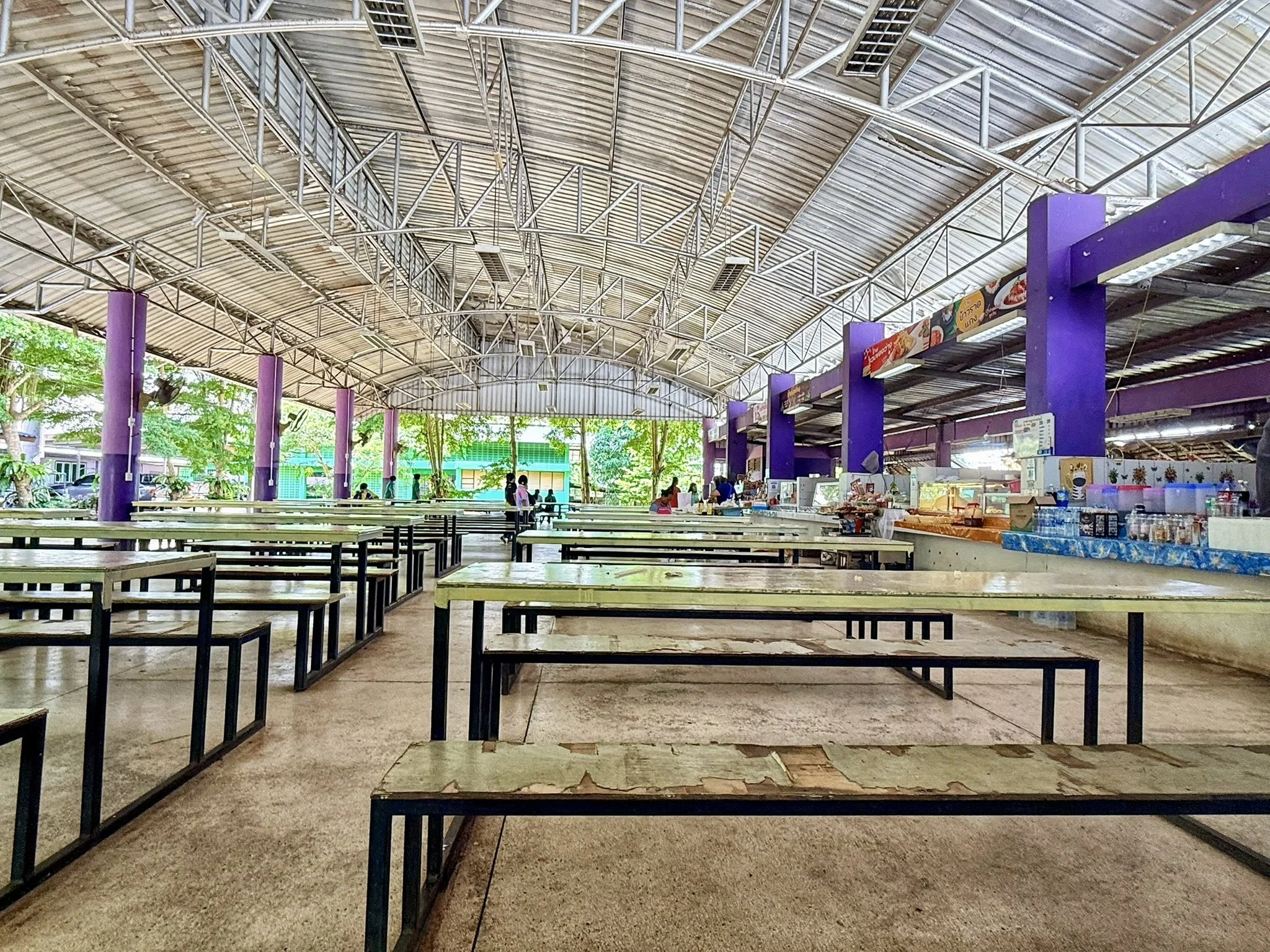
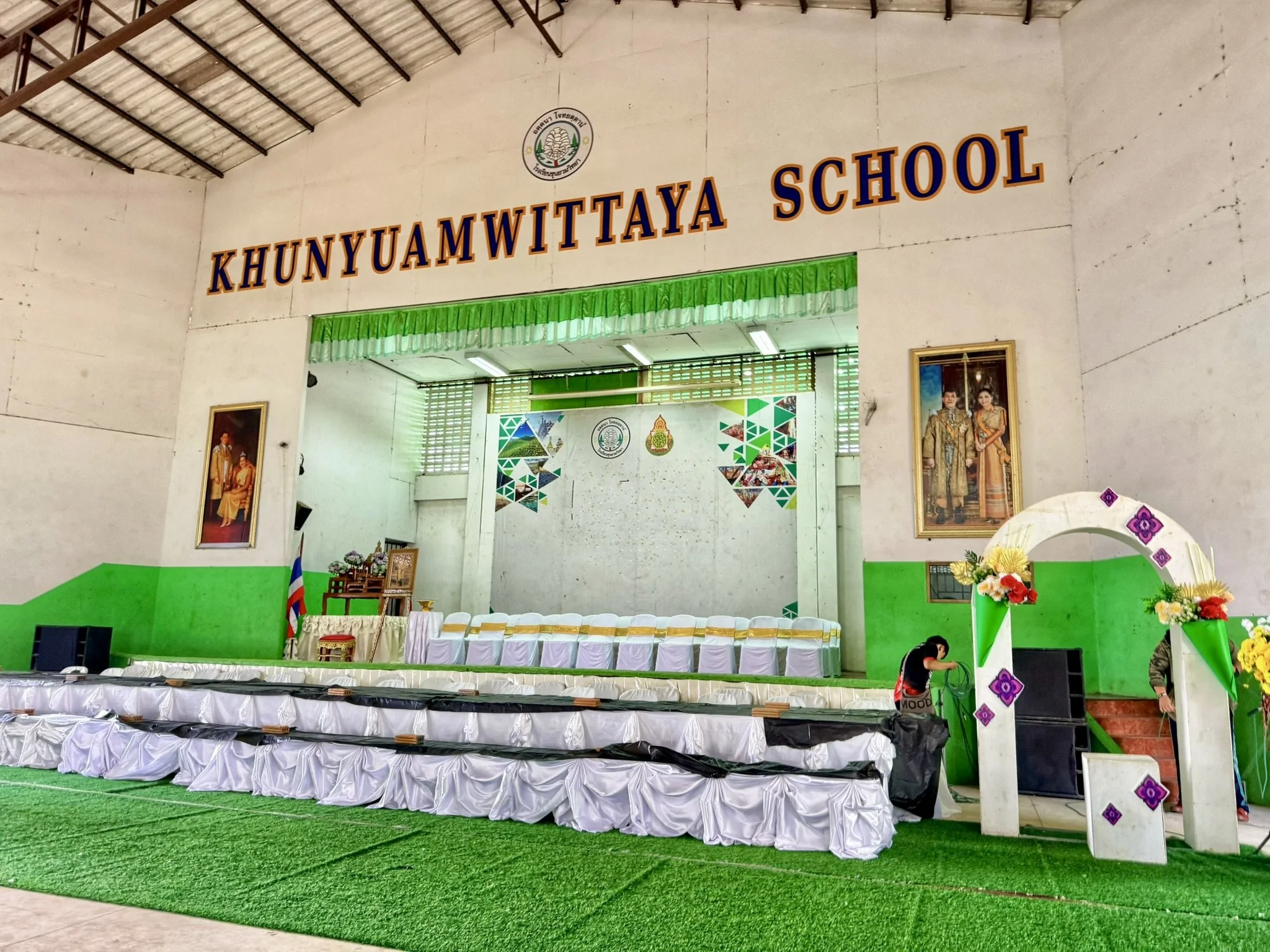
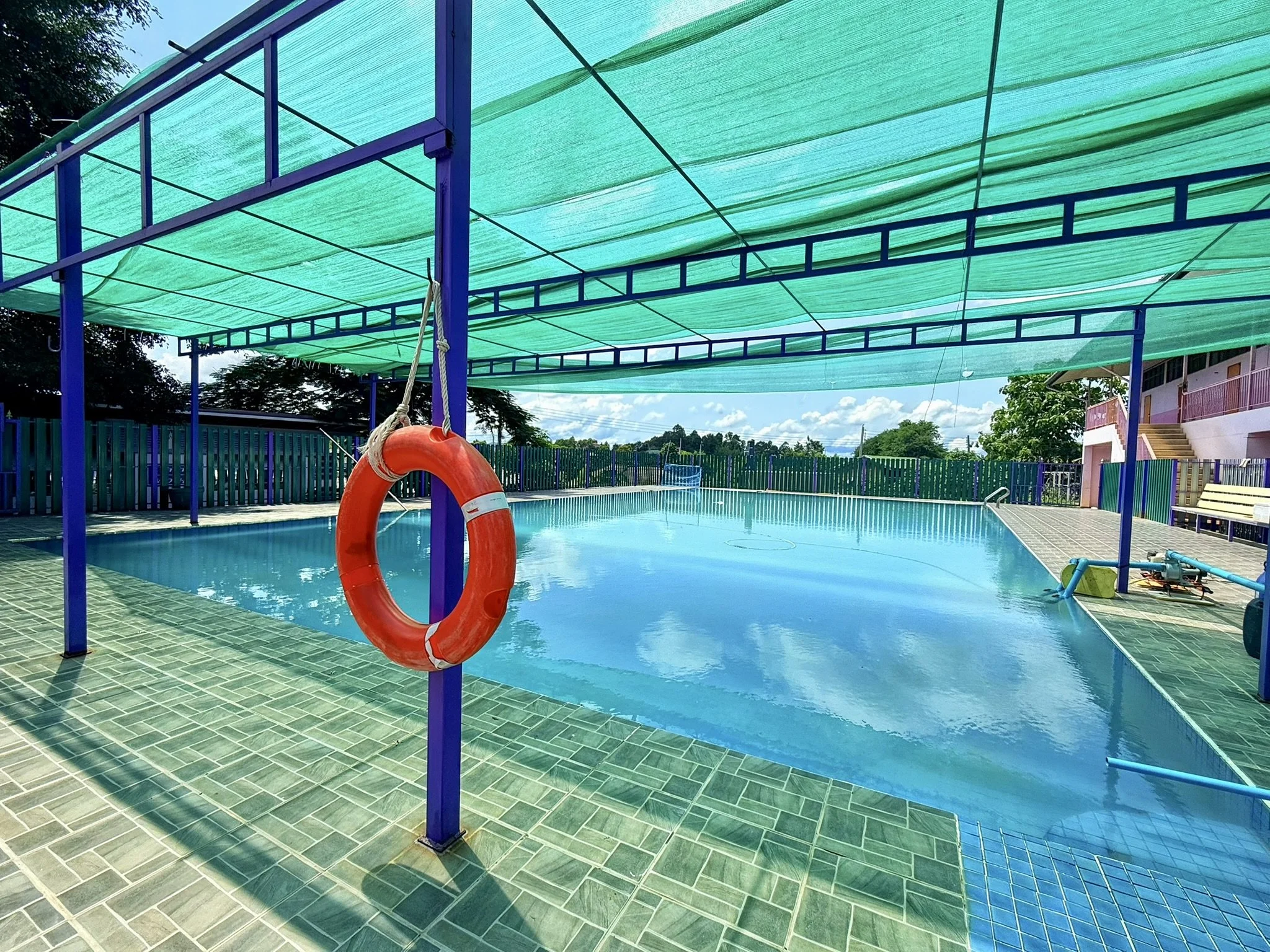
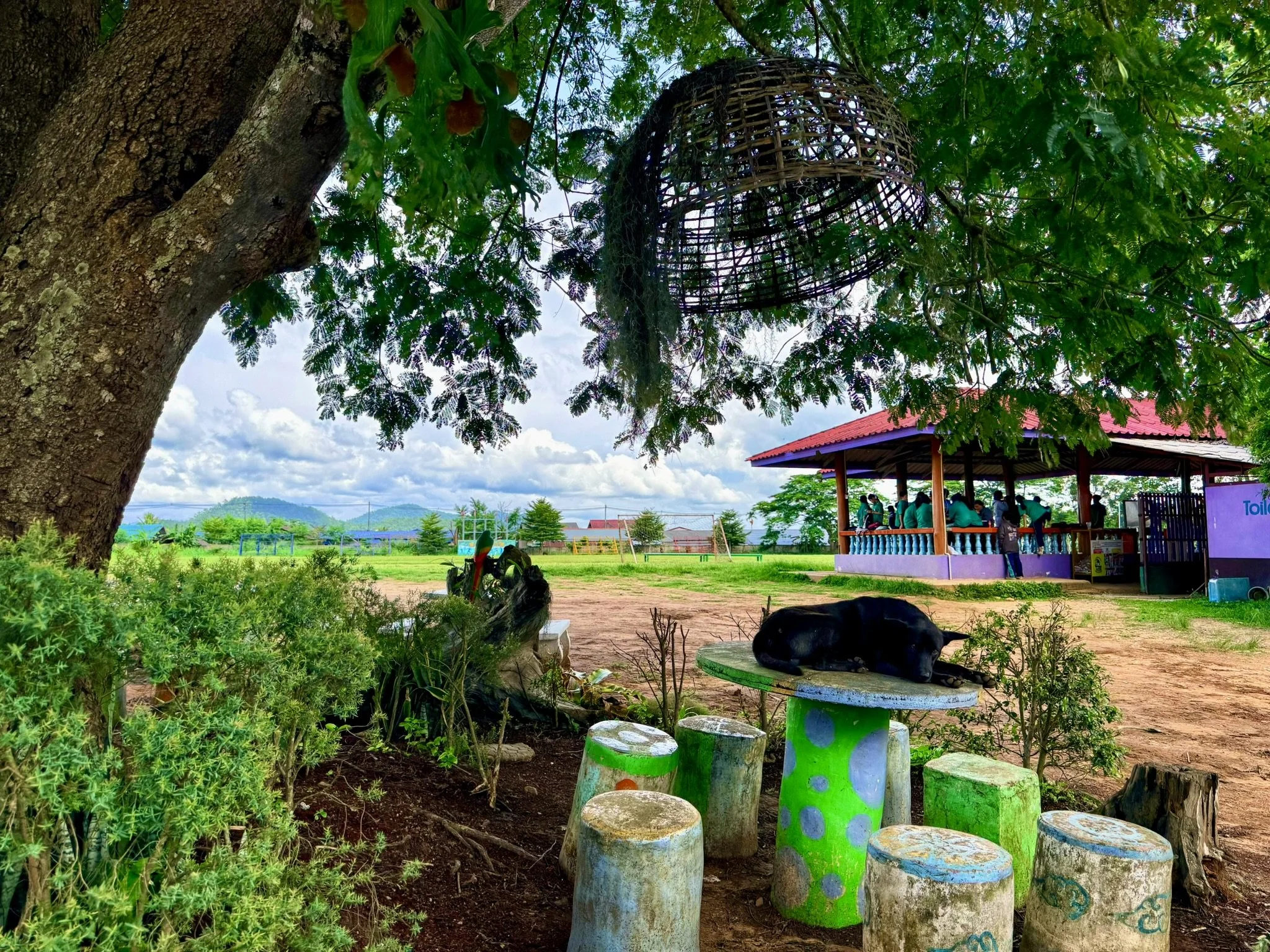
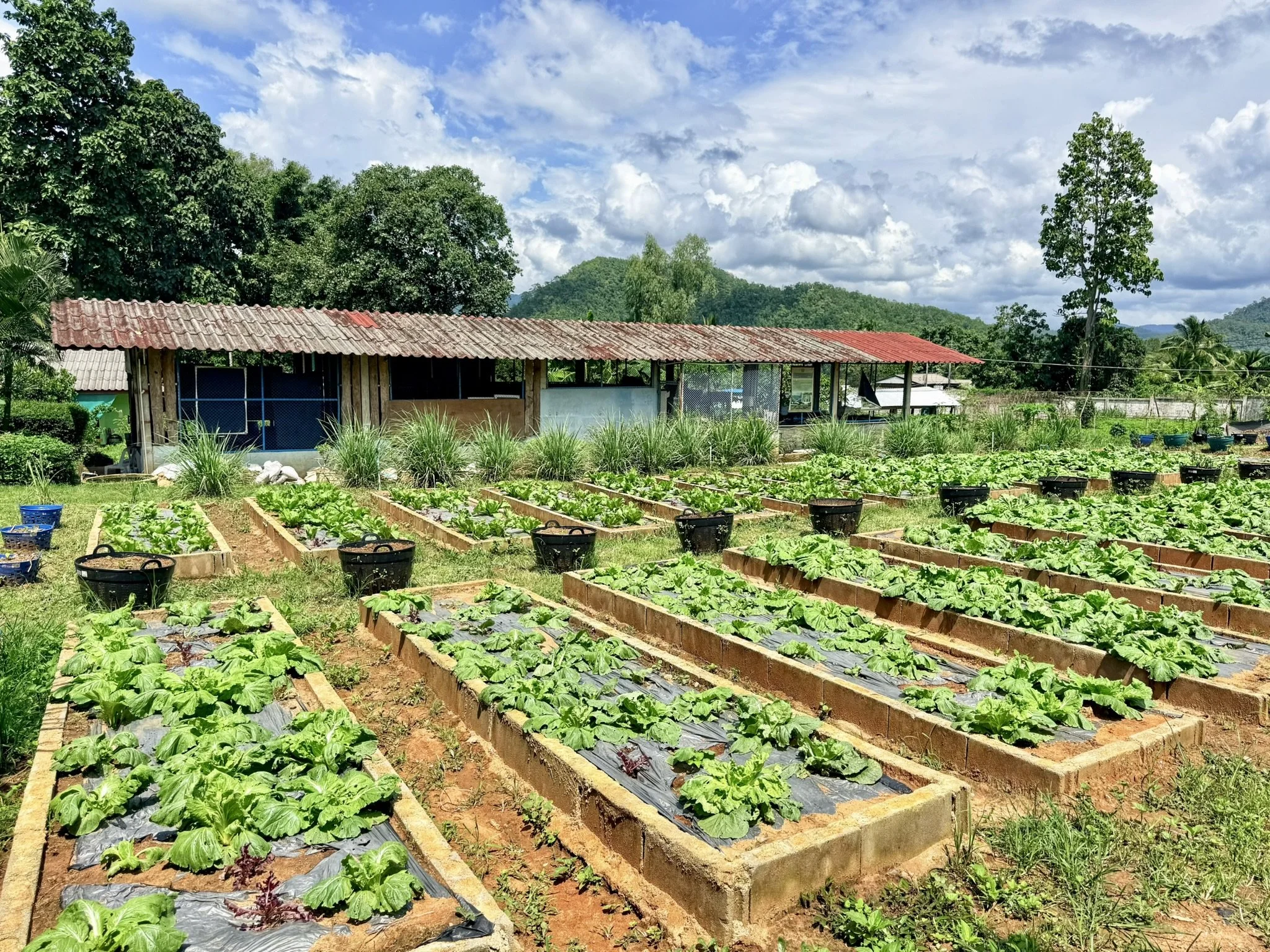
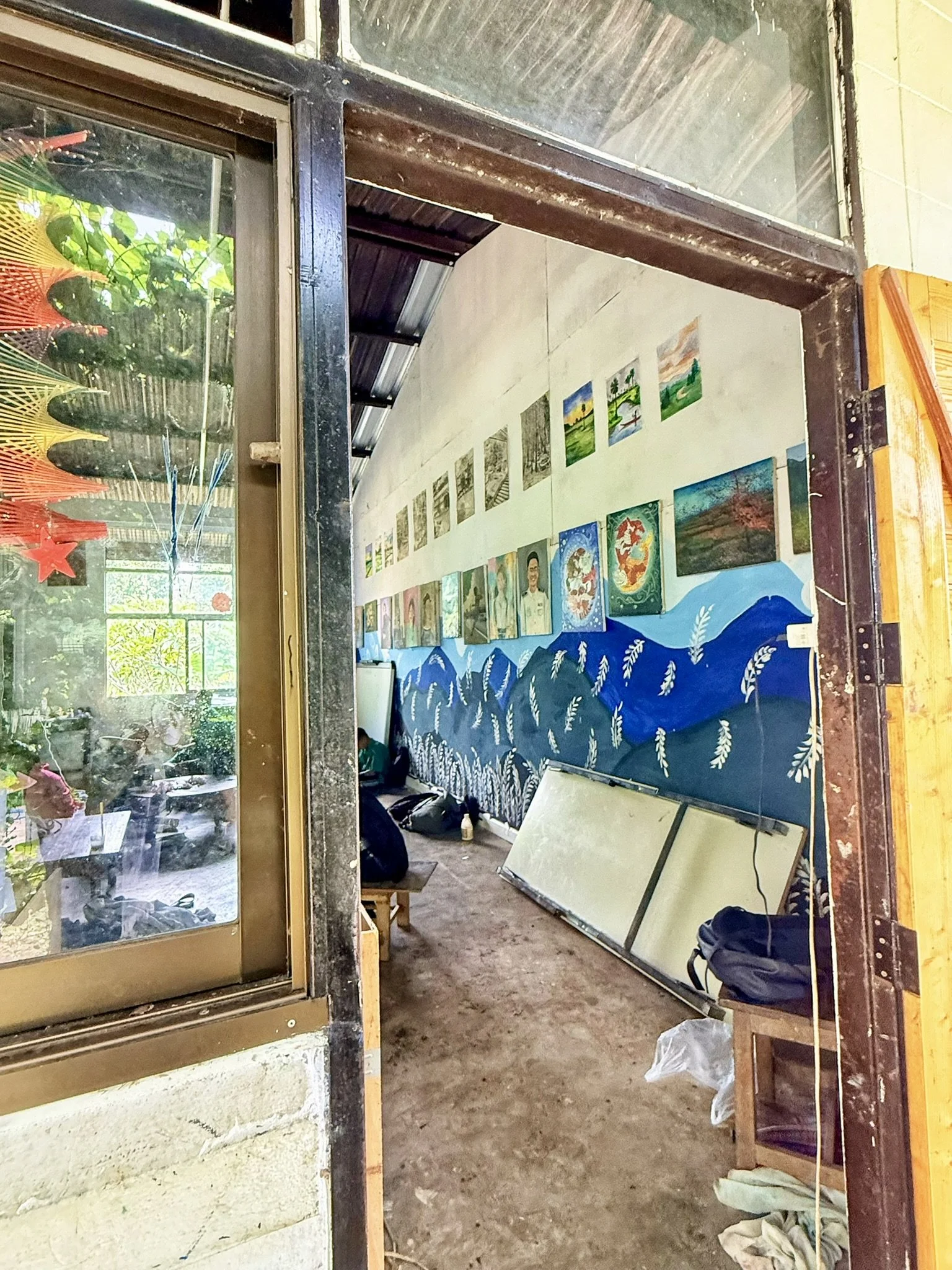
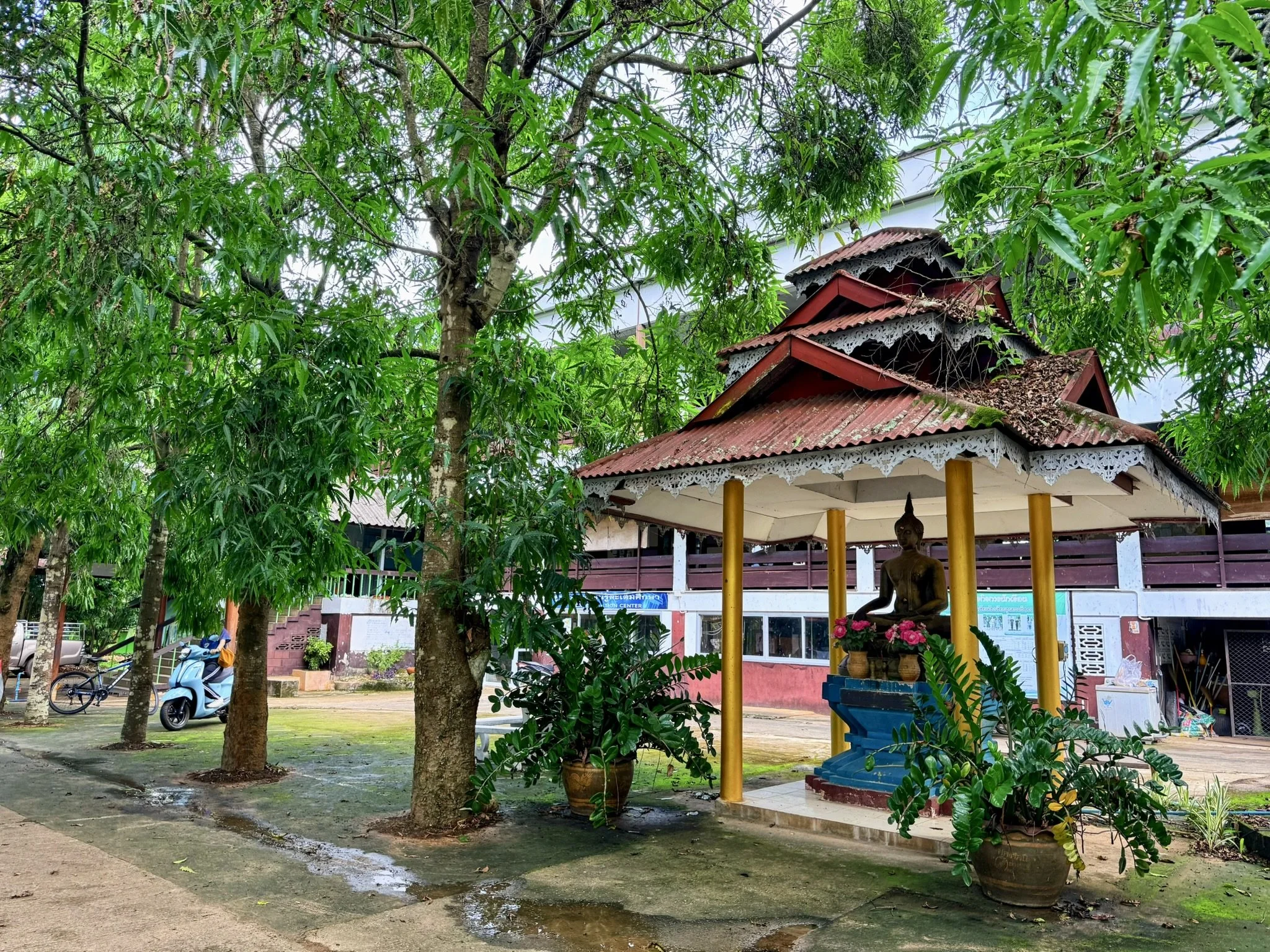
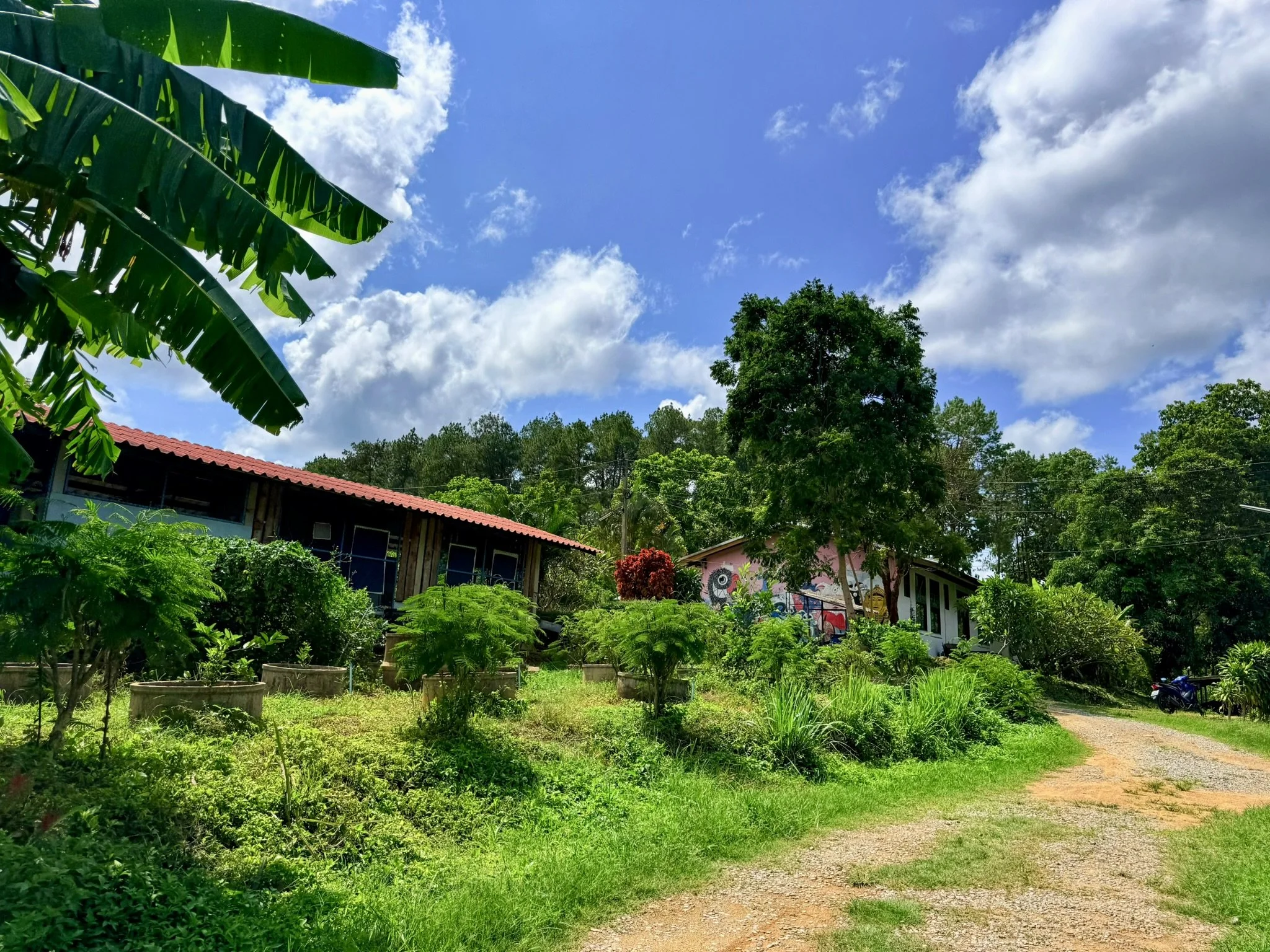
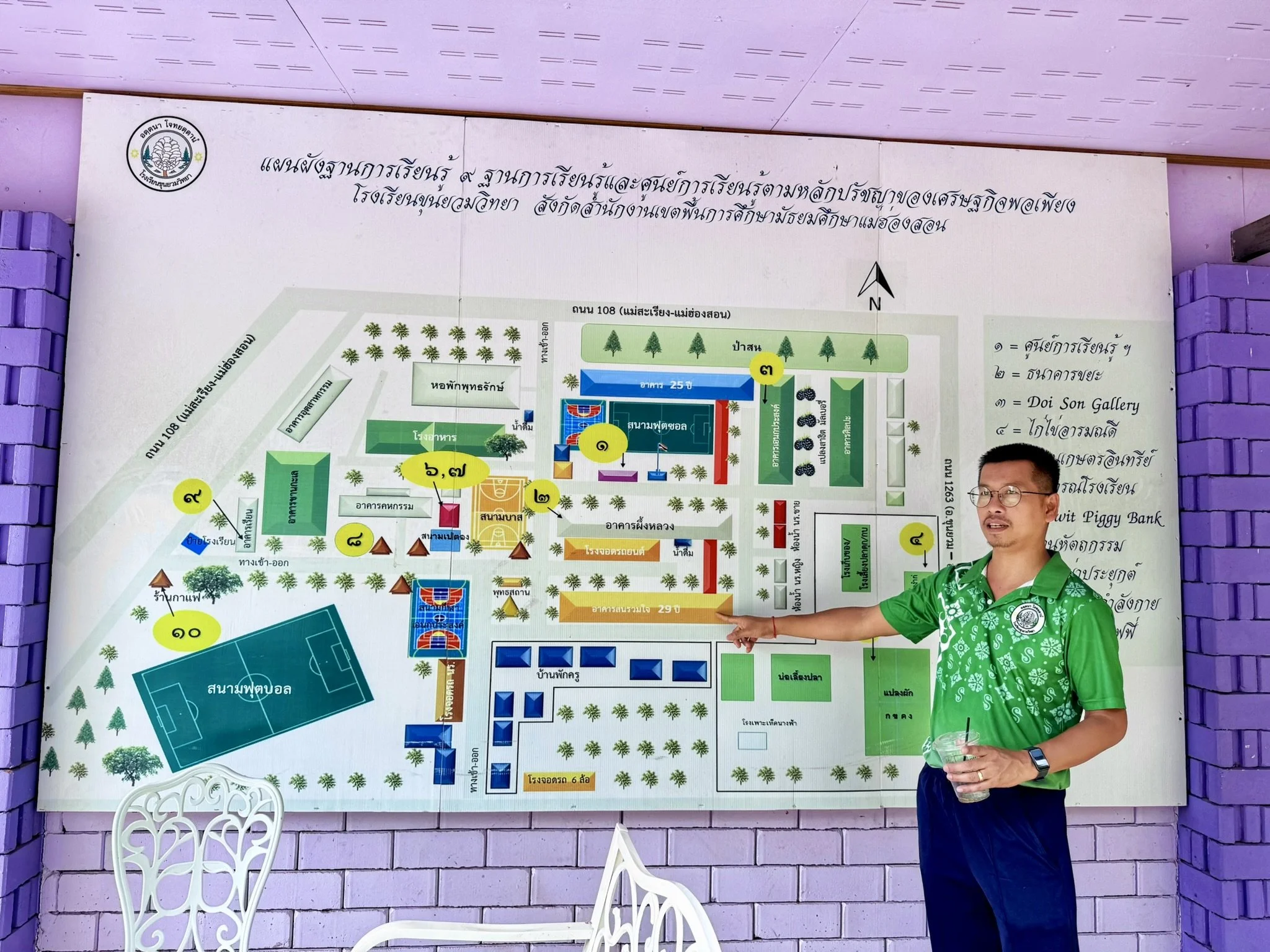
Our main destination for the day was Khun Yuam, where we were meeting up with our friend Gai, who teaches English at Khunyuamwittaya School. The school serves grades 7 through 12, has roughly 1,000 students, and about 200 of them live in on-campus dormitories. After Gai treated us to lunch and coffee, he gave us a tour of the sprawling campus, which immediately reminded us of Akiko’s high school boarding school campus. The grounds seemed to go on forever, with classrooms, sports facilities, dormitories, and open spaces spread across the property.
We also had a chance to sit down briefly with his wife—also a teacher at the school—who grew up in Khun Yuam. During the conversation, we learned a surprising detail: her father is the mayor of the town. Somehow that little fact had never come up before.
Khun Yuam: Thai-Japan Friendship Memorial Hall
We then visited an unexpected memorial—the Thai-Japan Friendship Memorial Hall.
At first, we were skeptical.
“Friendship?” we thought.
The Japanese military is not exactly remembered for making friends during World War II. Most historical accounts focus on the brutality and suffering inflicted throughout Asia during Japan’s expansionist campaign.
So what exactly was this “friendship” museum about?
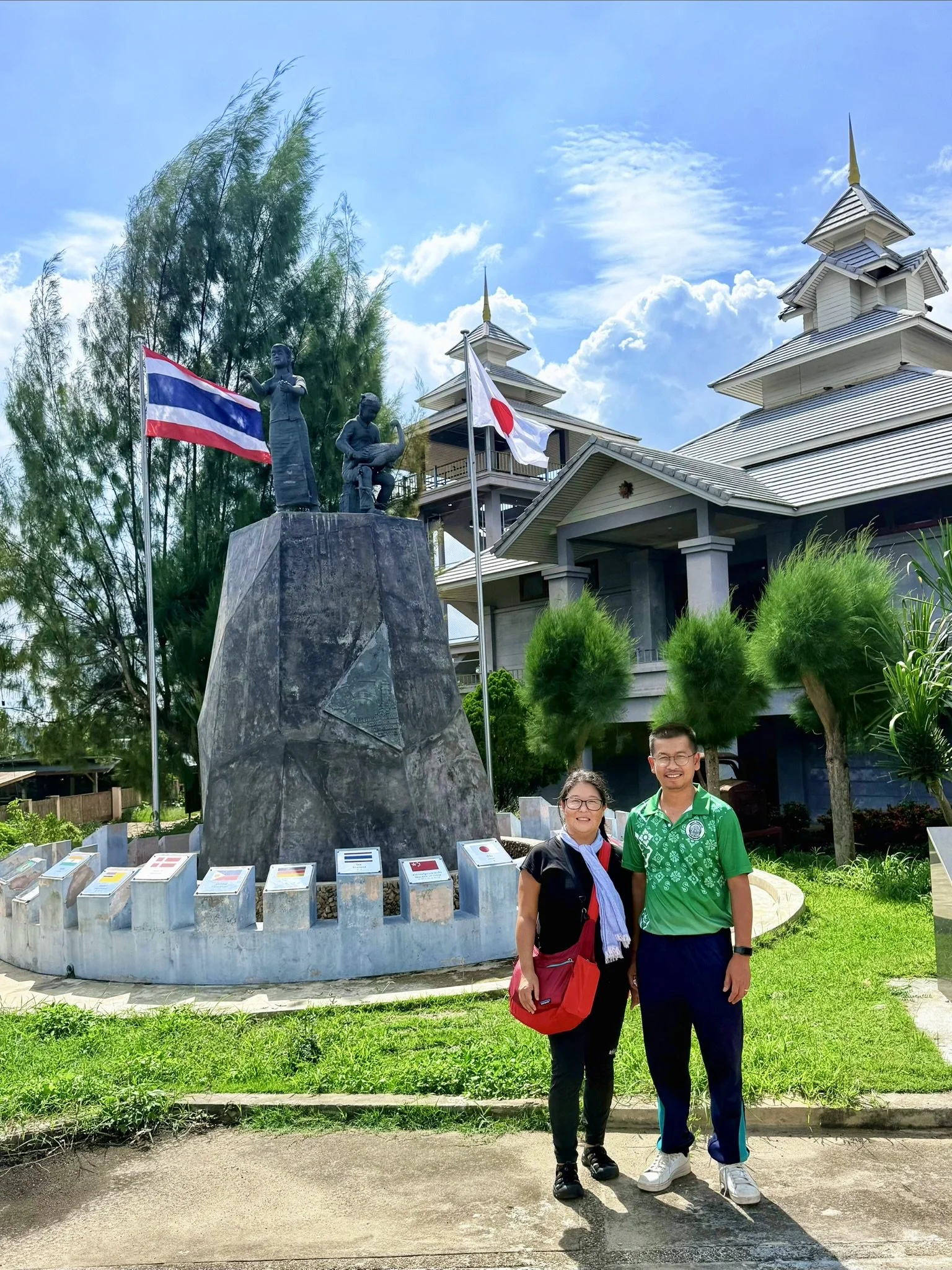
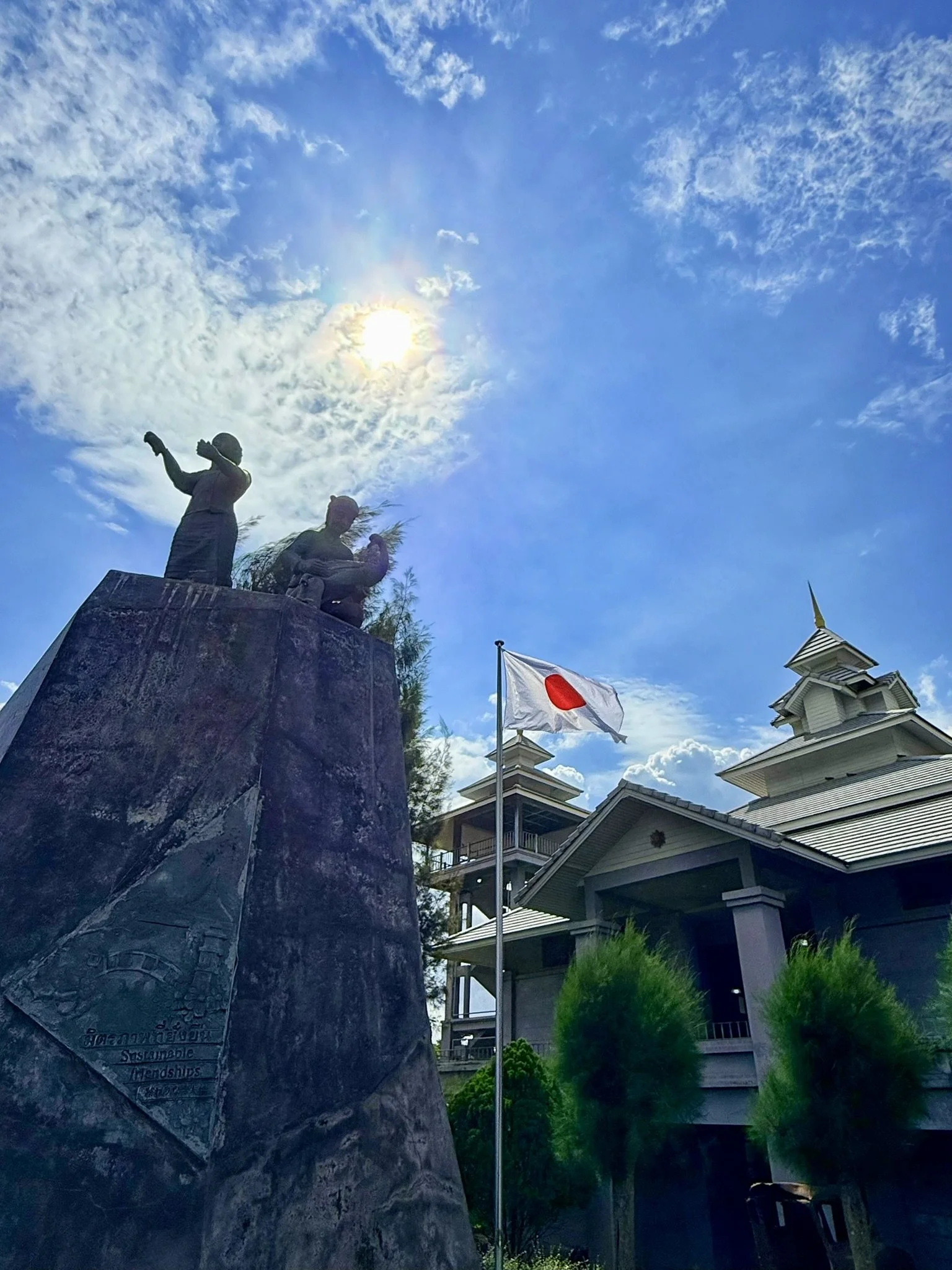
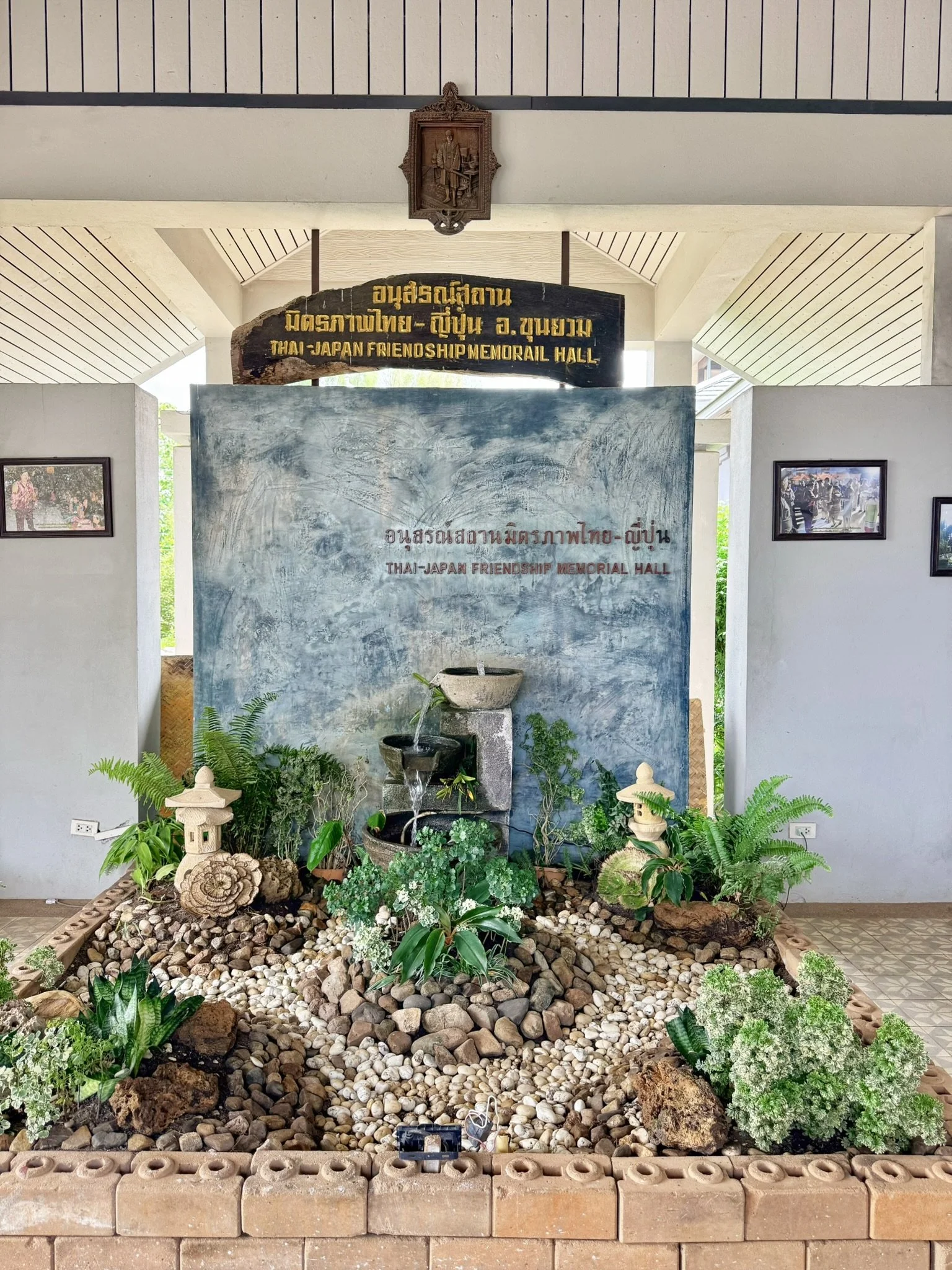
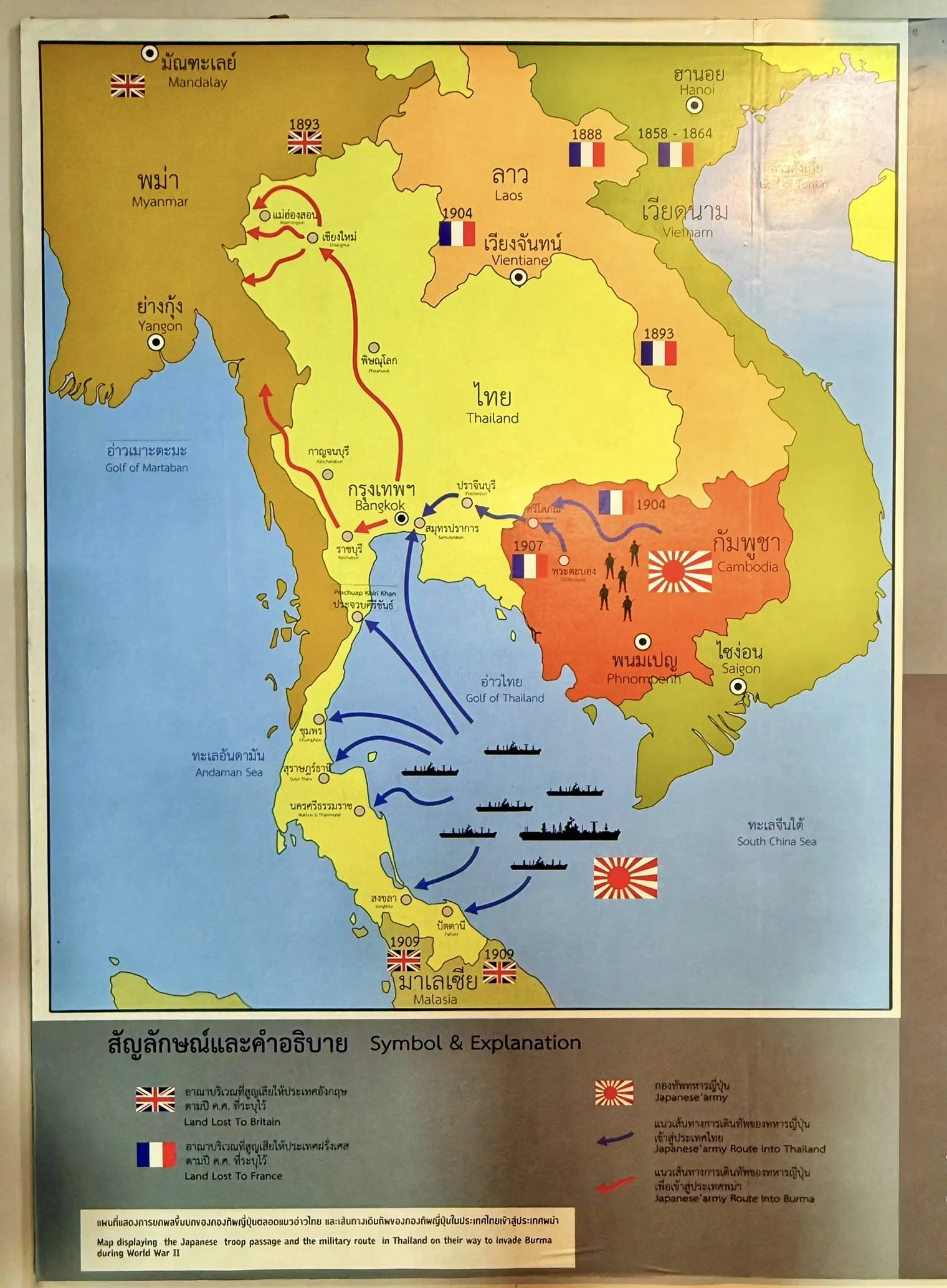
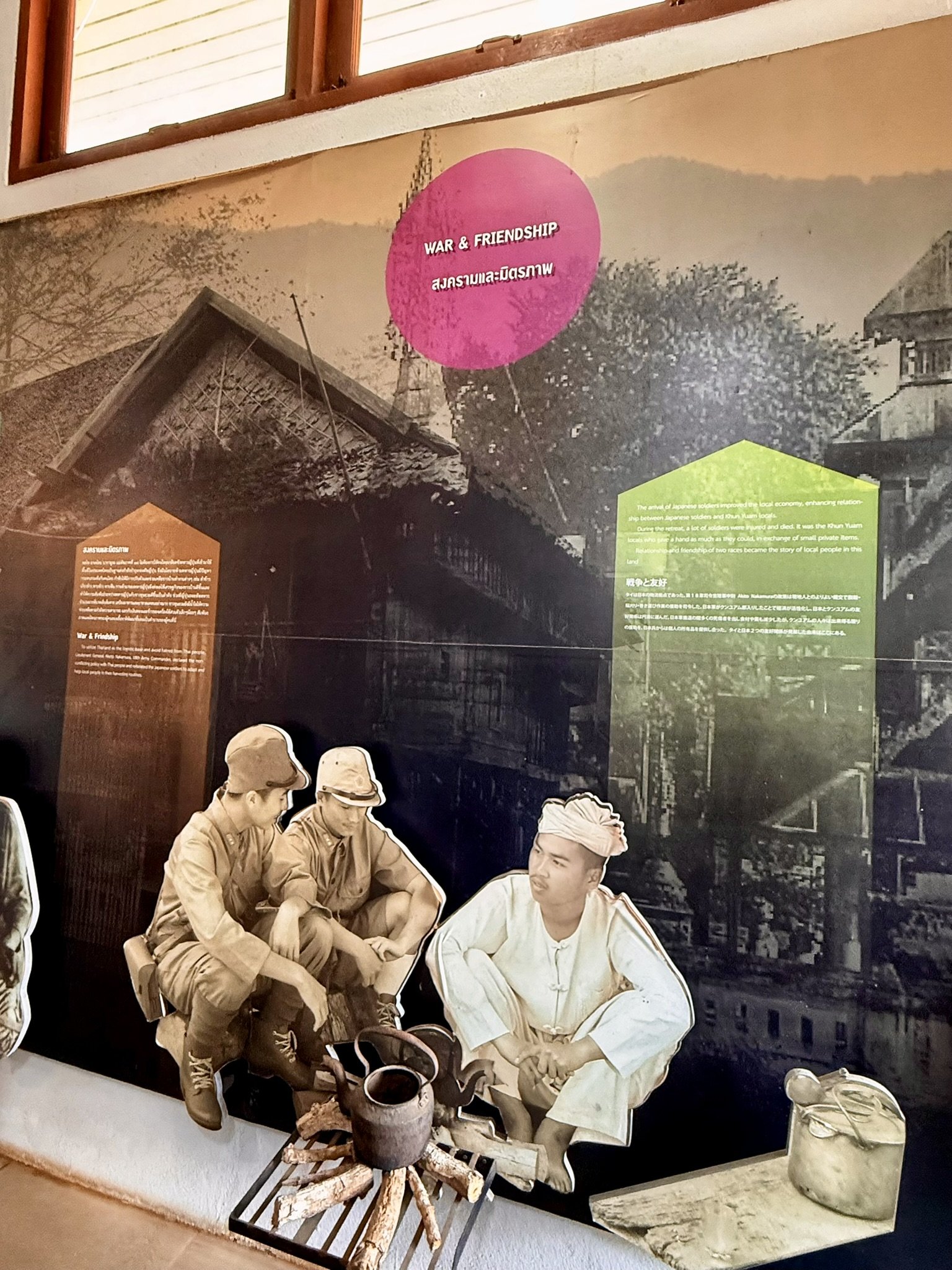
As it turns out, the story is more nuanced than we expected.
Historically, Khun Yuam sat along an important trade route connecting Chiang Mai and Myanmar. Long before the war, roads and infrastructure already existed through the region. During World War II, Japan used Thailand—and specifically the Khun Yuam area—as a strategic staging ground for its campaign into Myanmar.
What isn’t widely known is that Japan deliberately adopted a different approach toward Thailand than it did in many other parts of Asia. Thailand remained the only nation in mainland Southeast Asia that had avoided colonization by a Western power. Japan also understood that defeating Thailand militarily would be difficult and potentially costly. Instead, Japanese leadership instructed troops to cooperate with local communities and maintain positive relations in order to preserve access to critical military routes and bases.
The museum documented stories of cooperation between Japanese soldiers and local Thai residents. A Buddhist temple was temporarily converted into a military hospital. Some Japanese soldiers married local women, and Thai-Japanese descendants still live in the area today.
The memorial was built to commemorate this unusual chapter of wartime history—a relationship that was far more complex than we had expected when we first walked through the doors.
Mae Hong Son Town: Wat Phra That Doi Kong Mu Temple
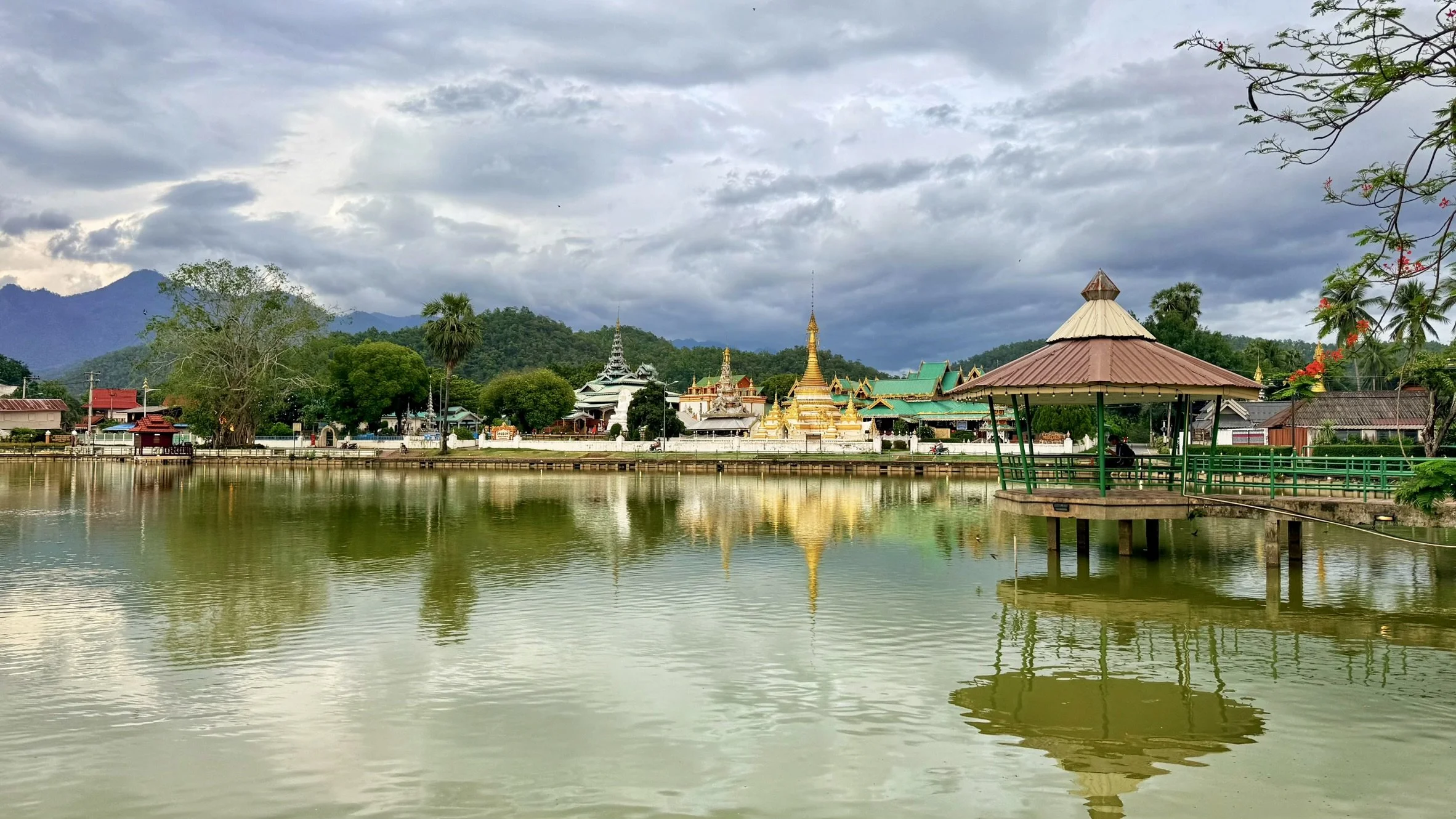
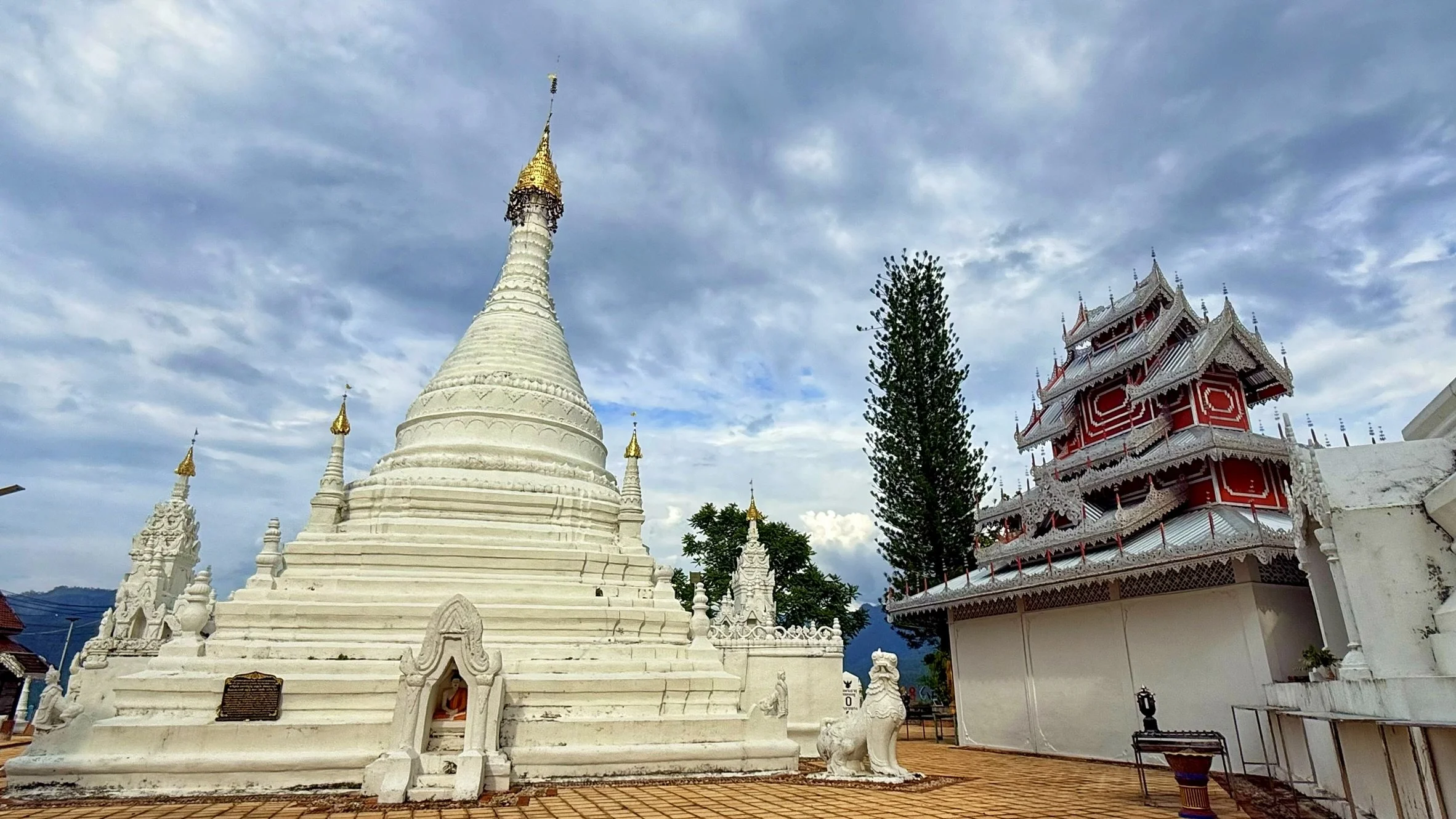
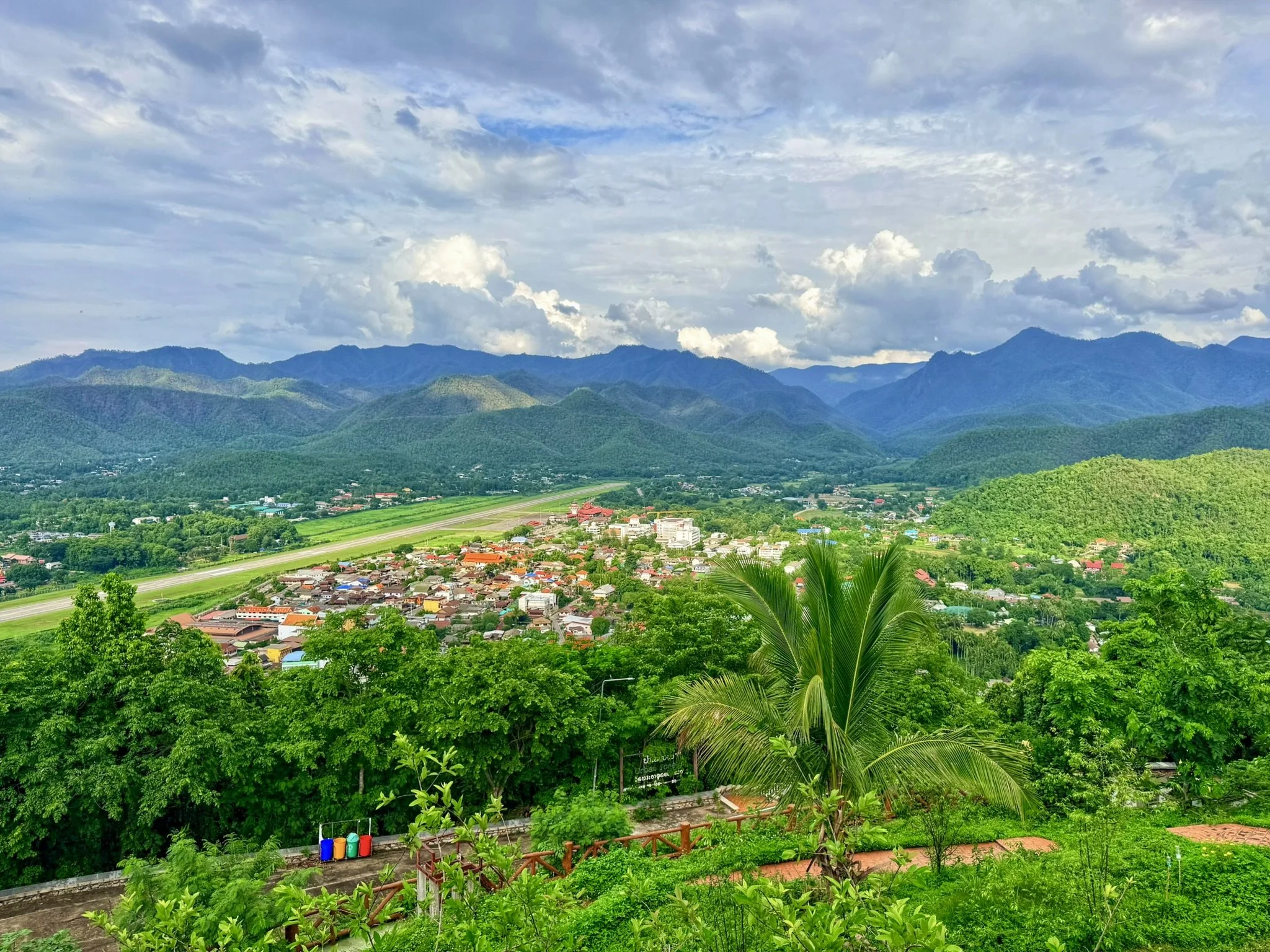
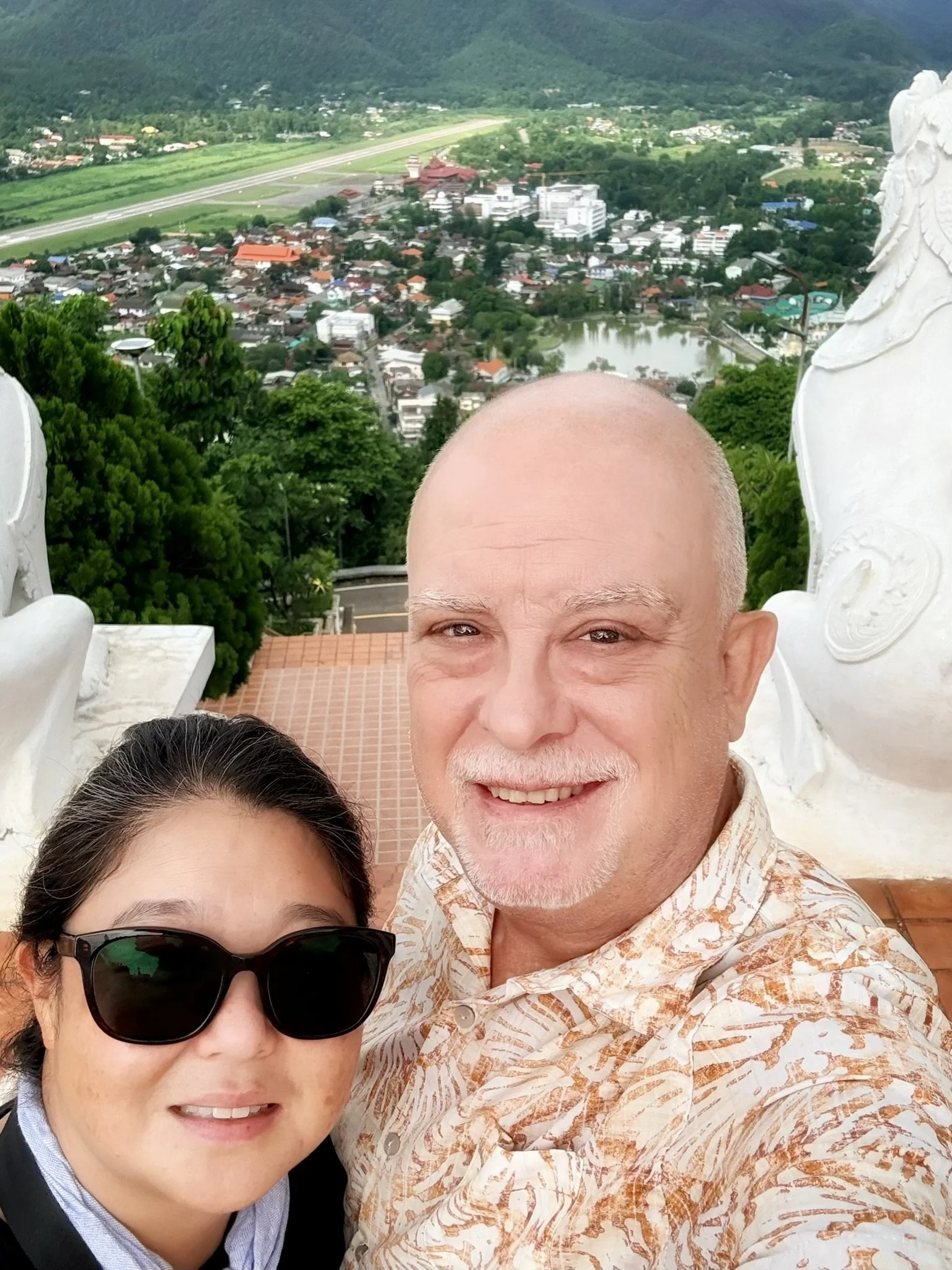
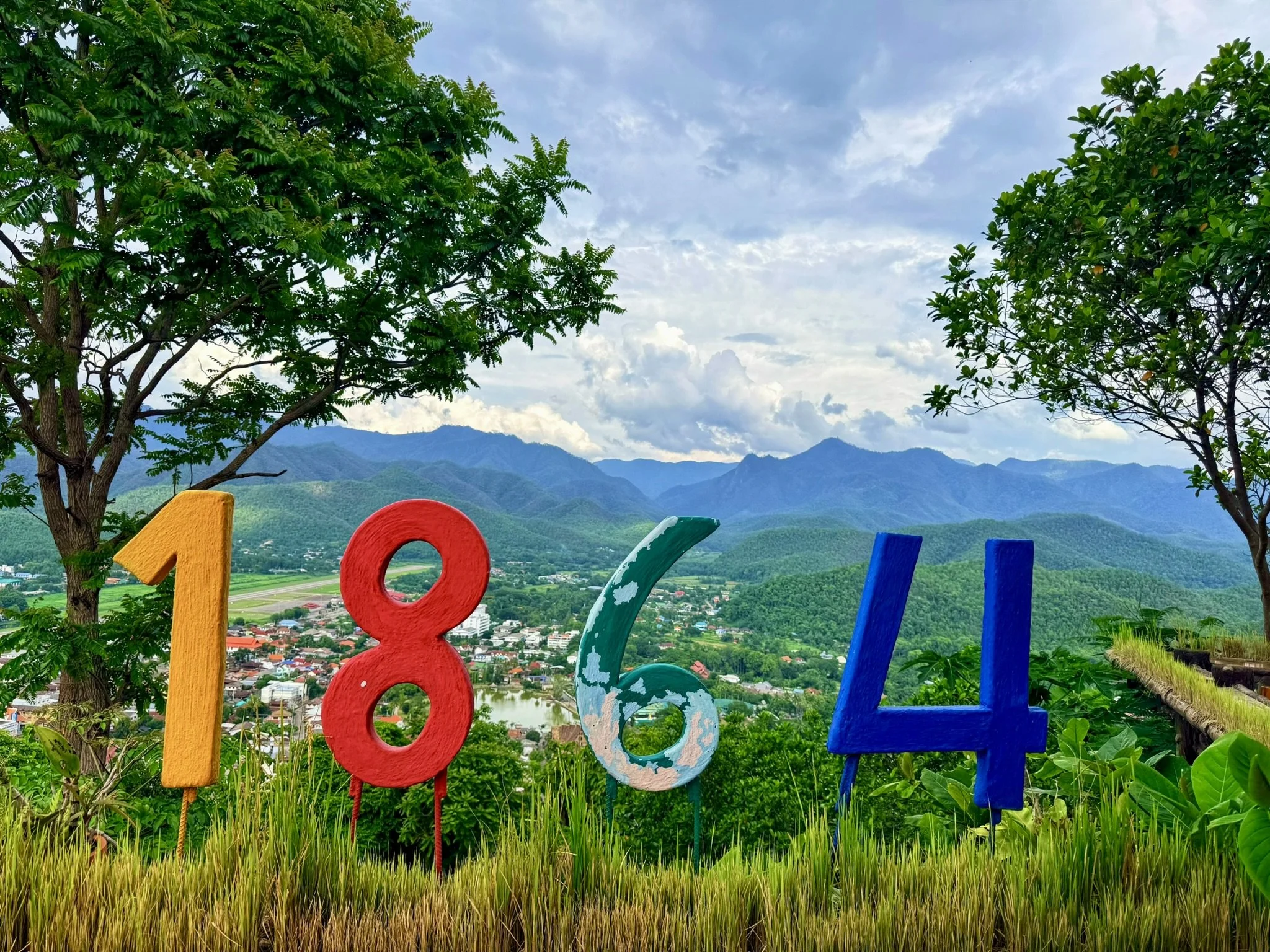
After many hairpin turns and serpentine roads—they say there are 1864 curves on the loop, we arrived in Mae Hong Son town and headed straight to the hilltop temple of Wat Phra That Doi Kong Mu for a panoramic view over the valley.
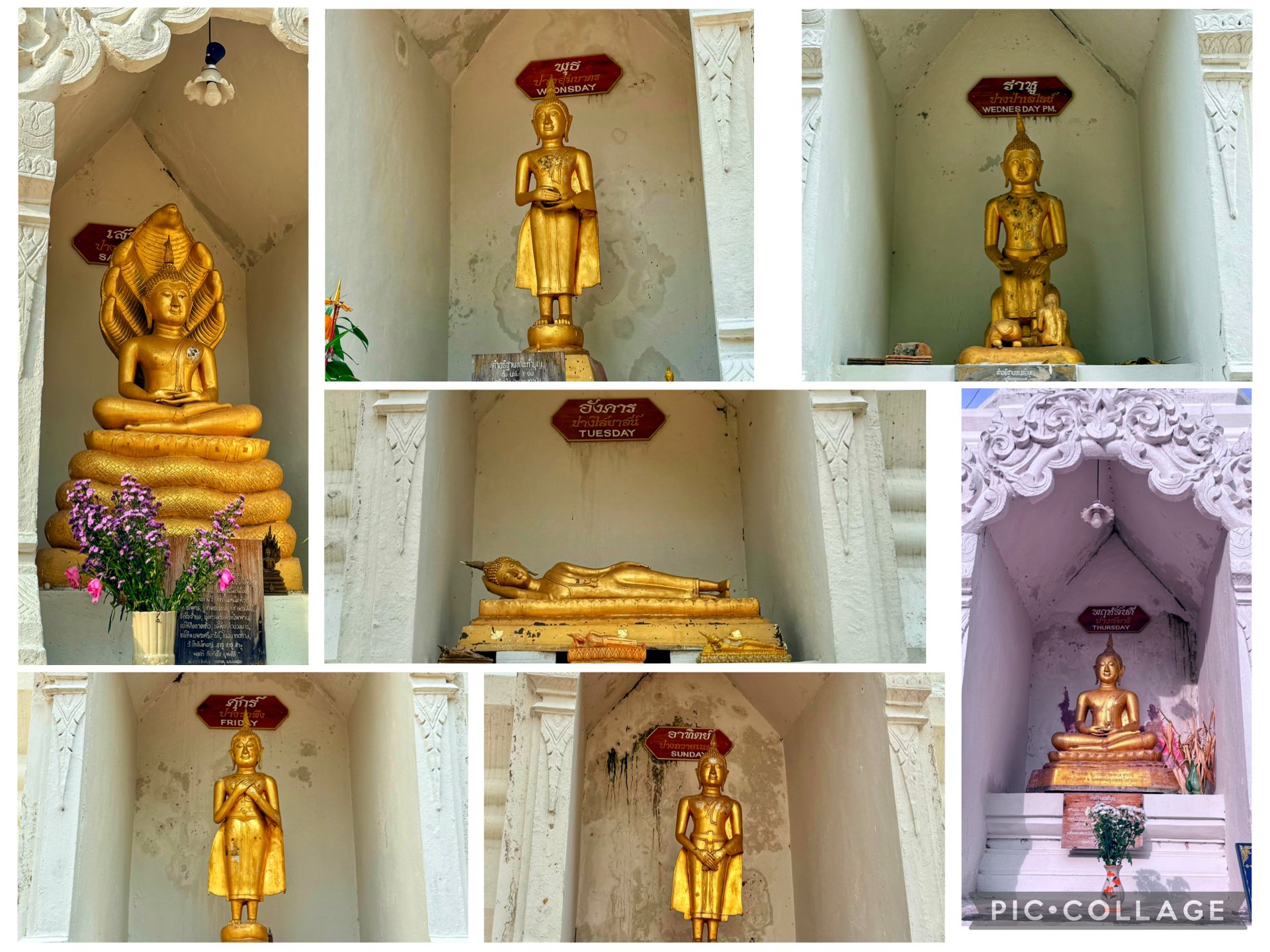
The temple overlooks the city and surrounding mountains, which at this time of year seem impossibly green. One feature we particularly enjoyed was the collection of Buddha images representing each day of the week. Out of all of them, Tuesday’s Buddha was my favorite—the reclining Buddha, of course.
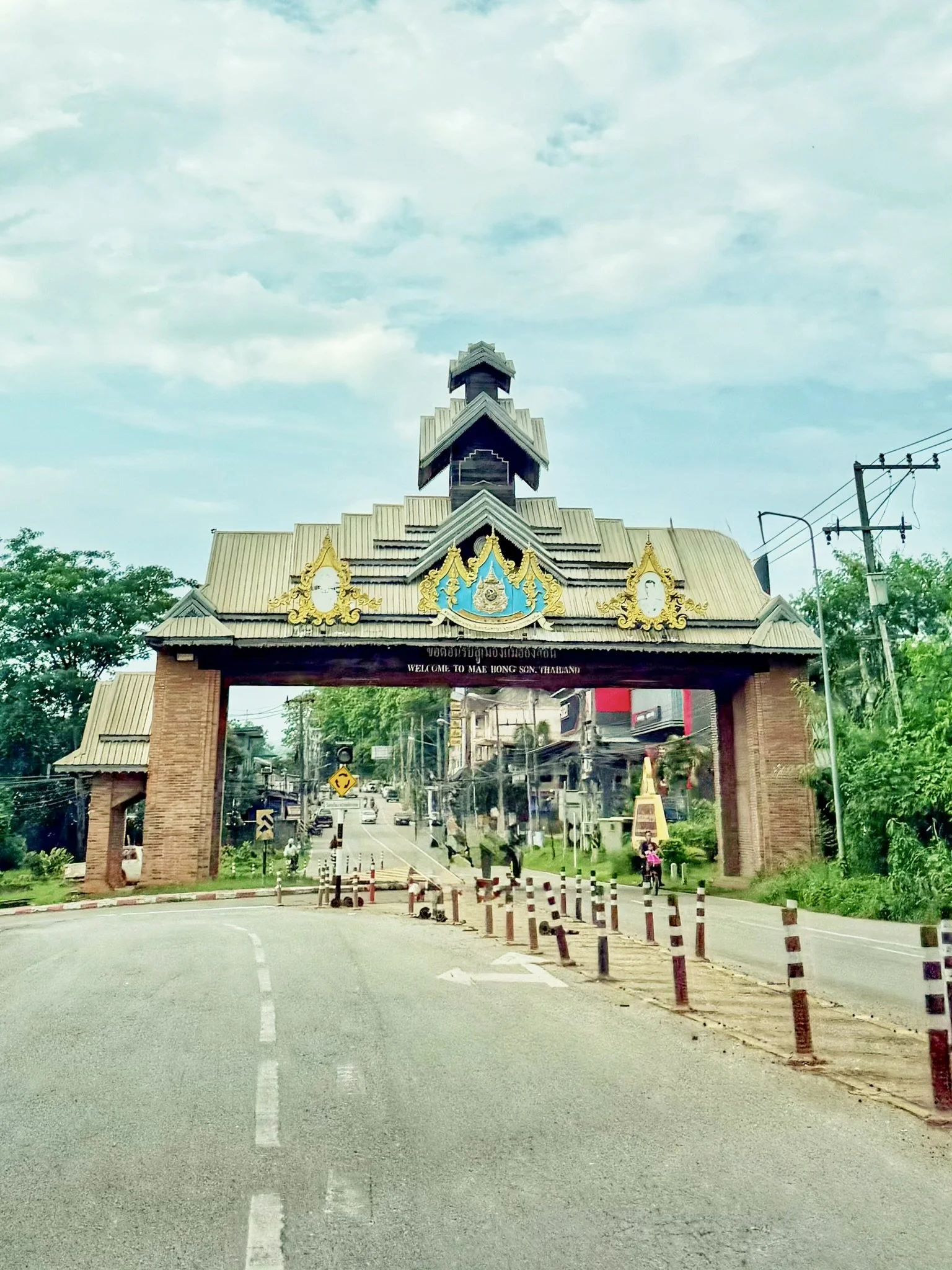
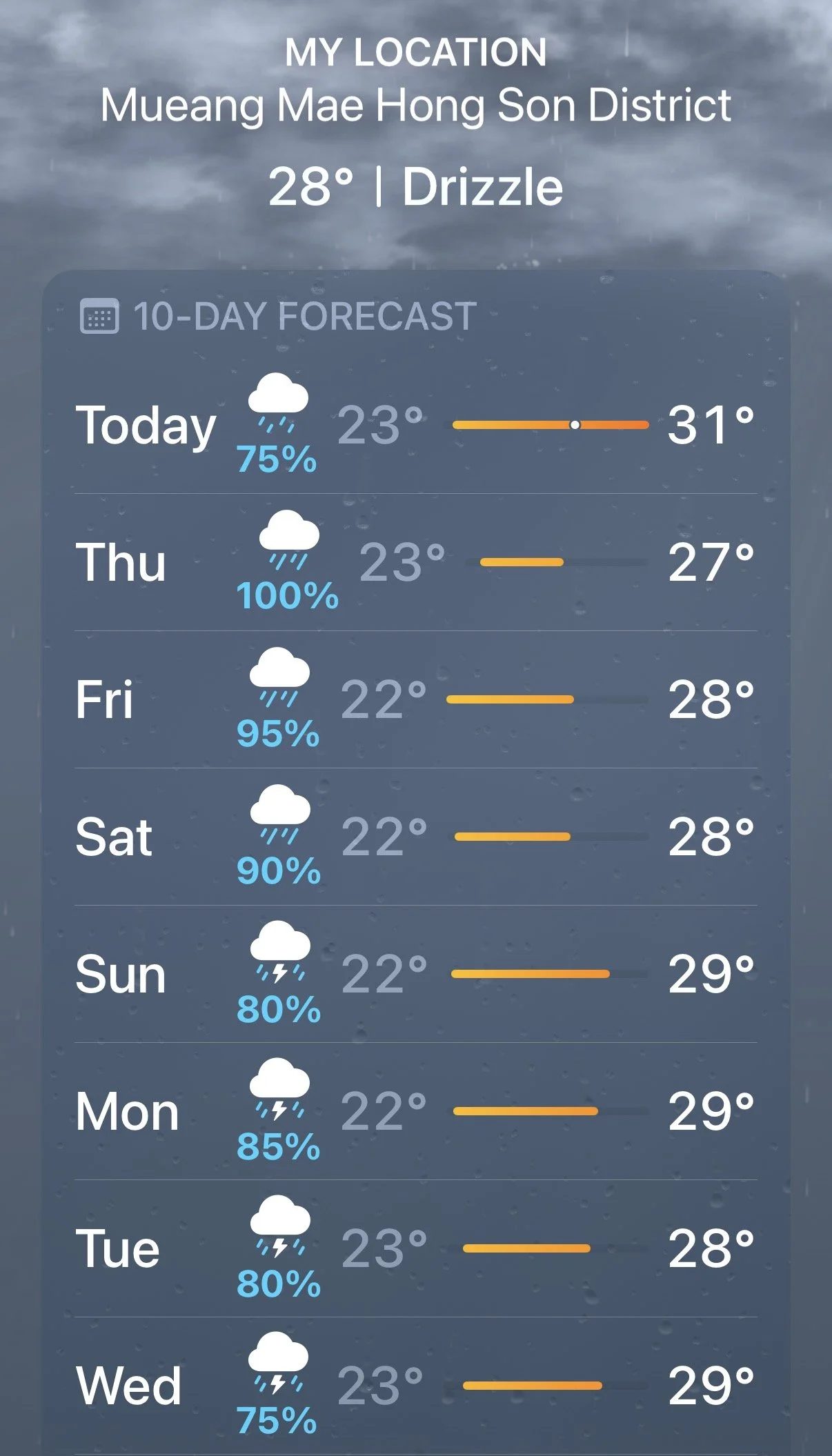
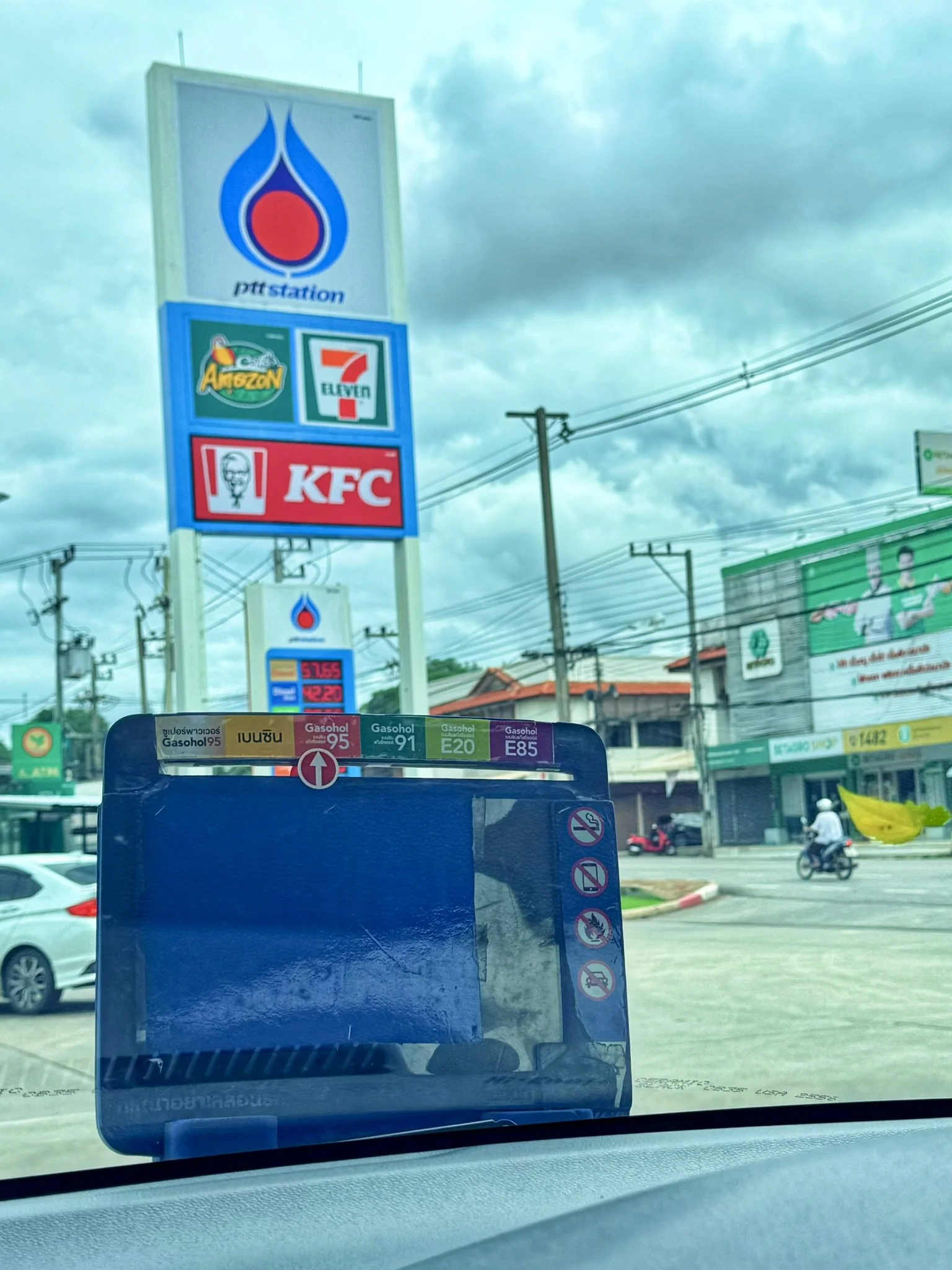
With it being the rainy season (almost 100% chance of rain every day!) as well as the low season for tourists, the town of Mae Hong Son was very sleepy. We filled up Cecil’s tank with gas (~USD $38 for half a tank) and found a restaurant within walking distance for dinner, then called it an early night.