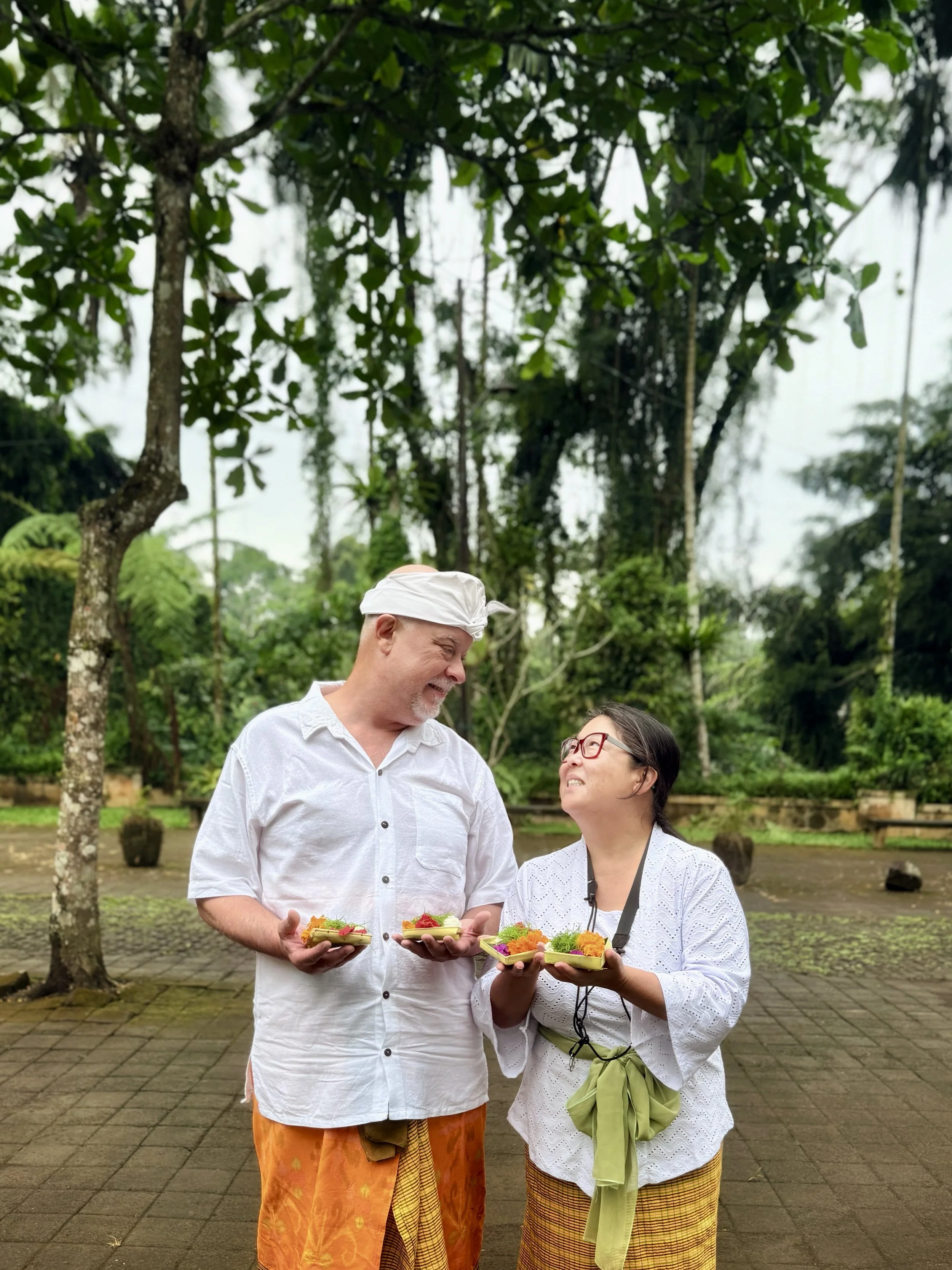
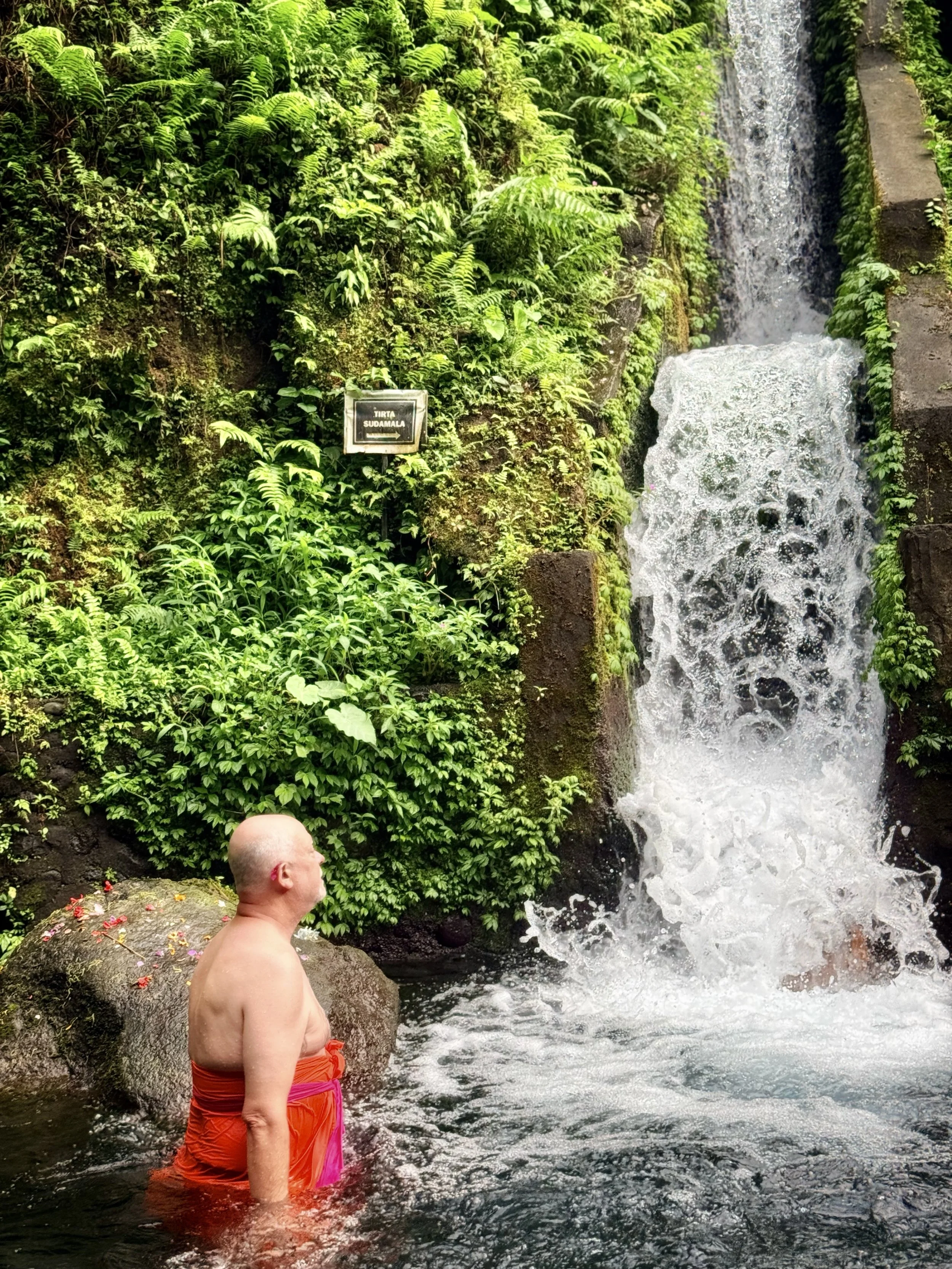
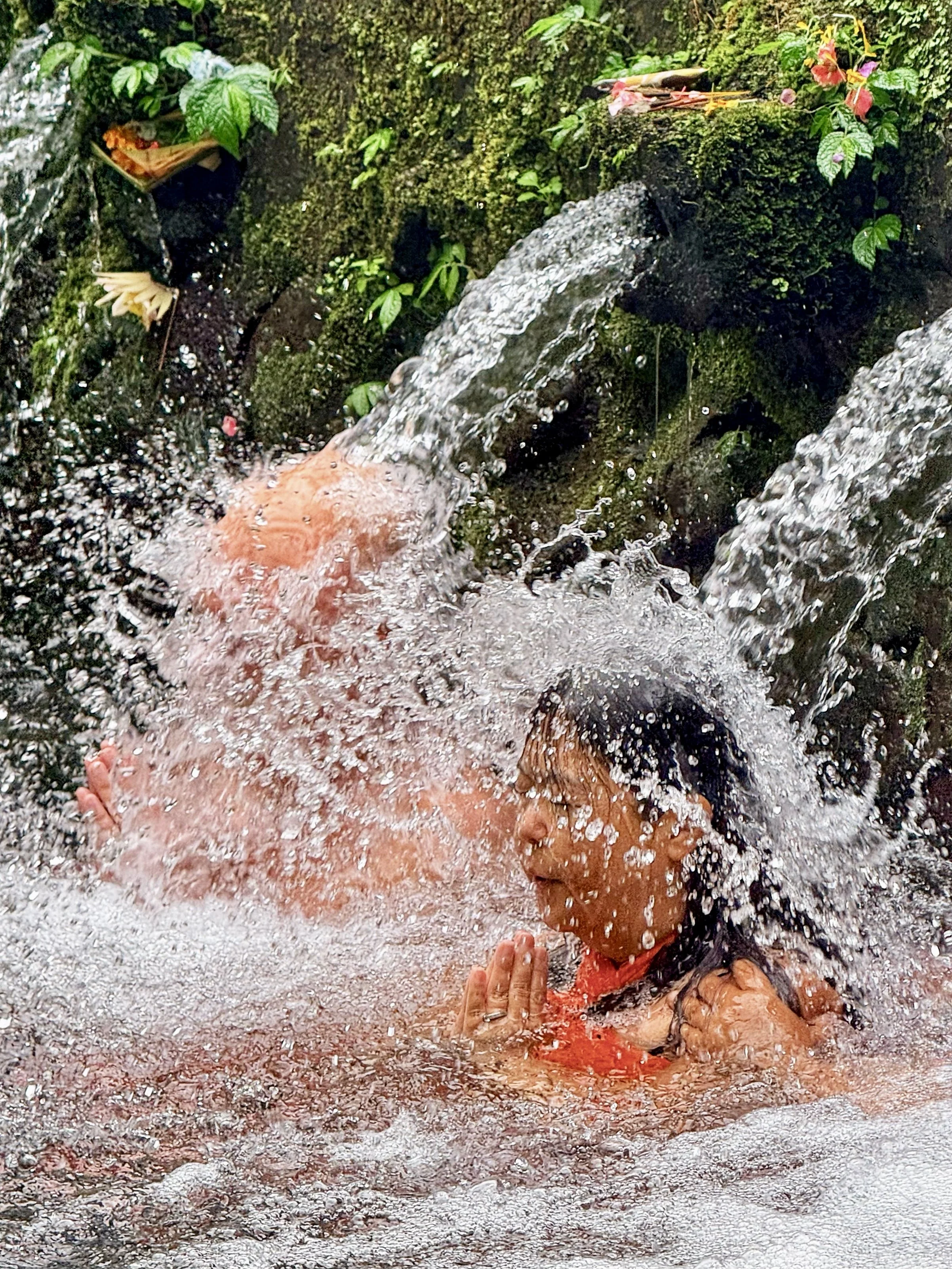
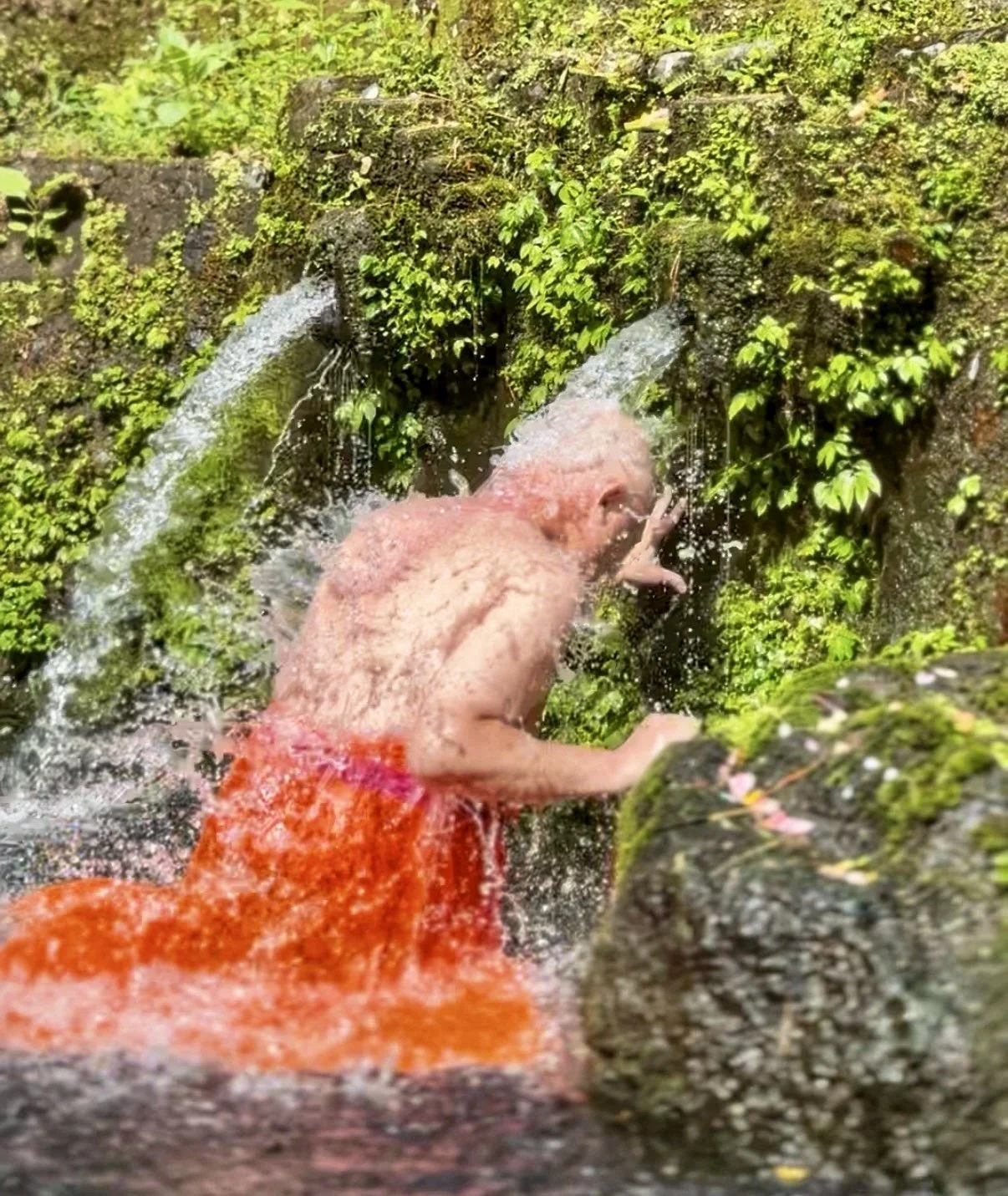
We got to partake in a Balinese Hindu sacred water purification tradition—Melakut—designed to wash away negativity and leave you feeling refreshed and renewed.
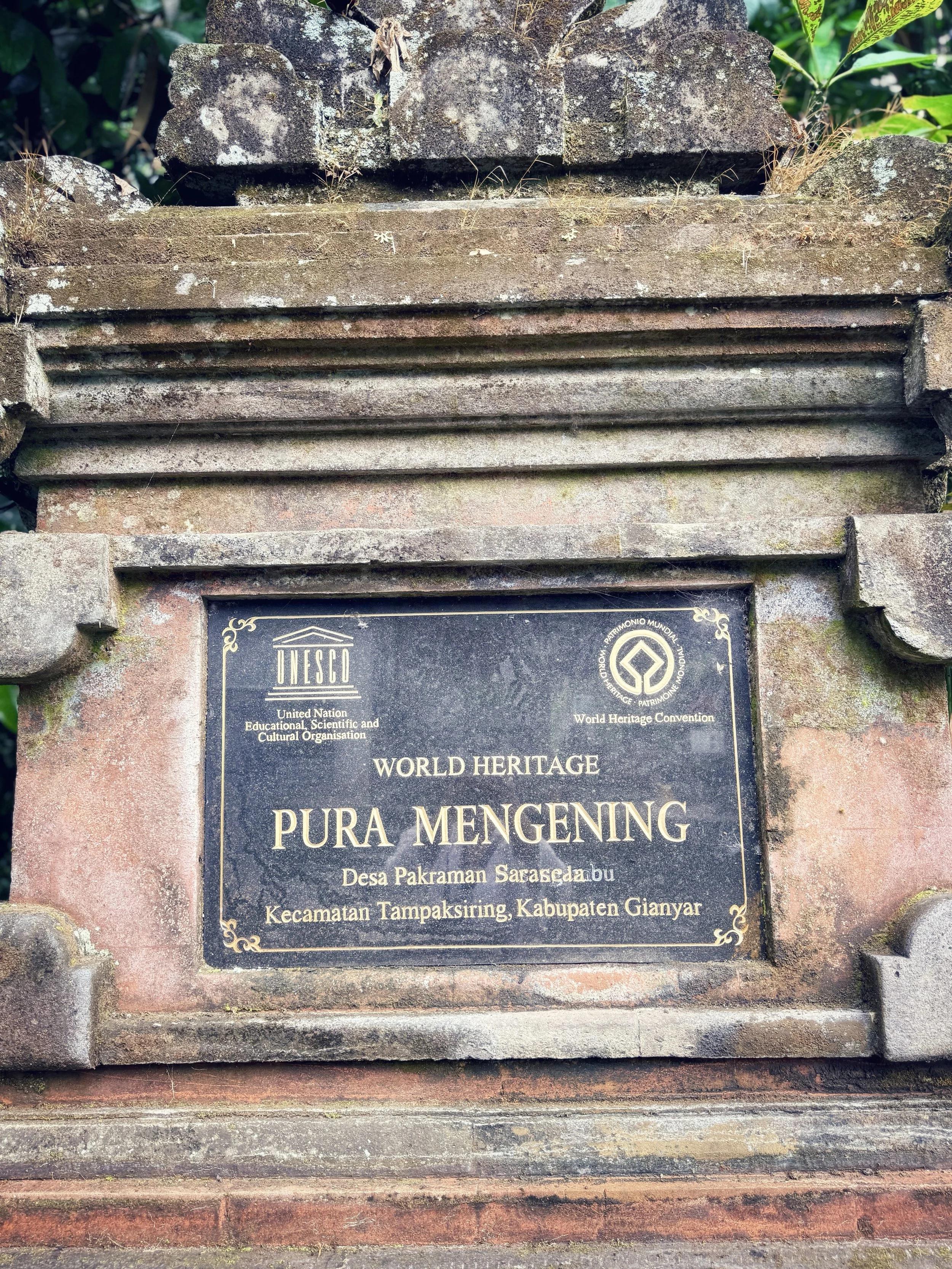
Pura Mengening Water Temple
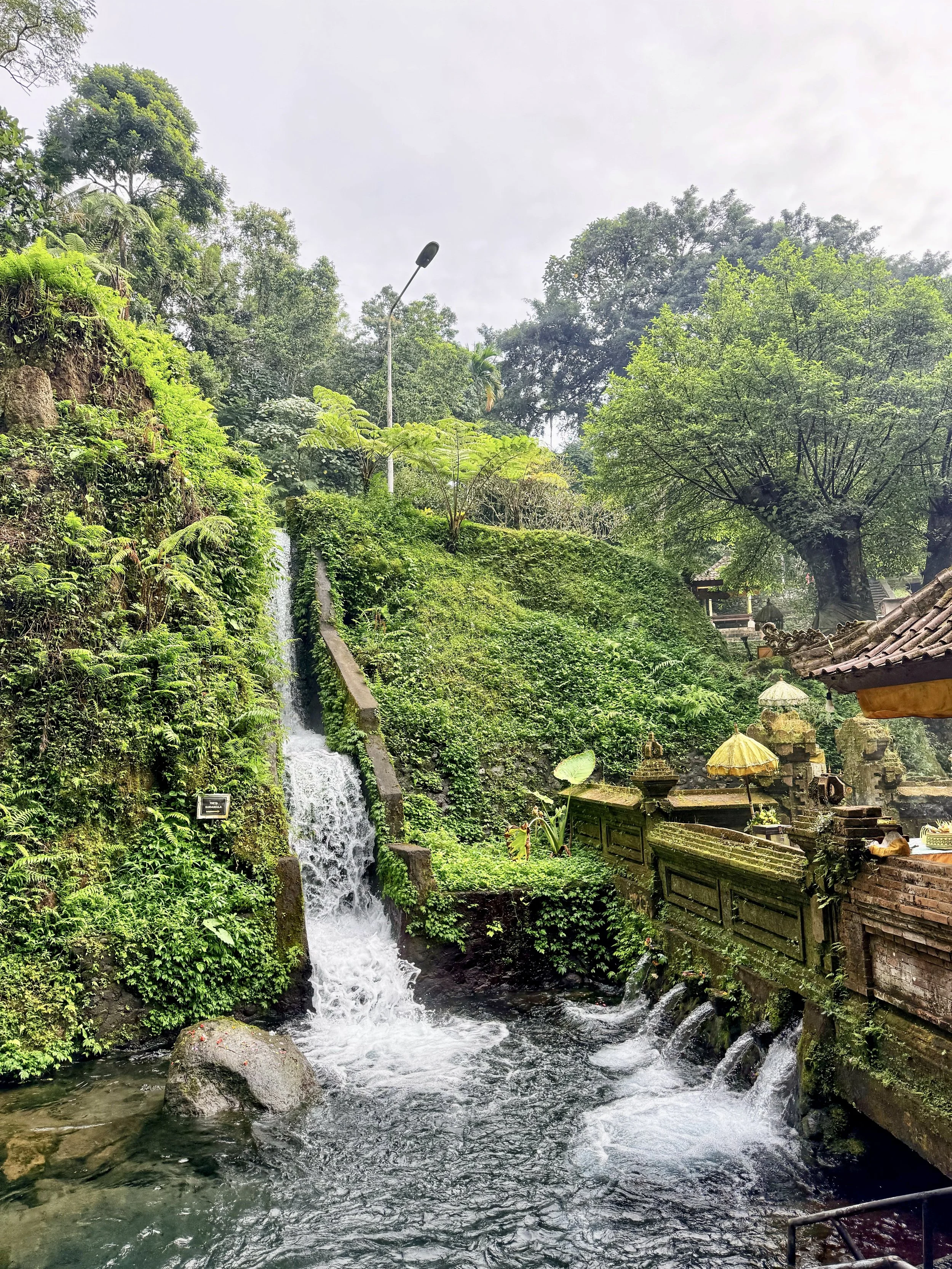
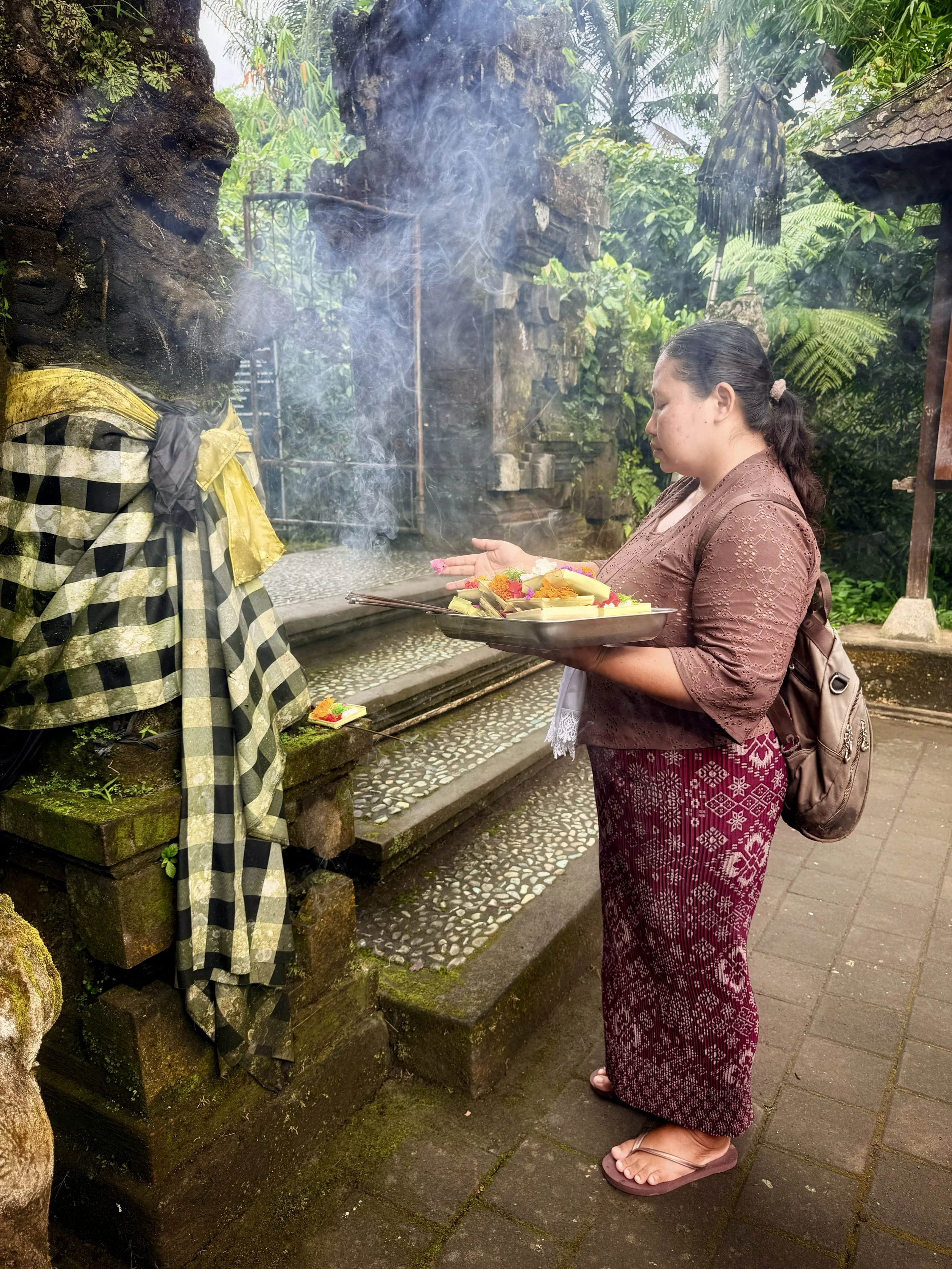
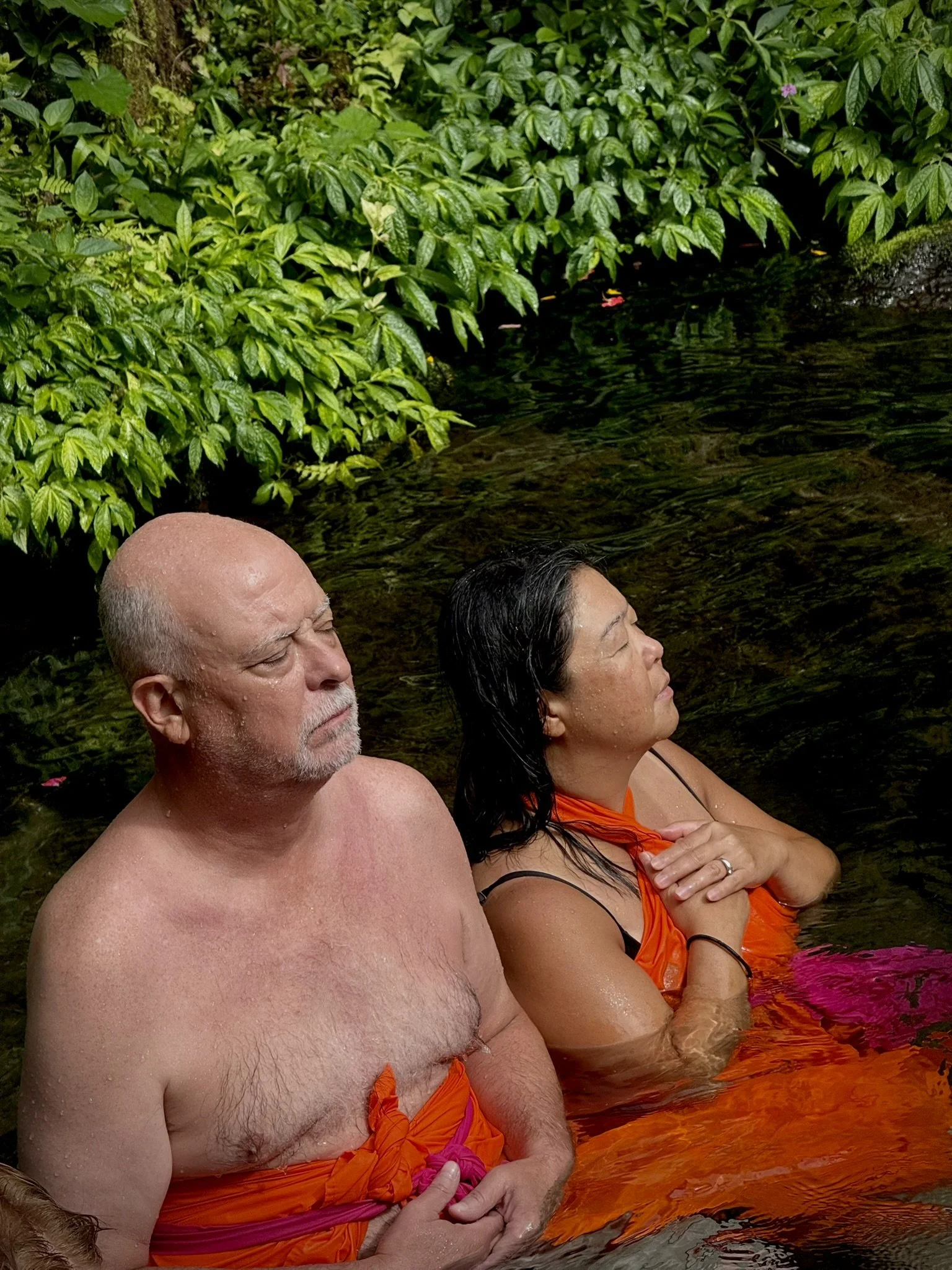
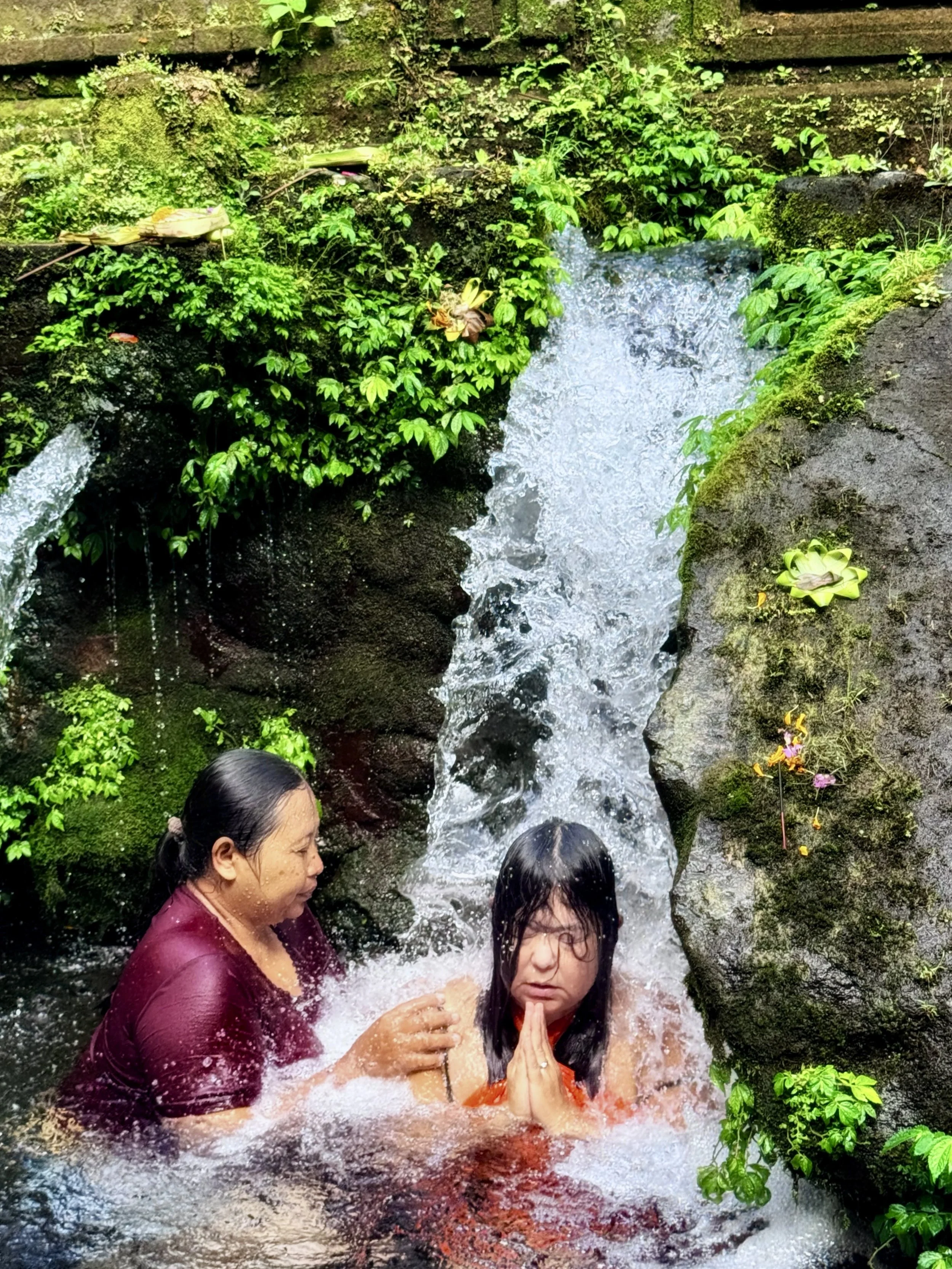
The guided sacred ritual at a beautiful water temple—Pura Mengening where the spring water comes from Mount Batur—was immensely spiritual. All our senses were hyper-activated. The beautiful colors, intricate carvings, fragrant florals, scent of the moss covered forest touched by incense smoke, the cool wetness of the holy water, sounds of the tumbling falls, the rhythmic meditative chants…made the entire experience even more special.
What a lovely reminder that rituals or acts of devotion with the intent to bring about a sense of spiritual awe, peace, and serenity is humanly universal and transcends any religion or beliefs.
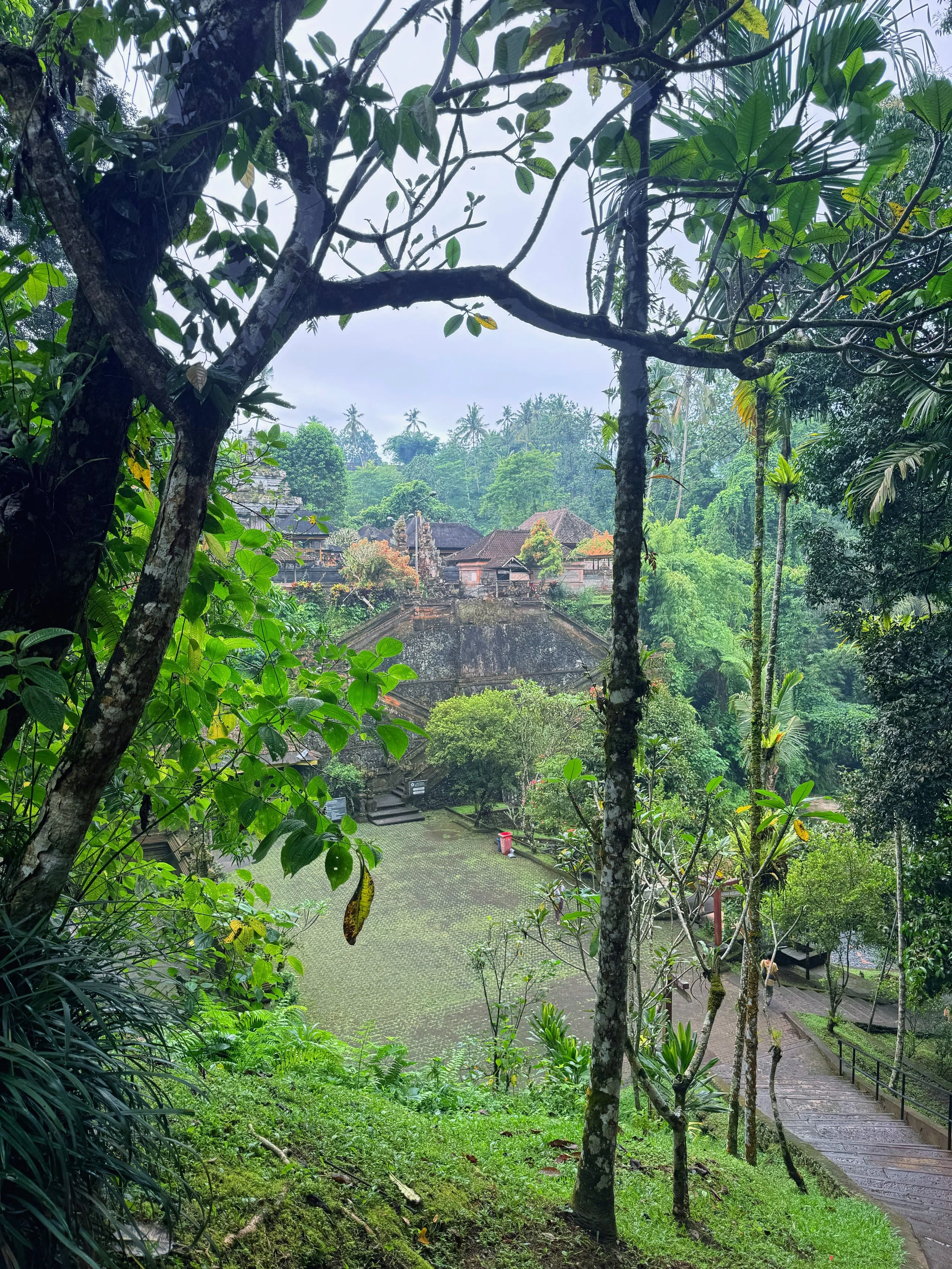
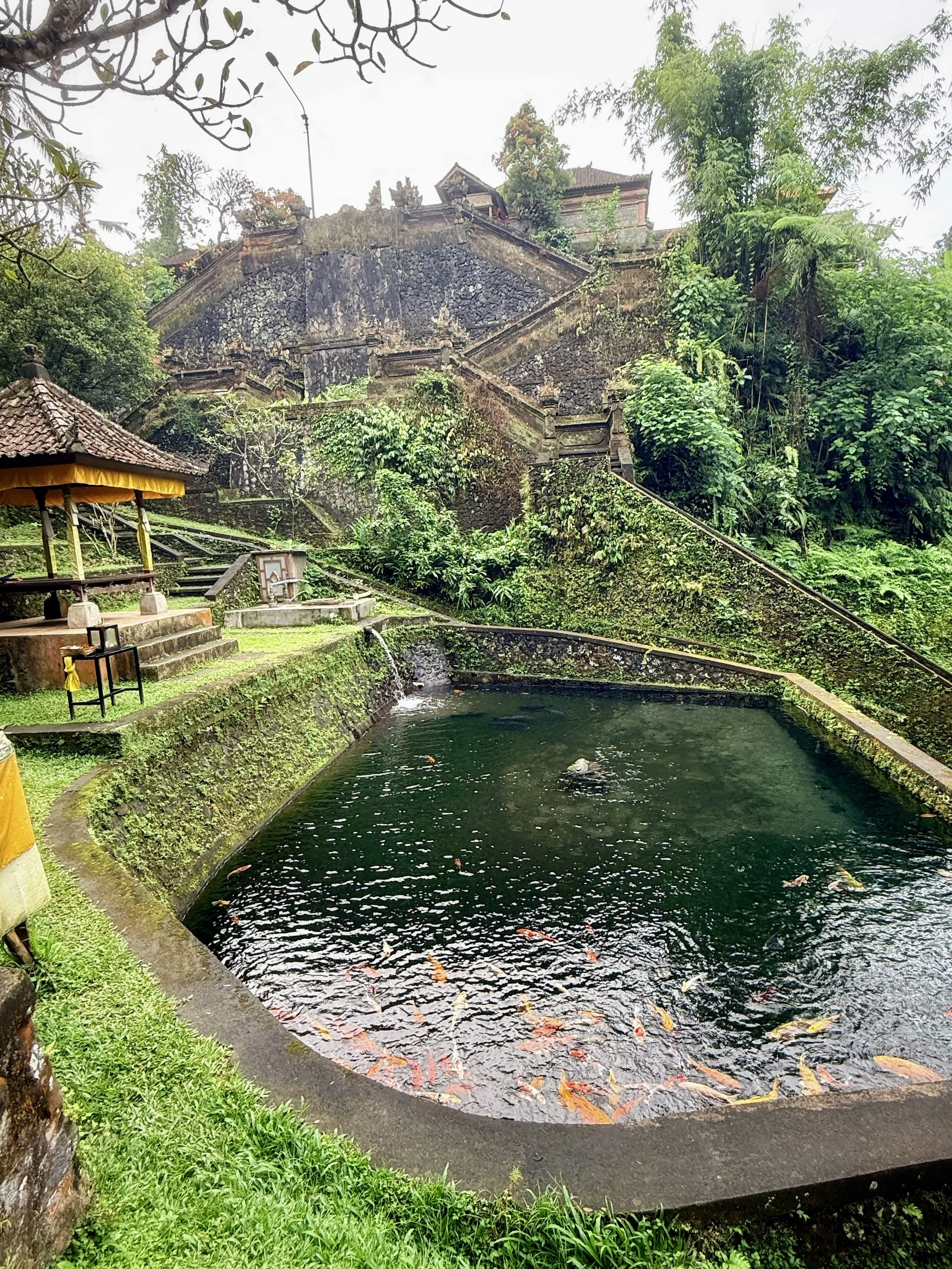
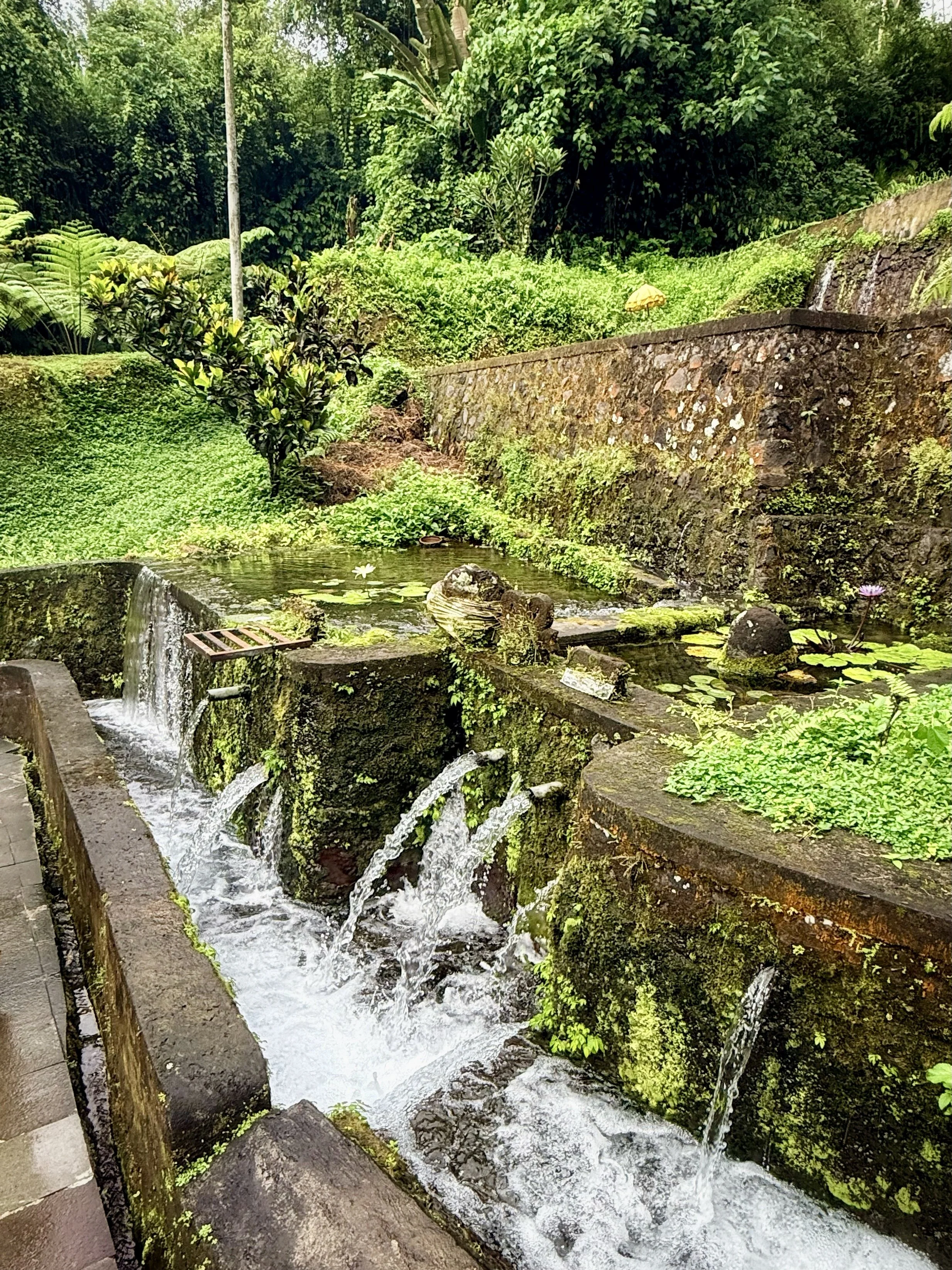
The Melukat Experience
We booked the Melukat through Seek Sophie, a company started by two solo female travelers to Bali, dedicated to offering unique travel experiences.
Agung and Ayu were our two spiritual guides. The morning went by quickly!
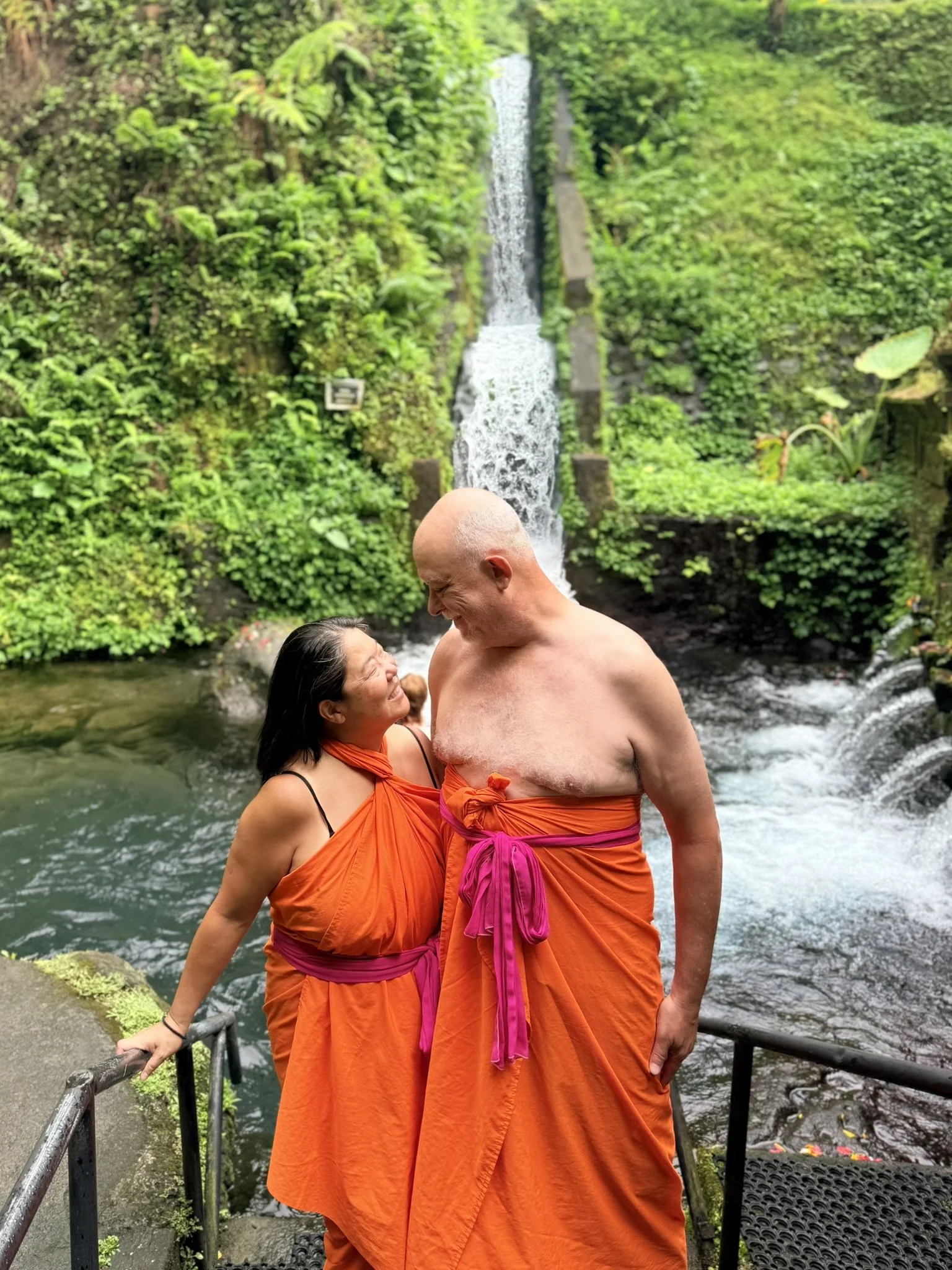
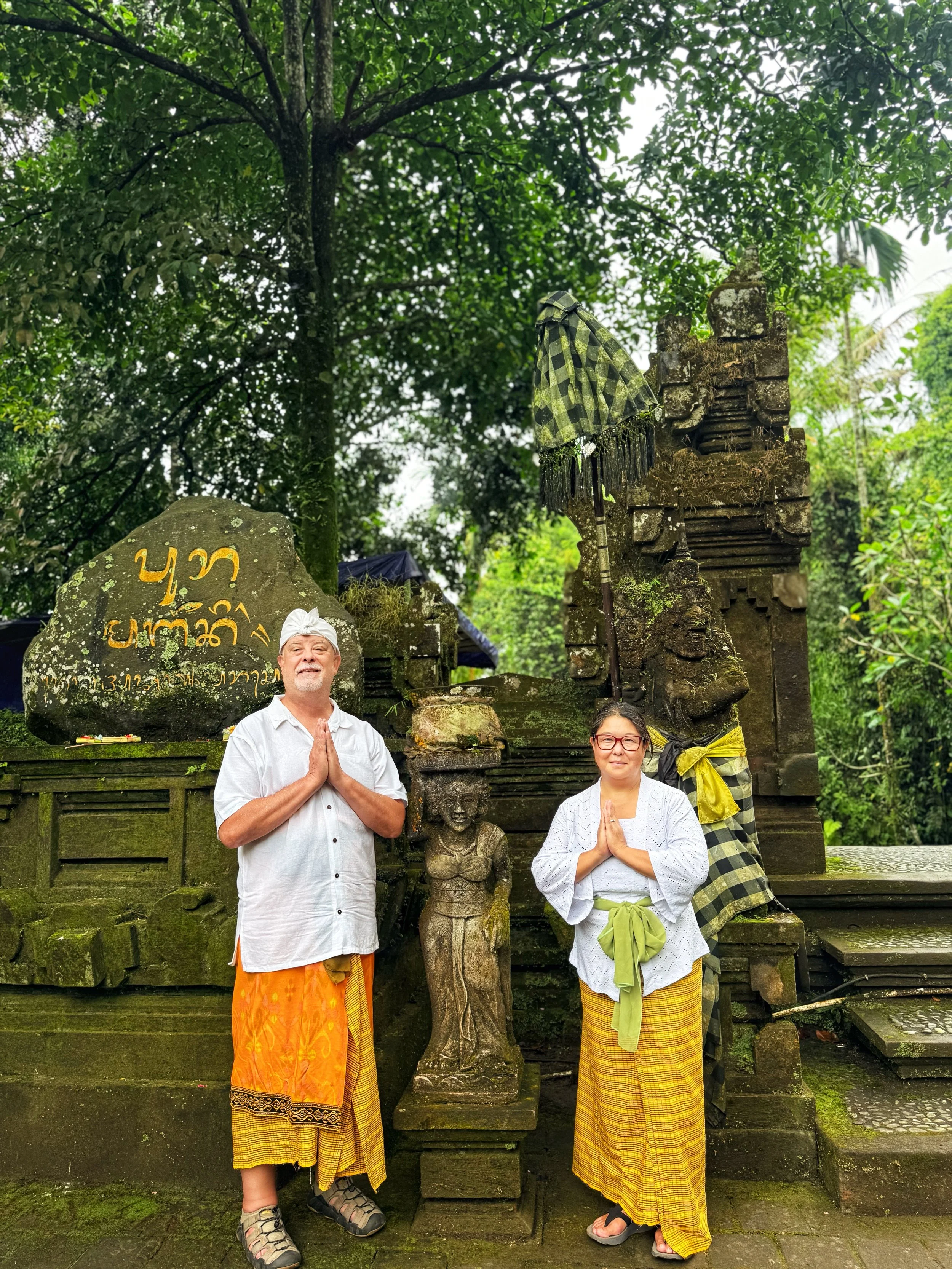
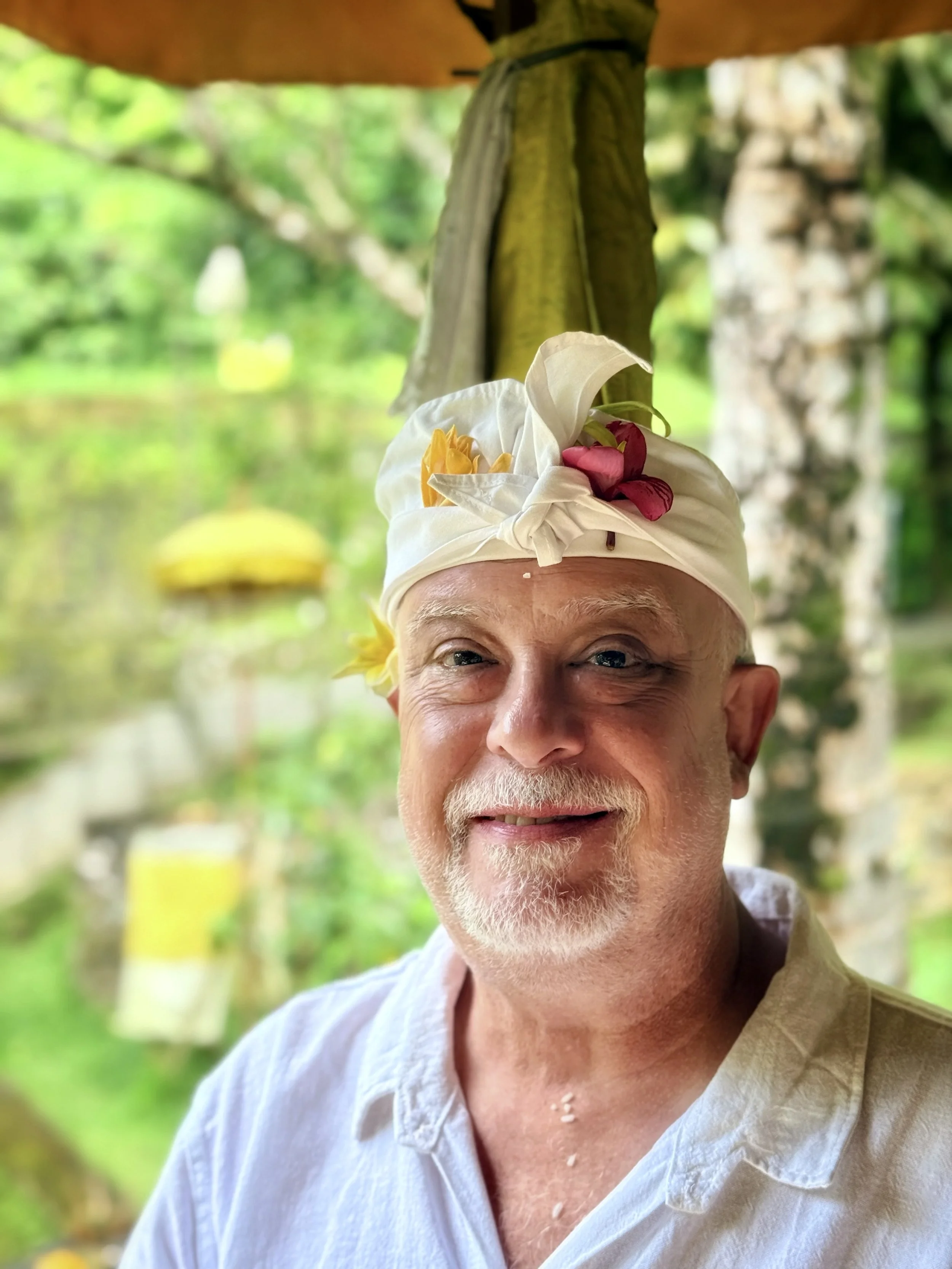
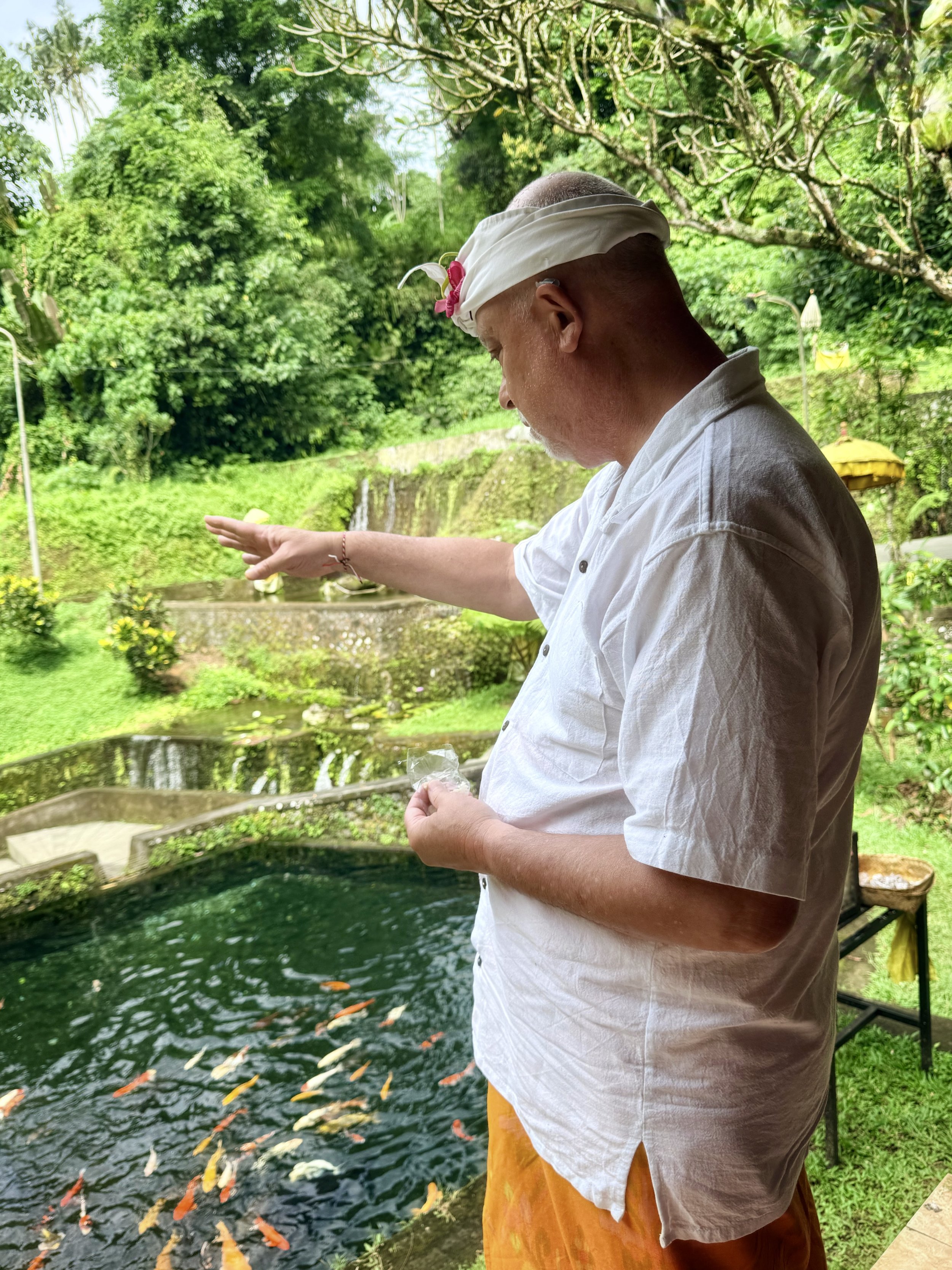
To enter the temple, we changed into traditional Balinese attire provided for us. We almost blended in!
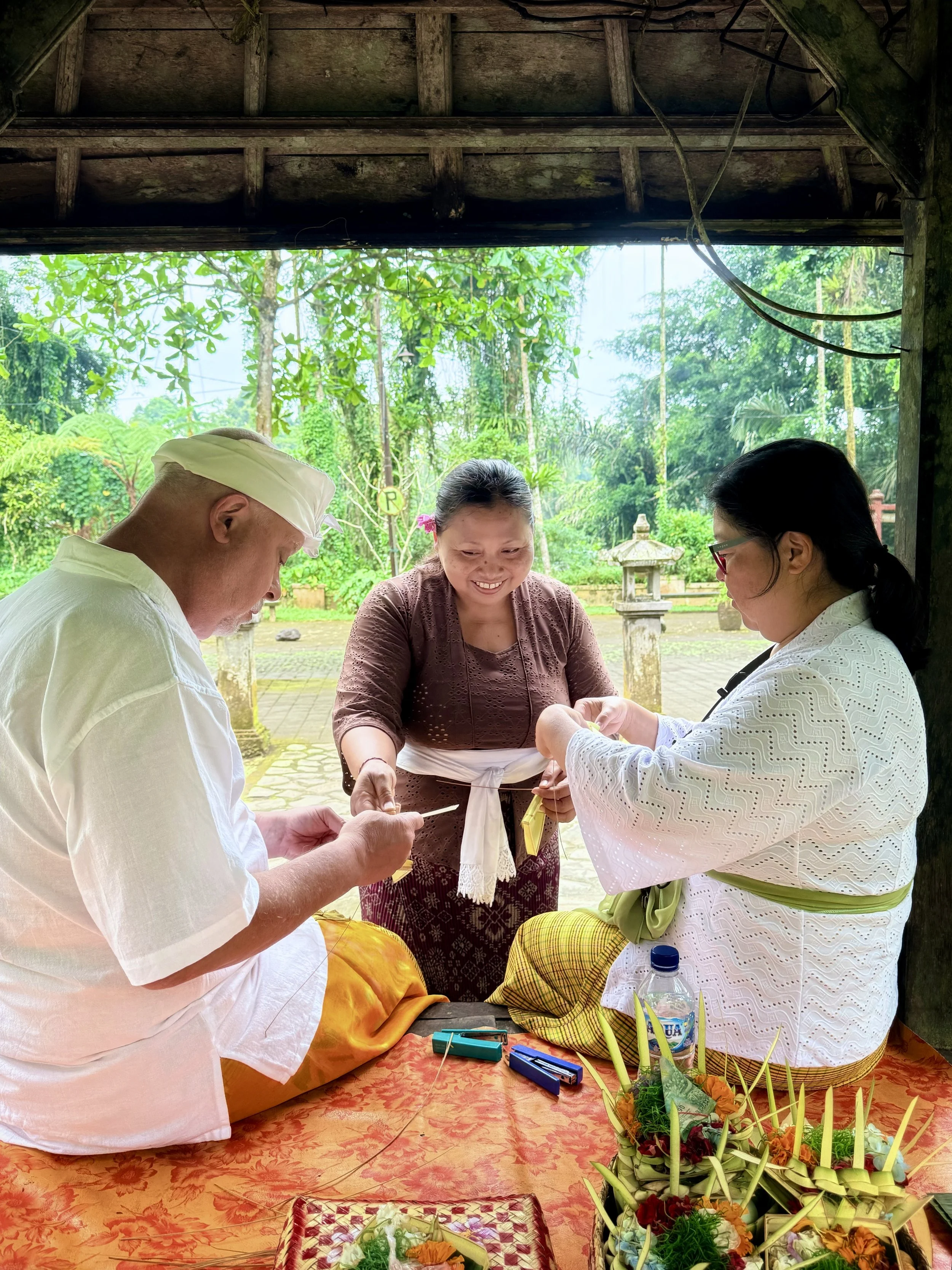
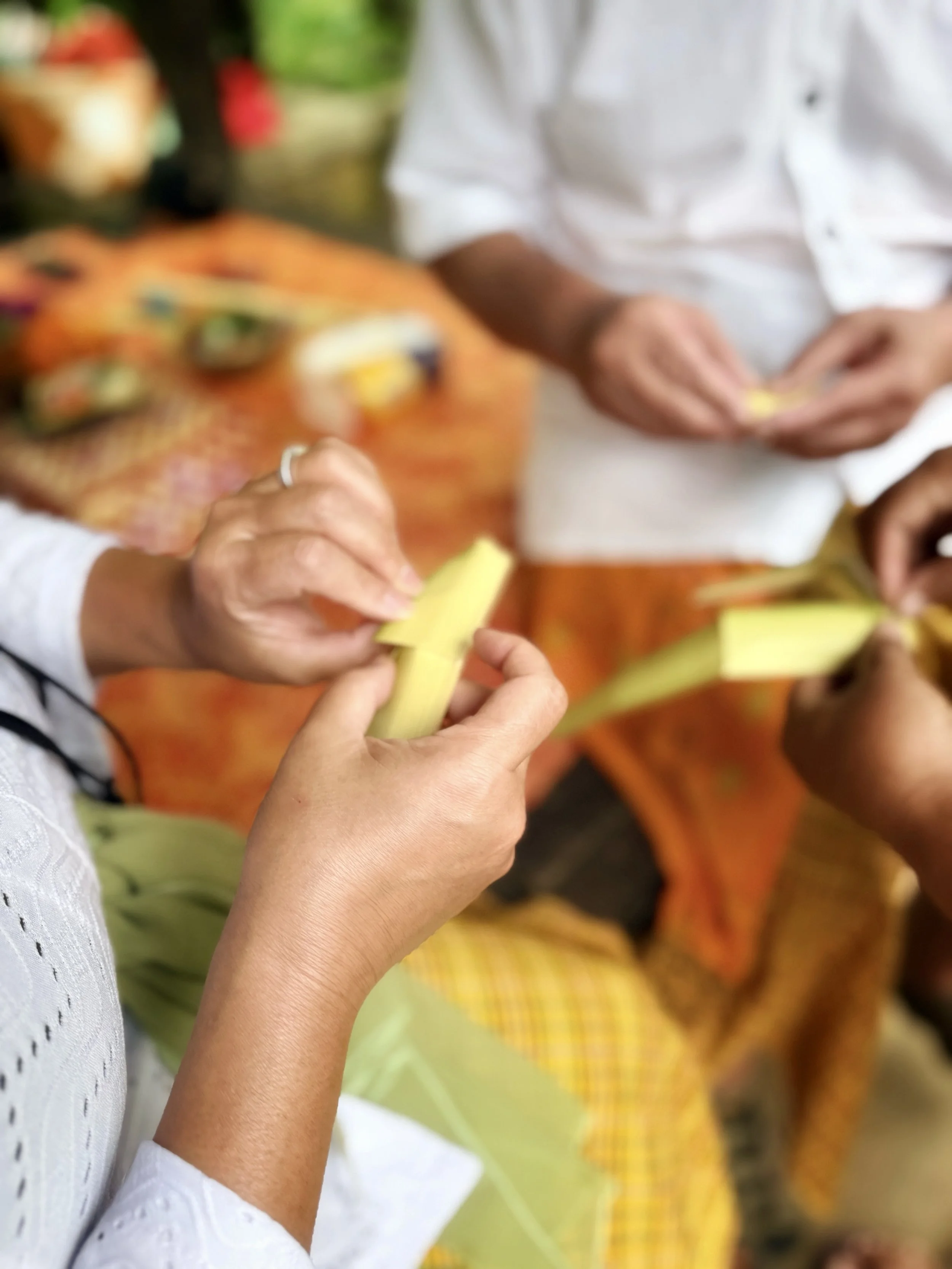
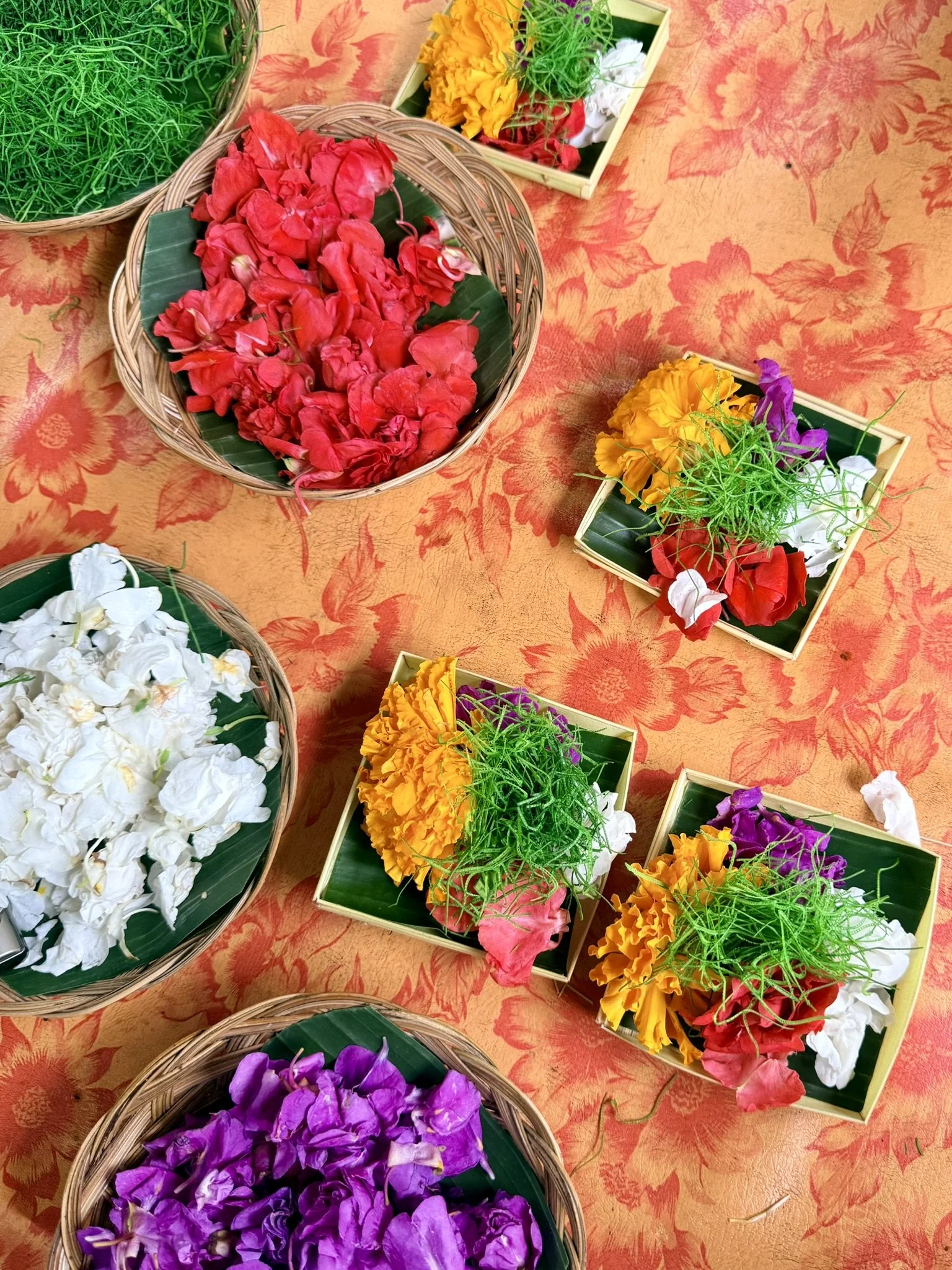
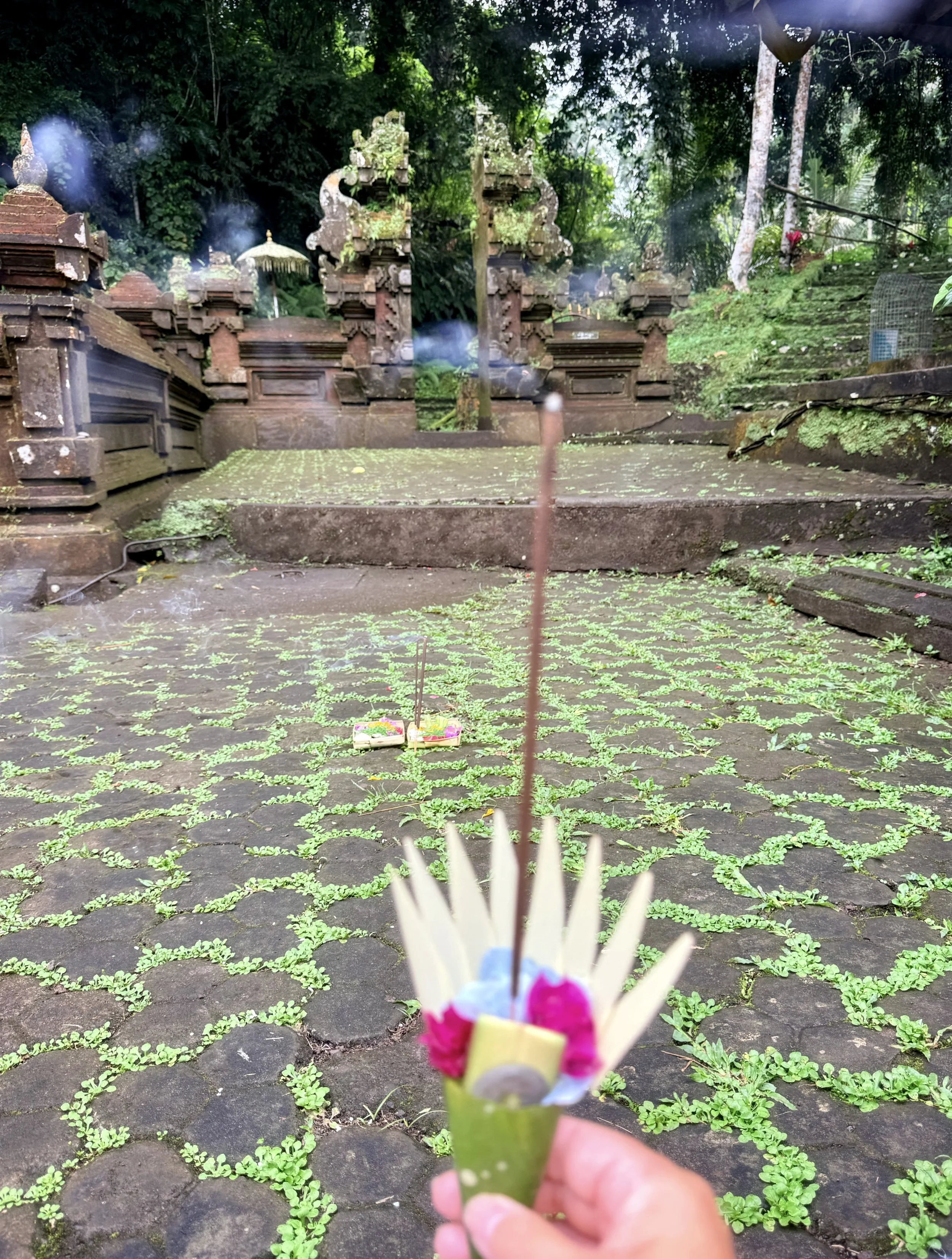
First, we helped make the Balinese flower offerings, known as canang sari. These are handmade palm-leaf baskets filled with flowers, incense, and snacks; placed at altars, businesses, homes, the ground, motorbikes, etc. to express gratitude and maintain cosmic balance. Each floral color is designated towards a direction and is spiritually symbolic of the Hindu Trinity. The Senthamil incense designed for prayer, meditation, and aromatherapy were particularly fragrant.
We then made our way to the temple grounds for a meditation session while Agung chanted.
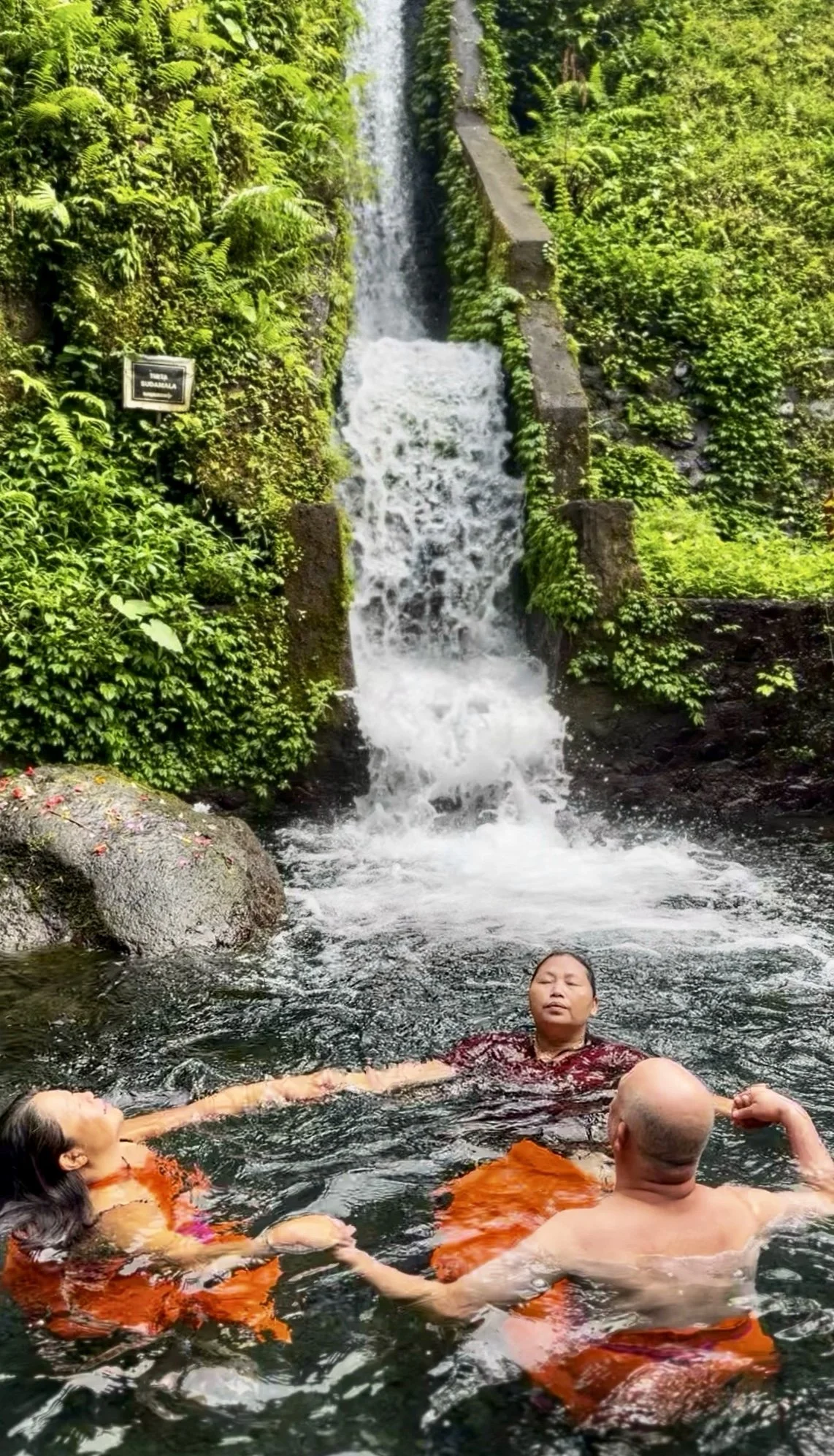
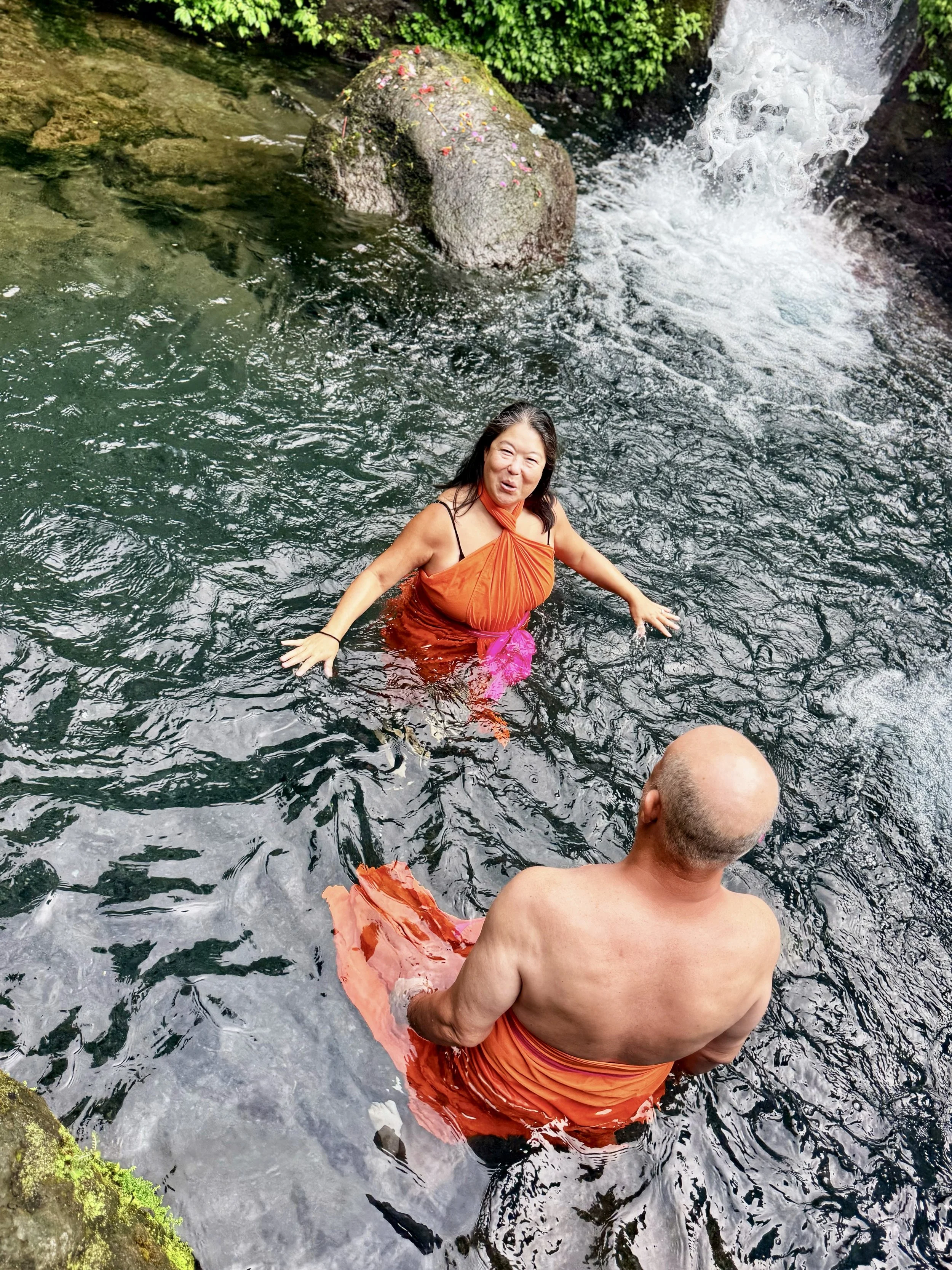
For the water purification, we changed into yet another set of temple attire, specifically for bathing.
Agung and Ayu guided us through the ritual of water bathing in the two different pools, one for masculine energy and the other for feminine energy.
At the end, we sat for a final offering and meditation, then shared snacks while overlooking the koi pond.
Balinese Hinduism--Island of the Gods
By the way, are you curious as to how Bali became an outlier as a Hindu island amongst the rest of Muslim Indonesia?
Hinduism was founded on the Bali island by Maharishi Markandeya in the 8th century. He developed the ritual method of water purification and sanctified Bali’s water sources. Hence, there are lots of pura tirtas or water temples on the island.
When the Majapahit Empire in Java (14th-16th century) collapsed to Islam, the Hindu-Javanese elites, priests, artists, and intellectuals migrated to Bali. They brought court culture, ancient Javanese literature, temple architecture, and Brahmanical ritual traditions.
Bali became the last stronghold of Hindu-Javanese culture. It eventually blended with indigenous local beliefs and Austronesian traditions centered on ancestor worship, animism, and sacredness in landscapes. This unique fusion integrated rituals, nature worship, and temple life into the foundation of Balinese Hindu culture. For the locals, spirituality is manifested in daily offerings (canang sari), ceremonies, and a philosophy focusing on maintaining harmony between the human and spiritual worlds.
Bali is also known as the Island of the Gods. Perhaps their open, welcoming attitudes and spiritual practices that feel somewhat familiar and readily accessible (e.g. yoga, meditation) made Bali a "spiritual capital" destination for westerners.
