Occasionally, we get our heads in the clouds and long for a little “vacation” from our daily nomad life. Not that we’re complaining about our lifestyle, 😉 but every now and then, it’s nice to trade our usual routine for a few days of unapologetic luxury.

Hotel Belmar
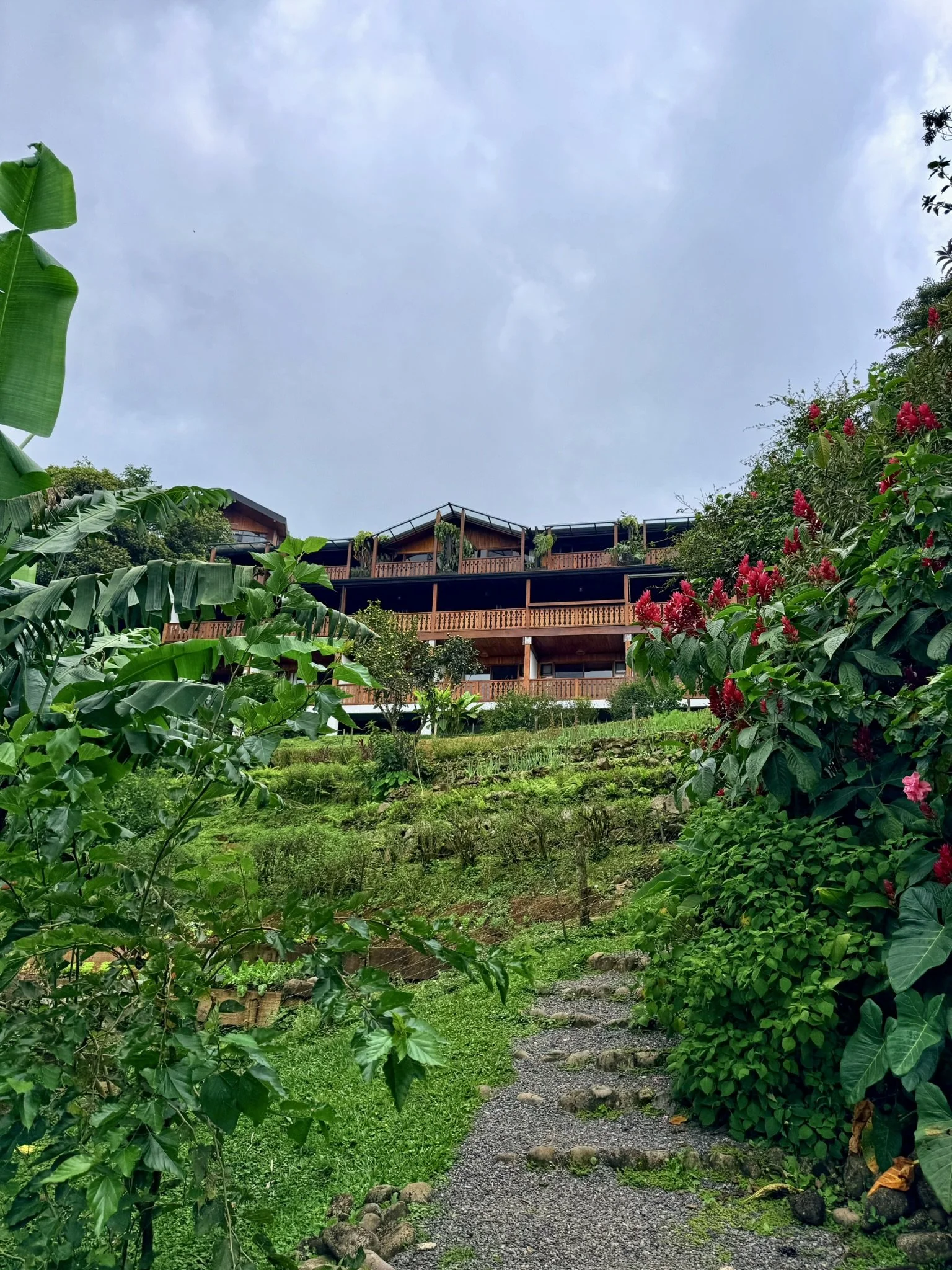
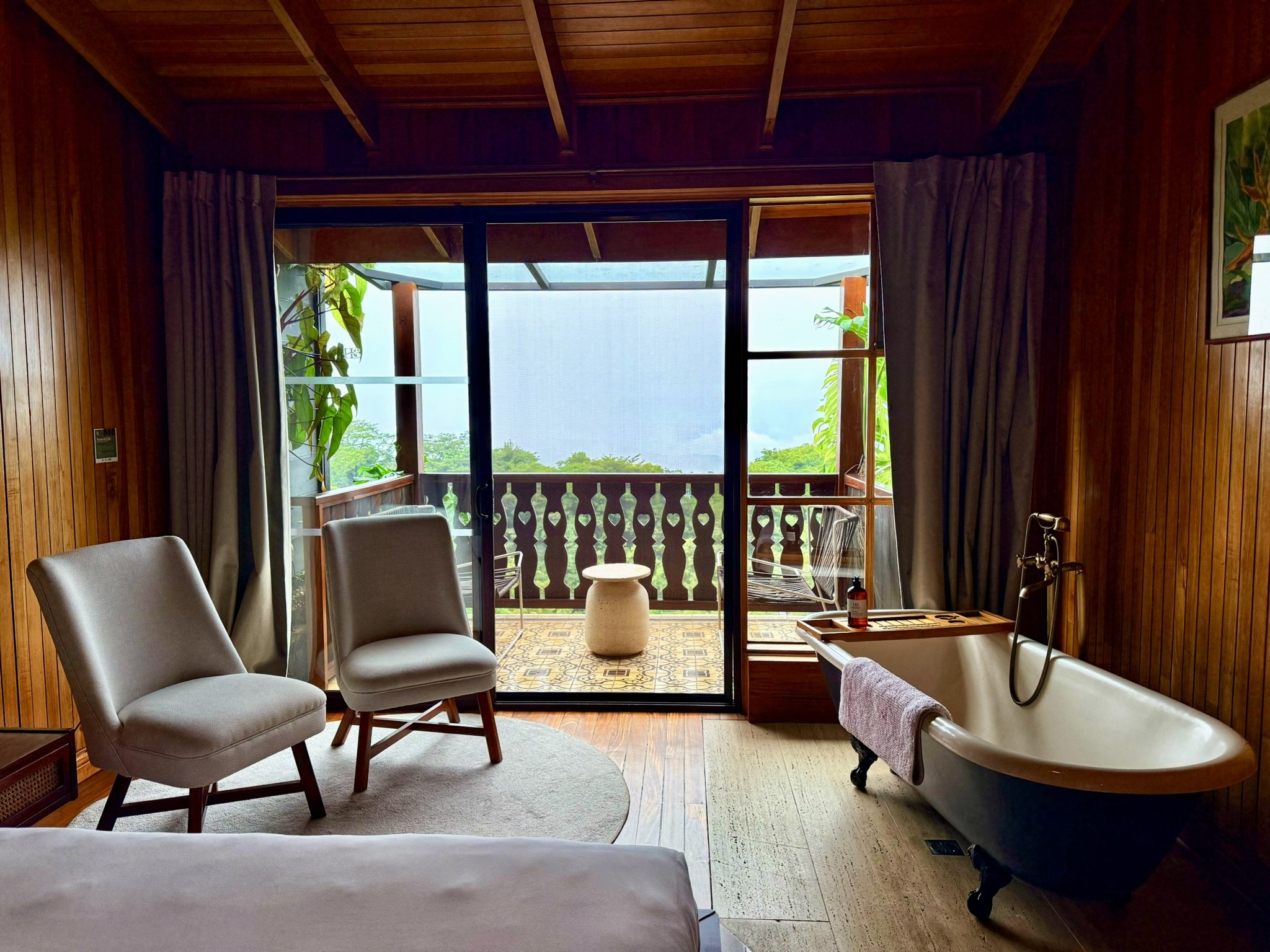
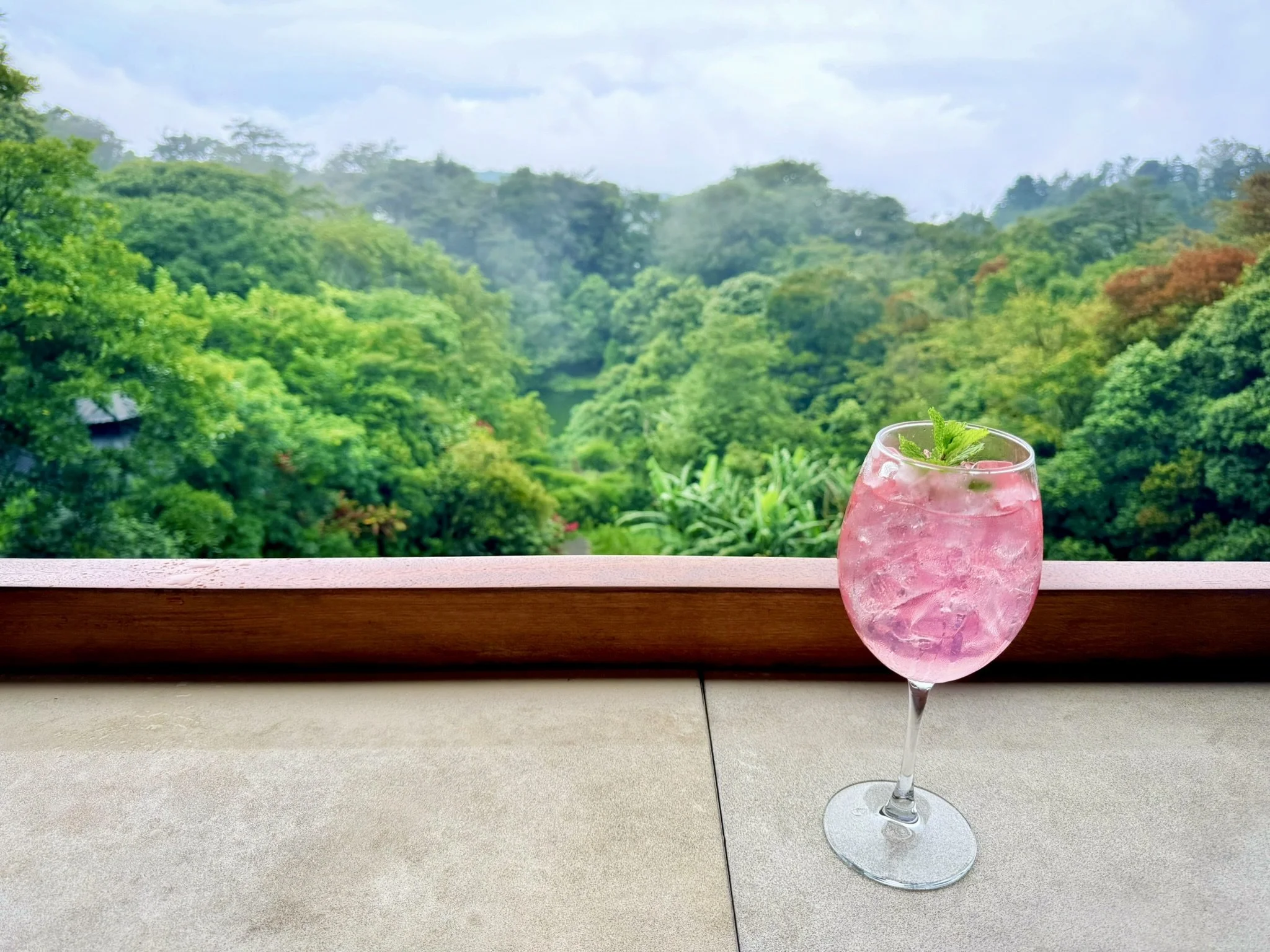
In Monteverde, we literally put our heads in the cloud forest of Costa Rica—and checked into a luxury ecolodge to do it: Hotel Belmar, a member of Design Hotels.
By the way, “luxury” and “eco” can sound like an oxymoron. How sustainable can a luxury hotel really be? But Hotel Belmar does a pretty impressive job of proving that the two can actually coexist.
For starters, Monteverde’s cloud forest is cool year-round, so air conditioning isn’t exactly necessary. That’s an easy sustainability win. But Hotel Belmar takes it much further. The property has its own farm and gardens producing much of the produce, dairy, cheese, and meat used in its gourmet restaurant. They ferment their own foods and beer, make their own soaps, have sophisticated water-recycling systems, and operate with a strong zero-waste philosophy.
Basically, they’ve figured out how to be fancy without completely trashing the planet. We approve.
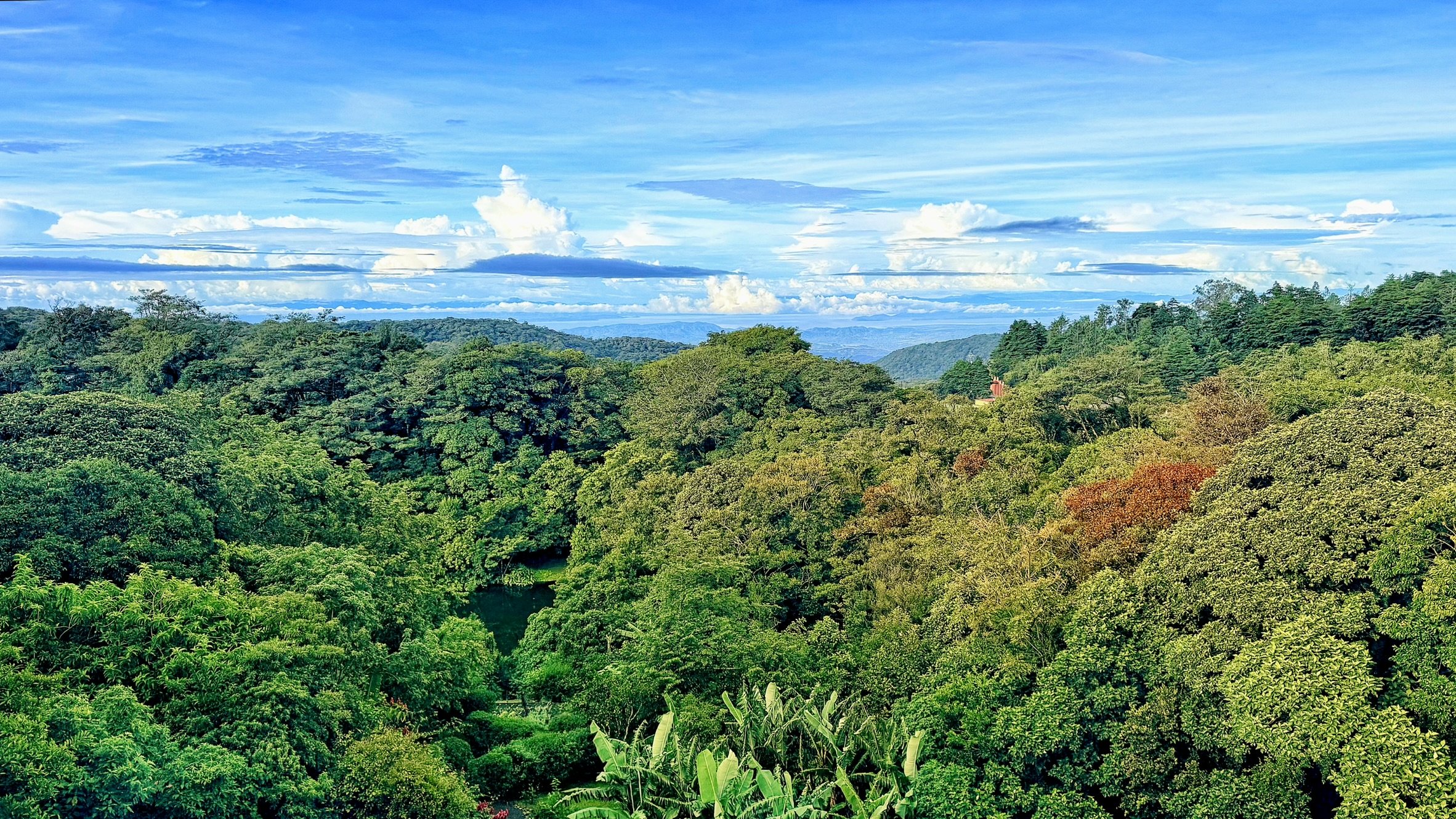
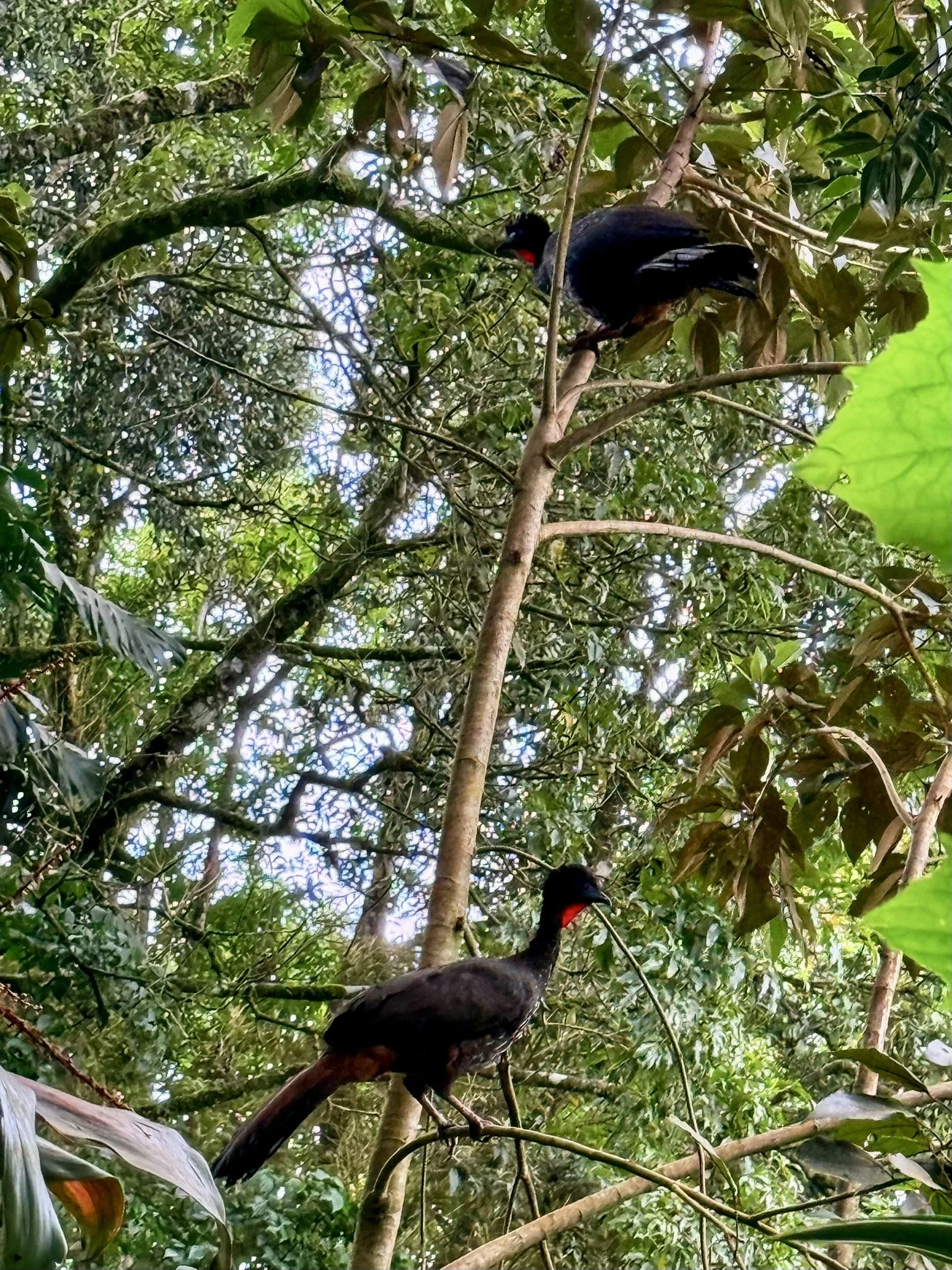
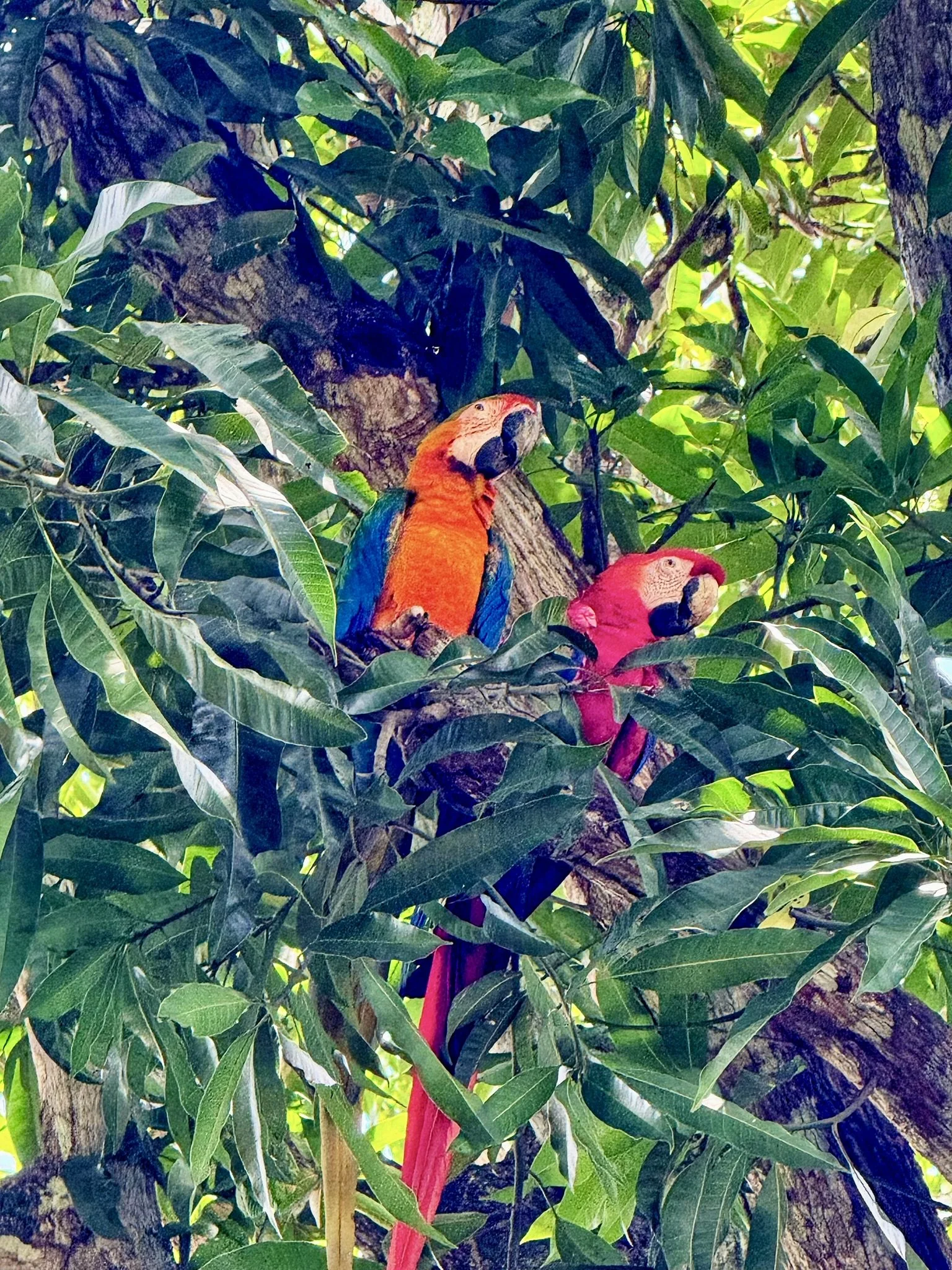
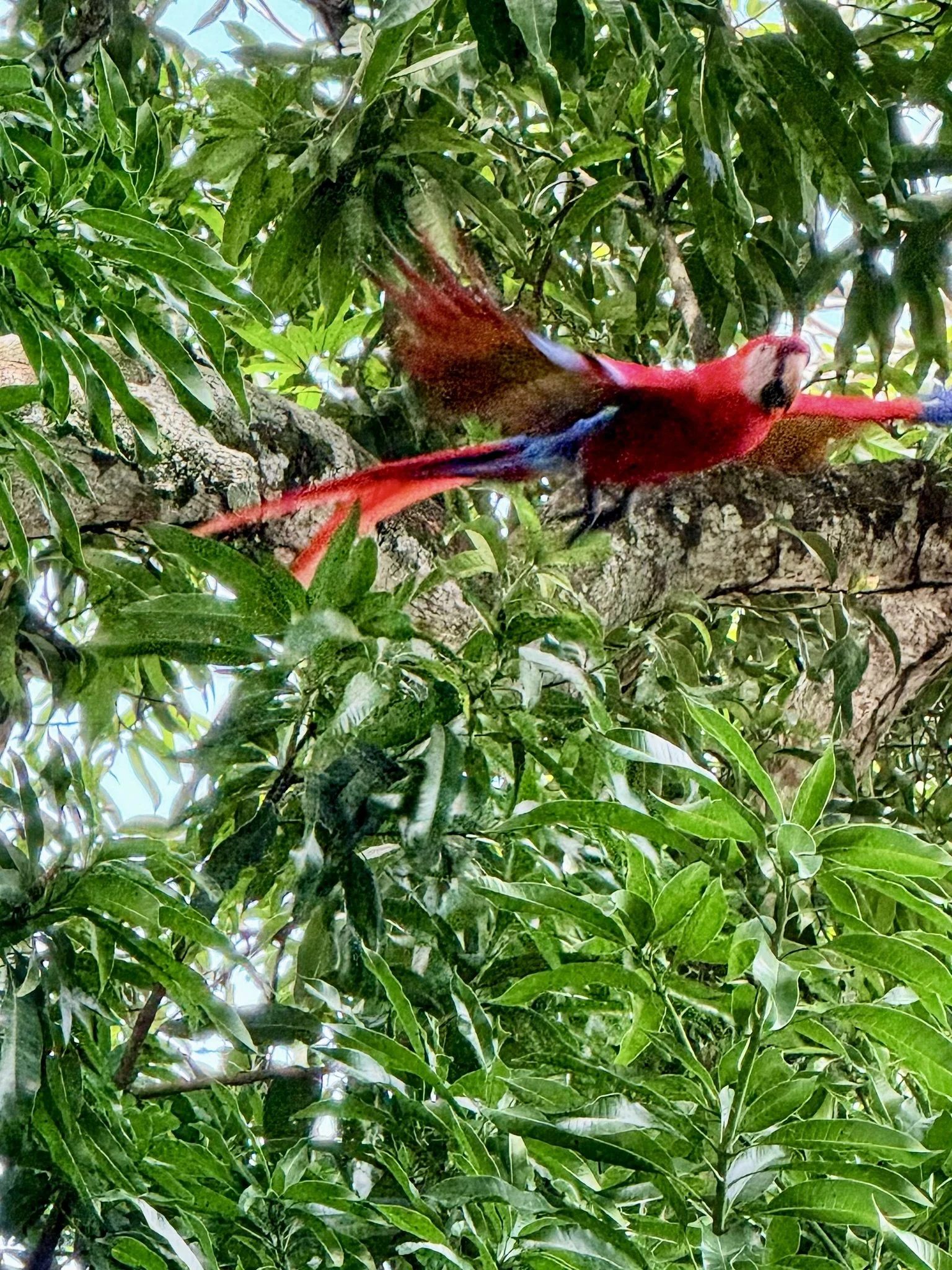
From our balcony, we had a bird’s-eye view of capuchin monkeys hanging out in the trees below. Toucans flew through the forest, and hummingbirds were constantly flitting around. Brightly colored macaws were munching on branches and leaves. It was like having our own private wildlife documentary playing outside the window.
For a couple of days, this felt like premium luxury to us—especially while we wandered through the cloud forest, took a guided night walk, and hiked along the Continental Divide.
Continental Divide Trail
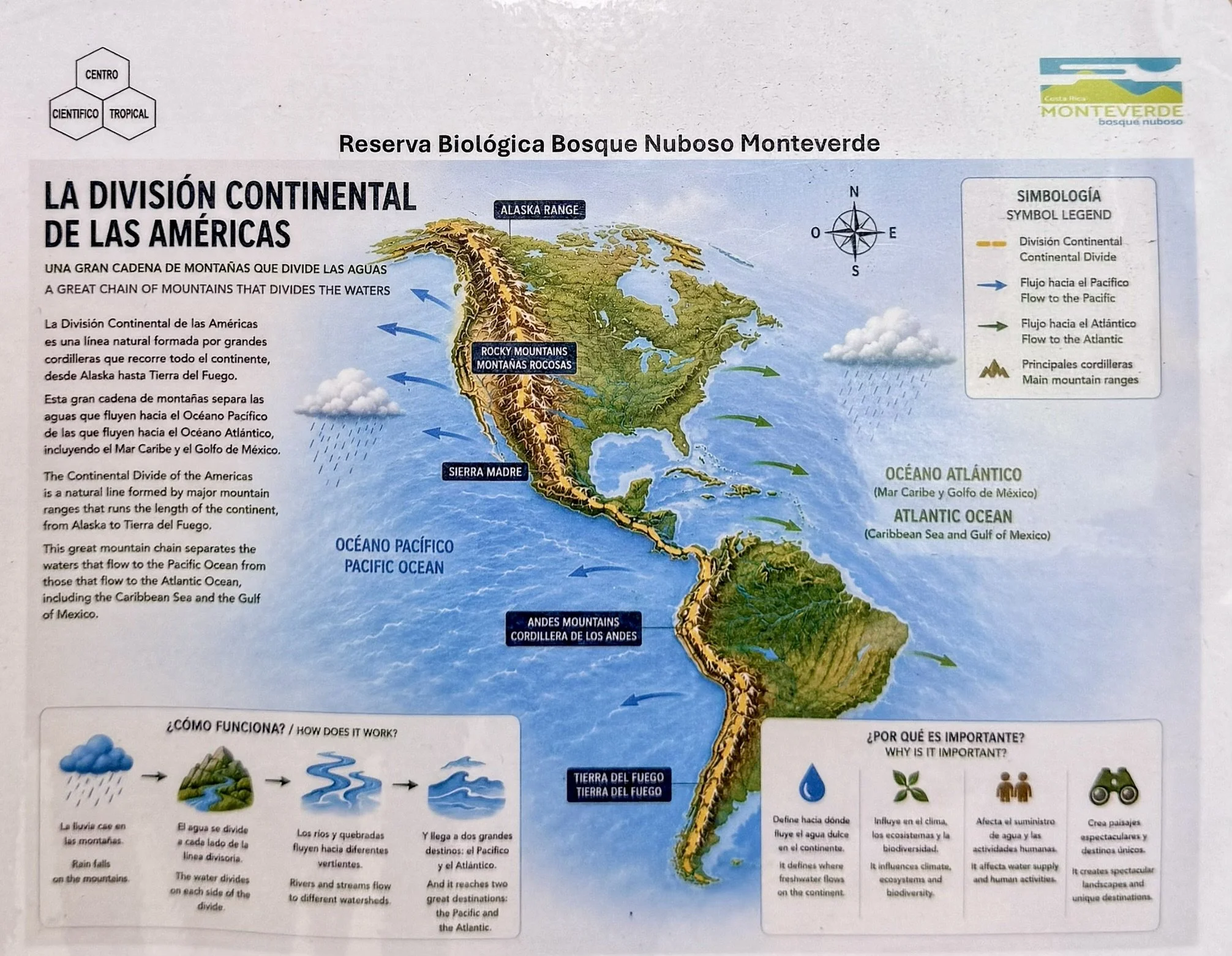
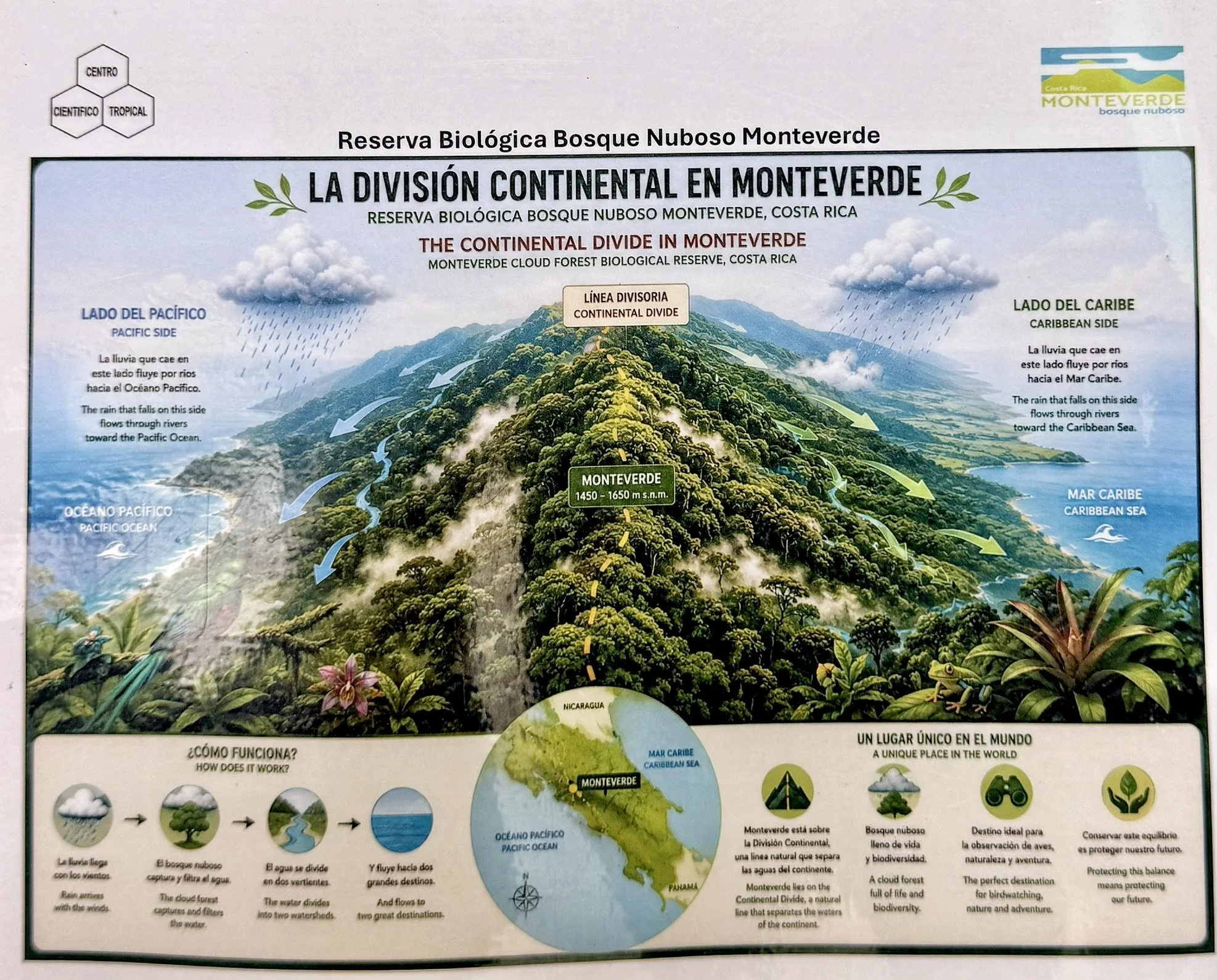

It never really dawned on us that the Continental Divide isn’t just a thing in Colorado. It’s the entire ridgeline of the mountain ranges stretching from North America through Central America and into South America. Duh. 🙄
The basic idea is that this mountainous spine separates the rivers and watersheds flowing toward the Pacific from those flowing toward the Caribbean/Atlantic. And that divide runs right through Monteverde.
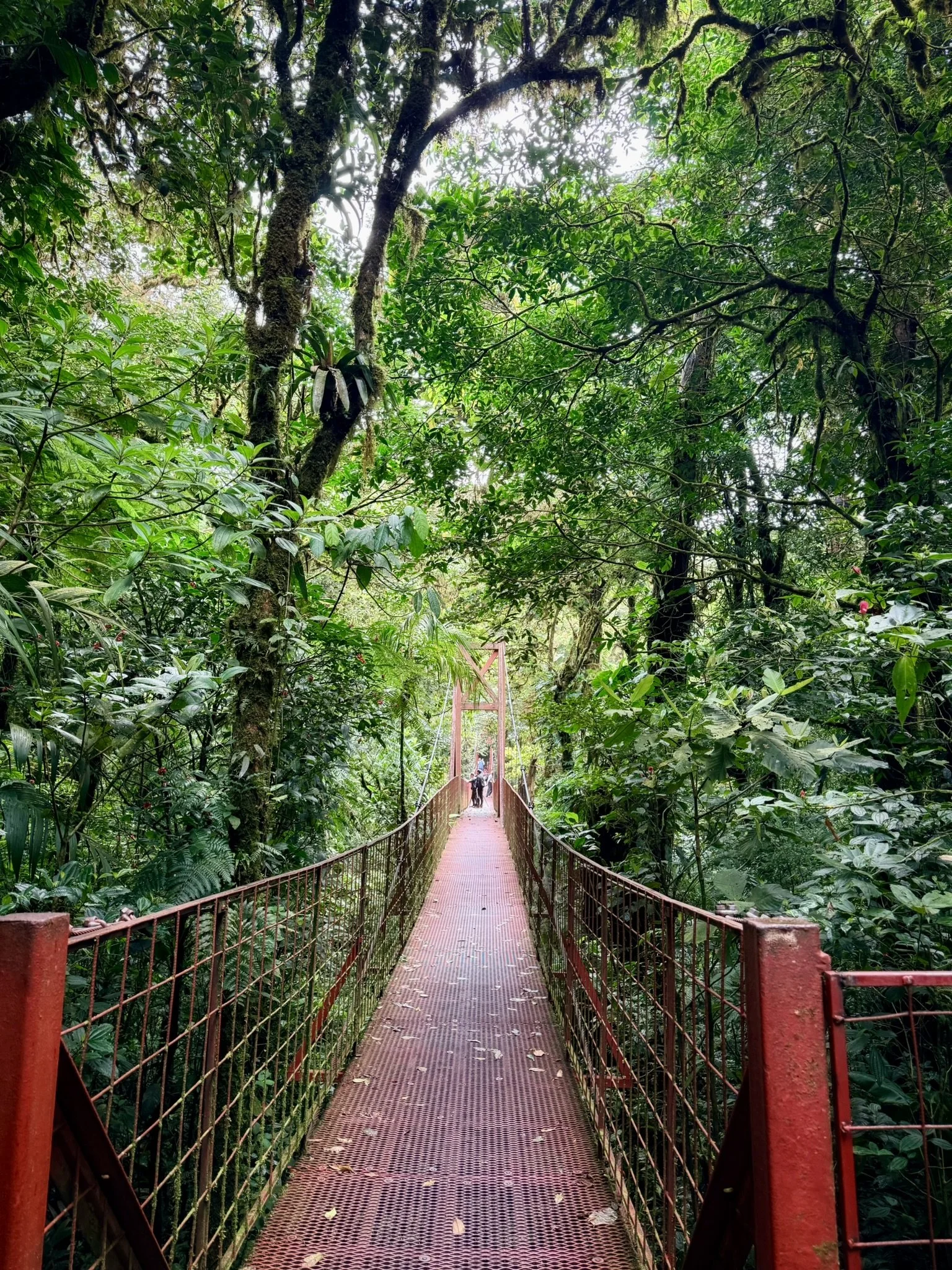
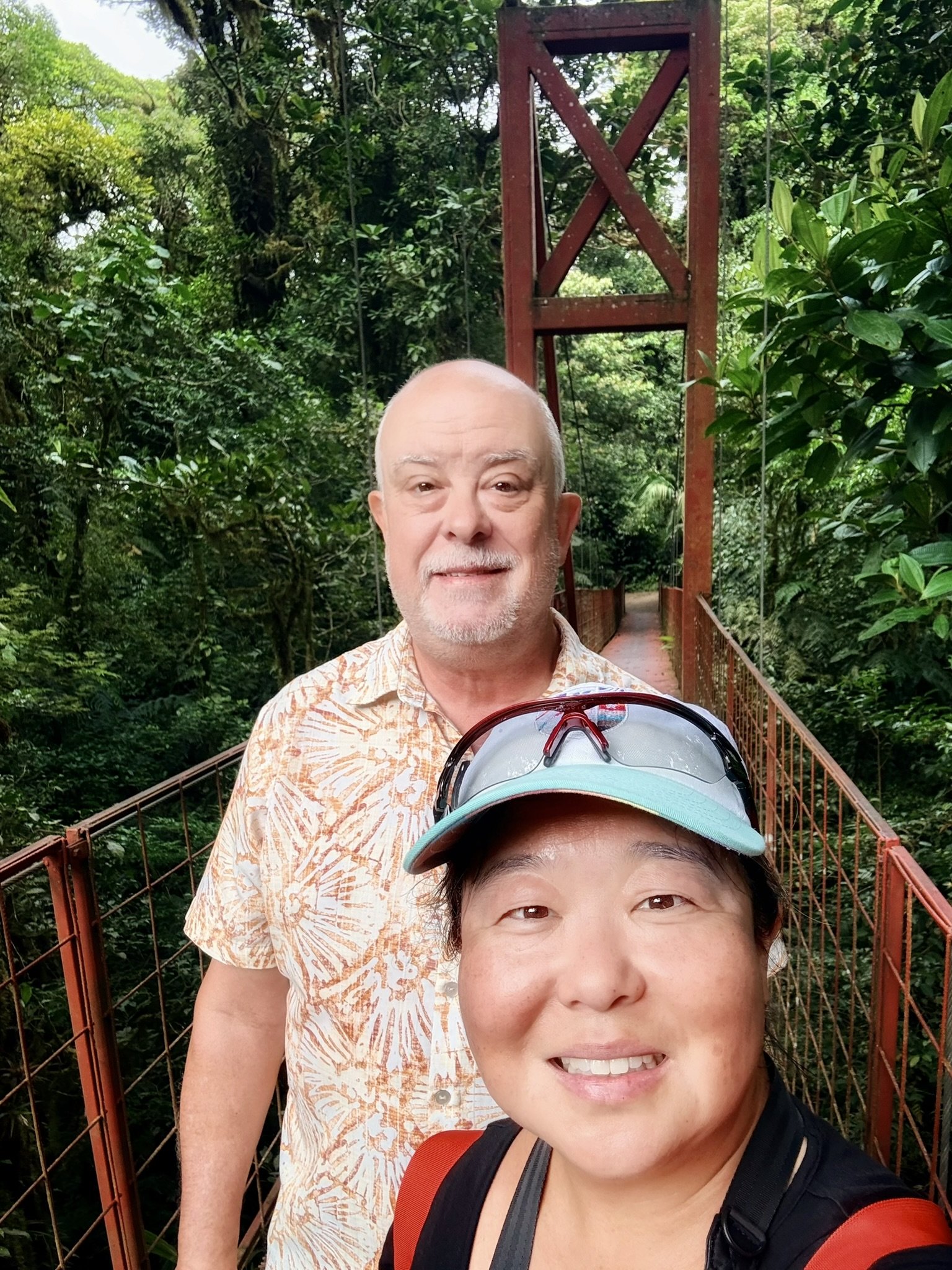
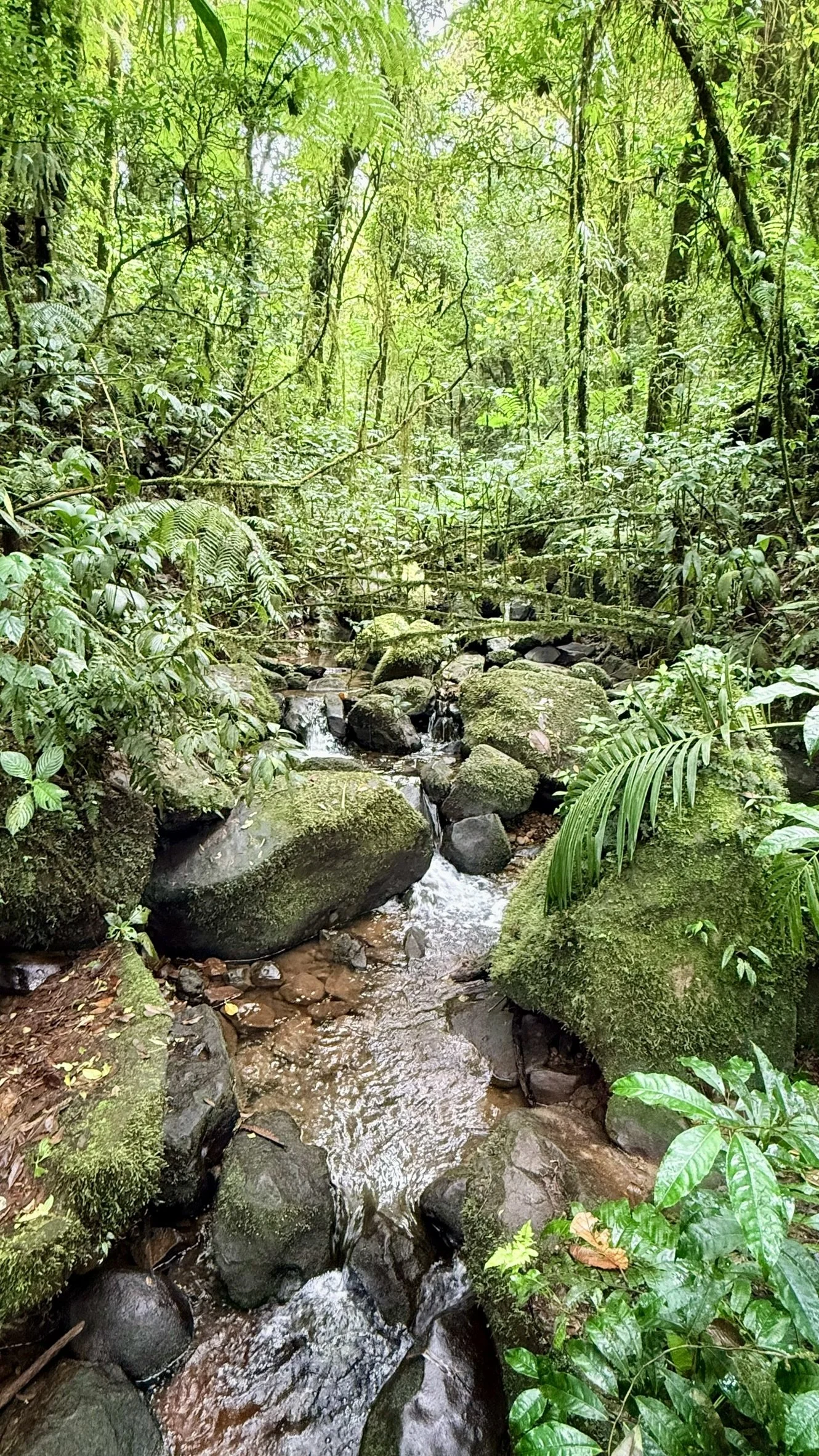
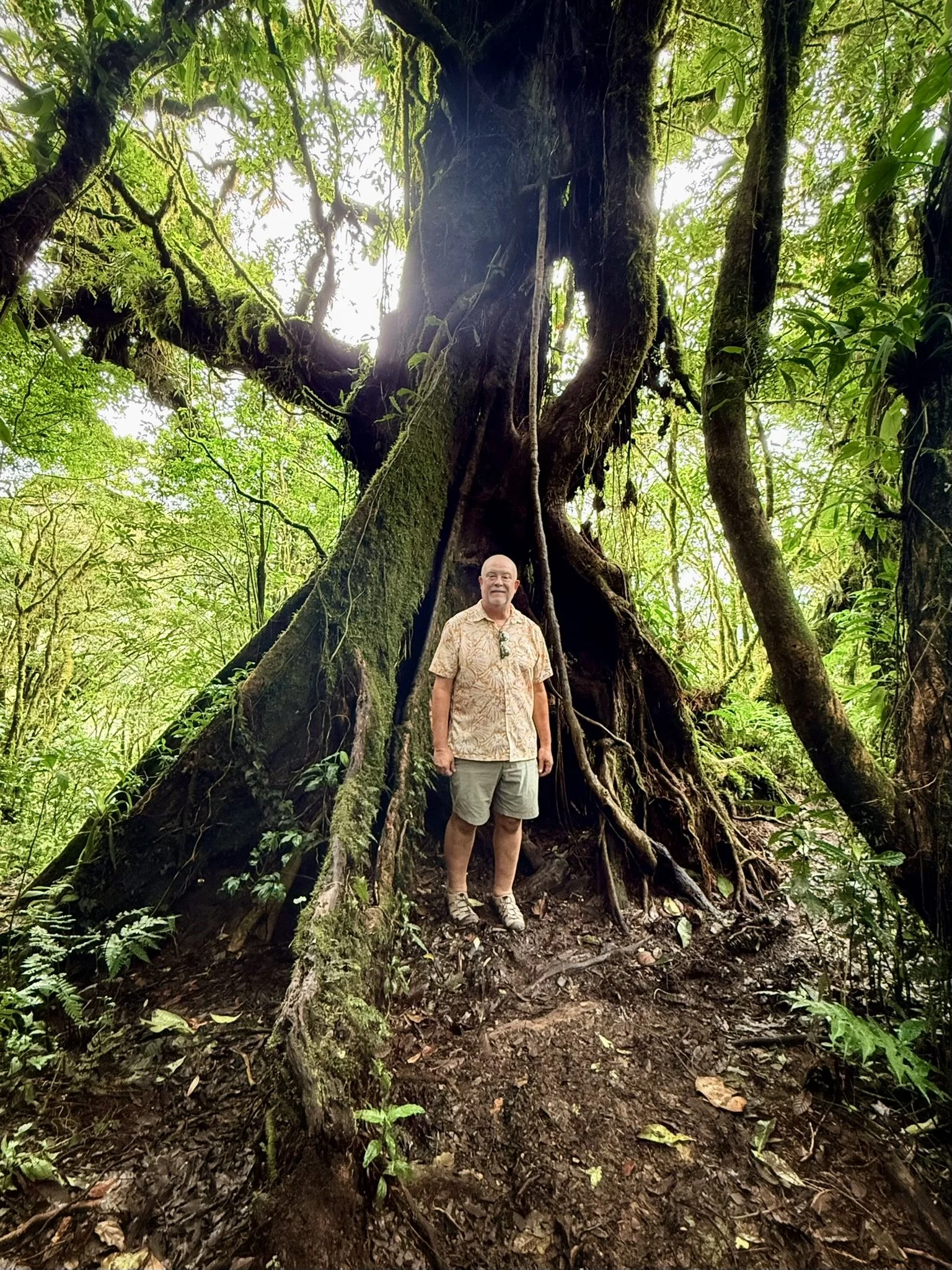
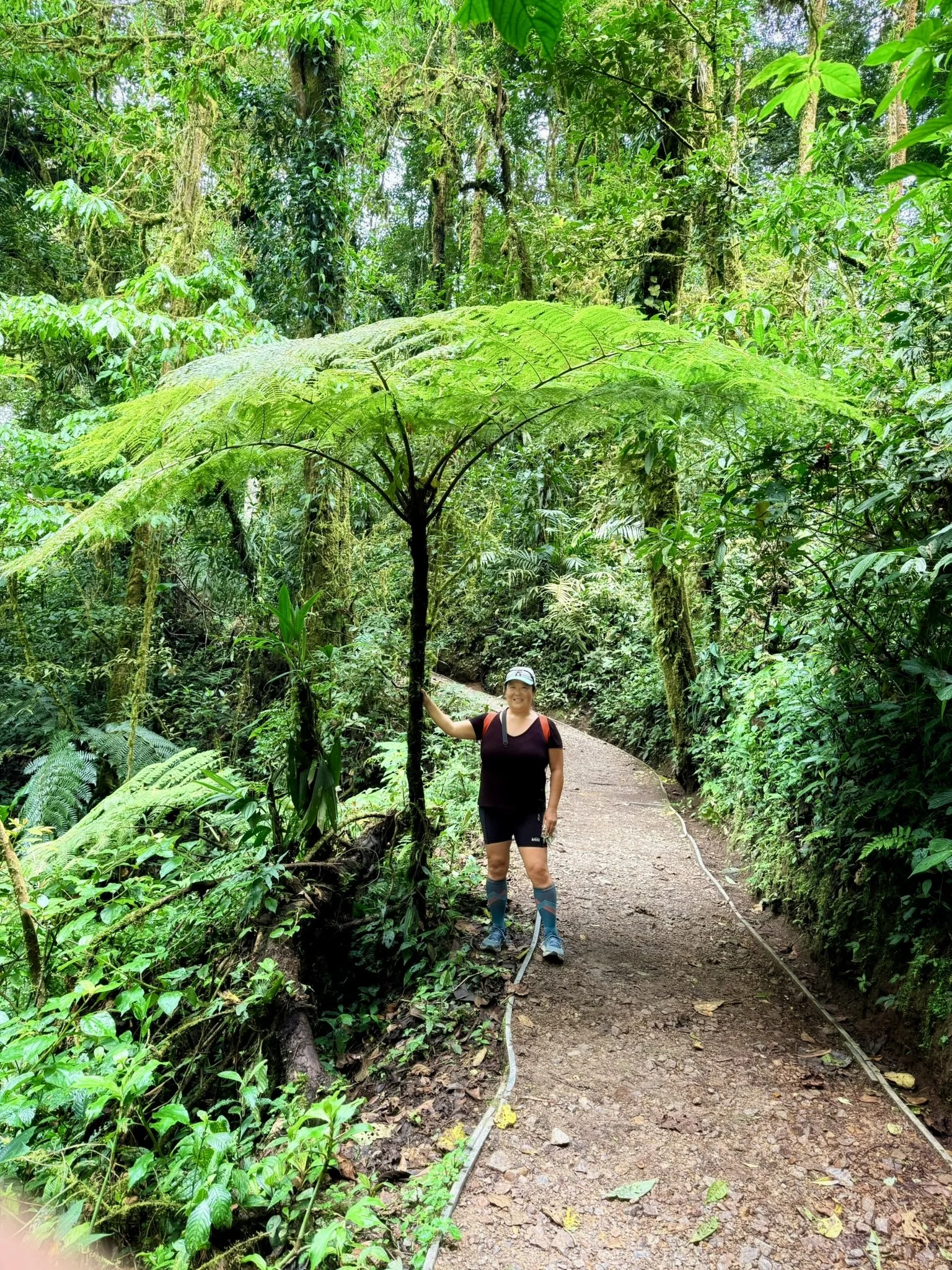
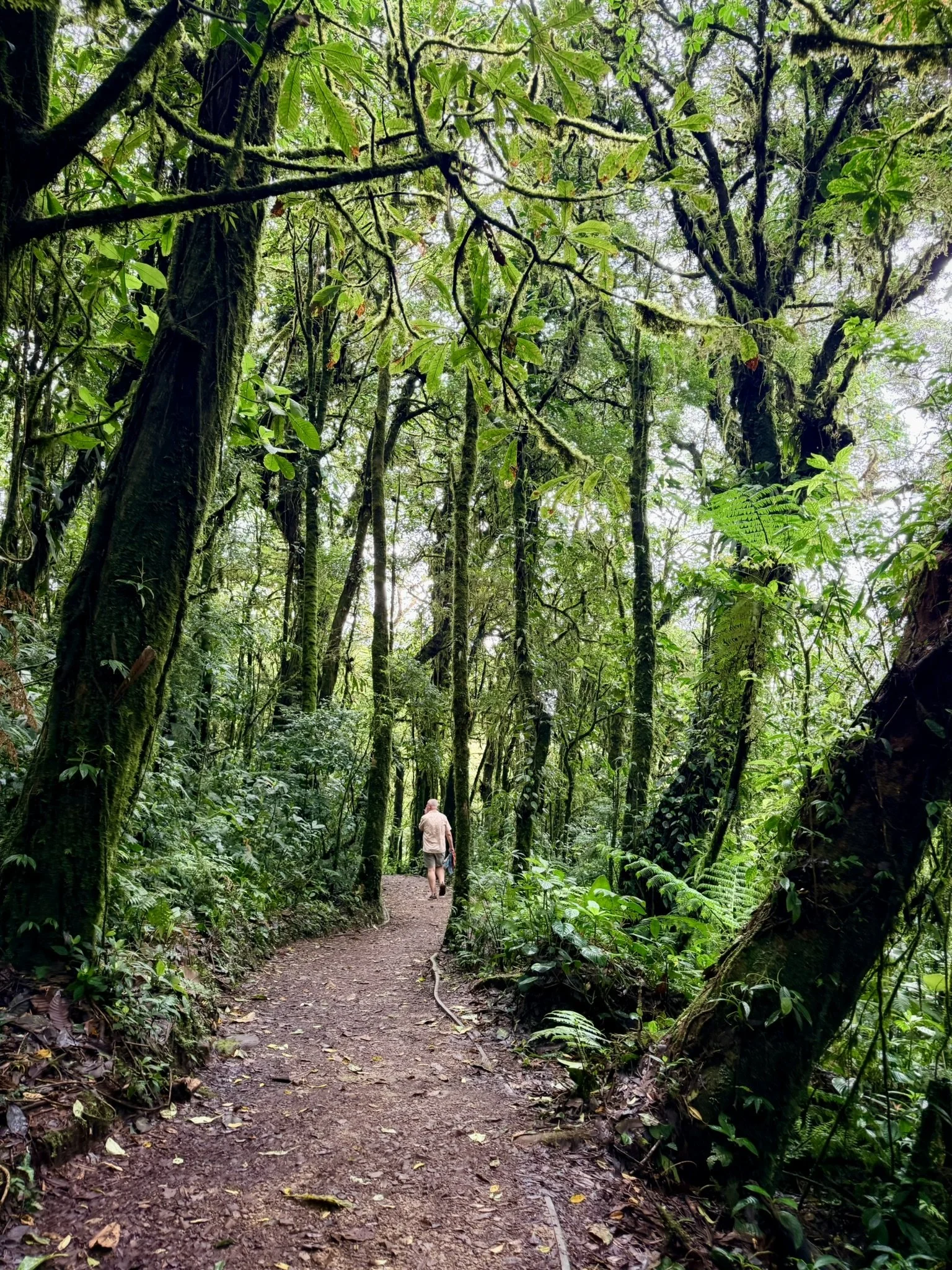
We hiked the Continental Divide Trail in the Monteverde Cloud Forest Preserve, and it was magical.
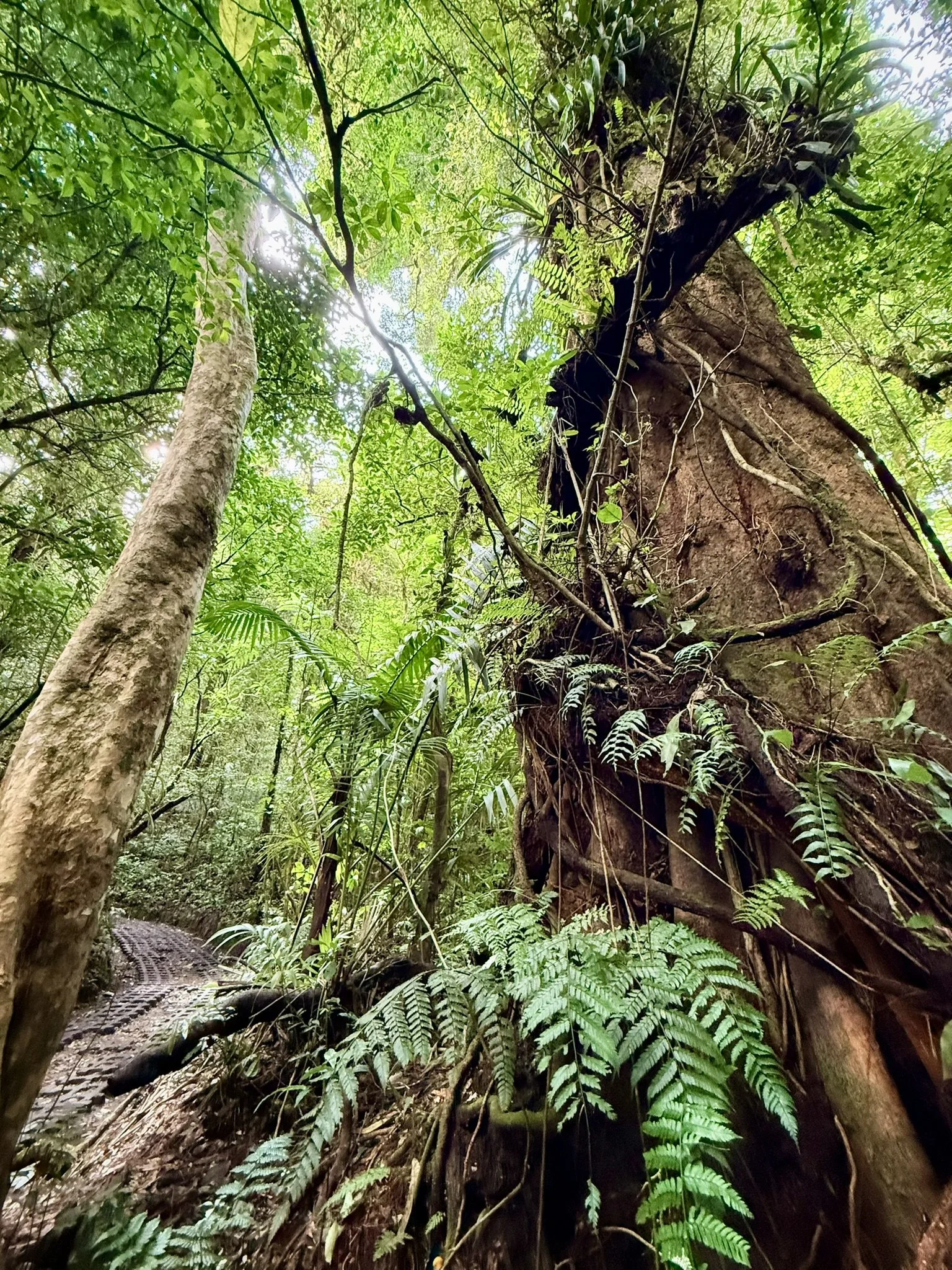
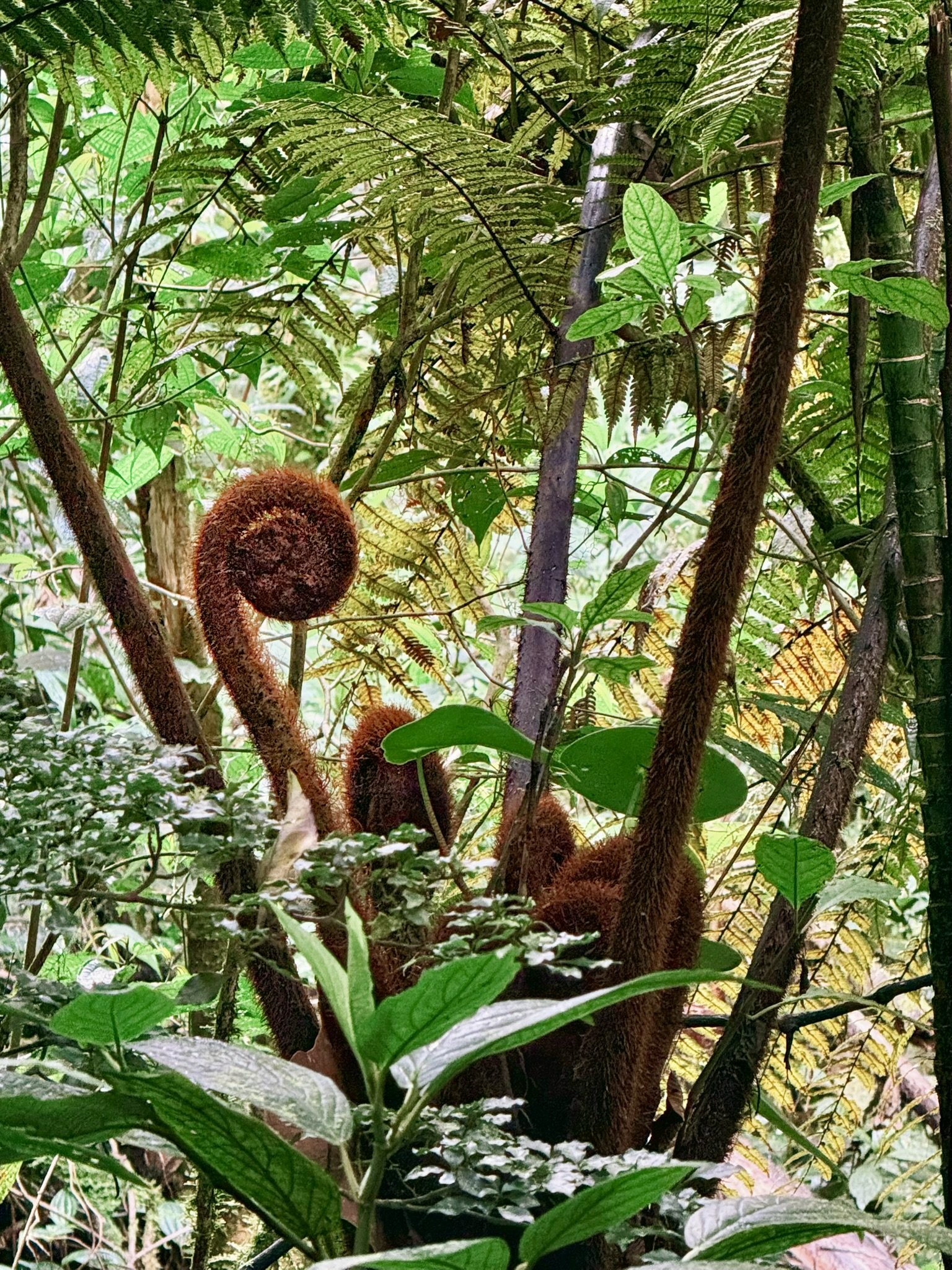
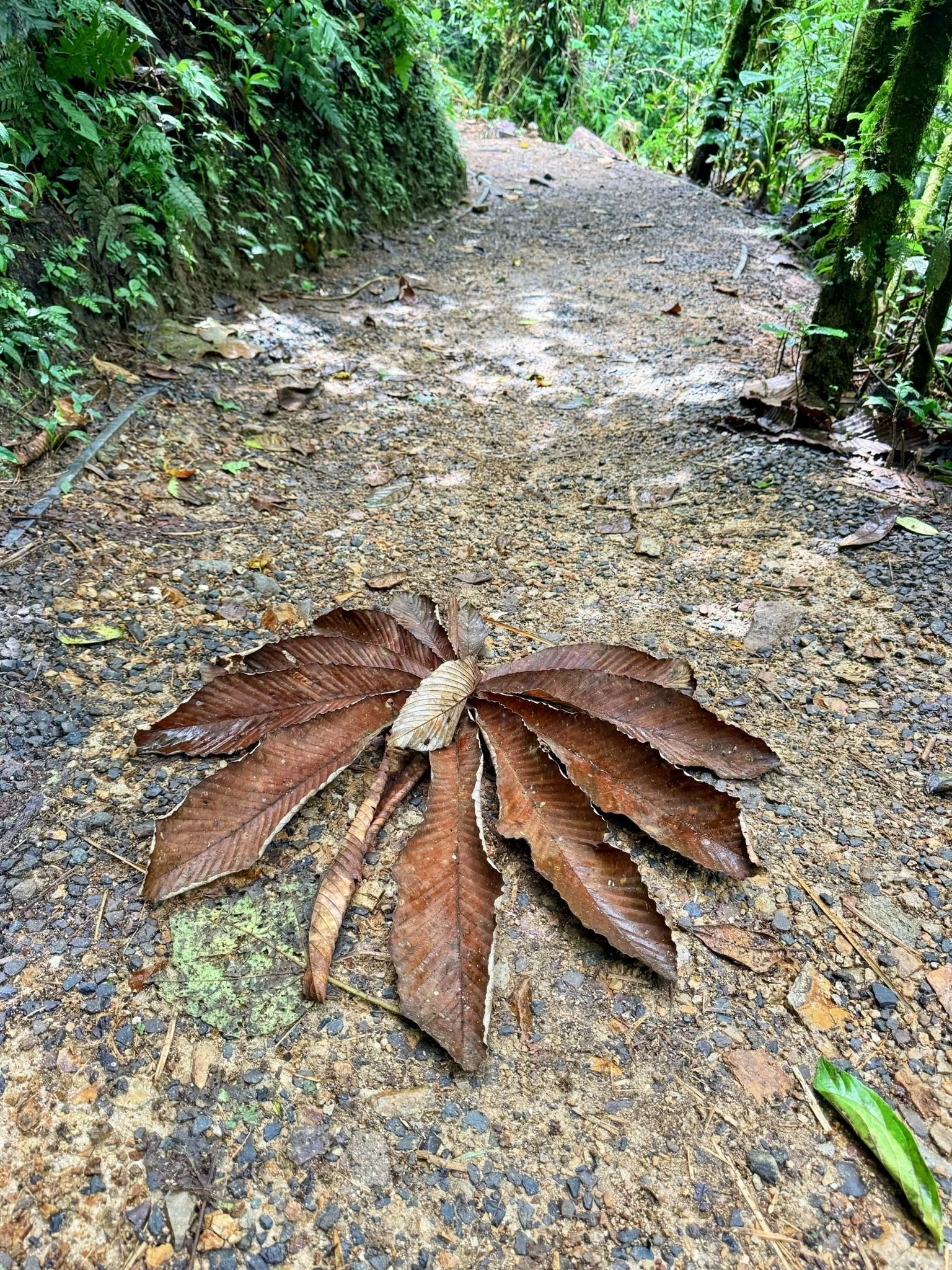
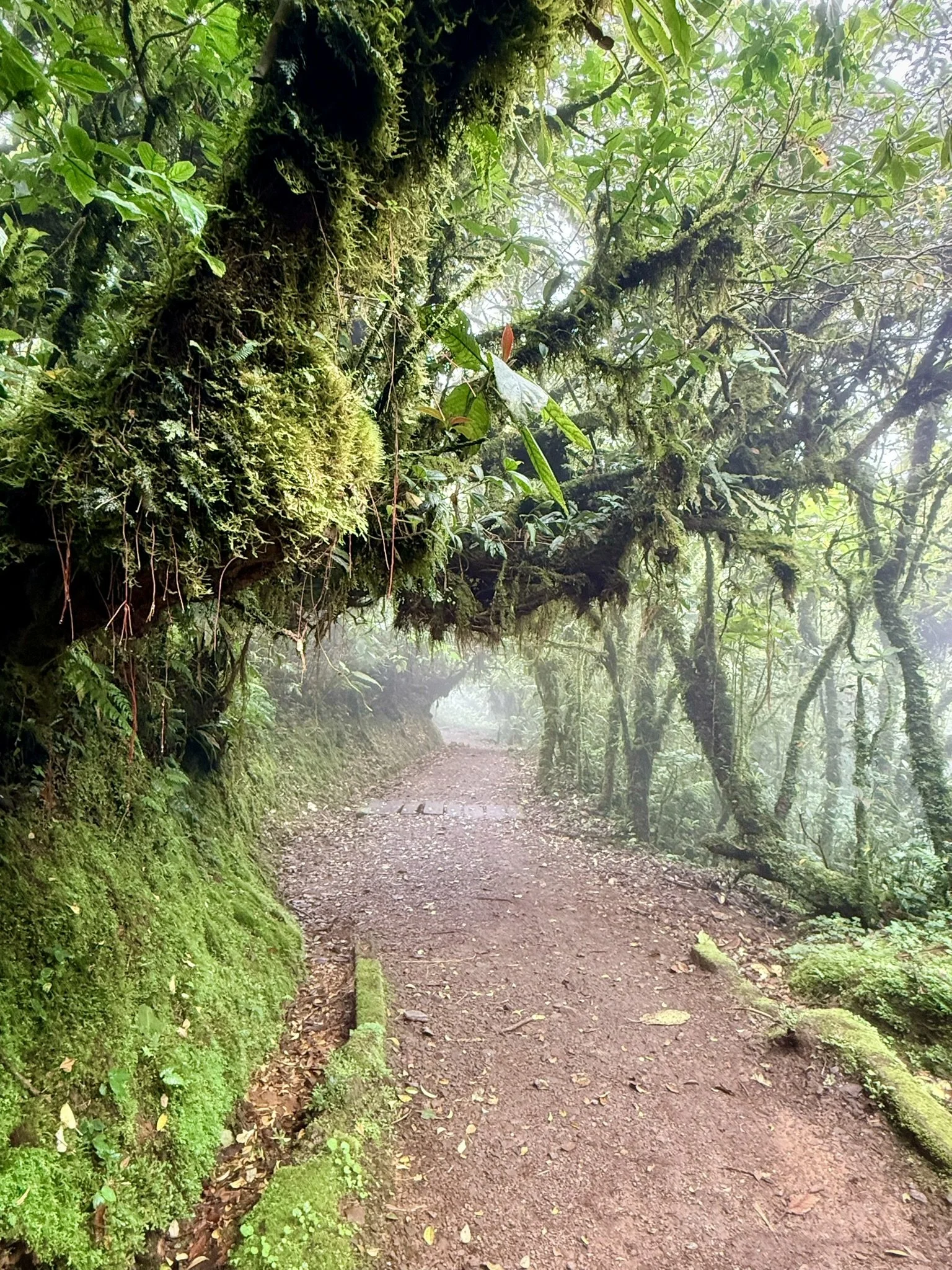
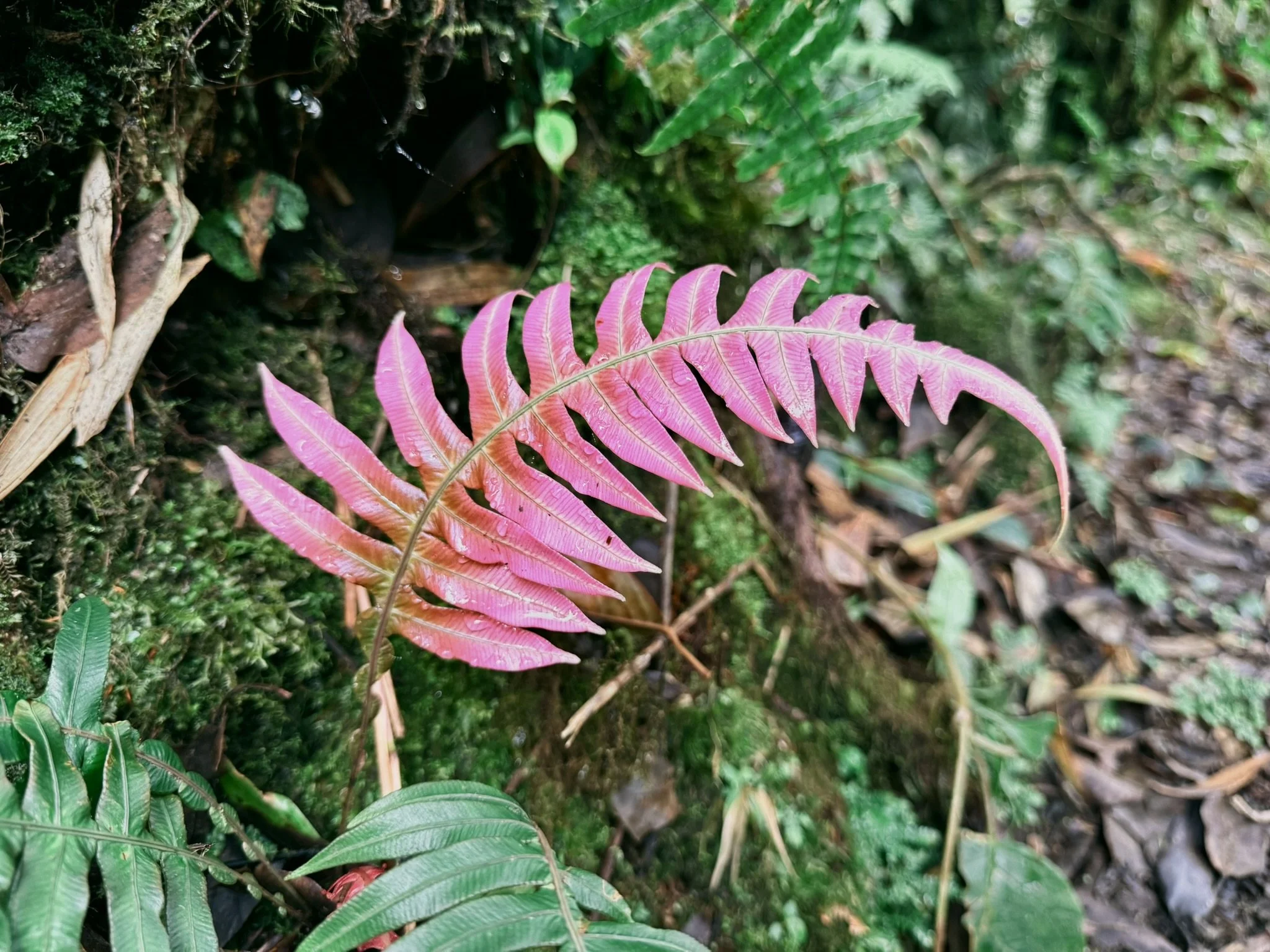
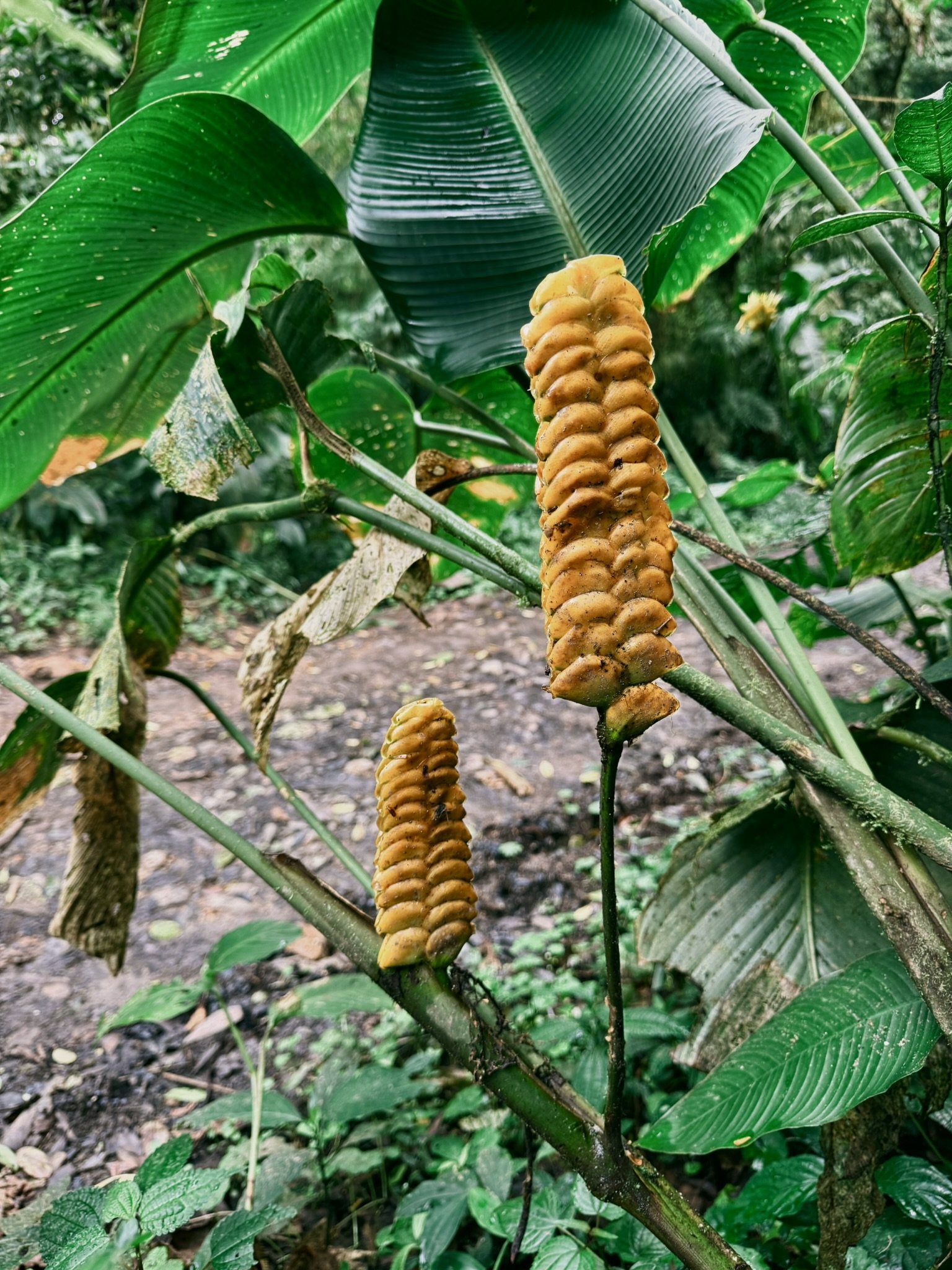
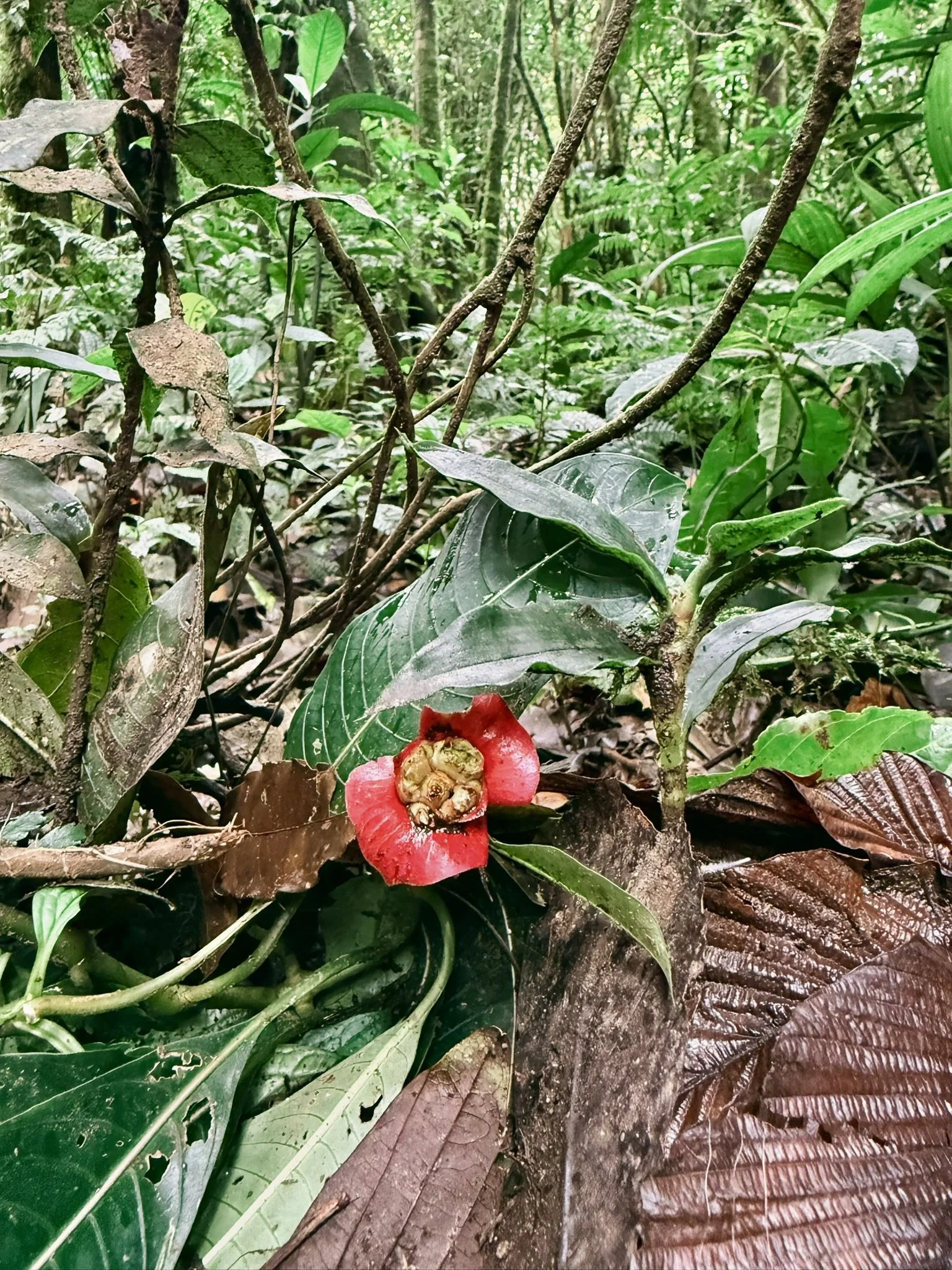
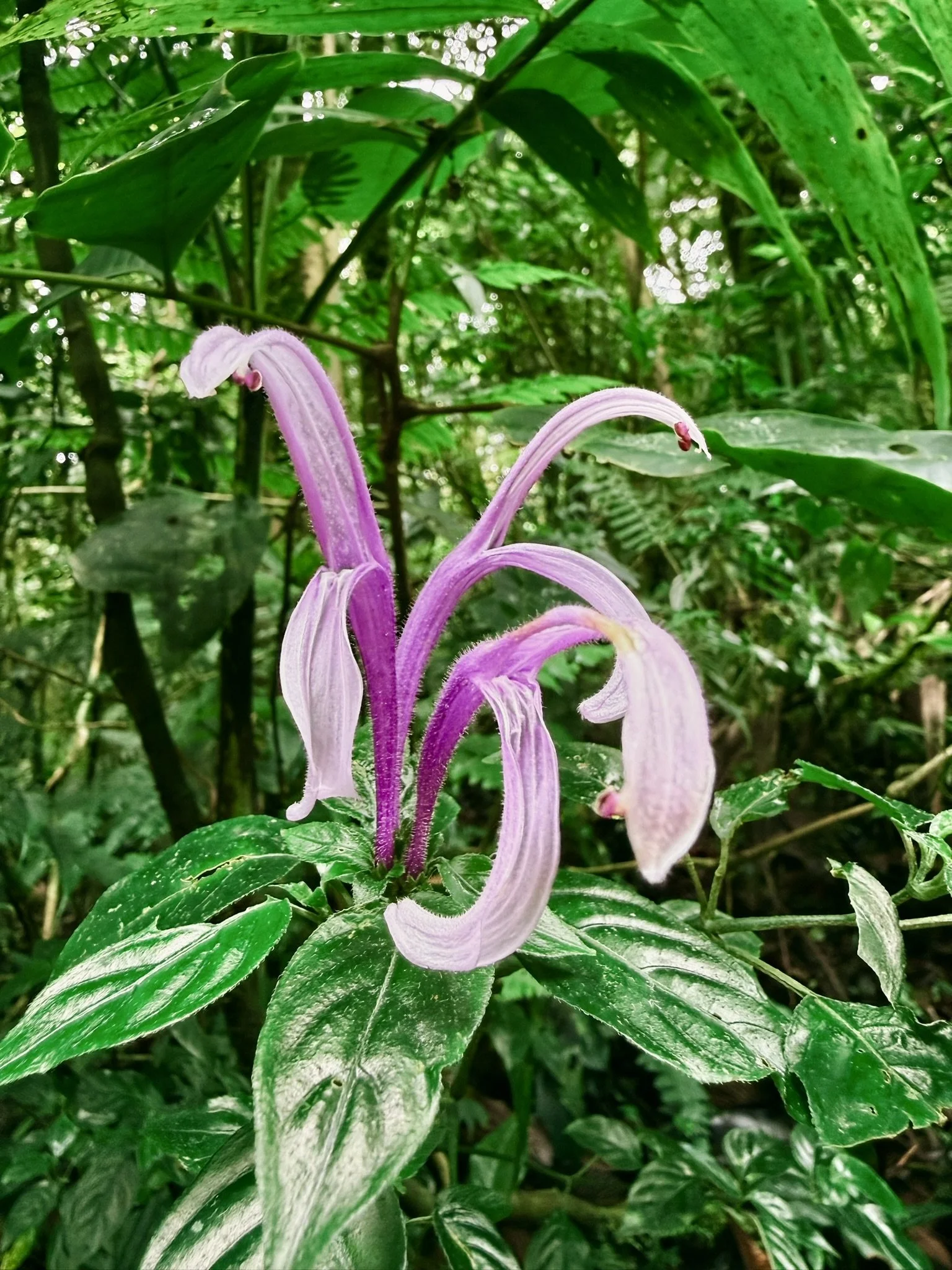
We were completely surrounded by lush forest and more shades of green than we could possibly count. Everything was dripping with vegetation, moss, and life. The whole place felt almost otherworldly.
Supposedly, on a clear day, there’s a lookout where you can see the air masses from the Pacific and Caribbean sides rolling toward each other. Their interaction creates the unique cloud-forest environment that makes Monteverde so special.
Of course, we weren’t lucky enough to get the clear-day version.
We got clouds.
Lots and lots of clouds.
Which, honestly, seemed appropriate.
Night Forest Walk
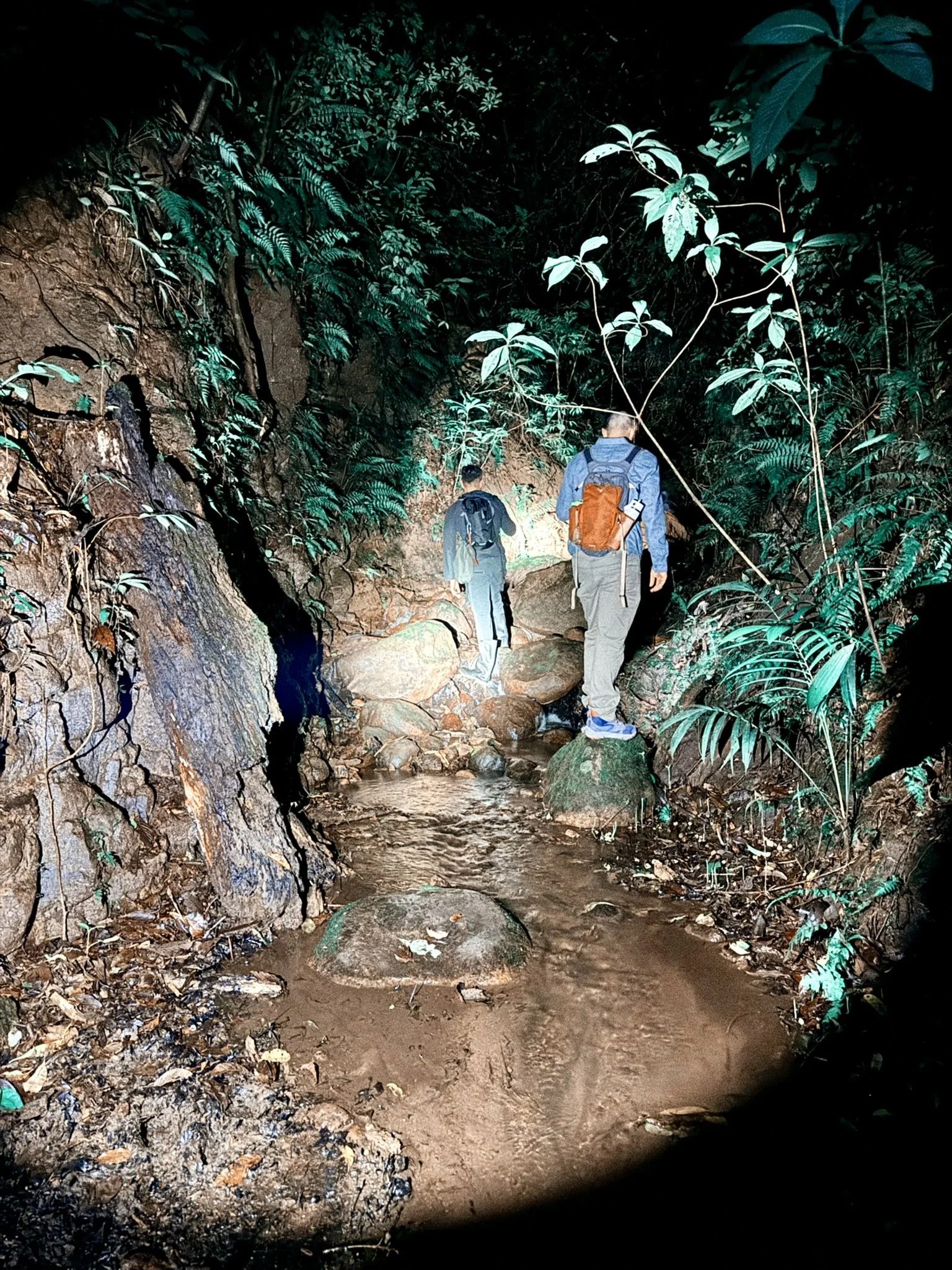
Another fun Monteverde activity is going into the forest at night to scout for wildlife. During rainy season, these tours can be a little hit-or-miss because lightning storms occasionally force cancellations or delays.
Our tour was delayed by two hours, but eventually the skies cooperated and off we went.
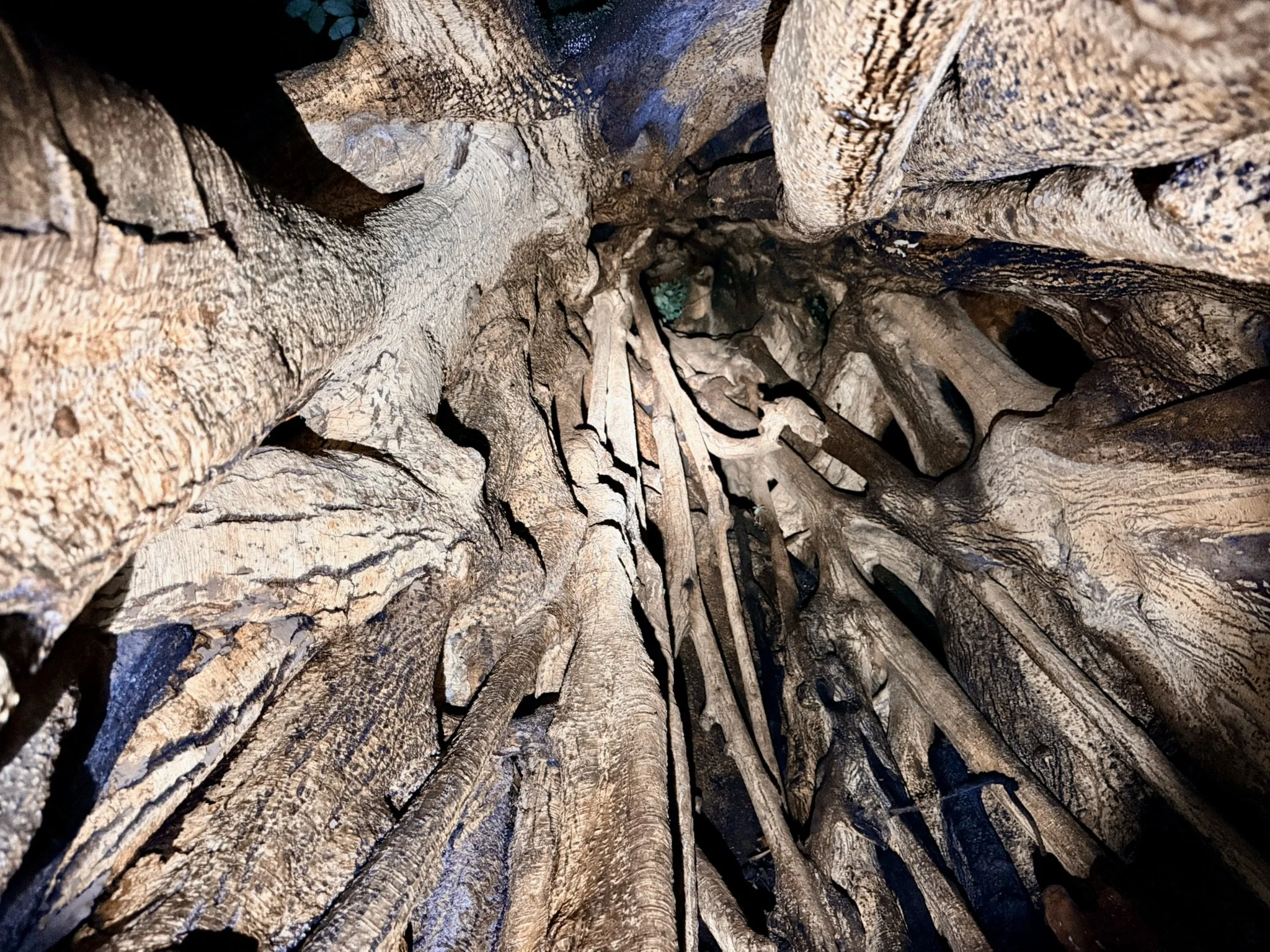
We saw some seriously cool wildlife, but what impressed us most was our guide. His ability to find things in the darkness was almost supernatural.
He said he can smell snakes. He recognizes subtle differences in sounds. He notices the tiniest movements and slight variations in color that the rest of us would never see.
Meanwhile, we were standing there with our flashlights thinking, “Where?!”
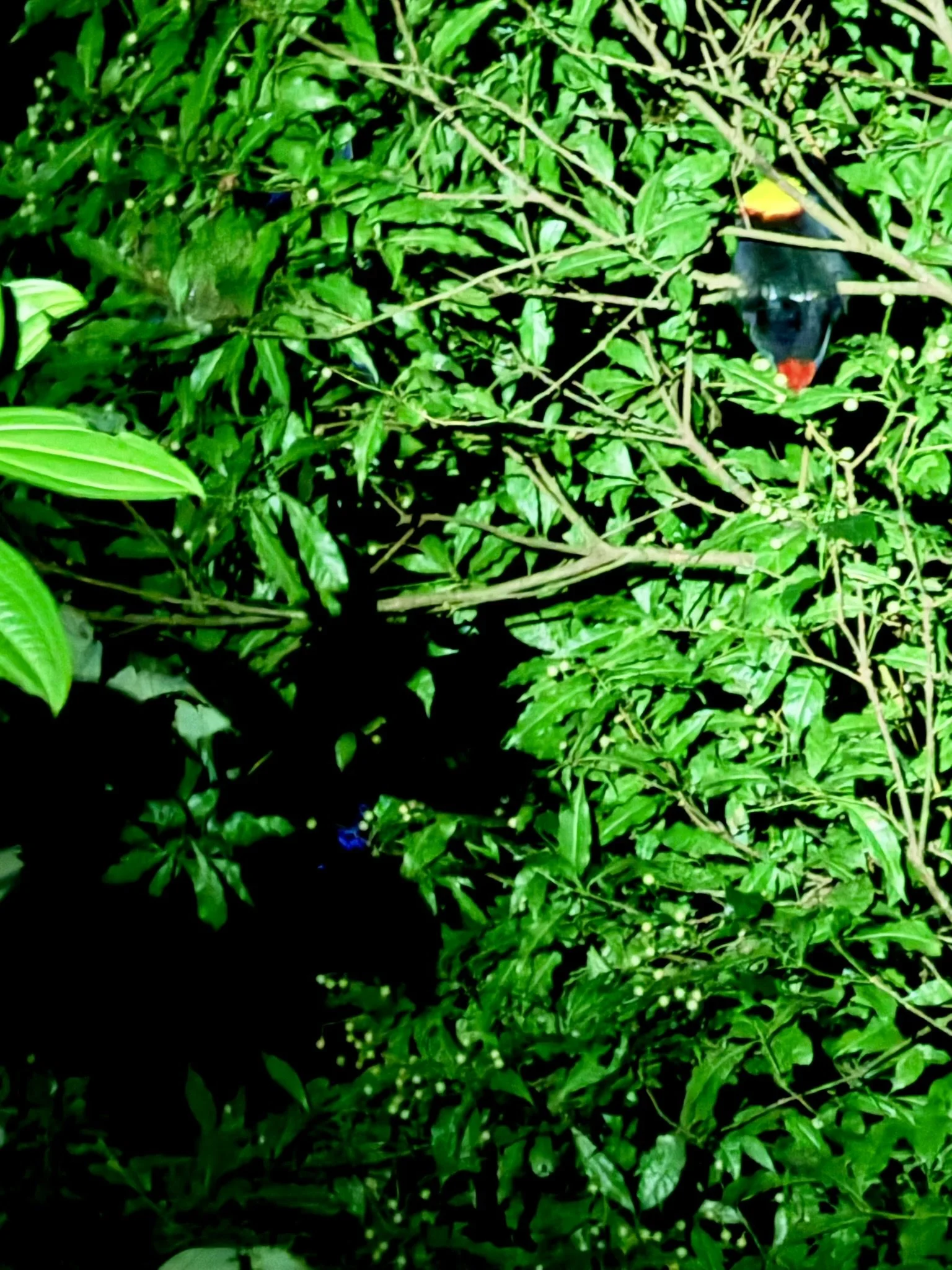
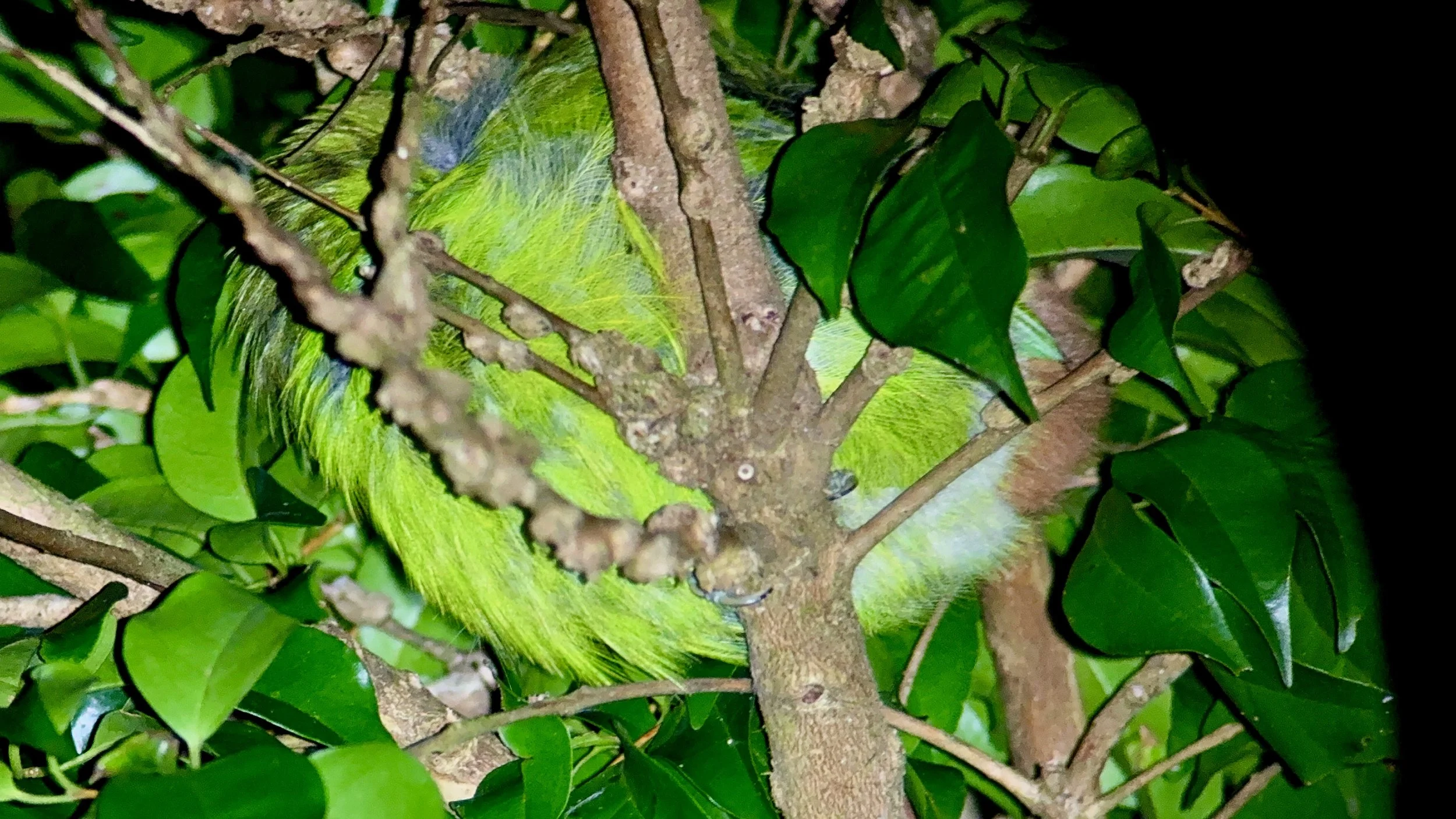
We saw two types of toucans native to Costa Rica, sleeping high in the trees. They tuck their enormous beaks underneath their wings while they sleep, transforming themselves into what looks like a big puffball of colorful feathers.
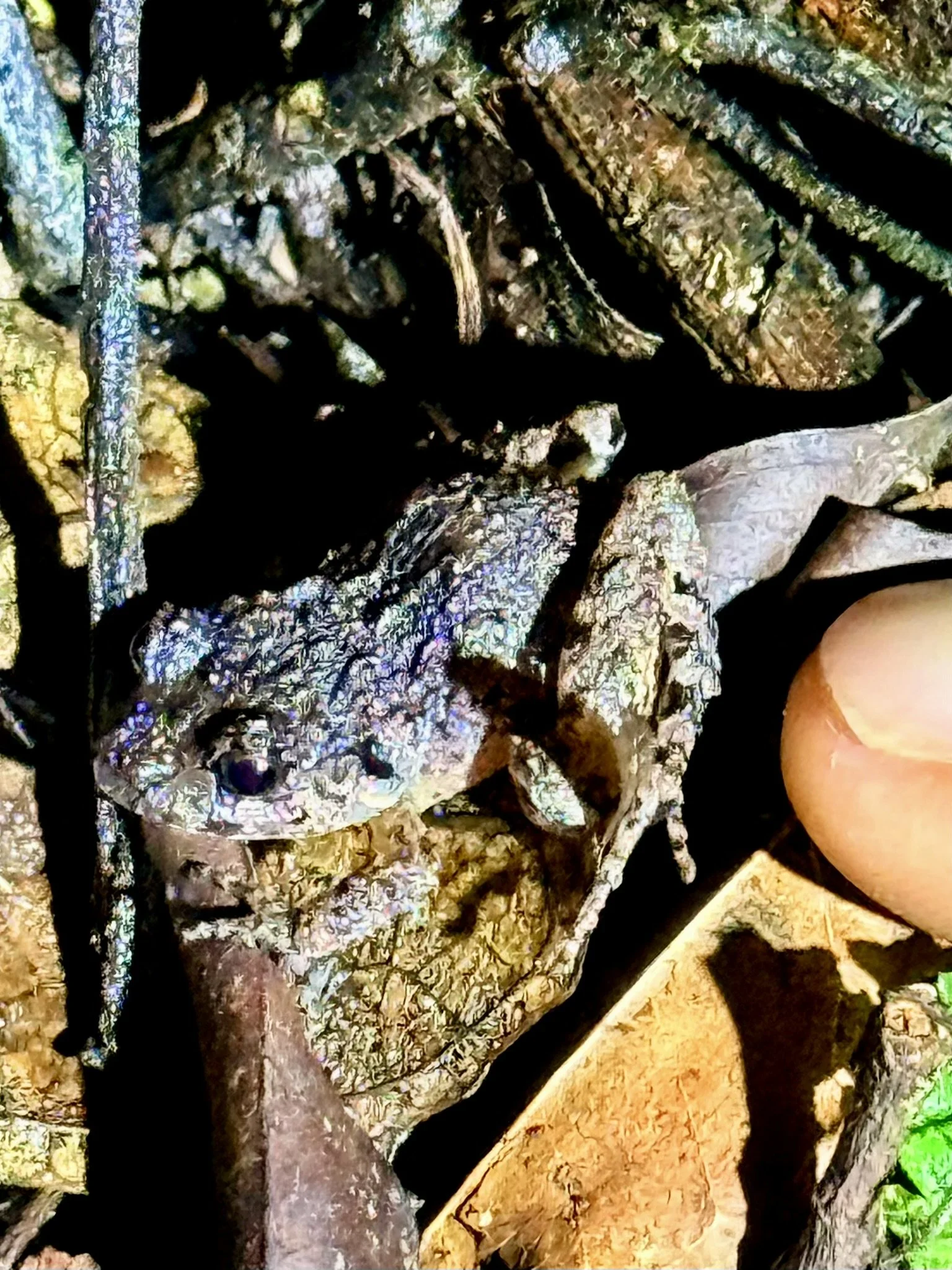
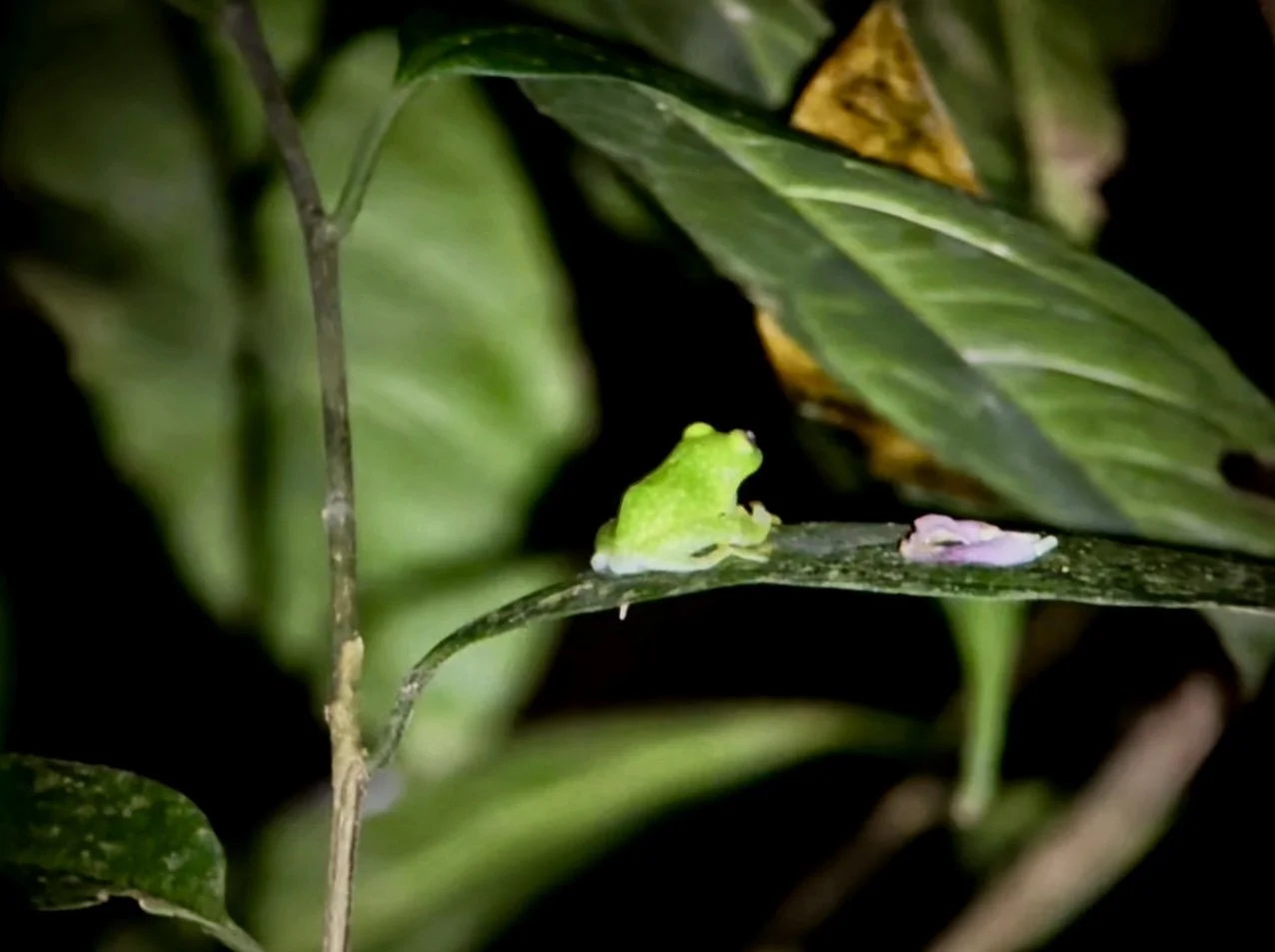
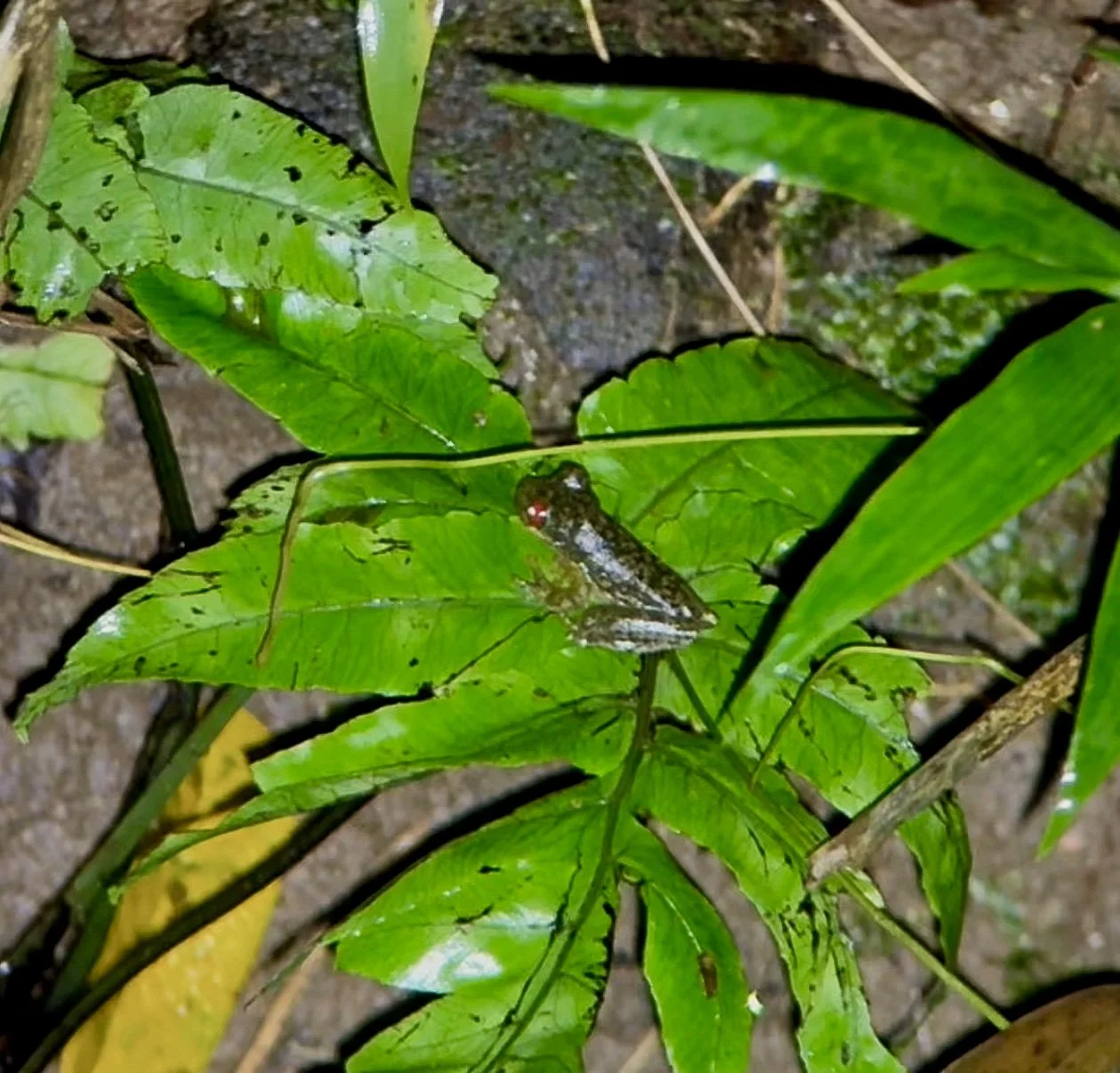
We also spotted three species of tiny frogs native to Costa Rica, including some that are endangered.
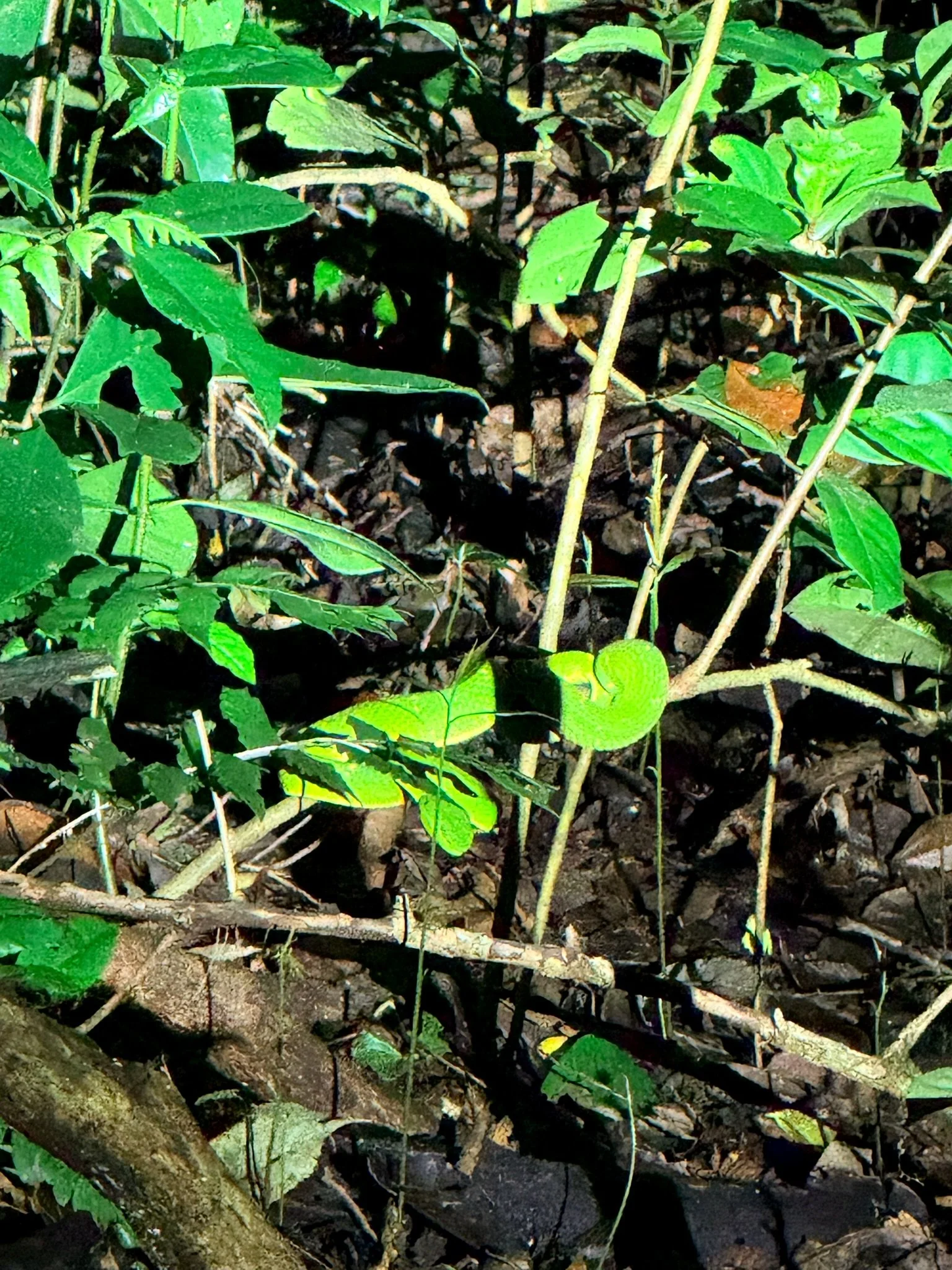
A bright green viper snake.
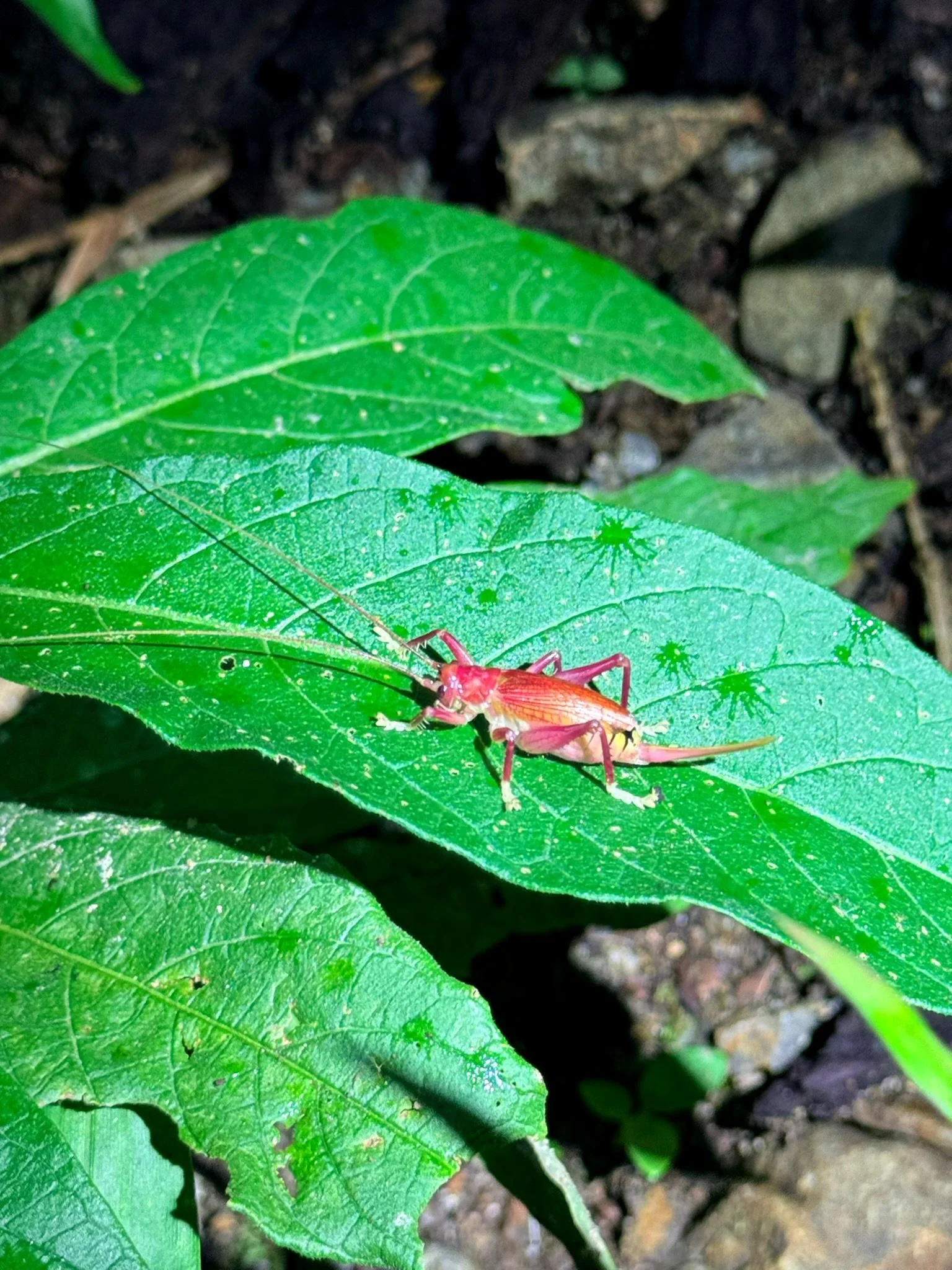
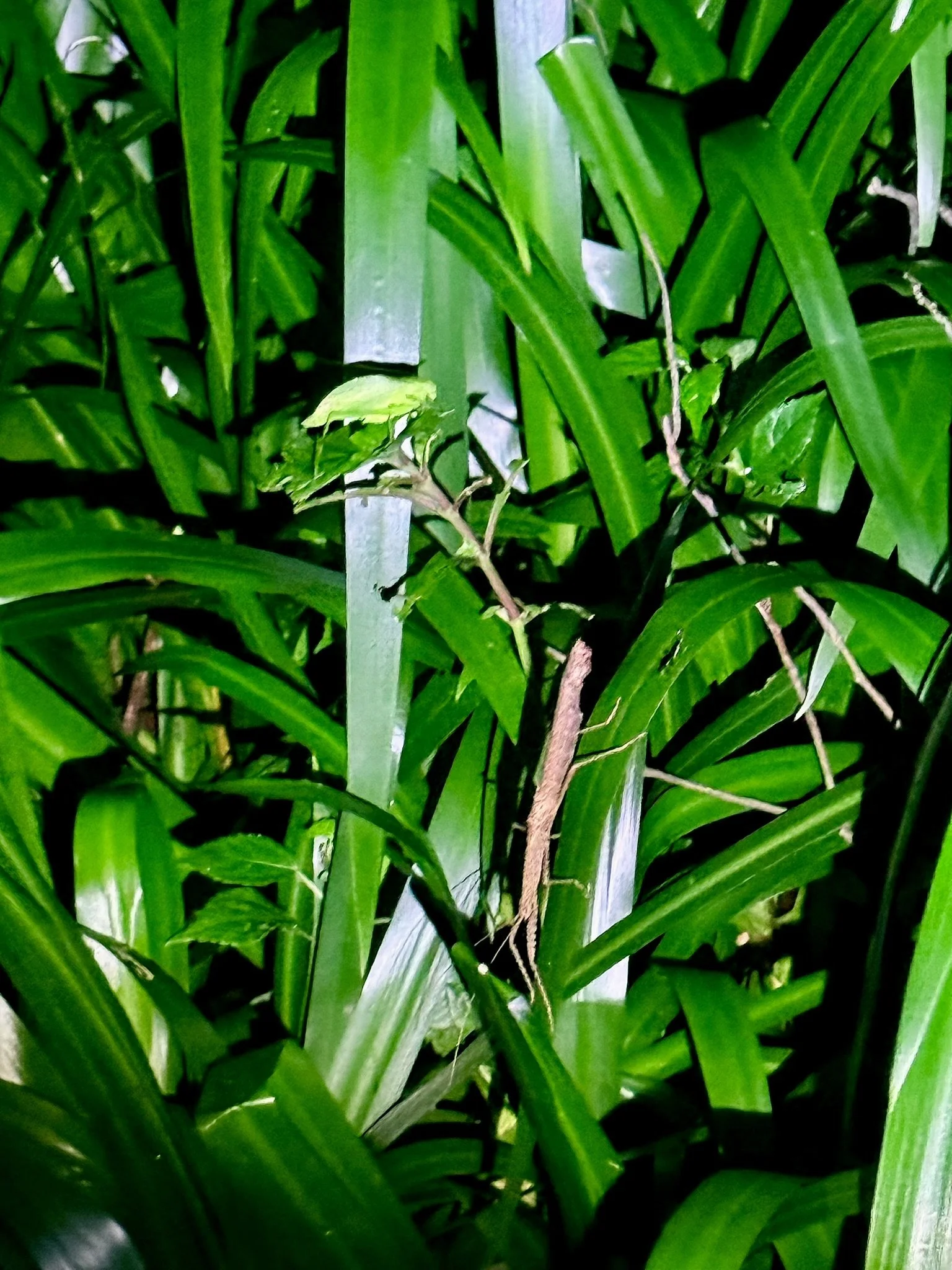
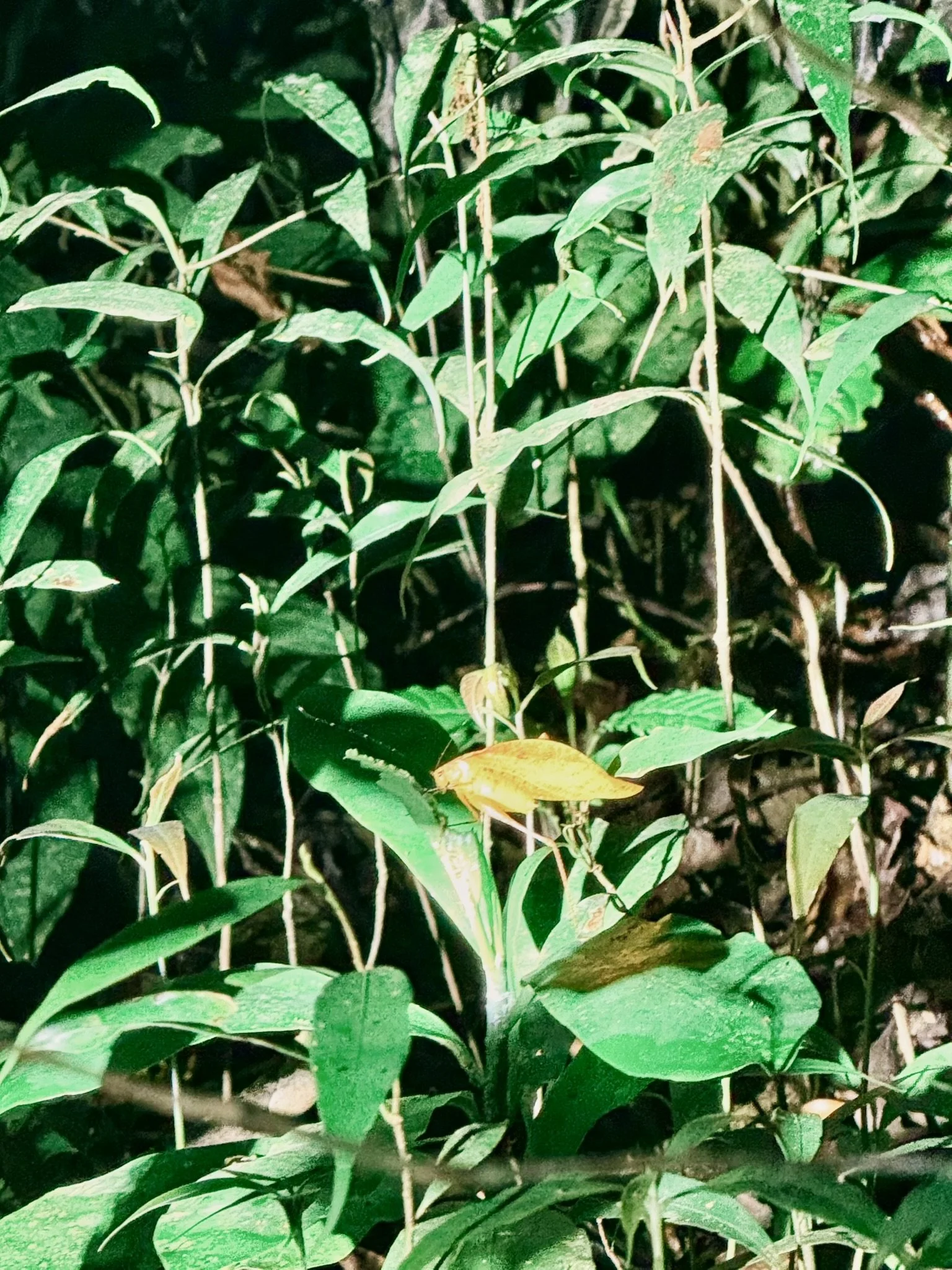
Countless insects so perfectly camouflaged that they looked like branches, sticks, and leaves.
And a very large leaf-cutter ant colony. Actually, “anthill” doesn't really do it justice. It was more like an ant mountain.
But no sloths.
Still no sloths.
We have yet to see a sloth anywhere in Central America, which is starting to feel like a personal vendetta.
Costa Rica’s Stability
As we enjoyed all of the protected biodiversity Costa Rica has to offer, we started thinking about something that doesn’t get talked about nearly as much as the wildlife: the political, social, and economic stability that makes long-term environmental protection possible.
Costa Rica is surrounded by countries that have experienced periods of civil war, military coups, and significant political violence. So why has Costa Rica followed such a different path?
A big part of the story goes back to the 20th century.
In 1948, following a brief civil war, President José Figueres Ferrer led the decision to abolish Costa Rica’s military. The idea was partly to reduce the possibility of future military coups, which had been a recurring source of instability in the region.
Without a standing military, Costa Rica was able to redirect resources toward areas such as education, health care, and social programs. Its approach to national security shifted toward international law, diplomacy, and multilateral institutions rather than maintaining a traditional military force. It has sometimes been described as the “Geneva of Latin America” because of its emphasis on diplomacy and international cooperation.
Later, Costa Rica became a pioneer in environmental conservation and ecotourism, building an economy around protecting the very natural resources that make the country so spectacular.
And standing there in the middle of the cloud forest, surrounded by toucans, hummingbirds, frogs, snakes, monkeys, and approximately seventeen billion shades of green, it was hard not to appreciate how those choices have shaped the Costa Rica we get to experience today.
No wonder everyone loves visiting Costa Rica.
We totally get it.
