One of our favorite ways to get acquainted with a new city is to simply walk it. Tirana proved to be an ideal city for a self-guided tour, allowing us to explore centuries of Albanian history while tracing the country’s remarkable journey from Ottoman rule to communism and, ultimately, to modern democracy.
Our four-hour, three-mile loop began right outside our apartment in the trendy Blloku District.
Blloku: From Forbidden Zone to Trendy Hotspot
It’s hard to imagine today, but during Albania’s communist era, Blloku was strictly off-limits to ordinary citizens. The neighborhood surrounding dictator Enver Hoxha’s residence was sealed off by police and secret agents, functioning as a kind of wall-less Kremlin reserved exclusively for party elites and their families.
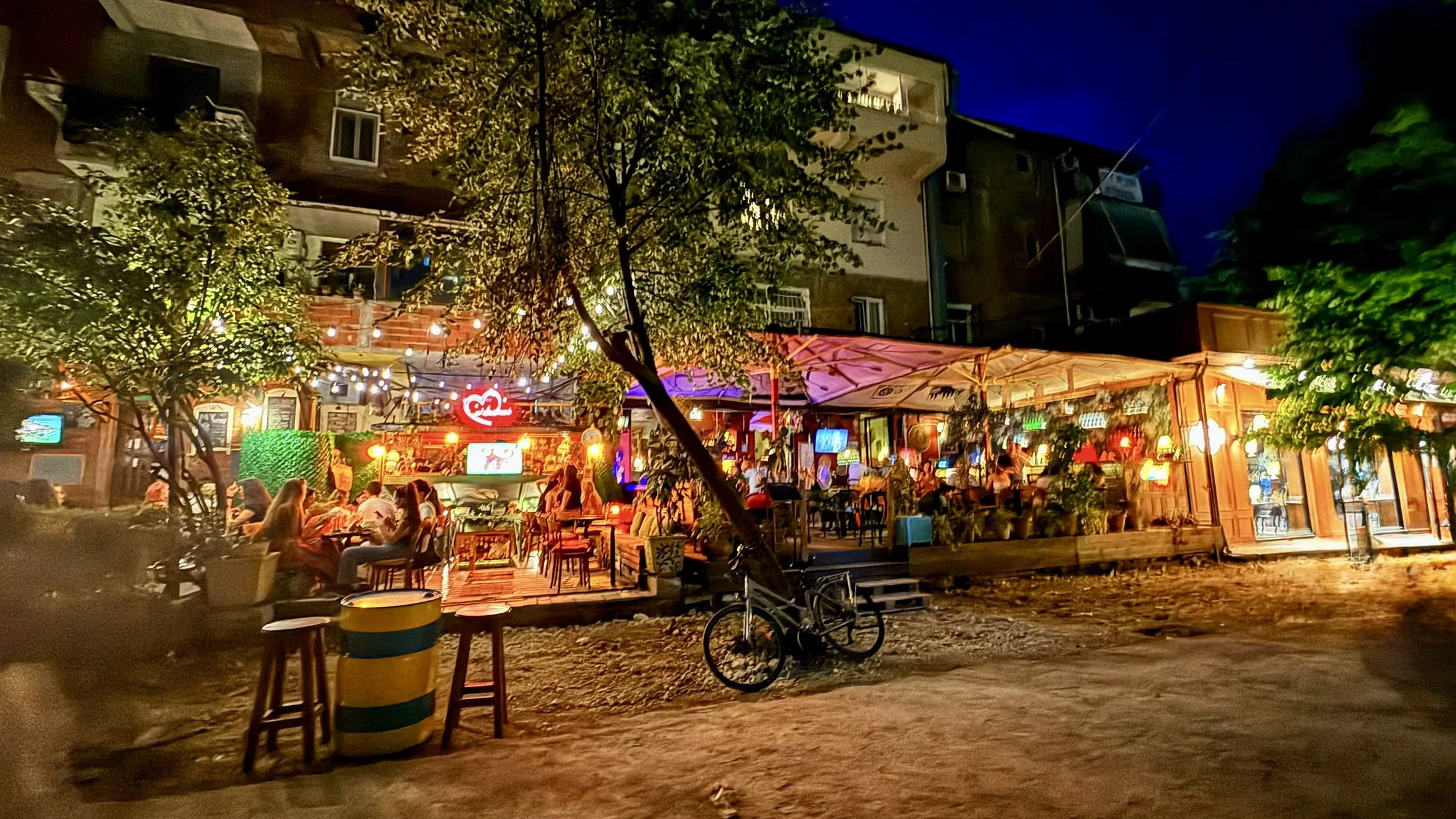
Today, Blloku is Tirana’s most vibrant neighborhood, packed with cafés, restaurants, bars, and nightclubs. Yet amid all the energy, reminders of the past remain.
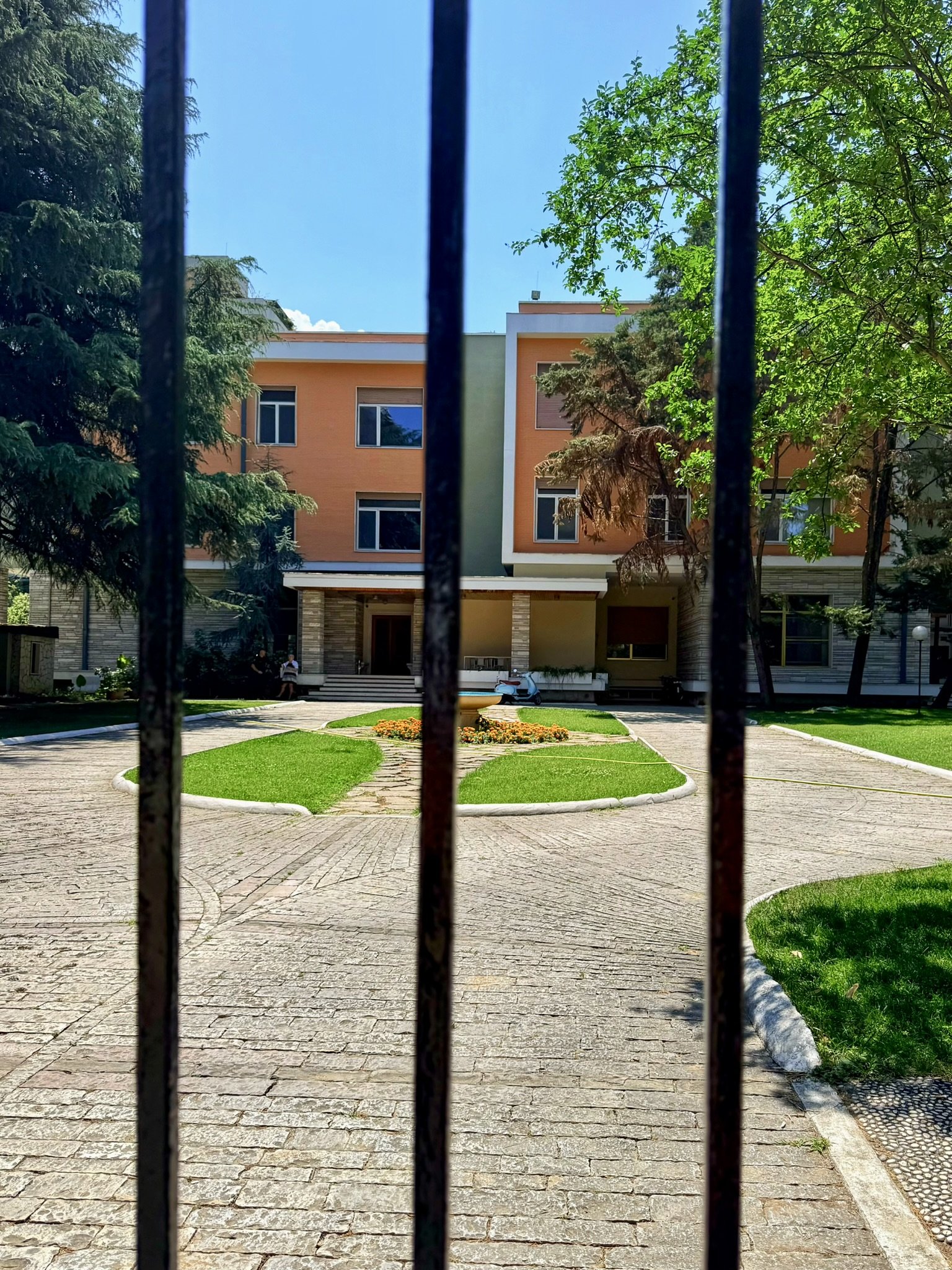
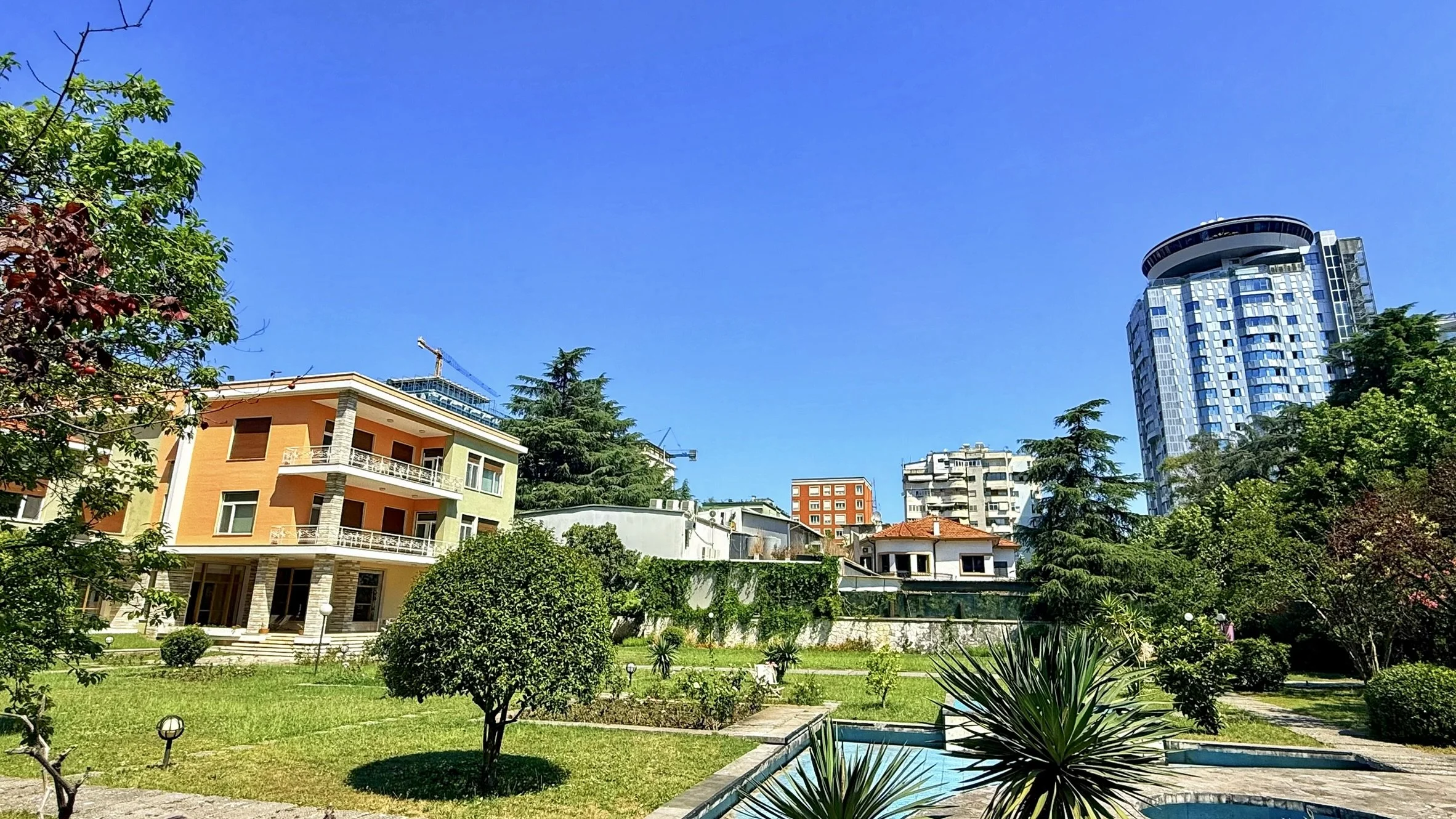
One of the most striking is Enver Hoxha’s former residence, now known as Vila 31 x Art Explora. The villa occasionally hosts art exhibitions and events, but it was closed during our visit, so we settled for a walk-by. The house appears frozen in time, looking much as it likely did in the mid-1960s.
Hoxha ruled Albania for more than four decades until his death in 1985, creating one of the most isolated and repressive regimes in Europe. In his later years, he rarely traveled and reportedly spent much of his time chain-smoking inside this very villa, where he lived with his wife and their three children.
House of Leaves: The Machinery of Surveillance
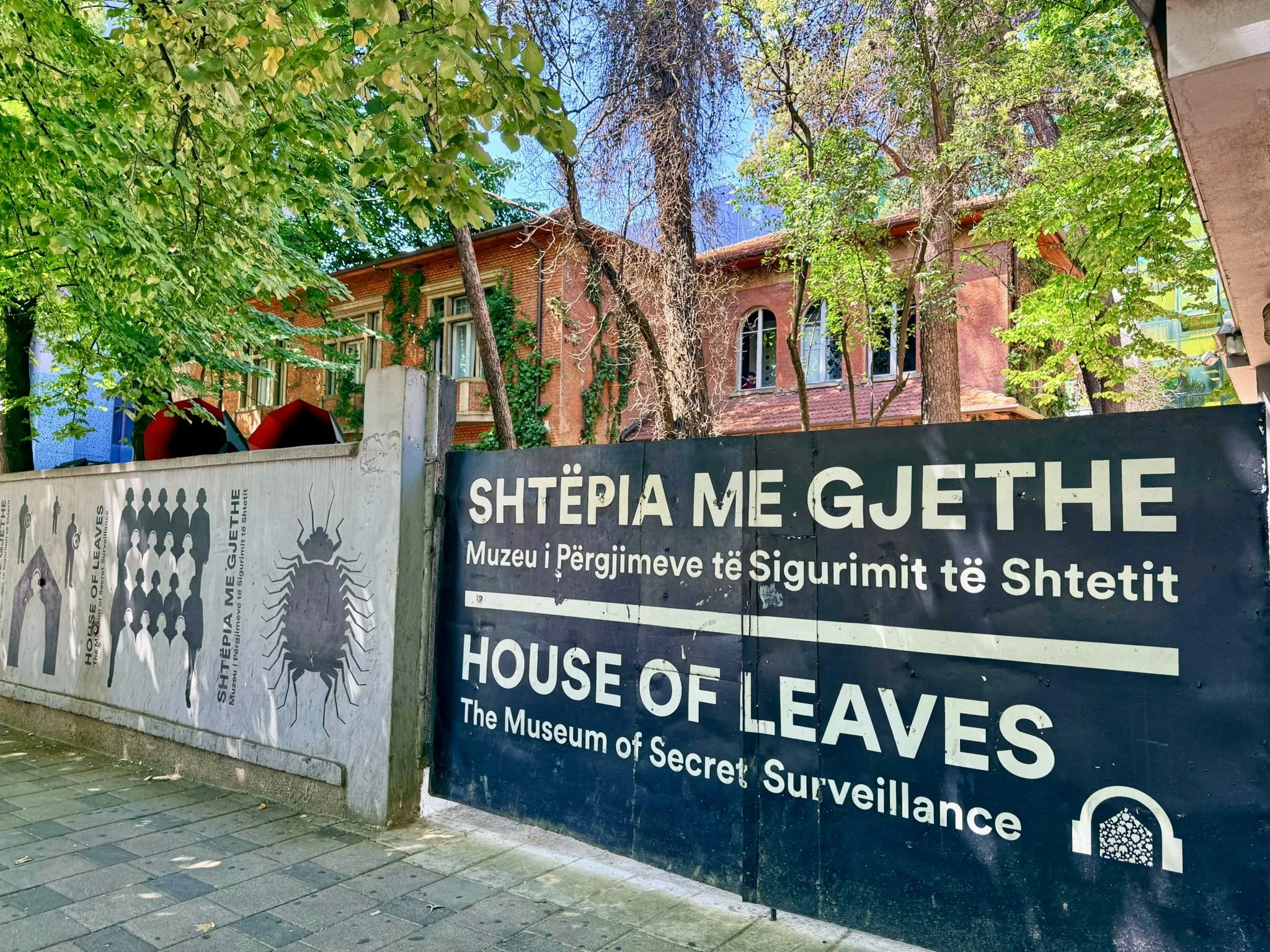
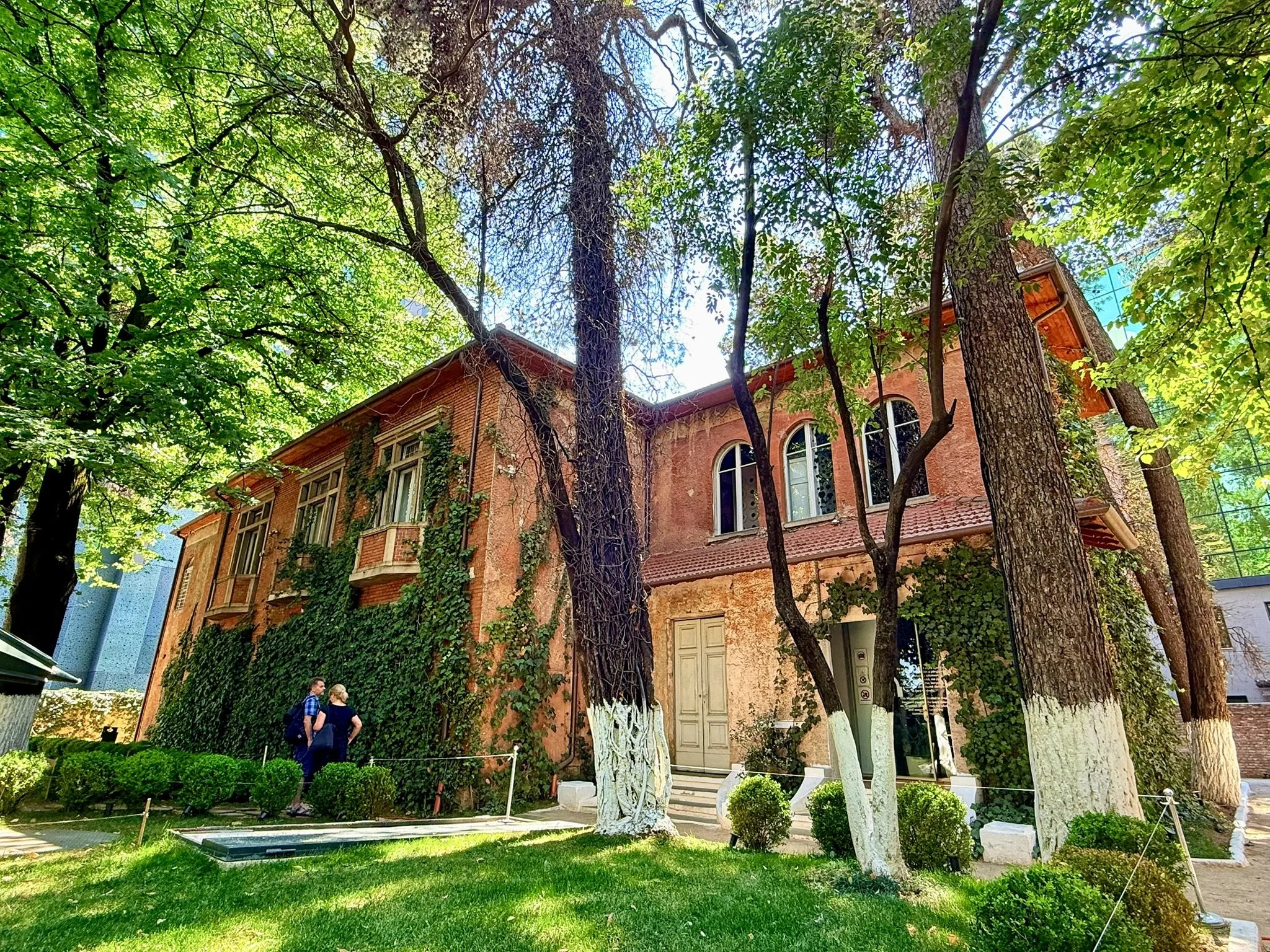
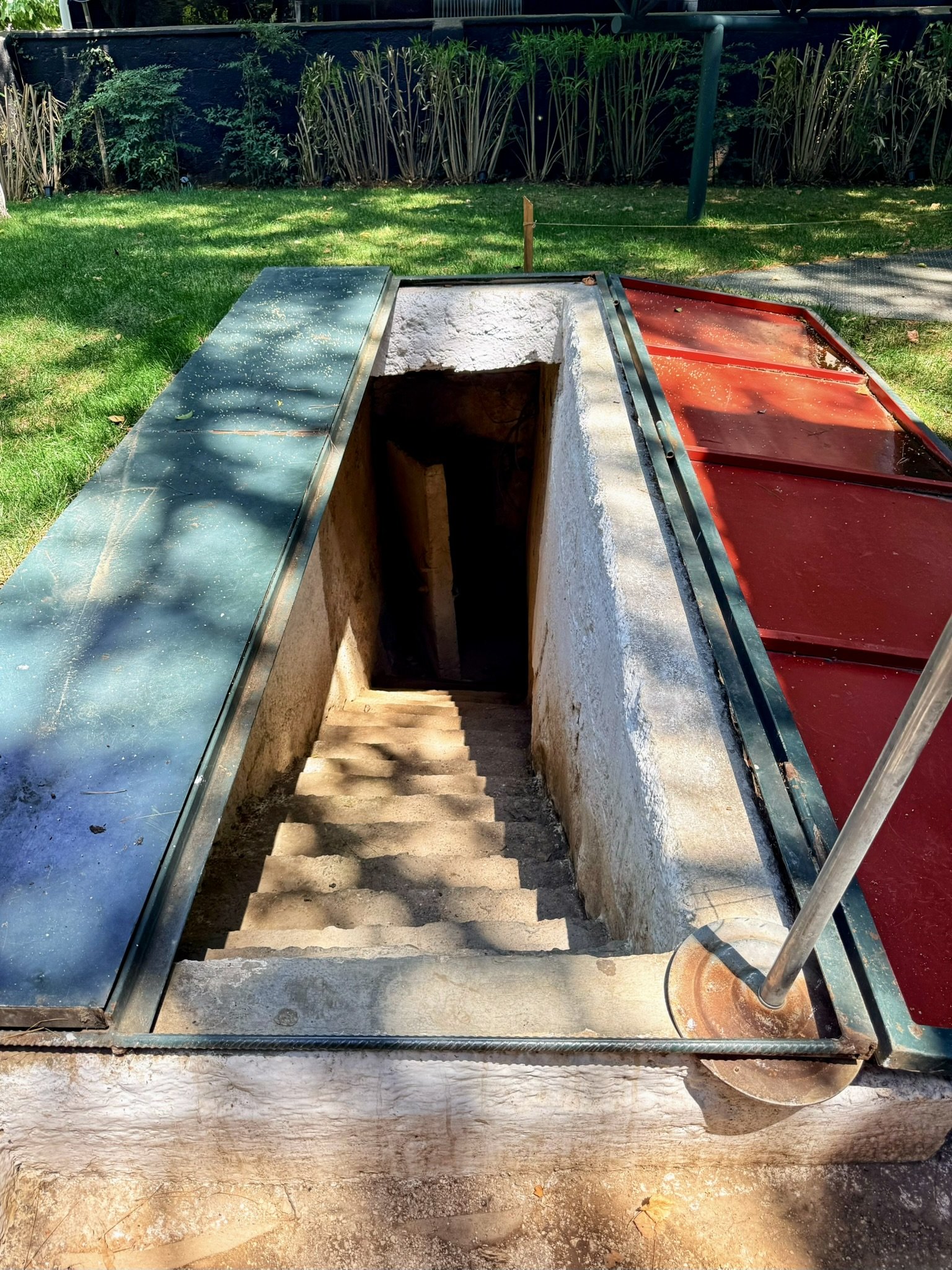
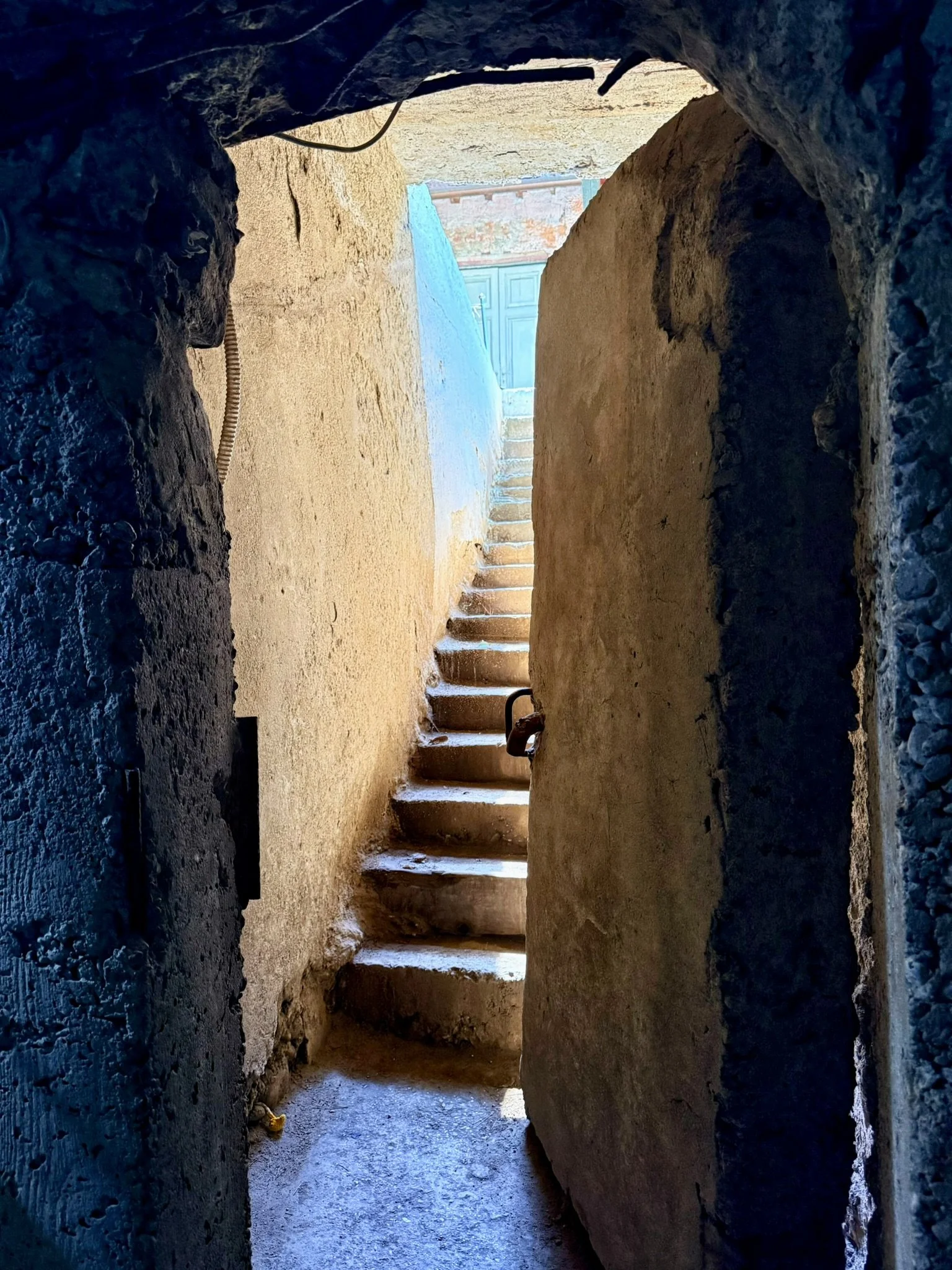
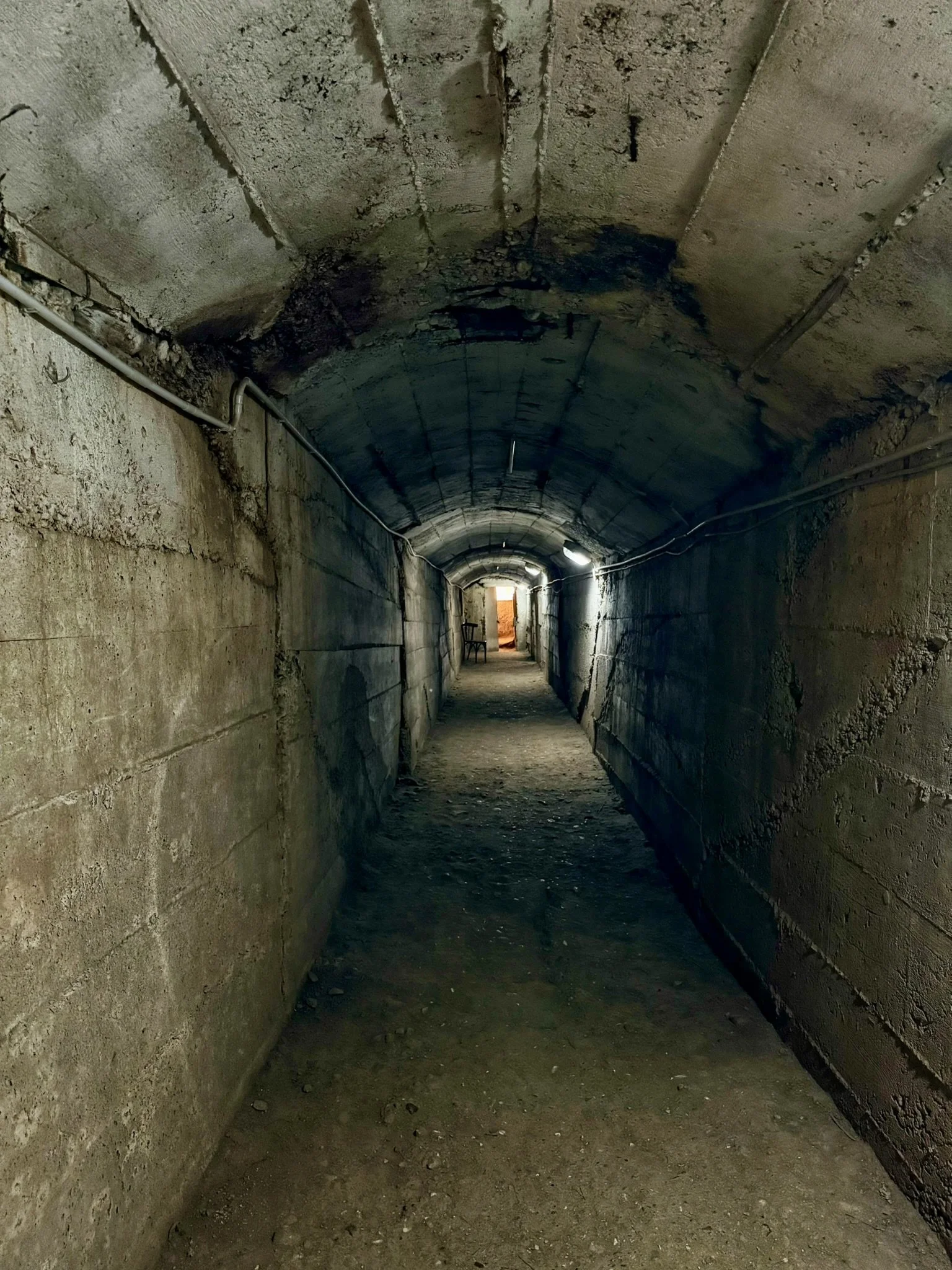
A short walk brought us to one of Tirana’s most fascinating museums: the House of Leaves.
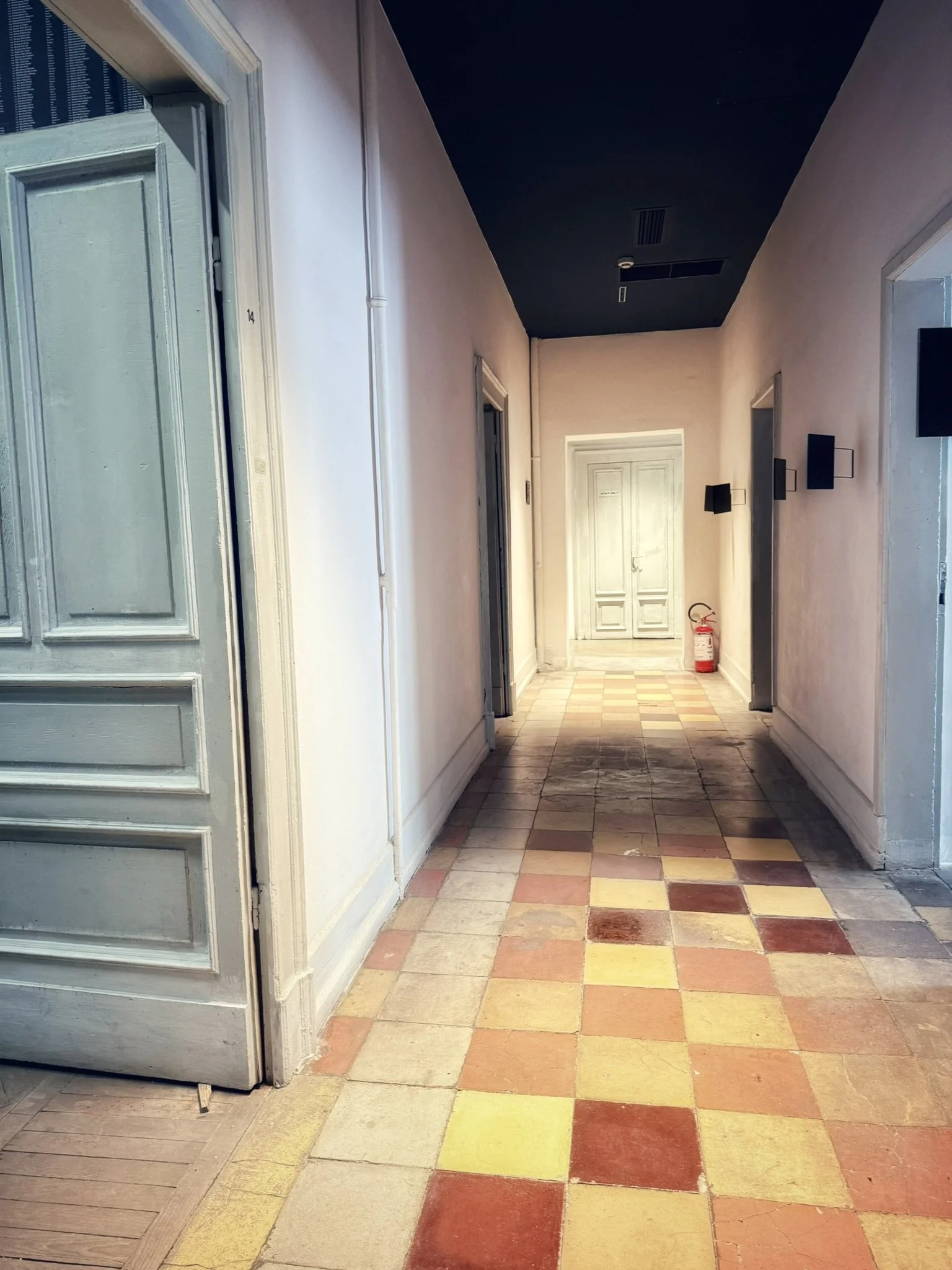
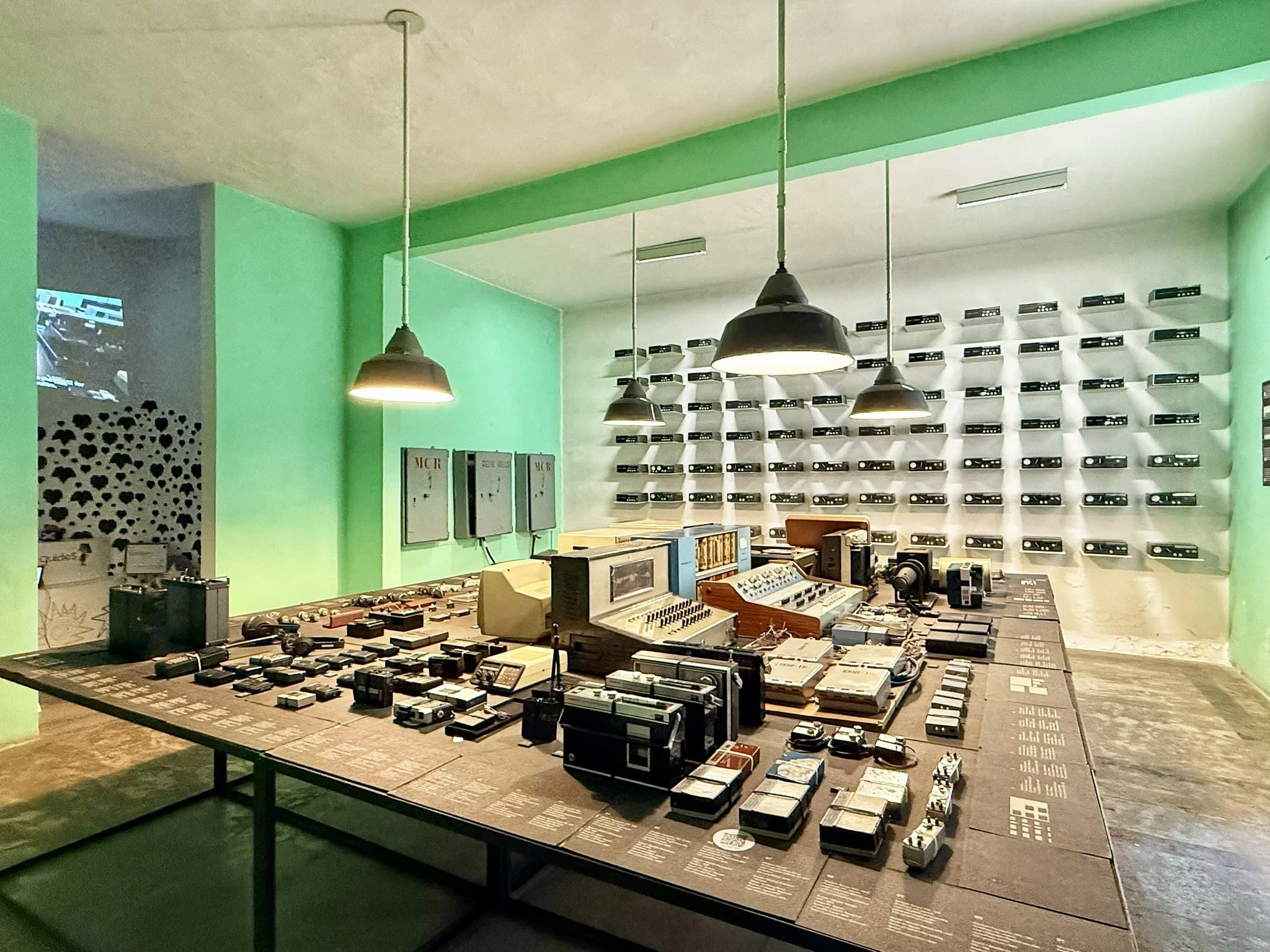
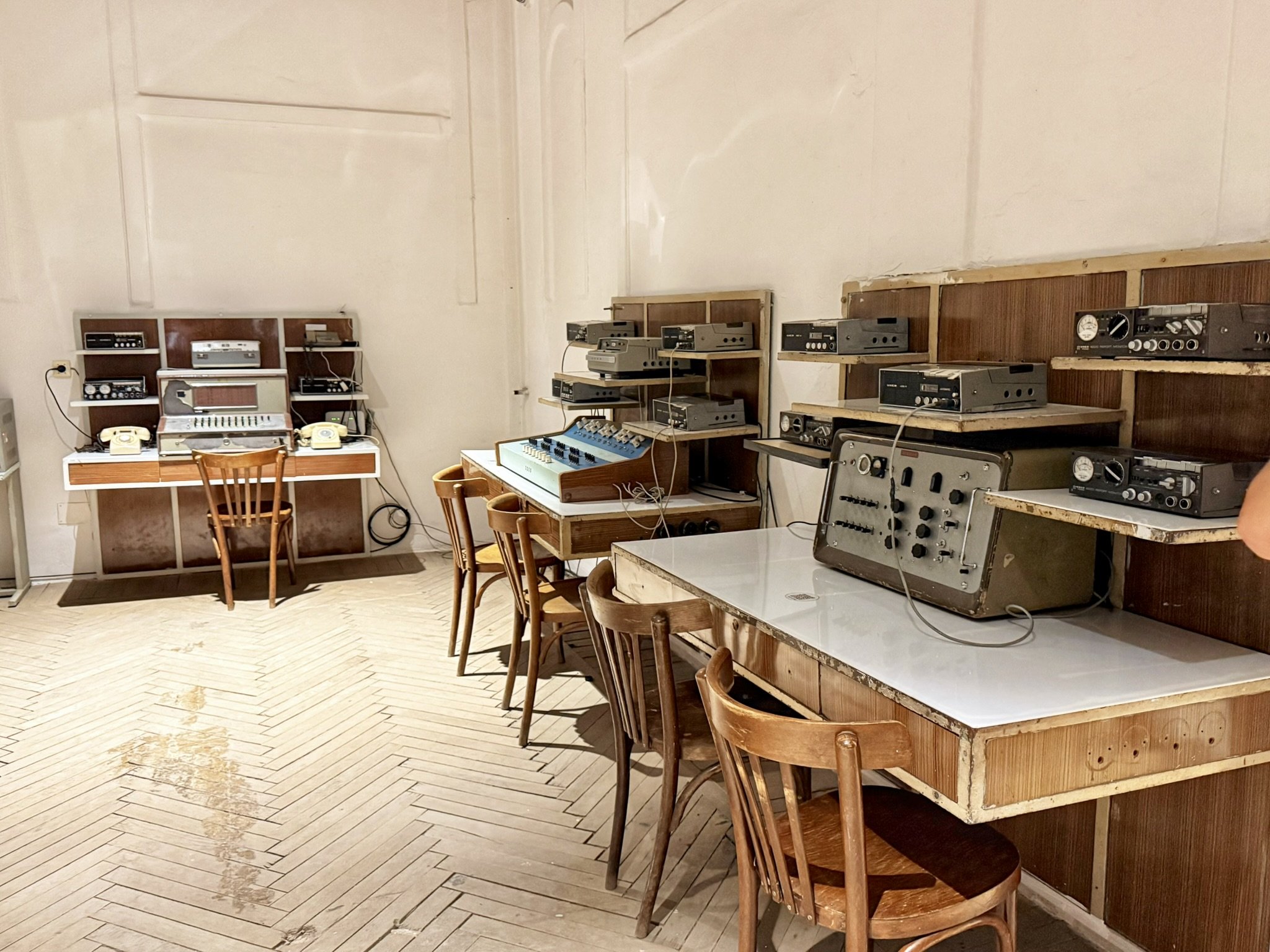
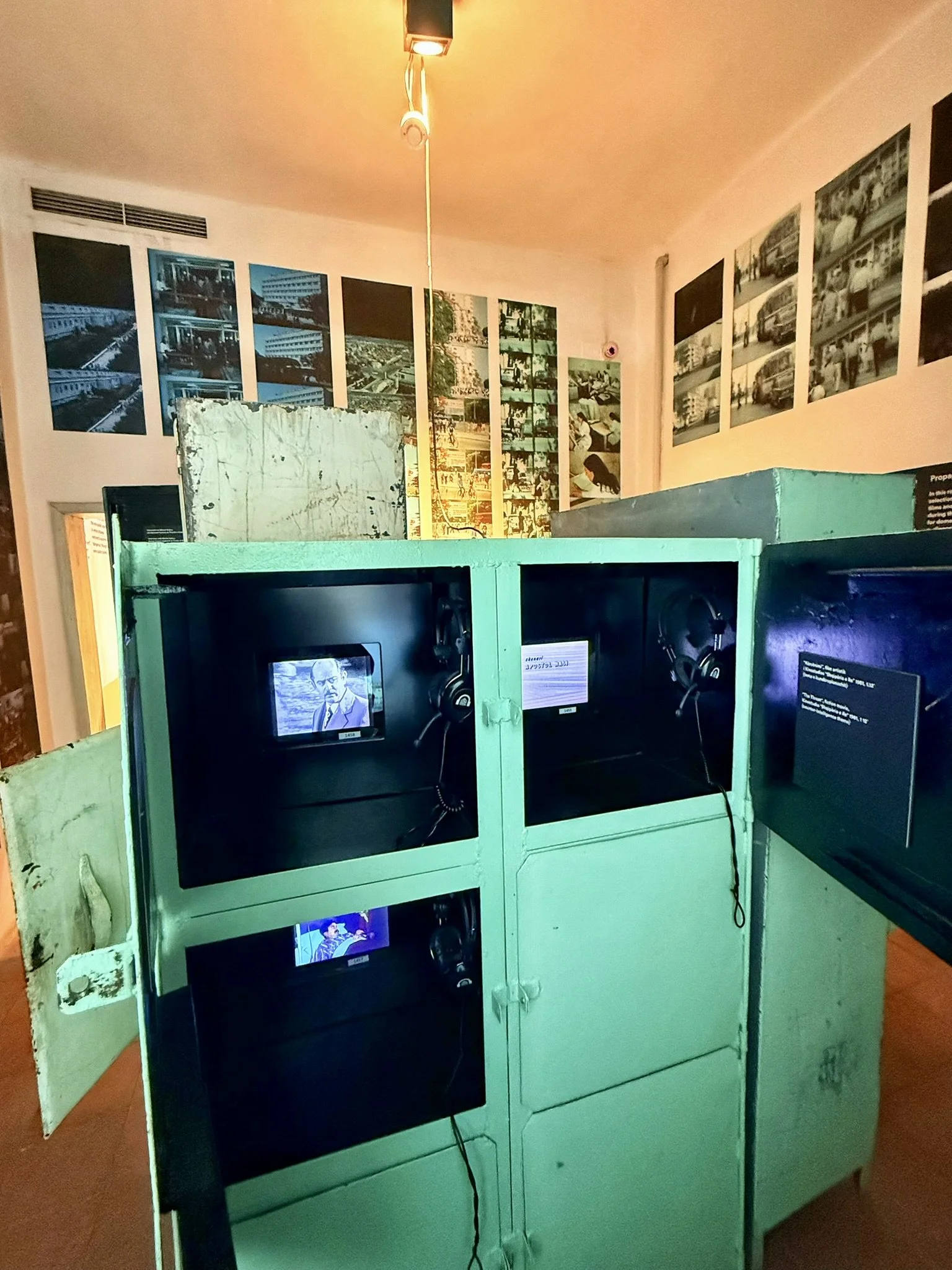
Originally constructed as an obstetrics clinic, the building later became headquarters for the Sigurimi, Albania’s feared secret police. Today it serves as a museum documenting the extensive surveillance apparatus that monitored citizens during the communist era.
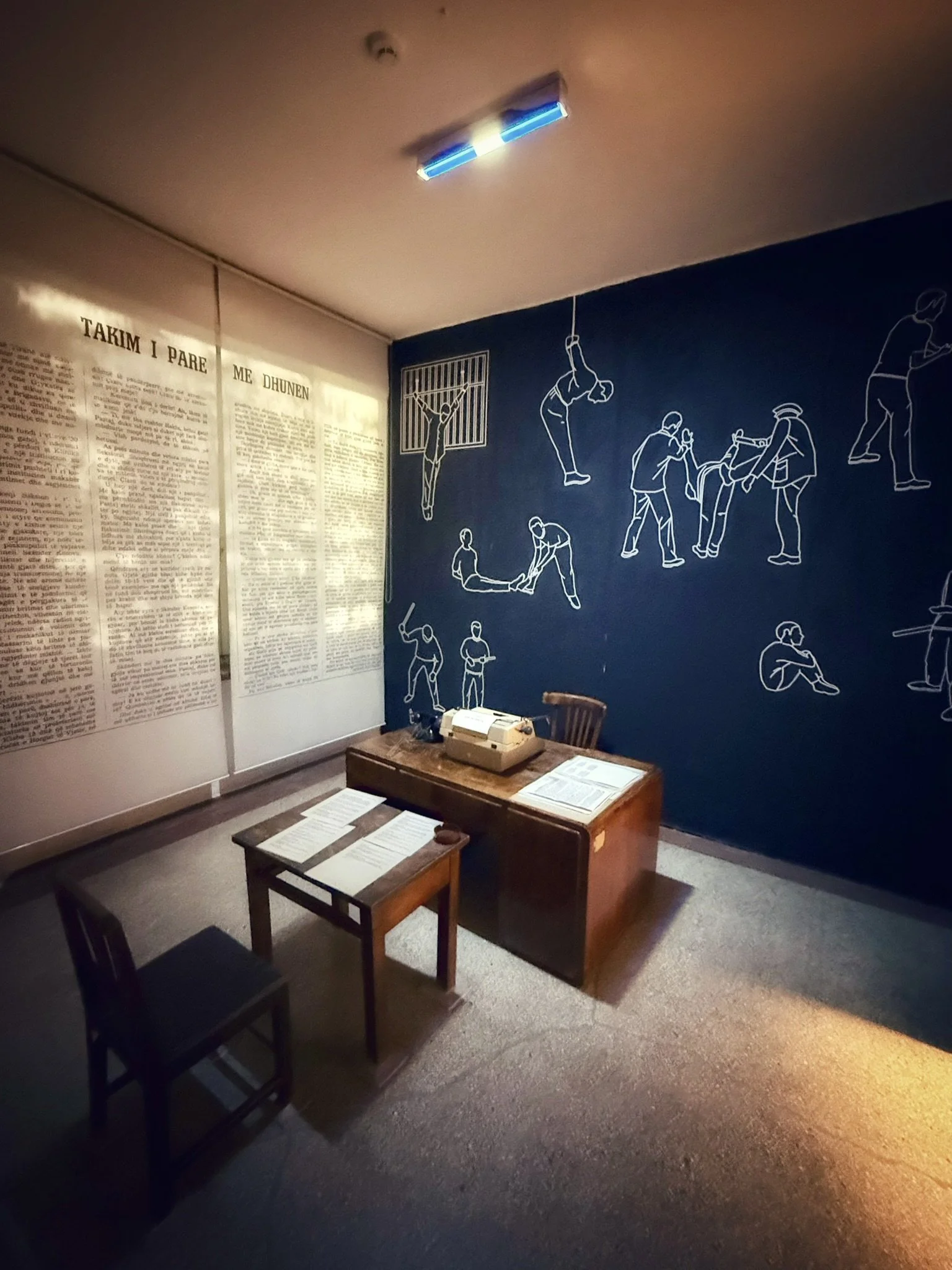
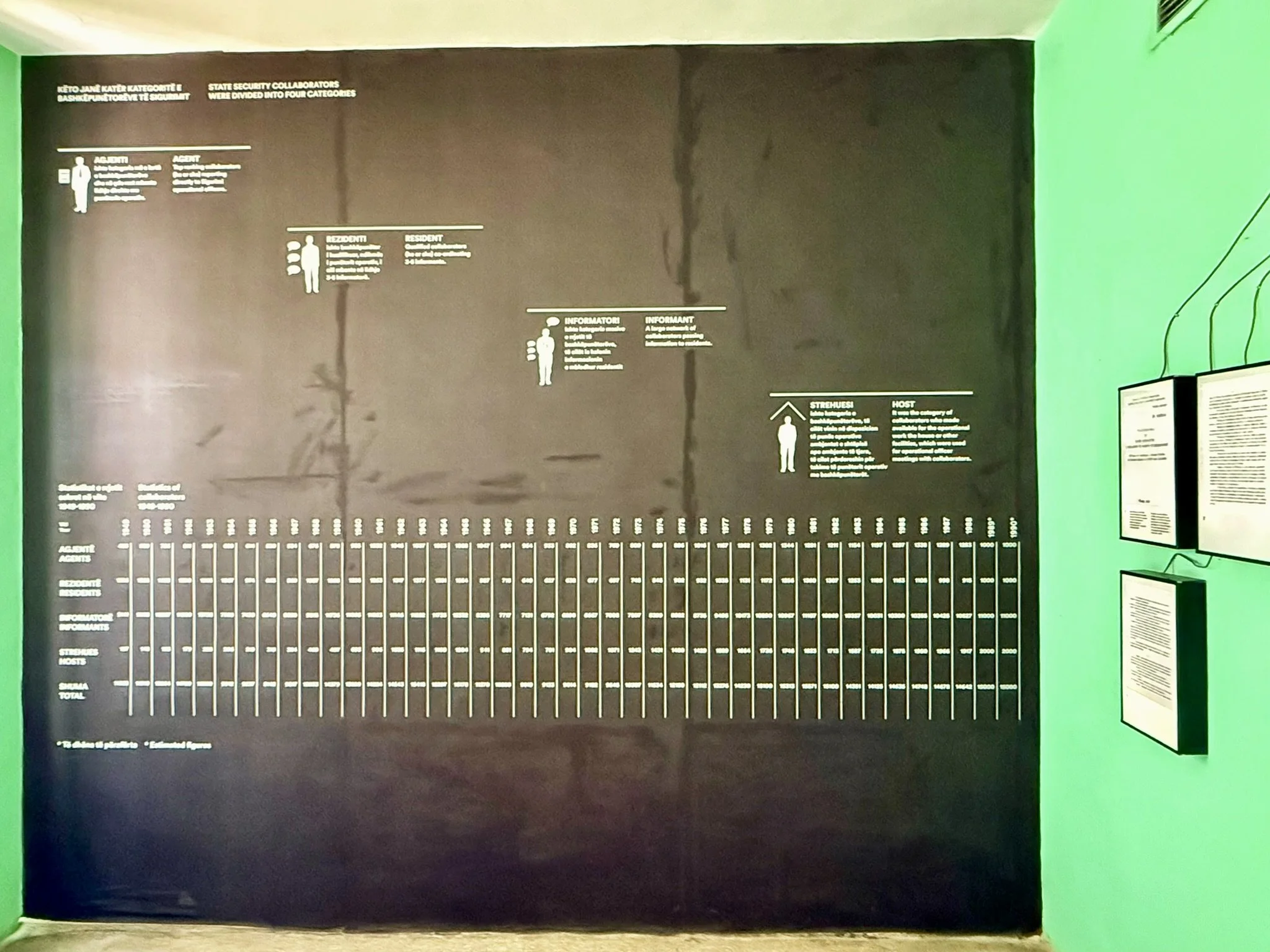
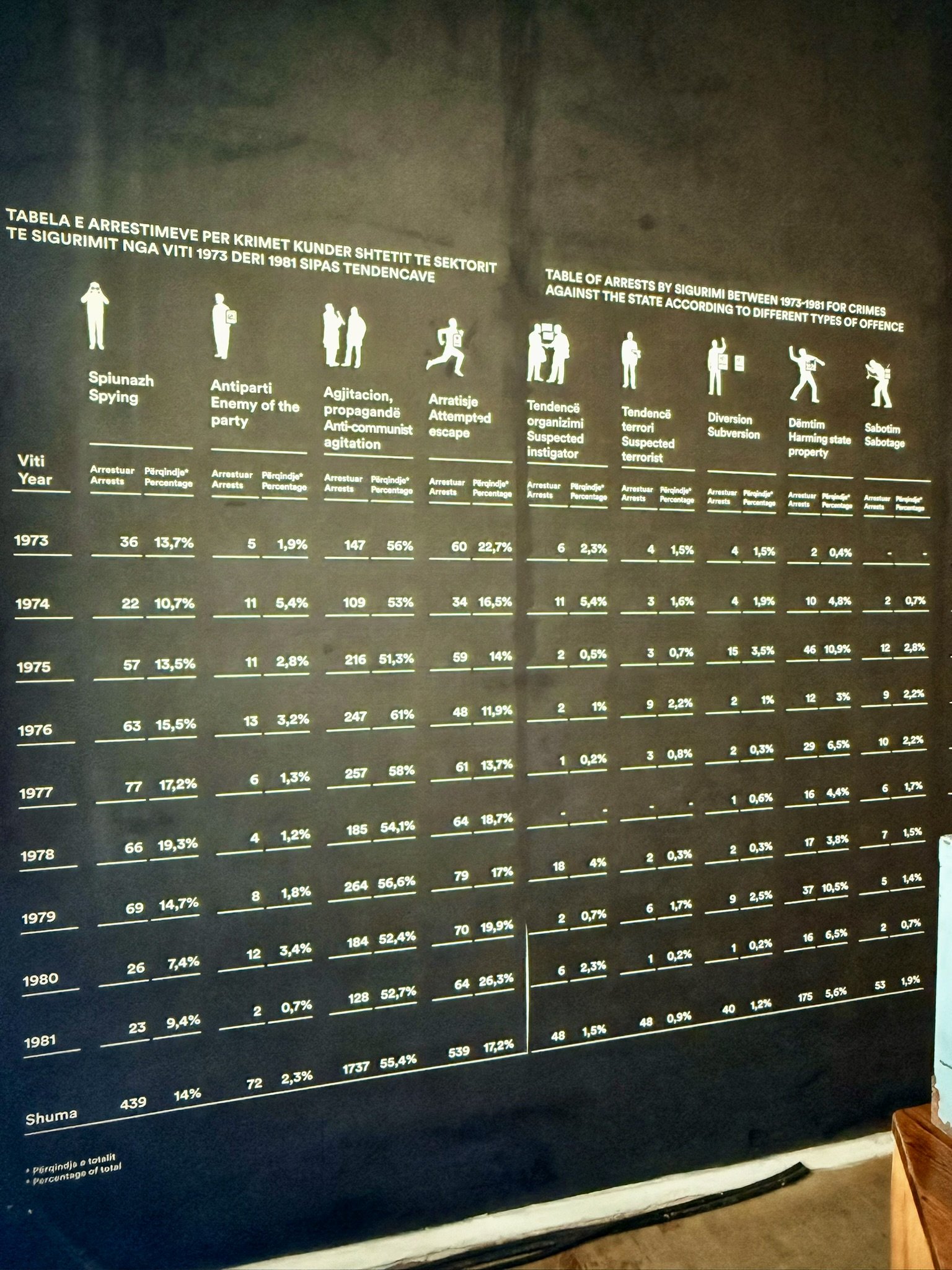
The exhibits reveal just how pervasive state control had become. We saw preserved surveillance equipment, an interrogation room, a secret tunnel, and training materials showing agents how to conceal listening devices inside walls. Statistics on informants, political prisoners, and executions offered sobering insight into life under the dictatorship. Some of the offenses that led to imprisonment are difficult to comprehend from the perspective of a free society.
A Revival of Faith
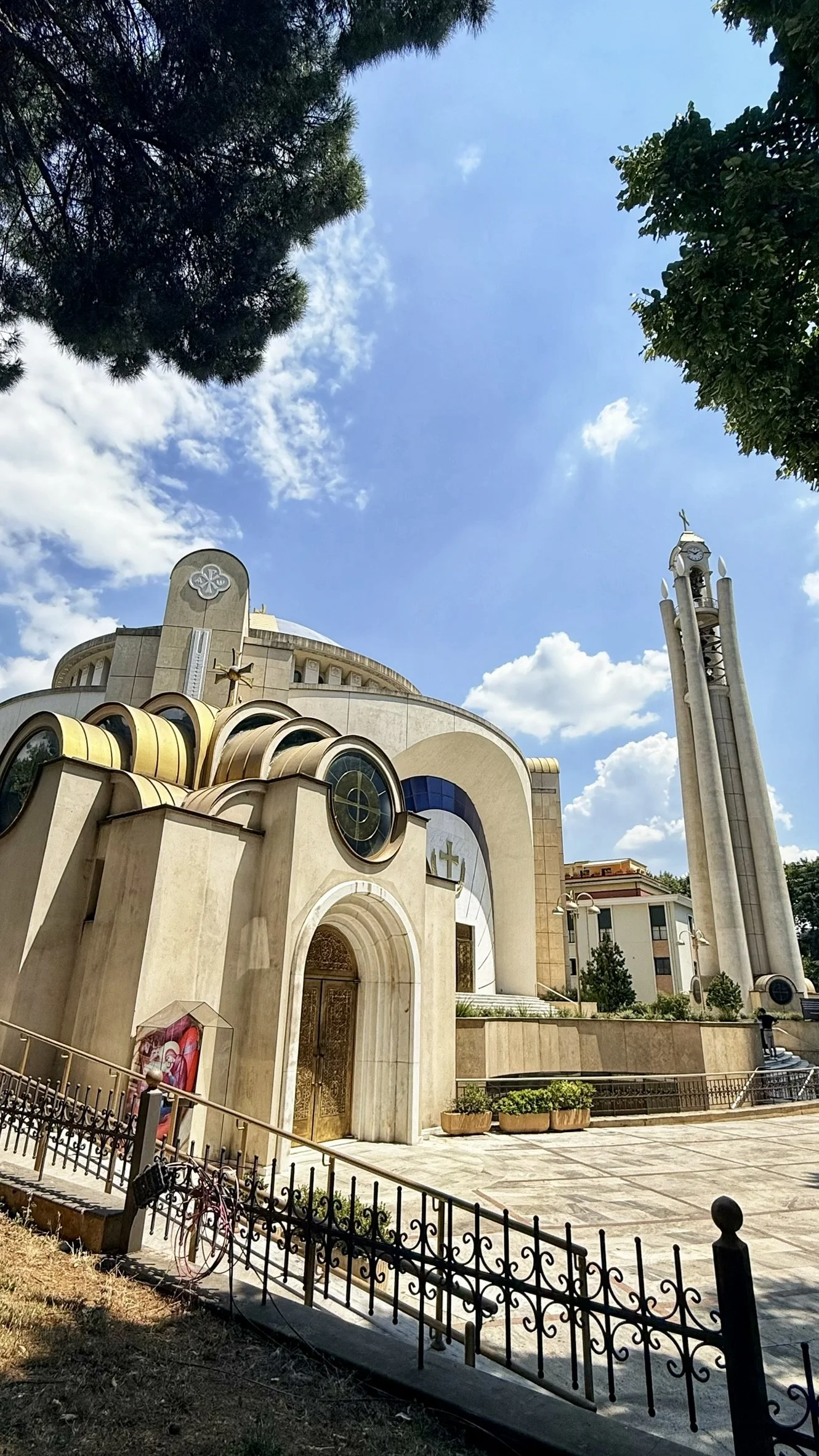
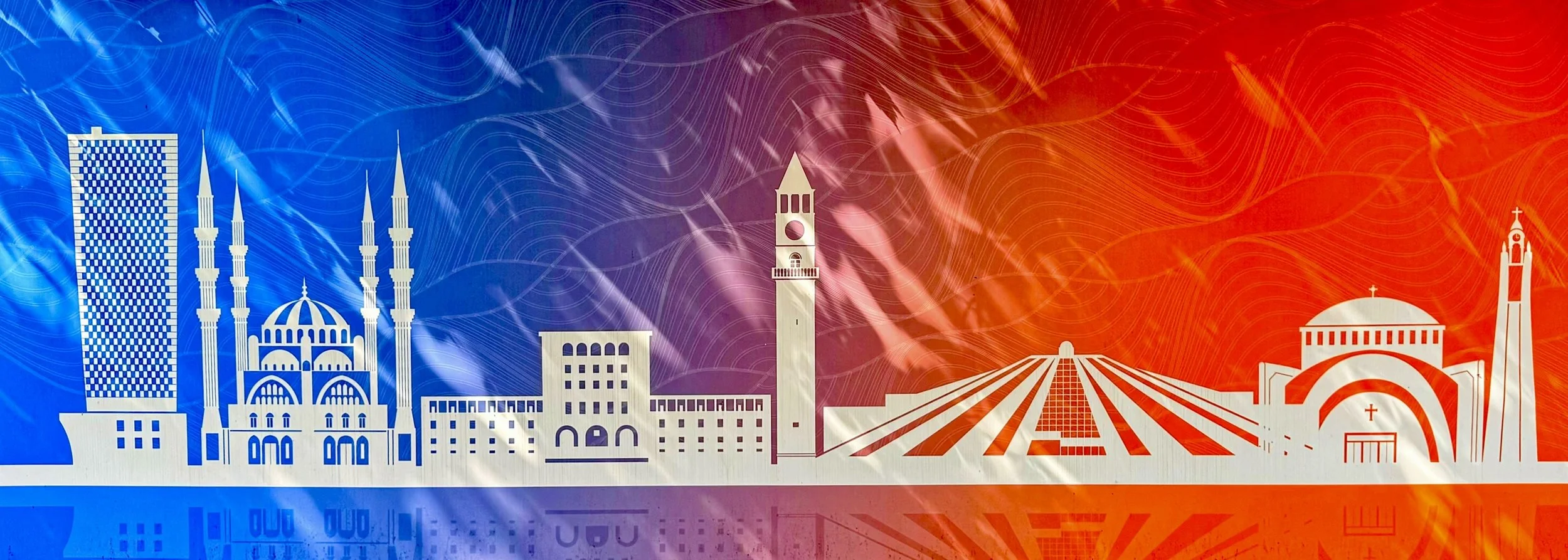
Continuing toward the city center, it was hard to miss the massive Orthodox Cathedral of the Resurrection of Christ.
The cathedral serves as the headquarters of the Albanian Orthodox Church and is the third-largest Orthodox cathedral in the Balkans. Opened in 2012, it stands as a symbol of the rebirth of religious life following decades of state-enforced atheism under communist rule.
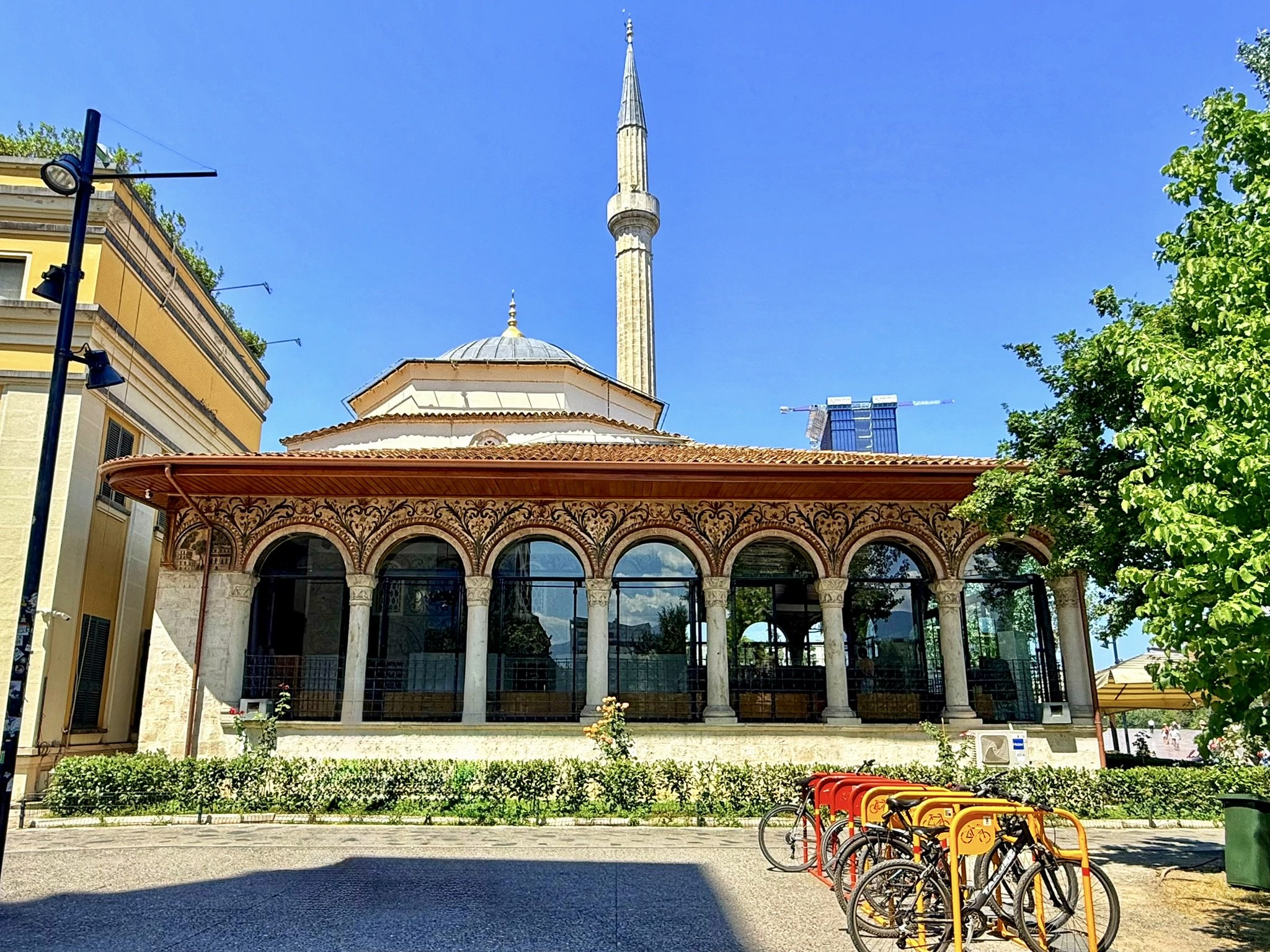
Nearby, we also visited the Et’hem Bej Mosque, another powerful symbol of Albania’s religious revival. During the communist era, religious practice was prohibited, and the mosque remained closed. On January 18, 1991, despite opposition from authorities, approximately 10,000 people entered the mosque carrying flags, marking a pivotal moment in the restoration of religious freedom in Albania.
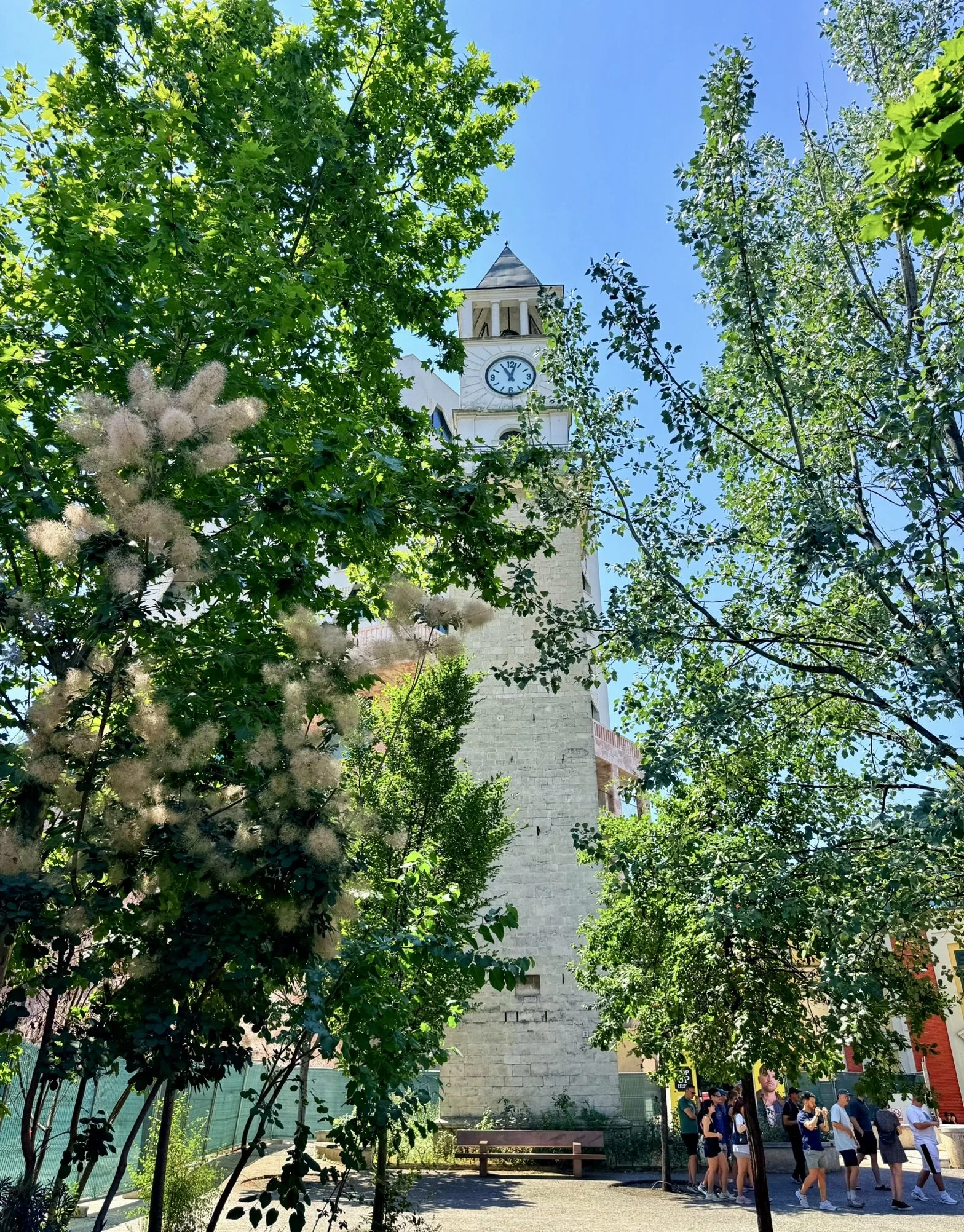
Beside the mosque stands Tirana’s historic Clock Tower, built in 1822. Although we skipped the climb up its 90 spiral steps, it remains one of the city’s most recognizable Ottoman-era landmarks.
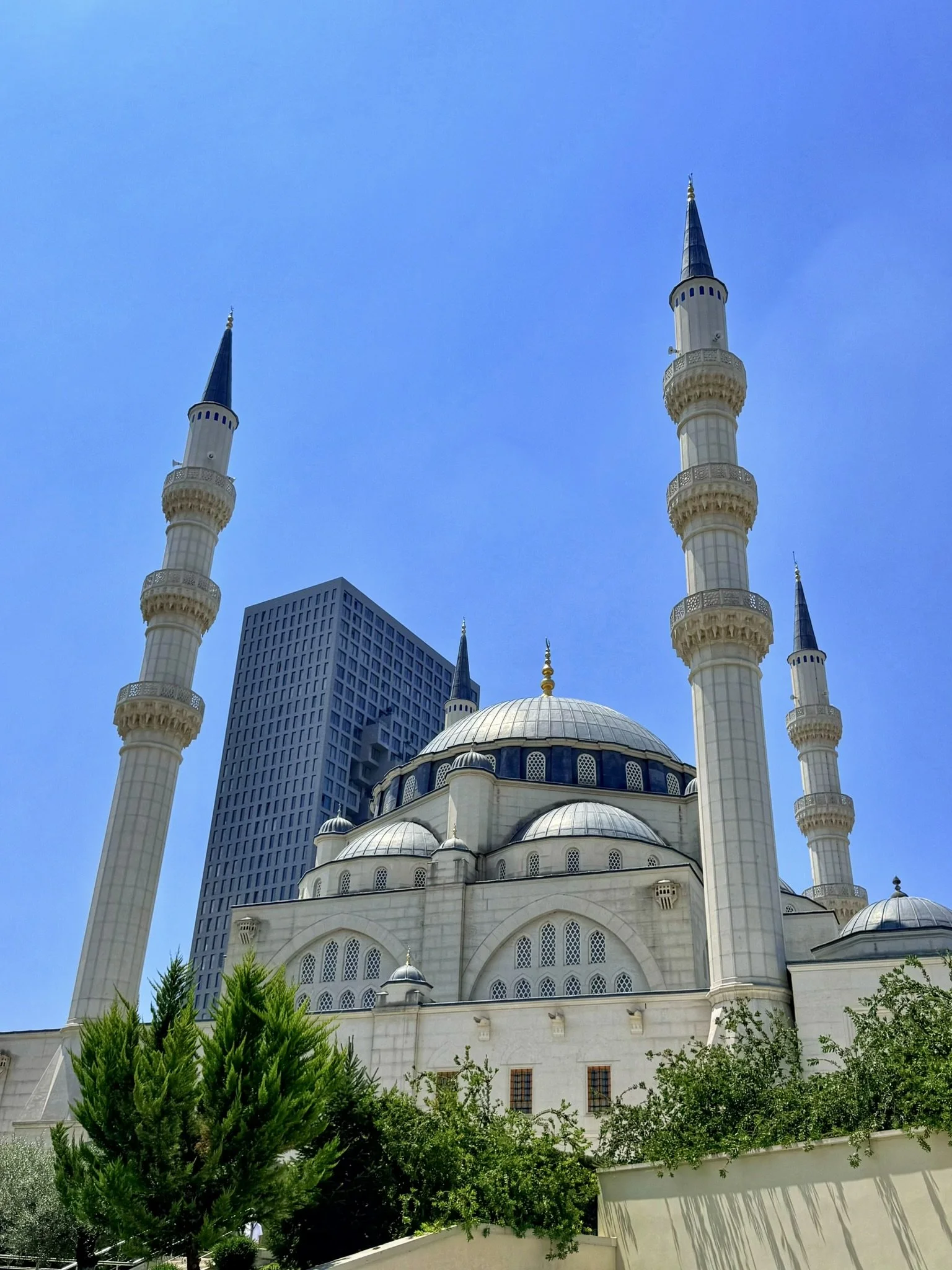
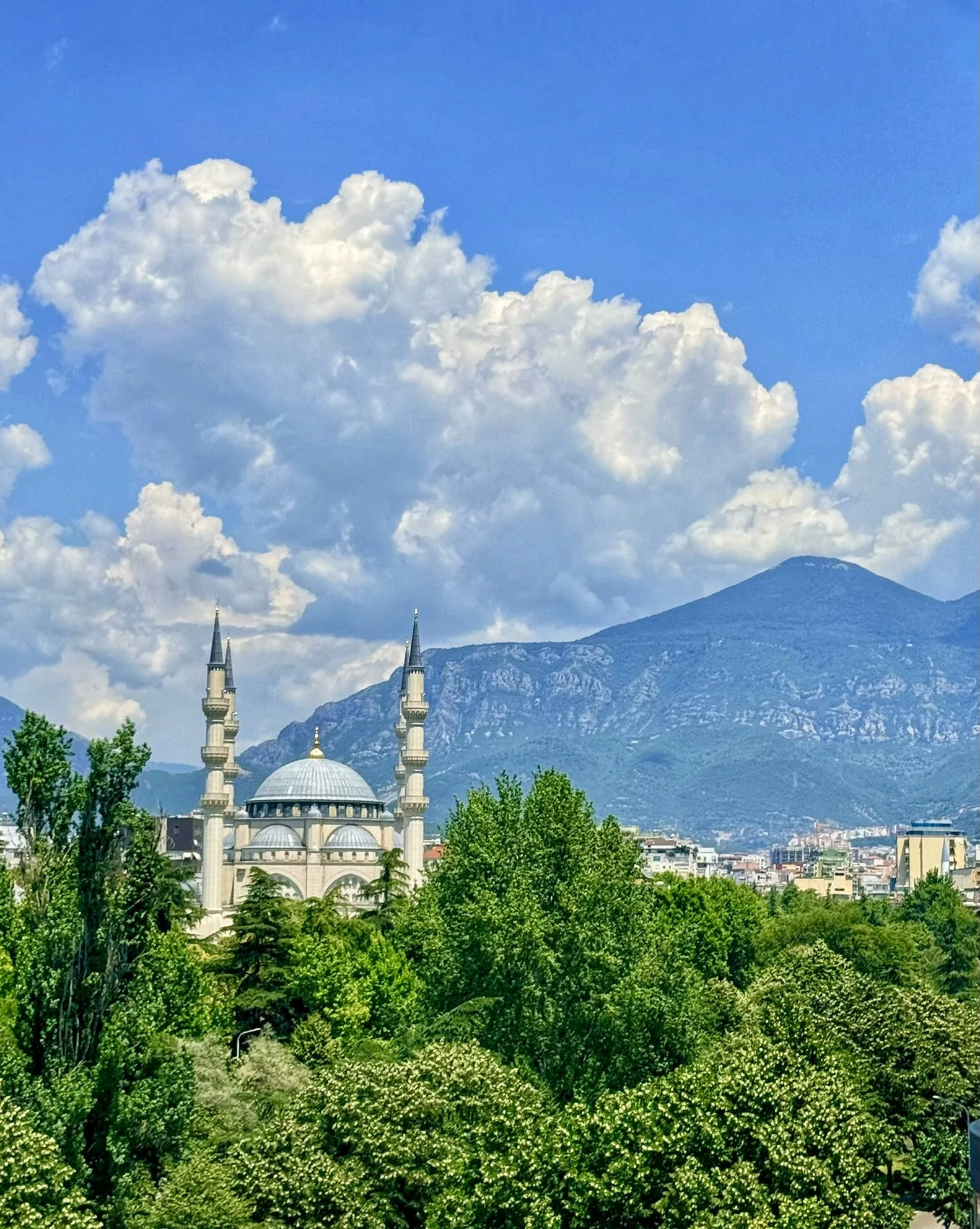
Not far away, we passed the enormous Namazgah Mosque, completed in 2024. With capacity for 10,000 worshippers, it is the largest mosque in the Balkans and an impressive addition to Tirana’s skyline.
Skanderbeg Square: The Heart of Albania
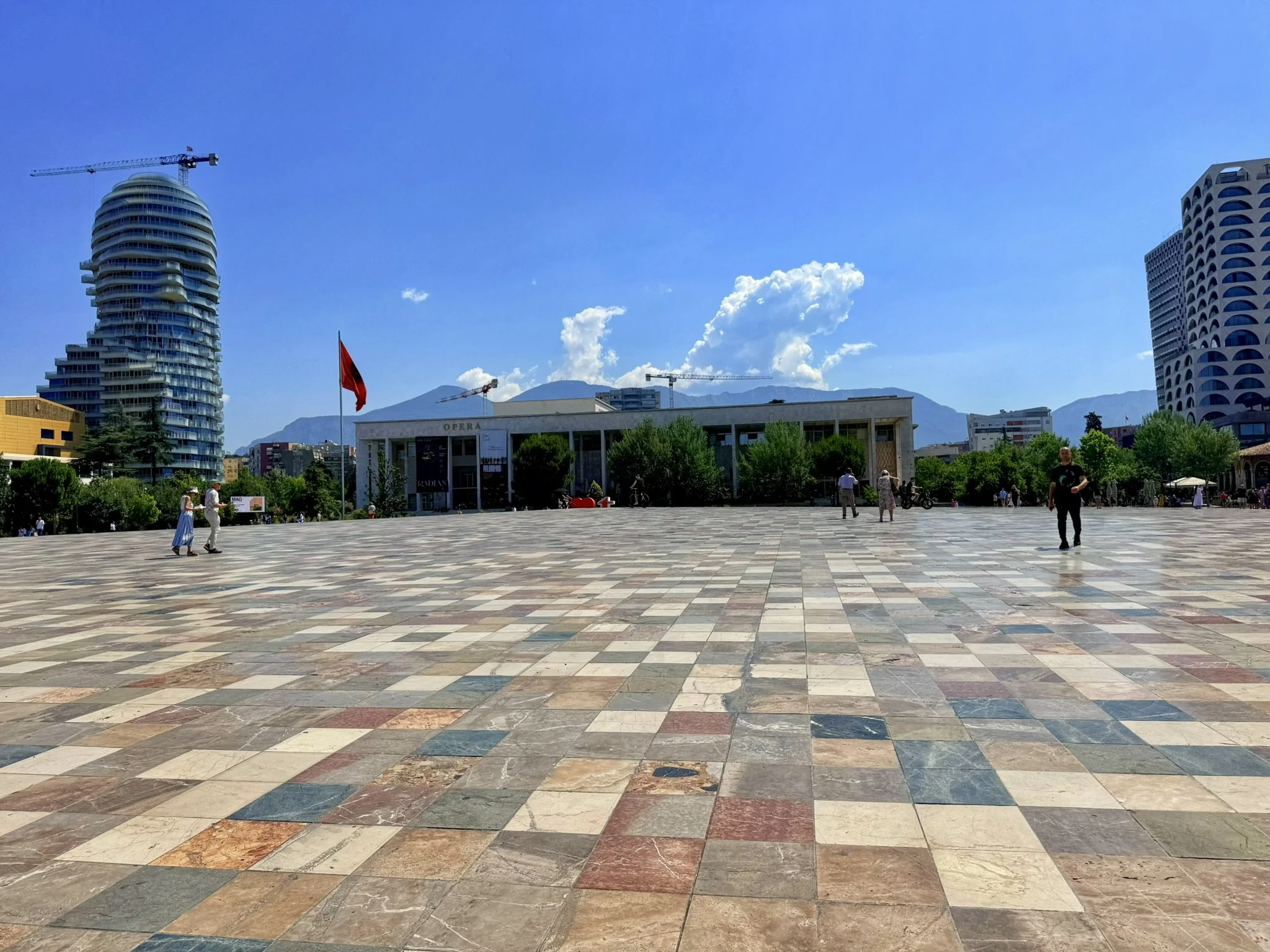
Our route led us into the vast expanse of Skanderbeg Square, Tirana’s central gathering place and symbolic heart.
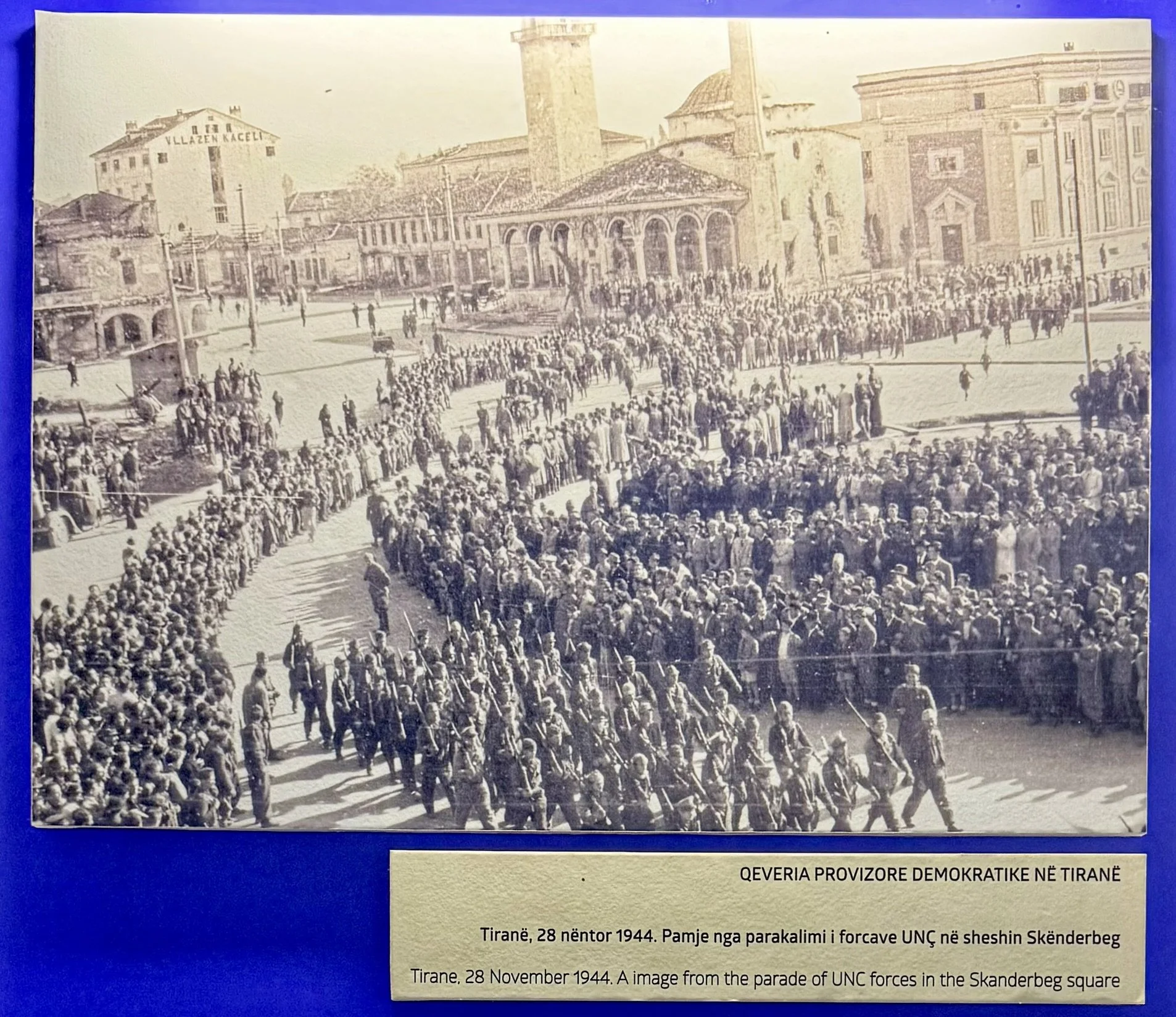
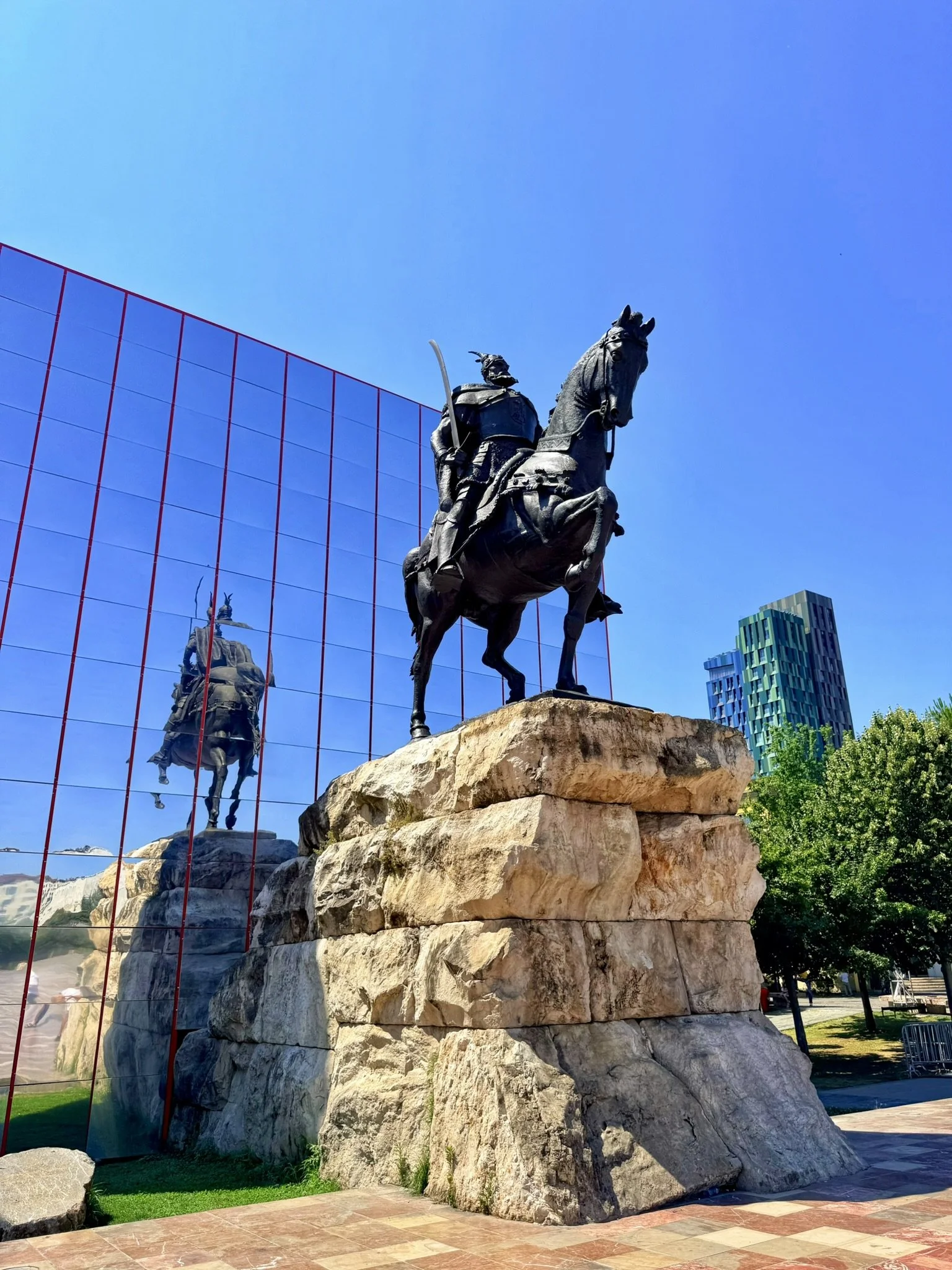
The square is named after Albania’s national hero, Gjergj Kastrioti, better known as Skanderbeg. In the 15th century, as the Ottoman Empire expanded into the Balkans, Skanderbeg united the Albanian principalities and successfully resisted Ottoman forces for twenty-five years! His military victories earned admiration throughout Europe, where he became known as the “Athlete of Christ” for defending Christian Europe against Ottoman expansion.
Following his death in 1468, the Ottomans eventually consolidated control over Albania, ruling for ~500 years until 1912. During those centuries, much of the Albanian population converted to Islam.
At the center of the square stands the impressive equestrian statue of Skanderbeg, commemorating the military leader whose resistance helped define Albanian national identity.
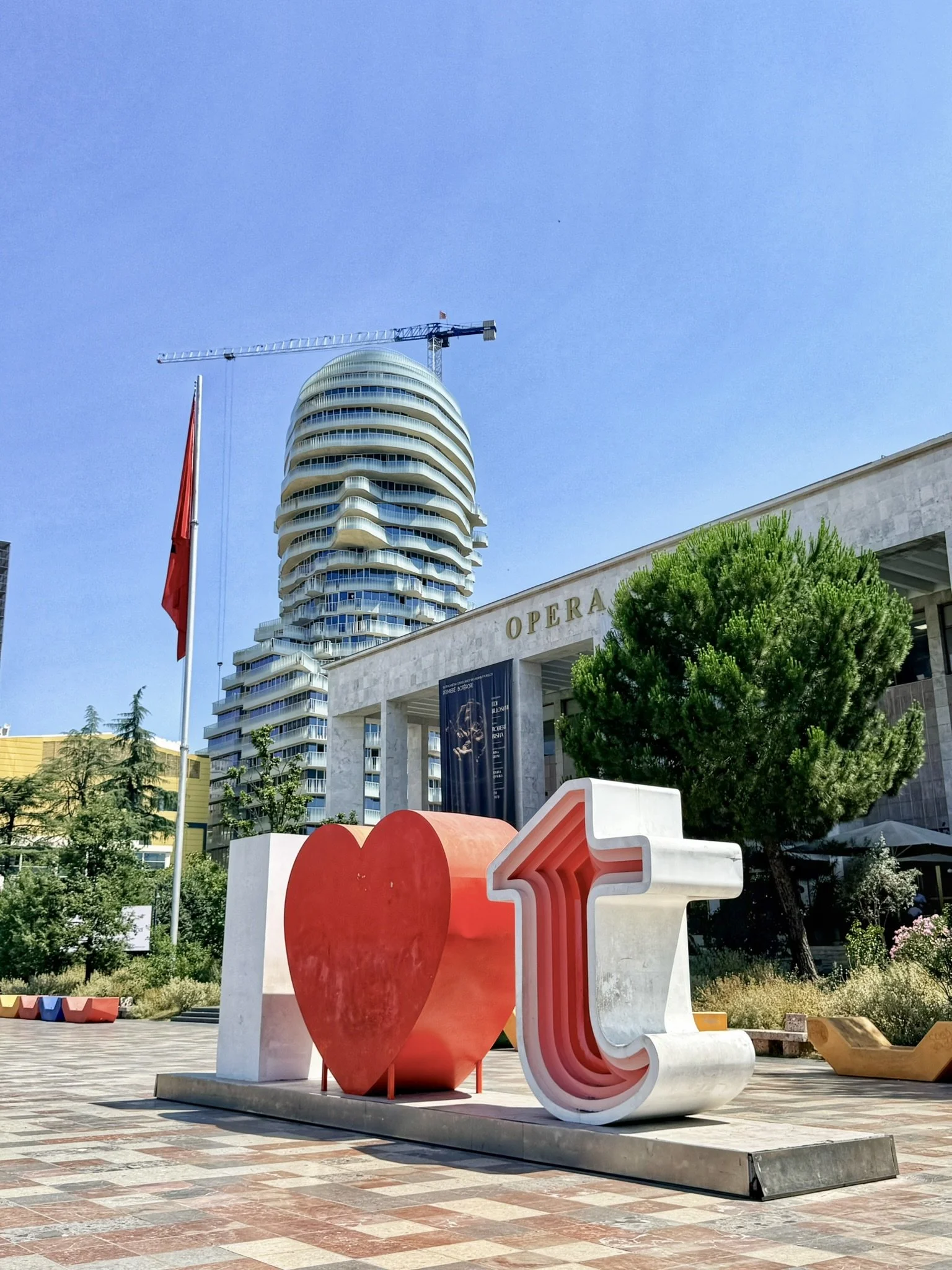
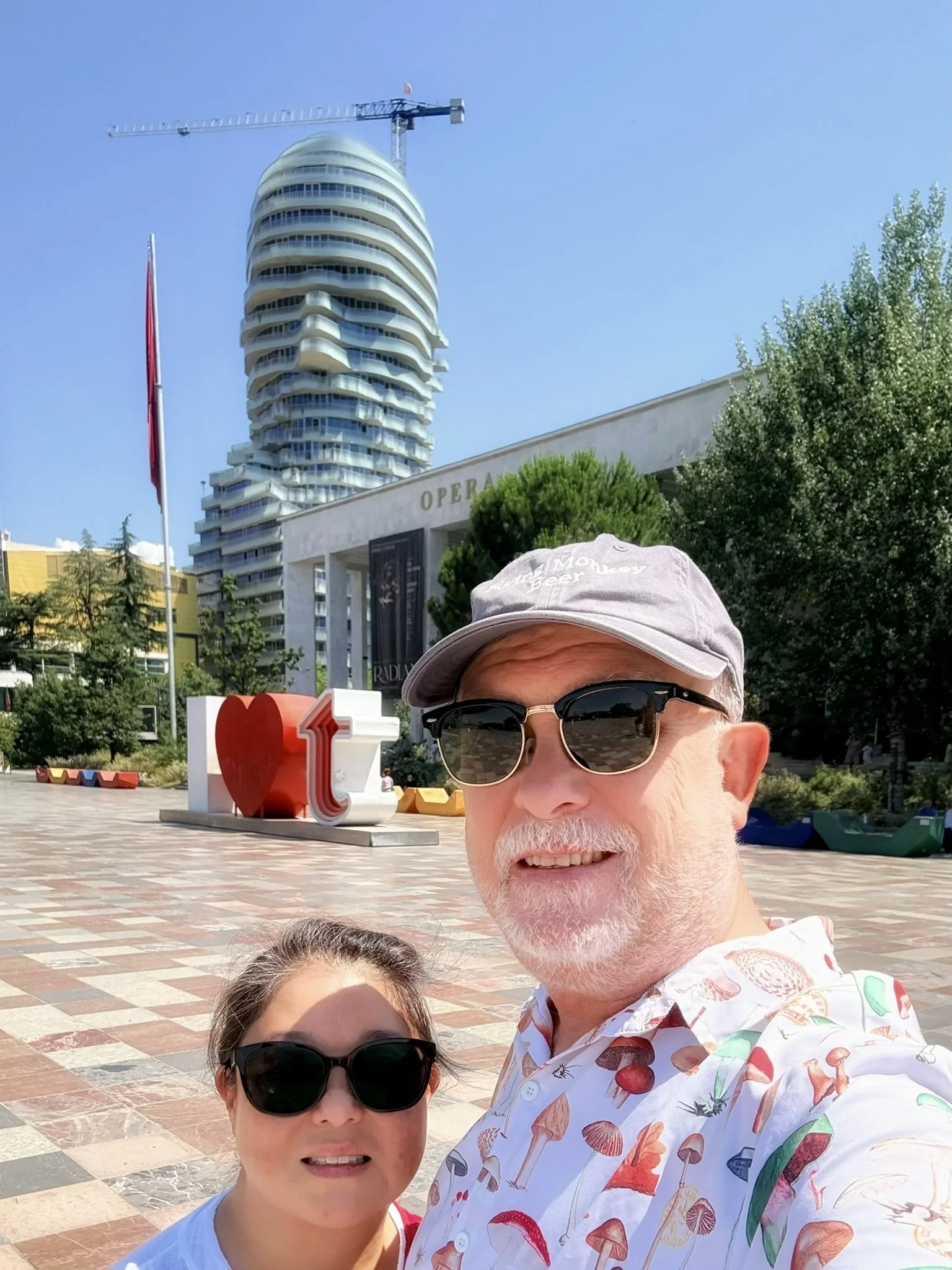
A more modern ode to Skanderbeg is a building called Tirana's Rock in the likeness of his head. More on that in a different blog featuring all the cool building designs!
Skanderbeg Square has witnessed many pivotal moments in Albanian history, but perhaps none more significant than February 20, 1991. On that day, more than 100,000 citizens gathered in support of student hunger strikers. The demonstration culminated in the toppling of Enver Hoxha’s statue, effectively signaling the end of Albania’s 46-year communist regime.
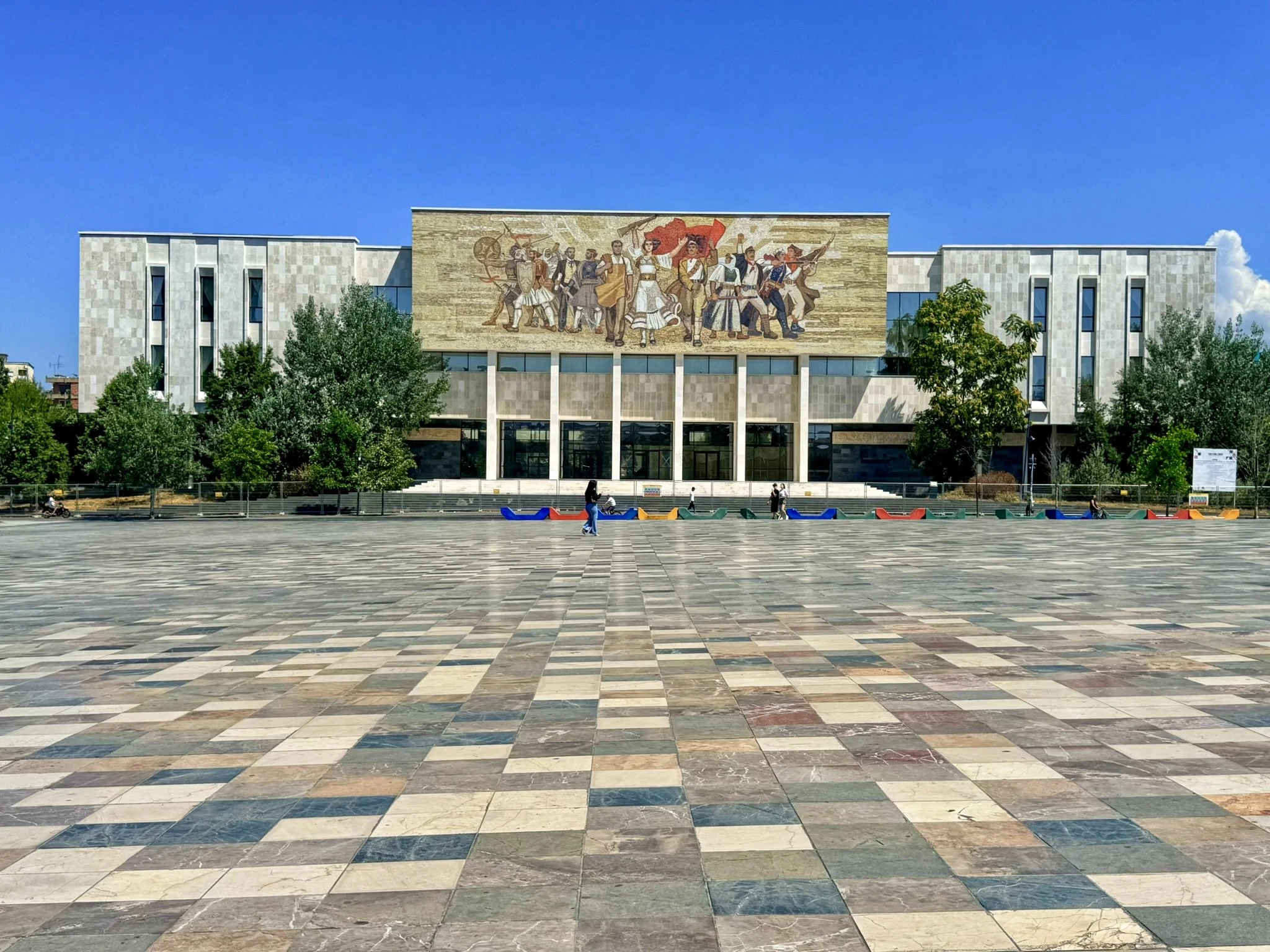
The square is also home to the National Historical Museum, Albania’s largest museum. Unfortunately, it is currently undergoing major renovations and is expected to remain closed until 2028. We were still able to admire its iconic socialist-realist mosaic façade, one of Tirana’s most recognizable landmarks.
Nearby stands the Palace of Culture, which houses both the National Library and the National Opera and Ballet Theatre.
Bunkers and Paranoia
No discussion of Hoxha’s Albania would be complete without mentioning the country’s infamous bunkers.
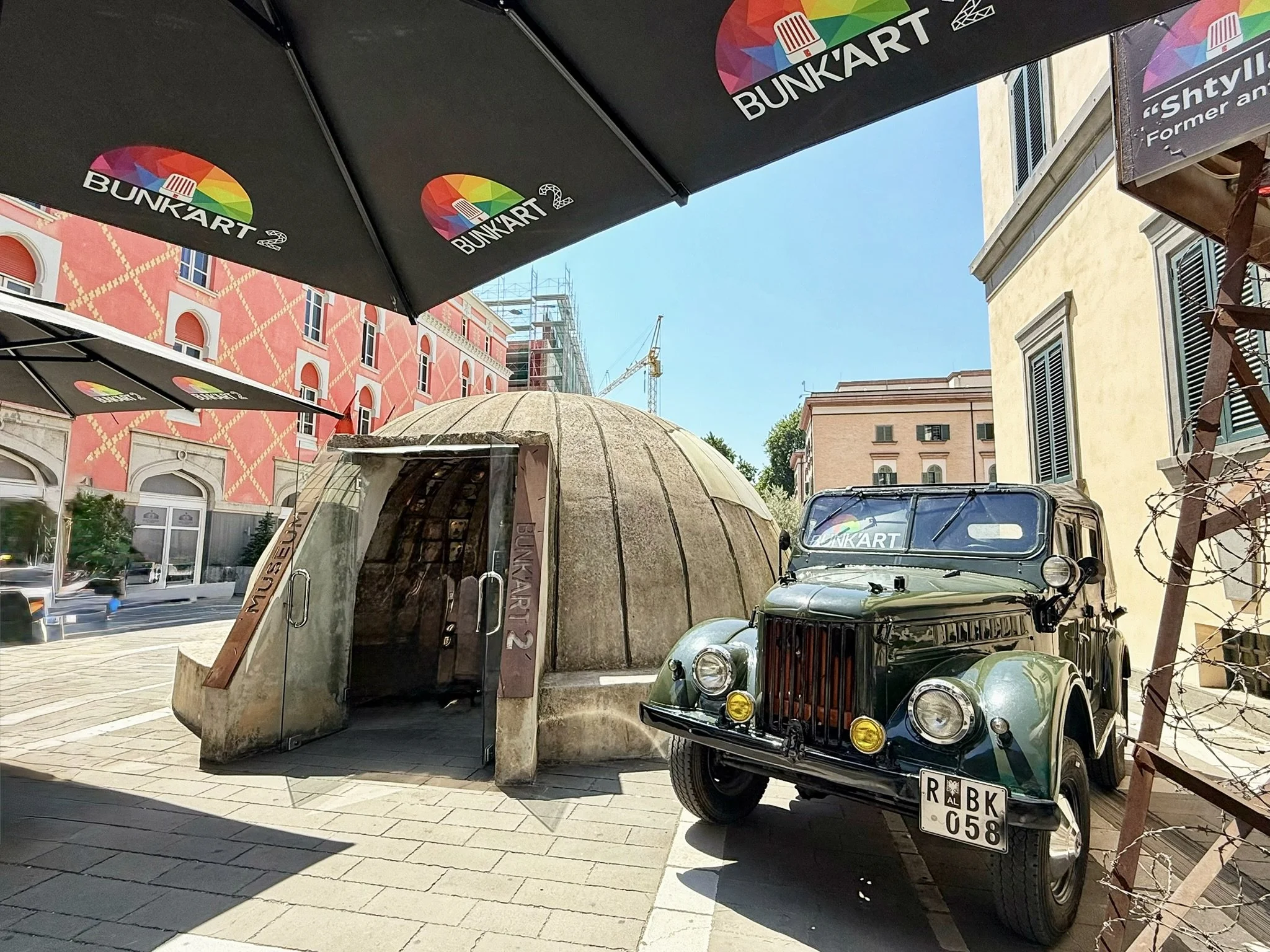
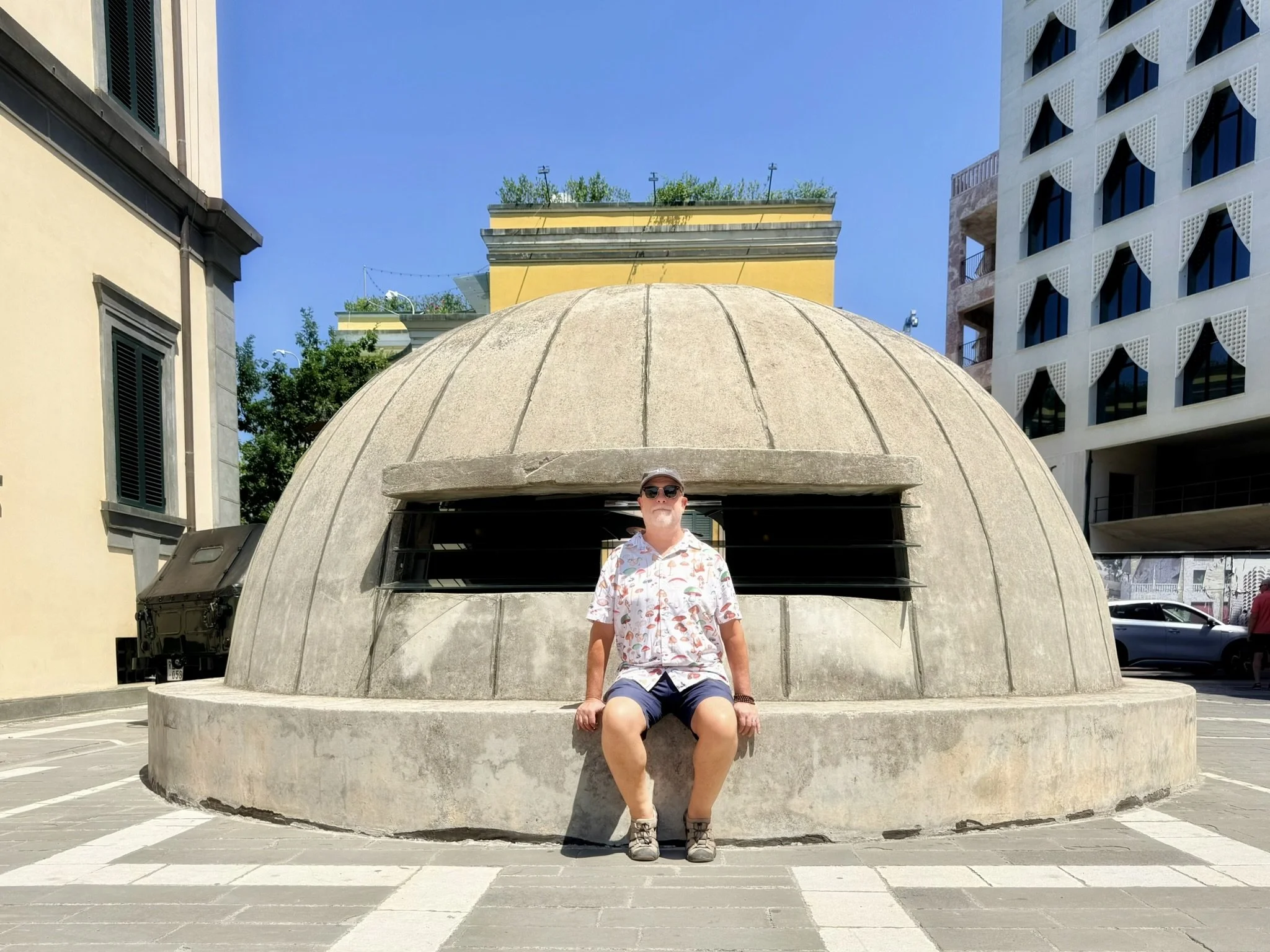
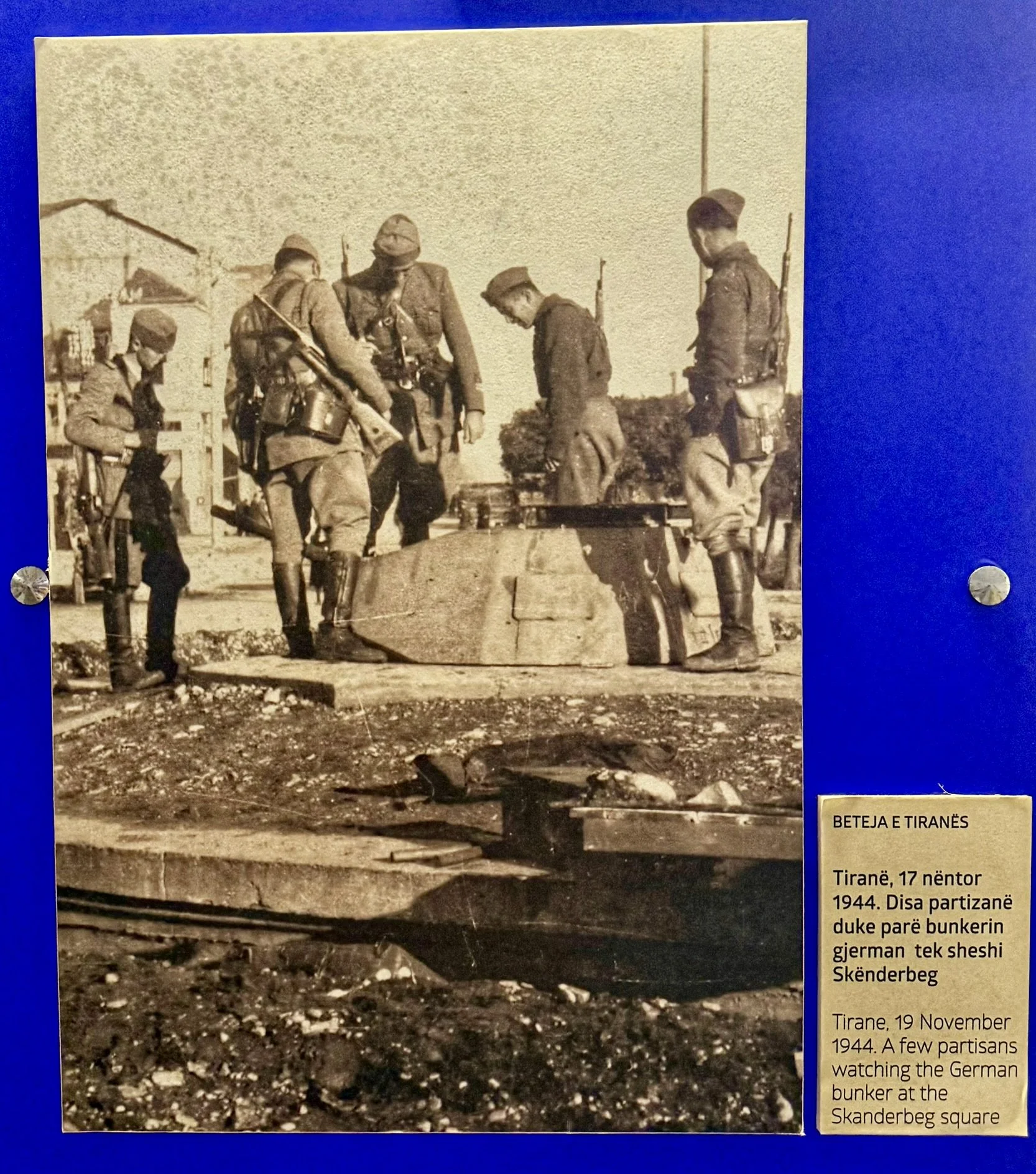
After becoming increasingly isolated from both East and West, Hoxha embarked on a massive bunker-building campaign inspired in part by a visit to North Korea. Approximately 168,000 concrete bunkers were constructed across Albania, creating one of the most unusual landscapes in Europe.
We stopped outside BUNK’ART 2, one of several museums created from these Cold War relics. We decided not to go inside because we had heard that BUNK’ART 1, located on the outskirts of Tirana, offers a more authentic and extensive experience, which we plan to visit later.
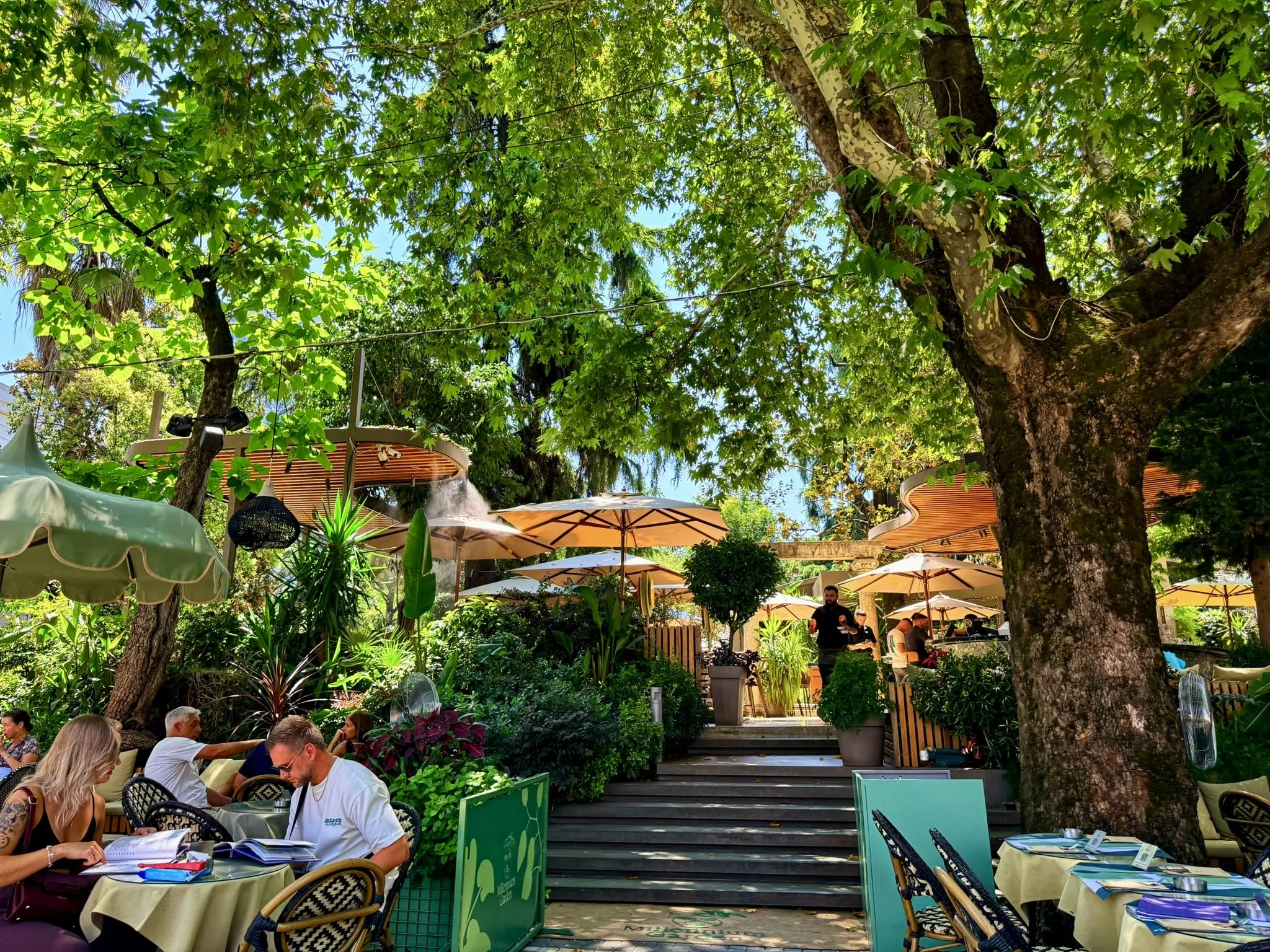
After several hours of sightseeing, we paused at Millennium Garden for a refreshment before continuing to Tirana Castle.
Castle Walls and Old (Now New) Bazaars
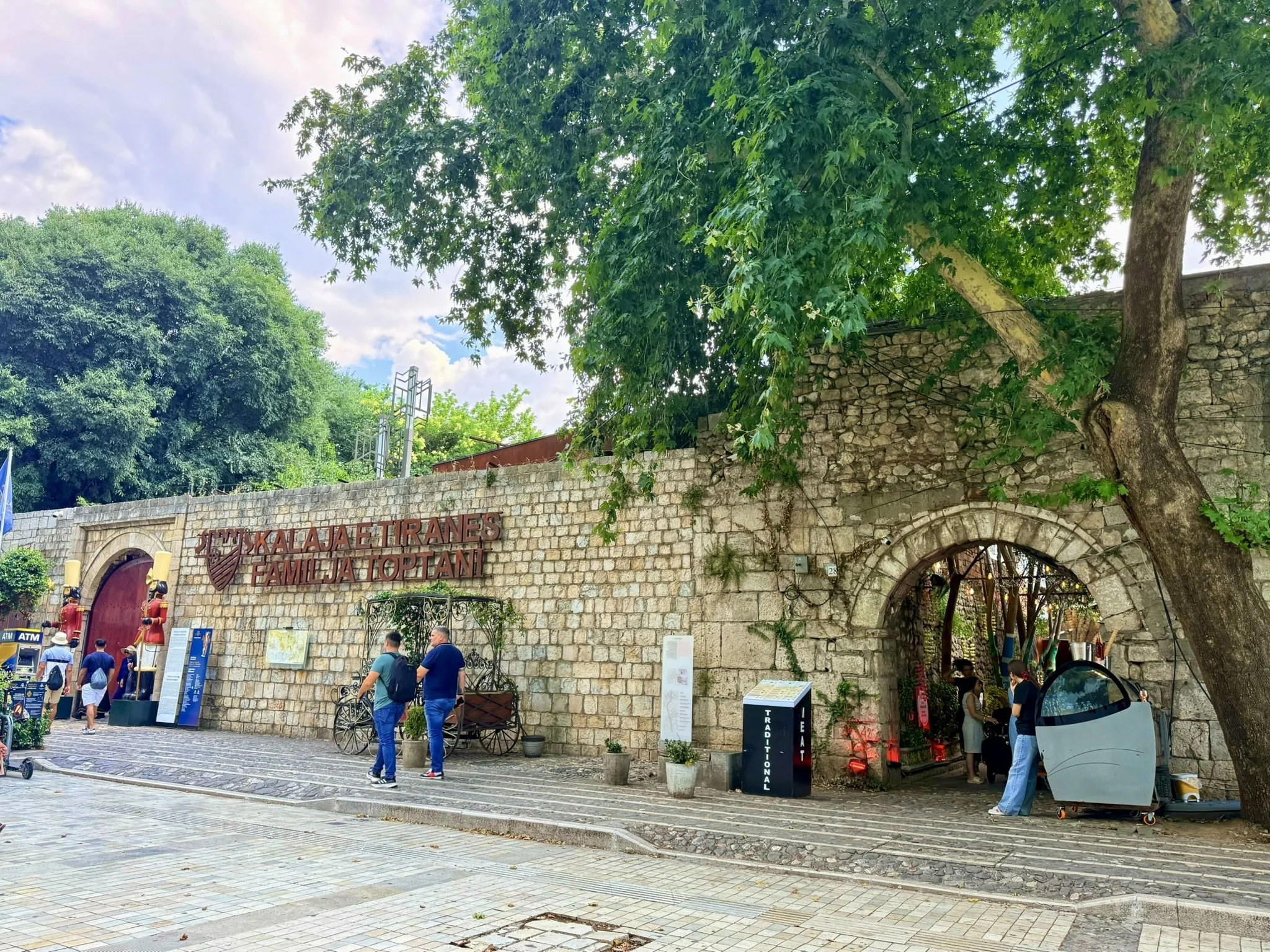
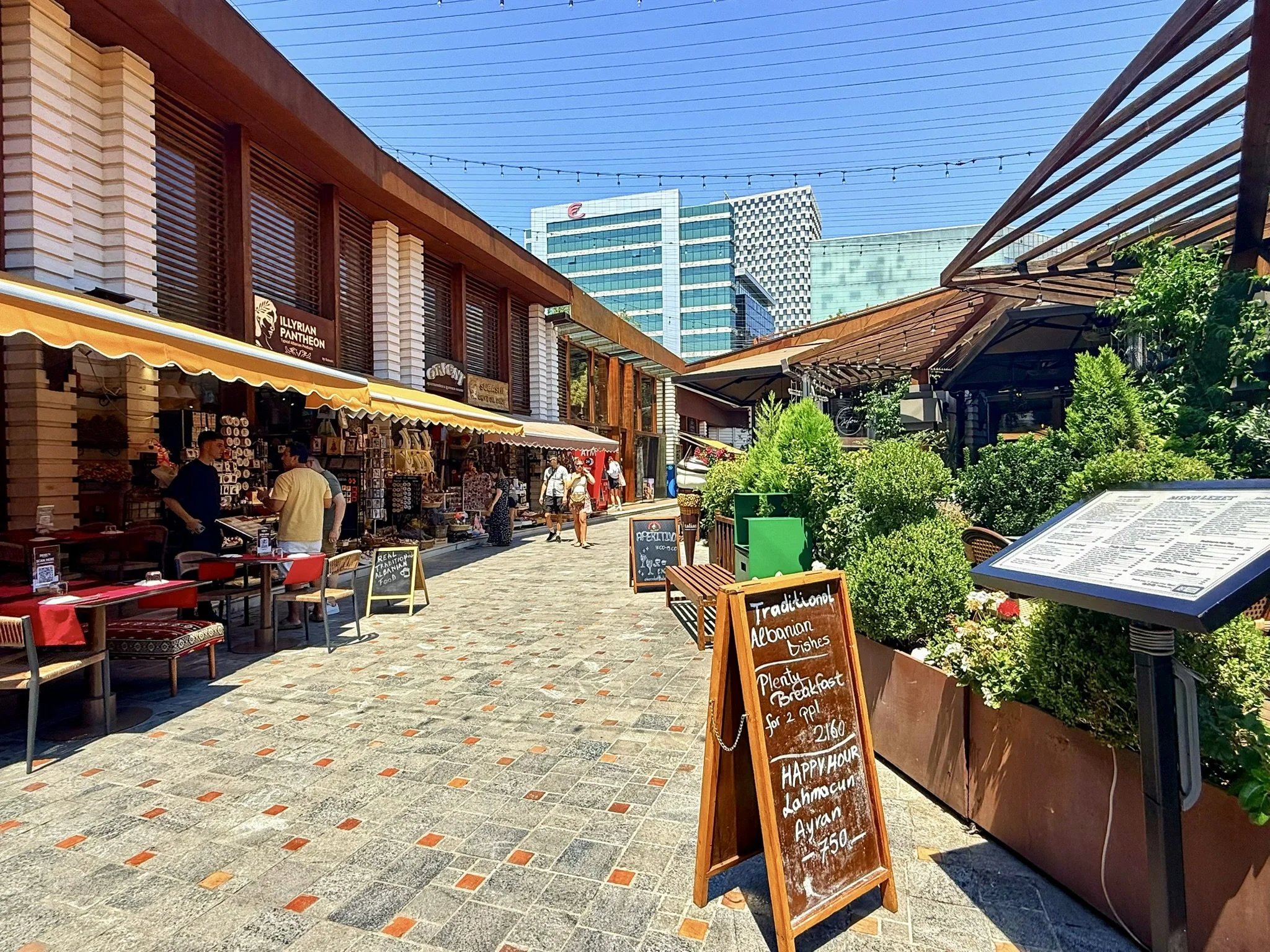
Despite its name, very little of the original fortress remains. Known historically as the Fortress of Justinian, the site dates back to the Byzantine period. Today, the surviving walls have been transformed into a lively complex of restaurants, cafés, and artisan shops.
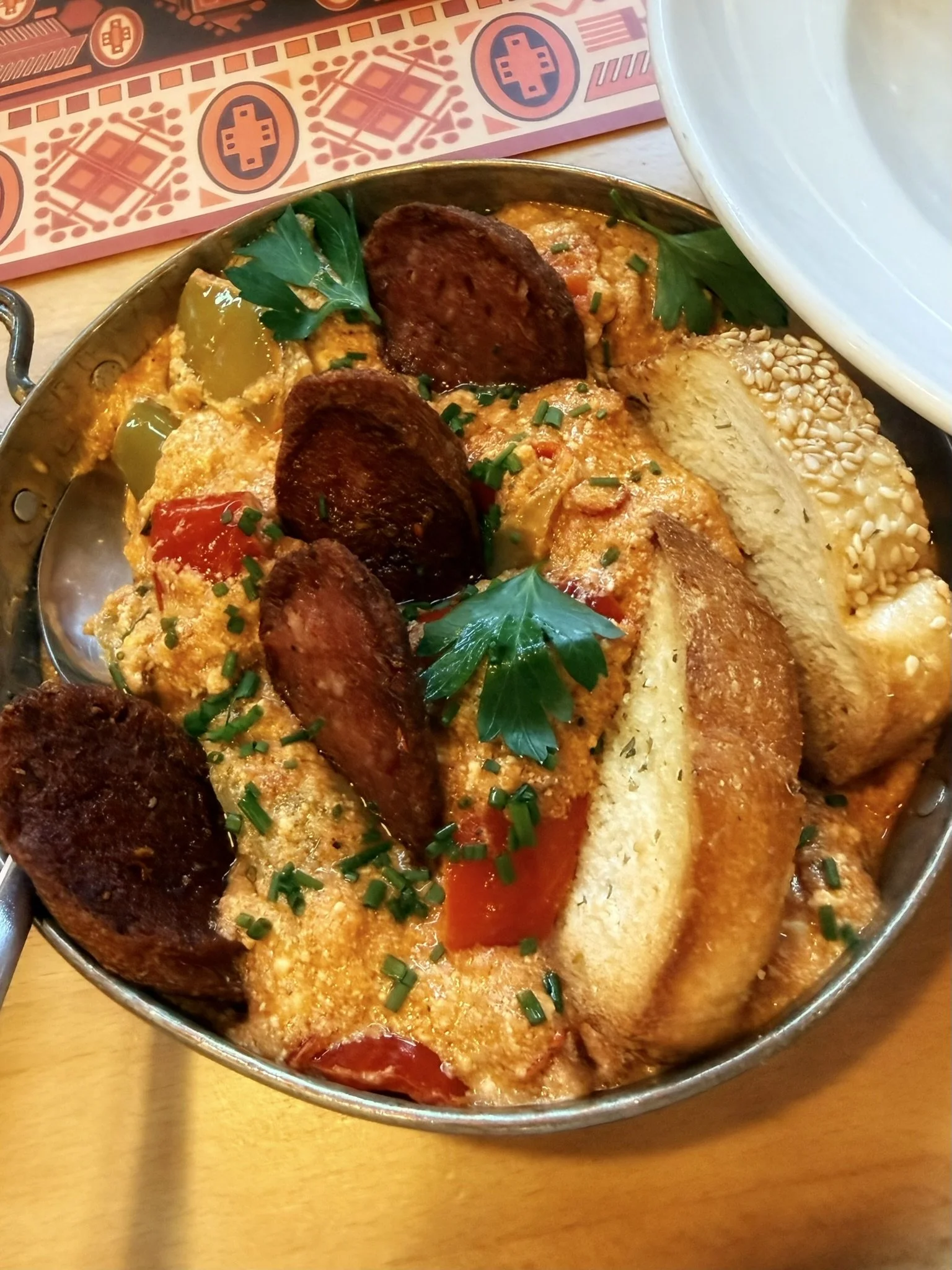
We enjoyed a quick bite at Lezet, located within the castle walls. Our choice was fërgesë with Albanian sausage, a classic local specialty made from bell peppers, tomatoes, and salted cottage cheese slowly cooked in clay pots. It was simple, hearty, and delicious.
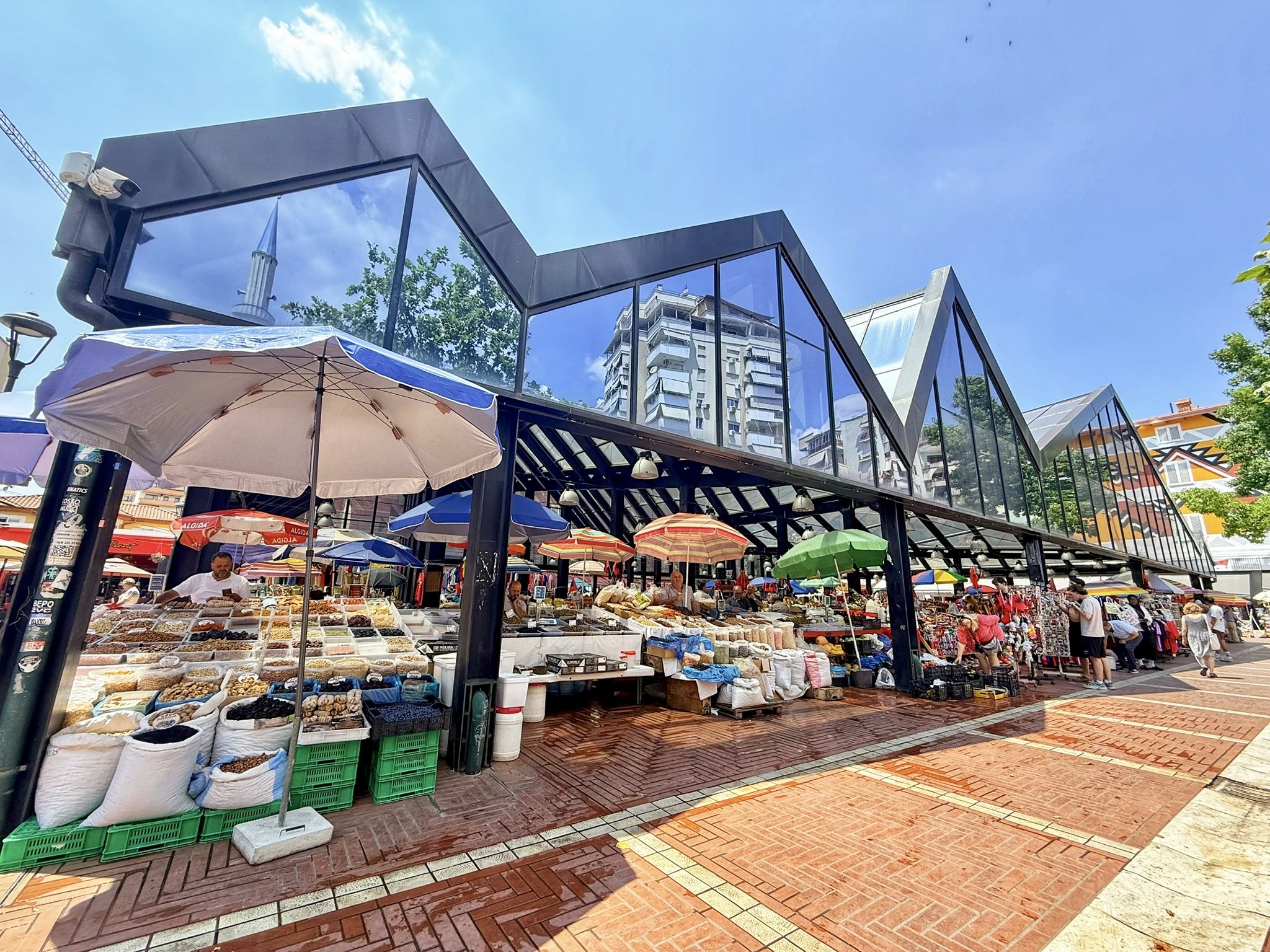
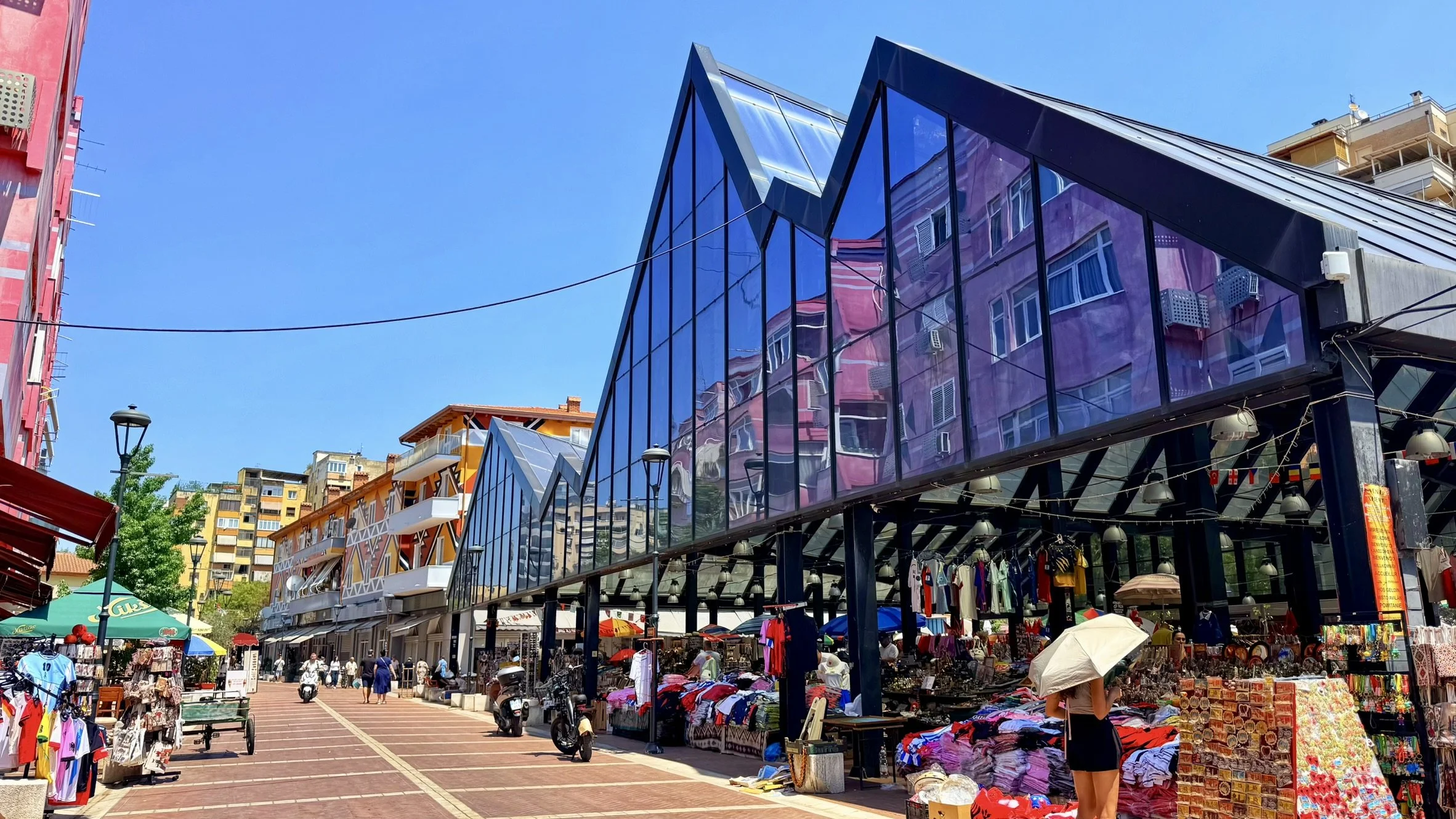
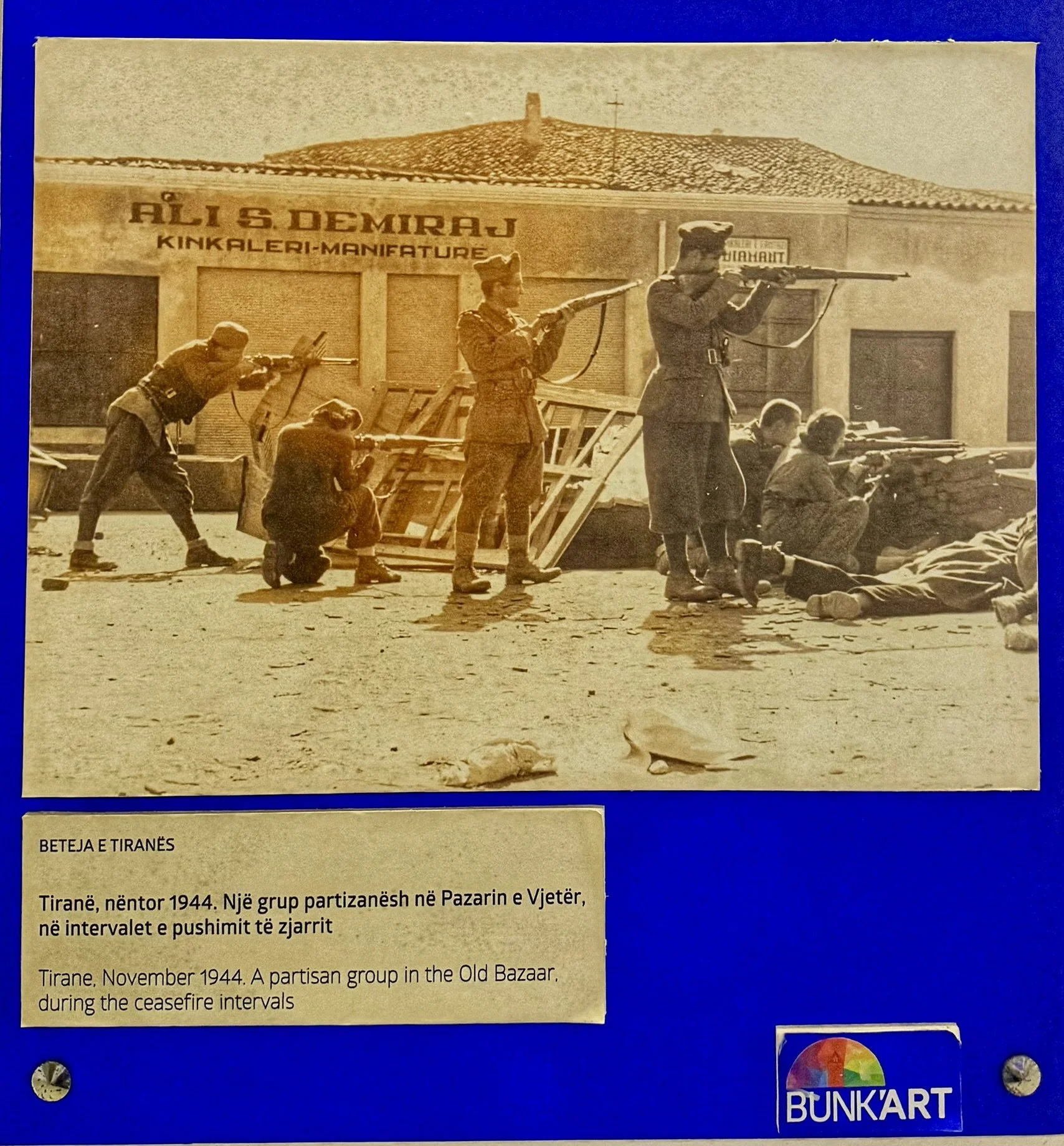
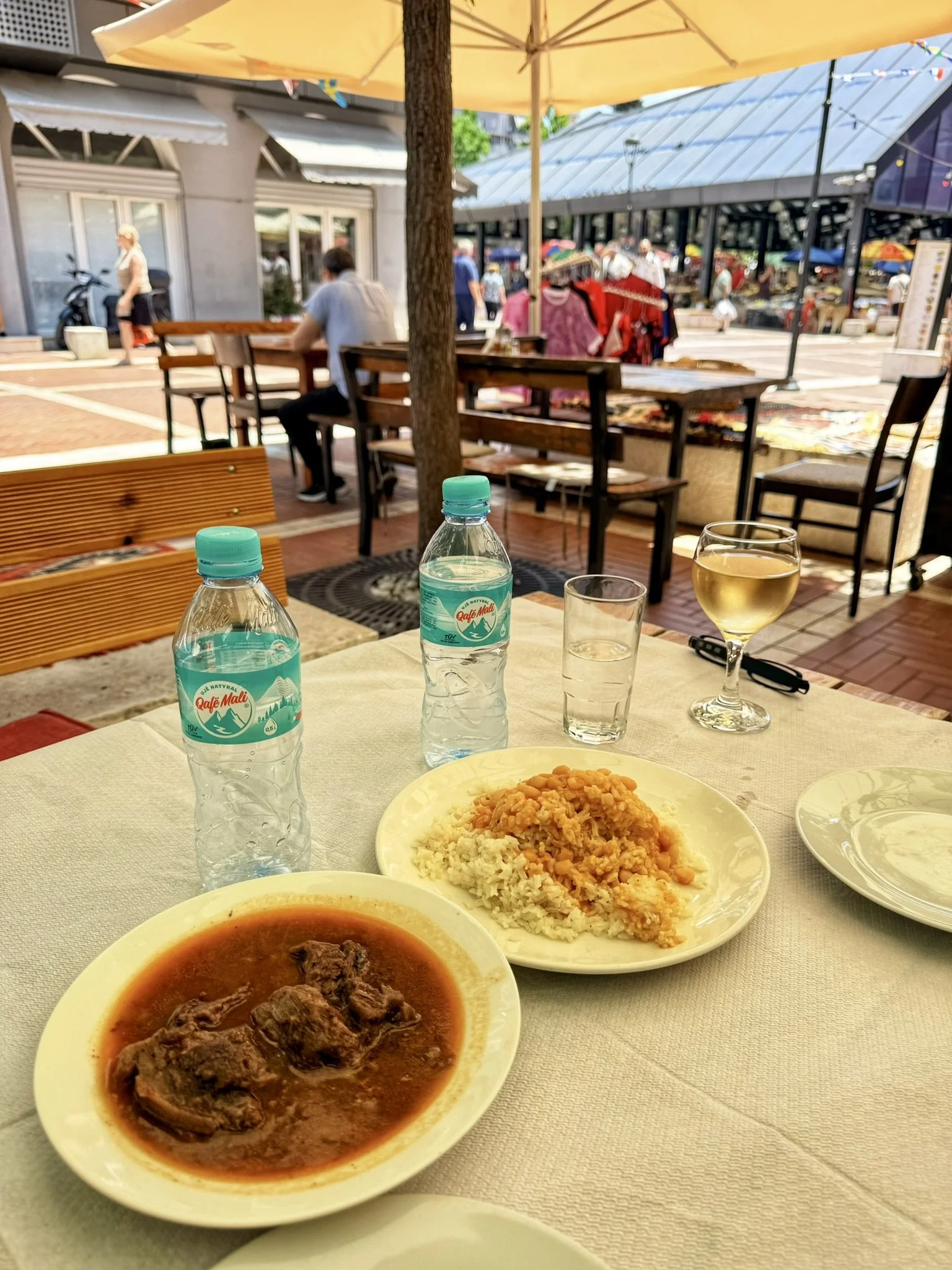
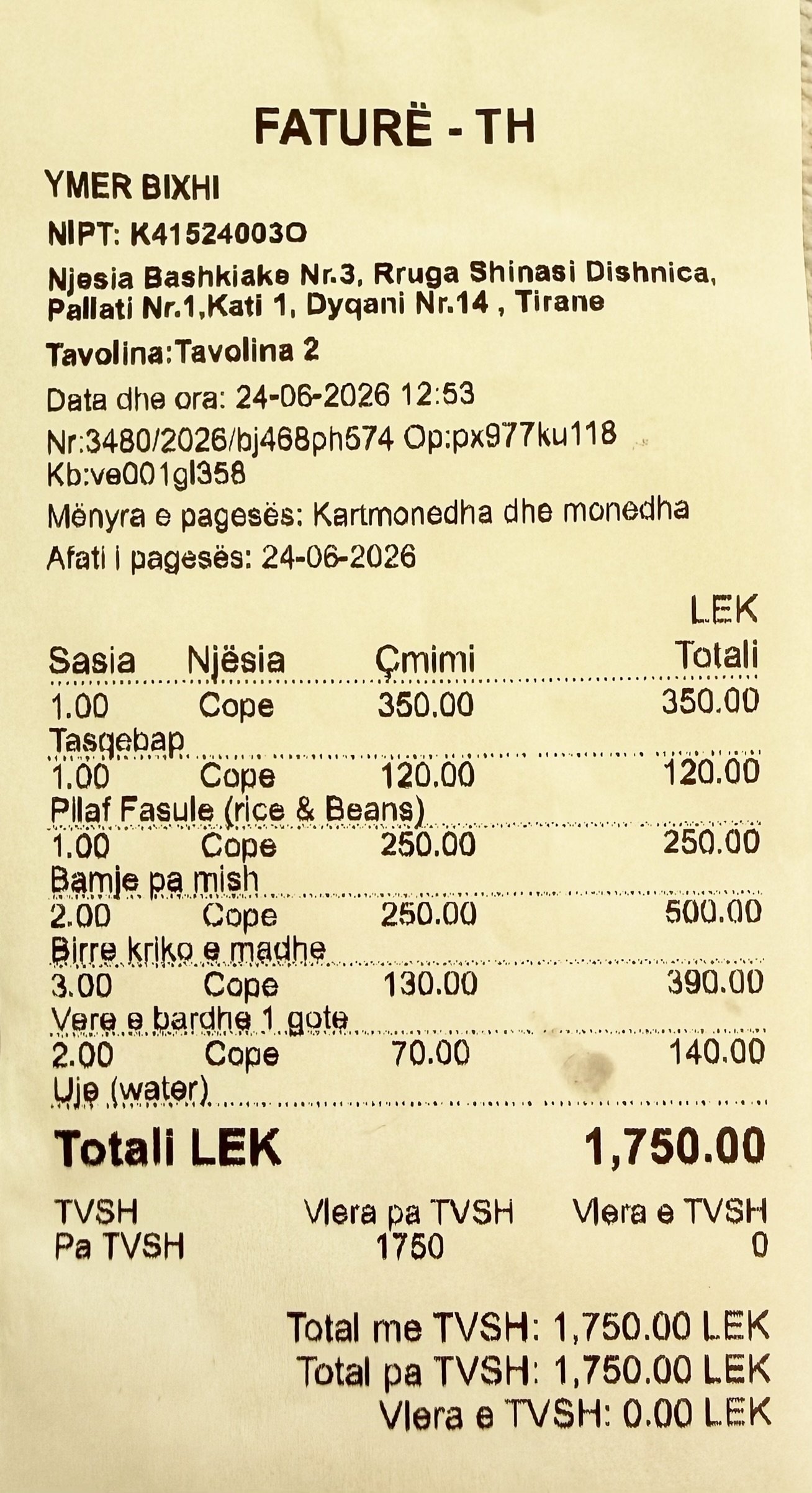
Afterwards we wandered through Pazari i Ri, the New Bazaar, which carries on the legacy of Tirana’s historic Ottoman-era marketplace. The original bazaar, dating back to the 1600s, served as the city’s commercial center until much of it was demolished in 1959. We stopped to sample another Albanian dish at mom-and-pop restaurant called Tradita te Meri, serving traditional food. We had tasquebap, a beef stew and some rice and beans…with very affordable inexpensive wine, of course!
Climbing the Pyramid
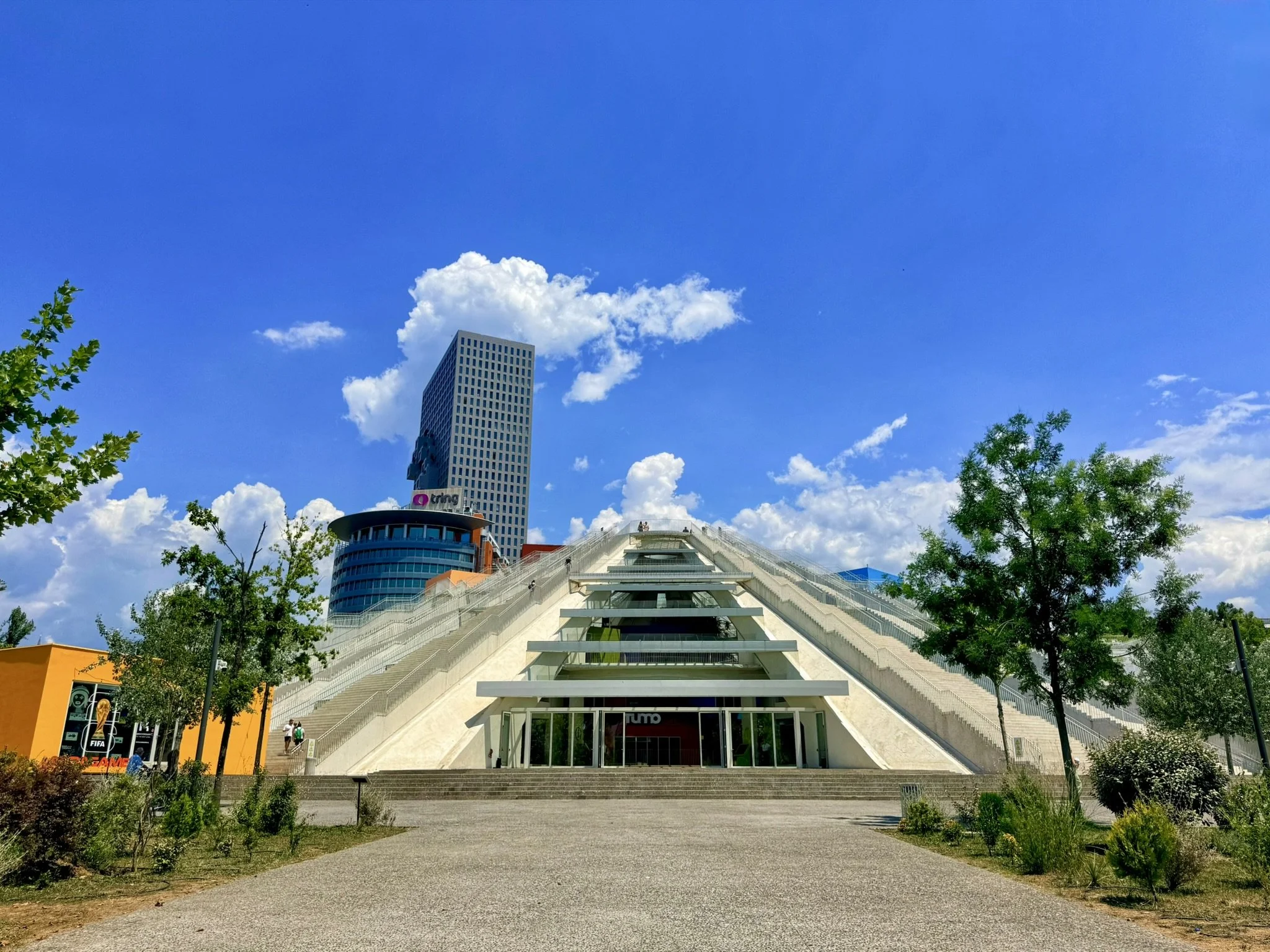
Our final stop was perhaps Tirana’s most unusual landmark: the Pyramid of Tirana.
Constructed in 1987 as a museum honoring Enver Hoxha, the pyramid became one of the last major monuments of the communist regime. Following the fall of communism, the building experienced an identity crisis, serving at various times as a nightclub, shopping center, conference venue, and even a NATO facility during the Kosovo conflict.
Today, the structure has been transformed into a modern cultural space while retaining its distinctive shape.
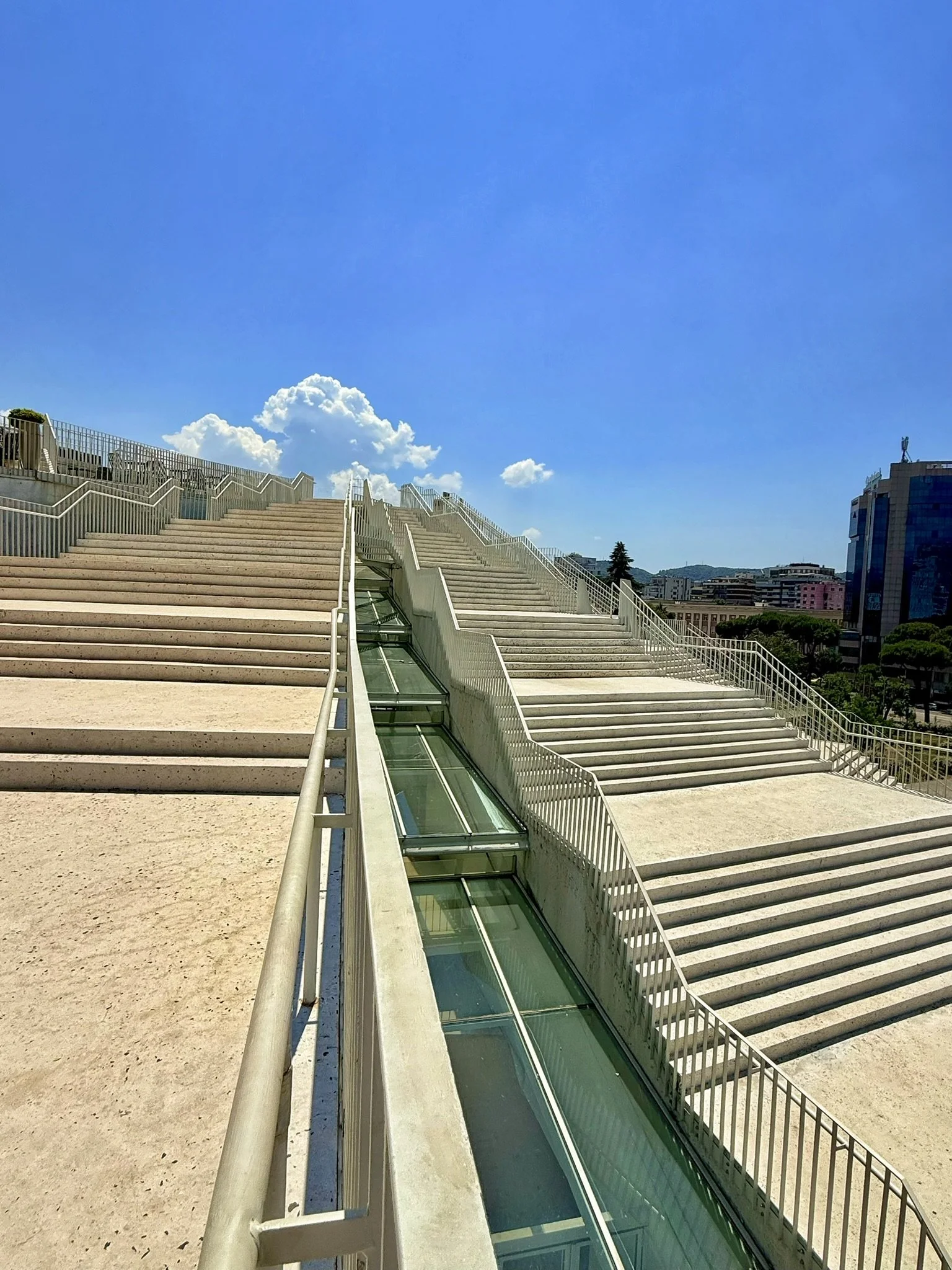
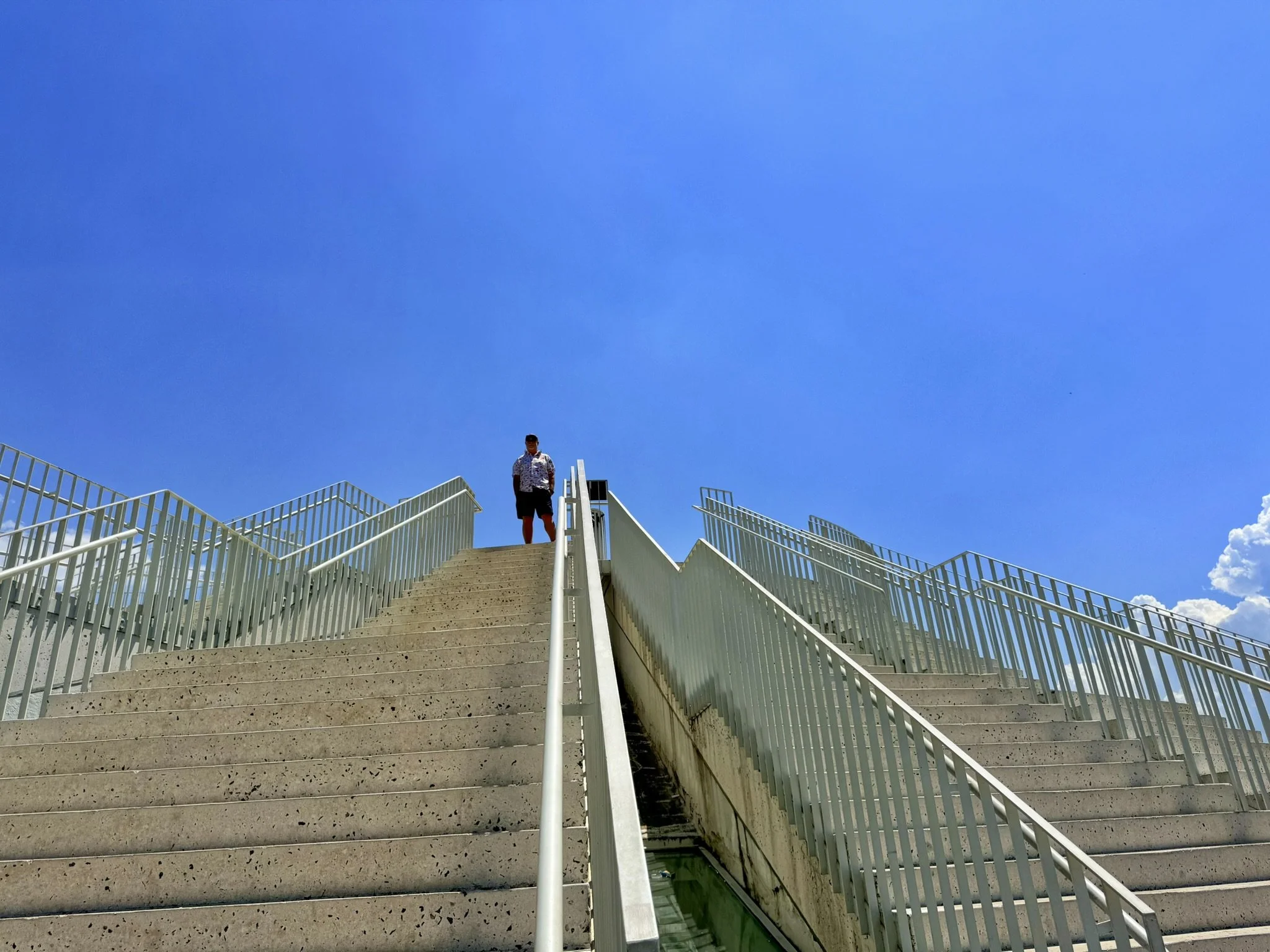
We climbed approximately 180 steps to the top and were rewarded with excellent panoramic views over Tirana—a fitting conclusion to our tour.
Final Thoughts
What I found myself thinking about was how difficult it is to wrap my head around just how far Tirana has come in only 35 years. What were you doing in 1991? Bama had just gotten out of the U.S. Navy. Akiko had just graduated from high school. We were living our first-world lives.
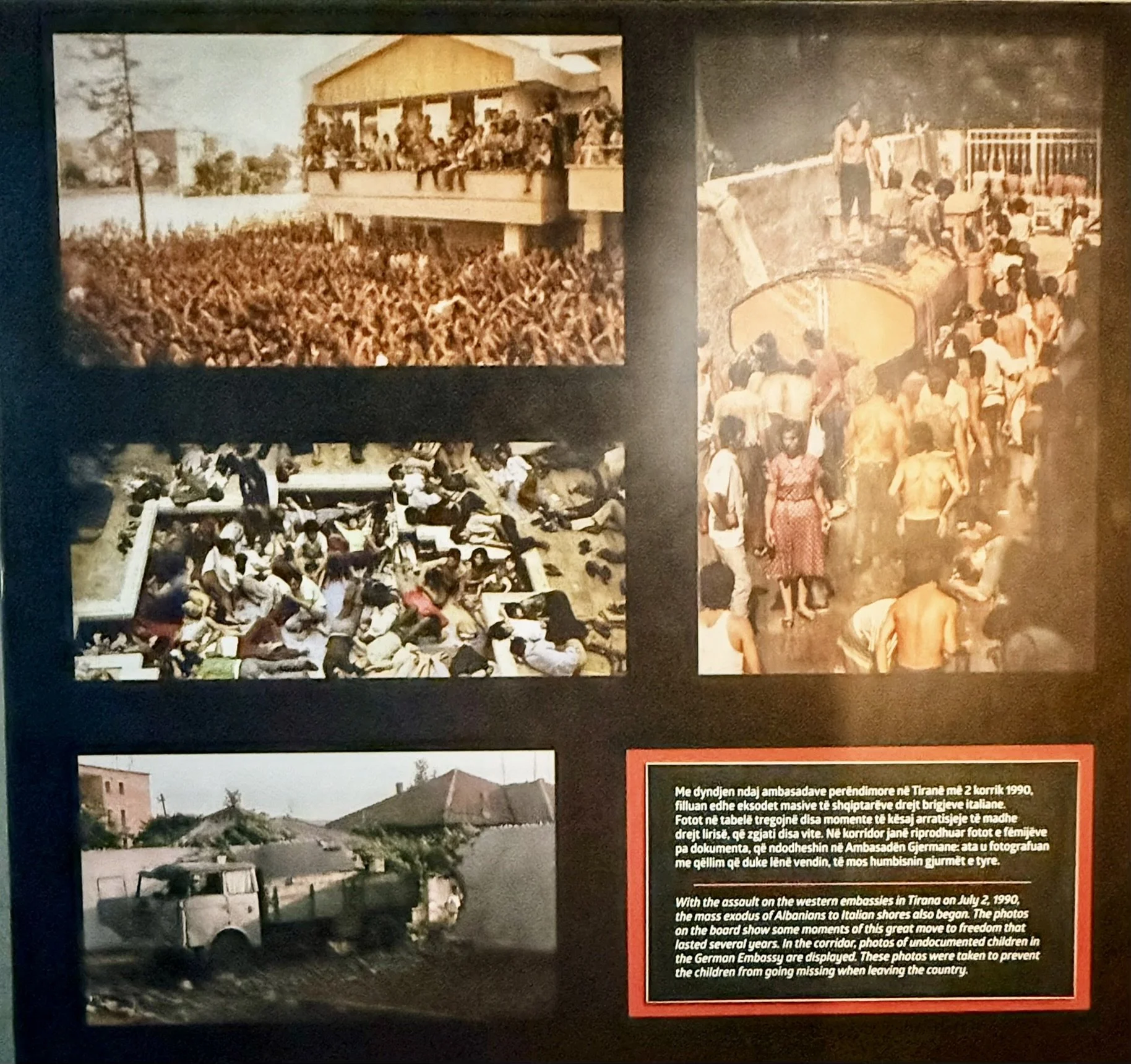
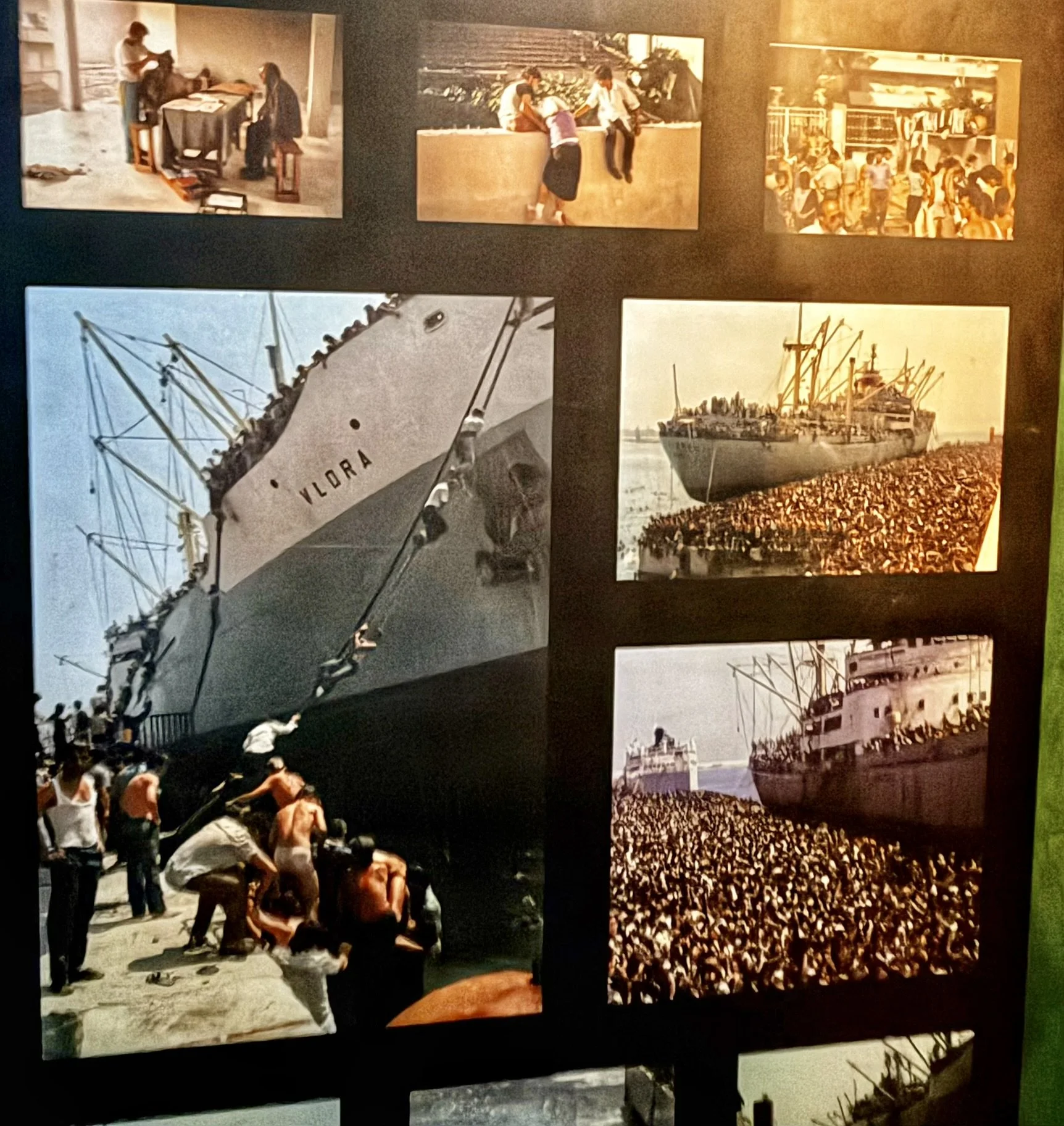
Meanwhile, following the collapse of the communist regime, tens of thousands of Albanians fled the country seeking economic asylum. One of the most iconic and dramatic moments of this exodus occurred in August 1991, when the cargo ship Vlora was boarded by over 10,000 to 20,000 desperate citizens who forced the captain to sail to Bari, Italy.
Being able to walk the same streets and step inside the buildings where so much of that history unfolded made Albania’s transformation feel real in a way that reading about it never could. Seeing what the country has become after centuries of occupation, foreign rule, and political repression left me feeling both hopeful and joyful for all Albanians. Tirana isn’t a city trapped by its past—it’s a city confidently building its future, and it was inspiring to witness.