Panama City: Casco Viejo, Old Town
If the modern part of Panama City initially had us wondering if we’d somehow landed in Miami, Casco Viejo had us wondering if we’d wandered into Havana, New Orleans, or some combination of the two.
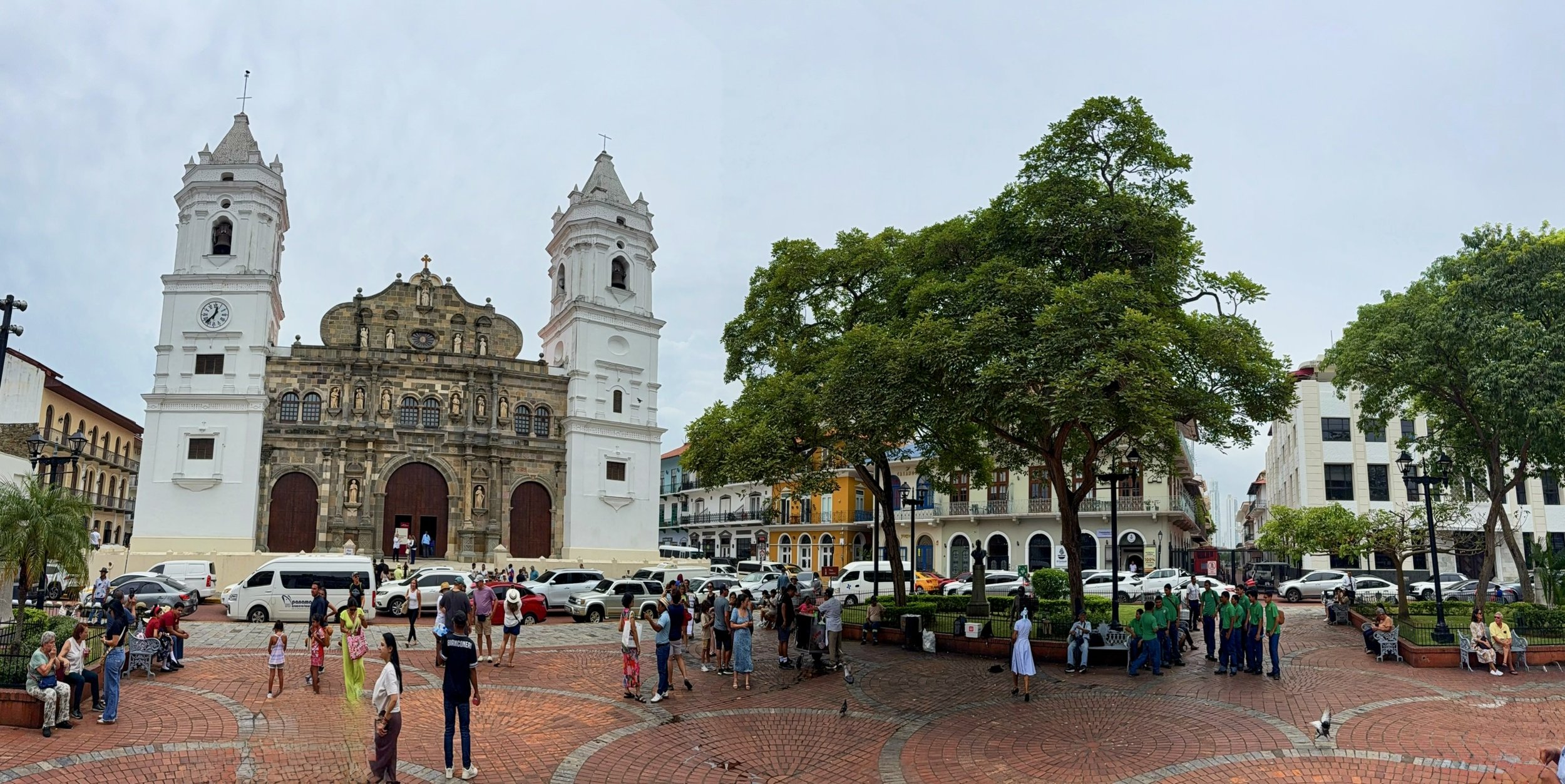
This is Panama City’s historic heart.
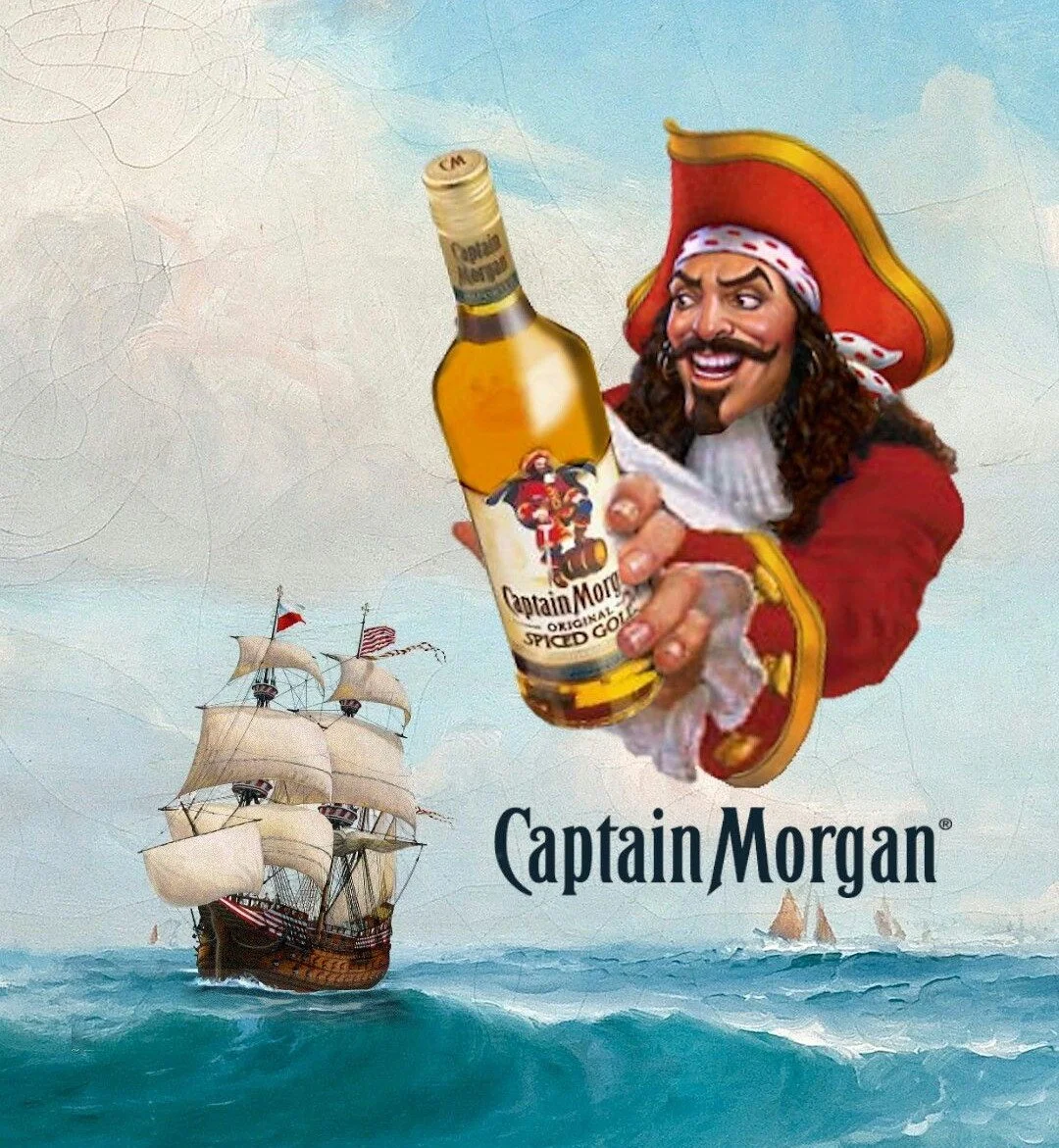
Casco Viejo was established in 1673, after the original Panama City was destroyed two years earlier by the infamous Captain Henry Morgan. And yes, that Captain Morgan—the guy on the rum bottle. Although history has given him a pirate reputation, Morgan was actually a Welsh privateer who had permission from the British Crown to attack Spanish ships and settlements. Basically, piracy with paperwork.
Panama City was an especially tempting target because it was an important Spanish transit hub for silver and other riches moving across the isthmus. When Morgan attacked, the Spanish defenders even tried unleashing a stampede of wild bulls on the pirates.
It did not go well.
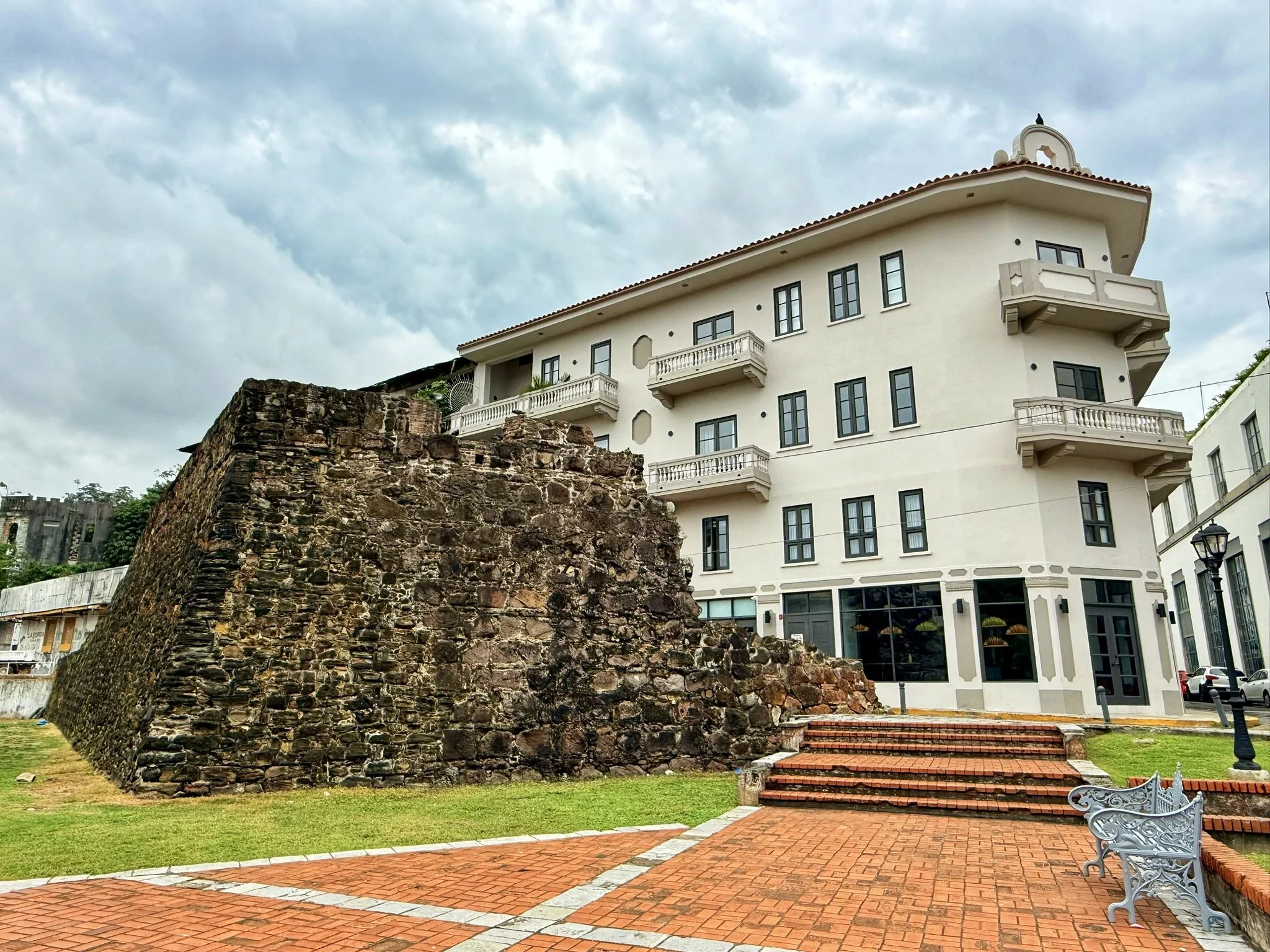
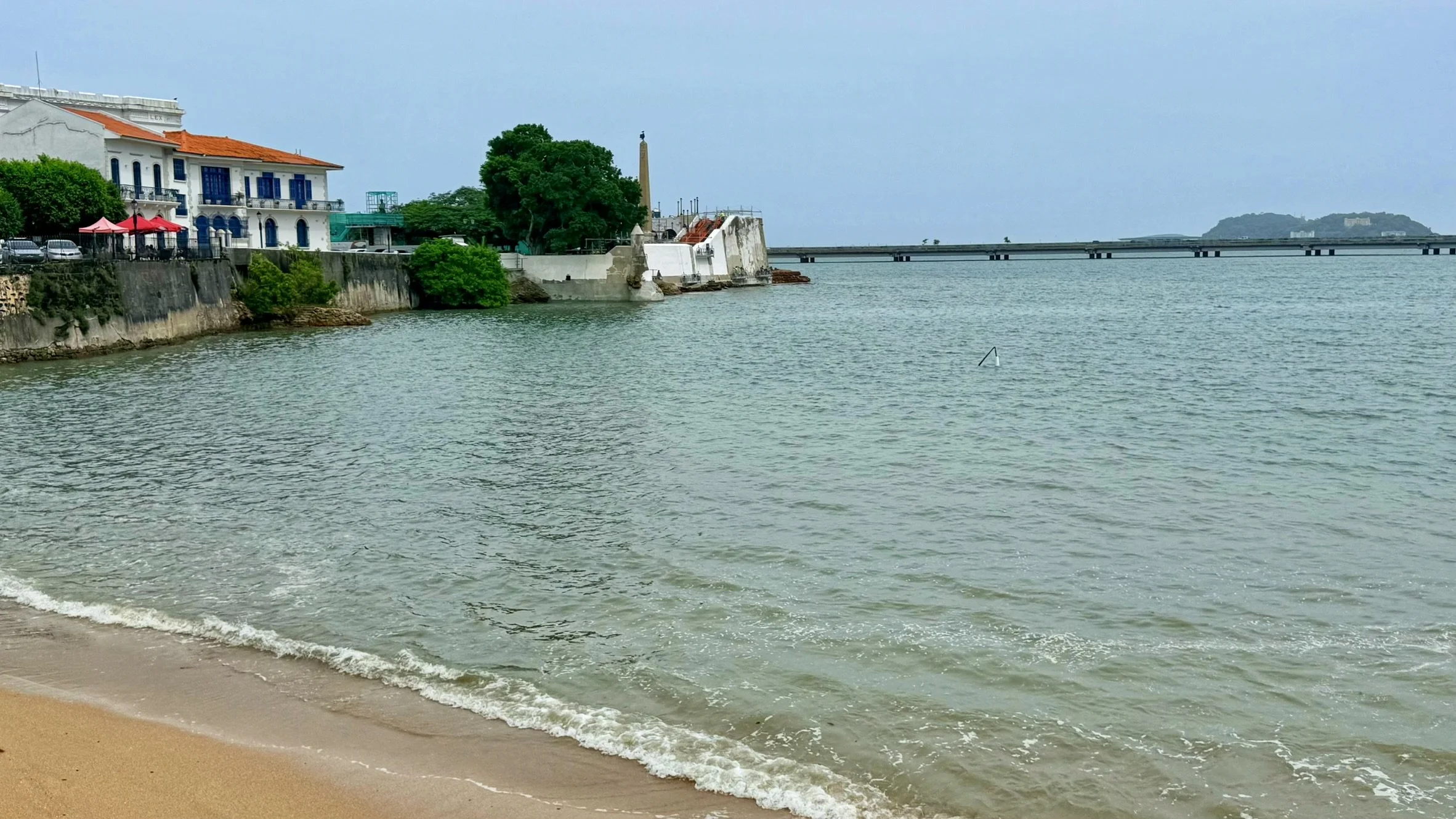
After the destruction of the original city, Panama was relocated to the site of today’s Casco Viejo. Sections of the massive defensive walls built to protect the new city from future pirate attacks still remain.
And today? Pirates are gone, the walls are picturesque, and the neighborhood has become one of the most photogenic parts of Panama City.
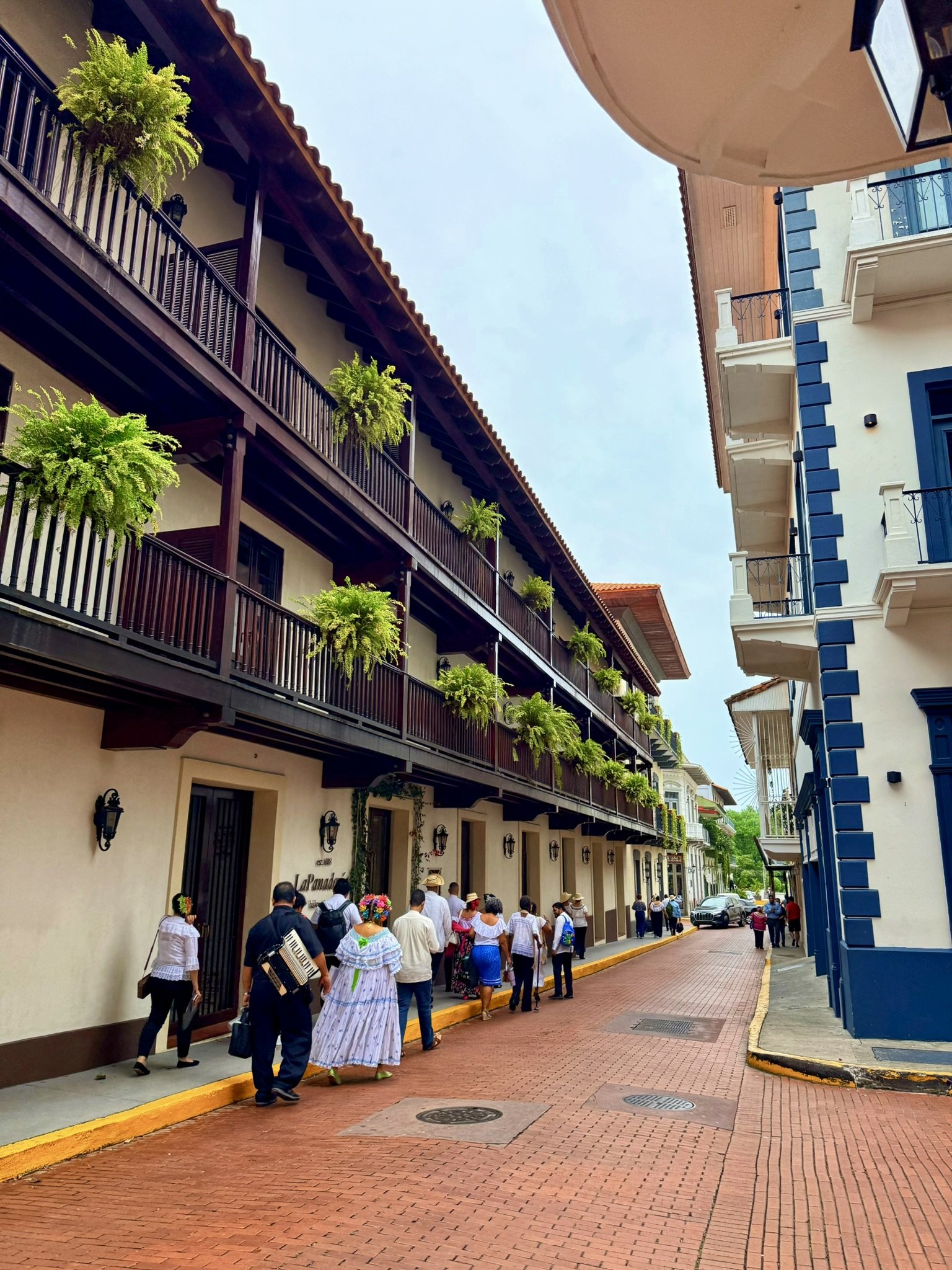
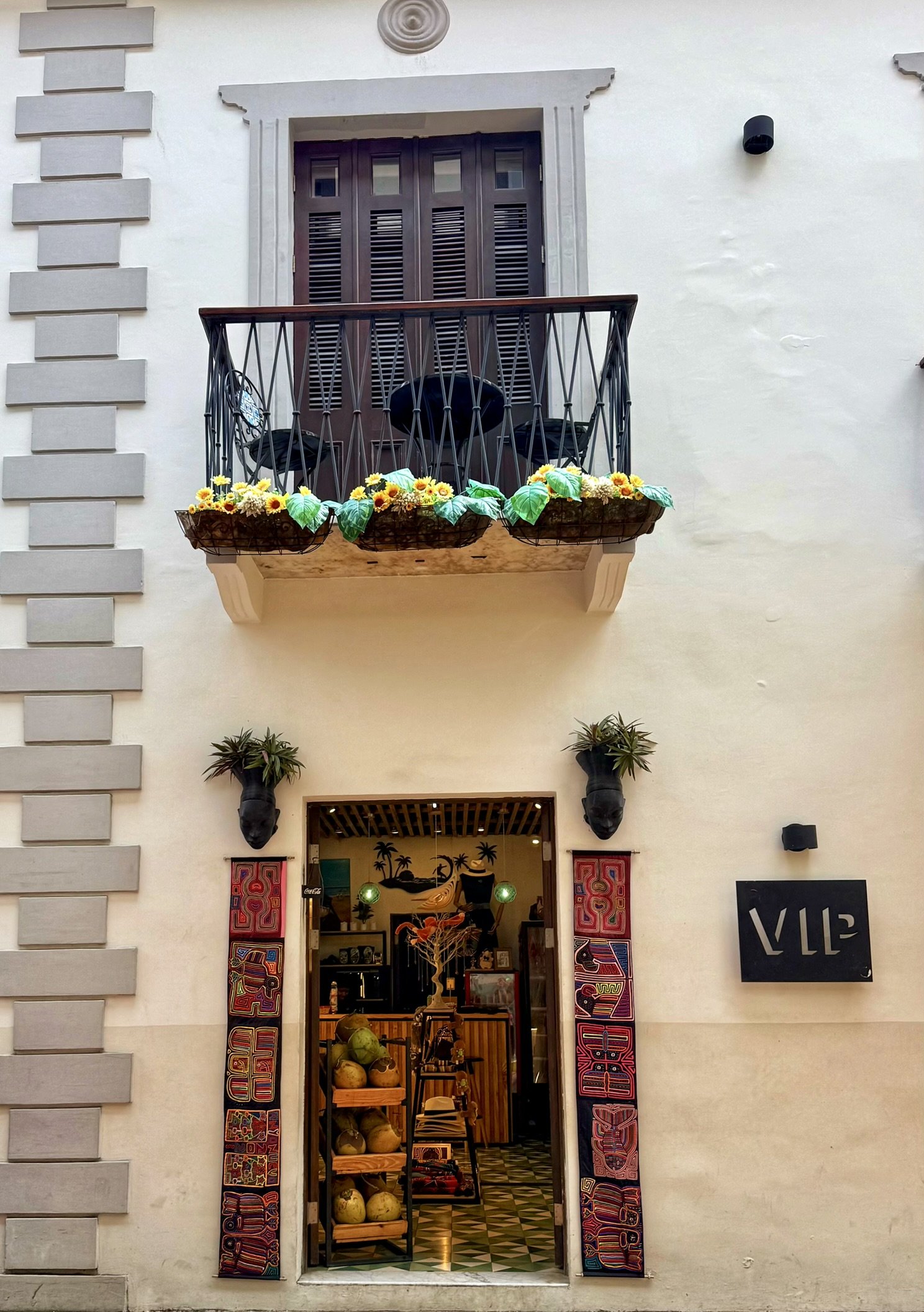
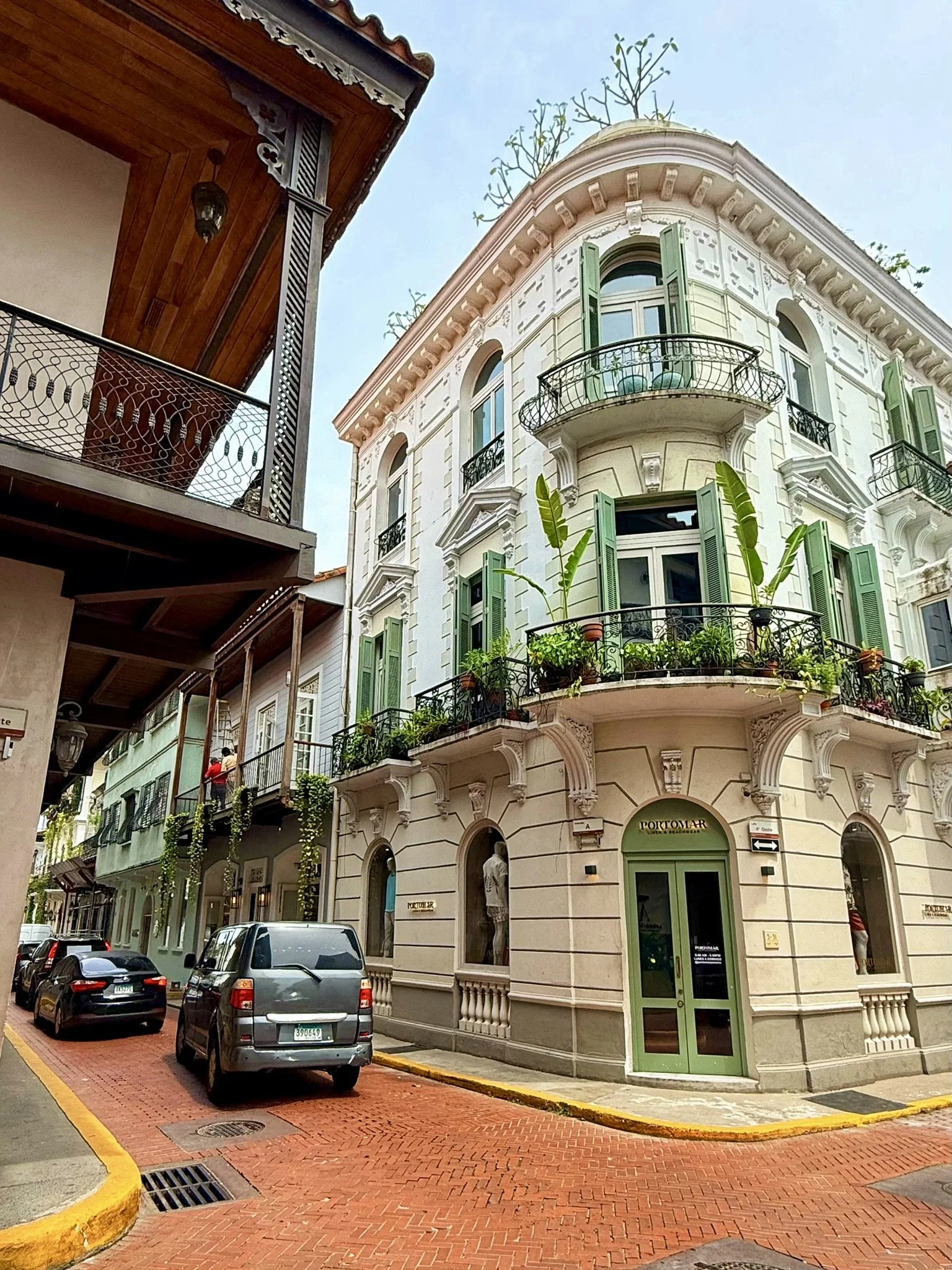
Similar to New Orleans, Casco Viejo is sometimes called the “City of a Thousand Balconies,” and it’s easy to see why. Colorful colonial buildings, wrought-iron balconies, beautiful plazas, old churches, French neoclassical influences, and cobblestone streets give the neighborhood a distinctly European feel. These are reminders of the French attempt to build the Panama Canal in the late 1800s.
Casco Viejo is such a small area, it was best explored on foot with absolutely no particular sense of urgency.
Our Casco Viejo Walking Tour
We started at Plaza Herrera, where our Uber driver dropped us off, and from there we wandered through the old city, following our loosely organized list of things we wanted to see.
Our first stop was the Antigua Muralla Panama, or the ancient city wall. The Baluarte Mano de Tigre was one of the major defensive bastions guarding the western land entrance to the city. Standing there, it isn’t hard to imagine why these walls were so important. Back then, you’d want something a little more substantial between you and Captain Morgan (the guy, not the rum).
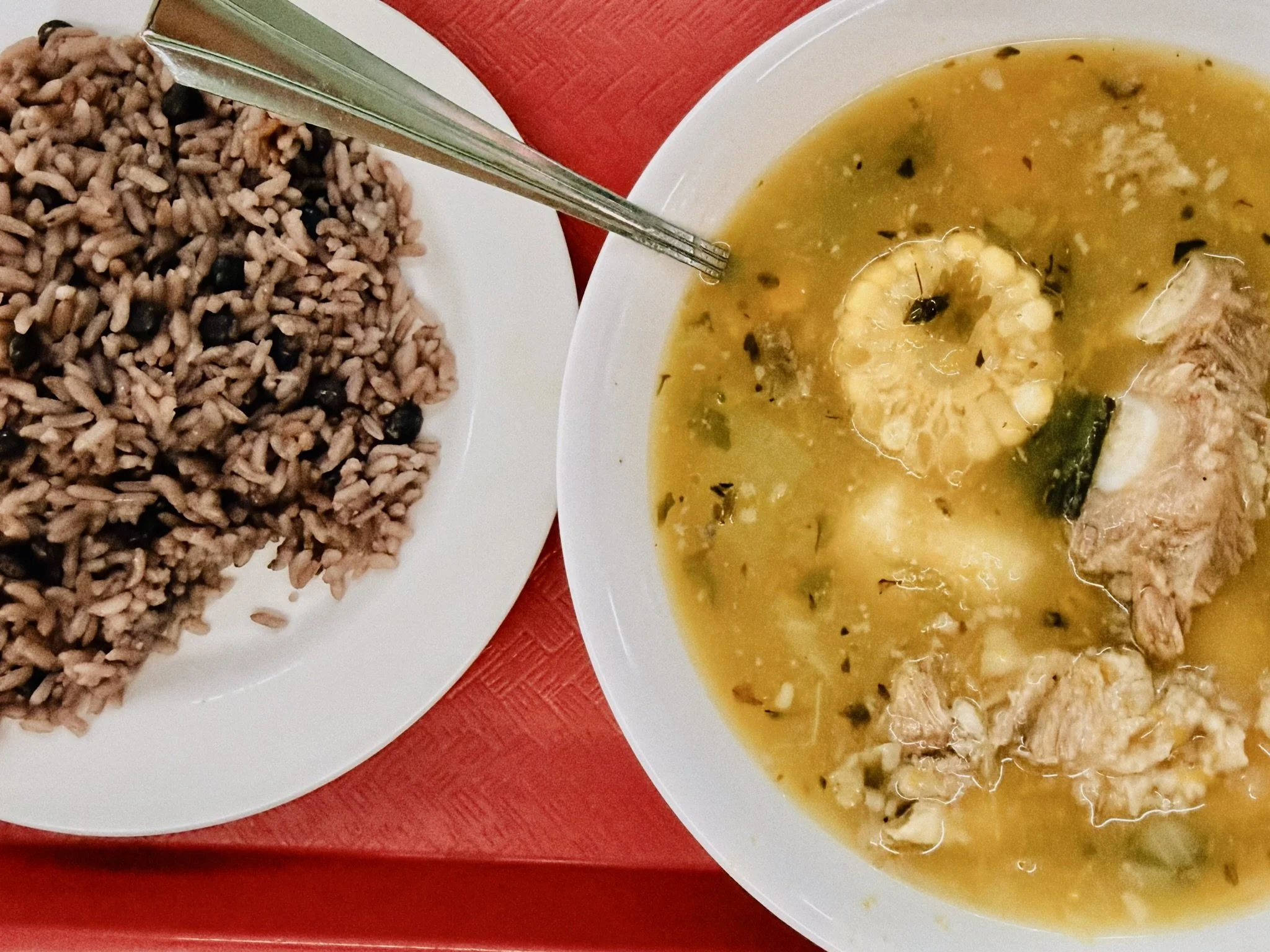
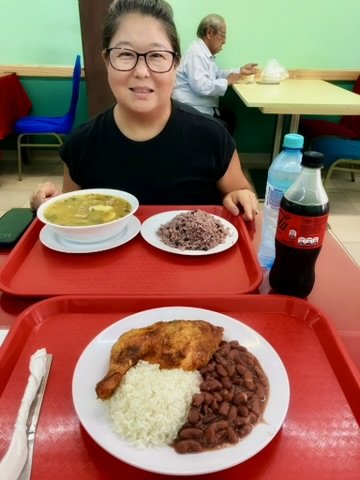
Our next stop was lunch at Restaurante Jonathan, a local fonda. The restaurant is owned by Jonathan, who is Chinese, which explains the colorful Chinese lanterns hanging throughout the space.
That led us down another Panama City rabbit hole: the country’s Chinese community.
Chinese laborers first arrived in Panama in 1855 to help build the Panama Railway, and Panama is now home to the largest Chinese community in Central America. So even a casual lunch at a neighborhood fonda turned into a little history lesson.
Which is one of the things we love about traveling—you can start out looking for lunch and accidentally learn about immigration, railroads, and the development of a country.
And then you eat. We had roasted chicken, rice and beans, a huge bowl of soup, more rice and beans, and drinks—all for USD $11.
Molas: Art, History and a Very Patient Needle
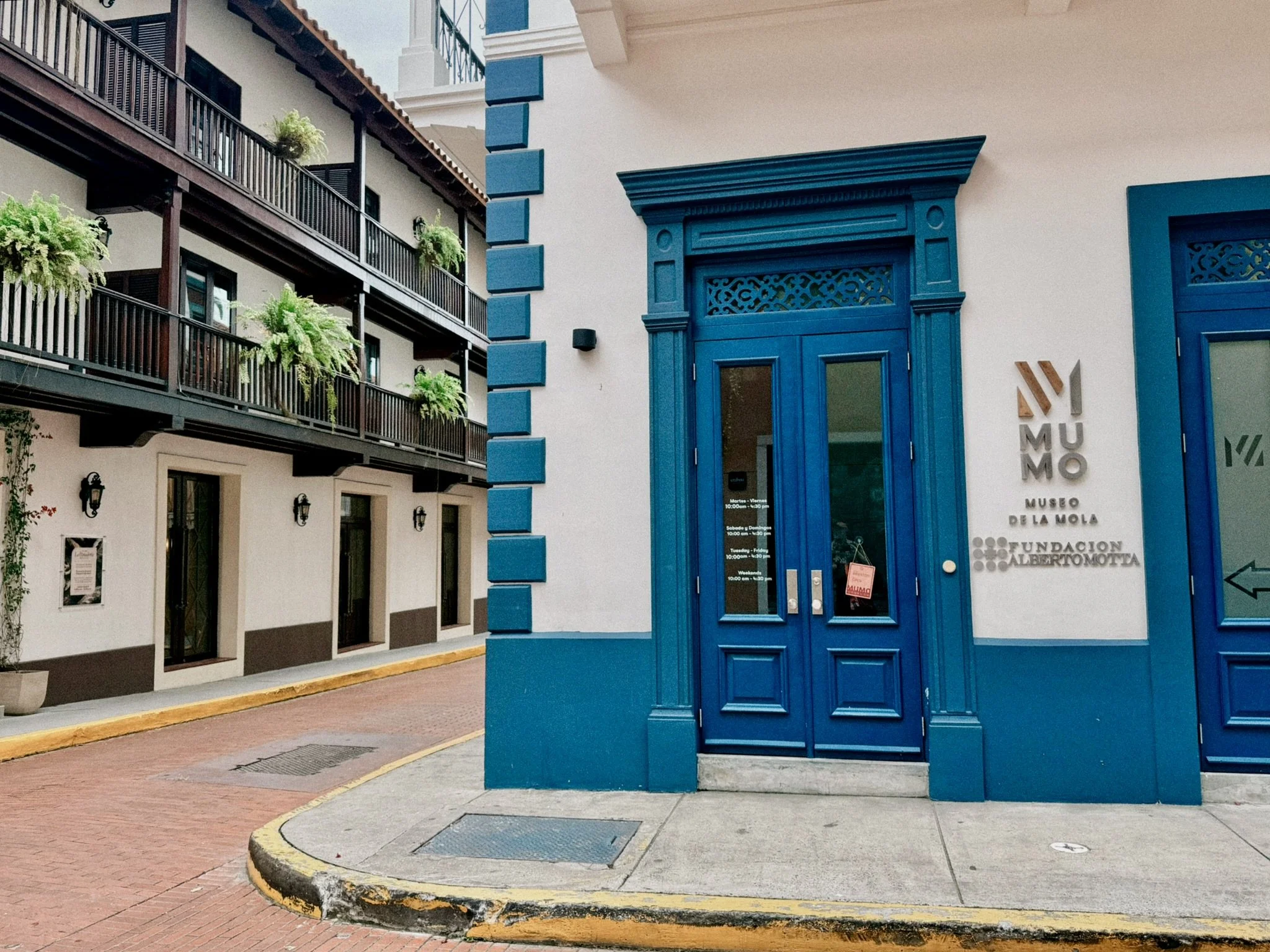
From lunch, we headed to the Mola Museum to learn about one of Panama’s most distinctive forms of indigenous art.
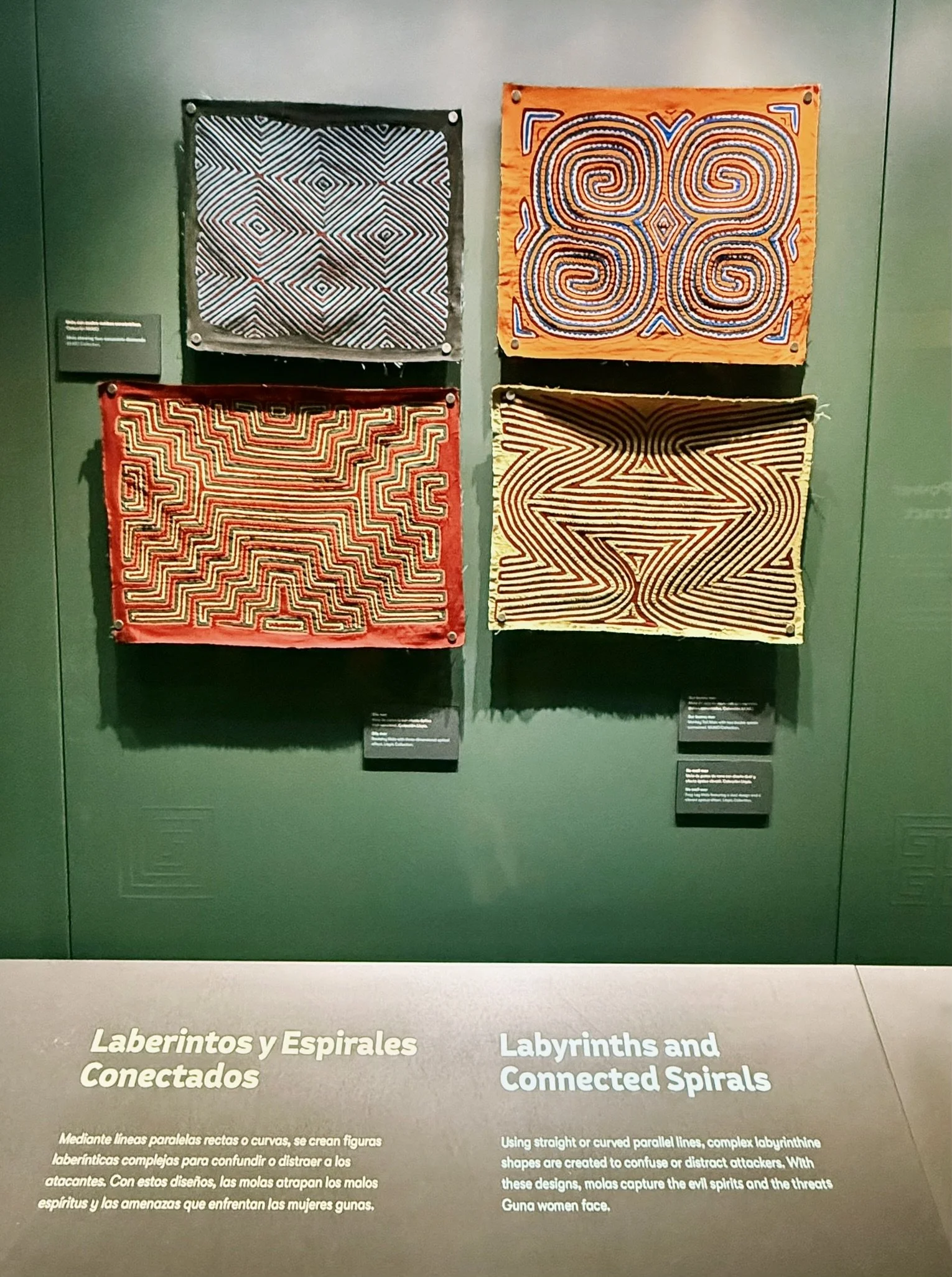
Molas are handmade fabric panels traditionally incorporated into the blouses worn by Guna women. They’re created using a reverse-appliqué technique, layering and cutting brightly colored fabrics to create intricate patterns.
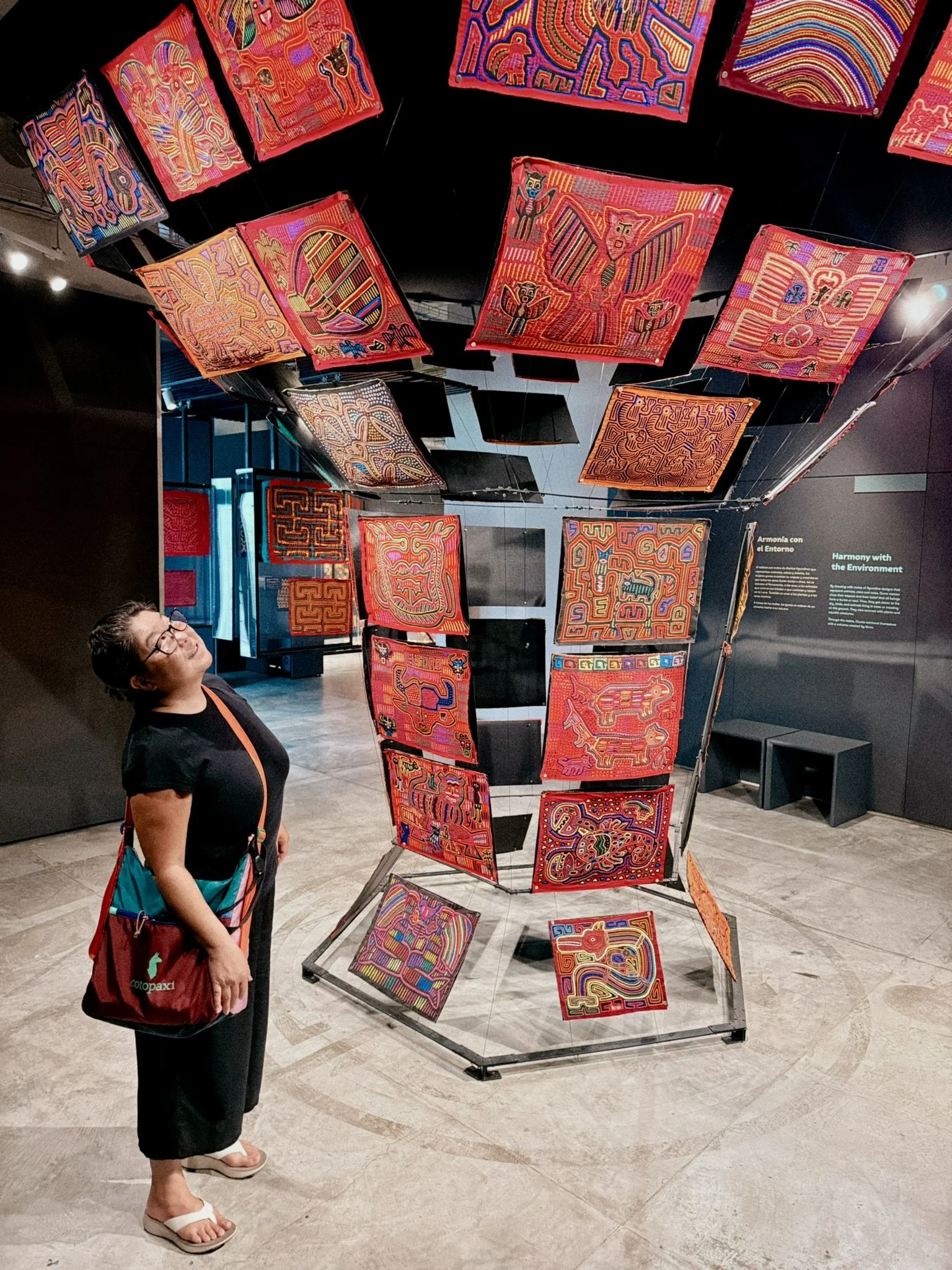
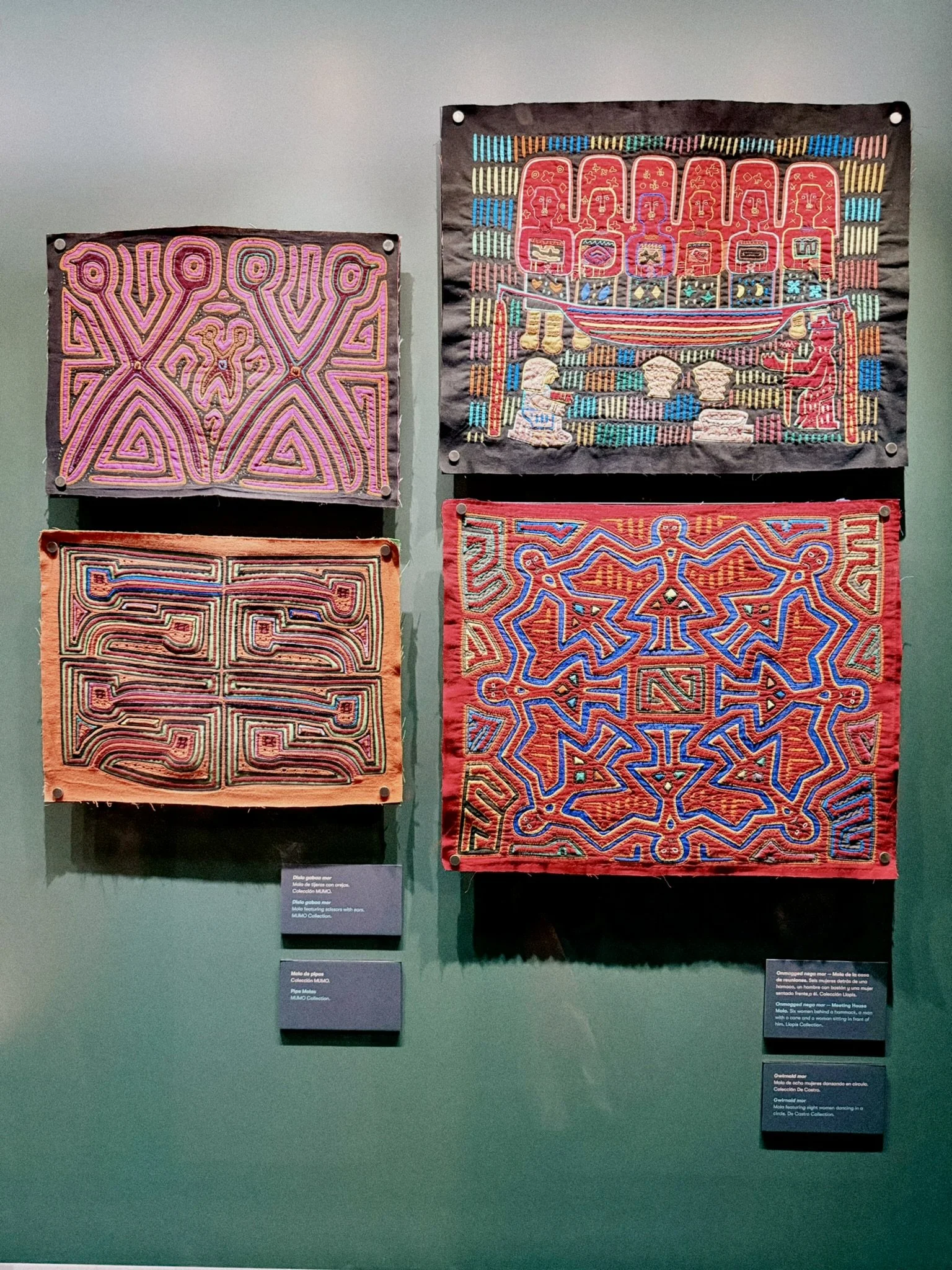
And when we say handmade, we mean really handmade.
A mola of average complexity can take around 60 hours to complete, which immediately made us look at the beautiful intricate designs a little differently. We have a newfound appreciation for anyone who can sit patiently stitching tiny pieces of fabric together for days on end.
The museum also tells the fascinating Guna story of the origins of mola designs, including the mythical world of Galu Dugbis, where ancestral knowledge of the patterns was discovered and eventually passed down to Guna women.
Plaza de la Independencia
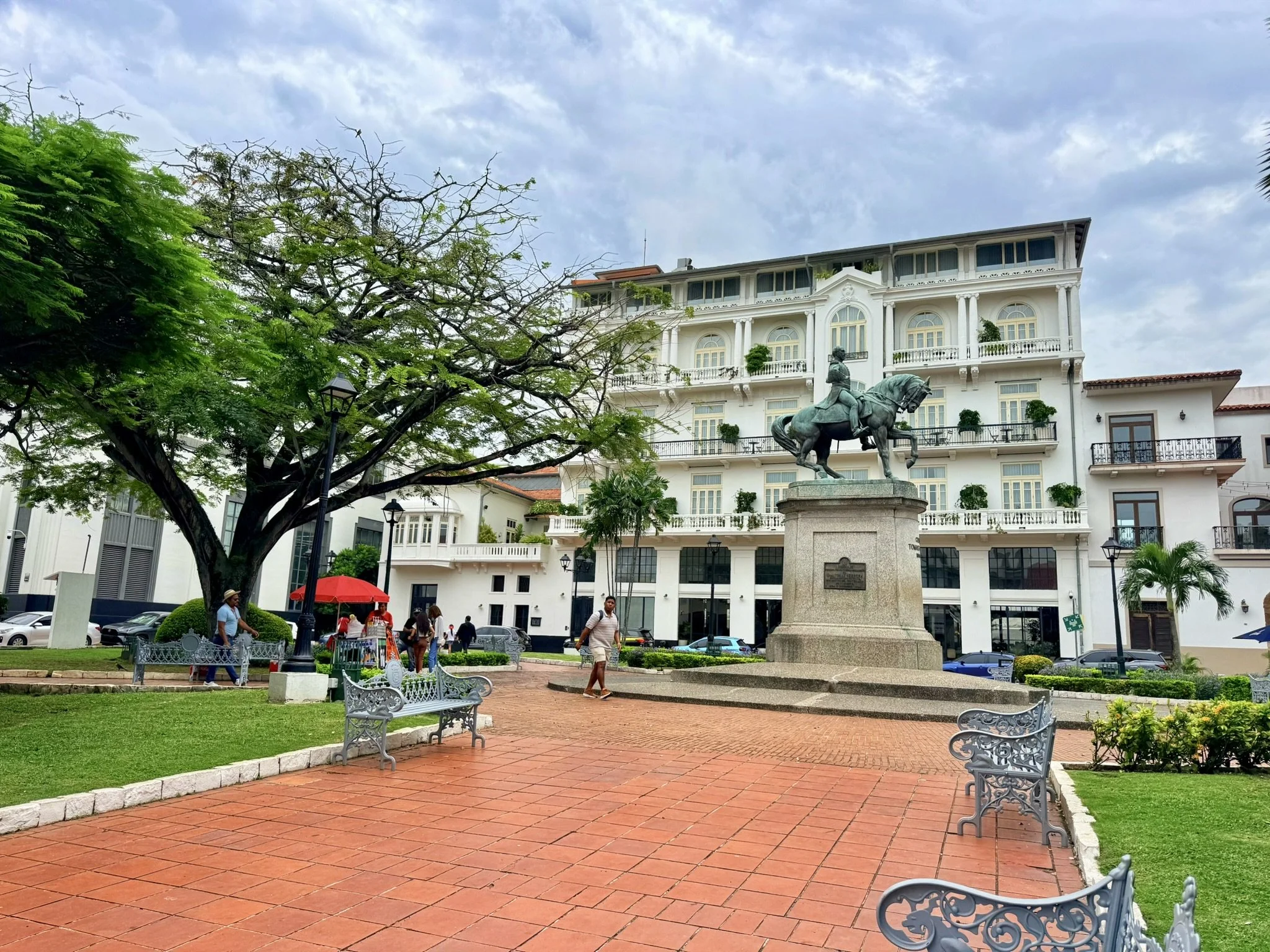
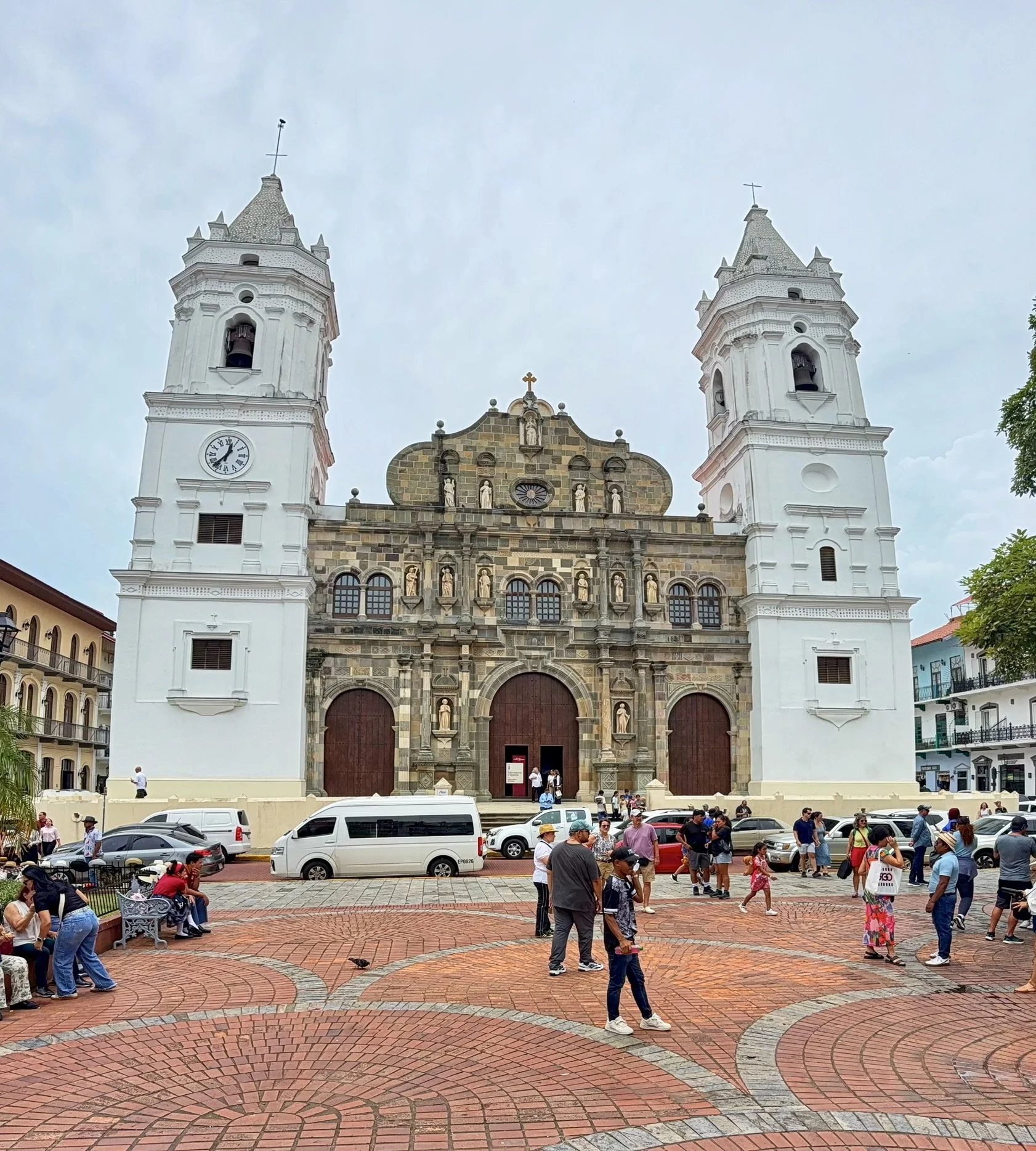
Next up was Plaza de la Independencia, one of the most important squares in Panama City.
This is where Panama declared independence from Spain in 1821—and later declared independence from Colombia in 1903…wait what?! We missed the fact that Panama, Colombia, Ecuador, and Venezuela were all part of a single republic from 1819 to 1831 called Gran Colombia uniting northern South America under Simón Bolívar—"El Libertador" from Spanish colonial rule.
Facing the square is the Metropolitan Cathedral Basilica of Santa Maria the Ancient, an impressive Spanish colonial structure that took more than a century to complete. Its two massive bell towers are decorated with mother-of-pearl from Panama’s Pearl Islands.
It’s one of those places where you can stand in the middle of the square and look in virtually any direction and find something worth photographing.
Museo de Canal
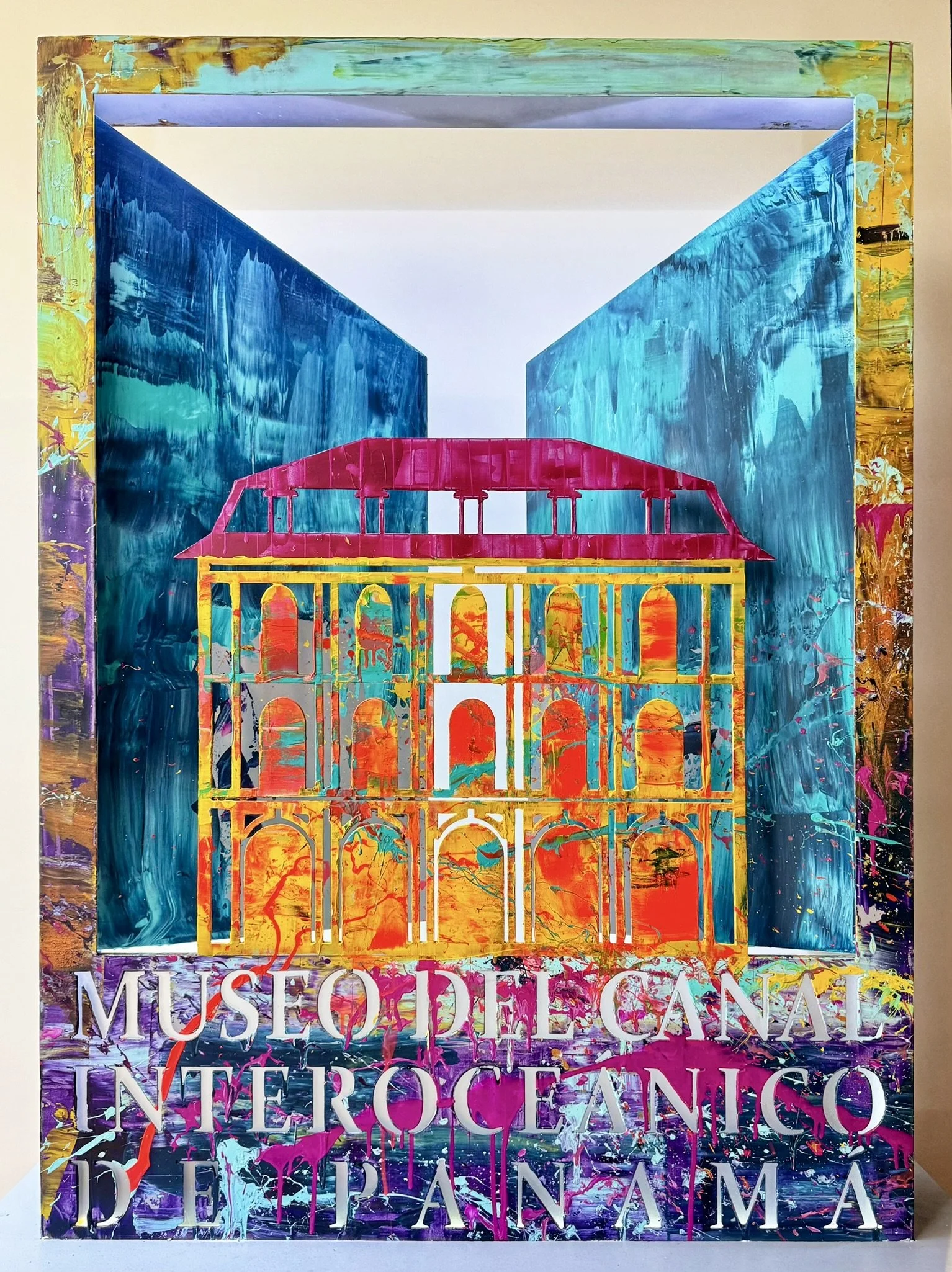
Our next stop was the Canal Museum, which turned out to be one of the biggest surprises of the day.
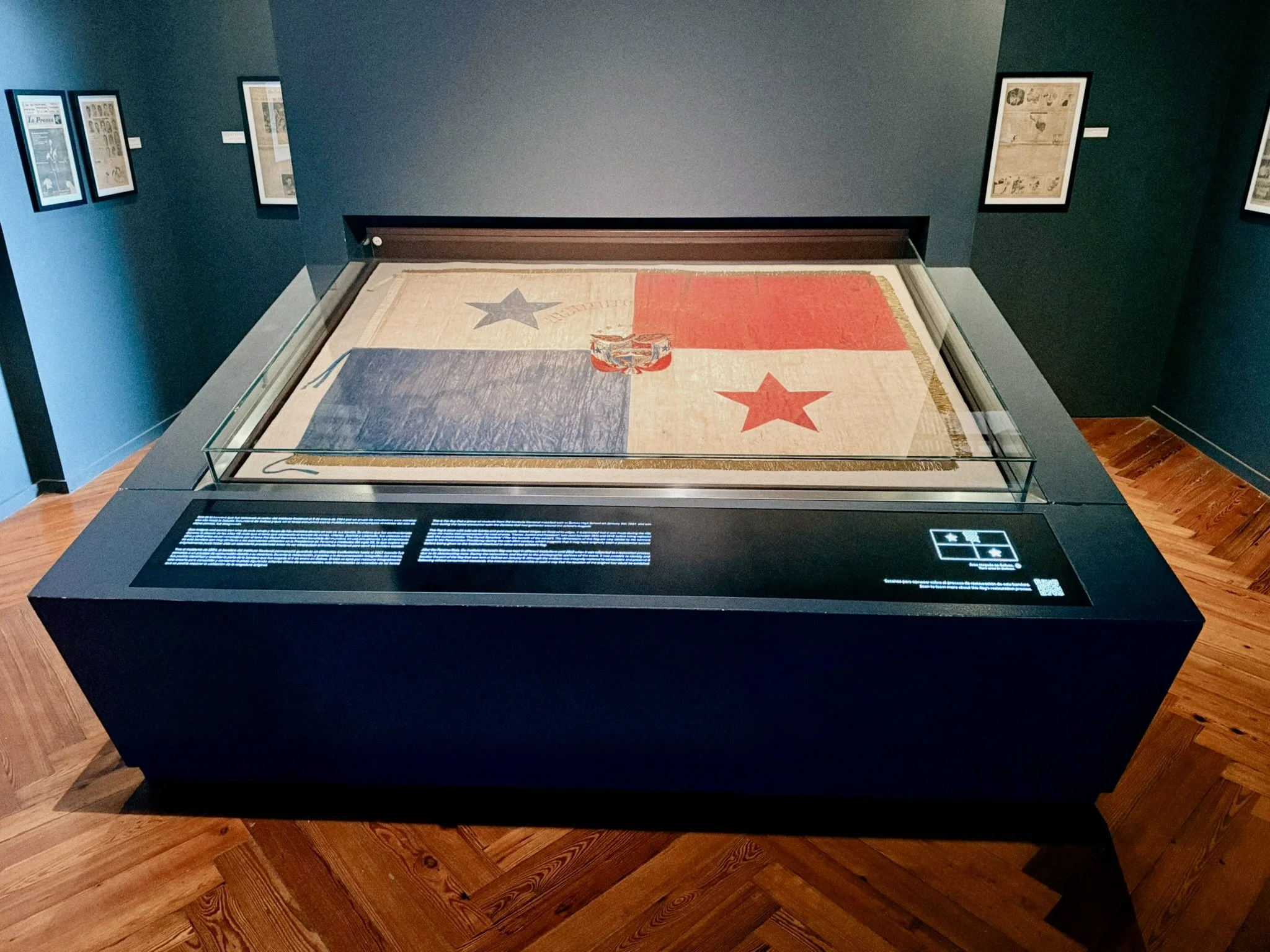
Of course, the museum covers the history of the Panama Canal, but it also explains the much larger story of the isthmus—how it formed, the Indigenous people who lived here, and how this narrow strip of land became one of the most strategically important transportation corridors in the world.
One of the things that fascinated us most had nothing to do with the canal itself.
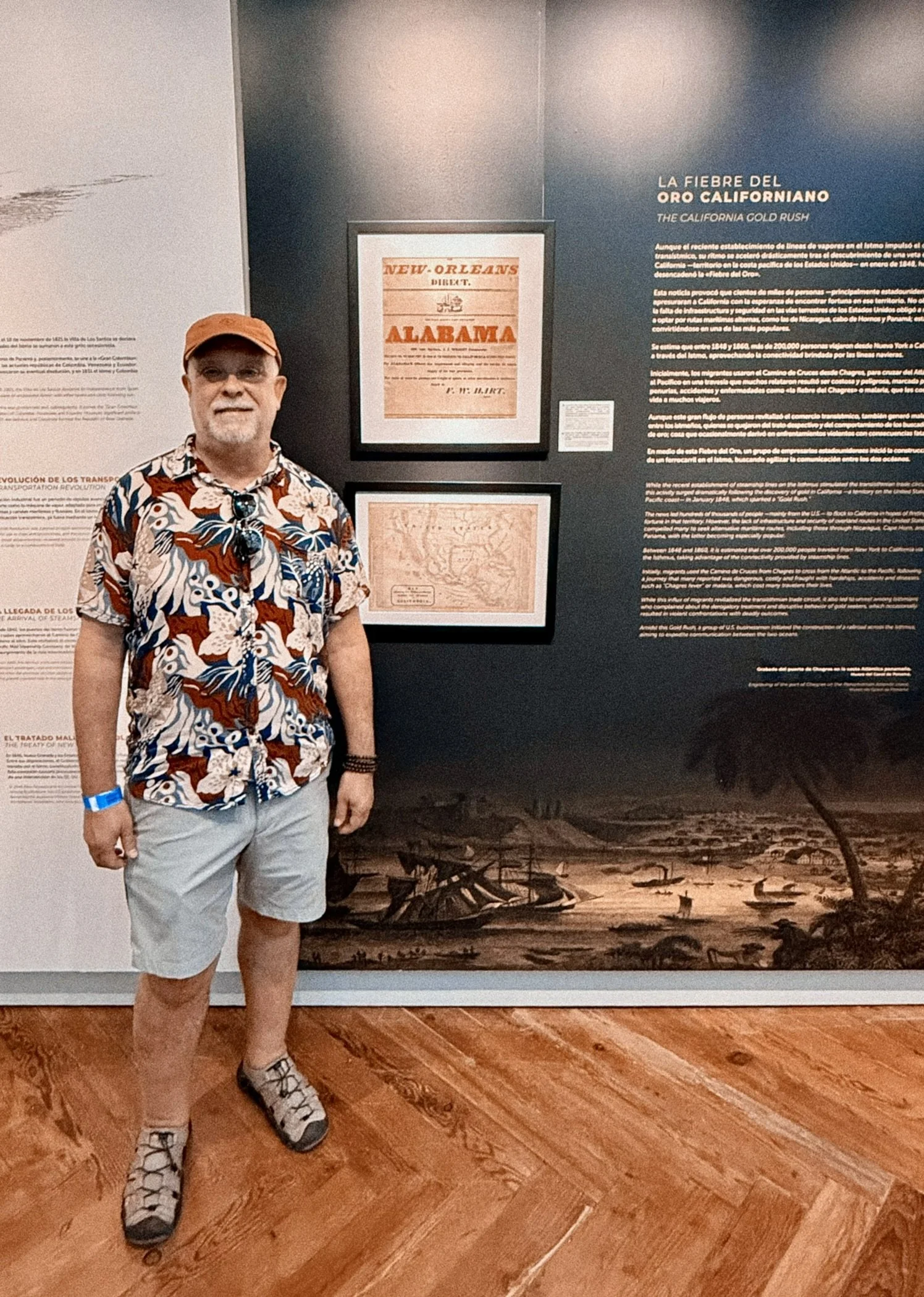
Before the Panama Canal, the California Gold Rush created a huge increase in traffic across Panama. People traveling from the East Coast of the United States to the newly booming West Coast could cross the isthmus rather than attempting the long overland journey across the United States. The museum highlighted a steamship, “Alabama”, as one the ships that sailed out of New Orleans to Panama, carrying all the forty-niners.
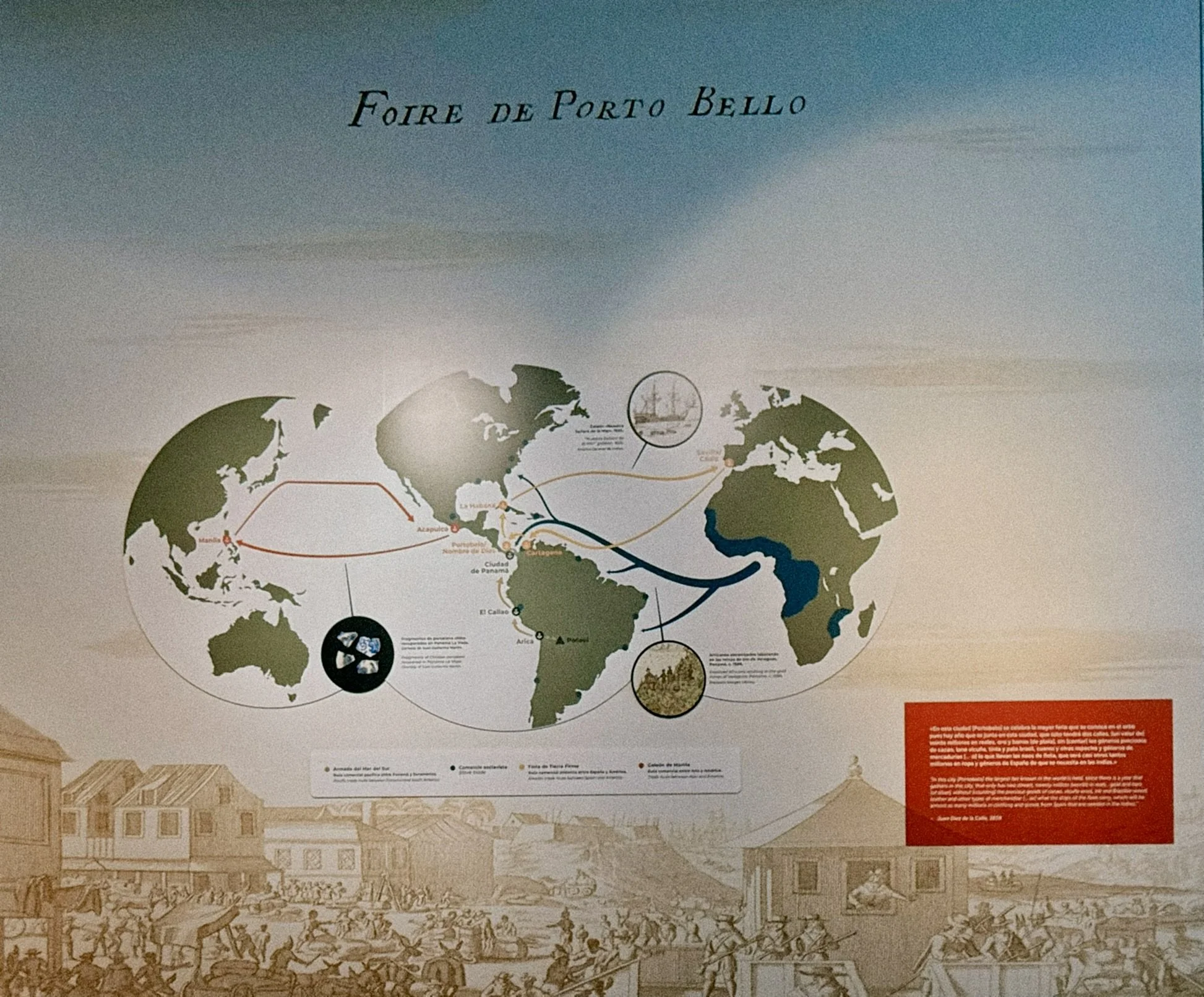
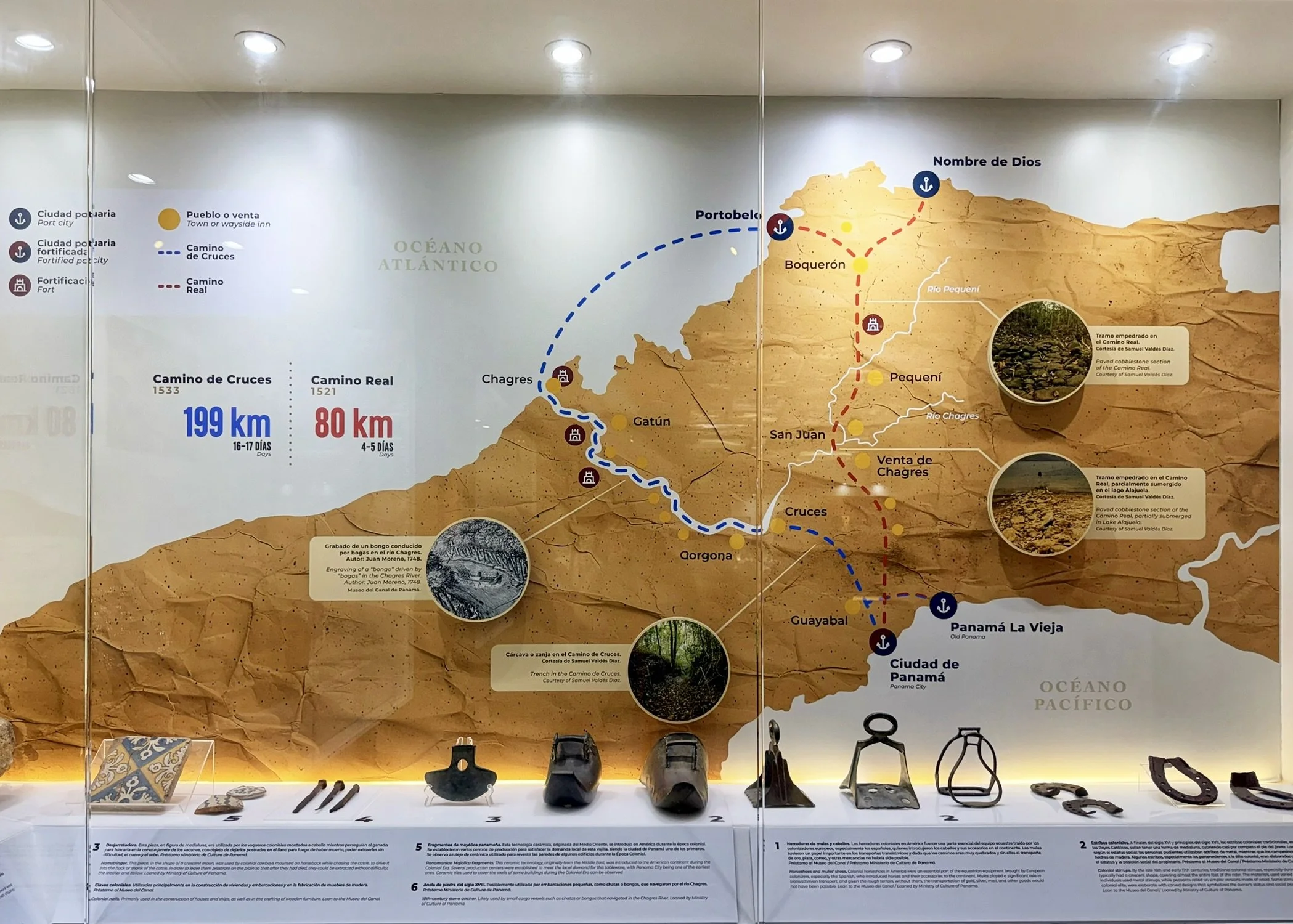
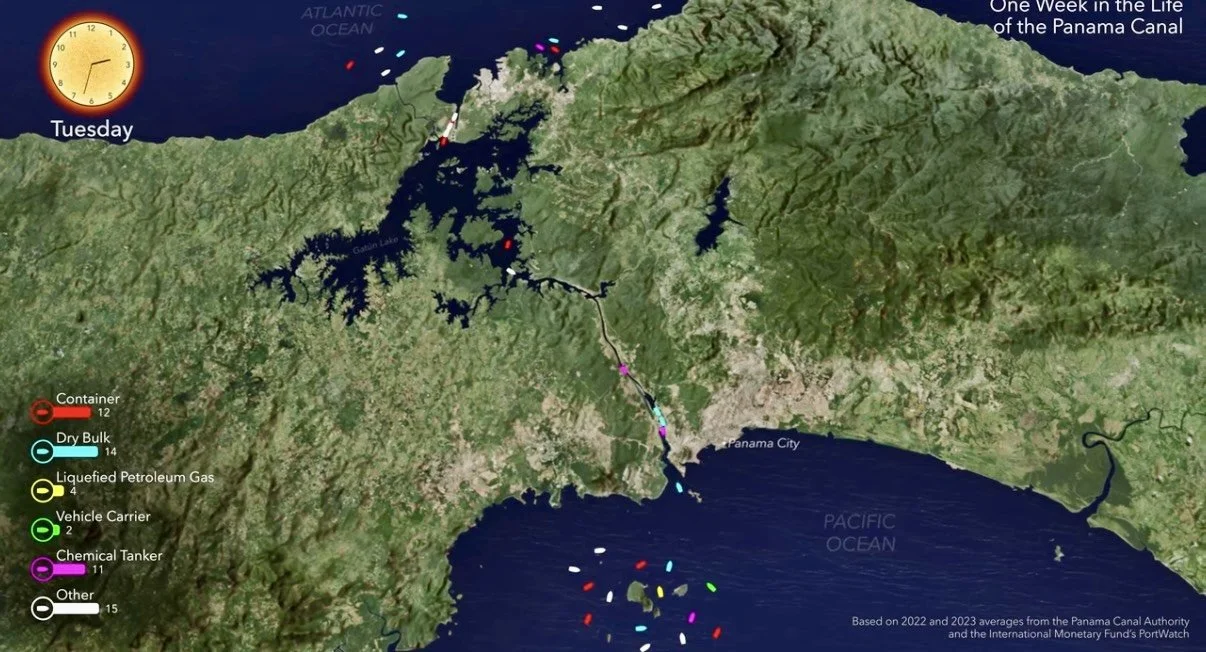
When the Panama Railway was completed in 1855, it cut the overland isthmus crossing from several days to roughly 12 hours.
So, before Panama became famous for its canal, it was already functioning as a shortcut between two oceans.
And then, of course, came France’s attempt at digging a canal, then the United States’ successful attempt at digging the canal while colonizing and militarizing the Canal Zone, and eventually Panama’s sovereignty over it in 2000.
We hope to learn more about the canal when we actually go see the canal!
The Flat Arch That Became a Sales Pitch
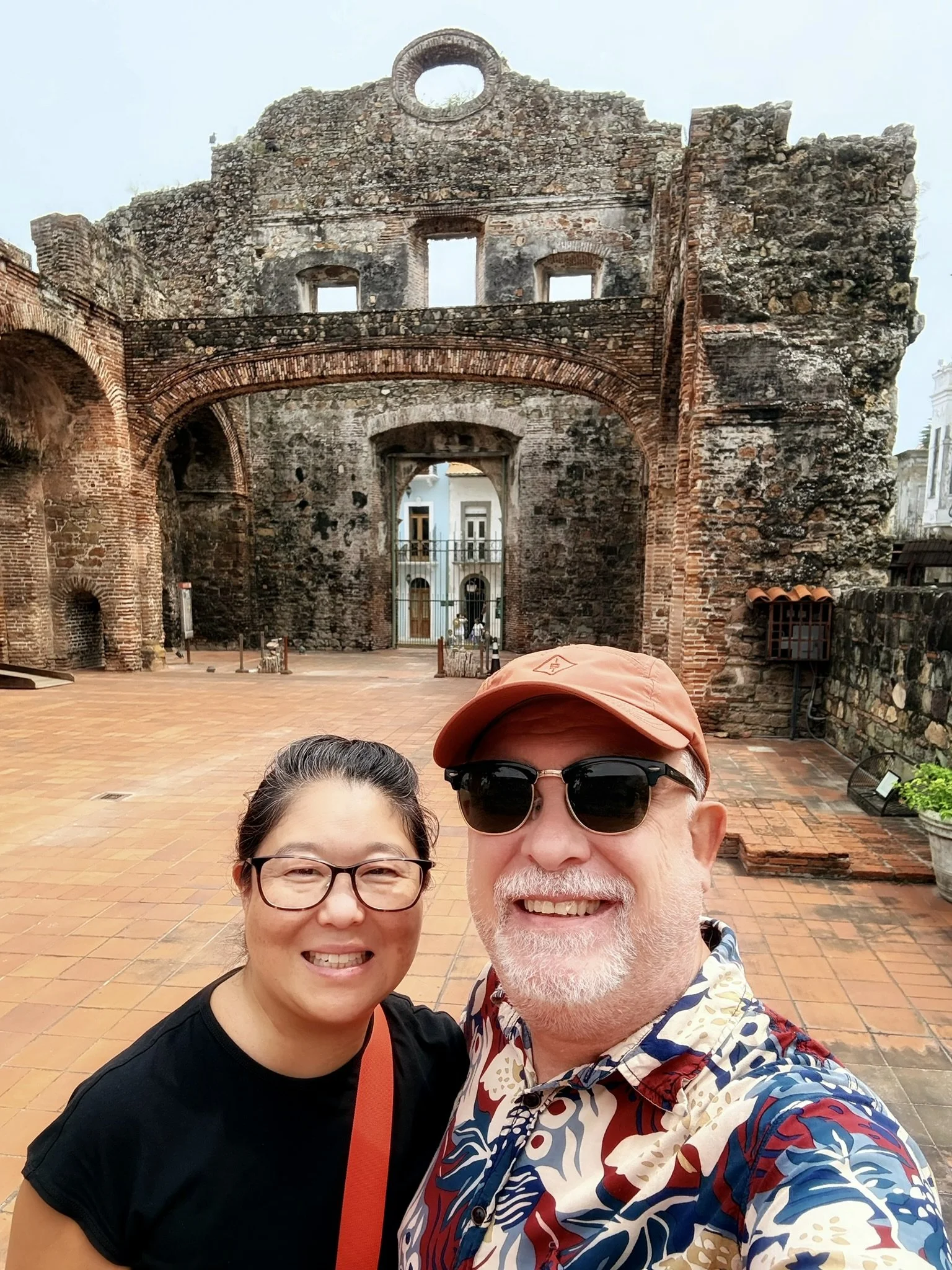
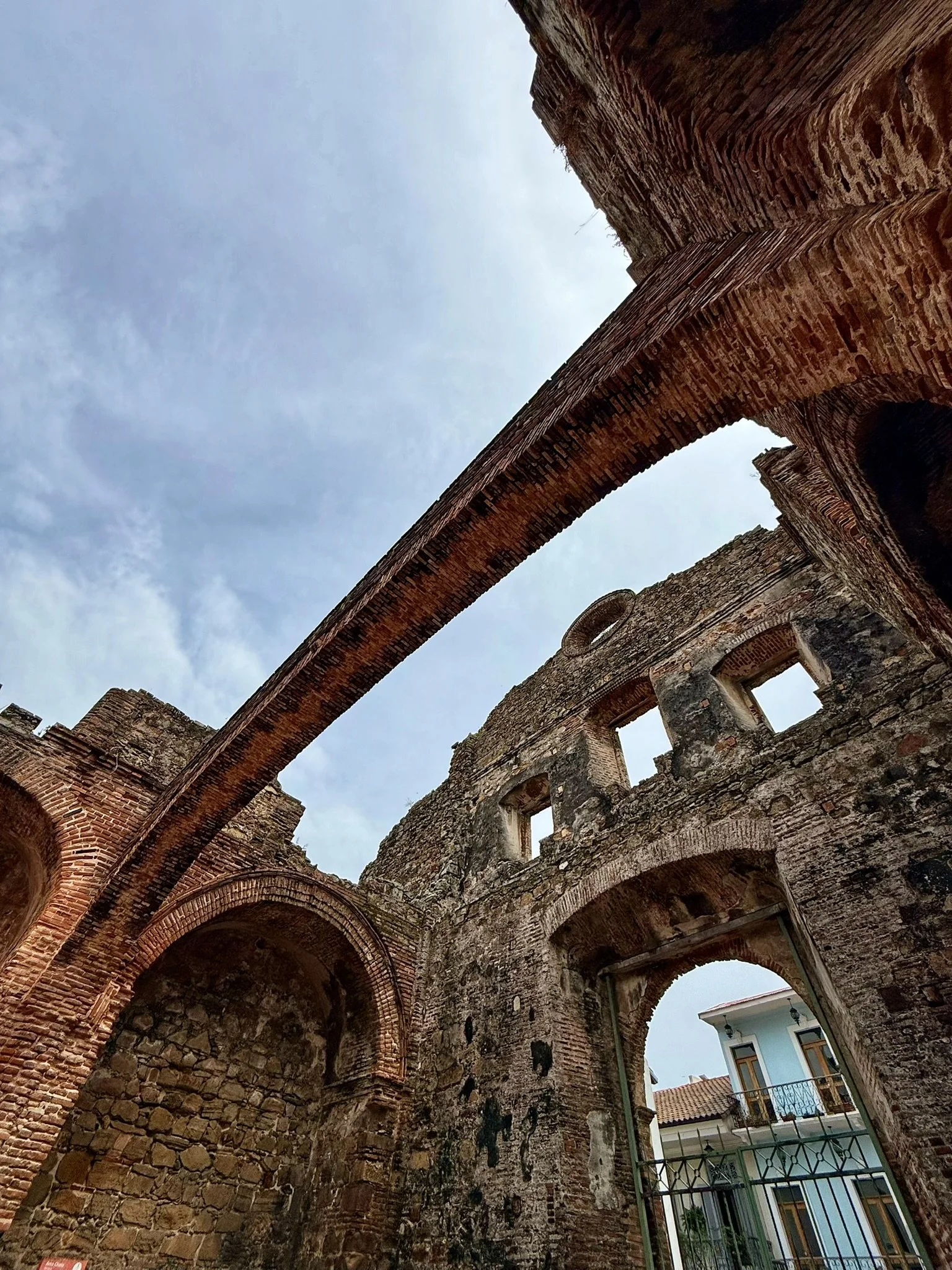
From the Canal Museum, we wandered over to the ruins of the Santo Domingo Convent and its famous Arco Chato, or Flat Arch.
The Dominican convent was destroyed by fires in the 18th century, but somehow this long brick arch survived. The remarkable thing about it is that the arch spans roughly 49 feet without internal supports or metal reinforcement.
In the early 1900s, when engineers were debating whether the future interoceanic canal should be built through Panama or Nicaragua, the arch was held up as evidence that Panama was relatively stable and free of major earthquakes.
Basically, Panama’s argument was:
“Look! Our arch is still standing. Build the canal here.”
And apparently that was convincing.
Although, in a spectacular bit of historical irony, the arch finally collapsed in 2003.
Oops.
Fortunately, it was reconstructed.
Sunset, Cocktails and the Pacific
By this point in the walk, we had earned refreshments.
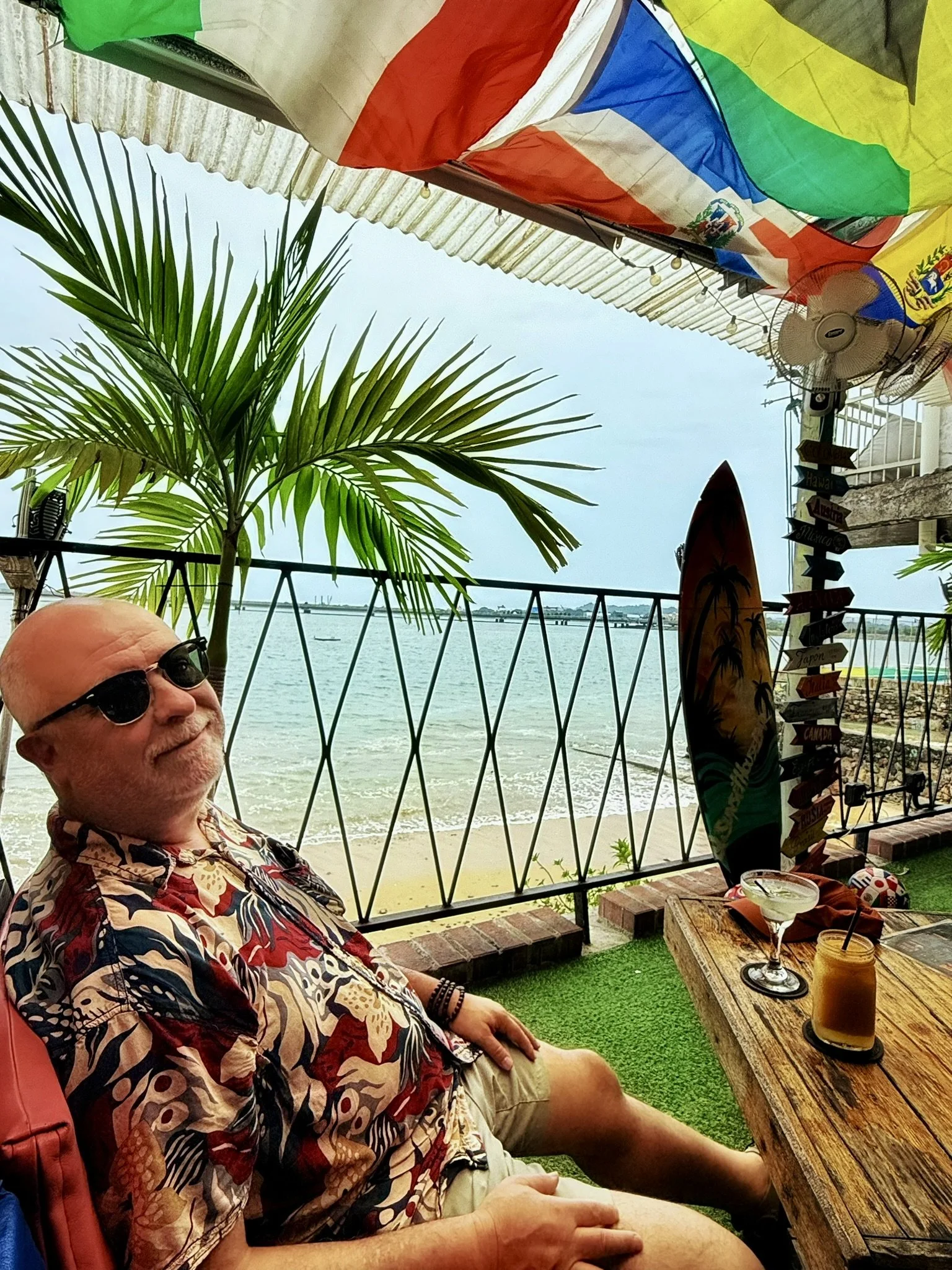
Our next stop was Cóctel Sunset House, tucked behind what appeared to be a very touristy souvenir shop. But once we got inside, the kitschy entrance was quickly forgiven. We had a drink, sat back, and enjoyed views of the Pacific with the waves practically lapping against the bar.
Not a bad place to stop and contemplate several hundred years of Panamanian history.
Treasures Hiding in Plain Sight at San José Church
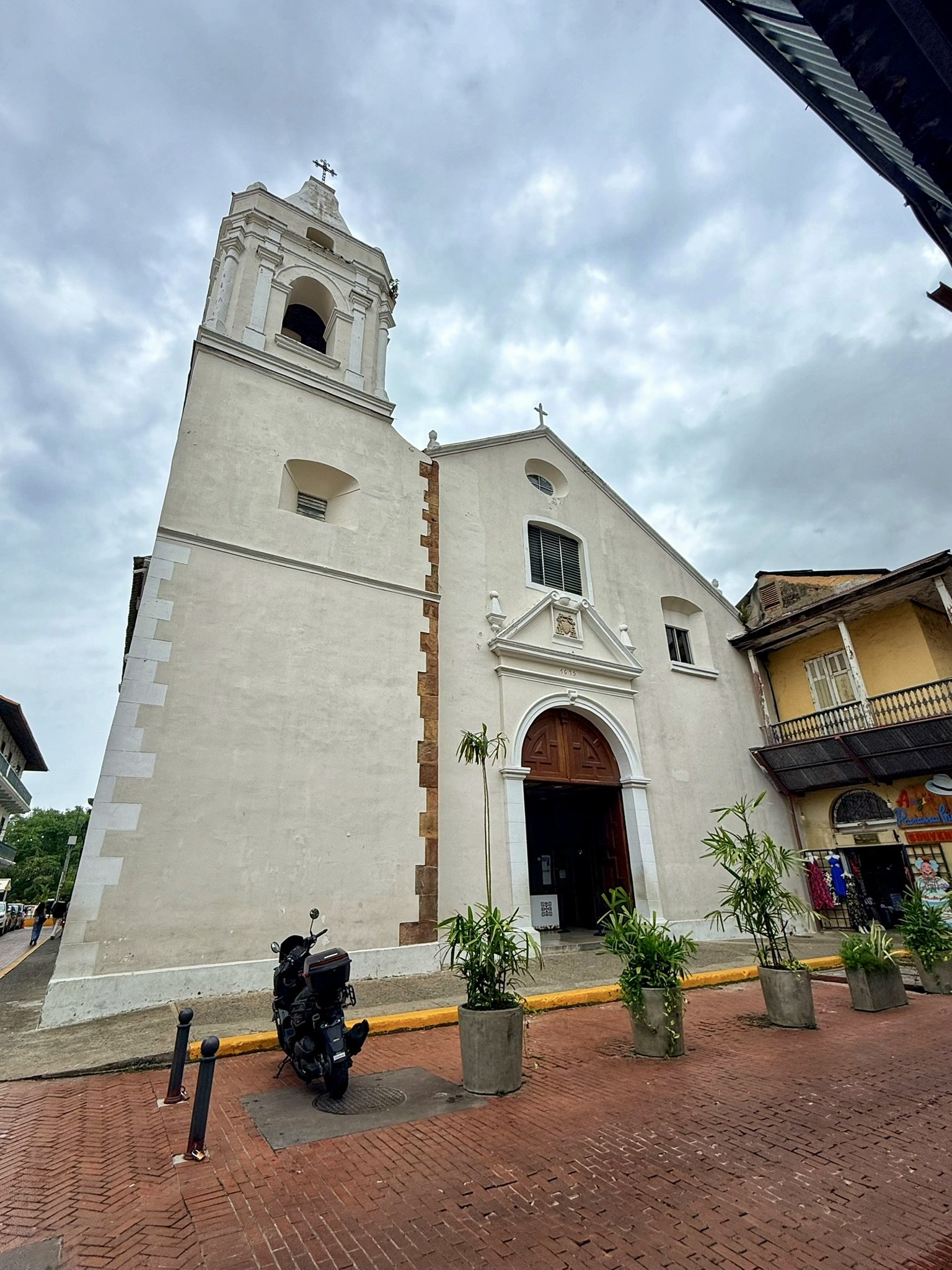
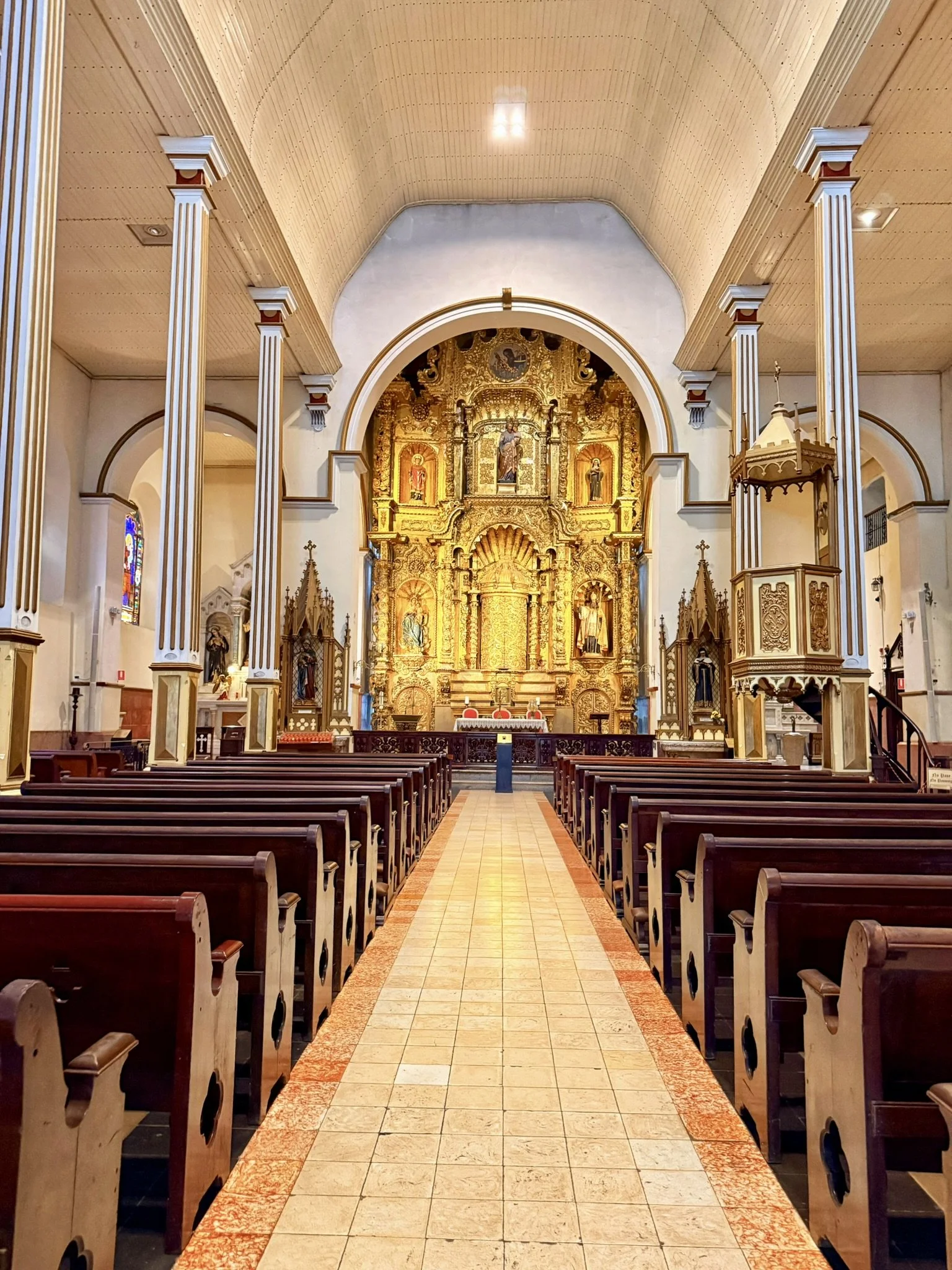
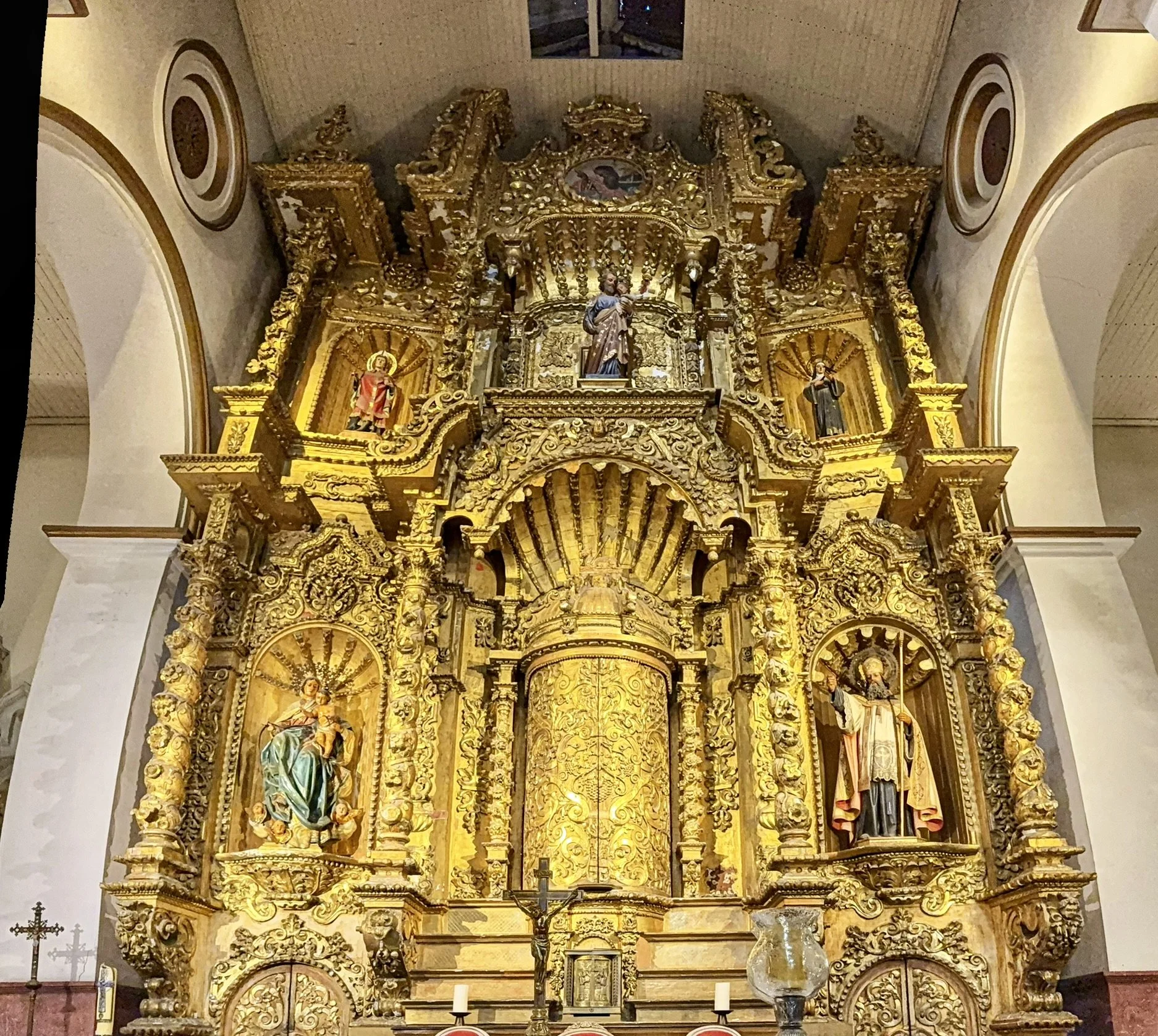
Then we continued on to San José Church, home to one of Casco Viejo’s most famous treasures: the Altar de Oro, or Golden Altar.
The church itself looks fairly modest from the outside, which makes the interior even more surprising.
According to local legend, when Henry Morgan attacked the original city, a clever priest painted the gold altar black so it wouldn’t attract the pirates’ attention. He supposedly convinced Morgan that the church had nothing of value—and Morgan even gave him a donation.
Whether every detail of the story is true or not, it’s a great story.
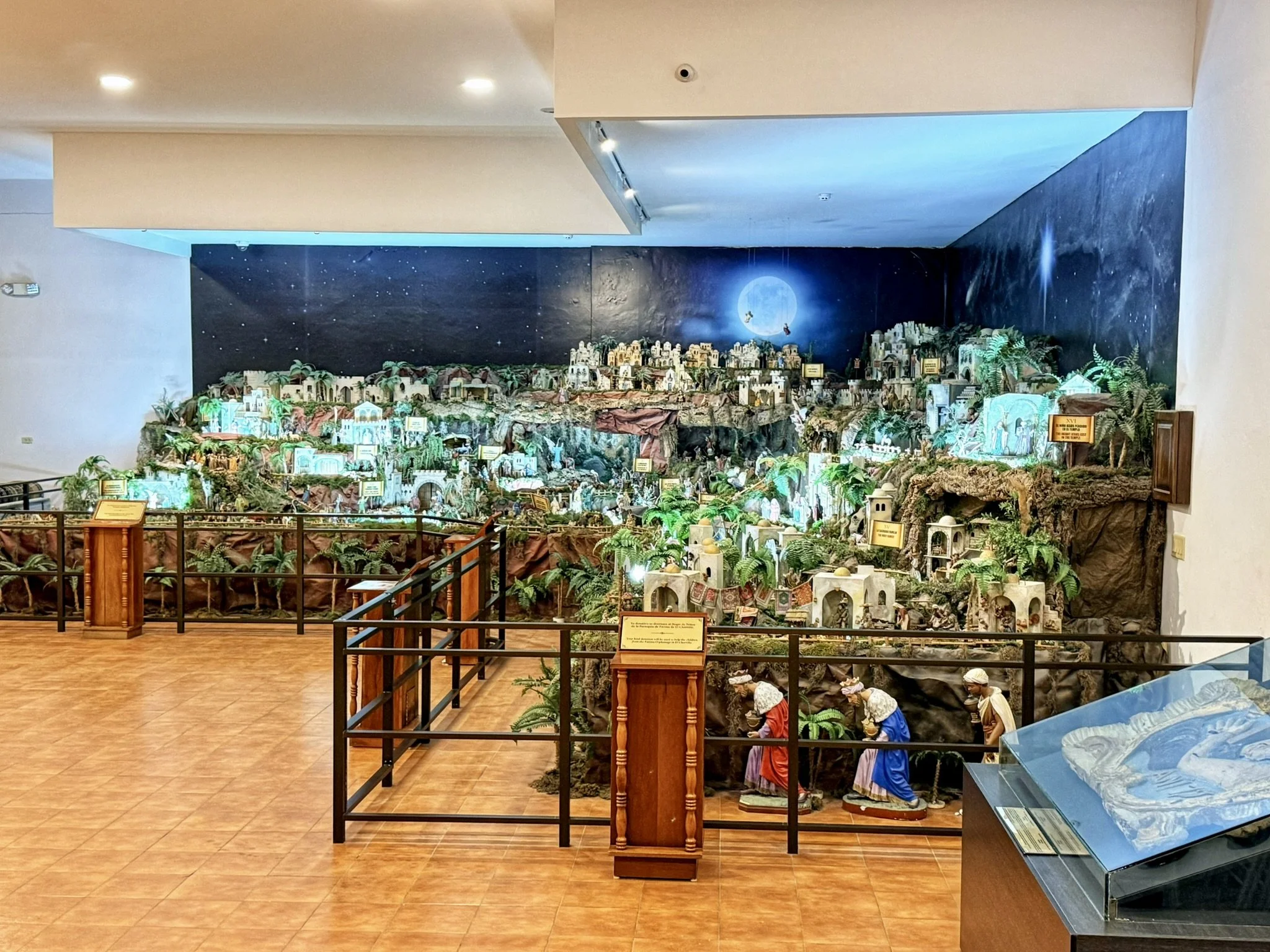
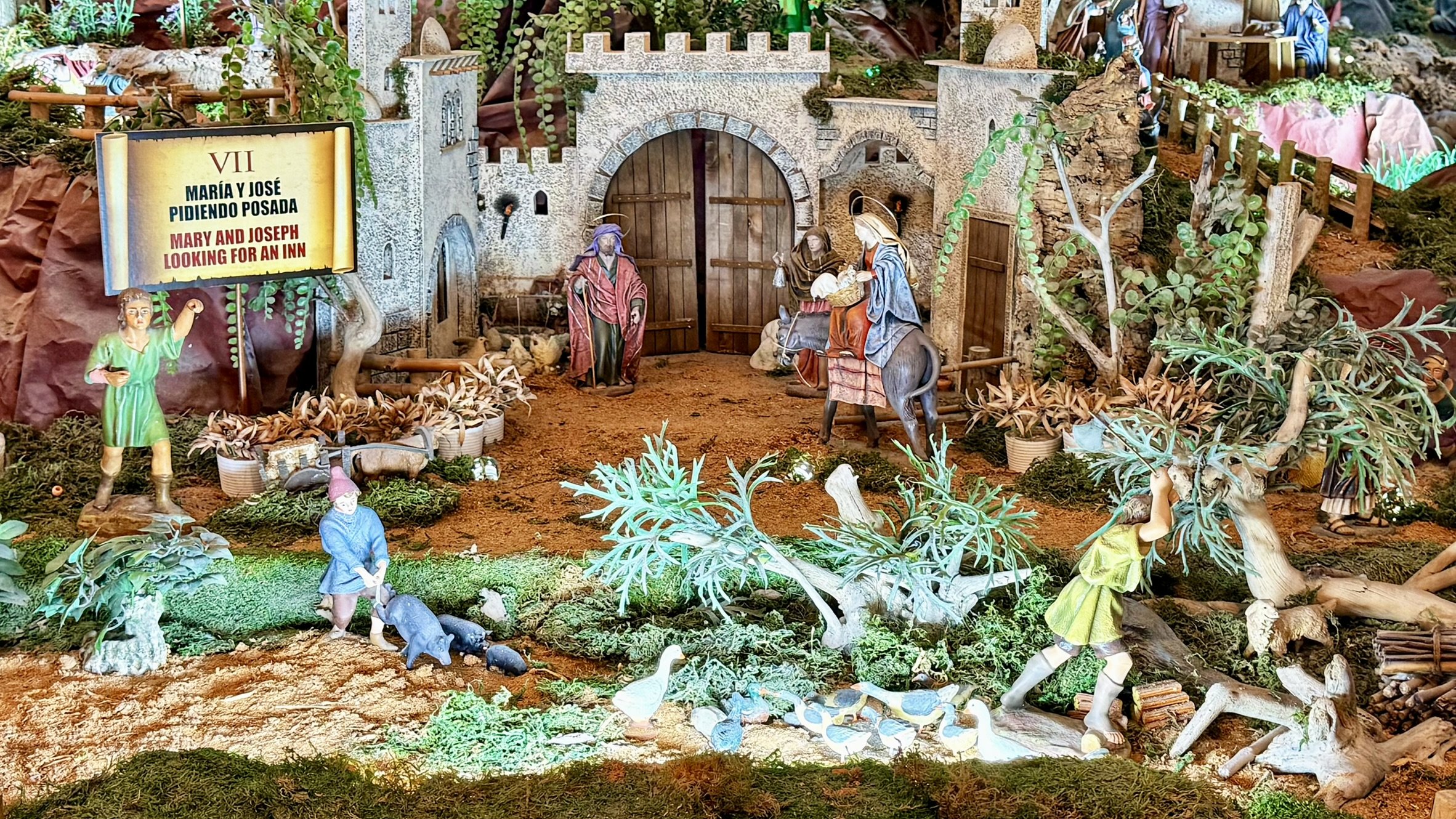
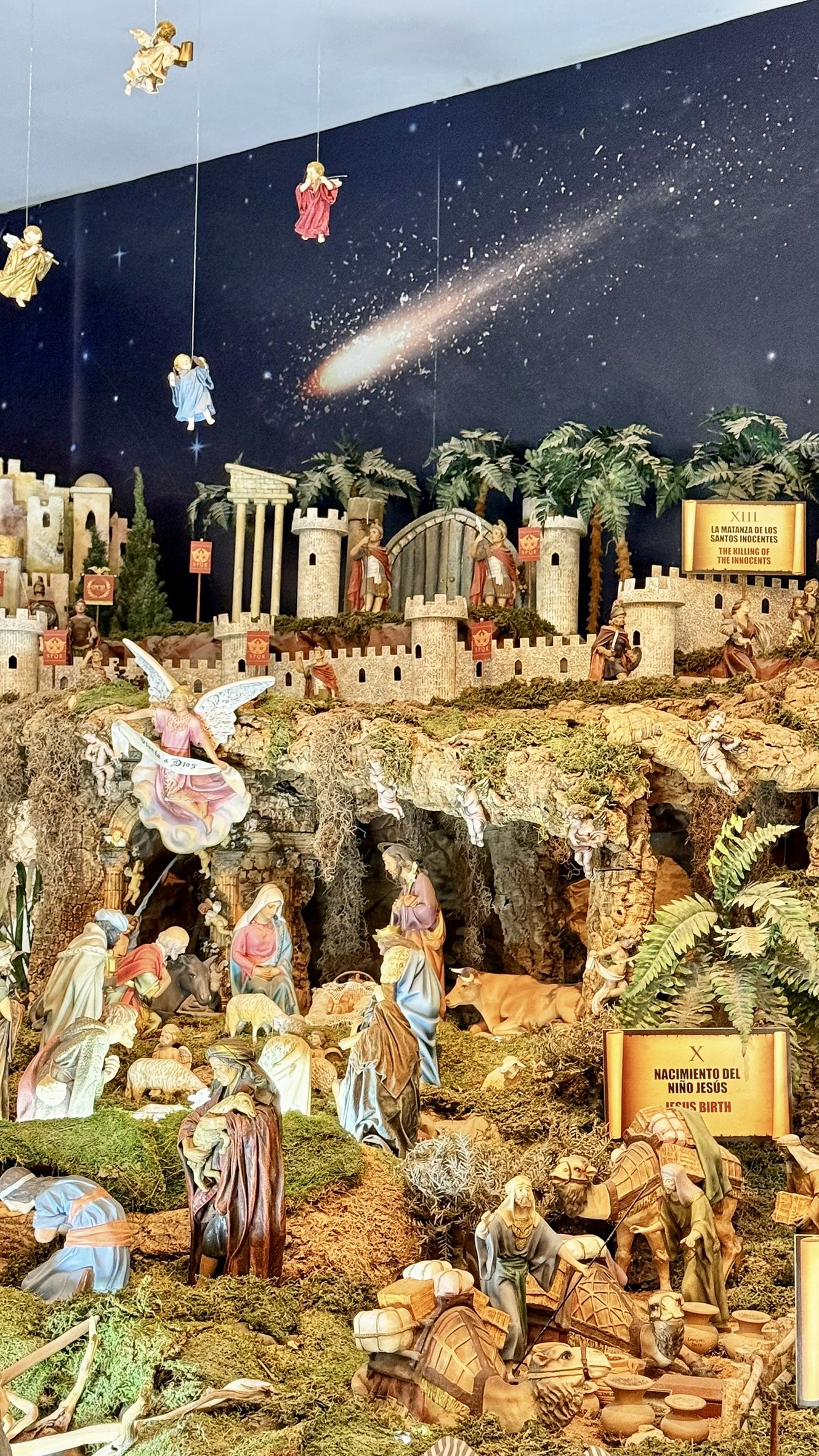
But, we think the bigger hidden treasure inside San José is the massive permanent nativity scene.
And when we say massive, we mean massive.
The display spans multiple walls and recreates the entire ancient town of Bethlehem and surrounding landscapes in exquisite, comprehensive miniature detail.
It was incredibly detailed and completely unexpected. We spent far more time admiring it than we anticipated.
And Then There Was Rum
By now, our “walking tour” was becoming less about checking historical sites off a list and more about finding interesting places to stop along the way.
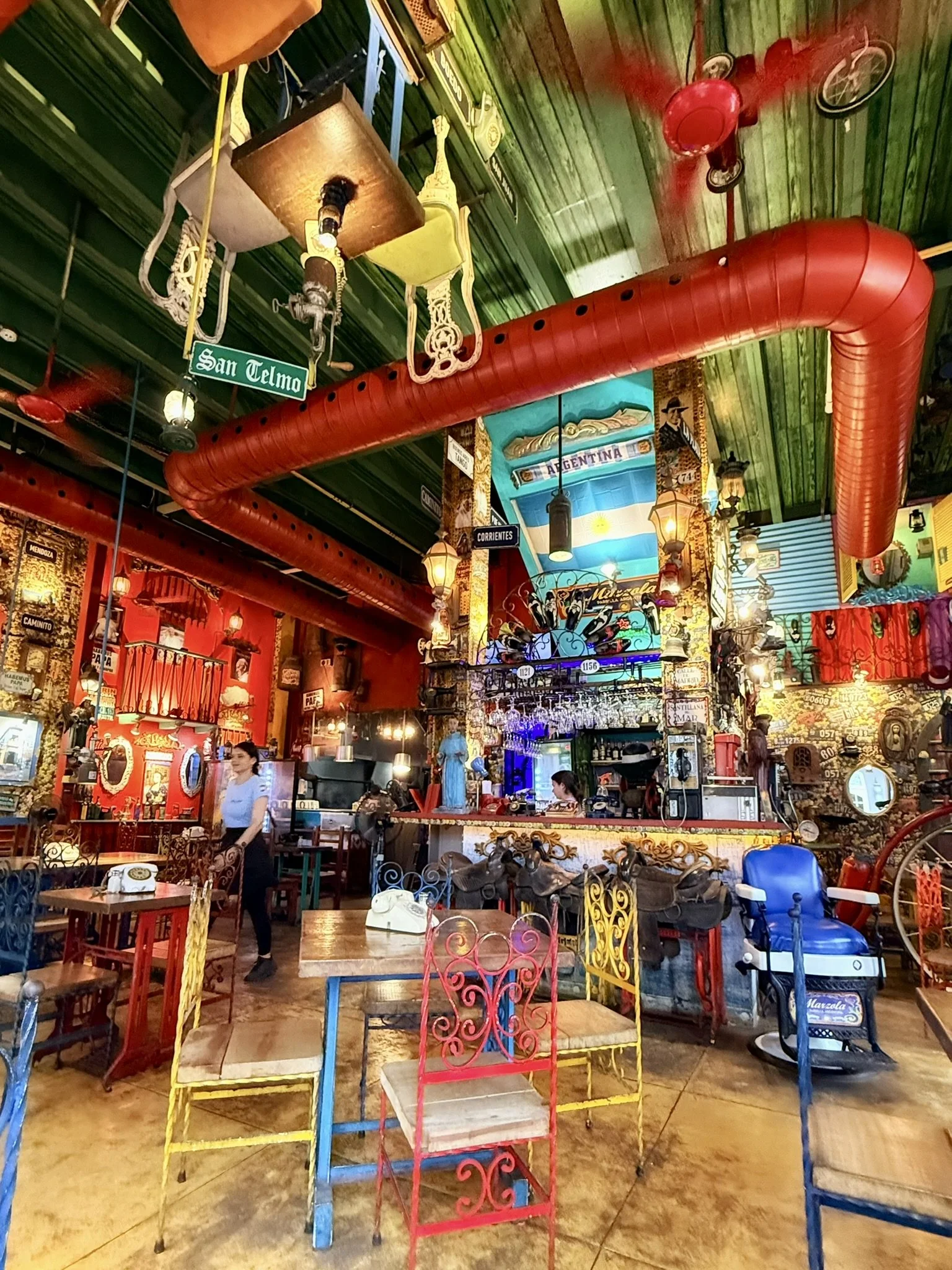
So naturally, our next stop was Marzola Parrilla Argentina for happy-hour wine and snacks. The decor drew us in.
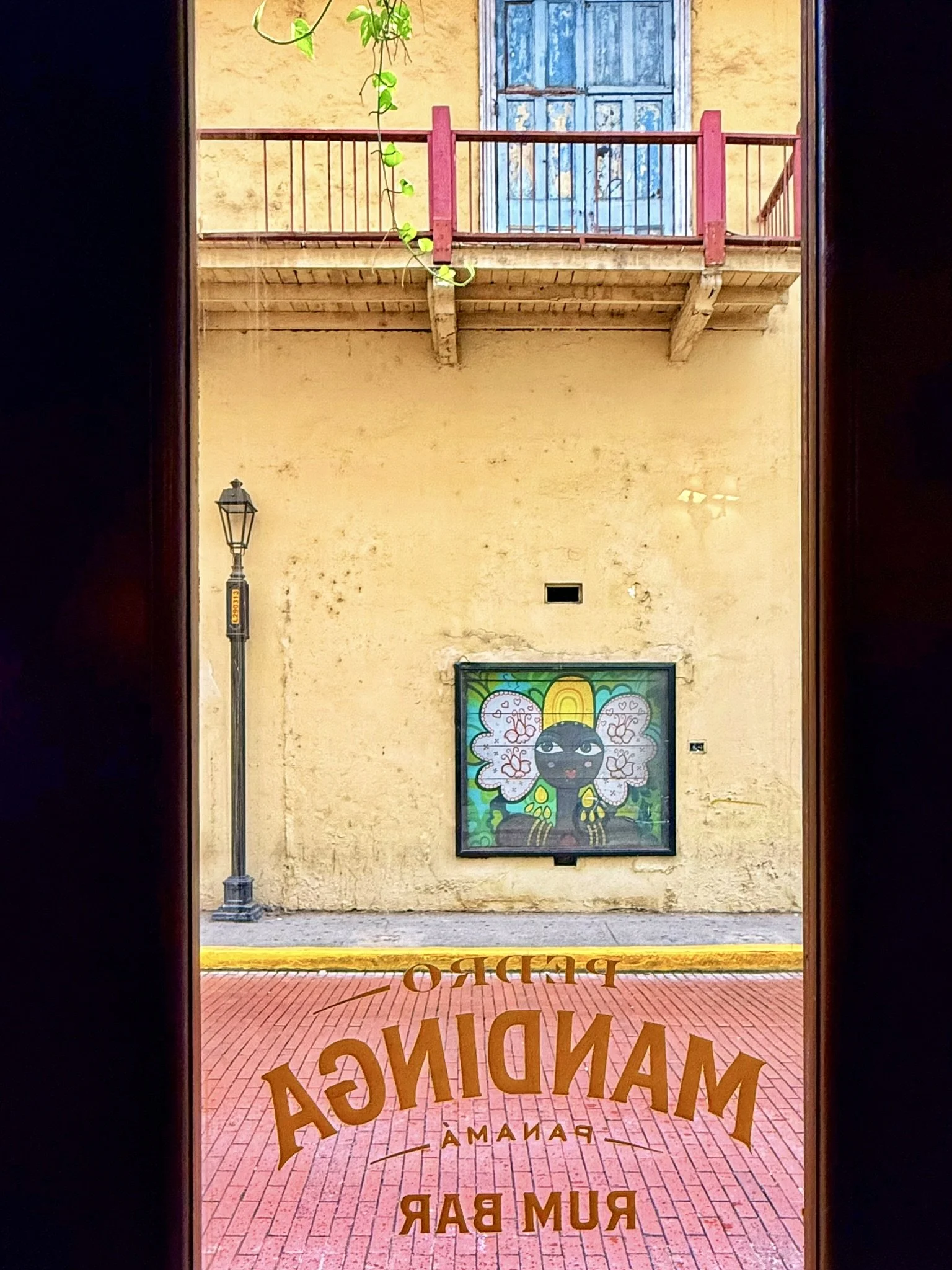
And then, because apparently one round of drinks wasn’t enough, we ended the afternoon at Pedro Mandinga Rum Bar.
Pedro Mandinga is Panama’s first artisanal craft rum distillery, producing small-batch spirits from Panamanian sugar cane juice. We sampled a mojito and a Cuba Libre and, because when in Panama, ordered some Panamanian corvina ceviche.
The ceviche was delicious.
The drinks were delicious.
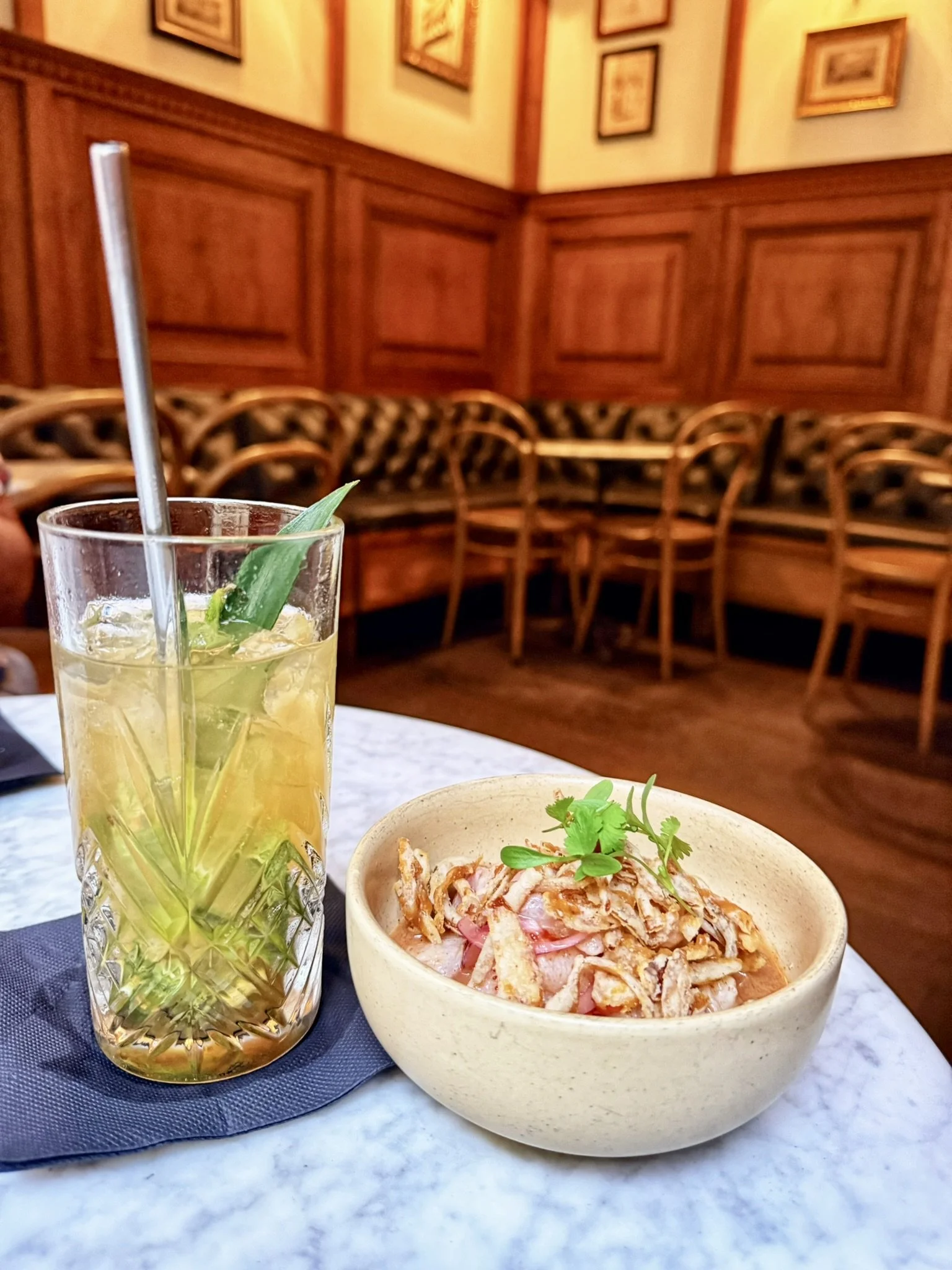
And then we got bamboozled by a street vendor into buying fake Cohiba cigars.
Yep.
The rum clouded our judgment where we would ordinarily have suspected that they weren’t real.
Well played, Mr. Cigar Vendor, well played.
We’re calling it a donation to the local economy.
And honestly, after a full day wandering through centuries of history, eating our way through the neighborhood, admiring indigenous art, exploring ruins, drinking rum, and watching the Pacific roll in, we decided it was a pretty good ending to our first look at the Old Panama City.
